Hello,
Everyone,
It's Judy Cohen,
And this is Wake Up Call 418.
I just tried to ring the bell and I did not see the microphone moving.
So I suspect no one can hear the bell.
So I'll have to work on that.
Anyway,
Today,
Welcome,
Everyone.
Today,
I wanted to talk about balancing on shaky ground.
So I don't know about you,
But when I was in law school,
And when I practiced law,
One of the one of the big principles that I absorbed was that it was never OK to be wrong.
And that if I was wrong about something,
Then I had done something wrong by being wrong.
That loop and it felt like a practice,
This always right,
Never wrong practice.
And it made sense to me because after all,
You know,
Clients weren't paying the big bucks for maybes or to lose their cases or to blow up their deals.
They were paying us to put them at the best possible advantage,
Which meant every position I took had to be unassailable.
Or if it was assailable,
I'd better have a really good comeback.
And then always right,
Never wrong practice,
It seeped down into the elemental stuff,
Too.
So not only could I not be wrong about a citation or a point of law,
But my syntax had to be perfect syntax.
My syntax had to be perfect.
My metaphors,
My similes,
They had to be clear.
The punctuation,
The spelling,
Everything had to be 100 percent.
And this is before computers,
So it's long before spell check.
Right.
Perfectionism.
It just it ruled the day.
My colleagues and I,
We would we would sit around and we would mock attorneys whose imperfect memos landed on our desks.
And we would say,
You know,
They're not very smart.
And we knew that we were the winners because we knew how to be perfect.
And I have to say that this always right,
Never wrong approach,
It sat really well with me.
I had grown up with this very mercurial parent.
I never knew who I would encounter when I walked in the door.
Was it angry parent?
Was it sorrowful parent?
Was it kind parent?
And so nothing in my life was predictable.
And perfectionism felt like predictability.
When things were perfect,
I knew where I stood and where everything and everyone belonged,
The periods,
The commas,
Everything.
I felt stable.
I felt certain.
I felt unshakable.
I felt solid like I knew who I was.
Like I was the one who did perfect work,
Whose positions were right.
And.
This was,
Of course,
A complete illusion.
And it's not as if looking back like right now,
I can finally see that it was an illusion,
Then the illusion of stability came crashing down on me tons of times in those years.
I would be completely right and be absolutely failed by opposing counsel,
By my family member,
By a friend,
By the world,
You know,
Over and over and over.
And still I would pick myself up and organize my life to be perfect one more time.
So that ground of perfection felt like solid ground and there was nothing I wanted more.
And I'm talking about this as if it's in the past,
But it's actually not in the past,
It's also still happening.
In in tapping into the spring,
Which is the second chapter of The Places That Scare You,
Pema Chodron continues to help us locate bodhicitta,
Our our own basic goodness.
But but she tells tells us it's not where we think.
And much to my surprise and chagrin,
It turns out that basic goodness isn't located at the intersection of always right,
Never wrong.
It's just not about that.
It's just not about being a perfect lawyer or a perfect partner,
A perfect friend or teammate or mom.
And mostly it's not about protecting myself from uncertainty and groundlessness and the fear that arises in moments that are like that,
That are uncertain and groundless.
It's it's the opposite.
It's about seeing and being able to name the truth of my fear of feeling groundless,
My fear of feeling unmoored and unbalanced.
And it's about being able to see that on some level,
Everyone else is afraid of that same feeling,
Too.
But for me,
That impulse to protect is so strong and perfectionism is my delusional protection.
I just really do still have this sense that if I can do everything all the time perfectly,
Then I will finally be standing on solid ground.
I have this very tenacious belief that if I can organize my days,
My moments so that so that everything is efficient and aligned and in place,
Then I will finally be safe.
Everybody's flavor of this is different.
Pema talks about these three different flavors of protection,
And the first one is the physical level.
So it's like buying things or having another drink or burying ourselves in another great book.
I also do all of those things as a ways of redirecting our experience away from the discomfort of uncertainty and imbalance and into a kind of false sense of solid,
Lasting comfort.
Or there's using our beliefs for that comfort.
So yesterday I was listening to Father Gregory Boyle on the 10% Happier podcast,
And Father Gregory is the founder of Homeboy Industries.
I highly recommend this podcast.
One of my Law and Social Change Jam teammates,
John Lopez,
Recommended it to me.
And anyway,
Father Boyle says death is a punk and there are many fates worse than death.
And I thought,
OK,
I feel safer believing that.
When I when I believe it,
It relieves my fear of death a little bit.
So beliefs can can provide that.
And then Pema says the third thing is states of mind.
We we sort of cultivate these altered or meditative states.
So concentration is one.
Or I've had experiences on retreat of extreme senses of interconnection and thinking like,
If I can only stay in this state of mind,
Then I'll be safe.
And all teachers will say the same thing on a retreat,
Which is,
Oh,
OK,
That's interesting.
Let it go.
But the truth and you know,
This is why they say that the truth and Pema,
This is what Pema is always reminding us about throughout the book,
Is that our lives feel shaky because life is shaky.
There is no solid ground.
Things are always moving and flowing.
Good,
Bad,
Happy,
Sad,
Safe,
Terrifying.
You know,
That's the hard truth.
But Pema says when we touch the center of sorrow,
When we sit with discomfort without trying to fix it,
When we stay present to the pain of disapproval or betrayal and let it softens.
Those are the times we connect with bodhicitta,
Meaning with our own basic goodness.
And it's a little bit hard to talk about because I'm talking about something I only know because I've touched into it a couple of times.
It's not from from reading Pema's book,
Although she certainly helps me to understand how to articulate a little bit.
And for me,
Touching into that place of groundlessness without trying to fix.
What I was feeling was tremendously destabilizing and terrifying at first,
But then it became interesting and then kind of amazing and then kind of ordinary.
So interesting.
What I mean by interesting is like interesting in the way that a rattlesnake is interesting,
But I don't want to get lost to it.
Right.
Or amazing in the sense that.
In the sense that.
I could realize that my fear and sorrow and ability to stay on that shaky ground of fear and sorrow are my basic goodness.
They're not all of it,
But they're there are real life part of it.
So then it was amazing.
And then ordinary in the sense that that once I could occasionally welcome my sorrow and fear,
Which is definitely a work in progress.
I finally got it that no one is always right,
Never wrong.
No one is perfect.
And we're we're all exactly the same that way,
And maybe we're all also terrified of that incredibly shaky sense of groundlessness.
And and that made me feel less alone.
So I can't say this any more articulately because,
Well,
A,
I'm not Pam a children and B,
Like everything else,
Mindfulness related.
You know,
Everyone really does have to see this for themselves and explore what's true.
We each have to touch into that place of sorrow and fear and shame and remorse and jealousy and hatred and the strategies we've cultivated,
The walls we've built to avoid all of that in the vain hope of finding solid ground.
So here's how Pamela puts it with gentleness and honesty.
We move closer to the walls.
We touch them and smell them and get to know them well.
We begin a process of acknowledging our aversions and our cravings.
What repels me and what attracts me?
We start to get curious about what's going on.
We can observe ourselves with humor,
Not getting overly serious,
Moralistic or uptight.
Year after year.
And I love that because year after year,
I mean,
This is the work of a lifetime.
Year after year,
We train in remaining open and receptive to whatever arises.
Slowly,
Very slowly,
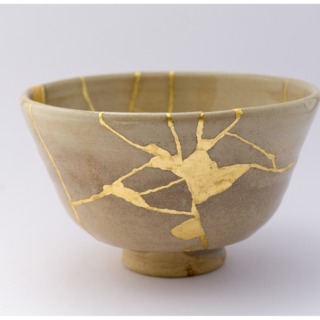
The cracks in the walls seem to widen.
And as if by magic,
Bodhicitta is able to flow freely.
So there it is.
Let's sit.
I'll try my bell,
But I have a feeling it won't,
It won't be audible.
So finding your meditation posture,
Whatever most supports you right now,
Sitting,
Standing,
Lying down and just grounding in this present moment and whatever is here.
So sensing into the body and how are you feeling this morning or this afternoon,
Wherever you are,
Letting the body just feel however it feels,
Not raising any objections,
Not building any walls,
Finding the rhythm of the breath.
And if it supports you,
Just letting the attention rest on the breath as it flows in and out of the on the breath as it flows in and out of the body.
And beginning to notice if there are moments that arise where we turn away.
This question,
Pema invites us to ask,
What repels me and what attracts me?
Riding the waves of the breath and also those waves of aversion and craving.
Not trying to change anything or fix anything.
Just noticing,
Coming back to the breath,
The body,
And just noticing what repels me and what attracts me.
With gentleness and honesty,
Year after year,
We train in remaining open and receptive to whatever arises.
Thanks,
Everyone,
For being on the wake-up call.
It's really lovely to sit with you today.
I'm sorry the bell wasn't working.
I'll have to fiddle with the Zoom sound again.
Take care.
Have a safe week.
Be well.
I'll see you.
I'll see you next Thursday.