Welcome to the podcast,
My friend.
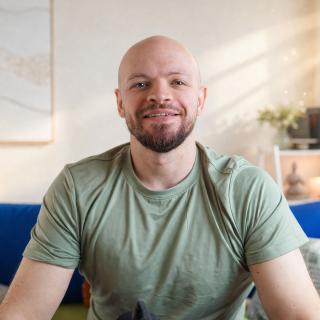
I'm John Brooks,
And today we are going to be practicing an ancient Stoic technique called premeditation of adversity,
Or in Latin,
Premeditatio malorum.
I like to call this quite simply rehearsing setbacks.
And this isn't about being pessimistic or morbid,
It's about waking up to the fragility and preciousness of what we have right now.
The Stoics believed that imagining loss teaches us gratitude,
Prepares us for uncertainty,
And trains us to respond with virtue when life inevitably throws us curveballs.
This is going to be a guided practice,
And I will be asking you during this practice to contemplate losing certain things that could be triggering.
If you find yourself highly anxious or highly neurotic,
Or you get triggered quite easily by things,
Perhaps do a different meditation and a different talk.
But if you're ready to give this a go,
Let's begin.
Close your eyes gently.
Take a slow breath in,
And out.
Now bring your awareness to the sensations in your body.
Notice the contact points,
Your feet on the floor,
Your back against the chair,
The weight of your hands.
There's nothing you need to do,
Just observe.
Everything is effortless right now.
Experience is simply arising.
Sensations,
Sounds,
The rise and fall of breath,
Even the sense of effort is just another sensation appearing in the open space of awareness.
Let yourself settle here for a moment.
I want you to imagine something with me.
Picture yourself out and about in your car.
If you don't drive,
Just see yourself as a passenger in a friend's car,
Or on a bus,
Or wherever feels natural and similar.
You are on one of your regular trips.
Maybe you're heading to grab coffee,
Maybe you're going to work,
Or to see a friend,
Maybe you're just running errands,
Picking up groceries,
Or getting gas.
But today,
Today feels good.
You're alive,
The sun is out,
Or maybe it's raining but you don't mind,
You're just in one of those moods.
You've got things to look forward to,
Plans,
Relationships,
Projects,
Hobbies.
Excitement is in the air.
Maybe there's a trip coming up,
Maybe you're learning something new,
Maybe you're just excited about seeing someone you love.
Take a moment,
What are you looking forward to right now?
What fills your life with possibility?
Let those things come to mind.
As you're driving toward your destination,
You notice someone on the side of the road,
A very interesting looking individual.
They glance at you and you make eye contact.
It's one of those rare,
Nice moments of human connection.
They smile,
You smile,
And there's this momentary recognition of positivity between you.
Just appreciation for beauty,
For life,
For all the people you meet and haven't met yet.
The eye contact lingers an extra second,
And then.
.
.
Your head snaps forward.
A violent,
Sickening crash.
Your skull slams into the steering wheel.
The airbag doesn't deploy,
Or maybe it does,
But it doesn't matter.
There's a deafening crunch of metal and glass.
The world spins,
Everything goes white.
You see that person on the side of the road's face change from warmth to horror.
They're screaming,
But all you hear is ringing.
You're only half-conscious,
But you know something is terribly,
Terribly wrong.
You blink,
Try to focus.
You see people on their phones,
Looking in with pity.
You can see panic.
Your head is swelling.
There's blood.
You're dazed.
What happened?
You glanced away for one second.
You weren't even distracted.
You were just human,
And yet you crashed into a skip,
A dumpster,
Something left too close to the road.
Blue lights appear in the distance.
Fire service,
Ambulance.
The paramedics stabilize you.
You're lifted onto a stretcher.
The hospital is a blur of fluorescent lights and voices.
Finally,
A doctor sits with you.
You're lucky.
No internal injuries,
No brain damage.
You're going to be fine.
Your leg,
Though,
It's badly damaged.
You'll be in a cast for six months,
Maybe longer.
You won't be able to walk normally for a while.
No running,
No running.
No gym,
No sports.
Not for at least a year.
Let that sink in.
Think about the next six months.
All the things you had planned.
The trips,
The workouts,
The spontaneity of just moving through the world freely.
Now picture yourself in a cast.
Crutches everywhere you go.
You can't drive.
You can't walk your dog properly.
You can't take the stairs without pain.
You're always the person people have to wait for,
Help out,
Make accommodations for.
Think about the smaller things too.
Going to the bathroom becomes a logistical challenge.
Getting dressed,
Showering.
The itching under the cast that you can't scratch.
The hygiene,
The smell.
Making love.
Awkward,
Restricted,
Frustrating.
Going to work.
People staring.
Asking what happened over and over again.
The exhaustion of just getting there.
Holidays you had booked.
Canceled or severely limited.
No hiking,
No swimming,
No dancing.
And the clothes.
The clothes you can't wear anymore.
The shoes that don't fit over the cast.
You are now the person with the broken leg everywhere you go.
Let that reality settle into your body.
How does it feel?
Now here's the question the Stoics would ask.
How would you cope with this?
What virtues would you draw on?
Patience,
Acceptance,
Courage,
Gratitude for what you still have.
How could you turn this into an opportunity?
Maybe you'd finally read those books.
Maybe you'd deepen relationships because you're forced to slow down.
Maybe you'd learn that you're more resilient than you thought.
Take a moment,
Really consider this.
What would you do?
Now,
The good news.
This hasn't actually happened.
This is a guided meditation,
But it could happen.
Any day,
Any moment.
But right now,
As far as I know,
Your leg is fine.
Open your awareness to them.
Feel them.
Wiggle your toes and flex your ankles.
When was the last time you appreciated your legs?
Do you even think about them?
They carry you everywhere.
They let you run,
Walk,
Dance,
Explore.
They're fundamental to almost everything you do,
And yet,
Most days they are invisible to you.
And the same is true for so many things.
Your health,
Your loved ones,
Your freedom,
Your eyesight,
Your ability to think clearly.
You don't appreciate what you have until it's gone.
This practice,
The premeditation of adversity,
Isn't morbid.
It's liberating.
It helps in three profound ways.
Number one,
It prepares you for an uncertain future.
When hardship comes,
And it will,
You won't be blindsided.
You'll have rehearsed resilience.
Two,
It teaches you to cope better and practice virtue during difficult times.
You're training your mind to respond with wisdom,
Not panic.
Three,
And most importantly,
It teaches you to want what you already have.
This is the key pillar of stoic gratitude.
As Epictetus said,
He is a wise man who does not grieve for the things which he has not,
But rejoices for those which he has.
You have so much right now.
Your body works.
You can breathe freely.
You can move.
You have people who care about you.
You have choices,
Opportunities,
And time.
Don't wait for a crash to realize it.
Take one more deep breath in,
And out.
When you're ready,
Gently open your eyes,
And as you return to your day,
Carry this awareness with you.
Notice your legs,
Your hands,
Your health.
Notice the people around you who are still here.
And remember,
Everything you have is borrowed,
Impermanent,
And precious.
So use it well.
Thank you for practicing with me today.