Welcome to the Storkham Books.
This is John Brooks speaking.
I want to share with you a quote that I love today from Seneca.
And I'd like you to use this quote as a way to transform yourself and your perceptions of the world.
So often we read an interesting or wise quote and it's cool,
It makes us think differently for a few seconds.
Maybe we remember it and tell people at a dinner party to make ourselves sound better or more intelligent.
But does it really shape us?
Usually not.
When it comes to quotes,
I have a three-step process to transform as a result of reading them.
Reception,
Reflection and integration.
So the first part is receiving it.
Receiving it without cynicism,
Receiving it without any bias,
Just letting the quote in.
Then reflecting on it,
Which is what I'm going to do for you in real time today.
And then finally integrating it,
Making it part of who you are.
When it comes to integration,
The key is to be able to create a daily practice of some sort with it.
At least momentarily,
Like drilling it,
Like a martial art.
So that you can use it spontaneously when life challenges you unexpectedly.
So I'm going to read the quote now and I just want you,
As best as you can,
To receive the quote.
To just let it come in.
We have so many listening habits that are bad.
We're distracted,
We're thinking of the thing we want to say next.
Just receive this quote fully.
Practice just active listening for the next minute when I read out this quote to you from Seneca.
No prizefighter can ever go with high spirits into the strife if he has never been beaten black and blue.
The only contestant who can confidently enter the lists is the man who has seen his own blood.
Who has felt his teeth rattle beneath his opponent's fist.
Who has been tripped and felt the full force of his adversary's charge.
Who has been downed in body but not in spirit.
One who,
As often as he falls,
Rises again with greater defiance than ever.
End quote.
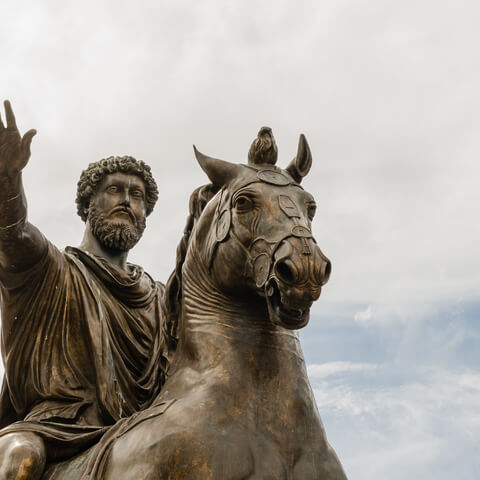
So if you look at the three main Roman Stoics,
Epictetus,
Marcus Aurelius and Seneca,
What you'll find is that when it came to adversity,
Epictetus would kind of tell you to not be too concerned with it.
If you look at the Dichotomy of Control article that I've published,
You'll see that he says,
This is none of my concern.
That's his response to things not within his control.
Seneca seems to have a slightly different approach.
He seems to find good things in misfortune.
He tries to find the silver lining.
He tries to see that that bad thing,
Quote unquote bad thing that happened to you,
That difficult challenging thing,
Not only was it not your concern,
It actually was great.
There's actually benefit to that.
You are actually able to show through that adversity what type of person,
What type of virtue you have.
Without challenge,
You don't have an opportunity to exhibit virtue.
So here Seneca is using the example of the Prize Fighter.
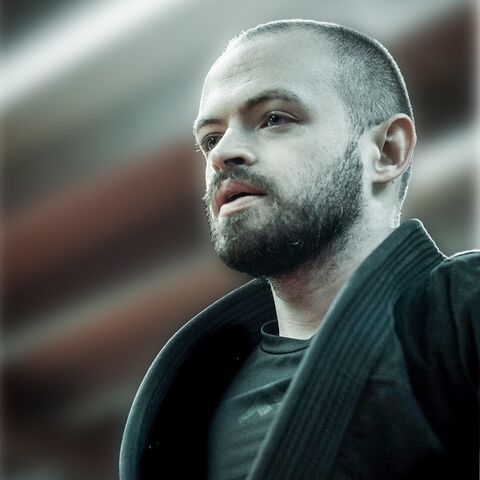
There is something very fascinating that you can learn from observing martial arts contests like mixed martial arts,
UFC or boxing matches.
There's a great amount of psychological warfare that goes on beyond simply skill.
There's intimidation,
There's confidence,
There's risk taking,
There's not showing your hurt to your opponent.
You'll sometimes find that a prime for a martial artist might be 30 to 35 years old.
Even though a 22 year old might be fitter and more athletic,
There's something that is gained through experience that you can't just fake.
You can't learn any other way than by going through the process.
So when you're in the training room as a martial artist,
You know everyone there.
You're friends,
You're respected,
Maybe you're looked up to.
And then suddenly you have to travel across the country,
You get booed when you come in.
There's all these lights and cameras looking at you.
And your opponent looking across the ring from you wants to beat you,
Not to become a legend but because they want to feed their family.
They're doing it for survival and you stand in their way.
Everyone back home is watching you,
Expecting you to win,
Saying things like,
Ah,
This person's going to win easy.
And then round three you get stunned with a punch and your legs start to wobble.
You can hear the cameras chattering away and flashing.
You can hear the commentators.
You can hear everyone getting excited.
You can see the look on your opponent's face that he can see that you're hurt and he's coming to finish the job.
In such moments,
Is it really skill that will save you,
That will give you the confidence to get out of their life?
Or is it experience,
Being there before?
If you speak to any martial artist,
They will tell you that they learn more from the difficult experiences than they do from the positive.
If someone has ten fights and they win every fight,
They learn each time.
They learn something new each time completely.
But if they lose on their eleventh fight,
They may completely change their whole approach to fighting based on that loss,
Based on that lesson.
It's very important,
Seneca is telling us,
To experience hardship.
That could be the edge of our limits in terms of stress,
In terms of anger,
In terms of the way that Fortune,
In whatever form she takes,
Can beat us,
Black and blue.
When you've been taken there,
As difficult as it is,
If you get through it,
You can see,
I know what life is about.
I know how that feels.
I know that if it happens again,
I'll get through it,
I'll cope through it,
I'll work with it.
You can actually push yourself into situations to challenge yourself.
Travelling is a great example.
When I've travelled,
Stuff always goes wrong.
I don't know if you've experienced this,
But I can't find the gate that I've got to go to.
The Uber doesn't show up on time,
The Wi-Fi doesn't work in the apartment,
Whatever it is.
There's always stuff that doesn't go well.
In the moment that can be difficult,
But you actually grow from it so much.
You learn to deal with setbacks.
What Seneca is saying here is that stoicism is not about trying to be okay and calm in every moment,
All the time.
It's about changing our relationship to challenge.
There's a lot of talk about gratitude journaling.
Write down five things you are thankful for every night.
That's a good exercise,
I've done that and I think it's just fine.
But I have a much better exercise,
Actually.
What I do now is I think back to the worst,
Darkest period of my life.
Just the one time that was crippling.
And I say to myself,
I'm not there right now.
I'm not there right now.
I'm not there right now.
And that alone is enough to relieve me of any momentary stress or distress.
So in terms of integrating this quote by Seneca,
I would like you to do one thing.
Simply think back over your life.
Think back over your life to the most difficult,
Stressful time you've ever had.
It could be a situation that lasted weeks or days or months.
It could have been a situation that lasted seconds or minutes.
And simply ask yourself,
How did you gain in confidence from that?
How did you gain in confidence from that?
What virtue did that bring out of you?
And more importantly,
Looking back on that,
Have you decided to rise again in defiance or give up?
I want you to think about that.
And it's never too late to change.
And it's never too late to start again.
I'll speak with you soon.
Faith-pimitting.