This talk is about the victim mentality.
Before I get into it,
I want to kind of preface this discussion by saying that the word victim can be quite a loaded term for some of us.
I want to just say that if someone is a victim of something,
I'm not trying to argue against that.
I'm not trying to say that it is impossible for us to be a victim of certain acts or violations.
I'm not trying to talk about that.
The thing I'm talking about is a sort of overriding mentality in life where we identify as a permanent victim.
Everything is almost like the world is against us.
We are a victim of life.
If only life wasn't this way,
Everything would be fine.
It's possible,
In my opinion,
To be a legitimate victim of something,
Say you're a victim of a crime or something like that,
But to not be consumed by the label of victim.
To kind of use the experience to then offer value to other people or to go on a healing journey.
To use the negative event of being a victim to actually empower you to progress through life in an interesting new way.
So I just want to say that I'm not going to say that nobody is a victim or anything like that.
A lot of our pathological negative emotions like anxiety,
Certain types of depression,
Codependence and things like that,
They have some seed of positive intent in them,
Even addictions.
If you're addicted to smoking or something like that,
It's not like smoking is all bad,
Right?
It provides you with certain benefits,
Otherwise you wouldn't do it.
So what does the victim mentality provide you with?
Why do you think we would have this instant reaction to see ourselves as a victim when things don't go our way?
When you identify as a victim,
You don't see your own role in the situation at all.
It's almost like you're just this observer going through life and all of the issues and all of the problems are out there.
All of the causes and effects are outside of myself.
There's no cause this side.
So a victim is someone who doesn't acknowledge any responsibility or accountability.
If you were to ask them what caused this problem,
It would always be outside of oneself.
And on top of this,
A victim almost expects others to care for them.
You know,
It's like this problem,
I didn't do anything to cause it.
I have no responsibility for it.
But I'm also in such a bad situation that the world that caused all these problems has to care for me now.
So I take no responsibility for the situation that happened.
But I still need you to care for me.
I still need to be the one that gets the validation or the special treatment.
So there's a sort of a strange imbalance here.
It's like the world is to blame for my suffering.
But I also expect the world to heal me and to make me feel better.
A lot of what we learn starts in childhood.
Now,
If you trip as a child and you cut your knee,
You absolutely are a victim,
Right?
You know,
You're learning how to walk,
You don't really know what you're doing,
You fall,
You cut yourself,
You're a victim.
Maybe it was just chance,
Or maybe your parent wasn't looking properly.
Who knows?
So you know,
You blame something,
The world,
You see yourself as a victim,
And then someone rushes in to take care of you and gives you that kind of loving attention.
If you're a child and your parents aren't paying much attention to you,
You're trying to get their attention,
Then you fall and all of a sudden they rush over to you,
Start giving you kisses and pick you up and tell you how brave you are.
That must feel good emotionally,
Right?
Even though it's painful to fall,
There's that kind of loving attention,
Which is what every child wants.
When it comes to kind of complaining,
Which is linked to a victim mentality,
One of the strange things about complaints is that at one point in your life,
When you complained,
It actually worked really well.
When you were a child and you complained about something,
Someone else came in and fixed the problem for you.
Like,
Hey,
I'm really hungry,
I'm starving.
Okay,
Here's some food.
There you go.
It's like,
Oh,
My legs are sore,
I can't walk anymore.
Okay,
No worries.
I'll put you in the seat.
At one point in your life,
Complaining really helped.
It essentially provided an instant fix.
The problem is we get older and a part of us still wants that person to come in,
To swoop in and fix our problems for us.
But there's no one there anymore.
And so we're acting out these childlike patterns as an adult.
And someone with a victim mentality,
And we all do it to some degree,
And someone who complains constantly,
It's just their way of life,
There's something childlike about that.
If you think of the ultimate wise,
Mature,
Emotionally mature person,
You're probably not imagining them constantly complaining and constantly blaming the world for their suffering.
Okay,
So why is that?
There's a reason for that.
Now,
The whole idea of a victim mentality,
It can provide us with this lack of responsibility.
It can do a lot of things that are kind of good for us,
We don't see any role in the issue.
But what about the problems of the victim mindset?
If you feel like you are a victim of the world,
And you didn't play any role in the problem,
What makes you think you have the power to play any role in the solution?
The victim mindset is that of,
I am powerless against the world.
I have no ability to change it.
I didn't play any role in it,
I'm a victim.
The victim mindset is not just disempowering,
It's also foolish,
Inaccurate,
And irrational.
And this is the key of Stoic philosophy.
So the Stoics did not think that anything external can be labeled truly,
Inherently good or bad.
Right?
Because let's just say that,
You know,
You win a lot of money,
Surely that's good,
Right?
Well,
It's not intrinsically good.
You could say that it's preferred,
Maybe.
But having a lot of money is not intrinsically good,
Because you could use that money unwisely,
Ruin relationships,
Sabotage your health,
Do evil deeds.
So the money is not intrinsically good.
You could say that really good health,
Like really,
Really good health and fitness is good intrinsically.
Not necessarily.
You know,
There are evil individuals that are doing very bad things.
If you made them healthier,
And let's say more intelligent or more capable,
They would just be better at doing evil things.
So from a Stoic perspective,
You couldn't say anything external is truly good or bad.
Instead,
They would say that our intentions and actions,
What flows out of us can be labeled good or bad,
And how we respond to situations.
The reason why the Stoics would say that thinking of yourself as a victim is inaccurate is because of this.
I'll ask you a simple question.
Think back to a time in your life,
Say,
Like a few years ago or more,
Where something actually bad happened to you.
Okay,
Something you would label bad,
Something that you would call a negative event.
Now,
If you've got that memory in mind,
The next question is,
Did anything at all,
Even one thing positive come from that situation?
Did you learn something new?
Did you take a new life trajectory?
Did you meet someone?
Did you become less naive?
Were there unforeseen things that happened after this negative event that ended up being positive?
Because we don't have complete knowledge of the future,
We can't accurately say that any situation that happens right now is completely bad.
A situation in which we call ourselves a victim to,
If we could time travel or look into the future,
We might actually say that not only are we not a victim,
We're a benefactor to that victim,
We're a benefactor to that situation.
Because that situation that caused us pain,
Helped us meet this mentor,
Who then gave us a job.
And then I met my soulmate on that job,
Or something like that,
Right?
Like,
You can't see the chain of events.
And if you could go backwards in time and see the chain of events,
Maybe that thing that you labeled as negative or bad,
The thing that you said you were a victim of,
Was the complete opposite.
And now that leads us into a very interesting topic.
And that's the idea of self-ownership.
How do you take responsibility?
And how do you own a situation without blaming yourself?
And this is where it comes down to is,
It's about what you're going to do about it.
So,
The Stoics were fatalists,
In the sense that they recognized that the past is completely outside of your control,
Unchangeable.
And even the present moment,
The moment you notice the present moment is outside of your control.
By the time you've heard what I'm about to say,
It's already too late to change your response to it in the moment.
But you can change how you're going to act after hearing it.
So,
You are able to make modifications in the future.
So,
Someone who takes ownership looks at the situation with nuance and complexity and goes,
Okay,
I can see that a lot went on there.
It's quite complicated.
But I can't control other people.
I can't control reality.
I do have some control over my intentions and my thoughts and my actions.
So,
I'm going to put all of my focus and intention there.
What am I going to do about this?
How can I take responsibility and go,
Hang on a second,
Well,
I did actually contribute to the situation in that way.
And that is something that is up to me.
So,
Moving forward,
I'm going to make this change.
So,
There's no blame.
It's just this earnest desire to take a look at yourself,
Learn and improve.
It kind of reminds me of the Seneca bedtime reflection.
This is quite a famous Stoic practice.
Every night when you go to bed,
Seneca recommended,
You just review the day and ask yourself,
What did I do well?
What did I do that wasn't so well?
That wasn't ideal?
Usually stuff to do with your character.
And how would I like to change it tomorrow?
Seneca is not lying there in bed doing this reflection saying,
You're a terrible person.
How could you do that?
That's awful of you.
Just reflecting,
You know,
It's done.
There's no point beating yourself up.
You just recognize it.
You might feel a little bit of pain here and there.
That's fine.
But the focus then becomes on,
Right,
I'm going to commit to making that change tomorrow.
Because ultimately,
That's the type of person that we want.
Every day being slightly better.
If all you do with all your time is blame the world and blame yourself,
You're probably not going to be as productive as you could be if you just took responsibility,
Accepted the messiness of life,
And then focused all of your attention on making small incremental changes on a daily basis to your character.
So that's the idea.
Now,
The whole idea of the victim mindset,
Something that I really don't like identifying with,
Is that there have been a lot of things that have happened in my life,
You know,
Different types of traumas and losses,
Problems,
You know,
Just a lot of different things like that.
And sometimes people come to me and they're like,
Like,
Poor you,
You know,
I'm so sorry that this happened to you.
I'm so sorry that you have to deal with this on a daily basis,
Things like that.
And there's a little part of me,
Like a tiny percentage that's like,
You know,
You're right.
You know,
Why do I have to deal with this?
But then I think to myself,
Is that really going to help me get through it?
Is that really going to help me keep moving forward?
One of the things that I find really inspiring about other people is when not only do they not let a setback interfere with their life,
But they let a setback improve their life.
I find this really inspirational.
So there's a,
I practice,
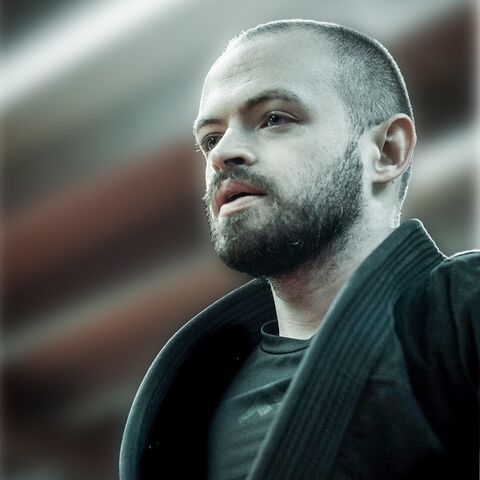
One of my favorite things to practice is jujitsu,
Brazilian jujitsu,
Which is like a grappling type of martial art.
And there's a coach that I really like called John Danaher.
He's an online coach.
And he was a cripple.
And he had like leg surgeries and hip replacements.
And he's just like was a cripple.
And he could never be a good athlete.
So instead,
He said,
Well,
I'm never going to be an athlete.
I love jujitsu.
And I'm kind of a cripple.
And I have to keep taking pain medication just to go training.
You know what I'm going to do?
I'm going to become the world's greatest coach.
Yeah,
I think I'll do that.
And he started when he was 28.
So quite late to the game.
And now he is recognized.
He's like,
Well,
55 is one of the greatest jujitsu coaches of all time in the world right now.
And because he's crippled,
And he can't train,
He is able to give more attention to his athletes,
He can sit on the sidelines and watch them.
Most jujitsu coaches will actually grapple along with the rest of the team.
Because he's crippled,
He doesn't do that.
Because he doesn't train as much,
He has more time to study.
You know,
It's the setback has actually become the thing that made him the best in his area.
And I find that really inspiring.
So while there's a little part of me that can go,
Yeah,
You know,
Like I am,
I guess a bit of a victim here.
I always ask that question.
How can I actually use this situation?
To massively enhance my life?
Wouldn't that be crazy?
What if I use these struggles that I'm going through on a daily basis to practice stoicism?
What if I practiced it and started learning about it,
And then started sharing that with other people?
You know,
And then,
You know,
A couple years later,
Thousands of people have listened to my talks and courses,
For example,
That's just like one principle there.
If I had just given up and gone,
I'm just a victim,
You know,
Like this is yeah,
I should this is just too hard.
I wouldn't be having this conversation with anyone.
So that's one thing that I want you to ask whenever something gets hard,
Whenever you feel a temptation to be a victim is how can you use this to not only not be a victim,
But to to not only not be a victim,
But to actually go the other way?
How can you use this situation to enhance your life?
I was involved in a really kind of difficult toxic type of relationship quite a few years back.
And it was really difficult and really painful.
But out of that,
I started learning and reading about different aspects of psychology and relationships.
And it's beautiful that I can actually help people right now who are going through that kind of situation themselves.
You know,
Like,
How cool is that?
Without that insider knowledge?
I mean,
I would have been dismissive of it or thought that I understood it,
But didn't really,
You know.
And now people can talk to me about stuff they're going through.
And I'm like,
Yeah,
I completely relate to you.
I can see what's going on.
So yeah,
Out of every kind of situation which you could call yourself a victim,
How can you not only not be a victim,
But use this to your advantage?
And you can use that in life in general.
And that's something that I encourage you to do as much as possible.
Now,
There's a German philosopher called Friedrich Nietzsche.
Very,
Very intelligent person.
I think he became a professor in his early twenties.
Just like so smart,
Like asking questions that nobody else was asking at the time,
Kind of predicting the future.
He made the claim that in the absence of religion,
People would have to kind of create their own values and morals.
And that would be a bloodbath.
That would be terrible because we'd have to start from scratch.
You know,
A lot of the values that we inherited from societies and culture over millennia would now be gone.
And we'd have to kind of figure it out for ourselves.
And he predicted,
He kind of said that it would be really terrible.
And there'd be like a lot of catastrophic situations.
And then World War I and World War II happened after that.
So he was really,
Really intelligent.
And he said that the formula for greatness in a human being is to love your fate,
Which is a really interesting one.
This very,
Very intelligent person says clearly,
You know,
Like,
If you want to know the formula for greatness,
Love how your life is right now.
If you can do that,
You are as great as anyone could ever be.
He's not saying the formula for greatness is to make a lot of money,
Or to have a lot of friends,
Or to be in shape.
And I love his formula for greatness,
Because you don't need any of those to love your fate.
You can have any life circumstance that you can imagine,
And you can still love your fate.
You can still love your life.
You can choose to love it.
And why would he say this?
Well,
A lot of us believe that we're going to live forever.
We feel like life is infinite.
I've got all the time in the world to have the relationships that I want,
Learn the skills that I want to learn.
I got all the time in the world to complain and tell myself how it's everyone else's fault.
But then we look back when we're older on the way that we've lived our life,
And we see that we spent our precious attention that is the most valuable thing we can have.
Like,
The fact that we are conscious and in the present moment right now is the gift of all gifts multiplied by a billion.
And we spent those precious moments complaining about stuff and saying that our life sucks and poor me and nothing went my way.
Is that how you want to spend your time?
Is that the right attitude to get the most out of life?
I mean,
I don't think it is,
You know.
I think the right attitude is nature is going to go how nature goes,
You know.
Life is a mystery.
There's so much going on outside of my control,
So much going on that is beyond me.
I didn't choose my parents.
I didn't choose my genetics.
There's so much I didn't choose,
But here I am,
And I'm gonna love it because here I am.
I want to talk to you about a fun exercise that I like to do.
This is included in some of my talks and courses on Insight Timer,
And it's the good exercise.
So there's this Navy SEAL called Jocko Willink,
And he was a commander in some of the most violent battles in Iraq.
I don't know much about American wars and things like that,
And so I wouldn't get into that,
But I want to specifically focus on a leadership tactic that he used.
When one of his subordinates would come to him with a problem of some kind,
You know,
Like dealing with life and death matters,
They'd come to him with a problem.
The first word that he would always use in responding to them was the word good.
So they would come to him and say like,
Hey,
There's a problem.
You know,
We didn't get that cog that we needed for the vehicle.
He would say good and then offer why it is good.
This is kind of strange.
It's kind of counterintuitive,
And his perspective is,
Well,
I'm more fatty,
Right?
This is the situation we're in.
How can it be good?
Break your ankle.
Good.
More time to sit and study.
More time to learn piano.
More time to learn a new language.
Okay.
Fail your exam.
Good.
More time to get better.
More time to get better.
Get the best grades in the class.
Okay.
Crashed your car.
Good.
Survived.
Nobody got hurt.
I'll never be in a fatal accident for the rest of my life because I care so much about safe driving.
That's a really powerful frame,
Saying good to whatever happens.
You can practice this with literally anything.
One of the practices that I like to use when I do my morning journal is I think about all the different setbacks that could happen,
And then I respond with good.
My child is going to be really grumpy and have lots of tantrums and be really demanding today.
Good.
Perfect opportunity to practice peaceful parenting and positive discipline.
This is going to be great.
What a great challenge for me.
All right.
This is so different from the other one.
The knee jerk a lot of us have is the word bad.
Not bad.
No.
What am I going to do?
I just want to check out today.
Do you want to live with the formula for greatness or not?
I would love for you to almost squirm at the thought that you are a victim of situations.
Think of it as a game.
How can I not be a victim here?
I got into a relationship that was quite unhealthy,
And I definitely could have felt like a victim in that some years ago.
I was thinking,
I can't not see myself as a victim here.
Clearly,
I'm a victim.
Anyone would be a victim here.
Then I realized that there was some pattern within me that led me into such a relationship.
Every relationship is 100%,
100%.
Something in me created the conditions that I was complaining about or helped create them.
First step,
Take responsibility.
Then the next question that I asked is,
If I didn't correct for these patterns that led to this relationship,
Even if I avoided this one person,
It would have happened again.
But what if it happened again and it was way worse?
Okay.
Then it changes from,
I'm a victim to,
I just had the best emotional education that I could have ever had.
If you'd like to go specifically deeper into the gratitude anti-victim mentality work,
The course that I'd recommend is the seven-day Stoic Radical Gratitude Meditation course.
That's on Insight Timer.
The purpose of that course,
You might be familiar with gratitude,
Like five things I'm grateful for each day,
Which is great.
But I like the idea of going beyond that.
Instead of being grateful for the nice things in our life,
How can we become grateful for everything in our life?
Not just accepting of negative events,
But actually grateful for them.
That's the purpose of the Radical Gratitude course.
It's like,
Let's be grateful and have gratitude for absolutely everything.
Gratitude for our anxiety,
Our negative moods,
Our past traumas.
Let's have gratitude for it all.
Because when we can cultivate that skill of gratitude for it all,
You're basically learning how to be happy without needing anything external.
One of the things I ask people if I start to work with them in a one-on-one way,
It's a fun question I like to ask.
If I put you in a room on your own for a day,
Would you be okay?
Would you go insane or would you kind of be fine?
It's a really good question actually.
Alain de Botton,
The philosophy writer says,
If you want to know how good someone is at being content,
How skilled someone is at generating happiness,
Put them in a room on their own for an hour and watch.
I can guarantee that an advanced Buddhist meditator would not only be not struggling in a room on their own,
They'd be like,
Yeah,
This is great.
Finally,
Peace.
I've been waiting for this.
Whereas a lot of us would be like,
I can't bear this.
Where's my phone?
Give me the internet.
I'm bored.
I don't know how to be bored because I'm so distracted all the time.
A good goal for us is to be able to be in a room and to be grateful for being in that room,
Finding something to be peaceful about.
One thing that I'm really interested in that I haven't done talk on is the inner critic,
Like,
You know,
The voice that we use to speak to ourselves.
I have a lot to say on that.
And that comes back to self-sabotage because self-sabotage is a form of the inner critic working.
A little preview of that is this idea of the bizarre normal.
And it's like this funny thought experiment.
Imagine if other people could hear the way that you speak to yourself,
But instead of them seeing you saying that to yourself,
They could see you speaking that way to another person.
Would they call you an abuser?
If people could see the way that you speak to yourself said to another person,
Would they call you an abuser?
You know,
Would we be saying horrific,
Cruel things to that person?
Would it be shocking?
And that's the bizarre normal.
You know,
It's like,
It's normal that we speak to ourselves in this degrading,
Abusive way.
But it's also like,
We're just used to it,
Right?
It's fine.
And that's a problem.
And that's related to the inner critic.
Like I was saying earlier,
A lot of the kind of negative aspects of our psychology have a positive kind of like intent.
So the inner critic on some level is designed to keep you safe and to kind of protect you.
And we've become really bad at communicating with that inner critic.
So yeah,
It's a complicated one,
But really good to learn about it.
Well,
I've got to get going because my voice is starting to go.
So I appreciate you all.
Thank you so much.
And hope to see you again soon.