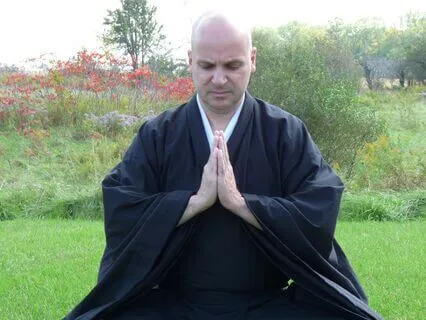
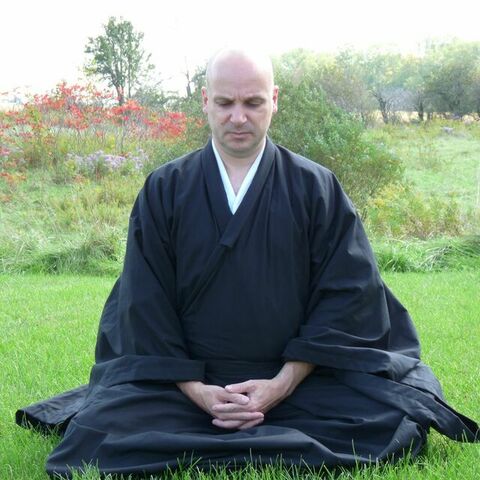
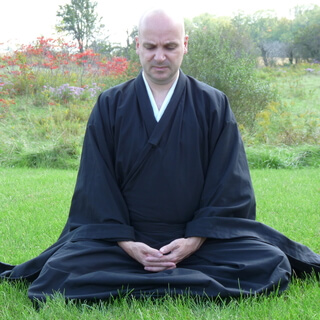
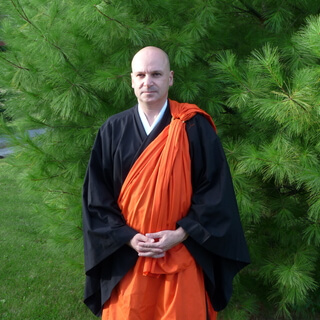
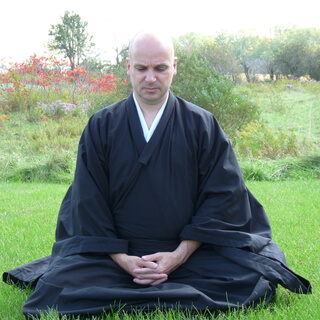
Hello,
It's me,
Joe,
The Autistic Buddhist.
Today I would like to talk to you about something I saw on television that triggered an emotional response for me and then led me on a journey to find out what the meaning of a word really was.
And what happened was that I was watching television and I saw a woman whose husband had been tragically killed,
And she was speaking to an audience about her husband,
About her children,
And she forgave the person who had killed her husband.
I was astounded by her sincere act of forgiveness,
But what astounded me more was what I said immediately after I heard her words of forgiveness,
Which was,
I wouldn't be able to do that.
And I thought about that for a while.
I wouldn't be able to do that.
I would not be able to forgive a person who killed a member of my family.
And that reaction was very instant,
Very quick.
And I thought to myself,
I'm a Buddhist,
Right?
Shouldn't I be more compassionate,
More kind,
More understanding?
But then again,
I also have autism,
And my autism orients me to clearly define outcomes in rigid terms,
Such as this or that,
Yes or no,
Either or,
There's no gray area.
This created an internal conflict within me.
One thing I'm glad that I didn't do is criticize and judge myself,
Letting my ego dictate to me that I was being judgmental or not a very good Buddhist.
So I decided that the starting point was to understand just what forgiveness is.
Because I had a suspicion that I reacted to a word that maybe I don't really understand its meaning.
I did a little research for myself in reference to this word,
Forgiveness,
The act of forgiving.
What does it mean to forgive someone?
In psychology,
I learned that generally,
Forgiveness is a conscious,
Deliberate decision to release feelings of resentment or vengeance towards a person or group.
When I searched for the meaning of the word forgiveness in other religions,
I was a little surprised that the different religions around the world have a slightly different view of what forgiveness is.
I am in no way an expert on world religions,
And my research,
My journey,
Did not dive deep into the religions that I looked into.
But nonetheless,
I did find some useful material.
For example,
In one religion,
Forgiveness is seen as a divine gift and is also seen as a moral duty.
It means letting go of resentment and pardoning wrongdoing,
Which is somewhat similar to the psychological explanation.
In another religion,
I learned that forgiveness is defined as a divine act of mercy and a moral choice.
That really intrigued me,
That forgiveness was seen as a decision you make,
And it's a moral decision.
In another religion,
I saw that forgiveness to that group meant a detachment from anger and revenge.
So you're separating anger and revenge from yourself,
And you're making a choice to forego that.
In some other cultures,
In indigenous cultures around the world,
I learned that in some of them,
Forgiveness is viewed as a way of healing and restoring balance to oneself.
So it's seen as a way of healing the self.
But the one definition that resonated with me the most was the Buddhist definition of forgiveness,
Which is the idea of letting go of hatred and resentment.
So when someone harms you,
Or someone you care about,
And you have that hatred and anger rise up in you,
Going back to Buddhism,
About the idea of letting go of hatred and anger.
And when I think back to that woman forgiving that man who killed her husband,
To me,
What she was doing was letting go of her hatred and her anger.
From a Buddhist point of view,
She was not torturing herself with these angry,
Hateful thoughts.
I admired that woman a great deal because my reaction led me to believe that I couldn't give up hatred and anger when someone harmed me or a member of my family,
As she did.
And perhaps initially she couldn't either.
But over time,
She reflected and decided to let go of the need or the feeling for anger and revenge.
Now,
Going back to my initial reaction,
Thinking so quickly that I did not feel I could do what she did,
Although I knew it would be spiritually and psychologically healthy for me to do so,
I still recognized that I couldn't do it.
Again,
A part of it is that autistic Buddhist dynamic that exists in myself,
Where my autism fuels the belief that things can't be left unresolved.
And that's why I initially started this journey to understand that word and to understand my reaction to that act.
Throughout my journey,
I learned that it takes strength and a strong belief in yourself and your spirituality to forgive.
I don't think I was strong,
At least at the very beginning,
When I saw what I saw on television.
But researching it,
Looking into it,
Is a part of learning on how I can make myself better,
Not only for myself,
But for others.
And of course,
The Buddha reminds us that while walking the Buddha's path,
You're going to stumble,
You're going to fall,
You're going to awaken,
And you're going to repeat.
Simply put,
You're going to trip up,
You're going to make a mistake,
You're going to learn from it,
And then you're going to go on.
So the idea of forgiveness being the act of letting go of hatred,
Anger,
And resentment still deeply resonates with me.
And when I thought about it a lot,
I understood that there is one person in my life that I need to let go of some anger,
Some resentment,
And that I need to forgive that person in order to move on.
And that person is me.
What I'd like to do this session is I'd like to forgive myself for some of the things that have disappointed me,
Made me upset,
And have made me resentful.
And I think I should do that right now.
So I'm going to start.
Joe,
For all the times that I needed you,
That I needed your support,
And you weren't there,
I forgive you for that.
For all those times where you could have helped me find answers and reduce my suffering,
And you didn't,
I forgive you for that.
And lastly,
For those times that I needed to reach out and ask for help,
Seek guidance,
And you wouldn't let me,
I forgive you for that.
That was an important exercise for me,
All stemming from something I initially saw on television,
And it has released from me the residual anger and resentment I've carried for a very long time.
So Joe,
You're forgiven,
And it's time to move on.
Thank you very much for listening to this session.
I hope that it is of benefit to you,
And you find it useful.
Goodbye.