Hello,
It's Joe,
The Autistic Bliss,
And in this session,
I'm going to present to you Awareness Meditation Part 2.
In Awareness Meditation Part 1,
I spoke about the foundation and the background of Awareness Meditation,
And I would recommend that you listen to that first before listening to this session.
This session is more about the logistics and the actual practice itself.
As a brief review,
The purpose of this meditation is pure awareness.
It is to understand and recognize the functioning of the mind and the ego so that you are aware that a certain emotion is occurring and your reaction to it.
Over time,
Your awareness will allow you to short circuit that emotion and the reaction to it.
Secondly,
It's important to remember these facets of Awareness Meditation.
First of all,
In this type of practice,
There's no desire,
No destination,
There's nowhere for you to go,
No state to achieve like bliss,
Serenity,
Calmness,
Because when you set a goal,
You also set the criteria for failure.
And in this meditative practice,
We are not trying to achieve another state of being or existence or emotion.
What we're trying to do is pay attention to how we think.
There's a saying that I had heard years ago,
Which I hold very close to my heart.
It is this,
It takes one perfect meditation session to ruin an entire practice.
I like that saying because for me what it means is that when you achieve perfection and if some day you are actually lucky enough to get as close to it as you can,
Then everything after that is substandard.
Everything becomes graded and ranked based on that one best meditation session.
There's also no judgment here.
There's no good sessions,
There's no bad sessions.
If you achieve some level of awareness,
Then that is exactly what the practice is about.
Now what you become aware of are a variety of different things.
You will become aware of the body,
Of how your legs are positioned.
You will become aware of sensations in the body.
And very shortly thereafter,
You will become aware of the mind,
What you're thinking,
What you're doing.
Let me give you an example of that.
Just a few days ago,
I sat in meditation and probably about 80% of it was a thought running through my head,
Which was an idea for a book,
Which had nothing to do with autism and Buddhism.
I just thought it was a good idea for a book.
Now I was aware that I was thinking this thought,
Didn't try to stop it,
Didn't try to run with it,
And I will talk more about that later,
But it was there and I observed it.
And so by observing it,
I let it run its course.
And eventually the thought went away.
I haven't had it since.
One of the great benefits that Awareness Meditation gives you is the ability to identify choices during a difficult moment and accept impermanence,
Which is a Buddhist concept,
Which I'm going to explain shortly.
Often when caught in the net of emotion,
We don't see choices.
We don't see impermanency.
We just see direction.
So when we are reacting strongly to an emotion,
We are not thinking about whether we should react or shouldn't react or how to react or the intensity of our reaction or if our reaction is her harming ourselves or others.
All we're thinking about is the emotion and the direction we want to move towards.
And having choices in those situations is very empowering.
Let's talk about impermanency.
Again,
As I said earlier,
It's a Buddhist concept that I learned a long time ago.
Strong emotion lets us lose sight of the fact that the situation is not permanent.
A while ago,
I felt very disheartened about something,
But I was aware that I was disheartened.
So I decided to let that feeling just sit and play itself out.
And I also was very much aware that I was not going to remain in that disheartened emotion or that sensation for the rest of my life.
It was eventually going to pass.
So the understanding of all that helped me manage that emotion much more adequately and successfully than I would have before.
Let me give you a quick example.
If you have a feeling of not being confident,
That's the event.
That's the reality.
You're experiencing this feeling.
How you face and react to that event is a choice.
That choice can lead you to a better state of being or you can allow the emotion and the reaction to dominate you.
So let's talk a little bit about the logistics of this practice.
Meaning,
What do you do,
How do you do it and when?
And what I'm going to do is I'm going to speak to my own practice rather than say this is how you should do this or how you should do that.
I'll just tell you what I do and hopefully you may find it useful and it may help you in establishing a practice of your own.
Where I meditate is in a quiet place in my home that I am not disturbed.
I meditate very early in the morning to minimize noise.
Even though I'm in a quiet place,
I can still hear some faint noises coming from the rest of the house.
But that early in the morning gives me a greater sense of quiet and serenity.
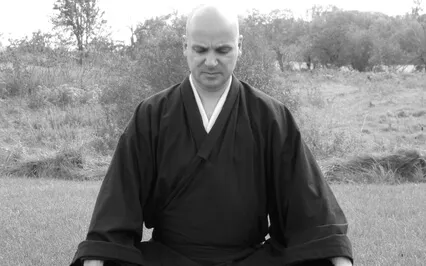
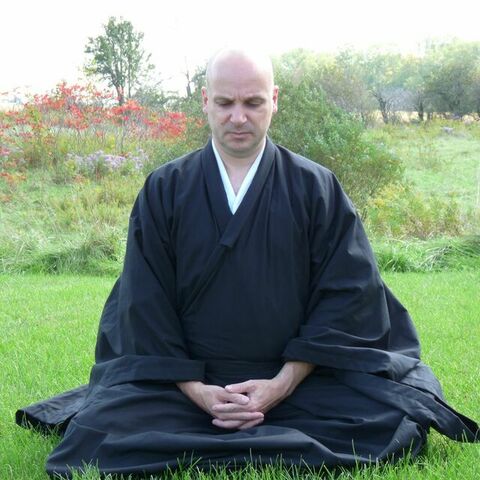
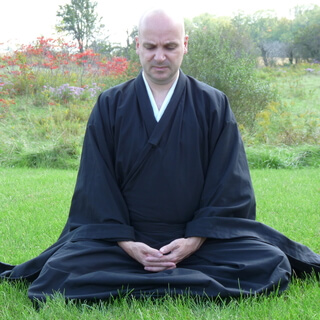
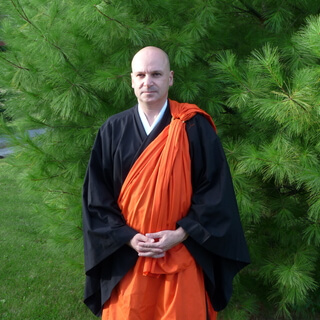
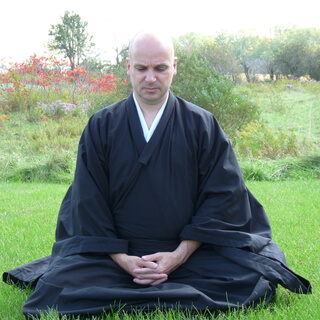
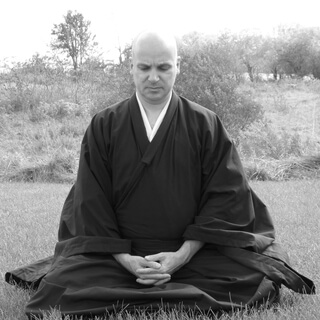
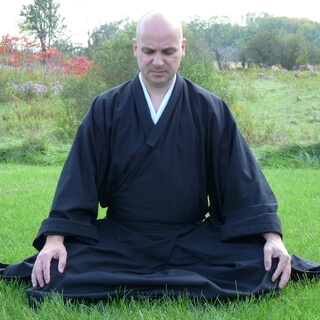
The posture I use I call the Burmese position or the Burmese posture.
You should just look that up on the internet.
Meditation,
Burmese posture.
And it will show you how I sit in my meditative practice.
You can use the Lotus or the Half Lotus or you can even sit in a chair.
Whatever works for you during your practice.
But I like the Burmese practice for some reason.
I picked it up a long time ago after trying several other postures and that's what stuck with me.
In terms of the length of time,
You need to be patient because that will grow over the course of your practice.
I would suggest starting with 10 minute sessions once a day.
And then as you feel more comfortable with those sessions,
Increase that time by 5.
15 minutes,
Then 20 minutes.
And discover for yourself of what length of time is best for you.
As long as you get enough time to sit down,
Center and become aware of your body and of your thoughts.
I also like to start my practice with a ritual so that I introduce myself to what I'm going to do.
Rather than just sort of sit down and get into posture and meditating,
I like to establish a little ritual that says,
Joe,
You are now entering a sacred place.
And my little ritual is to recite some Buddhist phrases and you can pick whatever you would like in terms of an opening ritual.
For me,
I bow,
I sit,
And then I recite some Buddhist phrases and then I begin.
For example,
Some phrases that are not necessarily Buddhist phrases that may be useful to you might be,
This is a safe place,
My thoughts cannot hurt me here.
And then you can begin your practice.
Or,
My journey towards awareness begins here,
Begins now.
Whatever feels best for you.
Of course,
I use the Insight Timer app that allows me to begin and end my meditation after a selected period of time.
I have three bells that go off in the beginning and three bells that go off at the end.
At the end,
My closing ritual,
I bow each time the bell rings.
And at this point,
I'm in my seated Burmese position.
Before leaving the cushion,
Or my meditative practice,
I just give a little thought and reflection to what I experience.
Sometimes it'll be very,
Very simple and short,
Other times just a tad longer,
But not very much so.
For example,
I may say,
Hmm,
Interesting practice.
Or,
Hmm,
I wonder what that reoccurring thought was regarding my work.
Just to emphasize the fact that the meditative practice has given me something in terms of awareness.
During the session itself,
During your meditative practice itself,
What I find interesting is how my mind can change thoughts so quickly.
It can change from one thought to another thought to another thought.
And in Buddhism,
Sometimes that's called monkey mind.
Monkey mind is the ability of our minds and our egos to rapidly repeat similar thoughts or different thoughts over and over again.
It's often the cause of worry and anxiety,
Just the same negative repetitive thoughts or other thoughts.
And you should be prepared for that.
It's not a bad thing.
It's just how the mind works.
Remember that when you end your practice as well,
That you are always more aware than you were yesterday.
And that is an affirmation.
In the practice itself,
We need to remind ourselves that when thoughts,
Emotions,
Feelings arise,
Our reaction is to observe the thoughts in our head.
We don't follow those thoughts and we don't judge them.
Some challenges that some people have experienced,
Including myself,
Is that you can have a thought that you're aware of and you can also become aware that the thought is repetitive or keeps showing up.
If you resist it,
It'll only get stronger.
If you follow it,
Then you are drifting away from the practice itself.
You're no longer aware.
And for reoccurring thoughts,
Thoughts that keep coming back,
They can seem overwhelming or discomforting at first.
At the time when this occurs,
We have some choices.
One choice is to label the thought.
Now I know some of you may say,
Well,
Joe,
Isn't that using the mind to conquer the mind?
Counter thinking with more thinking?
Perhaps it is.
Perhaps it isn't.
But it's helpful.
What labeling our thoughts does is it breaks the identification with the thought,
Creating a space between you and that thought.
And that space is very important because normally we are the emotion.
We are the thought.
I am angry.
I am sad.
I am happy.
And so we identify with the thought.
However,
When we have a space between the thought and ourselves,
It causes us to be aware of the choices we have.
So you can label those thoughts like this.
This is a shopping thought.
If you're sitting in practice and you're aware that you're thinking about shopping over and over and I need to buy this and I need to buy that and don't forget to buy this,
You can create a space and say,
Joe,
I am thinking of shopping thoughts.
And that statement,
That label causes a pause in the thought process.
Joe,
This is a happy thought.
This is a silly thought.
Or,
Joe,
This is what impatience feels like.
I like that way of labeling.
And there's no right or wrong way to label your thoughts.
What's important is that you create that space.
But that's my preferred thought labeling practice is to create that space by becoming aware of what the thought or the emotion feels like.
For example,
This is what anger feels like if I have angry thoughts.
This is what sadness feels like.
This is what fear feels like.
This is what calm feels like.
And so what you're doing is you're labeling those thoughts in a way that says,
This is what I'm experiencing right now so that later you can identify that experience when you have it.
And this is very useful because it teaches us to know the experience.
Oftentimes when you label a thought,
It goes away.
Sometimes it returns later on.
As I said earlier,
Sometimes it repeats itself.
And sometimes it stays gone.
My suggestion would be that in those occurrences where it comes back later on is to again label.
My worried thought has returned.
And this is what worry feels like.
Keep your labels as short as possible.
Long labeling will draw the mind further into the situation.
Thoughts in our practice are the activity of the mind.
They are impermanent and they are not you.
It is as if you are watching a movie.
You are not the movie.
You're not the film you're watching.
You are watching it and being drawn into the story.
But you are always aware that the movie is not who you are.
It is something you're experiencing at the time.
And when the movie is over,
That experience has ended.
Here's an illustration.
Imagine yourself sitting in a park.
It's a beautiful location.
You're enjoying being there.
And suddenly a cat walks across your line of sight.
And you start to watch this cat walking across the park.
You sitting down in the park is your awareness.
The cat represents a thought.
Now if you resist the thought,
If you resist the idea that this cat should be there,
It is equivalent to you standing up and saying,
Hey cat,
Go away,
Get out of here.
Don't disturb my nice serene,
Relaxing experience.
If you pursue the thought,
That is the equivalent of getting up and following the cat to see where it goes.
Our reaction to the cat is not to tell it to go away or to get up and follow it.
It is just to watch it.
Where it goes,
I'm not concerned.
Where it came from,
I'm also not concerned.
I just know that it's there now.
Eventually the cat will leave your line of sight and it won't be there anymore.
And that is pretty much all I can say about awareness meditation.
I would like to end this session with a quote which speaks to the subject matter of the session and it's also by one of my favourite,
Favourite Zen Buddhist priests,
Brad Warner.
This is what he wrote in one of his books.
When we come together to sit on our cushions and stare at the walls,
We don't look to anyone else to frame our experience for us.
We don't,
For example,
Do guided meditation sessions in which a leader tells us what to focus on or how to breathe.
We are left to discover for ourselves whatever it is we might discover.
And this brings this session to an end.
Thank you once more for your gift of time.
I hope that you found something in this session useful.
And for my autistic friends,
Stay strong,
There's a lot of people in your life that believe in you.