Hello everyone,
Thank you for taking the time to listen to this session.
This session on Awareness Meditation is part 1 of a two-part series.
In talking about Awareness Meditation,
It's important to start at the beginning.
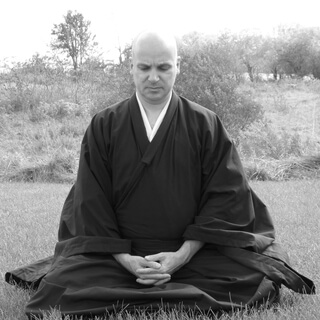
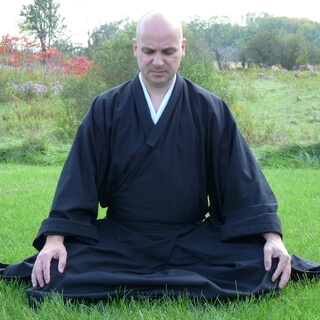
My Buddhist practice is based on the Soto Zen School of Buddhism,
Which is a Buddhist group within the larger Buddhist context.
Just like Christianity has several different denominations,
Buddhism has several different schools,
And the school that my practice is founded on is the Soto Zen School.
In Soto Zen,
One of the meditative practices,
If not the meditative practice,
Is called Shikantaza.
I have practiced Shikantaza for many,
Many years,
And with the help of many different teachers,
A lot of research,
And my own experience,
I have added to the practice of Shikantaza and have,
In my view,
Evolved the practice into what I now call Awareness Meditation.
For a person with autism,
Like myself,
Awareness Meditation restores balance,
And balance helps me better understand how I think,
And what I think,
And the impact of my thinking.
Even if you don't have autism,
Or any mental illness,
Being aware of how you think,
What you think,
And the impact of those thoughts will certainly decrease your suffering over time.
How does this happen?
Because you will be able to create a distance,
A gap,
Between you and your thoughts.
As an autistic person,
And in general,
I have reduced my suffering by being able to say,
And more importantly,
To believe that my thoughts and myself are not the same.
What I think and who I am are two separate entities.
We are not accustomed to that kind of thinking,
And many of us identify strongly with our thoughts,
So that our thought and ourselves are one being,
Which through Awareness Meditation you will discover is not the case.
For example,
If I am sad,
I accept sadness as being present in my mind.
I do not resist or reject it,
But I am also aware that it is not who I am,
But only an experience that I am going through.
And like all experiences,
They begin,
They are present,
And then they fade away.
And in hindsight,
We learn from those experiences.
This is very useful for people who have autism,
Or mental illness,
Or who don't have any of those conditions,
And that is to be able to recognize that your thoughts have no physical existence,
And that these thoughts are impermanent.
Also,
By being aware of the ego's functioning,
And aware of the mind overall,
You become less influenced by it,
And this will also decrease your suffering.
Over time,
When you become aware of how and what you think,
Awareness Meditation will bring you to a place where you can ask a very important question.
Why?
Once you are aware of what you are thinking,
The question might be,
Why are you thinking it?
One of the causes of our suffering,
Perhaps the most important cause,
Is that we think more frequently about negatives than positives.
And negative thoughts,
Unfortunately,
Often lead to negative behavior.
The process in our minds works like this.
Perception,
Thought,
Emotion,
Reaction.
Let me give you an example of how that process works in a real situation.
I'm sitting in a meeting,
And I need to go to the bathroom.
So I leave the meeting,
And when I come back,
I notice that someone is sitting in my chair.
First,
Perception.
There is a person sitting in my chair.
Then thought.
That's not right.
That is my chair,
Not their chair.
Emotion.
Anger.
Reaction.
Angry behavior.
Perception,
Thought,
Emotion,
Reaction.
That is the process that the ego goes through in assessing situations.
Unfortunately,
This process happens so quickly that there's no real gap between those four stages.
And with awareness meditation,
You will be able to create a gap between perception,
Thought,
Emotion,
And reaction.
So that the situation with awareness meditation might be more like this.
Perception.
This person is sitting in my chair.
Thought.
That's not right.
That is my chair.
Well,
Wait.
Is it my chair?
Is this really worth getting upset about?
Emotion.
I'm upset that the person is sitting in my chair,
But it's not really my chair.
So how upset can I really be?
Reaction.
I'll just let it go.
It is important to note that within ourselves,
We have functional and dysfunctional patterns of thinking.
The difference between the two is obvious.
If a pattern of thinking causes you unnecessary suffering,
It is a dysfunctional pattern.
Among other things,
Awareness meditation reveals how this pattern operates in your own mind.
And this is done by mental observation.
Let's examine that a little bit more closely.
Let's say you have a friend who lives in your neighborhood and who often spends a lot of time sitting in a chair observing the neighborhood.
You go to that friend and you say hello.
And the friend starts to tell you some information.
The friend says,
See that house over there?
In a few minutes,
A woman with brown hair is going to walk out of that house.
And she does.
Then your friend starts to tell you over there,
A car will pull up,
A man in a suit carrying a briefcase will come out and walk into that other house.
And that's what happens.
Your friend also says,
See those bushes over there?
A cat should be walking out of those bushes right about now.
And that's exactly what happens.
And you ask your friend,
How do you know this?
How are you able to predict the future like that?
Your friend is not predicting the future.
Your friend has observed a pattern that has been repeating itself over time to the point where your friend can predict outcomes.
The same principle can be done with the mind through mental observation.
And this type of observation done through awareness meditation creates a space where the mind can be observed without attachment.
In this space,
We learn to distrust our negative self criticizing thoughts because they do not represent a reality.
They are not a reflection of our true self.
Where we are more accustomed to following the ego through awareness meditation,
We learn to see and hear the ego.
We become aware of the operation of the ego and the mind,
The environment that the ego exists in.
In awareness meditation,
We follow three stages,
Which will happen over time more naturally.
But you may notice these stages when you first start awareness meditation.
Stage one is as you sit in your meditative process,
You become aware of the noises and sounds outside your meditative area,
Such as traffic or a dog barking outside or some people talking somewhere that you can barely hear,
But you are aware of that noise.
As you slowly move into stage two,
You become aware of the noise in your meditation area,
Perhaps your own breathing,
Perhaps some small noise that happens in the room you are meditating in.
And as you sink deeper into awareness meditation,
You become then aware of the noise of the mind.
You become aware of thoughts and you have visuals in your mind,
Things you can see that are the products of thought.
The more you practice awareness meditation,
The shorter the transition between these stages will be.
Through the practice,
As your awareness increases,
You will begin to see patterns,
Reactions,
Repetitive thinking,
Which I call fixation,
And how much time the mind actually spends in the past,
Which is regret,
And in the future,
Which is anxiety.
Remember that you are observing and if a thought captures you in it,
Don't resist that thought.
Don't ignore it.
Watch it.
What is this thought about?
When the thought is gone,
You may ask,
Where did it go?
If you experience a physical sensation during your meditative practice,
For example,
A itchy leg or runny nose,
Don't physically react to it,
Try to observe it,
Pay attention to it.
It amazes me that whenever I get an itch during my meditation practice and I pay attention to it,
So this is what an itch really feels like.
So this is the physical sensation of an itchy knee,
That over a very short period of time,
That itch just goes away by itself.
I don't know where it goes,
But it just disappears without me having reacted to it at all.
In practicing awareness meditation,
Be alert,
Be aware,
But try not to react.
If you have a disturbing or a powerful thought,
If it causes you to feel anxiety or fear,
Then I would suggest that you break the meditation,
Which is another way of stopping the meditation.
Remember that in this practice,
You are safe,
You are secure,
And you are in control,
Because those disturbing thoughts are not you,
And you were not the thought.
You are here,
You remain here,
And the thought is gone.
However,
It's important to note that sometimes in this meditative practice,
A disturbing or fearful thought can arise,
Which is very overwhelming.
And I would not recommend,
If you are new to awareness meditation,
To try to sit through that.
It may cause you some anxiety.
When you have that experience,
Once again,
I would suggest that you stop meditating and reflect on what the thought was.
Some questions you may wish to ask after an experience like that is,
Where did that thought come from?
How did it affect me?
And where did that thought go?
Perhaps an affirmation that can comfort you after such a situation where you've stopped your meditative practice might be this,
The thought arose,
I felt it,
It disturbed me,
It is gone,
I am still here.
In practicing awareness meditation,
Remember these three critical points.
The first one I call,
No desire.
In awareness meditation,
We're not wanting to gain anything other than awareness.
We're not trying to gain joy or serenity or peace.
We're not actively working towards a reduction in our suffering.
These things will occur on their own,
But we are not striving for them.
We are not aiming at them.
If we strive,
We will become attached to them,
And the goal becomes more important than the practice.
Point number two,
There's no goal here.
In this practice,
You have nowhere to go.
You are going to sit and what happens is what you will observe.
This is pure observation of the functioning of the mind.
And remember that what you observe is not you,
It's the mind.
Lastly,
And also very important,
Is there is no judgment in this practice.
There is no failure.
You cannot fail awareness meditation.
There is no such thing as a bad meditation.
The experience is just the experience.
Sometimes I will practice awareness meditation and I will note that my mind is preoccupied with several thoughts.
In some cases,
It is preoccupied with one or two thoughts through the duration of the meditative practice.
When that happens,
I don't resist it.
I accept it.
And when the meditation is over,
I say to myself,
Wow,
That was interesting.
My mind was really preoccupied with these thoughts.
That's good to know.
I wonder why these thoughts are so important to me or why that thought was important to me.
I'll pay more attention to that.
Once more,
If the experience of observing without reacting becomes too overwhelming,
Then stop the meditation.
Open your eyes or take a deep breath or stand up and bow and end the meditation.
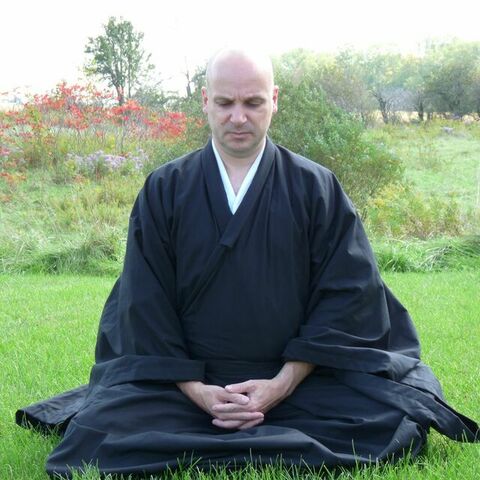
I should mention that awareness meditation is practiced with the eyes closed.
Ending the meditation because you became overwhelmed or uncomfortable with a thought is not a failure.
It is learning.
You became aware of your discomfort.
You became aware of how that discomfort was linked with thought.
That is progress.
That is important.
In part two,
My intention is to practice awareness meditation with you and see what we can find and learn together.
Once again,
Thank you very much for the gift of your time and I hope that you found something in this session useful and beneficial to you.