Hello,
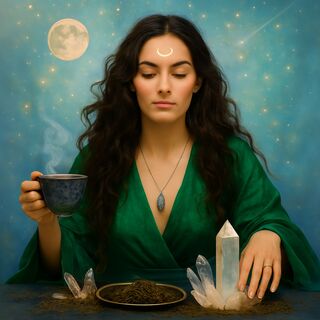
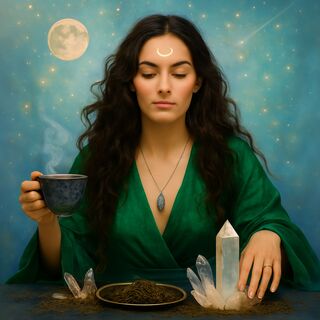
This is a track on herbal tea making and I'm going to give you a little introduction here on the history of it and then the next track will be a herbal tea blend for your chakras and we'll move through each of the seven chakras and create a different blend each time.
So pop the kettle on and pause this if you want and come back and settle down with your current favourite cup of tea as you begin your journey into the art of herbal tea blending.
Homemade herbal teas can offer so much more than just a thirst quenching drink,
They can change how we feel.
And here is a little history lesson on herbal teas and then we'll work through as I said each chakra to give you a tea blend to try and a little information on each chakra as we work through.
Across each continent we find a history of traditional herbal healing and in China and India herbs were and continue to be a pivotal strand of their ancient healing modalities.
Traditional Chinese medicine and Ayurveda also.
In both cases herbs are used to bring energetic balance to the body.
The ancient Greeks became very skilled in the use of herbs with influential figures such as Hippocrates and Galen using a holistic approach when choosing herbs.
In terms of blending tea we have a lot to thank China for.
Tea blending is thought to date back at least two and a half thousand years and there is a legend from China that tells us that Emperor Shennong accidentally discovered tea in 2737 BCE.
When he was sitting under a tree a tea leaf fell into his pot of boiling water.
A happy accident indeed.
And if we are to believe this legend of the divine farmer when tea leaves fell into a pot of boiling water,
The tea aficionados now would balk at the idea of a boiling leaf to make a tea.
Temperature control is one of several key elements involved in creating the perfect cup of herbal tea.
The brewing process is an important way to extract and preserve the flavour and active constituents of the herbs.
You should aim to use freshly boiled water with a temperature at pouring likely to be just below 100 degrees Celsius.
In a vessel such as an open mug the temperature of the water will drop significantly over the brewing time,
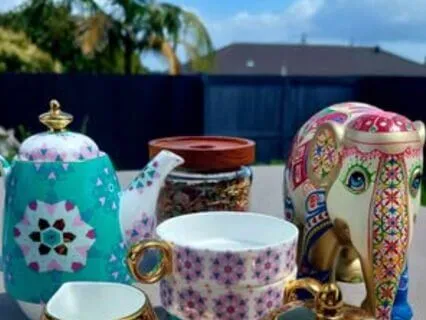
So ideally you should use a vessel such as a tea pot which helps to insulate the liquid inside more effectively.
This will keep the temperature up and enhance constituent extraction.
For me I like using a tea ball or a tea infusion pot when making my teas.
It's less hassle than trying to strain your tea after brewing.
And buying good quality dried herbs for your tea blend ensures you will end up with a blend that has colour vibrancy,
Great taste and therapeutic clout.
So that's just a little basic information about tea making,
But if you want to know more then you are more than welcome to contact me.
And the next track will be for the root chakra,
So keep an eye on it for it to be loaded and we'll love to hear how you go.
Namaste