Welcome to Inflection Point,
Conversations with women changing the status quo.
I'm Lauren Schiller.
Today on Inflection Point,
The goal of fundraising is to raise funds,
Right?
Very often money is the goal,
But money is literally just the gas that goes in the car.
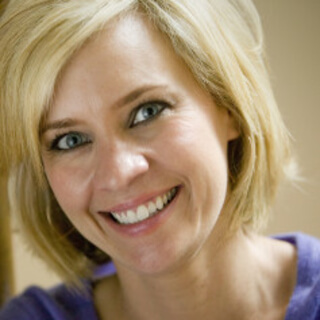
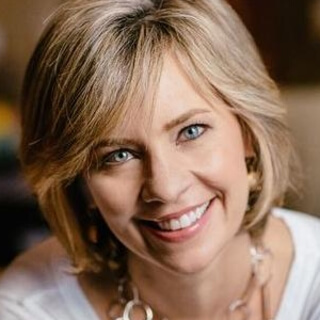
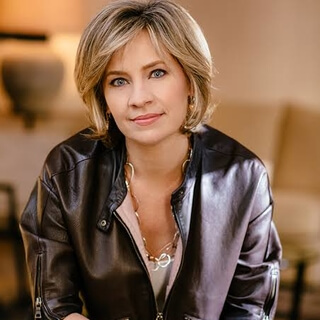
Jennifer McCray,
Fundraising expert and nonprofit leader.
That's today on Inflection Point.
Stay tuned.
Over $300 billion are given to charities and nonprofits each year.
Yet the job of raising all that money is often stressful,
Competitive and occasionally demoralizing.
So even if you're doing a whole lot of good,
Getting the money can feel kind of bad.
Jennifer McCray,
Who Bloomberg dubbed the billionaire whisperer,
Is a nonprofit leader and fundraising expert whose mission is to transform the practice of philanthropy.
She co-authored the book The Generosity Network.
She's a Henry Crown fellow at the Aspen Institute,
And she's chair of the MIT Media Lab board.
Plus,
She teaches a course at Harvard called Exponential Fundraising for leaders from the nonprofit and social enterprise sectors.
Welcome,
Jennifer.
Thanks.
Wonderful to be here.
Billions of dollars are raised every year for charities.
So what is wrong with the way we are doing fundraising?
Well,
The reality is we're actually leaving a lot of resources untapped.
And by the way,
I should say the word fundraising is a complete clunker.
I hate the word.
I kind of equate it with the word enlightenment.
Nobody really knows what it means.
Fundraising is so much more than just raising money.
Of course,
It is about raising money and moving money toward important causes and work that needs to get done.
But it's also about galvanizing people's networks and their time and their creativity and certainly their moral resources,
Things like capacity for risk and courage,
Which of course,
This work takes a lot of courage to keep doing day in and day out.
And so what's wrong with it is,
In my opinion,
I don't know if I'd actually use the word wrong,
But it's under leveraged and there are just so many resources that stay inactive because of the obstacles we put up.
And so my work is very much around helping people identify obstacles and remove them.
By the way,
I think all of life is like that.
It's flow or obstacles,
Flow or obstacles.
So how are you removing obstacles?
What do you like about the word fundraising?
Is it just because it's so focused on fund?
Yeah.
I think everybody sort of puts it into this category of it's just about money.
And of course,
It's not just about money.
We have to get all kinds of resources moving to get this work done.
So what are some of the ways that one could overcome these challenges and just have more flow?
I think it is constantly,
Constantly identifying what obstacles you're putting up.
And there are a lot of obstacles and we can unpack some of them if you want.
The biggest one,
Without a doubt,
Is our relationship with money.
We all have baggage around money.
Everybody does.
So trying to understand where our relationship with money can really get us stuck and understanding,
Most importantly,
In this space that money is just the gas that goes in the car.
It's not the car.
It's not the driver.
It's not the destination.
So we conflate it.
And so,
For example,
I was doing a board retreat pretty recently with a very well-known organization that was raising $10 million for some very important research.
And I got into the boardroom and sitting around at everybody's desk was this little fact sheet.
And I walked up to the head of the table to do my spiel.
And the first thing I noticed was they said,
Goal,
$10 million.
And I picked up the piece of paper and said to the board,
This isn't your goal.
Your goal is this incredibly important life-changing,
Life-saving research.
What it's going to cost is $10 million.
And so we conflate very often money is the goal.
But money is literally just the gas that goes in the car.
And when you put money at the center of it or you make it your goal,
There's always going to be implicit in that a power dynamic that limits your ability to actually have an authentic relationship between your funders and your organization.
And so the work is very much about getting money out of the center of the relationship.
So in the nonprofit world,
I feel like there's this sort of mentality that it's meant to be a struggle and it's meant to be really hard and you're for sure going to be underpaid.
And I can see how that might translate into the way the dynamic would work if you're then going out to extremely wealthy people or organizations and asking them for cash.
Yeah,
Exactly.
And,
You know,
The interesting thing is we're doing such important work.
And I tell people,
I implore people to go in standing up,
Never kneeling down.
We still have this old sort of,
You know,
Puritanical begging bowl mentality and feel like we're asking people to do a favor for us when we're inviting them to join in a really important cause.
So I started this nonprofit with the great music composer Quincy Jones.
And we were deciding we were bringing 90 organizations together that were bringing music to back to schools.
And we were trying to decide what to call it.
And we ended up calling it the Quincy Jones Music Consortium because the word consortium comes from the Latin word constari,
Which means to stand together.
And that's very,
Very different from the word client,
Which,
You know,
The Latin root of client is clientum,
Which means to lean against.
And I think very often we're creating partnerships in this space.
We're creating these relationships that are very client focused,
Which means we're negotiating all the terms of the contract up front and then we're trying to live up to it.
What happens if you don't live up to it or even if you do,
You know,
It lacks transparency.
And often,
You know,
I'll go into board meetings and you'll see like charts where everybody's just saying,
Oh,
Good news.
And the reality is,
Of course,
This is all a work in progress and we need to be creating authentic partnerships,
People standing together who are committed to creating change,
But they're also adaptive.
They're willing to take risks.
They're willing to say,
You know,
There is transparency,
There's mutual accountability,
All of those kinds of things.
And in a consortium,
It's just a different mindset.
What was your experience getting into this field?
I mean,
When you first started your career,
Were you trying to do this the old way?
You know,
I did.
I started,
You know,
Almost 30 years ago.
So I've been in this business a long time and I was working for my little liberal arts alma mater in Pennsylvania.
And I was very fortunate because I had a great college president and he said something that I still say today to any fundraiser,
Anybody I meet who's mobilizing resources,
You cannot raise money sitting behind a desk.
Just true,
You have to be out there actually having conversations with people.
And he said,
We're raising money for a new science building.
Here's the blueprint,
Go.
And off he sent me.
I had been out of Pennsylvania exactly once to go to Disney World with my family.
And he said,
You're covering New York City.
But I was undaunted.
I was really pretty fearless.
And so just went out and I was meeting with alumni and parents and friends of the college.
And it was the 80s.
So I had a really nice spiral perm going and some really awesome shoulder pads and the coach,
You know,
The hard coach briefcase.
And I would sit in.
I had one of those.
They were all our graduation presents,
Right?
And I would sit in these people's offices and make small talk.
And,
You know,
After a certain period of time would pull out the blueprints and say,
Your name goes here.
Don't you want to fund the science building?
And I was having absolutely no luck and wasn't even getting second meetings.
And so about halfway through the year,
I had made over an excess of 100 calls and visits to people.
And I was just absolutely despondent.
I thought I have to get a new job.
This is horrible,
Horrible work.
And so I,
You know,
Sort of I do remember dragging myself up Fifth Avenue.
You know,
My arms and legs felt like lead weights.
If you had those moments where you just feel like you absolutely cannot go on.
And I went back to my little nonprofit sized hotel room in Manhattan and said,
I have to get some something else to do.
I was a I was a philosophy and English major and did not know what I was going to do in the late 80s with that.
But I was sitting there thinking something's not really adding up for me because I do know that the people I'm meeting with care about education and science and innovation and technology and the leaders of tomorrow.
And I care about all these things,
Too.
So what's the disconnect?
And it became just it was sort of a very blessing,
A eureka moment where the disconnect was I was,
In fact,
Putting money at the center of the relationship and I was making it about the money.
And so I vowed from that day forward to never put money at the center of any relationship,
Because again,
Anytime the money's at the center of any relationship,
Not just certainly a philanthropist and nonprofit leader,
But,
You know,
Employer,
Employee,
Spouses and partners,
Parents,
You know,
Employer,
Anything,
You know,
Money's at the center of any relationship.
There's a power dynamic inherent in that,
Which is ostensibly whoever has the money has the power.
And whoever is looking for the money's in the supplicant position.
So by taking the money out of the center of the relationship and keeping always the work itself at the center of the relationship,
It creates an entirely different dynamic where it doesn't become about power.
It becomes about shared responsibility and shared commitment to change.
And you know,
And I'll just add that people always say to me,
So you're saying it's not about the money.
And I say,
No,
Of course it's about the money.
We have to get money flowing.
It's you know,
We have to get it flowing.
And it's a really important vital resource to an idea just stays an idea unless it gets resource.
So we have to get money flowing.
But it's not about money as the goal again.
It's about the work.
So did you having had this epiphany,
Then get yourself back out there and start having a different kind of conversation?
I did right away.
And you know,
Here I am 30 years later and I calculated at one point,
I think I've made like 8000 face to face visits in my my long career as a as a as a somebody who's always raising resources.
And never again did I ever fall into that trap.
And if I if I meet with somebody and I and I have to say really authentically,
Only only a handful of times have I ever met with somebody who I really fully believe is always going to try to keep that power dynamic going.
I won't work with that person.
It's just too hard.
It's just too hard to work with those people because in the end,
They're not really about the work.
They're about their own egos.
So just to give us an example of of what that conversation sounds like when you went out to test,
You know,
Did this new idea work?
So instead of your name here?
Yeah.
You know,
What's the offer?
First of all,
You know,
Now from sort of that moment forward,
One of the tiny shifts I made was I almost never meet in people's offices because there's a power dynamic inherent in meeting with people's offices.
And people will say to me,
How can you not these people are really busy.
Like everybody eats breakfast.
Everybody has coffee.
And as soon as you get out of that office environment and you can actually sit with somebody and not even for very long,
You have the ability to release,
You know,
Ask and answer and share.
And it's so much more so much less about pitching and so much more in a first meeting about really having an authentic conversation about what your story,
Why are you called to do the work you're doing?
Why,
You know,
Sharing why I'm called to do the work I'm doing,
How how we might collaborate and how does this person potentially fit into our consortium?
And it's really not about selling.
It's getting,
You know,
That that whole sales dynamic like out of the mix.
Now that said,
You know,
I don't wait very long to invite people to join.
And so I might not on a very first meeting,
But on a second or third meeting,
I will invite somebody to join because,
You know,
I'll be speaking.
I speak to philanthropists very often who will say I met with so and so,
You know,
Five times.
Clearly,
I'm interested in the work and they haven't invited me.
They haven't asked me.
And so I really firmly believe that we wait too long.
And you know,
We'll add that there's this myth that people get very need to be very committed and then they give.
The truth is people get committed in the act of giving.
And if you think about yourself,
You can,
You know,
Think of all the petitions you've signed and,
You know,
All the websites you've read.
But when you've written a check,
There's something about that actual act of writing a check.
You're more committed.
You've got a different level of commitment.
What resistance have you run into with this methodology?
I mean,
You've written a book,
You teach this in workshops,
You teach it at Harvard.
So what kind of pushback do you get?
You know,
It's interesting,
Very little,
Because this is all stuff we already know.
We know that we're doing important work.
We know we should be going and standing up.
We know we should be doing things like abolishing the word help.
I always advise people never use the word help.
Don't say,
Can you help me?
Say how can we work together?
Or you know,
More importantly,
Can you take responsibility for this?
You know,
You're inviting people to be part of this.
And so people know this.
And you're in the work because you care.
You want to create change in our world.
And so fundraising,
You know,
Is seen as this kind of necessary evil in support of the program.
But when you actually see it's very integral to the mission,
Because it's integral to getting your community built,
Your tribe built,
Then it's a very different kind of value proposition.
So in your workshops,
Or in your class at Harvard,
Can you give us an example of an exercise that you might do with the people who attend?
My class is very,
Very experiential based.
I really believe in kind of the discovery model of pedagogy.
So we do a lot of exercises.
But one exercise that just comes to mind,
In fact,
I'm teaching next week,
And we're doing an exercise.
I'm co-teaching with the head of a very well-known foundation.
And we're doing,
We're talking,
Having a whole segment on power,
And power dynamics.
And we're starting the exercise with,
You know,
Having people in groups of three talk about a time when they felt they were really disempowered.
And what did that feel like?
And what was the memory there?
And talk very specifically about,
You know,
This is sort of an old psychological bridge,
But you know,
Where were you sitting?
Do you remember what you were wearing?
Do you remember like what the feeling was inside of you?
And then conversely,
Talk about a time or think about or reflect on a time when you felt very much in your power.
And what did that feel like?
And it's interesting,
I've done this exercise many times,
And you can actually see people when they're just telling their stories in these small groups when they're telling the disempowered stories that their shoulders are sort of humping forward and their voices get low.
And when they're telling the empowerment story or the time when they felt in,
You know,
In their own power,
Their shoulders are kind of back and their voices are stronger.
And it's a good exercise to remember when you're going into conversations that this is about,
You know,
Being in a place of power because this is important work and power in the best sense of the word,
Right?
And so power to create change is a really important kind of power.
And so going in from that kind of a place is really important.
It also,
You know,
Really illustrates that only you can take your power away.
So the person on the other side of the table can never,
Ever disempower you.
It's only you that,
You know,
We're our own,
You know,
Worst enemies in this stuff.
SONIA DARA.
.
.
Where does gender fit into this?
So I'm just thinking about the way men and women fundraise.
Is there a difference?
Do women undervalue themselves and so they don't know how to ask for exactly what they want or what they think,
You know,
The cause is worth?
KIMBERLY PAPILLON.
.
.
You know,
I think there's a lot of issues.
I don't think it's just,
You know,
Gender issues.
So it's people how people grow up in terms of,
Again,
The relationship with money and with wealth and with,
You know,
Quote unquote,
Power and all of these things.
And so my experience is it's less of a gender issue.
It's more again,
And it's not even a cultural issue because a lot of my Harvard classes is very international.
I teach all over the world.
And people say,
Oh,
This is culturally,
You know,
Not going to fit.
It's too,
You know,
I just taught in Dubai.
And you know,
That is a culture where they were,
I came in with them saying to me,
This is going to be a tough,
You know,
Sale in terms of really getting people to buy into this.
And you know,
You do have to do some framing and getting people comfortable with the fact that this is something that is potentially new,
But that you're the leaders that could potentially take this on and do it differently.
And the,
You know,
The results and the feedback that I have gotten from doing this for many years is that it really isn't that big of a cultural difference.
We put these barriers,
Again,
It's an obstacle.
So it's an obstacle that we are constantly putting up.
And in terms of diversity,
To me,
You know,
The absolute most important kind of diversity is diversity of thought.
And so when I'm putting together a diverse community of people who are going to work together,
I want diversity of thought.
I want people who,
You know,
Are in that place where you have that very productive and constructive pushback.
So do you feel like women are just as good at asking for what they want as men are?
I'm just trying to get at this question because so much has been written about this,
You know,
But maybe it's a stereotype.
I don't know.
What have you seen?
You know,
I cannot honestly.
So maybe that's the best I can answer is maybe I don't see it.
So I feel like the arc of people's anxiety around this process isn't that much different between men and women.
Now what's actually happening out in the real world because I'm not going on all these meetings?
I don't know,
But I don't see a huge difference in my class.
What about in terms of donors?
There's some statistic out there about that the bulk of the wealth in America right now actually resides with women.
And so are there any things to be aware of in terms of who you're asking to work with in terms of what they want,
What women donors want versus what male donors want?
Again,
Maybe I'm creating a distinction that doesn't exist.
But what do you think about that?
Well,
I do think women probably are more natural collaborators and we're moving into a space,
You know,
Where for sure philanthropy and social change in general is moving out of this kind of old,
You know,
Support one single organization model to being much more about systemic change and figuring out how do you bring lots of multiple parties to the table from governments and nonprofit organizations and civil society and how you break.
And I do think women just have a much more natural sort of ability to kind of bring those kind of groups together,
Which is great.
And so in terms of leadership,
There's more I think there's probably more of an attraction for women donors to looking at that.
Although,
You know,
I work with many,
Many,
Many,
You know,
Male philanthropists and,
You know,
It's just the trend,
Which is an awesome and very important trend.
I guess one distinction I see is that a lot of the male philanthropists I work with are very much in that mindset of we've got a problem,
We have to fix it.
And I think women tend and again,
I don't want to overly generalize,
But I think women have again,
Because of this natural sort of innate ability to see integration and,
You know,
Sort of see things from a more whole perspective.
Don't say,
You know,
This is just about solving problems,
Although it is certainly.
There are real problems to solve,
But it's a bigger sort of,
You know,
There's this bigger question that we're solving for.
None of this stuff,
By the way,
Is disaggregated.
So even if you're working on clean water,
How could you possibly ever disaggregated from girls education or infrastructure or,
You know,
Any of these other things?
And so the more you're seeing kind of the fabric of integration and maybe it's not women versus men,
Maybe it's that sort of male versus male and female sides of ourselves that we all have.
When someone is going to work with you or I should say when someone's going to work with a nonprofit,
They've decided to make that commitment.
Does ego play a role in it?
You know,
How much does it matter that they have their name on the side of the building or,
You know,
What have you seen in that realm?
It's so funny.
We call it the edifice complex.
People want to name buildings.
So actually,
I'm not against naming.
I think,
You know,
People go for it.
You know,
Take a stand with your money.
What happens,
Though,
A lot of times when it becomes just about the naming,
It becomes,
You know,
A little bit of an ego contest of,
You know,
How big's the font?
How big's my font on the letterhead versus your font?
And who else is on the letterhead and where's my table?
You know,
How close is my table to the stage of the gala?
And that kind of,
You know,
Sort of ego based giving,
I think,
Create,
You know,
It's not usually very effective.
It tends to be pretty transactional and it doesn't necessarily allow for,
You know,
These deeper kind of growing issues that that growth issues that we have.
And,
You know,
I can't remember if we talked about this before,
But,
You know,
Pretty much across the board,
Humans have three basic buckets of needs.
We have safety and security needs.
We all obviously need food and water.
We have tribe needs,
Community and belonging needs.
And we have growth needs.
And the challenge with a lot of nonprofits is they focus only on the tribe,
Which is important,
Right?
Because you're building,
Again,
A consortium you're building.
You want to know who's my people,
Who are my people.
But if that's a group that's not growing together,
It's not learning together.
It's going to stagnate and it's going to get competitive and it will get ego will start to get in the way.
And so very much the leaders of the organization need to be thinking about how are we making this actually an opportunity for us all to continually grow and learn.
Just thinking about all of the different ways that what you have learned has manifested.
So you sit on a number of boards.
You teach this course at Harvard.
You give workshops.
You've written a book.
Did you realize what the opportunities for your own career were as you made this discovery sitting in that little nonprofit hotel room feeling discouraged?
Absolutely not.
And,
You know,
I had a pretty traditional fundraising background working in higher education for much of my career.
And then about 18 years ago moved to New York and started doing work with Quincy Jones and some others.
But I didn't,
You know,
It was definitely it has not in any way,
Shape or form been me sort of proactively designing this.
I feel like it's been like kind of endless allowing and just things are,
You know,
Are and just being in that growth mentality,
Feeling like just being very open to new,
You know,
New ways that this this content and this message can get out there.
And in fact,
I was just literally as I was walking in the door here on the phone with somebody from the for profit banking sector who is very interested in,
You know,
How do they create with their clients a different relationship with money and wealth?
So it's not so transactional.
What would you say is your general philosophy or mentality around letting these new directions into your life?
I feel like I'm incredibly non-systematic,
Which is probably not the best strategic way to be.
I feel like I'm pretty you know,
I get I get opportunities.
And if it makes if it seems like it makes sense and it feels like it can integrate into both leveraging the work,
Which to me,
Leveraging the work means both.
I call it exponential fundraising because I do feel like it's not only exponentially more resources,
But each person I touch,
You know,
Exponentially is touching more people.
And so I like that part of it.
And then also is it deepening my own practice?
And so this is why I still,
You know,
Actively serve on boards.
And you know,
I'm a sitting CEO of an organization because I feel like it's very hard to teach or impart any of this without actually,
You know,
Day in and day out actually doing the work myself.
So you probably won't be just picking one thing to do anytime soon.
Probably not.
Probably not.
So you're you're a Bay Area transplant.
I know.
I'm a recent from from New York City.
So how are you managing that change?
I'm still having to fly back to the east coast to Farah Mountain travel,
Which is a little more difficult to travel from here,
Here to Boston versus New York to Boston.
But it's wonderful and I love it.
I feel like the philanthropic community here is,
You know,
A buzz with with innovation and all kinds of,
You know,
Amazing things are happening.
And I've met so many already,
So many really incredible philanthropists and nonprofit leaders who are doing really good work.
That's been fun.
And then honestly,
It's just great to be out of the just the constant sort of assault of New York for a change.
And I'm actually taking very good advantage of all the beauty and nature and hiking.
Do you hold a meditation group?
Yeah,
I have a Sangha that I'm part of.
What is that?
So it's a group that and I've had I love groups.
So I have groups like crazy.
So many groups that I just think we totally,
You know,
Exist and mirror in the mirror relationship.
And so having communities come together to change the world and to just,
You know,
Deepen our own understanding of who we are as human beings is really powerful.
It's hard to do it on your own.
And so the meditation group is very much about holding each other,
You know,
Sort of semi accountable for meditation practices.
I started a,
You know,
Sort of an equivalent of this gathering 10 years ago that I had every month in my almost every month in my New York City apartment called Pure Sight,
Where it was just a gathering of friends that would talk about various things like we did one recently on what is time.
And in that conversation,
We had my 15 year old stepdaughter,
We had a New York Times journalist,
We had an actress,
We had a Buddhist monk,
We had a physicist.
So we had all these people talking about,
You know,
What is time.
And it's so interesting to see,
Of course,
Time is completely relative because to somebody on deadline or somebody who's like up against opening night versus a Buddhist monk or a physicist who says times a turn,
You know,
There is this thing is time.
It was just this fascinating conversation.
And so I think those kind of things are,
You know,
Just what make make my own heart sing.
You've written one book already,
The Generosity Network,
And you're working on a new book,
Right?
What's the topic?
The topic is sort of still in formation.
You know,
I'm still sort of delving into into it,
But it's really it's going much.
The Generosity Network had some of the kind of philosophical meta framing that but it was a very tactical book,
A very technical book on fundraising.
And this book,
I really want to dive much more deeply into money and meaning.
Well,
What's the best advice that you've ever been given about finding meaning in the money?
I don't know if this was advice,
Although I think,
You know,
You know,
The realization that money,
Like anything is,
You know,
Whatever lens we're looking at life through is how life actually is.
And so if you're looking at money through the lens of scarcity and power and control,
It's always going to be a problem.
If you're looking at money through the lens of the values like justice and love and commitment and change,
You know,
It's a whole different kind of conversation you can have around money and your own relationship to it,
How you ask people for it,
How you live with it.
You know,
It's interesting.
Somebody said once,
If you want to know everything about somebody,
Follow them around for a week and watch how they spend their money.
And I always thought that was a really interesting act of self reflection,
Because there are weeks when I'm not like at my best.
And there are weeks when I haven't.
So I think money is just so tied to our value system in such an interesting way.
I'm going to have to think about that this week.
Well,
Jennifer,
Thanks so much for joining me.
Thanks,
Lauren.
It's been great.
I'm Jennifer McCray,
A fundraising expert and nonprofit leader and the co-author of The Generosity Network.
That's our inflection point for today.
Is there a woman changing the status quo you'd like to hear from?
Let us know at inflection point radio.
Org.
And while you're there,
I invite you to become a patron of inflection point,
Like the Perkins group and Jessica McGinley,
Whose contributions are helping bring the voices and views of powerful women to the ears of everyone.
And you can too at inflection point radio.
Org.
Inflection Point is brought to you with the support of Girls Leadership,
A national nonprofit teaching confidence building skills that empower girls to make change in their world.
We're on Facebook.
Just search for inflection point radio.
Follow us and follow me on Twitter at L.
A.
Schiller.
And of course,
Visit us at our home base on the web,
Inflectionpointradio.
Org.
Inflection Point is produced at the studios of KALW radio in San Francisco and delivered to public radio stations nationwide through PRX.
Subscribe to our podcast on iTunes and Stitcher and give us a review.
We'd love that.
Our engineer and producer is Eric Wayne.
I'm your host,
Lauren Schiller.
Our engineer and producer is the fabulous Eric Wayne.
And I'm your amazing host,
Lauren Schiller.
Like that?
What do you mean by a different read?
Are you a subscriber yet?
If you like hearing my guest story and want to hear more stories of women who rise up and how they do what they do,
Use the podcast app of your choice and subscribe to Inflection Point today.
Thank you.
Support for this podcast comes from the Corporation for Public Broadcasting.