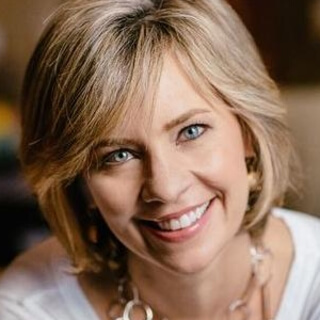
Dr.
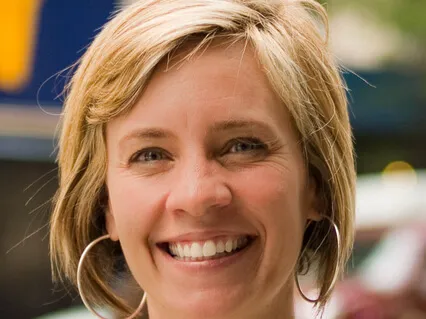
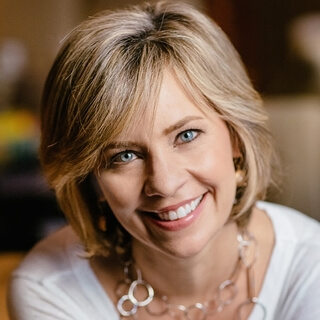
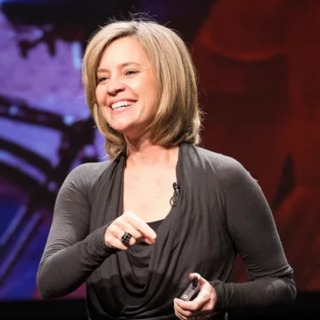
Jennifer McCray,
Who's here to talk ultimately about something I think all of us endlessly work to cultivate in ourselves,
And I really suggest that you read her abstract,
Which is a fanatic of Twitter and constraints spawning creativity.
I think she does a beautiful job.
And I'd just like to say you can follow her on Twitter as well.
She's mcrayjennifer1,
And two of the quotes that I'd love to introduce you to her with are things that she's re-quoted,
She talked about Dalai Lama saying,
Practice a policy of kindness.
And then since we get to hear about her work and the generosity network,
Her book that's outside,
I think another tweet that she wrote in her own words,
There is calmness to a life lived in gratitude.
Thanks.
Well,
Good afternoon.
Wait,
Let's try it again.
Good afternoon.
Good afternoon.
Good afternoon.
Good afternoon.
Good afternoon.
Good afternoon.
Good afternoon.
Good afternoon.
I feel like I was going to say,
Usually if I'm doing the closing of anything,
I usually say I know I'm between you and drinks,
But now I feel a little anxious because of our various conversations this afternoon,
But so be it.
So anyway,
I am so thrilled to be here.
Thank you,
Larry,
And all of your colleagues for having me join with you.
I'm really thrilled to be here to hopefully seed some dialogue around the world that generosity,
Philanthropy,
Money,
Influence,
Power,
Goodness,
Kindness,
All of this stuff intersects with our work.
And so my absolute,
And I have no slides,
So you have to bear with me.
I am very anti-slide.
I don't know.
You have to tell me later if you think I'm wrong on that.
But in any event,
I started my career almost 30 years ago.
I used to make a joke that I know what you're thinking.
I started when I was 14,
But nobody laughs anymore.
So I just go with it.
But after all of these years of being in this sort of social change,
Philanthropy,
Fundraising sector,
It became clear to me that my underlying theory of change is this,
That there are ample resources out there.
And when I say resources,
I never just mean money.
I mean money and time and networks and people's creativity and certainly our moral resources,
Resources like courage and our commitment to risk and the ability to make change.
There are ample resources out there to get the work done that we wanna get done in this world,
But they just stay inactive because of the obstacles we put up.
And by the way,
I think this is true in life in general.
I think life is about flow and obstacles,
Flow and obstacles.
So when we're mindful of what obstacles we're putting up,
Both in our life and in our work,
We have the ability to open up these gateways for resources to flow.
And without a doubt,
The absolute number one most pesky obstacle that we have is our relationship to money.
So I thought I'd take today and spend some time unpacking the obstacle of money.
Now I've worked at every level of the socioeconomic spectrum.
Bloomberg Magazine gave me this sort of dubious title of the billionaire whisperer.
And I do work actually with a lot of very high net worth people on their philanthropy.
And I also have worked for many years,
Over 20 years in extreme poverty eradication.
So I've worked on every level of the socioeconomic spectrum.
And I can tell you one universal truth and that is everybody has a dysfunctional relationship with money.
Everybody does.
And so when I share some of these stories,
I think hopefully you'll see yourselves in some of them.
So I teach a class in Boston and I was there last week and we were doing some work around our very early conditioning around money because the truth is a lot of our relationship with money is grounded in our very early kind of conditioning and family dynamics around money.
And so people are telling stories.
And I shared a story of a time when I started babysitting when I was 11 years old.
Now I don't know about you,
But how many of you have kids?
How many of you would now let an 11 year old babysit your kid?
You would?
I think back and think,
Whoa,
That was like the 70s when people did that.
And I was.
.
.
Not only was I babysitting at 11,
I was babysitting three kids under six at the time.
This was the Swisher family.
And so I babysat that family all day long one day.
All day I was babysitting them.
And at the end of the day,
Mr.
Swisher came.
.
.
Both of the Swishers came home and Mr.
Swisher handed me the most money I had ever got.
And I was so excited.
I had never gotten in my entire life.
It was a $20 bill.
And I was so excited.
And I put it in my corduroy pants and they lived at the end of a long cul-de-sac and I walked back up to my house all along dreaming about what I was gonna buy with that $20 bill.
Most memorably,
The new Olivia Newton John CD.
I really wanted that.
But anyway,
Somewhere between the Swisher's house and my house,
I lost that $20 bill.
And I was devastated.
And it's funny because that's the way money works a lot of times when we think about it as a limited commodity.
We think,
That's the last $20 bill I'm ever gonna have.
And so I was just.
.
.
I actually organized a search party.
I had two sisters and they went out with flashlights and we had our camping headlamps on and we were looking through all the bushes.
And then the next.
.
.
We didn't find it.
The next morning we were looking through all the bushes.
I never found the $20.
I don't know about you if you ever lost money,
But for the next two weeks,
Every single thing that I wanted to buy,
I was like,
I could have bought that with that $20.
I could have bought that with that $20.
So after about two weeks of lamenting this,
My father.
.
.
And I grew up in a very modest blue collar part of Pittsburgh and my father sat me down and I was on the couch and he was on a chair and there was a table between us and he looked at me and he said,
I know this has been really painful for you.
I know this has been really hard that you've lost this money.
And so he took out a $20 bill and I was so excited because I thought I'm gonna get this $20 bill back.
And he ripped it up into little tiny pieces of paper and he dropped it on the table and he said,
This is just literally just a piece of paper.
It is only gonna have power over you if you let it.
And so actually I was thinking about having you all take a $20 bill out of your wallet and rip it up.
But then I heard it's actually against the law that the feds don't actually like us to rip up currency.
But if you can imagine yourself taking any currency out of your.
.
.
And how attached we are,
How attached we are to money,
Even though it's just a piece of paper,
How attached we are to it.
And so my first lesson with money is money only has power over you if you let it.
And maybe if that's too extreme,
Money certainly has a lot of power over you if you let it.
Fast forward 10 years,
I got my very first job out of college and that was as a fundraiser for my liberal arts alma mater,
A little college in Northwestern Pennsylvania.
And I was very fortunate because my college president had himself been a fundraiser and he said,
Very wisely,
I still believe this,
You cannot raise money sitting behind a desk.
He said this I think sitting behind his desk,
But nevertheless,
He said,
We are raising money for a new science building.
Where are the blueprints?
Go out and make 350 face-to-face visits this year.
By the way,
You're covering New York City and I had been out of Pittsburgh exactly.
.
.
Out of Pennsylvania exactly one time to go to Disney World.
He said,
You're covering New York City,
Go.
And I thought,
I know money doesn't have any power over me if I let it.
I'm gonna be awesome at this job.
And so I just jumped in and I was calling on alumni and parents and friends of the college and I'd sit in their offices and I'd make small talk and after a few minutes,
I'd pull out the blueprint and I'd say,
Your name goes here.
And I was having no luck.
I mean,
Absolutely no luck.
I wasn't even getting second meetings with people.
And I was so despondent and about halfway through the year,
I remember this moment is so emblazoned in my mind,
I was walking up Fifth Avenue toward my little nonprofit-sized hotel room in New York City.
And I felt like,
Have you ever been so tired that you feel like you have sandbags on your arms and on your legs?
And I was dragging myself back up to my hotel room and I sat down on my bed and I thought,
I've got to get a new job.
I have to get a new job because fundraising is a terrible job.
And I was a philosophy and English major trying to think,
What would I do with that?
And then I had this epiphany.
I really did.
Sitting that long ago in my hotel room in New York,
Something was not adding up to me.
Because I knew for a fact that the people I was meeting with,
They cared about science,
They cared about education,
They cared about technology,
Innovation,
They cared about the leaders of tomorrow.
And I cared about those things too.
So where was the disconnect?
And it became really clear to me that the disconnect was that I was putting money at the center of the relationship.
And anytime you put money at the center of any relationship,
Not just philanthropist organization,
But I would say between spouses and partners,
Between parents and children,
Between employers,
Employees,
Between friends,
Anytime money is at the center of any relationship,
Implicit in that is going to be a power dynamic where whoever has the money ostensibly has the power and who's ever looking for the money is in the supplicant position.
So I made a decision on that day to never ever again put money at the center of any relationship,
That I'm going to keep the work itself at the center of the relationship or outside of a fundraising kind of sales kind of relationship,
Just keep the relationship itself at the center of the relationship.
And so my second lesson was never put money at the center of a relationship.
But this is hard to do,
Right?
So I actually co-founded this organization called Born Free.
We're working on eradicating mother to child transmission of HIV.
I co-founded it with a very well-known and really wonderful philanthropist who happens to be a very senior guy in private equity.
And he was great.
He was a fantastic partner to start a nonprofit with because he would go out to places like Davos or,
You know,
CEO conferences and he'd talk about business,
But he'd say,
What I really want to talk about when I'm really passionate about is global health.
And so it was great because he would come back and he'd set up meetings and we'd go together to meet with people and we'd make some small talk.
And it would get to the time where we had to make the ask.
And even though they were socioeconomic peers,
Right,
So even though he was asking people who were his peers,
I would argue separately that a peer is not necessary,
A socioeconomic peer,
But these were socioeconomic peers.
He would get to the place,
He'd be very excited about talking about the work we were doing and he'd get to the point where he wanted to make the ask and he'd say,
Can you help us do this?
And you could actually physically feel like this wall going up between people and we weren't having much luck.
And so after a couple of meetings,
He said,
Okay,
Debrief with me what's going on?
Like,
Why is this not working?
And I said,
I think it's because you're using the word help.
And the word help is putting you in the supplicant position again.
And so what if you changed your language?
And by the way,
I would implore all of you to try to get the word help out of your lexicon because help,
The world does not need our help.
The world is not weak.
The world is actually very strong.
It needs for us to be part of it and to serve it.
And so I said to John,
What if you started to change your language to say,
How might we work together?
And it was a very,
Very different conversation when he started to say,
How might we work together?
And so I started another nonprofit many,
Many years ago with the great music producer,
Quincy Jones.
I don't know,
All of you,
I suspect know Quincy.
And we were working on a collaboration to bring 90 organizations together to bring music to kids.
And we were sitting around the board table deciding what to call it.
And we called it the Quincy Jones Music Consortium.
And we called it that.
We knew we obviously wanted to use Quincy's name for obvious reasons,
But we called it the Quincy Jones Music Consortium because the word consortium comes from the Latin consort,
Which means to throw your fate together,
Which means to stand together.
And when I think of the work that I'm doing is I'm looking for a group of people who are willing to stand together to make change,
Which is very different than how we often do this work,
Which is much more of a kind of a client mentality.
And the word client comes from the Latin word clientum,
Which means to lean against.
Now to me,
That's a very fragile place to be.
And in a client relationship,
Typically,
You're negotiating all the terms of the contract up front,
Right?
And then you're trying to fulfill those terms.
Now,
The challenge with that is that the world changes.
And if you're creating a relationship with a client,
You get very afraid to be transparent.
You get very afraid to tell hard truths because you have basically sold a bill of goods.
And I get so frustrated when I go into board meetings and I see these graphs that people put,
Oh,
Good news.
Because if I'm in a consortium,
I want people who are standing together and actually trying to understand and grapple with these hard problems together and not be afraid that we're going to lose somebody because we sold them a bill of goods.
My good friend,
Jed Emerson,
Who some of you know,
Who actually was the guy that coined the term impact investing,
Calls it the dance of deceit,
Where funders are so willing to say whatever they think,
Or grantees are so willing to say whatever they think the funders want to hear.
And similarly,
The funders play into that.
How do we transcend that?
We've got to transcend that.
It's time that we're building consortiums and not clients and groups of people that are standing together.
And in that regard,
I always say when I'm teaching or training or working with people,
I say you need to start with the question not what's my issue,
But who are my people?
Because issues divide us.
First of all,
Take a guess at how many.
Just in the US alone,
How many nonprofits are created every month in this country?
Every day.
Let me say every day.
Ninety-six nonprofits are created every day in the United States.
And this stat,
By the way,
Is pretty.
There's over almost two million nonprofits.
That doesn't even include social enterprises.
Same stats in India and China and Africa,
The equivalent.
There's just this abundance.
And such,
Such,
You know,
That's a whole separate conversation we won't have today about how that there are too many of them.
But regardless,
We're all doing,
In my opinion,
Most of these nonprofits are doing very,
Very good work.
But for me to come in and say that my issue is more important than your issue is really not.
A,
It's probably misguided.
And B,
All of these issues are integrated.
None of this stuff is disaggregated.
So while I'm working on HIV,
I also fundamentally know that HIV is in no way or shape or form disaggregated from girls' education,
From the environment,
From extreme poverty.
This is all deeply integrated.
I was doing a training for the Nature Conservancy.
And like this half of the room was the trees people,
And this half of the room was the oceans people.
And they were knock down,
Drag out,
Fight over which one was more important,
Trees or oceans.
Issues divide us.
Issues divide us.
Does that mean you don't have a strategy and you don't have an issue and you don't have a,
Of course not.
But if you start with that,
It's a much harder place because then you're selling,
You're trying to sell people on why my issue is more important than yours.
So again,
You're starting from this place of who are my people,
Who are the people that share the values that we have as an organization and that are gonna stand together to create change.
And in that way,
When I invite people to join with me,
And I've built lots of organizations and I've worked with lots of organizations,
I ask people,
Again,
Never to help me but to take responsibility.
And again,
It's a very different dynamic when you're saying to somebody,
Not can you help me make 10 calls,
But will you take responsibility for 10 calls?
Because then you're in,
You're part of it.
And so how do we keep,
How do we make these tribes,
These communities,
These consortiums really vibrant?
There's an exercise that I do a lot of times.
We don't have time to do it here,
But there's an exercise,
It's just sort of a thought experiment that I meant,
Some of you may have done it in the past,
But I do it whenever I'm teaching.
And I've done this exercise literally all over the world.
And the thought exercise is this.
So you can kind of think of it in your own mind quickly.
But the thought exercise is your planet is dying.
You're gonna be transported to a new planet.
All of your basic needs will be met.
You can take three non-basic needs.
What are they?
Everywhere I've taught this,
And again,
In China and India and Africa,
My Harvard class is mostly international,
Certainly lots of places here.
The answers are all the same,
And I bet all of you have had,
Have the same answers going through your head.
You're gonna take your families,
Your friends,
You're gonna take books,
Music,
Running shoes,
Seeds,
Something.
Because we all as human beings,
All of us have three basic buckets of needs.
We all have,
And Alex alluded to this a bit,
We all have obviously our safety and security needs.
And so obviously,
And clearly if those aren't met,
That has to be our highest priority.
For this purpose of this experiment and for the purpose of the conversations we're having in kind of the larger philanthropic sector,
We're taking that off the table.
We also have tribe and community needs.
It's really important that we're part,
We as human beings need to belong,
We wanna belong,
We wanna be part of a community.
But we also have growth and learning needs.
And the challenge with a lot of communities,
And I don't know about you all,
But I've been in some,
If you're not learning and growing,
That tribe starts to stagnate.
You start to get a group that's passive,
They aren't showing up,
There might be herd mentality,
There might be ego,
Where does my name go on the letterhead?
Because if it's just about the community,
If it's just about the tribe and baked into that,
Isn't this opportunity to learn and grow,
It's not gonna be a vibrant,
Thriving community.
De Tocqueville,
When he came here to the States to understand,
At the sort of dawn of the country,
Really understood,
Understand what was it that made the United States so uniquely able to galvanize volunteers and voluntary organizations?
And it was interesting.
A quote that I really sort of live by myself is this.
He said,
The mother of all knowledge,
To me that's pretty profound,
The mother of all knowledge is the art of combining.
And so to me,
Thinking about how you're combining your communities in new ways,
How you're giving people the.
.
.
Because all the time,
What I hear too when I'm working with boards or donors or any communities,
We need new people,
We need new people,
We need new people.
And the reality is,
Sure,
Of course,
But you also have a community,
Very likely,
That just has lost some of its ability to combine and to grow together.
All right,
So money only has power over you if you let it.
We need to get money out of the center of the relationship.
The third lesson is that money is just the gas that goes in the car.
Money is not the car,
It's not the driver,
It's not the destination.
I just did a workshop a couple of weeks ago for a great organization that was raising money,
About $10 million for a really important research project.
And they asked me to come in and speak to the board about it.
And I got in and there were like fact sheets around everybody's seat.
And I walked up and I looked at the fact sheet and I picked it up and it said,
Goal,
$10 million.
And I said,
That's not your goal.
Your goal is this life-changing,
Life-saving research project that's gonna fundamentally,
Hopefully change and save a lot of lives.
What's it gonna cost is $10 million.
Now we conflate money as the goal and this is part of our challenge as a society,
Right?
Michael Sandel writes so beautifully about this at Harvard.
When he talks about we've moved from a market economy to a market society.
I've heard this a lot through this conference.
And so that everything,
Education doesn't become about learning,
Medicine doesn't become about healing.
Law doesn't become about justice,
It becomes about money.
So if we can kind of start as leaders in this room and others to start thinking about money as just the gas that goes in the car,
Not the end game,
It can help us reshape and reframe the ability to be in this space in a different way.
The last kind of lesson I have is really twofold.
One is that we have to understand our own relationship to money.
We need to spend time asking some of these hard questions.
Where do we get stuck?
Where does it keep us from really moving forward?
And one thing that I ask myself a lot is what values am I infusing in money?
Because if I'm infusing values of scarcity and power and control,
It is always going to be a difficult thing in my life.
If I'm infusing money,
Which is just an energy source,
Which is just currency with values of justice and care and love and courage,
It gives me a different frame and then it gives me a different frame to invite other people.
Because I say to people,
When you're in conversations,
When you're building your consortium around your important work,
Go in standing up,
Never kneeling down.
We still have this like begging bowl mentality and that comes back to that power dynamic.
So go in standing up and when you remember that money is actually,
Could actually be a powerful source of change,
You know,
Unless we fully move to a gift economy,
Which I don't think we're going to do,
Money is an important resource we have to get moving.
Because people say that to me all the time,
So you're saying this isn't about money.
And I say,
No,
Of course it's about money.
It's just not about money at the center and it's about money and its proper role.
And in that regard,
I guess I would say the last thing is that money can buy anything but meaning.
And our lives are so incredibly full of meaning and we just miss it because we're not looking at it.
And so,
In fact,
I did a workshop maybe,
I don't know,
It was about a month ago with these very high powered,
I moved to California about six months ago.
And it was this very high powered group of Silicon Valley CEOs,
All of whom doing amazing philanthropic work.
And they were all talking about how stressed out they were,
How burned out they were.
And I said,
What do you do to renew yourselves?
What do you do to restore yourselves?
And they said,
Well,
You know,
We go on vacation,
I'll go to a spa,
I'll,
You know,
Take some time away,
I'll meditate.
It was so interesting to me because not one person in that room,
Not one person said they turned to the work itself as a place for renewal and restoring.
And it was interesting because I then recounted a story.
I came home,
This was,
I don't know,
15 years ago from a very long,
Very arduous trip to Africa.
It was one of those multi-layover things and I,
You know,
Finally got through,
This was pre-global services.
I think this would be like wheels on suitcases,
Which is a whole separate topic.
You know,
I got through,
I finally got through customs and I got to JFK and there was this long,
Long,
Long,
Have you ever been to JFK after a long trip and there's this long taxi line and I just wanted to be back at my apartment so badly.
So finally after what seemed like an eternity,
I got to my,
I got to the,
To the cab and I opened the cab door and there was something like immediately different about this taxi.
There were these absolutely beautiful Persian carpets lining the floor of the taxi where my feet were to go and I could hear this ethereal sitar music playing and my cab driver had a long white beard and a turban and he,
Instead of just kind of,
You know,
Saying nothing,
Which is what most New York City taxi drivers do,
Or like just looking in the mirror saying where are you going,
He turned around and looked at me and I remember he had these beautiful blue eyes.
He looked at me and he said,
Where can I take you?
And I just felt my shoulders drop and I said,
You can take me home.
And he said,
I will drive you as carefully as I would drive my own daughter.
And that story meant so much to me because I thought if something as stressful,
I mean,
There have been studies that New York City cab drivers are like among the most,
They're probably up there with physicians,
The most stressful jobs out there.
If this man can find his work as a calling,
If he can see his work not just as a job but as a calling,
That he had this privilege to actually provide safe passage with people,
Why can't we all do that?
And so there's,
You know,
There's some really interesting studies out there on,
You know,
The difference between a job,
A career and a calling.
And a job is,
You know,
Something that we do and by the way,
We all have aspects of all three,
Which is totally fine,
But it's like always a question of what balance.
So a job is,
You know,
Where you're making,
Doing work to make money to go do other things in your life.
A career is obviously something that's measured sort of by external validation,
By your promotions,
By how you're getting paid,
All of those things.
And a calling is what that taxi driver clearly was in.
A calling is something that you are deeply,
That's tapping into your deepest sense of self and purpose.
And we all,
All of us,
Our work has elements of calling in it,
But we forget.
And so there's data on if your job is more than 50% job and career,
You're going to be stressed out,
Burned out,
Fatigued,
You're going to be up on one of your charts having all kinds of chronic illnesses.
But if you can remember and again,
This is nothing has to change.
The beautiful part about all this is nothing has to change,
Just your experience of it has to change.
If you can start to look at your work as a calling,
Then suddenly you can reframe the whole experience of it.
My favorite quote of all,
I have it posted on my bathroom mirror is the famous quote that most of you know from Proust which is the journey of discovery lies not in new vistas,
But in having new eyes.
And it's so true because in the ability to just have new eyes in the work that we do and the experiences of our life,
We can really shift away from this constant fatigue and burnout and knowing that we're doing something really valuable and important.
And so when my kids were little,
I'll end with this,
When my kids were little,
We had,
And I learned this from a great healer physician called Rachel Raman who some of you may know.
And so Rachel taught me this many,
Many years ago and we adopted it and modified it for our family.
And I still do it really every single day and it's a really simple self-reflective exercise and I call it SIM,
S-I-M.
And so at the end of every day,
So when the kids would come from school,
We'd sit around the dinner table instead of saying,
You know,
How was your day?
Fine.
We'd say nothing.
We started inviting them to answer this question of SIM.
And SIM stands for something that's surprised,
Inspired,
Or moved you.
And it was amazing because even as little tiny kids,
When they were talking about something that surprised,
Inspired,
Or moved them,
They were usually talking about human connection.
And so at the end of every day,
At the end of a meeting,
At the end of a conference like this,
I will go back and very,
It's similar to reflecting on generosity.
It's this active,
Actively reflecting on how much meaning is in your life but you miss it because you're not reflecting on it.
And so the simple five-minute exercise can transform your entire experience of your life by just saying,
What today surprised,
Inspired,
Or moved me?
And it's interesting because sometimes people say,
Well,
Nothing.
Nothing did.
But I guarantee if you go over your day like a journalist and just think of these moments,
These little tiny moments that you would have missed,
There's so much meaning and so much beauty in them.
So I just want to end with a quote from Mother Teresa.
This is actually my favorite quote of all.
And she said,
Because I also believe in addition to the fact that the world does not need to be helped,
That that implies that the world is weak.
I also don't believe that the world needs to be fixed.
That doesn't mean there aren't problems to be solved.
But fixing also implies a deep brokenness.
And so Mother Teresa said,
We serve the world not because it's,
I serve the world not because it's broken but because it's holy,
As in whole.
And so I just want to thank everybody for bringing your whole selves to this conference,
To this conversation,
And to all the really hard work you're doing.
It takes a lot of courage.
And I really am grateful.
So thank you.
Other questions or comments?
Or do I leave everybody speechless?
Nice.
That's good.
We have one up there?
Do you want to?
Do you want to get the camera?
Thank you.
And so I'm an entrepreneur,
I have been,
And now I work in an innovation group at a hospital.
So a lot of times we're talking about spinning things out,
And entrepreneurship,
And innovation is such a hot topic.
But having pitched an awful lot of investors and had no say to me many,
Many times,
It is a money argument.
So do you have any tips for entrepreneurs or people in an entrepreneurial innovation type world now to have that conversation?
Because fundamentally,
When you pitch a VC,
It is about money.
Yeah,
You know,
It's interesting.
I do as much work,
I do a lot of work with like HBS.
I taught at Wharton this year.
I did the Kleiner Perkins CEO Conference.
I do a lot of work with people who are in the social change space,
But not necessarily just in the nonprofit space,
But are in the social change space who are needing to mobilize resources.
And so I would say,
You know,
It's so much about relationship building and breaking down those beliefs that there's this power dynamic inherent into these conversations.
And so again,
If you can keep the work at the center of the conversation and make it not about the money as the victory,
But the work or the ability to create this plan together as the victory,
Then the money again just becomes the gas that goes in the car.
Because as soon as we make it the car or the driver or the destination,
Then it gets like everything gets off track.
And so and I really don't even like the word pitching,
Because I feel like it gets us into the sales.
My first blog that I ever wrote was fundraising isn't sales.
And I got this big pushback,
Everybody's like,
No,
Sales.
So authentic sales,
Yes.
Authentic sales,
Yes.
And so I think that's the thing in that you're trying to again say,
Well,
Here,
I have the best idea on the planet.
And here's why you should fund me is a very different conversation with somebody when you're going in and actually practice with people.
We spent a lot of time in my classes practicing with people.
How do you tease out much more authentic,
Vulnerable conversations with people?