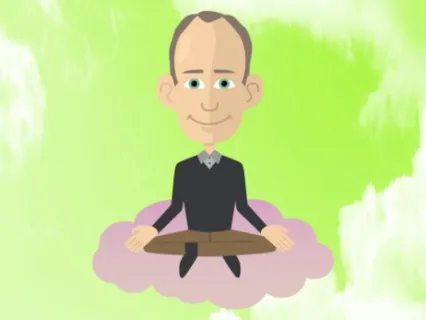
One of the key foundations of mindfulness is to simply learn to sit,
Noticing what's happening while it's happening without judgment and developing a regular time to just sit,
Reflect and to just be in the moment.
It can be quite difficult for a vast majority of us.
We spend a lot of our time not really in the moment.
We're lost in illusion,
Covered by delusion,
Created by ourselves and created by others around us.
And so by just taking the time to just sit and to settle the mind,
Become grounded in the body and to become aware of the space around us,
We allow more time,
Space,
For thoughts,
Emotions,
Feelings to arise and we can pay attention to these.
We can learn from them,
We can study them and how they affect our thinking,
Our thoughts and emotions,
But most importantly we can learn to release them as they arise.
And this key practice is done very much in the grounded sitting posture of what some might call meditation,
Formal mindfulness practice.
And within this practice there are three key steps.
First of all we join the practice from our busy lives and so quite naturally our minds will be busy,
Our awareness will be displaced as it were.
And so by sitting and setting an intention of the reason why we do this and the motivation of what the benefits are from doing this,
We slowly sit,
Breathe and focus all of our attention on breathing in and breathing out.
Some people like to count,
Perhaps to a count of three or four and others may just use a phrase such as breathing in or breathing out on each out breath.
By focusing our attention on the breathing and the counting we slowly train our minds to gather in its awareness.
It shows the mind how by focused attention we can train gently and kindly for the awareness to gather itself in around the breath.
And so takes us to a slightly different state of mind which is less distracted.
And of course as thoughts,
Emotions and feelings arise we can always return back to this focusing of attention on our breathing as a place that's completely here,
Now and in the moment.
Now we may spend two or three minutes and longer doing the settling phase and then we gently move to focusing our attention on the out breath,
Slightly elongated and we can notice how it triggers sense of release within the body as we exhale and we can after a few moments moving our attention to the body just with a regular breathing pattern and by returning our focus to the body we also become aware of what's present right now within the body,
Areas of tension or areas of comfort.
We may notice areas of pain or some areas of warmth and change of temperature.
All of these allow us to focus our attention here,
Now and in the body.
Another distraction for the mind,
Another way of training the mind to become focused and attentive and focused.
We also notice how our bodies sit on the chair or the cushion and all this focus directing our attention to what's happening right now.
We can encourage ourselves to allow ourselves to give permission to be with the sensation of just being held by the support of the chair or the cushion and encouraging ourselves to allow a sense of giving in,
Allow a sense of self release into the seat with our bodies.
And the third important stage of this practice is once we're sat and comfortable,
Aware of our breathing,
Aware of our bodies,
Then we can direct our attention outwards towards the outer world,
The space around us.
This again changes our focus from a zooming in effect to a zooming out,
Training our mind to be in the present as it changes its focus and becomes more aware of the things around us,
So sensations of air pressure,
Sensations of warmth or cold,
Others in the room with us opening up towards them and ourselves,
More allowing.
And as we just sit with nothing to do and nowhere to go in this moment,
We've got nothing to achieve,
Nothing to strive for,
We then move into a sense of just resting.
Now the resting stage,
One of the most important stages,
But without wanting anything to happen,
Just sitting there,
Allowing whatever comes to just come and arise,
Meeting whatever arises with compassion,
Patience and tolerance and a curiousness,
Just noticing what it is,
Where it is,
How it is and allowing it to be there.
And the allowing again trains the mind into becoming less reactive,
More inclusive,
More curious and more kind and compassionate to ourselves and to the things that may arise in us.
Now we can vary this practice for short lengths of time to longer,
Stretch them over periods of time and as we become more practised in this towards the end of each and every meditation or practice,
We can then bring other ideas into play.
For example,
We could bring a sense of gratefulness and love for others around us.
We can generate love and kindness for ourselves.
But what's most important to this practice is a sense of being kind to yourself,
Taking time out to get to know yourself,
To slowly and very gently allowing issues,
Problems,
Good things,
Bad things,
Perceptions,
Illusions,
Just to arise and to percolate as it were in a consciousness,
In front of you so that you can see them for what they are,
Learning to be just as you are and just to sit and allow and to let go.
And with this learning,
With this letting go,
We train our mind to be able to self-release.
The idea of self-releasing thoughts,
Emotions and feelings is something that we can generate,
Aspire to,
Train for and just accept as a natural part of our lives.