As we begin to develop our mindfulness skills,
One of the biggest skills that we start to develop is this idea of being able to observe what is going on in the mind.
And it's really simple,
Really,
To just get the concept that we can just watch what's going on.
But it's really not that easy because what tends to happen is that a thought will come along and we find that we just become completely immersed in it.
And that thought,
Taking us away into the future or reminding us of the past,
Has the power to drag us inside and to completely take us away from the present moment.
It's as if our thoughts are like a river and that when the thoughts come down on that river,
We fall in and follow those thoughts or we step into the river.
We're trying to pick up the debris,
The logs and the leaves that flow down the river,
Just like thoughts in the river of our mind.
And it's almost like an obsession that we've got to,
We allow ourselves almost to be consumed by the content of our minds.
Now,
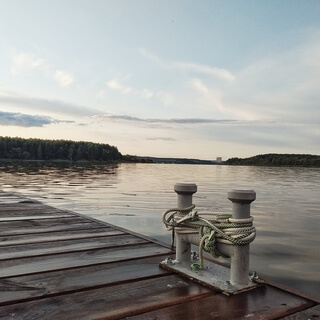
A simple way to almost disassociate from our thoughts is this idea that we're sat on the riverbank.
We have the ability deep within us to remain sat,
Observant at the back of our minds,
Watching the thoughts flow like a river in front of us and to resist the urge or to notice when we are pulled into paying attention to what's going on.
But we have the ability to come back to our support of breathing,
Sound or body and just notice what's going on in front of us,
Being observant.
So imagine being in a cinema.
We are passive yet curious about the film that we are watching.
We are not in the film.
We can at times be emotionally charged by the goings on in the film and the music and the sound and the voices and the words that people use.
But essentially,
To be more detached in the cinema,
We could move to the back row or ultimately we could move into the projection screen room and watch the film from there,
Seeing the audience in front of us,
Watching the film play itself out in the distance over there as a sense of being an observer.
And we can do that within our own minds.
But we can't do that straight away.
So we mustn't be impatient.
It's a trait of mind that is developed after a period of practising mindfulness.
And it allows greater sense of space,
A greater sense of control for some,
This ability to not be overwhelmed by what's going on with the content of our minds.
And let's not forget that the majority of the content within our minds has already been created in the past.
It comes back,
It's recycled,
It flows over and over constantly for us to be reminded every minute,
Every second,
Every day,
Every month of particular memories or particular ways of being.
And this can hold us back in developing our wellbeing,
In developing a strong,
Safe sense of self and our ability to be with the world.
So taking the time to just watch what's going on,
Not just in the real world,
But also within ourselves,
Being able to observe the content of the mind and being able to observe or track the sensations within the body and to notice emotions and how they affect us are all parts of the skills of mindfulness meditation.
And we learn to do this in a space of self-compassion,
A space of understanding and allowing for all these things to emerge without the need to interact,
Without the need to inadvertently fall into the river and be carried along by the strong current of whatever it might be.
So developing an observant attitude in daily life will reinforce our meditation practice and observing practices when we do our formal meditation.