Now,
Today we're going to be talking about something called the body scan,
And really useful.
It's one of the mainstays,
Really,
Of traditional mindfulness practice.
So last week,
There was something that I called full practice.
You may have seen in the resources,
Calming the mind,
Settling the mind,
This idea that we sit quite formally when we're making an effort to learn these skills,
Attention,
Focus,
And awareness.
And it tends to be sitting down,
Or if we're being informal,
You know,
Standing around going for a walk,
Looking out of the window,
Listening to sounds,
That kind of thing.
But because we are the way we are,
And Westerners very much more so than traditional people who have practiced meditation for centuries through their families,
It's not typical for us to do.
We don't have it in our genes,
Essentially.
We don't have it as a tradition of being still,
Of doing what the definition is,
Noticing what's happening,
While it's happening,
Without preference or judgment.
Our judgment and our preference really does kick in a lot.
So last week might have been difficult for you all.
And if we were to hear from a few more with the comments,
Or later on,
It's actually a good thing to hear that,
John,
It just didn't go well.
John,
I just sat there and my mind was just,
It was on fire.
I just couldn't get rid of the,
You know,
The quieter I thought I was,
The busier my mind was getting.
And these are very typical things,
Because we're starting to pay attention on purpose to what's going on.
And for others,
Perhaps Anthony,
That it's like,
Oh,
Well,
Actually,
I thought mindfulness was supposed to help with this pain thing.
I'm actually noticing it even more.
That's really not very helpful.
John,
You know,
Thanks a lot,
Mate.
And for the rest of us,
Perhaps with zero pain in bodies,
All of a sudden,
This being still,
Sat down,
It's like last week,
I'm a bit tired.
Body's a bit stiff.
Oh,
Shoulders.
Yeah,
And we're noticing things that we didn't notice before.
We find it uncomfortable.
We think we're doing it wrong,
Perhaps.
And we may be less inclined to give it another go,
Because ultimately,
As Westerners,
We like nice things,
Don't we?
We like things to go well.
Yeah,
We want to relax.
We want to be in charge.
So.
The idea of doing the body scan,
Which I'm going to explain,
Is a is an alternative way to be quite mindful with yourself and your body,
But it's going to take our attention down into our own particular body frame.
OK,
And if we can learn over time to to do this practice,
Then the focus and the attention and the awareness within the body,
They all really start to develop.
So it's fantastic for developing skills.
But it's also a really nice way to take your mental activity down inside the body.
And so we just have to go.
So.
For those of you who might be lying down,
Then I do recommend that if we try this at the weekend when we have more time,
For example,
Having a pillow and the recommendation is whatever your four fingers are,
Then that would be the size of the pillow behind your head on the floor.
So I have a yoga block here that kind of just about my forefinger.
Yeah,
We are all different shapes and sizes.
So it's to be aware of your own body shape and size and fingers.
Yeah.
As a guide,
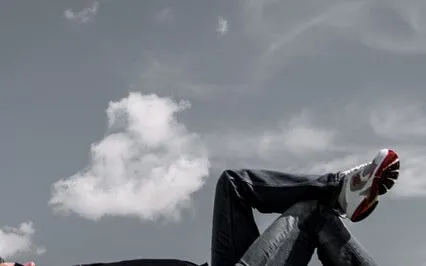
I'm going to suggest to you that the way that we use our imagination when we're lying or sitting with the body scan is a bit like the picture in front of you,
So there's a spotlight and we're going to imagine this spotlight.
Shining down on different parts of our body.
So,
For example,
Those of us are sitting down right now,
We could push our feet down into the ground a bit more.
Yeah.
Those of us who might be lying down,
We could perhaps push the lower back a bit further down into the ground.
But at the same time.
To help us get our attention to that part of the body is to imagine this spotlight shining down.
Okay.
So then gradually we'll move this spotlight.
Up through the body,
Stage by stage,
As if we were to internally scan.
And why would we want to do that?
Well,
It's another way of noticing what's happening while it's happening.
And it's a wonderful way to get into the present moment and to positively distract the mind from all those things that consume us.
From bodily pain to just mental anguish,
Perhaps,
You know,
I'm always thinking about the past and what have I got to plan for the future?
And John's in front of us now,
But I've got 101 things to do when the kids get in.
Yeah.
Permission to do nothing right now.
We don't have to do anything.
Other than sit,
Listen,
And practice for the next hour or so.
Yeah.
And so the reason why we do that is to develop those faculties and to get really tuned in to where those areas of tension are,
To where those areas of relaxation are,
And even to feel parts of the body that we've never really experienced before,
Because there will be some areas where,
Especially during the day,
We're not conscious of.
So as I'm talking,
For example,
I know because of experience and the subject,
I'm directing my attention to my stomach because I'm noticing I'm pulling my stomach in.
Yeah.
It's a little tension thing.
Okay.
That's one of my,
Um,
I guess one of my signs of not today,
Anxiousness,
But signs of being with people and delivering something.
Yeah.
Things tense up a little bit.
I have to be honest with that.
Yeah.
So it helps me to notice when things begin so I can soften and relax those areas in normal daily life.
Yeah.
So we may tense the body when we have a meeting coming up,
We may have a,
We may have a particular tension somewhere when we hear a voice or we hear particular footsteps of a person,
A trigger.
And over the years and months,
We don't recognize them.
You know,
They fall into the background.
But we've made the effort to,
To,
To do something different with this subject called mindfulness to enable us to be more aware of these things that hopefully we can,
Um,
Change our patterns and our habits and learn to soften and relax the body,
Soften and relax the mind in time.
So I think the best thing to do is just,
We'll just have a go and we'll just do it.
Okay.
Okay.
Hot day.
So I don't recommend we sit in the sun.
So somewhere shady.
If we do feel ourselves nodding off,
I'm going to suggest it's probably the heat and perhaps open your eyes a little bit more to,
To remain here.
We'll talk about the benefits of this afterwards,
Because it's really useful for sleeping,
But that's not the point.
Yeah.
It's not the point.
It's great during the day,
Especially at the weekends for developing,
Um,
Awakeness,
Awareness of the body and how it is so we can learn,
Understand,
Make changes in daily life.
We'll talk about sleep after this.
Okay.
So get comfortable.
However,
That may be for you.
And remembering last week,
Intention and motivation.
So I'm here today and doing this practice because I know it's good for me.
I'm curious how my body is today.
And I enjoy leading people through a group experience so that they too may benefit.
And perhaps you just ruminate or just percolate your own intentions to yourself and just tell yourself why you sat here with the group or lying on the floor.
And maybe,
You know,
We intend to do this for maybe 15,
20 minutes,
Just relaxing.
And also the motivation.
See,
I do this because yes,
Of my own wellbeing,
But I also do this because I do this to be,
Um,
A better version of a husband or a better version of a father,
A better version,
A more compassionate version of,
Uh,
Someone that can help people.
And you'll have your own reasons in time.
So maybe we'll just wiggle our toes a little bit just to get our attention down there.
And when you stop wiggling the toes,
Perhaps we could begin to imagine that we can breathe in,
Up through the toes and the soles of the feet.
A strange,
Peculiar suggestion.
And it might bring a smile or it may bring a,
Uh,
You know,
A mental disagreement.
You know,
I just can't do that,
But we're being curious.
We're being open-minded.
If we find it hard to imagine breathing up through the toes and the feet,
Perhaps we can just pay attention to what's going on down there.
So for some,
We may feel the contact of feet on the floor.
For others,
Maybe temperature,
You know,
Our feet might be inside shoes or some kind of clothing covering.
And let's not forget that we're entitled to have busy thoughts.
That's okay.
They can be there.
But right now,
The majority of our focus is down in the feet area.
Maybe imagining breathing through the toes,
The soles of the feet,
Up towards the ankles.
Or for others,
It might be that imaginary spotlight that's shining onto the toes and the tops of the feet and perhaps around the Achilles heel.
If nothing's happening or you think that it's not working or mind is too distracted,
Then we're not doing anything wrong here.
Here,
We just gently persist every time we breathe in.
Perhaps we can breathe in a coloured light or that spotlight moving up from the ankles and moving up through the lower legs.
So our calf muscles or shins,
The idea that the breath can move up through the lower legs and as we breathe out,
Falling back down through the legs and the feet into the ground.
Concentration can be relaxed.
It can be soft.
No need to be trying too hard.
We can soften our eyes and soften our forehead.
So be curious as to what sensations are to be found as you breathe in or as you imagine that spotlight of awareness,
Maybe moving up now towards the knees and the back of the knees.
And a little tip,
Just notice what you're doing.
Are you making a mental picture in your head or are you actually sensing through and inside the knee area?
Perhaps there are differences in the left hand side of the body or the left hand knee to the right hand.
Maybe you could experiment with focusing on one and then the other.
And we can,
Again,
Gradually moving the light or moving the breath around the knees and up through the upper legs.
So we have our calf muscles and our hamstrings.
For some people,
We could go deeper and imagine bones or blood vessels or muscles.
And for others,
It might just be the sense of the temperature on the skin.
Yeah,
We have no need to make anything happen.
We're learning to open up to whatever sensations are around in the present moment.
Maybe your breathing or your attention can begin to move towards,
If you're,
If your bottom is sat on the chair or if your bottom is lying on the floor,
Just notice the weight of the body still bringing the breathing up from the toes and through the legs up towards the seat or up towards the bottom being supported by the floor or the cushion.
And we could spend a little time in and around the pelvic area because we could soften our bellies.
We could be inquisitive to all the little nooks,
Crannies,
All those parts in the body that work so hard for us.
Can we sense any space within the pelvic area and the hips?
Can we allow ourselves to breathe in to the lower belly and also allow the belly to just soften,
Relax,
Be more open?
Or maybe there are little tensions in and around this area.
In and around this area and then moving our attention round towards the lower back and gradually can you move your focus almost step by step up each vertebrae in the back or as you breathe in,
Moving that awareness up the spine.
We could ask ourselves,
What is it I'm noticing?
Do I need to move the body slightly?
Do I need to adjust my posture?
If there is any pain or discomfort,
Then obviously it's to move for your own comfort if you need to.
But there's also,
Can we allow the pain or the discomfort to be there?
Can we imagine softening around the outside of that area or imagining breathing in and out of that place?
All too often with areas of tension,
We kind of tense around it and try to avoid it.
But let's just be with our bodies,
Softening as we scan through the body,
Up towards the body,
Up towards the shoulders and maybe up and around the shoulders,
Just noticing the position or the feelings.
And as you breathe out,
I wonder if you could allow that to run or to flow down the arms towards the fingers.
Noticing sensations,
Tingles,
Temperature,
Maybe any space between the fingers and whatever the hand is resting on.
And distraction is normal,
Remember.
So if we have been distracted by a noise or a thought,
We can register that.
But we just come back to our fingers.
Can we breathe in and out through the fingers,
Perhaps?
Or noticing what our imagination is doing to allow this idea that we pay attention to the different parts of the body.
And so from the fingers now,
Just gradually moving the spotlight of attention or the breathing or the imagination of the breath moving through the fingers and the arms and perhaps up through the chest area.
Can we sense the rise and fall of our breathing?
Can we relax the body or to let go of the breath and allow the body to let go?
In time,
The mind can follow the body and the mind will end up letting go as well.
Maybe focusing in and around the neck area and the throat.
That can hold a lot of tension.
Do we need to slightly open our jaw a little bit?
What is it like to just pay attention to the throat area?
Or maybe moving around to the back of the neck and up around to the ears and the front of the face.
Can we sense the breathing through the nose down into a more open,
Relaxed throat and chest?
Or do we detect a little tension that we can soften and then gradually up towards the top of the head and just be curious what it is that we sense here.
It might be our hair or temperature.
And just take your time in gradually moving and expanding awareness into the whole body,
Just lying or sitting here now.
So for some of us,
That might be imagining breathing in from the whole body.
For others,
It might be a light of some color inside the body and just filling the body.
It might be a sense of being in the space around you with nothing to do right now.
If we're feeling a little drowsy,
A little sleepy and perhaps staying with the body but opening eyes,
Just noticing how that is perhaps.
You know,
Can we look around in our space and yet still keep an awareness of the body sensation?
And I'm going to give us all three phrases that I would like you to run through your own mind.
To notice what might be happening in the body,
Okay?
And with our focus on any niggles,
Aches,
Pains or tension,
You might have noticed different parts of the body.
If you want to revisit them and we'll just say some nice soft phrases.
So for example,
Soft,
Soft,
Soft.
Maybe notice how the body is responding or not.
But locate a little part of the body that might be tense.
Soft,
Soft,
Soft.
Soothe,
Soothe,
Soothe.
Allow,
Allow,
Allow.