Welcome to the Flowstate Performance Podcast.
Created for those committed to mastery and success.
Coming to you from Manly Australia,
We break down the science and philosophy of optimal performance.
So you can unleash your potential.
Okay,
Welcome to the Flowstate Performance Podcast.
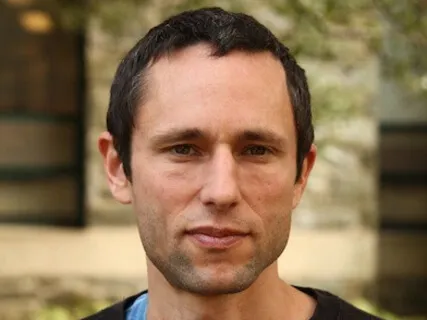
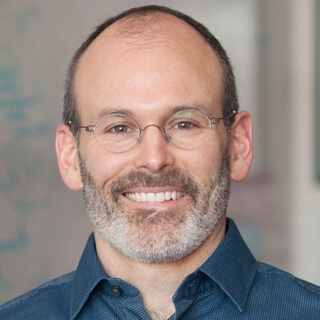
Today I'm with Charles Eisenstein,
A speaker,
A teacher,
A writer who focuses on the themes of consciousness,
Money,
Human cultural evolution and more.
Charles,
Welcome to the show.
Thank you,
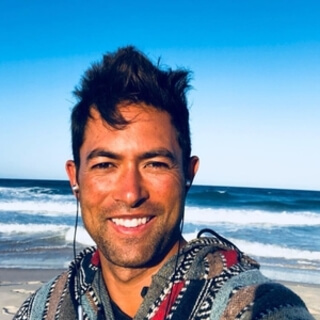
Jiro.
Yeah,
Hi.
It's good to be here.
Thanks,
Man.
Just so we can place you,
Tell us where you're at right now.
Well,
I've just moved to Asheville,
North Carolina in the United States.
And I'm sitting here in my home office.
Awesome,
Man.
Awesome.
So,
Yeah,
I mean,
I've been,
I think I first came across you five or six years ago and since then I've read a couple of your books and really fascinating to me.
Tell us a little bit about,
Just so the listener can place you,
Tell us a little bit about,
I guess,
What you're best known for.
I think I'm still probably best known for a book called Sacred Economics that I wrote,
I mean,
I did the writing like six years ago mostly.
It came out in 2011.
And it's a lot about the basic nature of money,
Why it's working less and less well,
And what transition is in front of us and how we can participate in it.
And,
You know,
I did a lot of speaking,
Public speaking on that,
A lot of writing on that,
But since then I've,
I still kind of maintained that as a sideline,
But I'm talking a lot more now about,
You could call it narrative change,
The changing mythology that we don't even recognize as a mythology that's kind of,
That's running our civilization.
Interesting.
So let's trace your background a little bit because you,
I suppose you trained as an economist,
Is that right?
No,
No,
No,
I didn't.
No,
No,
I yeah,
I mean,
I studied mathematics and philosophy way,
Way back at university,
And then you know,
I just,
Because I thought that that's where the answers were,
Because that's the foundation of knowledge in our culture.
Mathematics is the language of science and philosophy is supposed to be asking the deep questions,
And I didn't find the answers I wanted there,
So right after university I basically just jumped ship and moved to Taiwan and translated Chinese for the next eight or nine years,
And just did a lot of reading and a lot of thinking and living,
I guess,
And absorbing.
Wow,
So you're pretty much your entire 20s was spent living in Taiwan.
Yeah,
That's right.
And I felt,
In a perverse way,
I felt more at home there than to this day than I do in my own country.
Why do you think that is?
Maybe because,
Like,
At least I had an excuse for feeling different,
You know,
Whereas here I look pretty much like everybody else,
But there,
You know,
I was tall and white and nobody else was,
So I had at least a reason why I should feel slightly like an alien.
I don't know,
Though,
Maybe there's something karmic,
I don't know.
Yeah,
I spent the early part of my 20s living in Asia as well,
But I was living in Japan,
Actually.
So I know what you mean.
I think it's a super fertile time to travel.
It's like,
You've obviously had your childhood and then your youth,
And then going through sort of like a traditional education system I imagine you did just like I did,
And then you go to somewhere on the other side of the world where they really have fundamentally very different,
Sometimes opposite ways of looking at things like personal evolution or growth or meanings of success and things like that.
Or even a different way of looking at what's real,
How life is supposed to be lived,
How change happens,
You know,
How to be an effective person.
I mean,
These assumptions are also very different.
Exactly.
Did you tune into these ideas before you went to Taiwan,
Or was it while you were there that you came across these ideas?
No,
I would say that before I went I had this kind of latent dissatisfaction with life as it had been presented to me,
As normal.
You know,
Here's a normal life,
Here's how to live,
Here's how to be a man.
I didn't really accept that,
But I didn't quite know what an alternative was.
So when I went there and I began discovering alternatives,
The different views of reality and human beings that existed there,
I was like,
Ah,
Yes.
It gave expression to a knowing that I'd had,
But hadn't really been able to articulate.
Interesting.
Did you immerse yourself in any of the traditions of that place?
I wouldn't say I immersed myself in it.
I immersed myself in the language.
And,
You know,
I studied some Taoism,
Absorbed Buddhism,
Just kind of osmotically,
You know.
But I never really became a dedicated student of any of those things.
Yeah,
Interesting.
It's a long time to stay over in that part of the world.
I think most people go over there for a couple of years,
Teach some English,
And then come back.
But what was it that kept you there for nearly a decade?
Oh,
The answer isn't that sexy,
Really.
I mean,
I think I just got kind of stuck in my routines a bit.
I was doing translation,
So I was making a really good living.
Life was pretty comfortable.
You know,
I had a good life for myself.
And then two things happened.
One is I got married and we had our first child,
And it was a really hard place to raise a child.
And then also I just got really tired of doing the work I'd been doing.
And I began exploring or integrating the ideas that I'd been reading about and thinking about in my entire 20s.
And I guess this might actually be related to the theme of your podcast here,
Because even though I was extremely effective and gifted at the work that I was doing,
Because it became less and less meaningful to me,
My enthusiasm waned and I became,
You know,
It became a drag to even just get up in the morning.
And no matter what techniques I would try to use to motivate myself,
Those wouldn't work.
Eventually my only motivation became money.
You know,
How much am I making per hour doing this,
Would it become rather tedious?
I mean,
There's still an element of creativity,
But it was kind of like the engine,
The engine beneath my effectiveness,
Productivity,
Creativity was no longer working.
And so that's what really,
I felt like I had to totally change my environment,
Change the conditions,
The ground conditions of my life in order to reorient toward what I was passionate about,
What I wanted to do in life.
Fantastic.
Yeah,
I can really relate to that feeling of the original conditions that brought joy or made you feel alive,
Dissipating,
And you being left with the barrenness of exchanging your time for money.
It really is,
I think you talk of it in being terms of a kind of slavery that we've all just kind of just accepted.
Yeah,
I mean everybody wants to live their own life.
We don't want to live the life we're paid to live.
And no matter how much you're paid to live it,
Even if you're you know,
Working on Wall Street and making five million or ten million dollars a year,
No matter how much you're being paid to live a life that's not yours,
You're going to rebel against it.
Maybe consciously or maybe unconsciously through self-sabotage,
Addiction,
Depression,
Motorcycle accident,
You know,
Because we're not meant to be slaves,
Not meant to live the life that someone else tells us to live.
No one wants to do that.
Absolutely not.
And I've seen it,
I spent a bunch of my career wearing a suit,
Working in a skyscraper in Hong Kong,
Which is possibly one of the most financially motivated places on the planet.
And I saw a hell of a lot of that.
A lot of success in inverted commas,
A lot of the flash cars and the fancy holidays and people really like chasing the carrot and really like succeeding in catching the carrot,
But there being this absolute barrenness,
Emptiness to it,
Which is actually the journey that started,
That's the thing that started me off on my journey with Flowstate,
Interestingly enough.
So what was it or what is it in your life that has made you feel most alive or most human?
I guess it would be my intimate relationships.
Which I mean,
You know,
Not only with women,
But with my children,
With my friends,
With nature,
With other beings in nature.
And also,
I guess I would even extend that to the intimate relationship I have to the ideas that I write about,
The work that I do.
I don't really even see those as my production so much as something that I come in,
That exists outside of myself,
That I come into relationship with.
And then through that intimate relationship become the mouthpiece or the servant of those ideas.
So yeah,
All those things.
Or even also,
You know,
I do a lot of public speaking so there's an intimacy there too when I'm really speaking to that audience.
You know,
I can see the light in their eyes,
I can see the expressions on their faces.
There's a,
It's actually a two-way communication.
I never come with a canned speech or anything like that.
I'm always just,
You know,
In the moment like I am right now.
I didn't plan out I was going to say this.
And that also makes me come alive,
Those situations.
Absolutely,
Absolutely.
Fantastic.
I just had a question that came up in my head about,
Because you spent some time living in the East,
Living in Taiwan.
Talk to me about the different constructs,
Mental constructs,
Cultural constructs surrounding money in relation to that part of the world and I guess the Western world.
Because I see like,
I think like Buddha over there is represented as a fat dude who's,
And that fatness seems to represent to me some sort of,
I don't know,
Like a different relationship with materialism.
Yeah.
Do you agree?
Well,
I mean there's different Buddhas,
You know,
And different Buddhas,
Some of them are thin,
Some of them are fat,
You know.
But yeah,
There's certainly differences in the attitude towards money there,
But I think that those differences are not nearly as great as the differences between modern,
Any modern culture and indigenous cultures when it comes to money.
You know,
The US,
China,
Japan,
Whatever,
Taiwan,
I mean they all,
You know,
Europe,
I mean we all pretty much conceive of wealth as controlling,
Possessing a lot of resources,
Financial or otherwise.
But that's wealth as a matter of how much you have.
And in Taiwan,
I mean there was still,
There were still vestiges of an earlier culture that was based on gift.
To this day,
Gift culture is much more alive there than it is here.
And so some of those were a bit of a cultural shock to me.
For example,
Here,
And this may seem trivial,
But it's actually quite important.
You know,
Here when people go to a restaurant,
They'll split the tab usually,
Or they'll have some kind of arrangement.
In Taiwan,
People would fall over themselves to try to pick up the tab.
For the other person,
Occasionally people will actually get into fights over who gets to pay.
Because,
And this is a remnant of gift society where social power comes not through control and hoarding,
But through generosity.
The more you give,
Then the more you're in a high status position because other people,
Everyone else kind of owes it to you.
They owe you an obligation.
And so giving a gift can be at one extreme,
It can be even a power play,
Where you gain power over the person who receives the gift.
And so there was much more of that in Taiwan,
Especially when I was there.
I don't know how it is now because this was a while ago,
But there was more of that there then than there is now.
And so then there is here.
Yeah,
I've observed that dynamic,
In fact.
The power play of the gifting.
It's an interesting one,
Isn't it?
Yeah,
Very interesting.
So why do you feel like in our culture,
And maybe over there as well,
Success is so interwoven with money and financial means?
Well,
I mean this is a complicated question.
I'll just maybe unravel one thread of that.
Part of it has to do with the decline of community.
Today,
Unlike say 200 years ago,
Suppose you lived in a small village in Europe or in the Australian outback or something 200 years ago,
Your security and your well-being depended on the goodwill of your neighbors,
Depended on your social relationships.
If you got bitten by a snake and were bedridden for a month,
You would not survive if your neighbors and relatives didn't take care of you.
If your house burned down,
You would not have a new house unless the whole village got together and built you a new house.
It didn't matter how much money you had because you couldn't pay for these things.
It wasn't a fully monetized culture.
Today,
Though,
You don't need any of that.
You could be on bad terms with every single person on your street,
Every single person in your town even,
But if you have enough money,
You can still meet all of your needs.
So security depends today not on human relationships.
Well,
What I'm saying isn't entirely true,
Okay?
But the system makes it look as if security and well-being depend not on your relationships but merely on your money.
Money is deeply associated with security for that reason.
So no wonder we all associate that with success because that's the way that our economy works.
And I'll add to that that the structure of our economy and our money system in particular also sets us into competition with each other because there's never enough money.
There's always more debt than there is money systemically.
So we're always in competition with each other.
Therefore,
Your success kind of implies my failure.
You got the deal.
I didn't.
You got the job.
I didn't.
Whereas in the Australian outback in early times,
Your neighbor's good fortune was your good fortune too because it made the whole community stronger and better able to take care of each other.
So in a cooperative setting,
In a gift economy,
There's.
.
.
We have a different perception of each other.
We're no longer envious of each other.
Our security no longer depends on outcompeting others.
And there still might be competition.
But it's not for the basis of material security.
Hmm.
So really it's it all boils down to separation versus inseperation.
Yeah,
You could say that.
Yeah.
Interesting.
Have you been to Burning Man?
No,
I haven't gotten there.
Yeah,
I was at the Australian version of Burning Man just a few weeks ago,
Which is obviously a much smaller scale version of the big Burning Man.
But the same principles apply.
There's still this sharing economy or gift economy and you rock up and there's no money and you wander around and you find people to feed you and to water you and to entertain you.
And it's very much the energy of in my giving I'm also receiving.
And I feel like that's sort of like a fundamental,
There's something in our culture where we've got this fundamental flaw around what it is to give.
Like giving almost implies like something's being taken away from us,
Like we're giving.
Whereas through personal experience I'm sure we can all feel that actually when we give we receive something.
Like it feels awesome.
Or we receive gratitude.
It seems to be like that,
Do you agree?
It's sort of like a cycle that fuels itself when you actually get into the spirit of it.
Yeah,
I mean I would agree 90%.
I've been on this path for a while and learning that there are also times not to give and times also to refuse a gift that's given.
Like I gave away my hat a few months ago to this guy and I just really regretted it later.
And when I felt into it,
Like at that moment I didn't really want to give the hat.
We see gift as this,
Like you said,
This act of self-sacrifice and think that we have to overcome something in ourselves in order to give.
But really it should be a natural flow.
It should come out of desire and it should come out of a feeling of gratitude.
So there's moments where I guess what I'm saying is that I don't want to uphold gift as some standard to aspire to.
And if you do it then you're an admirable person.
It should really be part of the expression of the pleasure of being alive.
Absolutely man,
Absolutely.
I've just come back from a ceremony myself.
I spent the weekend doing shamanic work,
Plant medicine work which involved San Pedro and Ayahuasca and really I was spending time in the forest and I was basically getting a lot of wisdom from the trees.
What I could see from these trees was that the one particular magnificent tree that just stood there very proudly and it had a certain swagger about it,
It had a certain confidence and warrior spirit about this particular tree.
I could see that this tree through its root system which I equate to its awareness and through its trunk which I equate to the power of its,
The power that we gain through rituals and habits and the choices we make,
It was basically expressing its life force in the form of its foliage and its leaves.
That was the purpose of the tree to basically express its life force and in the expression of that life force photosynthesis takes place and obviously the process of giving and receiving and I wonder how different we are,
You know,
Fundamentally.
I had this real breakthrough moment and I was like wow,
Purpose.
I just got to,
We all got to stop looking for it out there and just be like the tree and just express what is in us and therefore live our purpose.
Yeah,
I mean this whole question of flow states that you're exploring,
Maybe that is really a matter of finding,
Like you said,
Finding opportunities for the exuberant expression of your life force and if you are not in a flow state,
You could just see that as a symptom of oh,
I am not in circumstances that accommodate the exuberant expression of my life force rather than trying to do something to fix ourselves.
Maybe it's not yourself that's the problem.
Maybe it's something in the environment because I don't know about you but if I'm in one of those states where I'm just like,
I'm feeling paralyzed,
I'm feeling totally unmotivated,
I can barely get up to even do a little exercise or do anything.
I had a day like that just last week where I just binge watched Sensate and I could have been writing an article,
I could have done all this kind of stuff but just where I was it just,
Like yeah,
Theoretically I know these ways that I could motivate myself.
I could have done some meditation,
I could have done some yoga or something like that.
I could have done something but I didn't have the motivation to do that either.
Like where does that initial impulse come from?
And I don't think that it comes from me because I can be in other circumstances and I am effortlessly productive,
Lucid and motivated and it would be nice to take credit for that and say yeah,
That was because I got my act together or I changed my attitude or I did something.
But honestly,
I think that that motivation is itself a gift that comes to me whether from other people,
From my environment,
Maybe even from some mysterious source like by grace,
It comes to me.
Therefore instead of taking credit for it,
The honest response is just gratitude.
Oh,
Thank you that I now feel motivated.
Thank you that I now am productive and clear and energetic because something could happen and I could wake up and not be able to get out of bed that day and just as,
Yeah,
I don't want to blame myself for that.
So that's kind of where I am with this question right now.
Interesting man,
Very interesting.
Yeah,
I think it is,
We should honor the external circumstances that elicit an internal state of being.
I think you're absolutely right and it comes down to what you're talking about the indigenous tribes and communities and I think that one of the biggest,
I guess you would,
I don't really like using the word,
But one of the biggest triggers for a flow state for me is being in a certain group environment.
Having a collective goal,
Feeling like we're all pulling in the same direction,
That's a powerful thing.
That's very interesting.
So exuberant expression of life force,
That's a wonderful way to look at flow states I think.
So Charles,
It seems to me like you're,
Would it be accurate to say that your work in recent months or years has shifted?
I guess we're always evolving and you're certainly evolving.
Talk to me about the direction or the type of evolution that is happening with your work,
Or with you I guess.
Yeah,
Well one thing I've,
So I haven't written a book for a couple years now.
The last book I read was a shorter book called The More Beautiful World Our Hearts Know Is Possible and that was in 2013 and so since then I've been just doing a lot of public speaking,
Writing essays and articles and stuff and filming things and I've started a podcast and right now I'm also launching a course,
An online course on masculinity,
Which I could talk a bit about but,
Well maybe I'll say a couple words about that.
It's an exploration of what masculinity,
It's called Masculinity,
A New Story and it's exploring,
When we do away with the old patriarchal masculinity that doesn't feel anything,
Is afraid to cry,
Is just macho and maybe even abusive and aggressive and when we reject that but what comes after that?
It's not just a retreat into being soft and sensitive and feminine and so on and so forth I mean those are nice things but what about the next expression of a real masculine energy,
What would that look like?
So that's the kind of basis of this course that's starting in a couple weeks and I've been going around I was just in the UK interviewing some extraordinary people that I've come across who seem to hold some wisdom about this and live it.
Which isn't necessarily me I'm not the expert on being masculine but I'm in an inquiry about it and so what I'm learning though,
To answer your question,
Is that I better be really careful what I put out there because when I start to investigate something then it starts to give me sometimes painful or humiliating life lessons around it.
It brings that field into my life so it's not just an intellectual exploration I'm doing of the sacred masculine but it's also really hitting home,
Like all the ways in which I've been out of integrity,
All the ways in which I've been weak,
All the ways in which I've been immature a boy and not a man,
All these things are just being shown to me in a clear and sometimes harsh light.
So I've been part of your journey though isn't it?
It's very fascinating because what I'm hearing,
What I'm feeling is that the stage in your life where you're writing Sacred Economics and you're doing a lot of talks and commentary around the gift economy,
It almost seems like that was a stage in your life where you were looking at the macro and you were looking at systemic change.
Whereas it seems to me that you're shifting into this stage in your life where you're looking at the micro,
You're looking at the individual change what is innate within you.
And really when you boil it down we have the masculine and the feminine energies.
It really seems to be like this is how your life path is evolving which is yeah,
Has a lot of parallels with my own as well.
Yeah,
And the macro and the micro are intimately connected too because you look around at the planet and it's not hard to say well the problem here is masculine energy run amok.
It's a patriarchal system and mostly men who have been destroying nature and oppressing other nations and so on and so forth.
So the healing of the masculine,
We hear a lot about healing the feminine and the divine feminine and that kind of thing but I think healing the masculine is crucial.
So what we're doing on a personal level also has systemic implications.
Oh absolutely.
I mean when I tune into I'm sure you're the same but when you really really think about what is required,
What will be the catalyst for there to be profound level,
Large scale change on this planet for our species it all boils down to that micro.
It all boils down to the domino effect of each individual having some sort of shift in consciousness.
So yeah,
The micro becomes the macro right?
And vice versa too.
I'm not advocating that people never engage with political or social levels of reality.
I think that's important too.
I'm probably going to write an article on the TPP the new agreement that's going to be the nail in the coffin for our planet if we don't stop it.
I'm engaged in that conversation too but it's not honestly I'm not even going to say it's not as alive for me it's not what's most engaging me right now.
And I think we all naturally go through phases of engagement of more inner close things and then sometimes we go through a phase of more outward focus and to really trust that process and trust what's calling to you right now.
Where does your life energy want to flow?
To trust that then,
I think then that's only when the flow states really start to happen.
Absolutely.
Trusting that intuition,
Being able to first of all being aware of it then being able to listen to it.
Because it can be a very subtle thing at first and if you're living from a place of heavily conditioned programs then it's almost like it's not there.
But it is there.
To listen to it.
And that's actually,
Coincidentally enough that's one of the qualities of the healthy or sacred,
Mature masculine that has been coming up a lot in these conversations.
The quality of deep listening of being able to be so present that you're capable of hearing everything without an anything,
Without losing it without going into reactivity,
Without running away from it.
To be able to stand present and to really listen that quality of presence and patience that could come up when and you said that maybe most of your listeners are men so could come up when you're faced with an angry woman or an emotional woman.
And can you hold that presence without just walling yourself off without capitulating,
Without fighting back but just to really hear,
To really see her take it all in without being shaken loose.
Can you do that?
I think that's kind of the same skill that's required to,
As you were talking about,
Listen to your intuition because the intuition doesn't come as this naked flash of insight.
Usually it's surrounded by all kinds of emotional forces that try to shake you loose,
That try to obscure that intuition,
That try to have you listen to be a slave to fear or greed or something like that.
So I think it's that same quality of holding presence that allows us to hear the call of our mission and our passion as men.
I could be talking to the inner masculine of a woman too,
Like this isn't just for men,
But that same listening I think is also what we need to cultivate in our relationship to nature,
Which is maybe another expression of the feminine.
What does nature want,
Rather than how can we best use and exploit nature for our advantage?
That's what men have done to women in patriarchy,
And that's what we do to nature.
And so I think the same cultivation of a trait that I often identify as masculine,
This trait of deep presence and listening,
I think this is important on every level.
I agree,
And I noticed that in many indigenous cultures,
Certainly in Australia,
I believe the word is dandiri,
But it's a word that basically means deep listening.
Listening far beyond the level of thought,
Like listening very deeply,
And it's basically an intuition,
Or beyond an intuition,
Listening to the collective consciousness or listening to mother nature,
However you phrase it.
But that is an integral part of masculinity in some of these non-industrial,
Non-Western cultures.
Is that right?
They actually associate that with the masculine and not just as a good human quality.
Yes,
That's my belief.
Tell me more about the course that you're putting together,
Because this is so interesting,
Because obviously it's come from a place of calling and intuitive,
Kind of innate level of behaviour in you.
Because I guess when you graduated from Yale and you had your math and your philosophy degree and you were writing books on basically economics,
You probably,
You might not have been able to see that you were going to move into this direction of exploring the sacred masculine.
Yeah.
So what's really the root there?
Was there a defining moment or has it been a gradual metamorphosis?
Well,
I guess it's always been in the background.
And I don't know why,
But for some reason in the last couple of years people have started to ask me about it.
It's also been coming up,
I mean,
You know,
I'm a man.
I have relationships that have taught me that I have something still to learn.
So I guess I'm very personally curious.
I guess part of it you know,
I speak of the more beautiful world our hearts know is possible.
I use that as a book title,
I kind of use that as a catchphrase,
But I also think of the more beautiful life or the more beautiful self my heart knows is possible,
Like which is recognizing that what we are offered as the standard of happiness or fulfillment is a pale imitation of what human life could really be.
And I've had experiences maybe like the one you had in the medicine ceremony,
I've had experiences that have confirmed that,
That suspicion,
That life can be just so much more vivid,
More authentic,
More intimate,
More real,
More alive,
You know,
And I want that,
And I can't really rest if I'm not somehow pursuing that.
And so I think that's another reason why I'm now actively exploring,
You know,
As a man,
I'm exploring,
Well what is it to be a man,
What is masculinity?
So it's very personal.
It really resonates with me,
And it's so interesting how I guess as we as a collective go through shifts,
As we learn,
As we evolve as a species certain things come up,
Certain themes come up and there are men in Australia who are very much involved,
I mean it's a global thing,
This re-examination of what it is to be a man.
And it's so needed.
You know,
You look at some of the models of masculinity that are prevalent in our culture and it's really not hard to see the damage and the emotional repression and the stuntedness of it,
Like the inability to fully express as a being,
Those models are enforced in that kind of prison that we're in.
So yeah,
I salute you man,
It's fantastic work that you're doing.
Tell us more about the,
You say that you came across these guys in the UK,
Are they part of a community?
Is it just scholars?
No,
No,
There's just,
I'm,
You know,
There'll be 8 to 10 sessions,
Each with a different guest presenter basically.
But it's not really a presentation,
It's more I record a conversation with somebody extraordinary.
And then we play that conversation and then people kind of go back to an online forum and they integrate it,
Digest it,
And then 5 or 7 days later there's a live session with that presenter and myself where people can ask questions and so there's an interactive part and then there's a receptive part.
So two of the guys just happen to be in the UK and the others are I guess mostly in the US.
Yeah,
I'd like to after this show,
I'd like to connect you with a friend of mine called Dane Thomas who's doing work in this same space in Australia.
Yeah,
There's tons of people doing the work.
I mean,
The movement goes back to I guess Robert Bly was the person who's kind of most associated with the birth of the men's movement.
I'm just reacquainting myself with his book,
Iron John,
Really great book.
Yes,
It was just recommended to me two weeks ago.
Yeah,
It's still relevant.
I mean,
He wrote it in like 1990 but it's still relevant.
But yeah,
You know,
There's probably 100 people I could interview.
So let's talk about resources because David Data seems to be getting a lot of props these days for the work that he's doing on the masculine.
Iron John is another book that you just referenced.
Are there any other resources that men or women out there who are exploring these new ideas and paradigms could look at?
Well,
I love Moore's book on the four male archetypes,
Warrior,
Lover,
Magician,
King,
Beautiful book.
But,
You know,
I mean,
This is,
Again,
This is something that an intellectual apprehension of principles only can take you so far.
These books and ideas,
They do stir something up.
They're not useless mental masturbation.
They do stir something up but I think that what they stir up is a desire to work with these in a more embodied way.
So,
You know,
Maybe it might be joining a men's group or doing some other kind of work.
We use,
In the course we're also using story as a technology kind of as a way to transmit information that maybe cannot be conceptualized but it can be delivered in the form of a story and you don't know,
Even if you can't explain why the story impacted you,
After hearing it,
Something changes.
So we have yeah,
There's quite a lot of storytelling that's going to be going on.
We need it,
Man.
We need those rites of passage.
We need those stories and fables and all the things that the elders.
.
.
Yeah,
Exactly.
Yeah,
And that's another theme in the course,
You know,
That are craving for initiations and rites of passage that you can't just invent those and go do them on a weekend workshop somewhere.
And then they have to be,
To be really effective,
I think they have to be integrated into the community and integrated into life and they're just not part of modern society so what do you do?
And I don't think there's any easy answers to that.
Yeah.
There's a couple of questions from listeners that I'd love to ask you if that's okay.
The first one is around Bitcoins.
I had a listener who was eager to get your thoughts on Bitcoins or any other alternative currencies for the future.
Yeah,
Bitcoin's I think it's a very illuminating experiment.
It has,
On the one hand,
It has some what I think to be serious design flaws.
Not so much in the blockchain,
I kind of like that idea but in the way that the money is created and issued.
But anyway,
I'm not going to go into the technical details.
Basically,
You know,
As the old story of money falls apart we are entering what you might call a space between stories where the old isn't working anymore but we don't know what the new system will be and in that space I think,
Like I approve of any kind of exploration,
You know?
I don't think that the future is going to come because some really smart designer came up with the perfect plan,
The perfect blueprint for the perfect platform or something like that.
I think that what we end up with will be the result of a period of experimentation and chaos and learning and we'll get to something that no one right now could have predicted.
So Bitcoin is part of that ferment that is exciting to me,
You know?
So I take my hat off to the inventors of Bitcoin and I wish for them the flexibility and resourcefulness to not be too tightly attached to the way it is now and to keep innovating and responding.
Awesome man,
Thanks for that.
And the sharing economy so what are your views on the long term effects of the sharing economy and how this plays out with what the big corporates would look like or how they would respond if this sharing economy was to take root in our culture?
People mean different things by sharing economy.
On the one hand there's kind of the dark side of the sharing economy where resources that were once not monetized become monetized and people become even more a slave to money.
Even their free time is spent driving people around in Uber and stuff like that.
And the people who are doing that grunt work are often very poorly paid and there's problems with Airbnb too that are sending money to the people who have an extra room or an extra apartment.
Meanwhile people who don't have one can't even find a place to live.
So there's a dark side to it but fundamentally I think it is moving us in a new and hopeful direction simply because it allows a much more decentralized economy,
More participatory and I guess it decentralization is one thing and also the infrastructure of a sharing economy could also work in the presence of a different kind of money system or even without money altogether.
The infrastructure can still operate.
I think it kind of offers a transition a bridge to the next economy where people might be giving each other rides all the time and not paying for it.
I see that sort of thing happening in very micro-scales,
In micro-communities,
People just giving of themselves.
In Manly we have this,
I live in a very much village kind of environment and that sort of stuff happens all the time.
Just one final question,
Do you find that it's do you find a personal challenge in balancing your requirement to earn money and put food on the table and feed your kids and basically generate abundance within this system that we live in and do you find it hard balancing that with your philosophies or views on where we could be as a species?
Yeah,
I've been doing a lot of exploring in that area as well.
I think that anybody who well not anybody,
But more and more people who are following their passion and their calling find it difficult to reconcile that with earning a living because the institutions that we live in reward certain professions or certain behaviors certain vocations that essentially are contributing to the conversion of nature into products and the conversion of relationships into services.
If you're participating in the world destroying machine you're going to be paid to do it because that's how our money system works.
If you are following a calling that does not bring you to producing monetizable goods and services then you're probably going to have trouble earning a living in the existing economy.
The institutions for a lot of what is attracting people today just don't exist yet.
So a lot of us are living kind of on the margins and sometimes there is a happy coincidence between monetizability and passion.
But sometimes there's not and it doesn't mean that you are indulging in victim mentality or scarcity mentality or something like that or that you don't value yourself.
That's not necessarily it.
That's kind of a cop-out explanation.
Because I know that you went public on this.
I tuned in to something that was going on in your life on your Facebook page in relation to the pricing of your course and offering scholarships and I feel like you were dismayed and disheartened unsurprisingly by the fact that a lot of people who probably had financial means signed up for the free option or the scholarship option.
I'm just curious on how you've reconciled that in the past couple of weeks.
Well actually I just made a change.
I could have gone,
Either I could have just drawn a line and gone to a more traditional model or what I did is I just went the other way and I said,
Okay,
Forget it.
The whole thing is by gift.
If you want to pay,
Great.
I've got a staff of several people to produce this course.
It's not cheap.
I'm traveling all over the place.
But anyway,
If you want to support us we're grateful for your gift and if you don't,
Then we'll be fine.
It's not like I'm not advocating that for everybody but it just felt partly because when I got honest with myself I maybe shouldn't be calling it a course at all because there's not a product I can package and deliverables that I can guarantee.
It's very much of a learning journey for me too.
I don't know what the value will be.
Originally I set it at $320 which was kind of in reference to similar things online and I don't know if it's going to be worth that.
For some people it'll probably be worth a lot more.
For others it will be worth less.
And $320 is trivial for some people and it's impossible for others.
It just didn't feel good to me to even offer that as a guideline.
So I'm basically letting go and making it a gift.
It's very interesting to hear how that played out because reading the comments there were all sorts of solutions being thrown around and it was a very lively debate that was going on there.
Ultimately I just had to feel what really feels an integrity for me.
That's what I went with.
If it doesn't break even,
Maybe I just won't do courses in the future or I don't know.
But I'm just not even thinking about it too much.
I'm focused now on making the course awesome.
I think we can all feel that.
Let's make sure that people can find out about this.
So where can we direct people to see more details on this course?
The website is TheSacredMasculine.
Net And do you anticipate lots of females on this course as well?
Anybody who wants to explore either their own masculine aspect or how to engage the masculine in others so that would definitely include women.
But I think it will probably be at least two thirds men.
I'm guessing.
I think that's probably true.
Cool.
So TheSacredMasculine.
Net My regular website is CharlesEisenstein.
Net I will put references to all of this in the show notes.
Charles,
Next time you're in Australia or if you have any plans to come to Australia,
Do let us know.
It would be great to collaborate.
We could even put on a retreat where we explore some of these themes because this is the time.
People are very interested in exploring these things.
I love going to Australia.
It's one of my favorite places.
It's just such an arduous journey to fly that far.
It is.
It's far.
But there's no better place to meditate than on the plane.
Cool,
Man.
Well,
Thank you so much for coming on the show,
Charles.
It's been a real pleasure.
And I'll make sure that we put links so that people can find more about the stuff that you're doing and the course that you're offering.
And yeah,
Many,
Many thanks and keep up the good work,
Charles.
That's very kind of you,
Jiro.
Thanks for having me on.