Hello and welcome to Harmonious Hormones in Later Life.
My name is Jerusha Nichols.
Thank you for joining me for this four-part series on treating your hormones naturally.
This short course has basically come about because I've treated so many women for hormonal issues in my years of practice.
But also,
I'm actually starting to experience some of these changes in myself.
So I would really love to share this information with you.
So the aim of this course is basically to give you as many natural solutions as possible to any symptoms that you might be experiencing as your hormones readjust.
And a lot of the time,
There's many,
Many things that we can do for ourselves if we have that knowledge before going down the pharmaceutical route.
In saying that,
Please do have your own naturopath or GP and or GP.
Make sure that it's someone that you can speak to about your health concerns.
And please always be wise and seek advice whenever you need to.
But this course is here to empower you,
Arm you with some knowledge,
And give you some solutions to the symptoms that you might be experiencing.
So in this session,
We're going to cover tracking your cycle,
Your attitude toward the change,
Getting your head right,
Which is super important,
Getting some exercise and the exercise that you need,
The importance of having a morning ritual,
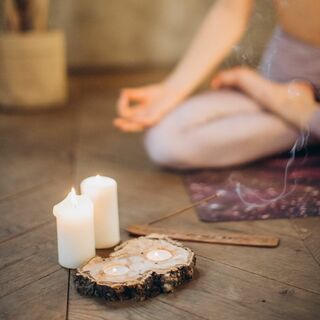
Scheduling meditation into your day,
And also creating a vision board.
But what does the term mean?
Okay.
So the term was originally used in 1816 and roughly translates to meno,
Which is month,
And pause,
Which is cessation or something being brought to an end.
So what is perimenopause?
Perimenopause is the time when you're still having a period.
It may be irregular though.
It may be heavier or lighter or shorter or longer than usual.
And you may have other symptoms including breast soreness,
Emotional symptoms,
Hot flashes,
Sleep issues,
Vaginal dryness,
Bladder issues,
Changes in your libido,
Loss of bone,
And changing cholesterol levels.
So the menopause is defined as the complete end of all menstrual periods.
So it's generally said that the period can be erratic for months to up to 18 months,
But everyone is different and everyone is individual.
Hormonally,
In perimenopause,
What's happening is that the rising level of follicle stimulating hormone allows the ovaries to continue secreting estrogens and progesterone.
But as the cycle becomes more and more erratic,
Ovulation becomes unpredictable,
The follicle stimulating levels become irregular,
And your estrogen declines,
Which causes many women to feel like they're in a constant state of premenstrual tension.
And unfortunately,
This can be a normal part of the change.
First thing is first,
Though.
Nobody,
I mean,
Nobody knows your body better than you do.
It's super duper important that you have health practitioners who are listening to you,
Who are not just flicking you aside and putting things into another category or not even looking at what's going on with your body.
You know your body better than anyone.
Don't take no for an answer.
Really,
Really important.
Now,
Medicines we're using in this series.
So we're going to be using herbal infusions and decoctions.
We're going to be looking at homeopathics,
Flower essences,
And tissue salts.
Also,
We're going to be looking at some nutritional stuff and supplements as well,
Wherever applicable.
So what are herbal infusions and how do they work,
Or and decoctions?
So herbs have been used for a very long time.
In fact,
It dates back to prehistoric times that humanity has been using herbs for.
Just amazing.
But herbs do work in a similar fashion to pharmaceutical medicines.
So this is why before you're using a herb,
It's really important that you always check for any contraindications and drug-herb interactions.
So we use medicinal herbs to treat illness and disease.
And in this course,
We're going to be discussing herbal infusions and decoctions.
Now,
If you've seen a naturopath in the past,
You might see that you've been prescribed herbal tinctures,
But they are really to be dispensed by a practitioner only,
Whereas herbal decoctions and infusions are extremely effective and safe to use at home,
As long as you check on those contraindications and drug-herb interactions that are super-duper important.
And we'll go through these as we go through the herbs.
So how do we make a herbal infusion?
So this is where we soak or we steep the selected herbs in water to extract the medicinal properties.
So you're looking at one to three tablespoons of the dried herb into a tea strainer or a teapot or into a mug.
And then you want to heat the water just to a boil,
Pour the hot water over the herbs to submerge them,
And then cover it up so that it can hold in any of the volatile oils.
We want to keep them in the infusion.
Then you're going to let that soak or steep for 15 minutes to an hour,
Strain,
And you can consume that either hot or cold.
Herbal decoctions are a little bit different because we extract the medicinal properties by simmering or very,
Very occasionally boiling the selected herbs.
And this is better when we're using things like stems,
Roots,
Bark,
Rhizomes,
All the heavier or harder plant materials,
So that we can actually extract those medicinal properties from them.
So by making a herbal decoction,
You'd use around about three tablespoons of the dried herb into a small saucepan,
Cover it with some cold filtered or pure water,
Slowly heat the water,
Bring to a simmer,
And then cover it,
And then allow that to gently simmer for 20 to 45 minutes,
Depending on what kind of herb you're using.
And then you're going to pour additional hot water over the herbs just so that it brings the water level back up.
And then once your decoction has finished simmering,
You can also infuse more delicate,
Leafy herbs or flowers into the hot water that don't do very well when boiled or simmered.
And most herbal infusions and decoctions last up to a week in the refrigerator.
Now,
Homeopathics,
What are they and how do they work?
So homeopathic medicines are nanomedicines,
And they use diluted amounts of a substance to create medicines that treats the whole individual.
They're exceptionally safe to use,
They're non-toxic,
Non-addictive,
And they produce no side effects either.
So they can be used in infants,
Pregnant women,
Breastfeeding women,
Alongside prescription medications.
It's a very,
Very safe medicine to use.
So I just wanted to also give you an example.
So a common homeopathic treatment that we use to treat insomnia is called Coffea.
This is a medicine that's made from coffee,
And it's often prescribed to patients if they suffer with insomnia.
So coffee can produce effects like sleeplessness,
Anxiety,
Racing thoughts,
Palpitations.
But giving a person homeopathic coffee will actually kickstart there and stimulate their own immune system to heal itself.
Now this is why homeopathics are so safe,
Because the patient's body itself is doing the healing,
Not the medicine itself.
The medicine is a catalyst,
That's pretty much what it does.
Kickstarting the immune system into healing itself.
So we're just coming to flower essences now.
So what are they and how do they work?
So flower essences are dispensed usually in a liquid form and are taken orally two to four times a day in drop doses.
So they select flowers,
They harvest them at a certain time,
They're placed into a crystal bowl,
Then pure or spring water is added.
They're then either left in full sun for a period of time.
There's another kind of way that you can use it,
Sorry,
By putting a little bit of warmth into it,
But usually we use the sunlight method.
And then the flowers are removed from the bowl,
The liquid is combined with brandy,
And that's called the mother tincture.
Flower essences imprint the flower's vibrational healing signature onto the water,
Similar to homeopathics,
And it can bring about some incredible emotional,
Spiritual balance.
It's just,
They're amazing,
Absolutely amazing.
They're very gentle,
But they're very powerful,
And they can really,
Really treat the whole person and lift their well-being.
Now,
Tissue salts.
These are taken in pill or tablet form and usually just allowed to dissolve them beneath the tongue.
They are absorbed through the mucous membranes in the mouth,
So it is important to try and dissolve them in the mouth.
However,
There's a few differences when we're treating babies or toddlers or whatever.
Tissue salts are non-toxic,
Non-addictive.
They produce no side effects either.
They can be used by infants,
Pregnant women,
And can also be used alongside prescription medications as well.
So here we have some dosages.
For acute conditions,
Take one tablet every half an hour up to six doses per day until the symptom resolves.
But in chronic issues,
If you've had that issue for a long time,
You can take the tablet four times per day.
It's often good to know to take that about half an hour before meals with the last dose before bed.
In the case of very little people,
Young children,
Little babies,
We're going to dissolve the tablet,
Whether it's half or a quarter,
Just in a little bit of warm filtered water and then give that to the patient.
Now,
It's just really important that you guys understand that every woman here is an individual and it means that not all options are going to work for every person.
This is why I'm trying to give you as many options as possible so that you've got a few ways to come about treating the issues that you've got.
But it's about treating the individual who's experiencing the complaint.
So oftentimes you're going to need to look at physical symptoms but also the mental and emotional symptoms of that individual and what they're experiencing.
It's not a one-size-fits-all approach but individual treatment for the individual.
So this is why much of the time I give you several options to consider and match most closely to that individual's experience.
But where can you go for more information of the remedies discussed in this series?
So I want you to be searching online herbal and homeopathic materia medicus.
I want you to search online for more information about the beechflower essences and Australian bushflower essences.
Search online for information about the schistler tissue salts and please look for any books or textbooks for sale or at your local library and collect as many as possible.
As you can see I've got quite a few here and there's more in the other room but they're super super important for you to be able to refer back to.
However let's talk about tracking the cycle or tracking your cycle.
It's really important especially at the moment to track your cycle because it is going to give you a great deal of information and insight about what's happening in your body.
And even though we might be looking at tracking the period as such or the ovulation as such,
We're going to be looking at what happens pre and post those period and ovulation as well.
You're going to start to see a pattern both physical and mental that emerges at certain times of the month.
You're going to have a better idea of when you ovulate or when you're meant to ovulate.
You might notice that you're ovulating earlier or later than usual or not even at all.
You'll also know when your period is due or if it's early or late,
Heavy,
Light,
Painful etc.
You're going to start to also notice things about your libido and how or if it even relates to your cycle.
So you're going to start to notice mood patterns so that then you can schedule certain tasks for certain times of the month.
Especially if it affects your sleep,
You're not sleeping properly,
You're tired,
You're worn out,
You're exhausted,
You're overwhelmed.
You can structure your life around the things that you need to do at certain times when you're feeling well and then other times you can tame things down a little bit when you're not feeling physically or mentally as well during the different times of your cycle.
Now your attitude,
As I mentioned before,
It's a really huge period of physical and emotional change and it does affect some women far more than others of course.
Now strictly speaking you're in menopause after your 12 months without a period.
Now if I had a dollar for every time I've heard a woman say to me,
I thought I got to 11 months so that I had my period again,
I'd be a very wealthy woman.
But this can happen as early as in your 30s or but usually it's usually within your 40s or 50s.
And it can also,
Menopause comes when there's a lot of stress in a woman's life.
You know,
Children are leaving home,
You might have aging parents that need help,
Not to mention your own things that you need to get done in your own life and your own career.
It sort of comes at a pretty difficult time in some certain ways.
Now research actually shows that certain women who have certain personality types can suffer with more symptoms than others.
So for example,
Women with long-term mental health issues,
They're more likely to have a more difficult change of life than someone who doesn't have problems.
But in contrast,
There's women who really embrace the changes that perimenopause and menopause can bring.
There are some really good things about these guys.
So really dealing with and accepting and embracing these changes is going to be a huge part of how you experience these changes.
And this is again why self-care is crucial at this time.
So when we get into the natural medicine part of this series,
It's important to remember that this is not an exhaustive list by any stretch,
Not at all.
There are literally thousands and thousands of remedies that can help deal with these sorts of symptoms.
But in this short series,
We're just looking at the more of the major players that can be helped or can help in a generalized way.
The other thing I want to talk to you about as well is whether you try one of these modalities or two or three modalities at a time.
So do you use herbs and homeopathics and flower essences and tissue salts?
So what you need to consider is that if you use one remedy,
Then at that stage you can actually notice what's making a change or a difference or not.
Whereas if you're actually taking two or three different treatments,
It's a little bit harder for you to what might be working and what's not working.
But it's important that you make this decision about that and what works for you because we're all different and what might be right for me may be completely different for you.
So that and that's all that's fine.
So really think about it intuitively.
Think about how your body feels while you're taking these treatments and go what works for you personally.
It's your individual journey.
So I just want to talk to you about a morning ritual.
Now morning rituals have revolutionized my life.
I can tell you that right now.
And that's because the way we start our day very much dictates the feeling and success of our day.
So a morning ritual can set up the right intentions for the day and this process,
You know,
It needs to be enjoyable.
It's not like,
Oh my goodness,
I've got to do my morning ritual.
You know,
That kind of doesn't work.
So we want to make it enjoyable,
Something that you look forward to,
Something that's easy.
If you're going to work up to certain things or,
You know,
You need to start where you are now.
Remember that it's in personal,
Individual to each and every one of you.
And if it's fun,
It's more likely that you're going to be consistent.
So please try and think about this and make it fun and individual to what you need.
Now a morning ritual,
When we add physical movement,
Increases your energy and metabolism throughout the day.
And boy,
Isn't that a big one.
A lot of the women who are experiencing these symptoms,
They're exhausted,
They're tired,
They're overwhelmed,
They're overworked,
They just don't have enough energy.
So bringing physical movement into your morning ritual is going to increase that energy.
It'll help you lose unwanted weight and it's positively going to impact your mental health.
It sets up your day so that you're more productive,
You're switched on,
You're more focused.
But it's imperative that you set yourself up to be successful.
Okay,
So take things at the right pace for you.
But some of my recommendations are to walk,
Exercise,
Walk,
Dance,
Jog,
Practice yoga,
Pilates,
Swim,
Take an exercise class,
Meditate,
And journal daily.
So this is just a quick example.
Before you start,
You will need to allocate 30 minutes for you and you alone,
For each morning,
For you and you alone.
You want to have some good walking shoes,
You want some fresh lemon juice,
And then you want to also download one or two meditation apps for your mobile or your tablet,
Whatever.
For example,
Headspace is a really good one,
And One Giant Mind is also a really good one.
So we want you to get up a little bit earlier,
If possible,
And basically straight away,
We want you to put your runners on,
Your sneakers on,
Pop the kettle on,
Make a drink of warm,
Boiled,
Filtered water and lemon juice.
I want you to drink that mindfully.
After that,
Drink a large glass of spring or filtered water.
Then start with maybe some gentle stretches,
And then if possible,
Get outdoors,
Even better if it's in nature,
And just start warming up your body by walking for five minutes or so.
Then you want to pick up the pace,
You know,
Walk briskly or jog gently for 10 to 15 minutes,
And then warm down,
Have another five minutes.
You might want to add some stretching in there too.
And then what I want you to do is find a place where you won't be disturbed.
So you want to lie or sit comfortably,
Do 10 minutes,
Just 10 minutes of meditation can make a huge difference,
It really does.
You can use an app that you've downloaded,
Or you can just do it yourself,
Whatever feels right for you.
Then you want to drink another glass of water,
Get that toxicity out,
And get ready for your day.
Now,
A couple of important notes.
When organizing your morning ritual,
You need to do what works for you and your family.
Now,
Someone with very small children,
It's very difficult to,
If you're up and down during the night constantly,
That's very difficult to sort of get up or take less sleep.
But it may be that you do those things when your child has a morning nap or something like that.
But just be,
And just create it so that it works for you.
Make it easy,
Because you can always add to it,
You can always add extra time,
You can always add extra exercise,
Or whatever it may,
Or extra meditation.
But if you make it too difficult,
You're just,
You're not going to be consistent.
And also be mindful if you're making excuses about this.
So this practice can really change your life for the better if you give it a good go.
But the main point is to make sure that you have some time for you,
So that you can set up your day for you in a really positive and productive way.
Another really helpful thing is to,
At the beginning or end of the day,
Or it doesn't really matter when,
Whenever it works for you,
Is to journal.
Journal a minimum of one to two quick paragraphs on your food and exercise even.
Even if it's just that,
Or what happened to you during that day?
What have you been thinking about?
What's coming up for you at the moment?
Don't judge it in any way.
Just get those thoughts out on paper.
Even that can be extremely helpful when you're feeling very overwhelmed by many thoughts,
Lots of things to do.
To get that stuff down on paper,
It just,
Do that brain dump,
Is amazing.
It's never ever a waste of time to get your thoughts on paper.
And try and use the same notebook,
So that you can see and track your progress.
You know,
You've got your mood tracker and your physical symptom tracker,
But this is a bit more information.
And this will help you track,
Yeah,
How you're feeling as well as the tracker,
As previously discussed.
That's right.
Now the other thing I want you to do is really honestly make a commitment to you.
As we go through this program,
Make a commitment to do the morning and or evening,
Whatever works for you,
Or in the middle of the day ritual.
Even if it's just for the next few weeks,
It will help you concentrate.
It'll help you focus and get the most out of this series.
And it will help you deal with or avoid any anxiety,
Depression,
Get your metabolism moving,
You know,
Ready to lose unwanted weight.
It's a win-win around everywhere.
So your activity for today is to get together all the things that you're going to need to get ready for tomorrow morning or tomorrow at mid-morning or lunchtime,
Whenever it suits you to do this.
But ultimately,
We want to be upping the time that you exercise as the weeks go on.
But just start out small,
Especially if you haven't done a lot of physical exercise for a while.
Lastly,
Vision boards.
So vision boards are a very powerful visualization tool.
It stimulates shift in our subconscious mind.
It allows us to create the life and the future that we really consciously want.
And it also helps us to become the person that we really consciously want to be.
So what we focus on,
We get more of at the good and the not so good.
And there are several ways that you can do vision boards.
With technology,
You can change things up a bit these days,
Which is so awesome.
So you can do them on Pinterest.
I know a lot of my students do them on Pinterest,
On a magnetic board so that you can change things quite easily when things come into your life that you have had on your vision board.
You can just do it on cardboard,
Make it simple.
On your wall,
Just some photos on the wall,
Anything.
Or you can even put together,
Be more creative and put together some kind of video that you'll watch every morning or a couple of times a day,
Just to sort of get that starting to filter into your subconscious and get that happening in reality.
So you're just going to collect words and images that you want to attract into your life.
That's it.
It's really that simple.
On the vision board though,
We want to express how we want to feel physically,
Emotionally,
Mentally,
Where we want to be in the future,
Whether it's career,
Finances,
What we want to accomplish,
And things that we want to attract more in our lives.
Love,
Peace,
Whatever it may be for you.
We want to be looking,
But more to the point,
Feeling the feelings that we would have if this was in our lives right now.
So I suggest that you get creative and really enjoy this process.
It is super duper fun.
And it's so exciting to know and feel that these things are being brought into you,
The law of attraction,
Obviously.
And meditation,
Yeah.
So 10 to 15 minutes in the morning can absolutely change your life.
You are going to get to the point where 10 or 15 minutes is not enough.
You're going to want to go deeper and deeper into this meditation,
Which is amazing.
It helps us become or be more emotionally balanced throughout the day.
It increases a sense of wellness and calm and peace.
It improves your immune system.
It gives your mind a rest,
Which usually at this time,
It kind of needs a rest from time to time.
It detaches us from our chaotic and busy lives,
Even if it's just for a short while.
Brings in calm,
Brings in peace.
It's extremely beneficial for people with mental health issues,
Anxiety,
Depression,
Etc.
And it helps you tune into your body as well.
And it can help if you are suffering with persistent negative thoughts,
Thoughts running around around around the head,
That a negative meditation can disconnect you from that and then re-plug you in and that's kind of gone.
The negative thoughts can just go float away.
It's quite amazing.
So download a meditation app that works for you.
Implement your morning ritual or evening or midday or whatever it is for you and do it as many mornings a week as possible.
I also want you to create a vision board that includes the way that you physically want to feel.
I want to be energetic.
I want to feel fantastic,
Vibrant,
Bursting with vitality,
All of that sort of thing.
How do you want to feel?
Pop it on your vision board and then I want you to share a picture of it with us all in our Facebook group.
That would be amazing.
Some of the things that my students have come out with,
Oh wow,
It's just been amazing.
Fantastic stuff.
So that wraps up this session.
In the next session we're going to be covering physicals.
So painful periods,
Irregular periods,
Profuse periods and flooding,
Painful breasts or nostalgia,
Vaginal candida,
Cystitis or UTIs and insomnia.
So thank you for joining me for this first part.
Go and get those things organized.
Really set yourself up to be successful and I can't wait to see you in the next video.
Take care and have a beautiful day.
Bye.