This podcast should not be listened to whilst driving or operating heavy machinery.
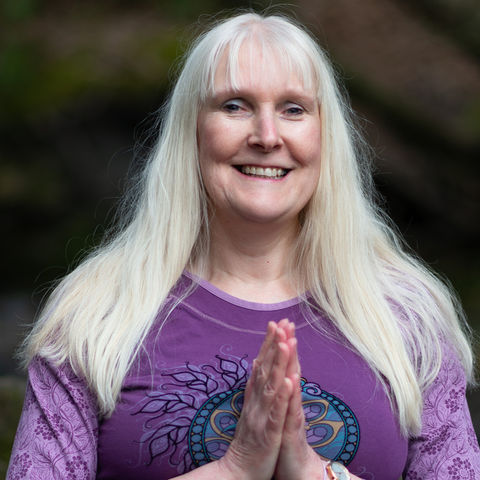
This is Living Lightly with Jenny Light.
Yogic philosophy,
Guided meditations and pranayamas.
Please subscribe for all future podcasts.
Welcome to today's session.
Enjoy.
Today's session is on yoga for calm endurance.
From yoga we learn tṛṣṇa,
Which is a Sanskrit term meaning patient endurance,
As a practical approach to ride the storm of the pandemic.
While in our lucid moments logic tells us that this situation will not last forever and that we can then get on with living our lives.
But locked within our own four walls with minimal face-to-face interaction,
As social creatures this can be very tough.
The tṛṣṇa teaches us then that what we are perceiving in this moment will change and you only need to put one foot in front of the other,
One breath after the other and that you will come out of the tunnel at the other end.
Nothing lasts forever.
Everything in this transient world is subject to change.
It is a heartening assurance that when the pendulum of life swings to the extremes it will eventually return to an equilibrium.
And while it can be quite unsettling in the midst of an extreme shift of change,
We know that we have all been through difficult periods in the past and we will get through this.
Yoga then becomes a lifeline,
A buoy to save us from drowning and social isolation.
Here then are a few of the ways in which you might use your physical asana practice,
Your pranayama and meditation to practice patient endurance.
First of all you could earmark 30 minutes in your day when you have no communications,
No intrusions.
In a lifestyle of virtual communications it's important to have no interruptions in order to give your full undivided attention to your yoga practice.
Research has shown that people were far more distracted when their phone is present in the room,
So switch off notifications and mute your phone or even put your phone out of the room.
Start with an affirmation to set the intention of your practice.
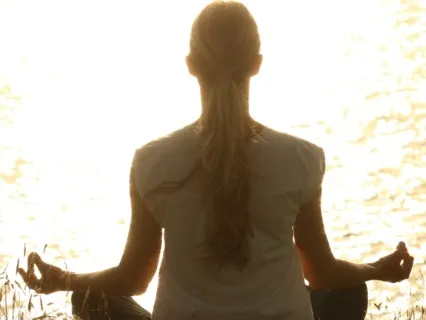
Sitting upright in sukhasana,
Which is cross-legged pose,
Bring palms in namaste,
That's praying hands,
Toward the heart and gently close the eyes.
Breathe in deeply and sigh out.
Breathe in deeply and sigh out.
Take another deep breath in and sigh out.
Once more take a deep breath in to the body and sigh out.
Draw your attention and will to the brow centre.
This is the point between the eyebrows.
A firm,
Bringing your willpower here.
I am calm.
I will patiently endure all of life's changes with strength and calmness.
Again,
I am calm.
I will patiently endure all of life's changes with strength and calmness.
And once more,
I am calm.
I will patiently endure all of life's changes with strength and calmness.
Yoga practices are designed to discharge physical,
Emotional and mental restlessness or static,
Lubricating our physical and energetic systems with oxygen and prana or life force to be better disposed to sit quietly for a restorative meditation.
If we do not have mental or physical calmness at the beginning of a practice,
Then the practice itself quickly reinstates and writes us to calm within a few asanas,
A few movements.
Calmness is the ultimate result of yoga.
Patience is required to allow your yoga practice to work its magic over a few weeks and months and to a certain extent within the 30 minutes designated to your individual daily practice.
It doesn't really matter which asanas you choose.
Physical movement that is partnered with concentrated attention in tandem with a synchronized breath will be enough to change your state of being.
Although do try to have a mixture of standing,
Kneeling,
Inverted postures,
Twists,
Balances and prone postures to have a balanced practice over the period of a week.
There are many videos available on YouTube of physical yoga sequences that might last 20 minutes or so or if you have any knowledge of yoga just play with your favorite postures.
The important point to note is that you bring your physical yoga practice to a certain level you bring your mind to the yoga practice,
You bring your mind to the mat as it were and that you can make the confines of your mat the extent with which your mind stays for the period of that practice.
So that when you arrive on your mat,
Bring hands into praying hands,
Eyes closed toward the brow center and start your affirmation and from there flow into several yoga postures that are to your choosing but keep the mind on the task.
Keep the mind on what the body is doing with the inhale and the exhale of the breath.
So the ratio of asana to pranayama to meditation over a 30 minute period is important.
If you have an un-tutored busy mind then the ratio would be something like 20 minutes of physical posture,
Five minutes breathing and five minutes meditation.
Those with a restless butterfly mind will benefit from a particularly physical practice such as surya namaskar which is the sun sequence which flows from forward bends to lunges to down head dog to pose of eight points to cobra back to down head dog stepping forward again into lunge both feet together at the head of the mat head of the mat unfolding again back in up into standing and opening the arms either side of the head as you breathe out into a slight back back bended to a sunburst and then coming back to rest with the hands in namaste,
Praying hands at the heart.
But if you already have some experience in bringing the mind and the body to calm during practice then the ratio might be something like 10 minutes of asana,
10 minutes of breathing and 10 minutes of meditation.
The most important factor to apply in any ratio is attention.
The attention must be in the asana present in observation of the breath and alert and awake in the meditation irrespective of whether these are long or short time scales.
So just be in your asana practice trusting that while you are engrossing your attention in the movement the practice is working its magic stripping the body and mind of restless useless static replacing it with a prana be calmed acceleration which further invites your attention to show up in the present moment.
Five or ten minutes of nadi shodhanam which is alternate nostril breath will clear wisps of residual static and charge the cells of the body with vitalizing life force.
The nadis are the energy pathways of the energetic or astral body which like nerves of the physical body lead back to the physical spine and into the brain.
The 72 000 nadis of the energetic body crisscross the string of chakras on the astral spine and lead up to sahasra which is the astral brain.
So nadi shodhanam then is cleansing of the nadis the energy pathways of the astral body and it's a bit of a miracle how five or ten minutes of nadi shodhanam breath practice breathing in through one nostril and out through the other has such a profound chloroform on anxiety and a chloroform on mental restlessness in such a short space of time.
The practice is to set up straight have the spine alert and erect chin level and placing the fingers of one hand lightly over the nose so that the thumb closes one nostril and the little finger and ring finger close the other.
The other two fingers can be placed on the brow center or they can be tucked into the hand so that you start by closing the right nostril and you breathe in through the left one full inhalation close the left nostril and breathe out through the right nostril breathe in a full breath through the right nostril close the right nostril and release the left nostril breathing out fully so you're going for full breaths having no retention of the breath after the inhale or the exhale it's just the inhale just the exhale one full inhale into one nostril and out through the other.
Just continuing to your comfort or your allotted time period whether that be five minutes or whether whether that be 10 minutes not only will you notice the difference within the mind being clearer but you'll notice that the brain functions clearer because you're not only bringing prana and life force into the body you are really oxygenating the body through those very sensitive membranes in the back of the nasal cavity but notice how bright the brain has become how clear the thought processes.
I'll repeat again it's a bit of a miracle how five or ten minutes can make such a difference.
And last of all in your daily practice comes meditation.
This is the pinnacle of your practice.
Those who are new to meditation often find that they are besieged with a restless mind and even assume that meditation makes the mind more restless but the truth is that the restless mind is no more restless than it was but when the eyes are closed and the attention is temporarily divested of the entertainments of the external world it can seem to be more restless.
Even if you do not think you could close your eyes and give full attention within just give it a go.
Attempting meditation after asana and pranayama it is remarkable what you can achieve because practice of a few physical postures with attention with breath and clearing the nasal cavities and the nadis with alternate nostril breath the mind is already in a clearer state a calmer clearer state so it's remarkable again what you can achieve.
Let's think of an analogy let's think of a glass of muddy water if you allow the water to become still the sediment settles to the bottom of the glass but if you mentally stir up the contents with restless thoughts then the water becomes muddy imagine that you are watching the mental silt settle to the bottom of the glass and just observe the thoughts if you don't engage with them they just sink to the bottom use each breath to mentally ride the inhale and coast the exhale ride the inhale ride the inhale and coast the exhale without disturbing the water in the glass this is to texture calm endurance enduring the inhale and enduring the exhale observing that the silt in the water those heavy particles gradually settle down to the bottom of the glass and the water becomes clear in the inevitable times in life when we're struggling with trials to texture lends us great strength i think that each one of us will have already endured loss pain and extreme periods of difficulty and traveled through many tunnels into the sunlight at the other end it's just that while we are in a tunnel this can seem overwhelmingly difficult but we can't can't let that monkey mind run away on the thoughts of negativity or alarm just keep calmly breathing and say aloud or mentally this too shall pass in this moment this too shall pass riding the moments this too shall pass yoga helps us to develop that strength of will yoga helps us to develop that strength of will to apply patience to determinedly plod one foot in front of the other toward the light at the end of the tunnel even when that end isn't inside cling steadfastly to the raft of your daily practice for with it comes a strength that i might not be able to do much about what is happening in the world but i can do this a 30 minute wonderful transformative practice is all it takes to lift the mind hone the body and prepare the consciousness to inner calm so the meditation that we're working on today is a short five minute meditation assuming that you have used your physical yoga practice for a few of your favorite postures that you feel enlivened from that that you have spent at least five minutes in alternate nostril breath calmly breathing in through one nostril and out through the other and then coming into your upright posture for meditation this is a particularly calming meditation it's a grounding meditation that helps with balancing and we're using a hand mudra a hand posture for this one so it's sitting upright and extend the ring finger of your left hand and wrap the fingers of your right hand around the ring finger of your left hand and allow the right thumb to rest inside the left palm so you're gently encircling the ring finger of your left hand and just let the hands rest on the thighs and then closing the eyes just let that calm of nurturing the ring finger of the left hand and visualize that you're standing in a field of golden grass it is high summer with a blue sky overhead and the solid earth beneath your feet and there is a gentle wind blowing through your hair and rolling through the grasses in this field watching the golden grasses rustling in the breeze and that breeze also lifts away all your restless thoughts as you breathe in the golden grass sway toward you and as you breathe out the grasses wave away from you in all directions your in breath brings the golden grasses swaying toward you and your out breath has the grasses swaying away from you in all directions so that you become the epicenter of the field of grass which moves towards you as you breathe in and ripples away from you as you breathe out just staying with the visualization of a field of grass moving toward you with the inhale and extended away to the far edges of the field in all directions as you breathe out that your breath is powerful and that your breath describes the movement of the grasses breathing in the field of grass moves toward you and as you breathe out all the grass ripples away in all directions as you breathe out much like the ripples on a pond when a stone is dropped in concentric circles that extend away to the far edges of the pond breathing in the grass moves toward you and breathing out the grass extends away in all directions just staying with the calming inhale as the golden grasses move toward you and the exhale as the golden grasses gently sway away from you in all directions allowing your breath to be the instigator for the movement of nature with the inhale and with the exhale and then with the inhale and with the exhale and then noticing how calm you feel perhaps the mudra,
The hand gesture is working its magic bringing a deep sense of calm in the tailbone feeling grounded feeling very calm in the abdomen feeling very calm in the breath if you like you can swap over now so that you circle the left fingers around the right ring finger with the left thumb in the right palm and just resting the hands on the thighs this is very calming for both hemispheres of the brain and also for the right hand and also for the entire sympathetic and parasympathetic nervous system of the physical body it helps us to become in tune with the earth element that groundedness beneath our feet that is associated with feeling grounded in the base chakra muladhara which is in the coccyx area but just breathing in the field of golden grasses move toward you and as you breathe out that field of golden grasses moves away from you just staying with the breath for another few breaths few breaths feeling the calmness on the inhale and as you let go and the breath moves away with the exhale letting this calmness sweep over your entire body letting that calmness sweep over your entire mind as if your mind were this field of grass swaying away to the far horizons with the exhale and making this breath your last one let that calm sensation in the belly be held in the body and mind as you gently release the mudra of the hands let both palms come into praying hands at the heart and finishing again with your affirmation i am calm i will patiently endure all of life's changes with strength and calmness i am calm i will patiently endure all of life's changes with strength and calmness i am calm i face all of life's changes with strength and calmness home shanti peace amen and so over your 30 minute practice you can bring strength to the body calmness to the mind and build your endurance of whichever situation you happen to be facing so that you can weather the storm as it were until you are once again in the sunlight at the end of the tunnel so bearing all of life's changes with strength and calmness my blessings to you all my blessings to you all