The easiest way Homeless and welcome.
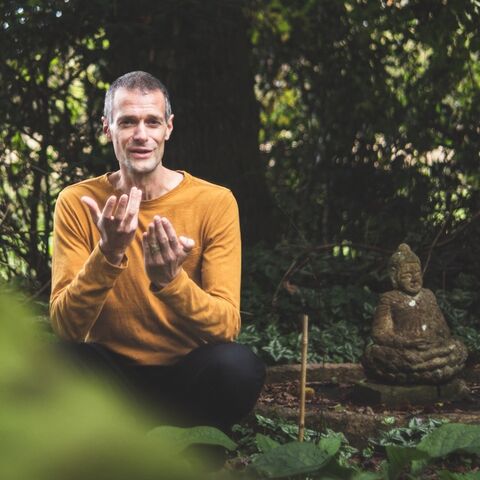
This is Josh Dippold from Integrating Presence and today's topic What are thoughts?
Are dreams like thoughts?
So the description I have here Let's pow wow for 30 minutes or so on these two questions That came from a distortions and dream event that I recently led And address any parallels between thoughts and dreams We may even do some mindfulness of thinking meditation So this will be in two main parts.
I'll allow you all to draw most of the parallels on your own dreams and thought I'll kind of address each one.
We'll start with thoughts What are thoughts and of course standard disclaimer that this is just pretty much my own Experience in research this information sharing is it's not to be taken as truth It's just a starting point for your own investigation and research Yes,
I'm not responsible for you do or don't do with this information And of course,
This is only going to scratch the surface because you know thinking It's just a huge vast topic and that's only one small part of mine,
Too So the standard our definition here thought we'd define As a group here what we mean by thought before we get going it's an an idea or an opinion Produced by thinking or occurring subtly in the mind.
It's a dictionary definition It's also the actor process of thinking of course.
We all know what this this means It just kind of put words to this right our conscious cognitive processes that can happen independently of sensory stimulation And then thinking of course is the process of you one's mind to consider a reason about something So when you look at into this more simply in your own experience There seems to be kind of two camps of people usually That think in either images or words.
So the images is pretty straightforward words can be like a voice are also Seeing images of words.
It's from what I understand.
That's a little bit more rare.
There's a teacher joseph goldstein and he talks about thoughts being faint blips or like bubbles like these wisps of smoke that are barely distinguishable that just Very ephemeral very subtle a lot of times Kind of popping but then again,
Of course thinking can become very pronounced very at the forefront of our experience too That Just depends on kind of the causes and conditions.
So the big question here is for me Anyway is where do they come from?
I think if you ask science where they come from?
They don't really know so much.
Um,
Joseph goldstein's teacher in india uh,
Merningerji If i'm pronouncing that right I remember him saying on a talk that he said they come from outside the mind And that's was a really provocative statement or claim for me and it really wasn't elaborated on And i'm not going to elaborate on i'll leave it at that for now but science And now this is probably a gross mystery Representation and jump in here to add to this please They seem to think it's just kind of like this electrochemical Occurrence or processes in the brain and somehow that translates to particular distinct thoughts so like if they put you in an mri and They test on thinking and then they will map the brain which parts light up uh intensities and things but is So depending on causes and conditions would that happen the same inside or outside mri machine?
Would um You know what led up to that time?
If something else would have happened would that the same test have been the same?
What if the certain areas of the mri light up in different ways?
Certain areas of the mri light up in um different people but then they have different thoughts or thought processes So there's just there's just so many different causes and conditions that could be gone into so it seems really complex and of course they're trying to kind of map and catalog And build databases and use ai and machine learning and algorithms And trying to quantify and preserve Thinking in the mind there's tons and tons of this now I'll just leave it at that for now.
So so before we get into just the thoughts or thinking more Specifically,
Let's do some background on this.
Um So this includes the broader range of mental activity is what it's often called in mental formation So this might include judging reasoning concept formation visualization problem solving deliberation considering an idea memories conversations reflections Imagination contemplation and volition as well.
So if there's any others That i'm missing Maybe you can come back to that So there also seems to be this emotional feedback loop with thoughts.
So a lot of times thoughts will drive emotions and vice versa the emotions can fuel certain thoughts and As soon as we can realize this we can focus on one As we take our foot off the gas pedal of one The momentum tends to slow down a little bit So you can try this for yourself the next time the the mind's out of control or the emotions are out of control or seemingly out of control They seem to be amped up High speed can tune into one of those and see how it's being fed.
Is it being it's like for an emotion?
Is it being fed and fueled with more thoughts?
Or is vice versa is is the thinking mind?
Take a pause and look at the emotional experience emotional body and see what kind of emotions are going on there And if they keep occurring Okay,
So Also moods obviously are really important.
So moods are kind of like the season Of the mind right in the kind of thoughts and emotions are more like the weather so mood tends to be like Something that sticks around a little bit longer emotions tend to or I guess intense a lot of time or short-lived So when we talk about The mind there's the e what is it the eg?
Spectrum eg frequency of alpha beta delta gamma and theta waves I won't go too much into that Mostly because I don't really know at least from the perspective of the mind How to speak much to that there's also brainwave entrainment So I guess that's when they hook you up to an eg and Study your brainwaves and do certain procedures perhaps to affect a certain outcome of certain brain waves For particular results and do training that way And of course the brainwave is a good example of that training that way And of course there's pattern recognition which humans are fairly decent at supposedly Be able to pick out patterns within a bunch of data It's also pattern completion.
You've seen the thing that um That you can fill in like sentences without the vowels.
I think it is and then you don't need the vowels You can just fill in the gaps or I think there's allusions where pieces are missing You don't really notice it until you look the parts that are missing Of course,
There's conditioning like Pavlov And then there's proximity I feel that affects mind too.
What we're around who we're around How close we are how intense that is?
And then i'll just mention some briefly the fringe and parapolitical here surrounding this probably starting from the more common To the less common more fringe TV programming it's interesting.
It's called programming right like we're programming a mind What you know,
What the intense the intent intense an agenda behind?
TV programming things like that are public information now like project mockingbird about Certain intelligence agency assets in the in the media.
Of course,
There's subliminal programming Of course,
There's subliminal programming.
We've seen these things or heard about these things Some people say it's overload and some people say it's not exposed enough about um,
What was it 24 frames a second and um did this experiment where they put you know,
A classic experiment where they flash coke and popcorn just like one One frame at a time and it just blipped and most people can't really perceive it But then people were supposedly going buying more popcorn and soda Um,
There's something called retinal induction programming Um,
I think that might be a specialized term.
That's not too wide Spread out there.
Actually,
That's probably Kind of ties in with subliminal things as well.
Now there is um,
Well something like this might be the seizures Like if you go to certain websites Sometimes you'll get a warning that if people are If people are um susceptible to seizures,
Please don't watch this because of the different frequency and intensity of light And um the duration and amount that it flashes on and off There was a um project that was declassified in the 1970s called any ultra and this involved the cia Doing different experiments with things like electrodes and lsd And um,
A lot of it has been destroyed but some of it was released and went through congressional hearings And you can you can read about this on wikipedia.
It's pretty mainstream.
It's not covered too much though And there's something called trauma-based mind control Which some people would say that part of those experiments has stuff to do with that I won't give that more energy that needs if you're interested in you look that up And some of the most obscure things are something like called remote neural monitoring And there's a whole book by uh,
Dr.
Robert Duncan who's um claims to be ex-cia And in his book project soul catcher,
Let's leave it at that of course in mythology There's a character in Egyptian mythology called thoth and just the word thoth is similar spelled to thought and um and That's pretty widespread information that you can look up on that and how that may or may not be related Beyond Thinking and thoughts and these experiences beyond the frequency spectrum of thinking when we still and quiet the mind Which just happens fairly?
Naturally with decent meditation instructions and a regular consistent practice Then the mind will calm down and settle and then there's these um states of consciousness that are possible called jhana And these are in eight levels and they're divided into form and formless states the first four form The second um are formless And i'm not going to go too much into these there's other information on my sites and give information on on this but these are not everyday states of consciousness that Are possible to reach uh with meditators and they go into gradually more and more subtle refined states of consciousness Starting with kind of joy on up to the the highest level of jhana Immaterial realm that's called the the sphere of Neither perception nor non-perception.
I mean such a rarefied state of consciousness is that Okay So what if thinking was kind of like an interface what if Experience perception and consciousness can be translated into words and images kind of what we um Our everyday life and our experience if we can translate those into thoughts and then vice versa Where words and images can influence our experience perception and consciousness Okay now back to phenomenon of thoughts and thinking so um,
There's a meditation teacher and Psychologist tara brock.
I like her material especially this question.
I like to throw it People if they're open to it is What's here now if there's no problem to solve?
And some people can't even fathom even considering that even as a hypothetical question have to kind of Emphasize.
Oh,
It just is this hypothetical like a thought experiment,
You know Because they really hardly can perceive a world or even just a few moments without any kind of problems So what's here now?
There's no problems to solve There's nothing to fix or change what's here now?
And i'm not going to answer that for you.
I'll just go into the other thing that she talks about this trance of thinking So we can get lost in thought.
That's another good expression Where we're just so absorbed into the thinking mind that we don't really even notice that thinking is even happening Until we become mindful that thinking is happening.
Oh i've been thinking Especially in meditation.
It's really easily noticed I've been thinking for five minutes and I had no idea.
I was sitting here with my eyes closed.
I've just been Lost in thought and so what tends to happen with this is it becomes really tricky.
Um,
Some people will demonize thoughts Really kind of lay into them and say oh you have to you quiet there.
You have to completely stop thinking and well,
That's okay But I don't think they're the enemy as well But then on the other extreme you get the worshiping thoughts and the thought of the mind But then on the other extreme you get the worshiping thoughts and intellect and just keep feeding discursive thought and what what not so I think it lies somewhere in between you know,
Um it's kind of like it's like maybe Thinking is like a this analogy where it's like a sledgehammer And it works great for certain things,
But you wouldn't want to make a cake with a sledgehammer,
Right?
And so overthinking can also act as an alarm clock.
I like this kind of teaching and analogy um,
You're kind of overthinking or just kind of the minds out of It seems to be an issue then can use that as oh,
Hey I need to tune in to my heart now tune into my emotions and what's going on in the heart So it's kind of like to wake us up to to check in with that and a lot of times and a lot of times um overthinking can be used as an escape for pain so All the different strategies for escaping pain one of them is a distraction into thought To avoid feeling or turning towards pain and seeing how it is now Of course things can get so overwhelming that we can't just always dive into the pain and just live there and be there Because sometimes it can get pretty severe and i'm not just talking about physical pain talking about like psychic and mental pain emotional pain So the heart tends to amplify things right?
So what are we?
Aligning with What is what is the heart aligning with and what are we using it to amplify?
I mean emotions can actually be very helpful to Pour a lot of energy into amp up something so it's um Very important to realize what the heart is in alignment with and what it's amplifying,
Right?
And This notion of using thinking and not thinking using being the master of thoughts not thoughts mastering us And i'll just wrap this up by saying that it's often said in um,
Terra vada buddha circle circles that The arhat are the fully enlightened ones.
Um,
They will only think if they want to there's no kind of Stray thoughts right because if we tune in maybe at the end here briefly there seems to be Some agency to some of our thinking and then but some of it just seems to occur out of nowhere without Us willing or wanting it to happen For whatever reasons if we're just observing thinking thinking mind Okay now onto dreams to define this A series of thoughts images and sensations occurring in a person's mind during sleep number two a cherished cherished aspiration ambition or a ideal And we're going to focus more on the first definition of what happens during sleep states kind of covered That second definition on the last event.
This was derived from And i'll be borrowing a little bit from ajahn puttadamos.
Um,
Talk on a couple talks on dreaming So there's various states,
You know,
We um pretty much all know this right,
Um states That we can experience dreaming deep sleep and waking states Um,
The fourth one kind of I just kind of lump a bunch of things together on the fourth one like meditation Kind of can touch into all those potentially substances of course certain drugs and substances can induce certain States that maybe not wouldn't fit directly into those other states.
There's altered states maybe like through drumming Chanting practices.
I mean this wild practices like people being buried.
Um,
You know With enough oxygen,
You know,
So they're not they don't die obviously And then a mix of all the above Can be as well now the the buddha says that there's these different types of dreams So it can be visions of the past either in previous Lifespans,
Uh,
If people are willing to consider that we could there can be dreams of visions of the future I'm sure pretty much everybody if they have any at least experience that for themselves They've heard,
You know dreams come true,
Right?
Okay messages from other realms.
That's kind of a more rarefied one where If we're open to things in dreams,
Um angels or devas or devas or other beings from other places And this could go into who knows,
You know,
Um,
If you're open to considering things like this even could be like,
You know technological or you know remote influencing people talk about But then the other one is um wind in the belly.
I think he called it.
So it's just kind of like,
You know,
Um,
Just different nighttime phenomena that really doesn't need to be put much attention on There's that thing where if you're like in a cold room at night and um,
Maybe you'll have some kind of dream like I don't know there's like a lot of ice or ice cubes Or something to do with um coldness in general So the big question I have for this or you know,
Where do the dreams come from and how do they happen?
Like how does a particular dream happen versus A myriad of possibilities of that could be happening It's also said that loving kindness,
Um meta is Is great for uh,
Sweet dreams having sweet dreams.
I do this oftentimes at night and just wishing people well Wishing safety Kindness happiness ease strength health well-being Being free and just can run that through whoever you are Like just really calming protective.
So when we look at dreams you have to look at perception And consciousness so in everyday life,
You know perception is kind of like our recognition and consciousness is knowing so Let's take the visual consciousness shape and color It's usually kind of the senses really only see it said shape and color And then the other thing is that Our senses really only see it said shape and color and then our perception our recognition of what that particular shape and color is Is then given a recognition of perception so in waking life,
You know,
That's limited by the acuity of our senses and um the faultiness Falseness perception i'm sure we've all seen things where it's been dark out a classic example is like a rope And it's being mistaken for a snake Um,
I think it depends where you are in the world.
Maybe people in the north might mistake like a tree stump for a bear So when we dream the those limitations are fall away a lot perception opens up There doesn't seem to be as much limitation on perception and with the daily meditation practice to the perceptual sphere Perceptual field starts to open up start to see more choices Different ways looking at things considering things and viewing things in more of an expanded perception perspectives So we talk about deep sleep too.
It's in terra vada buddhism.
It's called.
Um,
They call it Bhavanga consciousness.
So this is kind of like the you know,
It's a deep sleep There's no dream going on during that portion of sleep.
It can also experience this when we're drowsy and then the mind Isn't take or between the mind taking up objects Objects,
So whatever the mind focuses on and before it focuses on the next thing There's just kind of gap where it's not focused on an object there's even this place,
Um and I think buddhist cosmology where um these yogis would suppress their consciousness and perception,
Um,
So kind of They wouldn't want to hear anything see anything or be conscious of anything They would do all these extreme practices to blot all this out and the buddha condemned this and there said The next life they would be born in a heavenly realm Where they wouldn't remember any of it So they would only remember like the very beginning and end of it and then for I don't know how many eons or however long a time Um,
They would have no memory of it.
They might be having the greatest kind of pleasures and time but no consciousness of it So the other interesting thing to look at with dreams and consciousness like this is going under Being administered an aesthetic and i've never done this so I can't really speak to this But from what I hear the stories I hear is that um,
It's different than deep sleep because a lot of people will just go You know two Or ten and then go and the next thing they know they're they're waking up in the recovery room Um with a deep sleep though.
There seems to be a passing of time.
I guess some people have experienced passing of time while going under and anesthesiology um,
But from what I understand most people,
Um,
Just kind of there's The sense of time passing is not similar to deep sleep.
So now we can look at lucid dreaming practices I've done a little bit of this one of the things i'll just go through some techniques here and by lucid dreaming I mean When you're dreaming you're aware that you're dreaming,
You know,
You're dreaming So what you can do is pretty much anything some people fly some people have relationships with as many people as they Or whoever they want which I don't know if this is the wisest thing or not.
I think in the Tibetan tradition Visualization of a 16 pedal blue lotus at the throat chakra and this is supposed to be said to be Involved with dreaming the one that I have done is Last and first breath.
So Paying attention to the last breath before you fall asleep,
Which I have yet to do I've tried I haven't been able to do that yet,
But keep sitting the firm intent and resolve To see if we can become aware of the last breath before drifting off into sleep and it said you become pretty much lucid And a lot of people I know at least when I become aware that i'm dreaming a lot of times i'll just wake up Because it's um I don't know.
I don't know I won't speculate on why but the one thing I have been able to do though is kind of pretty much catch the first breath upon Waking and this will kind of wake us up pretty much instantly if we're aware of that if it's an in-breath or an out-breath the first breath upon waking Another thing is reading in dreams So i've done this before i'm going to dream and i'm reading something and I look away and come back to it and then it's completely Different some people I think experience garbled text but for whatever reason It just seems confusing when I I don't don't put two and two together and realize it's a dream a lot of times Or when I do I wake up again just kind of like this frustration of going back and forth to the text and it being different Each time the other thing is looking at your hands.
That's said to be a common one to look at your hands while you're dreaming I don't know about that.
Maybe they Distort and a common one is asking yourself throughout the day Sincerely am I dreaming getting to the habit about five times a day just taking a break and say okay right now And so this builds up a habit so it supposedly will carry over into dream state So you ask yourself in a dream am I dreaming and then oh you might realize that oh you are dreaming again?
It might wake you up or you might Turn lucid to a dream.
Another one is light switch flipping the switch Another one is light switch flipping a light switch on and off A lot of this is also in the movie waking life Kind of like a rotoscoped which means animate.
It's shot live action and then animated over the top Walking meditation is the newer one i've heard.
I don't know exactly how this works But see if you can do walking meditation in your dream I know I was having these dreams for the longest time where I would I couldn't find a place to meditate my dreams That was my goal and I just kept getting distracted or something would happen and I couldn't find a so I had this like this weird kind of anxiety of Trying to meditate what um and not being able to in a dream Okay,
So there's all kinds of devices you can buy too for this if you're interested in I I don't know much about these um,
I think there's one that will flash some kind of lights when you're getting in certain states that are peak times for um dreaming maybe in certain areas of rim rapid eye movement and that's can Supposedly indicate that you're in a dream without waking you up if i'm getting that right.
Another way is to set an alarm Um,
This is kind of harsh,
But you set it for like I don't know 3 42 in the morning,
Um if you're sleeping during that time And kind of wake up and it's jolts you out and more than likely you'll be able to Remember what you were dreaming at at least for that short amount of time right before you woke up with the alarm and journaling that's Classically recommended to as soon as you wake up and remember a dream keep a journal right by your bed And write down what it was and you can do any interpretation Later on that or then too if you want to go back to sleep or not It's an interesting question to see if there's awareness in deep sleep And there's some yogis that claim they can be aware while they're in deep dreamless sleep Just knowing that and so I don't know about that.
I can't really speak to that And then the also the other one is I thought was fascinating sea mammals can sleep Or actually sleep with one half of half of the hemisphere of the brain while the other half is awake That way they can have some kind of you know protection if they need to move or do something So not entirely all the brain isn't entirely asleep so what we're going to do now is a mindfulness of thinking if you all would um,
Feel called and moved to do so So let's just close your eyes take another keep a couple deep breaths Kind of let the words fade away from what i've been speaking on You can return to your natural breath Invite you to turn your attention to thoughts and thinking being mindful of thinking So if there's no particular thoughts happening there's no incentive to make those happen right now Just kind of Just kind of let your thoughts go And then you can turn your attention to thoughts and thinking Make those happen right now just kind of occupy the space where thoughts arise from So turn your attention there so So you can notice if you're more of a visual image thinker if thoughts happen in images More or In words either as inner voice or just language Or maybe even a visual image of words So if no thoughts are thinking are occurring Just for the sake of this meditation we'll drop in this Don't think of a pink elephant whatever you do do not think of a pink elephant So notice what happened And if it was a visual did you notice where that image appeared for a lot of people it's kind of like In front of the face maybe a certain distance away Or maybe even inside the head then we can look like a look into like a movie projector where we seem Where does it seem to be coming from and then where is it experienced?
So sometimes it can be seeming to be projected from the inside of the head and then displayed Outside the face or it could be elsewhere If it's a language or Thinking and words can notice what part of the body that seems to be coming from Sometimes it's just a little bit of a Something that seems to be coming from Sometimes it could be the head can be the throat If we can tune into if it's a inner voice if that voice is our own If it happens to be maybe from an authority figure or a parent maybe a teacher A friend whoever it may be And let's just spend a few more moments observing thought and thinking So being the observer observing the thought not being the thought or entangled in the thought Maybe like you're watching tv or you're listening to a podcast And again if there's nothing happening that's okay It can just be in the space where thoughts arise from return to perhaps And now more subtly tuning in that tuning still into that space where thoughts arise from See if we can detect the energy what it's like energetically Before thoughts arise and then see if you can catch the the arising of a thought the first moment You're aware of it and then if it persists for however long and then it's passing It's rising and falling Very subtle phenomenon thinking There may even be a possibility to kind of sense when a thought is arising and a choice to have it bubble up into awareness Or choose not to have it bubble up in awareness It's less of a control than just kind of a sensing a choice Maybe I'm wondering if this is suppressing anything.
That's a good question.
I don't know Okay in a few moments I'll end this brief mindfulness of thinking meditation Without a bell we'll end it here and when you're ready you can open your eyes bring yourself back to the room or space find yourself in in this moment You can wiggle or move around Do any movements that feel good I wish you all very sweet dreams pleasant dreams productive dreams and kind of knowledge of dreams and whatever you may wish when it comes to this as well as exploring thinking and how to hold and view and express yourself And respond to thoughts and thinking mind much love and blessings