Wholeness.
Welcome.
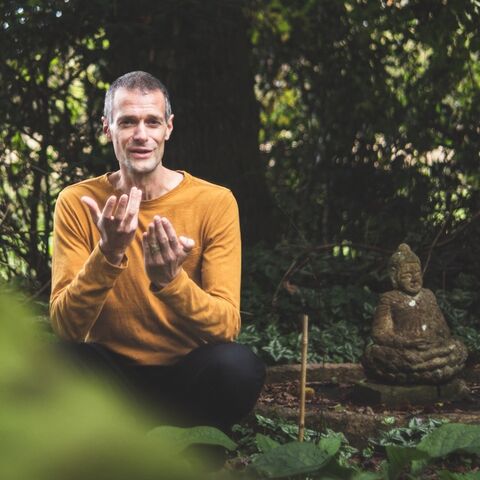
This is Josh.
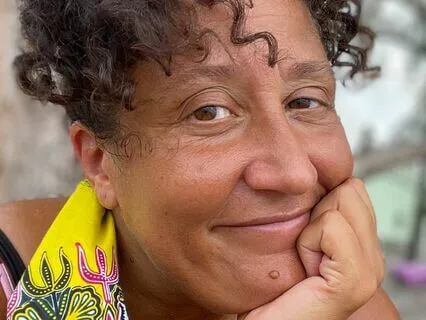
And today I've got Natalie Bedard with me.
Natalie,
How's it going today?
Going really well.
Yesterday was a different scenario because it was hump day.
Yeah.
Today is going much better.
That's right.
Here in the Scandinavia,
It's the worst day,
Right?
Day of Thor,
I guess.
So today I've got Natalie with me.
And so who is Natalie Bedard?
And what kind of work does she do?
Well,
Natalie really goes by Nat-Nat.
It was a nickname that was given to me by my friend whose name is Natalie.
Her son couldn't pronounce the L,
So as any child,
They duplicate things.
So he called me Nat-Nat,
And it helped to differentiate because two Natalies and a child is like,
Well,
Who are they calling my mother or this woman?
And it just stuck with me.
And the type of work that I do,
It's very playful.
So I engage people to enter in a space of playfulness and openness so that they can allow their curiosity to be around.
Who am I?
I'm somebody that is continuously trying to discover what life is,
The experiences.
What I've been told that it feels like to be in my presence is nurturing,
Deep listening,
A lot of laughter,
Tears.
A lot of space of just being true and being open and allowing to be seen in that naked truth without having to put all those masks on to feel like you need to feel a sense of belonging that you're accepted just as you are in the moment that you are.
And then finding the verbiage to explain our experiences.
I think that has been the most challenging thing that I've had to go through of really giving myself verbiage for what I've been experiencing and going through and traversing in this dimension of what we call the earth and the world and life.
The verbiage can definitely help.
Sometimes it can be a blockage,
But other times it can clarify and really provide residence and connection.
And that sense of belonging you mentioned is really important too.
You're a meditator,
Right?
You work with the breath,
The breath practitioner.
Maybe we might call it that.
That's my current meditation object.
So anytime anybody wants to talk about breath as a meditation object involved in meditation,
I'm all ears because honestly,
I find it quite challenging to just be so simple and stay with something so simple.
So why don't you just jump right in here and tell me about your relationship with breathing,
The breath.
I think you have a story around it too,
Perhaps.
So yes,
Put some verbiage on here.
I do.
I do.
Well,
It's almost going to go on 11 years that I was hospitalized and told I was possibly going to die in six months because I had lesions in my brainstem and in my cerebellum.
And you know,
Have it be.
That wasn't a very fun experience.
I was in there for almost 40 days.
They were trying to discover what was causing the lesions and if the medical system doesn't have a diagnosis,
That means you go through very painful tests in your body.
So I did biopsies and spinal taps and radiation was put inside me.
And eventually they said,
You know,
We're doing all these tests,
But the information is coming back inconclusive that it's atypical.
There is something yet what it is,
We don't know.
So I was discharged from the hospital without a diagnosis.
So that means without a plan.
And I was a solo parent to three boys.
And at the time,
The twins were four and my oldest was 18.
And anybody that knows twin boys already is very rambunctious.
But when you're in a low state like I was,
It was very challenging.
And I had to really listen to what was going on internally and really start feeling my emotions,
My authentic emotions.
Fast forward to a year later,
A friend had asked me,
You know,
I'm going to go learn about meditation.
Do you want to join me?
I'm going to go to this open discussion.
And I was like,
I didn't really know.
All I knew about meditation is people want world peace.
So I'm like,
Okay.
So I went and lo and behold,
That's where I found my jam.
It was in the beginning of my meditation journey was TM.
So it was transcendental meditation.
And they give you a mantra,
Which is a sound,
Which helps to distract the analytical mind so that you can go profoundly internally.
And really what it is,
Is releasing the defense mechanisms of the nervous system.
Like this ego that people talk about is the defense mechanisms of the nervous system that's protecting your vulnerability.
So when we do our healing,
It's like,
Oh,
I want to be in my vulnerability,
Yet I keep going in this defense,
This projection of a mass to be able to walk in this plane of earth because of the pain it feels to be myself,
To be in that sensitivity and feel my emotions and better understand myself.
So the meditation allowed me to go profoundly within.
And I had a lot of trauma when I was a child and a lot of things that got suppressed.
So by doing the meditation,
Grounding myself in the breath,
It allowed a lot of somatic releases and me reconnecting more profoundly with the vulnerability and allowing my curiosity to be unleashed.
Thankfully,
Like,
You know,
From a young child,
I had a lot of critical thinking.
I questioned a lot of things,
Which,
You know,
The adults didn't really like that too much.
They tell us to ask questions.
Yet when you're asking some pretty profound questions and they don't really have answers for it,
They're like,
They get a little irritated by it.
And so,
You know,
I conformed myself and I dimmed myself to be able to navigate through the world.
Yet with this meditation,
It allowed me to reconnect into that part of myself.
And then,
You know,
Going deeper.
The other thing that gives me the proper language with meditation is that when you learn meditation,
They tell you to create a space in your home that's very quiet so that you can,
And with TM,
They want you to do it twice a day for 20 minutes.
And like I said,
I had twin boys and they were five now.
And anybody that knows twins or just five-year-olds,
There's no such thing as quiet.
And as I said,
I was a solo parent.
So what I had to do was take meditation into the living room,
Onto the couch while they were playing,
Fighting,
Doing all kinds of things.
And I got to be more intimate with my nervous system that when it would hear sounds or be,
You know,
Distracted by things,
It would want to interject and say something.
Yet I would bring my attention and tell it like the feeling and sensation to do something.
I would call it back,
Come back to the breath.
You don't need to do anything.
You don't need to react.
Come back to the breath,
Come back to the breath.
Sometimes,
You know,
I failed and yelled and went with that feeling.
Yet more and more that I sat with it,
I got to harness exactly what that is,
That dysregulated nervous system,
That judgmental part of our mind,
The analytical.
And also because I was an only child,
I didn't know how to relate to sibling rivalry.
I thought there was something wrong,
Like you're not supposed to fight.
Like we want to be in harmony and zen and all this.
And it's like I didn't have it in my experience.
What is sibling rivalry?
I had cousins that I grew up with,
Yet a sibling is a totally different relationship.
And twins,
Trying to get your own identity when you're always being compared to the other person that came onto the earth around the same time as you,
It's really difficult to,
You know,
Find your identity in that and want the parent's attention.
So I got to really profoundly understand more of myself because for me,
Parenting is one of the highest spiritual practice you can learn about yourself.
And I was engaged to learn about myself,
Not drink the Kool-Aid anymore of a parent thinking I'm going to mold my child into what I think it should be,
Or they should be.
I was actually going to take responsibility of what are they bringing up in me that I'm not able to communicate or be able to hold space for them learning and allow the messiness of it all.
Again,
There was a lot of mistakes that went on.
There was a lot of pushback within myself that I didn't want to see things,
Yet I engaged with that warrior work.
So present time now,
When I hold space for people and I allow them to enter the space of meditation,
They're like,
Oh,
I can interact with this differently.
And it's like,
Yeah,
Because I'm helping to co-regulate your nervous system and that you can see that there's a more profoundness,
There's a different dimension within yourself.
Yet you have to go through those defense mechanisms of the nervous system.
And if you may,
I would love to guide us into a meditation right now so that the listeners can,
You know,
Experience what it is to meditate with me and hear that frequency.
And some of them have never meditated before,
So they can take this mindful moment for themselves and see if it's something that can benefit them.
Sure,
Let's do it.
Jump right in.
Okay.
And I don't know if this is only audio for some people.
So when I asked Josh and myself to close our eyes,
Please don't,
Because I know most people are driving.
So safety first,
Keep the eyes open.
Get the other prompts you're able to follow with whatever activity that you're doing.
So Josh,
I'll ask you to get comfortable in your seating.
And when you're ready,
You're going to gently close your eyes.
And you're going to begin breathing in and out through your nose.
And you're going to bring your awareness to watching your breath go in and out.
You're not going to try and control your breath.
You're just going to be aware of its rhythm.
Allowing it to bring you into your body.
By now,
There may be some sensations or feelings coming up.
It's okay.
Let them come up.
You're safe to feel.
You're safe to let go.
Surrender the need to control.
Release the need to resist and just be.
Be with your breath.
Drop deeper into your body.
By now,
There's probably some thoughts or to-do lists that have popped up in your mind.
That's okay.
Gently bring your awareness back to your breath.
Creating space between the awareness and the thoughts.
And going deeper into your body.
Always redirecting that awareness to focus on your breath.
Yet not controlling your breath.
Just being aware of it.
Again,
Those thoughts may have come up.
Gently bring your awareness back to your breath.
Begin again focusing on your breath.
Creating more space between the awareness and the thoughts.
And dropping deeper into your body.
And just being with the breath.
Now,
While still staying with your breath,
At your own time and at your own pace,
You're going to gently open your eyes while staying with your breath.
In a way,
You know,
It's quite beneficial and pleasant and helpful.
You know,
We're so disembodied.
Well,
I don't know,
I can't speak for everybody,
But I know that I live in my head a lot,
You know,
And so that's meditation.
It's so great for getting more in touch with the body and allowing the nervous system to unwind.
And you mentioned control with it too,
Because sometimes there is an over sense of control.
Like it's me that's trying to control the breath instead of just letting the breath come to me.
Receiving,
You know,
And just kind of being a witness and feeling it.
Just the tendency,
Some of us have a tendency to do control,
You know,
And so that's a challenge.
Sometimes there's,
Yeah,
A lot here.
And what you said before,
I mean,
You sound like quite a full spectrum human.
I've got,
I don't have kids myself.
Friends,
A couple friend in Illinois,
They have two small children.
I said,
Those are now your Zen masters,
You know.
They will reflect back to you what needs to be reflected and you won't be able to ignore it,
Right.
You'll be tested,
You know,
You'll be rewarded,
You'll be challenged.
And yeah,
So they're doing pretty good with it,
I feel.
But yeah,
You are thrown right in the midst there.
And I think any measure of practice,
You have to be able to take it off the cushion for those that are fortunate enough to be able to have a formal practice and take it off the cushion,
Integrate it into your daily life.
Because if it's not,
I mean,
It has a chance of being just navel gazing,
You know,
But it can really have so many benefits.
Like I'm preaching to the choir here,
Right.
But we really see how our mind and nervous system can operate.
We set aside the space and see what's really going internal.
And usually things happen internally before they happen externally.
I can just go on and on and on about this.
I do have a question about the TM though,
From what I understand,
How did that's just not just a mantra,
But that plays a big significant role in it.
And do they,
They don't focus on breathing,
Do they?
Like specifically,
Okay.
So how did you get from TM into working with the breath more?
And she would lead meditations every week with us.
And it was Vipassana.
So what we're doing right now is Vipassana and it's allowing yourself just to be with the breath.
So I don't know if you've ever heard of a 10 day silent retreat.
So they're being grounded with just the breath,
Bringing the awareness back to the breath and releasing,
You know,
The belief systems,
The control.
And,
You know,
To give that missing piece for people where they're like,
You know,
My mind's racing or I'm just in my head and going,
It's because we're not taught to feel our authentic emotions.
Most of us don't even know how to interact with our authentic emotions.
So we just do,
Do,
Do,
And keep going,
Going,
Going.
So we kind of,
It's running away from it and it's numbing and it's keeping us busy rather than feel what's going on internally and hold the space for these energies and these big emotions.
Because a lot of us,
Probably when we were young,
We were given a definition that those emotions aren't acceptable in the space,
Or they need to be,
You need to be experiencing something other than what you are actually experiencing.
Not allowing you to figure out a way out.
You were told to be something other than what you were experiencing.
So when we go into the meditation and where you heard in some of my prompts,
There's some sensations coming up.
Just let them come up,
Yet don't get entangled in them.
We usually get entangled because we want to control it.
We want to analyze it.
The part that,
You know,
Of the defense mechanisms that is telling you,
We have to be this way and your authentic parts like,
No,
Let me just flow naturally.
There becomes this conflict.
There's always conflict within ourselves.
And when we can better understand that conflict,
Then we can bring the harmony.
Yet until we acknowledge that there's always this duality going on,
We're not,
We're always picking black and white.
We're not in the spectrum of the nuance of things.
And just allowing these things and energies to pass bias.
Yet it takes warrior work to feel like when anger is trying to come up and you're told not to,
And it hijacks your behavior and you go into a habit of a pattern.
It's difficult to,
You know,
Interrupt that.
Yet you have to cultivate a space with others that will hold a space for you to see that it's possible to interrupt this,
To hold space and listen to the information that's coming up.
Because most of us think,
You know,
Emotions are supposed to take over our behavior and we're supposed to just take charge.
And it's like,
No,
Emotions are information.
Yet it doesn't mean that it's,
You know,
Absolute truth.
It's just information.
And we have to be able to listen to that information.
Yet a lot of us don't even know how to have that listening skill for ourselves.
And then we wonder,
Well,
Why is it difficult to listen to somebody else?
Well,
If you don't really listen to yourself and understand your own emotions,
What space are you really holding for other people?
And a lot of us are just trying to make other people feel good because that gives us a reward loop.
Rather than holding space to allow people to just be and be in their experience and hold that witnessing space that I can witness your pain,
And I'm not going to tell you that you have to get dressed or robed.
You can process it and I'm not going to disconnect from you.
But that's warrior work to do that.
Not everybody has that capability.
And I understand that I have that gift and I keep honing on that.
Yet the more that people start honoring it for themselves,
There's a space that it opens up a little bit more and a little bit more in the interactions in their everyday life.
And I love what you said,
Because a lot of people think meditation,
I'm going to cultivate a room and I'm just going to be there.
And it's like you're trying to use control again.
Meditation,
Yes,
At the beginning,
You have a sitting practice to better understand your nervous system,
Biology,
All these things,
See how it's so easy to get distracted with things.
Yet now it's like,
Okay,
Come back to your breath and take responsibility of no longer reacting,
That you can take a pause and you can go into a response and you can feel these emotions that are coming up and not let them cause you to do like this hot potato.
You want to project it off because it's just too intense.
And you're going to make mistakes.
Yet meditation is supposed to be in your everyday living.
And another thing that I am removing from meditation is that it's supposed to quiet your mind.
So many people quit meditation because they're like,
I'm not doing it right and my mind's going crazy.
And it's like,
Bravo,
You're being aware of what's going on internally.
And you're going to be able to have better information of how do I find the tools to navigate in this tsunami going on inside.
But a lot of people think meditation is going to be kind of like this pill that's going to numb everything.
And it's like,
No,
Because life is going to be impermanent and new experiences are going to come in.
So you're going to relate with yourself in different ways.
It actually makes you more sensitive to things.
At the same time,
It increases wisdom to know how to deal with that extra sensitivity.
You said so many cool things here.
Being comfortable with paradox,
Because there is a lot of paradox things that come up too.
Yes,
The mind will quiet naturally on its own,
But that is not the goal of meditation.
We see how kind of out of control the mind is.
And we have some control,
Seeming agency over thinking and thoughts.
But the mind,
I like this term,
The mind just kind of thoughts on its own,
You know,
And some people get freaked out by that.
But that's just the matter of fact.
Anybody that looks at their own mind knows that they're not 100% in charge all the time of their own mind.
And I'm sure that freaks some people out when they realize how chaotic and out of control their mind is.
And that's OK.
It's serious.
I mean,
That's just how if you take a deep,
Long look and some people run so much to get away from not looking directly at their own mind.
But the thing you focused on here that's really important,
I feel,
Is emotions and especially for guys,
Right?
We're taught to not if you're emotional,
That's too effeminate.
You know,
That's for that's for women.
And you need you just straighten up and,
You know,
Get over it,
Man.
You know,
Just get over it.
And so,
You know,
On one sense,
You know,
This is where I feel the feminine really shines and expresses emotions.
But guys,
They have to be able to hold space to,
You know,
And space holding is kind of an art and science in and of itself.
And like you're saying,
With the emotions I know in my and my experience,
Yeah,
A lot of them are really unpleasant.
And I expect and especially from other people.
And so I don't want to deal with them.
So the guy's natural tendency is to fix,
Right?
I want to I want to make it better.
I want to feel pleasant.
I want to provide solutions.
But when I just over and over again,
I'm reminded I just need to be there and listen and not offer solutions,
Not offer advice,
Not try to fix or change,
Just hold the space,
Be there and turn towards the unpleasantness when you can,
You know,
And that's what's great about meditation is to provide this inner resourcing to be able to face the challenging,
The unpleasant,
The difficult.
The threshold is higher,
But also the payoff is higher.
When we stop running from our things that are difficult,
We stop numbing out.
We stop distracting ourselves.
You know,
We start stop acting out in ways that aren't really helpful.
So,
Yeah,
All these things are great.
And like I was saying this more in theory,
But then when the rubber hits the road,
You know,
Sometimes it's there.
Sometimes it's not.
I look back over gradually and yes,
It is a lot better.
But is it perfect?
No.
Well,
What is perfect?
Right.
But yeah,
These are really important things that come up along the meditation journey.
I really appreciate you putting it in the way you did there.
Yeah.
Yeah.
And,
You know,
For men,
I really,
As I have three boys and I,
You know,
Really held the space of allowing their sensitivity to be there and really change the narration of how they are to interact with their emotions.
They are very emotionally intelligent and,
You know,
A lot of people are like,
Wow,
They really can articulate what they're feeling.
And I'm like,
Yeah,
I cultivated a space because I wanted to break the stigma and what society placed on men.
And also,
You know,
I'm going to introduce another part for people that they might be like,
Oh,
My gosh.
We see,
You know,
The human body is feminine and masculine.
That's what we need to know for our biology.
Yet in humans,
We have the feminine and the masculine energy.
And depending on where you are in it,
Some people are more grounded in their masculine.
Some people are more grounded in their feminine.
Yet when you can blend the two together and they can be in harmony,
That's where you have a whole individual with a W.
And they're not,
You know,
Unfortunately,
Men are stigmatized with their sexuality.
If they have sensitivity,
All of a sudden it's already labeled and their sexuality is already branded at a certain thing.
So a lot of men don't feel safe to reveal their sensitivity because sexuality then starts to hit as an identity.
And this is something as us as a society have to start to diminish and go into a different space with this.
Because,
You know,
They want to complain about violence and want change.
Yet if a human being isn't able to express their sensitivity,
Express their tears,
Anger is going to be the bodyguard.
And numbing is going to be there.
So of course,
There's going to be more aggression and violence there because it has to release in some kind of way.
It has to be expressed in some kind of way.
So better holding space of us changing what these definitions are and that people can interact with themselves in much more deeper,
Profound way.
And,
You know,
I just want to interrupt the listeners for a minute and just come back to your breath for a minute.
See what's going on inside the discussion that we said.
See how the rhythm of your breath.
We don't interrupt ourselves enough and nobody has to really know I'm saying this right now.
Yet you as a listener and what I do all the time,
And I'm sure Josh,
You practice this is,
Wait,
Let me check my breath so that I can ground in myself to see,
Am I really listening to what this individual is saying?
Am I hearing what's going on internally?
Am I feeling my emotions?
Am I getting ramped up in my nervous system?
Can I regulate it?
So that because when a nervous system is activated in the fight,
Flight,
Fight,
Flight,
Freeze or fawn,
Sorry,
We don't,
We're not present.
We're in the narration of trying to control,
Is it the past?
Is it the future?
What we're really doing is we're trying to find safety.
Yet when you ground yourself in your breath,
That is in the now.
And your awareness,
You come to see,
Oh,
There's an awareness.
I'm not my thoughts.
I'm not this nervous system that's dysregulated.
I can horn in on this and I can harness its power.
Yet I have to use the breath to align everything together.
And I got to understand what's going on internally.
So and I understand like for some,
This might be like,
Oh,
This is too much work.
And yeah,
At the beginning,
It is a lot of work.
That's why I call it warrior work,
Because the mind doesn't like to have to really be focused.
It does not like to do critical thinking.
It just wants to go on automation.
Let me just go on habits and let me go on coping mechanisms.
And let me just go on what the feelings are that I've interpreted.
Yet once you start,
You know,
Going internally and start interrupting the patterns,
Then you see like,
Oh,
Wait,
That isn't even me.
Like,
Where did I start this thing?
Or what is what is it that I'm actually feeling?
I don't even know how to give it that verbiage.
Yet when you can do that little by little,
You will see that things will change.
And so in such a profound way that your environment may stay the same.
Yet the way that you show up in the environment,
You'll be like,
Wow,
Before that used to like send me off in a spiral or I was overwhelmed or had to run away and shut down.
And now I can just be and just kind of laugh at this stuff now.
And some people might think I've lost some of my mental functions where it's like,
No,
I can just be be in the moment and allow myself to come back into joy and feel the aliveness and feel the peace internally.
Oh,
Wow.
So well said.
And I would say even because the nervous system gets a chance to relax and regulate and gets a break,
That the mental faculties will even increase and become more coherent,
More profound when the time calls for them.
But it's not like you don't want to have,
Use one tool in your toolbox,
A hammer for every job,
Right?
We don't have to think our way out of everything or to apply the mind and cognition to everything.
You talked about the masculine,
The feminine.
Yes,
Internally,
When that's kind of more in harmony,
Just think about the couples,
You know,
The ones that are in harmony and a good match and complimentary and aligned.
How much beauty and harmony there is in that relationship.
Well,
That's internalized to in every human being.
When we have these aspects that are like that and in harmony and complimentary,
You know,
And in sync,
It just kind of makes the heart sing and brings everything into greater and greater alignment and harmony and whatever fluffy flowery words we want to put on it,
You know,
But you just see it in our own experience.
And yeah,
The breath is,
It's just,
It's overlooked a lot because it's so simple,
Right?
It goes on autopilot,
But it really is so amazingly powerful.
And I don't know exactly how it does it,
But it does align the body,
The mind,
The heart,
You know,
The spirit.
It connects all of those and brings it into alignment.
And like you said,
It's such a great gauge.
It's just losing awareness of that and being okay,
Because it's going to happen.
And this,
What I've been working with now is a determination and just reminding myself throughout the day.
Okay,
Breath,
Breathe in.
I love your background there.
That's so,
That's so cool.
And yeah,
It's just,
It's been a classic meditation object.
Not everybody can use it because people have like asthma or trauma around the breath and stuff like that.
But for the most part,
It's quite universal.
And then the other thing I want to touch on is the anger.
And I would say also men's groups,
I think,
And women's groups.
I wonder how you feel about those.
I think if they're done right,
They can be very helpful too.
The anger though,
This is,
I think men need to really take a long,
Deep look at addressing this head on because,
You know,
Okay,
It's a double-edged sword the way I see it in some sense,
Because if you suppress it,
That's not going to work because it's going to be bottled up.
And then it's going to come out at something where it can be regretful.
It'll be harmful and it'll hurt yourself too.
But you also don't want to keep like getting an identity and a justification around anger and keep feeding it,
Bringing it up because then it's like self-reinforcing.
It actually can get stronger and stronger.
The beauty about meditation is we find this place and we can have the most murderous rage inside.
And we can just feel that in the body and we're not going to harm anyone,
Right?
We're not denying it,
Suppressing it,
Trying to get it away,
Distract ourselves.
We're really feeling how unpleasant it actually feels in the body,
But at the same time,
Allowing it to express itself and flow through the body and actually feel it all the way down to the bones and feel it and know it.
And I look at it as like it's there as a kind of a last ditch effort.
If someone's in some kind of abusive situation that they need to muster up some kind of strength to get out of because,
You know,
Abuse is never okay.
So in a way anger can serve,
But most of the time it's not helpful,
Especially when it's unconscious and not worked with,
Right?
Yeah,
You know,
Anger is the bodyguard of sadness,
Which is the profoundness of sadness is fear.
And so many of us don't even know how to interact with sadness or fear or the sense of helplessness.
So in my work,
I tell people to befriend anger.
We're going to invite anger in here and we're going to ask anger,
What is it trying to protect?
Your biology is always trying to protect.
It may not protect in the right way.
It may be harmful,
Yet it's trying to protect.
It's understanding what is it trying to protect you from?
And most people have just gone to a default of anger because that's what they needed to cope.
And they didn't know how to feel these other emotions or give verbiage to what their experience is.
And helplessness is a very debilitating feeling because there's nothing you can do in helplessness.
And it will activate like,
I want to do something because I don't want this feeling because I feel like I'm going to die if I feel helpless.
And so being able to give yourself language and acknowledging the fear,
Acknowledging what you are experiencing,
Then allows that anger to diminish more and more of a defense mechanism.
Yet to go cold turkey where people are like,
Well,
Anger is in this and that,
It's like that's easier said than done when somebody has been using this as a coping mechanism for decades.
You know,
Just to stop a habit,
Cold turkey,
Some people can.
The majority of us cannot as humans.
It's very ingrained in our patterns.
And so it's really being able to meet yourself.
And most of us don't even,
We haven't been taught to understand our biology.
Like the breath is our life force.
That's what connects us into the oneness of everything.
And so what it is,
It's not actually the breath.
It's that we don't realize there's an awareness that's other than what the mind and the brain creates as a meaning to work the humanness part,
The nervous system part.
The awareness is that spiritual part that is never ending and is connected to it all.
We aren't really taught to connect into that.
We're taught to connect into the identity where,
You know,
Me,
Natalie,
The avatar that's here,
That is what I'm supposed to take personally and defend and protect and all that.
And so once you start going into the breath,
It allows you to see,
Oh,
I'm not these thoughts that are going on.
I'm not these feelings and sensations.
And I'm not this body.
Yet I need this body to be able to walk on this earth.
And actually I can shift and shape this nervous system of how it's interpreting things and how it's protecting things.
Yet we aren't given the tools to really be curious about our biology,
To really go internally and find out what's going on in here.
How am I interpreting things?
How am I feeling things?
How do I experience things and validate yourself?
And,
You know,
Your experience is your experience.
Not have somebody tell you that your experience is invalid.
Like pain is subjective.
Suffering is subjective.
And when we see people doing things that we're like,
You could just do this.
Yet how many times are we doing it in our own journey?
And we don't even see that we're doing it to ourselves.
So when we can hold more space of people being curious about their own biology so that they can have access and they can,
Because we all know we want change in the world.
Yet change is always within.
Because we barely can sometimes control our own behavior and how we react or what we're feeling or how we show up.
Yet that's the work that we're doing.
Yet once we do it more and more,
We hold space that other people become curious of.
Oh,
So I have to go within me and not try to control everybody that is around me.
And that's the more profound.
And that's,
You know,
The breath is accessible to everybody.
And I heard you when I,
You know,
Yes,
Some people,
A trauma response comes up.
The agitation,
The anxiety,
The nervous system kicks in.
Yet again,
It doesn't mean that you don't have the capacity to navigate through those waves.
I think a lot of people just stop because of the fear of the anxiety and they don't know how to use it as a superpower.
Because it feels debilitating and nobody has empowered them to let's feel out these sensations so that you can see it's protection.
It's not trying to override you.
And to really understand that experiences get imprinted in the nervous system.
Yet what the imprint is,
Is probably a charge of authentic emotion.
You didn't,
You weren't able to feel.
So you have to let go of that dish,
That charge that's inside you.
So the nervous system isn't bucking and sending you into a fight or flight.
And there is possibility.
It's just going to take presence and whatever that presence is for yourself.
And it's little by little.
How do you eat an elephant?
One bite at a time.
Yet we want to just eat the whole darn elephant and get to the next.
Not be in the process of things.
And have grace and tenderness.
You know,
It's radical compassion.
And it's called radical compassion because when that nervous system comes up to defend.
I call it my pitbull when it comes up wanting to bite and growl.
Yet to meet it with kindness,
It feels like,
No,
That's too much of a threat.
Yet when we do,
It's like,
Oh,
I can disarm.
I don't have to do this.
It's,
Yeah,
I'm here.
The awareness is here.
Beautiful.
Where do I want to start here?
This going within thing and curiosity,
That's really struck a chord for me.
It's in my experience,
And not that I have to find a reason for it.
But my guess would be that the schooling system that I went through it.
I was a curious kid.
I love to learn.
But by the end of the schooling process,
I did not want to have anything to do with it.
But then I realized that,
Wait a second.
I had to unlearn a lot of that stuff,
You know,
And it was a huge wake up call to see that a lot of the stuff that I had been taught is just basically show up on time.
Sit down.
Shut up.
Don't ask questions.
Don't question the authority.
And,
You know,
Do a lot of busy work.
And then,
Yeah,
And then go on to the next thing.
And it's kind of a conditioning to be in the work world.
And it is what it is.
But as far as an education goes,
It's almost like I had to unlearn so much and then rediscover my own curiosity and learning.
But then that's all external.
We're just taught to look at the external world,
Right,
To,
You know,
We hear things,
We watch things,
We learn that way.
And then we think about things.
And that's really what we're taught.
But if we go in,
There's a whole nother world or system,
Levels of understanding and comprehension and expression.
And like you say,
It's all intimately tied in with our biology internally.
And there's just world upon world in there.
And it doesn't even have to be complex or anything.
But this thing that we're,
You know,
No matter how much we try to disassociate from it or escape it,
We're always right back here,
Right?
At least why we're sucking air.
And until the last one for this body before it sheds off,
You know,
That's so that's really important.
The breath is always there.
You know,
Whether we're aware of it or not,
That's what makes it so great because it's always accessible.
It just takes an awareness to go back to it.
And so this I was just endlessly fascinated,
At least the first maybe four or five years of my practice,
Just all these things I had been overlooking talked about this kind of psychological splitting.
Things got too hard.
It went off and I just kept going forward.
All that caught up with me.
And so I had a chance to deal with all that and the weeping and the tears.
And,
You know,
It's just a profound inner journey.
And so,
Yeah,
The only way out is through and you have to go inside it to kind of go through it and integrate.
Most people are trying to overcome things.
And it's like there's no overcoming yourself.
It's all about integration.
Like not everything is going to feel good about your personality or your experience,
Yet you need the wholeness.
Like don't don't squash anger.
Anger is a very powerful emotion when it is used in its proper way.
Yet a lot of us use it as a coping to avoid the other emotions.
Yet it's,
You know,
We stereotype.
We have a very black and white thinking of how utopia looks in this world.
And then people get so confused because they're not really being authentic.
And to be authentic means to really feel the experience as it is and let these authentic emotions pass through you,
Yet not get hooked into them.
And that takes a lot of work because some of them are huge and they feel uncomfortable and they drag you here and there.
And it's better understanding when you become this mad scientist with yourself.
But a lot of people think that that's for academics.
And I don't have the ability to do that where I'm like,
You're in this vehicle and you are allowing other people to drive it for you.
You're an autopilot and you're wondering,
Why do I keep going in this direction?
And that's not where I want to go.
Yet you don't realize you have the ability to take control of the wheel and go where you need to go.
Give it some guidance.
Yet if you don't know you're in the car and you don't know that you're not driving,
Then you you have no idea you're oblivious.
And that's exactly what if when you start doing the meditation or you're doing your mindfulness practices and better understanding yourself and seeing the indoctrination and the belief systems and how you interpreted things,
Like trauma isn't what happened to you.
It's how you identified with it and how you splintered off your emotions to be able to protect yourself.
And when you splinter yourself from your authentic emotions,
There's holes in you with an age.
And your whole thing is to be whole as a W and you accept yourself.
You accept the messiness of being human.
A lot of us,
You know,
I hear in the spiritual realm or the mindset realm,
It's like one or the other.
And I'm here to blend both like you're here to have a human experience.
You're spiritual,
Yet you're here to have a human experience,
Not have perfection,
Not come here with apathy and not feel anything.
It's like feel the depths of what these experiences are.
So it expands your empathy.
And to expand empathy,
It's really uncomfortable because when you feel the sensitivity of everything,
It is darn overwhelming.
Like sometimes when I have to shut things off because I can really relate to what's going on,
It's debilitating sometimes.
And I have to go within to remind myself,
Where's your experience?
Absolutely.
And this is why good friends are so important and who we're around,
Because when the empathy does increase,
Then it's so amazing to be around wonderful people to empath,
Beautiful,
Wonderful things,
You know,
And at the same time when we're not with them,
We really have to light up the wisdom sometime.
And okay,
How do I best address this?
This is happening.
It's like this.
Okay,
What do I do about it?
What's the skillful way to deal with this?
And I think before we start wrapping up,
I wanted to,
When it comes to this,
I think one thing we haven't touched on now is intention.
Because if we look at our intention in more and more subtle layers,
You know,
It does kind of drive our actions.
It drives our speech.
And this is one of the things we start getting in more and more subtle realms,
How we can see even the more importance of this.
I know there was kind of talks and discussions I've had before about intent and impact.
And of course,
Impact is really important too.
But I wanted to see if you have anything to say about intention.
And then if you want to say anything else about trauma,
I mean,
This is such a fascinating topic.
And I know that it doesn't really respond to a lot of my spiritual karate moves the way a lot of other things do,
You know.
So I just wanted to pick your brain on these two topics,
If you have anything to say about these.
A lot of us don't even have intention,
Or we haven't created intention for ourselves to really,
You know,
Ground ourselves.
How do we want to show up?
What do our actions?
What is the intention?
Even if I make a mistake,
I can come back to what is the intention.
And so I can recalibrate in that.
Because sometimes people think intention is perfection,
And it's not.
It's giving you some value,
Some purpose,
And some guidance of how do you want to show up?
How do you want your energy to be felt with other people?
How do you want to relate to yourself?
Because when we make mistakes,
And we're feeling rejection,
Or abandonment,
Or embarrassment,
Boy,
Most of us can tell we don't feel good inside.
Yet how can we still show up with ourselves when these sensations and feelings are coming up?
So intention is really important to really see that your life,
Your life that you've been gifted with,
The time that you have that is a tool,
Not a toy,
That you are able to be the author and put your hand to the pen and write the story.
Intention allows you to see you start writing your story,
Not have somebody dictate what your story is supposed to look like.
And then,
You know,
For the part of trauma,
Trauma is when you experience trauma,
It separates you from self.
Because being in self means being in your vulnerability,
And that feels too unsafe to be in.
So trauma separates you,
And you go out into the world trying to find that safety.
And then when people are doing that trauma work that they're saying,
It's,
Oh,
I got to feel my authentic emotions to come back into self and not separate from self,
To still be in my vulnerability,
In the sensitivity,
And engage with all these emotions that are going on and remember where my one true source is.
And that's in my life force.
And that's in my life force.
So,
You know,
Understanding that nervous system and how it interprets things and how it uses methods of protection,
And how those protections sometimes put us in harmful situations,
Because when people understand trauma,
A lot of times you create an identity of not being good enough that you don't belong.
So then you start to attract that narration and that definition,
Not intentionally.
It's just,
This is what was created.
Yet that's why I say,
Be curious about your biology to hear what is a narration that is guiding my life.
And once you can,
Then,
Oh,
Why am I embodying this?
I know intellectually it should be something different,
But we know that if we only went by intellect,
The world would be totally different.
So that doesn't work.
It's the embodiment.
How do I come into my body and create that safety and come back into self,
Connect back into self,
Connect into worth,
Not think it,
Not do action,
Not look for the validation,
Actually be in worth.
And that is the work to do.
So when people have experienced significant trauma with pain,
It's separation from self and you don't want to go back in there because I don't want to experience that.
Yet it's to learn that the pain,
You can use it.
And I know for some that would be like,
How could I,
It's nothing is wasted.
And I'm speaking from profound sexual trauma,
Physical trauma.
I went through medical trauma.
I have walked the walk that I am talking right now.
I'm not just theorizing and telling people,
Oh,
This is a good thing.
I have,
I am still walking through it.
There is no arrival with this yet.
You can get back into joy.
Wow.
That I just,
Um,
I'm so glad you,
You said that the way you did.
It's so clear and straightforward and so heartfelt and helpful.
I really appreciate you sharing that and everything else you shared today.
Do you want to tell people how they can get in touch with you,
Your,
Your websites,
Socials,
The kind of work you do,
Courses,
Classes,
Anything you got in the pipelines,
Anything else you want to draw people's attention to.
And then,
Um,
Take us,
Take the audience out on what you'd like to,
To leave us with today.
Well,
First I want to say,
Thank you,
Josh,
For cultivating a space that,
You know,
Many people,
It can feel kind of lonely in this space because you're not getting all the likes and you're not getting all of the validation yet your platform and the discussions are very profound.
So thank you for doing this and providing and allowing me to share,
Um,
The time with you.
Cause that's the biggest,
Most important thing that we have in this world is our time.
So thank you for,
You know,
Allowing me to be here with you.
You're welcome.
And it's my pleasure.
My website is liftoneself.
Com.
So that's L I F T O N E S E L F dot C O M.
And there you can find the work that I do.
I also have a 15 minute discovery call to see if a one-on-one session would be beneficial for you.
I'm on social media under liftoneself also.
So Instagram,
TikTok,
And Facebook,
Where I leave a lot of little videos that,
Um,
Bring self-discovery and interrupt the patterns.
I made the intention as we set up with intention that I was going to bring the work into social media.
And at the beginning,
It didn't feel good because it was a lot of crickets and nothing was said.
Yet now there's more of a community that's growing and that the intention helps serve me in that long run of a game in social media.
Also,
I have a podcast that's called Lift One Self.
And the intention of that podcast was to remove the stigma surrounding mental health and have discussions with people around the world to discuss the different modalities that we can engage in to better understand ourselves and support our mental health and create community.
Because we're not here to do it alone.
And presently I'm writing a book to speak about my experience with the lesions and my understanding of the nervous system and what meditation and the breath and better relate to yourself.
So the discussion that we spoke about,
I go in more profound,
Yet in a simpler way,
That people can do bite size and really,
Um,
Implement it in their everyday life so that they can see the difference in their life.
And that it doesn't feel so big and daunting that they don't take any action or practical.
And so that's where they can find me anywhere on the website,
On the worldwide web is Lift One Self.
And,
Uh,
You know,
Send me a message.
If any time in this conversation,
Something pulled at you,
Listen to that.
That was your limbic trying to communicate with you.
So just reach out.
And,
Um,
I'm very,
I love having conversations,
As you can see,
And going in depth and holding space for people so that they can see what's within themselves.
And to leave everybody with you and myself,
As I always remind myself is please remember to be kind and gentle with yourself in this journey that you matter.
And to know that you as an individual breathing being that you're appreciated just as you are right now.
So thank you,
Josh,
For holding this space,
Having these kinds of conversations and allowing me to be,
You know,
Graciously blessed in this dialogue.
I really appreciate it.
Well,
It's my pleasure and honor.
And thanks again.
May all beings out there come to know their most optimal breath right down to their bones and their heart of hearts.
And may all beings come to know the true heart's release.
Realize awakening and be free.