Holiness,
Welcome.
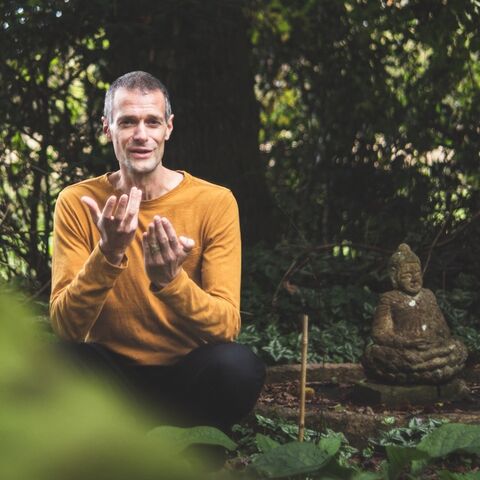
This is Josh Dippold,
Integrating Presence,
And today it's my honor,
Privilege,
And pleasure to have Tina Rasmussen join me.
Tina,
How's it going today?
I'm doing well,
Josh.
Yeah,
Good to be with you.
Well,
Thanks so much for joining.
Probably most everybody listening to this will already be familiar with Tina,
But just sticking to my format here,
Who is Tina Rasmussen and what kind of work does she do?
I love the way you phrased that question.
Well,
I could give the ultimate answer,
Who is Tina Rasmussen,
Which is the same answer for everybody,
Which is,
I could say,
The ground of being or a manifestation of the ground of being,
You know,
Sort of at the most ultimate level.
At the human level,
I'm a Dharma teacher,
And I feel really grateful to have been a Dharma teacher for almost 20 years now,
And what kind of work do I do?
Well,
I really,
My ultimate calling is to help people awaken to their deeper nature,
To know what they are beyond the body and the personality,
While at the same time honoring the human part.
You know,
I really,
A big part of my teaching has been in my own practice,
Really.
It comes,
I teach really my own practice.
That's,
You know,
So there's a lot of comfort and integration in that,
You know,
And it just so happens that there are some other people who resonate with that,
You know,
So it's a win for all of us.
But,
Yeah,
I really feel that our era is the time when,
With the tools of psychology and trauma therapy and a lot of the embodiment methodologies that we have really just come into recently,
Combined with the ancient ones that were,
Have been so effective,
To live as a regular human from our deeper nature,
That is,
You know,
Ultimately a mystery,
But that we can know through direct experience.
So that's my calling,
Is to help people come to know that and live from that more and more.
Well,
Beautiful.
Obviously,
That's so needed,
And we're,
Anybody probably listening to this is totally on board with that,
Too.
I just,
To be a little lighthearted here,
When people ask you,
Like at the grocery store,
You know,
Who are you,
How are you doing,
You probably usually don't say,
I'm in manifestation of the ground of being,
Though,
Right?
Yeah.
I don't say that.
I don't say that.
I remember one time,
Long,
Years ago,
When I was first practicing meditation and coming into the Dharma,
I remember one time Jack Kornfield said that he was,
When he was on planes and people would ask him what he would do,
He said,
Oh,
I'm in sails.
I don't say that,
But,
You know,
I thought that was kind of a humorous answer.
I usually,
You know,
I would tell people that I'm a spiritual teacher,
And I help people suffer less and be happy in their lives.
And to,
You know,
For those who are curious about the mystery beyond the human experience,
I can help them explore that.
You know,
So even somebody who has zero interest,
They know there's,
You know,
Is there something beyond this?
Is there not something beyond this?
Everybody,
You know,
There,
It's a question most people ask and feel they have an answer to.
So there are ways to make it in common language.
You know,
And at a human level,
I've had a super normal life,
You know.
I,
For years,
I worked in the business world as an executive coach and organizational development consulting,
Working with humanistic business leaders.
So,
You know,
I had to function at a super high level working with executives who had,
You know,
Five or 10,
000 people reporting up to them.
So I had to be as normal as and high functioning,
You know,
As you can possibly be.
And I was doing that while I was practicing the whole time,
You know.
And at some point,
I mean,
I never set out to be a Dharma teacher.
It just happened organically.
I was in a line of work that I love that I thought was a calling.
And when I did the retreat with Paoak,
By the time I left the retreat,
People around the world already knew about it,
You know.
So people just started coming and wanting help.
And I already had a full time job,
But I wanted to give back to Buddhism and to the Dharma.
So that's really how it all started.
And,
You know,
It just hasn't stopped for 20 years.
So now I'm a full time Dharma teacher.
You know,
It's been a gradual process.
But,
You know,
I think part of what I feel as part of my Dharma in this life is to help people who are householders,
Who have full time jobs and mortgages and kids and relationships,
And it's messy.
And,
You know,
We have to deal with living,
But also can we have a deep practice while we're living as a householder?
And I think we can.
I work with people every single day who are doing that.
And it's an exciting possibility to really integrate the two where we don't have to go behind the monastery walls in order to do that.
Not that that isn't a valid option,
It is.
But,
You know,
There are a lot more of us now who are out in the world who are feeling called to that.
So that,
I mean,
That was what happened for me.
And then when the whole teaching just evolved on its own,
That really became a calling is to help people who are trying to do the same thing.
So,
You know,
And like,
Who am I as a person?
You know,
I've had all the normal things.
I've been married twice.
So,
You know,
I've been through the ups and downs of all of that.
I was a step parent for a total of 21 years.
I've worked,
You know,
Up until last year,
I still have one client left in the business world.
So,
You know,
I've had to be normal and yet be doing these really deep,
You know,
I also did a year-long solo retreat in the middle of that.
And I'm,
You know,
I'm not from a wealthy family.
So I've had to manage the money around doing things,
Something like a year-long solo retreat at the age of 40.
And how do we integrate if somebody really starts understanding more about the deeper aspects of practice that affects your perception of reality?
What do you do with that?
How do you live from that?
So that's a lot of what I help people with.
There's so much here to dive into,
And thank you for that.
Well,
Yeah,
For one thing,
I would say the Dharma,
It's a good sales job to be in,
You know,
Because most people are interested in ending stress,
You know,
And yeah,
The deeper nature of life,
Like you said,
Even people that are so distracted by everyday life at some point,
You know,
Either through even a movie or a casual conversation or some kind of moment in their life have pretty much all considered this,
You know,
It's not easy being human,
You know,
It's one of the most challenging,
Difficult things that,
You know,
That we're told about.
I'm going to ask,
And then we have the whole dynamic of,
You know,
Everyday life and how deep and profound in a spiritual practice it can be.
And at the same time,
How that can be interwoven into all aspects of mundane existence in life too.
And we have the reference,
Those of us who have a deeper practice interested in this,
We have these reference points of how sometimes bizarre and foreign and far away from mundane reality in the base program or,
You know,
Just the consensus reality.
And at the same time that we're thrown into that and we still have to be in that and we can just be as plain as dirt too,
You know,
Even with those of us that have this practice,
We look at like Ajahn Chah's teaching,
He was really down to earth and really in this way.
I love the whole spectrum of what's possible here and the integration you mentioned.
I want to just ask about,
You got started with meditation,
Great fortune to have started really,
Really early.
For those not familiar with that,
Could you,
I think that's could be quite relevant here how you got into it.
There's a bunch of my bio that I left out there,
But yeah,
I just,
Again,
Was it good karma?
Was it good fortune?
Was it an accident?
Who knows?
But at the age of 13,
The Methodist church that my family went to outside of Chicago,
Illinois,
In the U.
S.
,
We had a family day.
My parents were off,
You know,
Doing who knows what,
And I went into the chapel.
I just wandered in there and there was somebody,
My story now is that it was a hippie,
You know,
This would have been 1976 when this happened,
And I wandered in there and he,
My story is that he went to Asia somewhere and had come back and was sharing what he knew.
You know,
It was a Methodist church,
So fairly,
You know,
Liberal and open,
And I just listened to what he was doing and I started doing it.
It was basically a mindfulness,
A body scanning kind of thing,
And I just started doing it at night.
You know,
It was helpful.
It was helpful.
It's stressful being a teenager sometimes,
And I just started doing it without really knowing a lot.
My parents were very open to these kinds of things,
And I just,
It was practical,
And so yeah,
I started at the age of 13,
And then at the age of 40,
I became a nun and shaved my head and was in robes,
So you know,
That was another part that I left out.
But yeah,
It was really,
For me,
Just a practical thing,
And I think now we're seeing with all the neuroscience research,
You know,
Thousands of studies,
That it helps people,
Whether they're Buddhists,
Not Buddhists,
Doesn't matter.
You don't have to believe anything.
If you just do it from a practical standpoint,
You will suffer less.
Your life will get better,
Period.
I mean,
The studies are just,
It's unequivocally true that you will feel better in your life.
Yeah,
It's pretty much a consensus there,
For sure,
Too,
Because I don't encounter too many people that would argue with that on any level,
Really.
Studies,
There's just,
You know,
I was studied by Yale,
And I mean,
There's studies,
There's hundreds of studies over years,
Not only for the psychological benefits,
But for the physical health benefits.
I worked for a health care organization for 16 years,
And they were prescribing this to people with certain conditions,
Not because they believed in it,
But because of evidence-based practice.
That's all they cared about.
People survived if they did it more than if they didn't do it for certain things.
So,
You know,
It's exciting to see we have the science behind it now and the research that we didn't have before.
So,
Yeah,
I want to get into the PAHOC stuff because that's what's,
And I'll explain that in a little bit,
But since you touched on this now,
I really wanted to get into this notion of the technology side.
Now,
For me,
On one hand,
Yes,
Of course,
I'm totally in on it in the sense that there are just some people in the world that will even ignore their own experience to the fact that they have to have verified scientific evidence,
Right,
And that it has to be in,
Like,
An institution or it has to be measured by machines and things,
And that's all good.
We need this more and more for those types of people who have to have that.
Otherwise,
They won't get involved.
So,
In that sense,
I'm totally on board with it.
On the other hand,
You know,
If I can a little bit,
We hear more and more about,
Oh,
I don't know,
Like,
I don't want to get,
Like,
Political or anything,
But,
Like,
Surveillance and things like this,
You know,
Like people being hooked up to machines and studied and then collecting data,
Basically.
Now,
I'm sure that most people that do this type of studying have all the best intentions in mind,
You know,
And a lot of this stuff is kind of rolled out as benefit,
But then some of it becomes normalized and then they use it for other means.
I guess what I'm getting at here is,
Do you see any downsides at all to this?
Through the research on meditation,
Is that what you're talking about?
Yeah,
But not necessarily that.
Yeah,
It just goes into this notion that there are some folks out there that want to,
Like,
Maybe quantify everything,
Right?
That,
Like,
Want to measure everything with machines and then collect data and amass data,
But,
You know,
Maybe not use it for beneficial means,
Potentially.
Okay,
I'm just going into maybe ethical things down the road,
And maybe I'm playing devil's advocate here a little bit,
But basically being able to,
Oh,
I don't know.
Where should I go with this?
Yeah,
Basically maybe using it to predict people's behaviors in order to potential control and serve up advertisements.
Yeah,
So I don't know.
That's one of the potential,
You know.
Sure,
Yeah.
There's a couple of places where I,
I mean,
I didn't need that to be into the practice I was doing and before they all came available,
But,
You know,
There have been,
I think,
A lot of really exciting discoveries from the neuroscience research.
So I,
You know,
Overall,
I would say I'm still in favor of it,
But the couple of downsides I see,
One of them is,
Like,
I've been asked to be in a number of studies I've declined,
Even by organizations like Harvard,
Because I felt that they weren't actually studying what they said they were studying,
That whoever was designing it was using inaccurate,
They weren't using the spiritual technologies and naming them correctly.
They were using the wrong names for certain things.
And I didn't want to be in a study that endorsed the inaccurate,
What I felt was an inaccurate study.
I mean,
The intentions,
I think,
Are good.
I don't have any question about the intentions there,
But I felt that they weren't actually studying what they said they were studying.
I didn't want to somehow endorse that.
And this is,
We're talking Harvard,
You know.
So,
So that is one problem,
Is that,
You know,
In an effort to kind of,
Because some things are hard to study because you can't respond while it's happening and so on.
You know,
A lot of these things,
I mean,
These were done in caves by people who weren't talking to anyone for weeks or months at a time.
And now you're in a lab,
You're supposed to produce it in five minutes so that it can be studied and then press a button when it's happening,
You know.
So in an effort to make it more studyable,
They're actually not studying the thing they say they're studying,
In my opinion,
Some of them,
Not all.
But so that's one downside,
Is that then if these studies happen,
They get published,
And now all of a sudden this is a fact.
And it's not even an accurate study,
In my opinion,
You know.
So that's one downside.
And people reading it,
If you haven't had these experiences or don't know the intricacies of it,
How would you know?
You know,
You just read it and think it was accurate.
You know,
There would be no way to know that without actually having experienced these things.
So that's one downside,
Is that now you've got scientific precedent for things that aren't accurate,
You know,
And only a few people know enough to know that,
You know.
So that's that's one thing.
It's like,
Say,
You can't study something in women because whatever,
So you study it in men and now you have all these conclusions that apply to women.
I mean,
Some of it,
You know,
So that's,
To me,
Kind of what's happening with some of the studies.
And then the other thing is that it's a reductionistic,
That everything's based on material,
On the physical realm.
And I believe that some we can measure,
But I believe there's still things that we can't,
We don't have scientific instruments that are sensitive enough to measure consciousness beyond the body.
And I believe that at some point,
Hopefully we will have that.
But I don't,
I think consciousness is fundamental.
And the body is more like a radio.
It's like,
What's first,
The radio or the radio signal?
You know,
And you could say that without the signal,
Why even have a radio?
That's to me what consciousness,
The consciousness is more fundamental than the physical.
So to reduce it to say it's all based only on physical matter,
I think is backwards.
Absolutely.
And I'm totally in agreement with that.
And that's one of the things,
You know,
This materialistic reductionist view of consciousness,
Like this thing is way off,
And it will never be kind of solved that way.
I don't feel right now.
Anyway,
What I know,
We look at the Abhidhamma,
We look at the Vasudhimagga,
And some of these really deep practitioners that have have so much mapped out and so much they see and know for themselves,
Like so long ago,
It's continuing to this day.
And it just seems like a lot of the consciousness research is barking up the right tree.
There's a lot of good consciousness research going on,
Too.
And I applaud you for the wisdom and in identifying the structure of the study and turning it down due to what seems to be a flawed structure in the study to begin with.
So you're right.
And that's so super responsible and needed for these things,
Because we don't want to be putting a lot of errors in the data in science that's misrepresentative,
Too.
So I think the best thing is not even to be involved in something that's fundamentally flawed from the get go,
It seems like.
So yeah,
These are really important points that you make.
I won't go into the more far out things with this.
So I want to get into the Paak stuff now,
If we may.
So when I first,
I think probably listening to Dharmaseed years and years ago,
And I would just listen to hours and hours of Dharma talks,
I'm sure was one of yours or when Gil Fronsdale started talking about Jhana.
And so first thing I have is why has this been so long kind of not taught in the West?
I know I hear some teachers explanation,
But I want to hear it from you.
Where in the Paak tradition,
You can't even really get into the Vipassana track until you either have tried Samatha right for a while,
Or you're deemed to go the dry insight route.
But as far as I know,
They try to get everybody to at least start off with the Samatha route.
But we have people jump into Vipassana.
So really the why question is why isn't everybody doing it the way the Buddha did it?
Are you saying that Buddha started with Samatha first?
Is that what you're saying?
Yeah,
Of course.
Yeah.
Before he left,
He left his two teachers,
Right?
Because he had already accomplished all that.
When he taught,
He started people with Samatha.
When he taught,
Not only as a result,
That's what he did.
So this is what the Buddha did for a long time.
So why not in the West?
Why was it so kept in the way?
Part of it,
I mean,
There are a few reasons.
And I do talk about this in my talk sometimes.
One is that,
You know,
Back in the day of the Buddha,
There were,
Like you can see this in the suttas,
There were Samatha yogis,
There were Vipassana yogis only.
And then the Buddha felt it was best to be both.
So there were people who just couldn't do Samatha.
They didn't have the concentration level.
And now that I've been teaching at 18 years,
I feel that there's a truth there that maybe we'll find out why one day with the neuroscience,
Why some people have the capacity and others who may still have a lot of spiritual capacity for momentary concentration,
Don't have the concentration faculty for,
You know,
The neck,
The higher level of absorption concentration.
I don't know why,
You know,
I mean,
But I have found the same thing to be true as what was true in the day of the Buddha.
You know,
And fortunately,
We have multiple routes to the mountaintop.
So one doesn't have to have that to get to the mountaintop.
But if I do agree with Pau Ok,
That if even if one doesn't,
Like I've had 30,
40 year Vipassana practitioners come to my retreat,
Whether they have access to the higher levels of concentration or not,
Their practice improves when they do Samatha,
Period.
So,
You know,
I agree with the Buddha that and with Pau Ok that everybody should do it because it refines the mind stream.
It's a purification of mind that whether one can attain jhana or not,
It's still super beneficial and it changes your life.
So I mean,
I don't know.
So why didn't they?
Well,
In the old days,
That was one reason because some people couldn't do it because there's a few suttas where you just go straight to Vipassana doing the dry insight.
They pulled that out of the vast sea of Samatha suttas.
They pulled this out,
You know,
We're Americans,
Take the shortcut,
You know.
So and also there's other reasons that are more important in Asia than they are here,
But there's what's called the supernormal powers,
Which in the day of the Buddha,
They needed these things because they were out in jungles with wild animals and,
You know,
Murderers and thieves and stuff,
And they had to be able to protect themselves.
And the way that one cultivates that is through the jhanas.
So they felt that people should only be doing that after they'd attained the first stage of awakening.
So they all had it.
They were just saving it for people after they'd attained the first stage of awakening.
But in the Thai forest tradition,
They used it but didn't talk about it until you'd gotten far enough along.
And even in the Mahasi side,
A lineage where they kind of do a lot of jhana bashing,
They still taught people after they had attained stream entry.
So they were saving it.
They didn't want people to abuse the supernormal powers.
So I,
You know,
I can respect that.
I think it's still like,
Aren't we Buddhists?
Aren't we supposed to do what the Buddha taught?
So to me,
That's really the big question is,
What's with that,
You know?
And this is so,
Jhana in itself is really controversial.
And I put a moratorium on me talking about it solo.
But I love talking to practitioners and teachers about it because then I can really dive in here.
You know,
We've got,
So where do we start?
In nimitta even.
I guess one of the,
Maybe we ought to make a distinction in jhana here.
A lot of people refer to like a suta jhana and a visuddhi magha jhana,
Right?
You don't like that economy?
Like our deeper nature,
Here's one book we've read.
I mean,
Do we really think that the ultimate reality is facing it?
They have a little gate there and says,
People who've read suttas,
Go here.
People who've read the visuddhi magha,
No.
That's a really good point.
No,
What they,
None of those practices give the three stages of concentration.
They're talking about access concentration.
If you look at how they describe it,
If you look at what was happening,
That suta jhanas are access concentration,
Not absorption.
None of those teachers teach the three levels.
So why aren't they teaching the three levels that are part of Buddhism?
Because they have no justification for what they're saying is jhana,
But is actually access concentration.
Yes,
And that's what I want to touch on too.
What some teachers would consider jhana,
If you go in the bhagavad tradition,
That's not even access concentration yet.
It's just PT arising.
I used to get PT and doing vipassana all the time.
And so with that,
It's like,
Yeah,
But then you have like some in the Thai forest tradition that completely,
My intent here is not to divide it.
It's just kind of to lay things out on the table and look at them.
And from what I understand,
The Thai forest tradition doesn't put a big emphasis on like the Vasudhi Maga and the commentaries.
They kind of blow it off pretty much,
Even though it's included in some of the writings and stuff.
But we don't,
As far as I know,
We don't even have a full translation of the commentaries in English.
So to me,
It's a little premature,
At least for myself,
To blow off the commentaries when we don't even have in English to read,
To blow off with these translation technologies and the chatbots and stuff,
Being able to translate.
I think it won't be very long now,
And there'll be full translations of these.
But what I get into here is now,
From what I understand,
Tina,
In your practice,
You were the first teacher approved by Pak Sayadaw to Wessner,
First Wessner,
You and Steven Snyder to teach in the Pak lineage,
Right?
And from my understanding,
You completed the grueling Samatha phase in mastery,
Right?
And there's different masteries of the Jhana,
And I just wanted to say that I learned about from another Pak teacher that to start the preliminaries to the psychic powers you're talking about,
You have to have that plus,
I think there's like 13 different steps of going beyond the regular standard Jhana mastery,
Where you have to even be more involved with cycling through and going in different orders and things with the Jhanas than just the five masteries.
Maybe I can show you that document later or whatever,
But that's just the preliminary work.
Yeah,
There's the super normal powers,
You have to be able to jump,
You have to first have attained all eight Jhanas up to the level of mastery.
Yes,
And then the five masteries,
Like you have to be able to enter at will,
Like switch rapidly,
Set a time for emerging,
Right?
And then which ones am I missing here?
Yeah,
There's the having the Jhana rise at will,
Being able to set a time of how long one will remain in Jhana and leave,
There's the,
That might be enter and leave,
There's the seeing what Jhana you're in at leaving reading,
Being able to see what's called the Bhawanga,
The heart,
It's like you're seeing your mind moments,
And I can't remember.
The other one.
Seeing what Jhana factors.
The factors after,
Yeah.
Entering into the Jhana factors,
And then I can't remember.
I think this list goes even into like jumping through not in order and reverse order and forward order and emerging and going back.
Yeah,
It's just so beyond.
Yes,
With the super normal powers.
Yes,
Exactly.
The preliminary work.
It's totally doable though,
If one really,
I mean,
If they hadn't been my aspiration,
I could have done that when I was doing the Bhawang retreat.
Let's just talk about that too for now,
Because I mean,
A lot of Americans would think,
Well,
That's nonsense,
That's superheroes,
Men in tights,
Right?
And then I have this kind of thing,
They just laugh at,
No more condition to laugh at these things and are that's for comic books and stuff.
But then you have people in Asia,
It's just like,
Well,
No big deal.
They all think it's real,
Yeah.
Well,
Not just think,
I've even practiced with the group,
Even part of the Bhawang,
Once you get past the Samatha stage and start discerning ultimate materiality,
Ultimate mentality,
Which is required before the dependent origination thing,
It's just so vast and so profound.
One of the reasons I went into this,
Because most of the other kind of Theravada stuff that I've been exposed to for years,
I would say,
It's fairly accessible,
I understand it,
I've practiced with it.
But when I get into this,
I haven't even had the Nimitta come up yet.
So I'm so at the beginning level of that,
And these are yogis that are part of the discerning ultimate materiality mentality,
Are going in the past lives and discerning through all the different,
So for people that are not familiar with this,
I won't go into this now,
But it's not even considered a big deal to be able,
I mean,
That's just another step along all of this.
It is,
It's part of the Vipassana because it's what the Buddha did.
And even potential future lives,
Yeah.
Right,
It's what the Buddha did.
I mean,
If we're using the Buddha as our role model,
That is what he did.
So Palawak is really looking at what did the Buddha do,
And let's do that.
With the addition of the Abhidhamma,
With the really analyzed,
Not only on perceiving,
Which I got to the very end of the Samatha,
Where I did have the Rupa Kulapas experience,
Which is incredible,
But then you analyze that.
Yes,
Each one has like seven or eight different characteristics in it,
But then it goes way into just,
You know,
I materiality,
You know,
All these different nuances,
And that's just the ultimate materiality.
Then you go into ultimate mentality.
So it's the past lives and the future lives.
Yeah,
It's extensive.
It's really extensive,
But,
You know,
You are,
I mean,
It is the matrix.
You are seeing,
Like,
Even just my experience of seeing ultimate materiality,
Like,
In the Wisdom Eye,
It changes your view of materiality that really is,
Agrees with science.
I mean,
You're seeing subatomic particles,
That's what's happening.
And we all believe,
I mean,
Most people believe,
Yes,
That's a thing in science,
That there are subatomic particles,
But when you see that everything is that,
And your own body is that,
It starts to change your perception of reality in a way that's different than just knowing about the science,
When you're actually perceiving it.
Exactly,
And actually all of my Dhamma practice is pretty much a conception,
Conceptuality,
You know,
On a conceptual level,
Because I haven't discerned ultimate materiality for myself,
You know,
Until I can see and know that for myself,
In a way,
You know,
Yeah,
Where it's a consensus reality I'm experiencing,
But in a way,
It's not completely truthful,
Because I'm not seeing the ultimate nature of the materiality mentality yet.
So in a way,
My understanding,
Wisdom and study and practice I have is basically on a conceptual level,
And so that is a driving force for me to practice this path as of now.
And,
You know,
Some people might say that's excessive,
And you don't really need to go that in depth,
And,
You know,
The Buddha said,
You know,
Like basically to know and let go,
But at what level and what comprehension and exhaustion and totality do we need to know,
You know,
Dukkha,
Anicca,
Natta,
In order to let go?
And I don't have a simple answer to that,
You know,
So.
This is part of,
Like,
When I give talks about the three characteristics that you just mentioned of reality,
That,
You know,
When we see into the ultimate nature,
That's when liberation happens.
Most of the time,
People are talking about it at a relative level.
They're not really seeing what is the liberating insight,
And the liberating insight is seeing ultimate materiality and mentality,
Not just seeing,
Yes,
I'm going to die,
And so everything's impermanent.
I mean,
That's helpful,
Too,
But it's not liberative.
So,
Yeah,
That's,
I mean,
That's really what Pahok was going for,
And I do believe that the other,
Like the more,
What's taught at,
Like,
Spirit Rock IMS,
I believe that the Vipassana there can lead people to see ultimate materiality and mentality in,
Maybe not at the level of analysis that Pahok does,
But at a level that's liberating.
So,
You know,
That's,
To me,
It's sort of like,
Okay,
What's,
What is actually needed for awakening?
That's what I care about.
What is needed for awakening?
And at least first stage.
Now,
When you start getting to the higher stages,
Then maybe more levels of direct experience of these things really is needed to be able to let go.
So,
Let's define that,
Too,
Because,
You know,
We throw these terms around,
And different teachers have different explanations.
You know,
We've got,
We've got mindfulness,
We've got awareness,
We've got attention,
You know,
These are really,
And we've got consciousness.
Well,
That's a huge one,
Too.
So,
But then we've got awakening,
You know,
And liberation,
And enlightenment.
So,
These,
Let's just,
I guess,
Stick to these three terms.
Is there any difference in these,
Or how would you kind of define or describe them?
And then you're talking about first stage,
Are you talking about stream entry here,
Or,
Yeah,
Okay.
Yeah,
Well,
Different teachers,
You know,
I was,
My first interview I ever did was with Conscious TV,
And when I met the interviewers in England,
They,
I had all these questions for them,
Which is,
What have you learned interviewing 300 people on the path to awakening?
And they said there's no agreement about awakening.
So,
Now I'm teaching my What is Awakening program.
It's probably the most popular thing,
Where I'm giving the lay of the land.
I'm not saying,
Like,
This is the answer,
But I'm saying,
Here's how it's seen in different traditions,
And so on.
I like the Theravadan four-stage model,
Because I think it's the most,
It's the easiest to understand,
And it's,
Like,
Accurate enough to use at a practical level.
Especially stream entry,
For sure.
Everybody can kind of identify with what that could possibly be.
Yeah,
So that's where,
Oh shoot,
Do I have a piece of paper?
Yeah,
So let me do my little demonstration here.
This is one of the things I saw that I really got in with my own awakening process.
It was like,
Oh my gosh,
Okay,
So this is how we normally see reality,
Like I'm here,
You're here,
The viewer's here,
There are computers here,
And they all are separate,
Which from this view is not false.
But if I take this paper away,
Which is like the veils of the ego self,
There's something deeper here.
There's a deeper reality that's more fundamental,
That doesn't invalidate this,
But like down here,
I can still feel the finger,
But is it separate from this finger?
No.
Where does it start and end,
Too?
Exactly,
Right?
And if this goes away,
This is still here,
You know?
So that's what happens with awakening,
Is our consciousness is here,
Because it's not bound by the body.
That's what the Buddha was really pointing to,
And almost all traditions in one way or another are pointing to,
Even the atheistic,
You know,
Becoming one with God.
It's pointing to the non-separation,
Either through unity or emptiness.
So awakening is like,
What happens is we have taste of this,
And then it's like I'm having an awakening.
So the identity is still with the body and with the personality,
The ego self,
But at some point,
The actual identity shifts to down here,
And there's no longer a belief that this is ultimate.
It doesn't invalidate that it's there,
But this is more fundamental.
What we are that is beyond the body and the personality is more fundamental,
And it's also manifesting everything else that we see,
You know?
So awakening is that shift of identity,
And there's so much peace in that.
I mean,
Even though it's just the first stage,
There's still a lot of personality material left.
So that to me is awakening,
Is awakening to this deeper mystery of the human experience that is the potential for all of us,
You know?
And that's really where there's some freedom,
And the reduction in suffering is really what the Buddha,
You know,
Cared a lot about.
And so liberation,
So awakening is realized.
So realization is realizing our deeper nature,
A lot of different things about our deeper nature,
And different traditions define that differently.
Like Theravadan Buddhism has the three characteristics that you mentioned.
That's one of the keys,
And what's called cessation is important in Theravadan,
But in other traditions,
Cessation isn't as important,
And other things are more important.
So they all kind of come at it differently,
And you can see why.
I mean,
There are good reasons.
Everyone's pointing to a truth,
But those are different parts of the elephant,
You know?
But what they all have in common is the non-separation and the non-duality,
Where that sense of the separation that we see here becomes non-separation because we know a deeper truth here.
So that is what they all have in common.
So realization is realizing these things about our deeper nature.
Liberation is being freed from our personality,
Material,
And identification with the ego,
Self,
And the body as ultimate.
So that's what liberation is.
And then actualization is living from that,
Where we're actually functioning from it off the cushion,
Where it isn't just like,
Here's my half hour,
And then here's all the rest of my life.
It's totally disconnected,
You know?
And then enlightenment is getting all the way to the fourth stage,
Which is very,
Very rare,
In my opinion.
It's extremely uncommon.
There might be only a small number of people on the planet right now who are at that level.
But the four stages in the Theravadan,
By the time you get to second stage,
There's really a lot less suffering.
Again,
To me,
The potential is because we know there's a bigger mystery that we know in our own experience,
And it's the most real thing you've ever experienced if you've experienced that.
And there's a peace in it.
So even at the point of death,
You know,
It's like,
There's a trust.
There's a trust that there's something more real and more fundamental that goes beyond the arising and passing of the body or of this life,
Or of others' lives,
Or of the things we like and dislike.
You know,
There are waves on the surface of the ocean,
And if you're a scuba diver down below,
You look up,
You see it,
You see all the turbulence like what we're having now in the world,
And it's sad that there is so much pain and suffering.
And there's also a deeper reality that is more fundamental than that,
That when we know that,
There's a peace and there's a sense of you know,
Acceptance that we can't change these things.
You know,
We can change some things,
But we can't change the nature of what's going on.
Most of what affects us,
We can't do anything about.
You know,
That's the characteristic of existence.
I mean,
There's inherent dukkha in every single conditioned phenomena,
You know.
And the good news is,
Though,
What is subject to arises subject to perish,
Too.
And one of the most profound meditations is on death,
As well.
So,
There is a kind of a paradox here that,
You know,
What you're talking about is beyond the body,
Not limited to the body.
And yet,
The Buddha put great emphasis on mindfulness of the body.
So,
How do you resolve this paradox,
Or what do you say about this?
And,
You know,
You've mentioned embodiment before,
Too.
And yeah,
I think that's,
Yeah.
Yeah,
Well,
Everything is an emanation of the ground of being,
Including the body.
So,
If we know anything deeply,
At the ultimate level,
We will know ultimate reality,
Including the body.
So,
I mean,
The body is a great thing to be in touch with.
This is part of the,
You know,
An open monitoring category of practice with Vipassana.
We spend a lot of time on body awareness.
And when we can know things arising and passing,
Vipassana is really focused on anicca,
On the impermanence of the arising and passing of phenomena.
So,
When we see that it's arising and passing constantly,
Like when our concentration,
It has to get up to a high level of access concentration in Vipassana,
To really see the minute detail.
First of all,
We see that I'm not making this happen.
There's no me making it happen.
Because if I could,
Then I could make it stop.
So,
Like right now,
I dare any of the listeners,
Make all the phenomena stop right now.
You know,
You can't make it stop.
So,
If you're not,
If you can't make it stop,
You're not causing it.
There's a greater mystery that is causing everything.
And that's when the me can let go.
The me can let go and then anatta,
The no self,
The sense of no self,
That is the psychological construct.
I mean,
I work a lot with the psychological because that helps us understand how the psyche,
The nuts and bolts of how the psyche gets,
How it develops.
You know,
That's what we have.
We have psychology.
So,
We've learned so much in the last 100 years,
The Buddha didn't have,
You know,
He did a great job with Buddha psychology,
But it's pretty rudimentary compared to what we have now to understand the psyche.
So,
When we see that it's an internal construction that's needed for self-reflective consciousness,
We can see that that's what it is.
And it's not really ultimately what we are.
There's a space from it.
So,
That's in seeing the body and seeing the arising and passing of phenomena,
Say in noticing the body sensations and,
You know,
The body door of the four foundations of mindfulness.
That's one way of noticing the arising and passing,
You know,
But I think really the four,
All four foundations of mindfulness are really required for,
To me,
For liberation because we can say,
Okay,
I'm not the body,
But I'm still my consciousness.
So,
We have to work with that too.
Yeah,
I asked Ajahn Suchito one time and some other teachers,
You know,
Why is this experience like tethered to a body?
Why is our experience not like tethered to a rock on Mars?
You know,
It's part of the human condition or human experience that is,
Yes,
People can leave,
Quote unquote,
Leave their body temporarily or lose awareness of it,
But ultimately,
Until their last half breath,
There,
You know,
There's an experience of a body,
You know,
From time to time.
So,
Yeah,
But what I wanted to.
.
.
I'll give you a scientific answer to that.
This is the physical route.
We're in the space-time continuum.
We have to have a location.
And the Buddha and Ananda weren't having the same experience.
So,
There's an individual consciousness.
It doesn't have to be separate.
It's more like a current in the ocean,
Not a wave,
Where a current,
I mean,
The currents run our whole climate,
Just like the air,
You know,
The jet stream.
They're not separate,
But they're distinct.
That's what the individual consciousness is,
And it gets attached to a body,
Because to be in the physical realm,
We have to have a location in time and space.
Otherwise,
We can't have a human experience.
Yeah,
That's right.
But,
You know,
Plants,
I guess,
Are in time and space,
Yet they don't have the same type of consciousness,
At least in the Theravada view,
Is like,
They're not consciously aware in the same way that a human are.
They don't have self-reflective consciousness.
Exactly,
Yeah.
They don't have the ego self.
So,
That's how the human,
We might find that whales and some other animals have self-reflective consciousness at some point.
But that's what we have.
That's how we can know our deeper nature.
A plant can't know its deeper nature,
But we can.
But there has to be the ego self as a scaffolding to have the self-reflection,
And then that scaffolding can come down with awakening.
Let's jump into this,
Too,
Because I know Steven Snyder,
Who you're a co-author in Practicing with the Jhanas,
That's kind of how I came to know your work a little bit better,
You know,
In a book form.
He's really into the working with personality material and awakening,
Because,
You know,
In the Zen tradition,
You hear of these kind of enlightened masters,
But their kind of behavior was appalling.
Some of it was,
Not to pick on the Zen tradition,
Because I just did a Colche in South Korea for a month.
It was a really profound experience I'm completely grateful for,
And I really didn't experience any of that,
Probably other than myself,
Actually.
But anyway,
So this personality material that seems to get neglected in some spiritual circles.
Tell me about your work with this and how important this is,
You know,
Maybe why this gets neglected and what to do about it.
Yeah,
That's one of the big focuses of my teaching.
This is really all about the embodiment,
The actualization,
Because,
You know,
If we realize things on the cushion,
And then we don't work with the personality material that's where our identifications are,
It becomes bypassing,
Spiritual bypassing.
So that's what has led to so many scandals,
Is that people in some traditions,
And again,
2,
600 years ago,
There was no understanding of psychology,
So they used renunciation and monasticism,
Just like almost every other tradition to deal with the instinctual drives.
So they just give it up,
But the problem is these instinctual drives are needed to keep this thing alive.
So if those aren't worked actively,
If it's just pretended like those things aren't there,
That's when it just gets stuffed into the unconscious and then people act it out,
Because they're in denial.
They're bypassing,
They're doing spiritual bypassing.
So,
I mean,
This is important for all of us,
Because really,
If we want to realize and live from our deeper nature,
We've got to work with the personality identifications that are keeping us identified as an ego self,
Even after awakening,
Because there's still personality material all the way up to the fourth stage,
You know?
So people,
Sometimes people will have big experiences,
Or they'll have maybe the first stage of awakening,
And they think it's all gone,
Because they've realized this,
But that doesn't make the ego self get digested.
All of that has to get digested through actually working with the personality material directly.
And unfortunately,
In Buddhism,
A lot of times,
And there's teachers today who still do it,
Oh,
Thoughts,
Oh,
They're just empty,
Just ignore them.
Ah,
Yeah.
And then the person has,
You know,
We have 80,
000 to 90,
000 thoughts a day,
The average person.
Think about the teacher who ends up sleeping with a student and abusing their power in that way.
They probably had that thought,
What,
Three or four million times before they acted out,
And they never went to another teacher and said,
You know what,
I'm really lusting after this student,
Can you help me work through this?
They never did that.
They pretended like it wasn't there,
And then they acted it out.
I mean,
They're like,
You know,
A dog.
These are instinctual drives that every mammal has,
And if we don't work with them,
They don't get digested.
It's so wild that,
You know,
Like in the business world,
A lot of people get brought down by financial scandals or all these other things,
But in spiritual communities,
It seems time and time again to be like a sexual scandal,
You know?
Well,
There's financial scandals too.
Well,
Yeah,
I guess so,
Sure,
Yeah.
Yeah,
And the third drive,
So there's three instinctual drives.
One is self-preservation,
That's where the financial comes in.
Another is the sexual instinct to reproduce and all that goes with that,
And to have a partner who has your back.
I mean,
Out in the wilderness,
If you have a sword and the wolves come and you're alone,
You're dead.
If you have one other person who's going to put you above everyone else and you go back to back with swords,
You're both going to live.
That's what having your back means.
So having a partner,
It's about all kinds of things that are very primitive,
And then the social instinct is about the tribe,
And where we see that being acted out in spiritual communities is competition,
You know?
Who's next in line for dharma transmission?
Who's the favorite of the teacher?
Who's this and that?
And politics,
Yeah.
People act it out all the time,
And that's just,
It's this tribal instinct.
If we get kicked out of the tribe,
We're a lot less likely to survive,
So you see these things acted out all the time.
Belonging,
Yes,
Yeah,
Yeah,
Sure,
Really good point.
Now,
Let me throw this,
Maybe a monkey wrench in here.
What about,
Well,
This just speaks so much to ethics and Sila,
You know,
And how glossed over that gets and how important that is,
Especially in lay life and in the West,
Too.
It took me a meditation practice to see how important this is,
And I was,
Like a lot of people are,
Astonished at how I was treating myself and how I was treating others,
And a lot of different things that I had forgotten about in the past were bubbling up early in my practice,
And forgiveness practice goes into this,
And,
You know,
So there's so many ways to work with this in therapy,
Too.
I wanted to throw in,
Though,
Like somebody like the,
Or not somebody,
I won't pick on any particular teacher or anything,
But things like the crazy wisdom tradition,
Right?
So some people will say,
Oh,
You know,
They've got a really high level of attainment,
And maybe they're just testing,
Or they understand something that we don't,
And of course,
That's BS,
And yeah,
We both agree that you cannot do that,
And the suffering and the pain that was inflicted on those people,
Not from one scandal,
But from now a second scandal from,
I won't say,
Sure,
But it's people who just,
They are overestimating their own level of actualization,
Or I mean,
I think the realization is legitimate.
That's why,
You know,
We've all gotten sucked in.
I mean,
Fortunately,
I haven't.
I've never had a teacher who's ever had an ethics issue,
So I feel very grateful,
But I'm like,
Refugees come to me all the time who've had teachers who've had scandals,
And even if it wasn't with them,
Even if it was someone else who was harmed,
The betrayal in that is so deep that it can push people off the path.
It's so sad,
You know,
And these teachers are just not working their personality material.
I mean,
They would have had to have the thought,
I'm going to sleep millions of times.
Why didn't they just admit it and go get some help from a peer,
You know?
Exactly,
So that's also what I want to ask.
What do you,
So the teacher,
How do we hold teachers accountable?
How do teachers hold teachers accountable,
And how do students hold teachers accountable?
Like,
What kind of advice do you have for things like that?
I mean,
I think people were very naive.
I was kind of in the second wave of people,
You know,
Not the first wave,
Because there's a whole wave that's older than me.
I'm kind of,
You know,
In the second generation of Western teachers,
But I think there was just so much idealization,
And that got fostered,
I think,
In the way that Buddhism,
Not Theravadin as much as the other lineages,
But there was,
Well,
Yes,
Theravadin.
When I was a nun,
One day I looked like this,
The next day I had a shaved head and he had robes,
And people were falling to the ground bowing in front of me,
You know?
I was put first in line.
What country were you in?
I was at the Powhawk Retreat.
Oh,
Was that in America,
Or was it?
I ordained at the Powhawk Retreat.
I did a temporary two-month ordination,
And the way that you're treated,
You are put on a pedestal.
It doesn't matter whether you have any attainment or not,
It doesn't matter whether you are realized or not,
You're put on a pedestal,
So we did that.
Was this in Burma,
Myanmar,
Though,
Or was this in the States?
It was in California.
It was,
And these were Western people doing this to you?
Wow.
Yeah,
I mean,
I didn't know what it was like to be a monastic,
But if you have any ego issues,
Boy,
They're going to just super get inflated,
You know?
So,
I think there is something good about the non-monastic lineages where we're regular people,
You know?
We don't look different,
We don't expect that kind of thing,
You know?
I mean,
Yes,
There's a respect that you would give to a teacher,
But there's that kind of idealization.
It's really the issue that there was so much idealization,
And it got cultivated by the tradition itself,
And I see why they did that in the old days.
I'm not saying there weren't benefits to it that were missing,
But I think it made students just believe that if somebody was a teacher and was realized,
We don't know if they're realized,
Because monastics can't say anything about it,
And that even the lay teachers agreed not to say anything.
I mean,
I couldn't help it,
Because I already told people by the time I finished my retreat,
People knew.
So,
You know,
The horse was out of the barn in my case,
But.
.
.
Yeah,
There's a line between worship and respect,
Right?
I mean,
Yeah,
Yeah,
Yeah.
Exactly.
So,
I think it's good.
I think it's good that the scandals have come out,
And that people are more,
Like,
If they see something off,
They're more willing to not just go along and think,
Oh,
The person knows better than I do,
You know,
Or whatever.
Although,
Again,
It's still happening,
You know?
It is,
And it's nice that the Buddhism,
At least,
Is a really culturally established religion.
I don't like to look at it as a religion,
But that's what it's become,
Too,
So there's so much more accountability.
I mean,
It can go really dark into,
Like,
Cultish type things with things outside of Buddhism.
I'm sure there's probably some in some sects somewhere,
But the nice thing about this is it is really culturally established,
So it can't get as.
.
.
I don't feel it can get as deep and dark as some other spiritual circles,
Potentially,
Not to compare and whatever,
But at least there is such a.
.
.
And maybe,
Like,
In Tibetan Buddhism,
There have been whole circles of elders who've also done cover-ups for the person,
But it's usually an isolated,
You know,
It's not like a whole community that's doing it,
In most cases.
You know,
There's even an expose called In the Shadow of the Dalai Lama,
Like,
Sex politics and something else in Tibetan Buddhism,
And it's been published online.
I haven't read all the way through it and whatnot,
But,
You know,
I'm not in a position to really say anything about any of that,
Because I know very little about the Tibetan tradition.
I mean,
I've seen so many good things from just being an outsider.
I've heard stories,
Too,
But so,
You know,
That's a whole complex topic,
Probably for some other place and time.
It's the big one.
Sure,
Of course,
Yeah.
But,
Yeah,
So I think as students,
If a teacher's asking you to do things that feel off,
That would be a good time to talk to someone else,
Talk to another teacher,
And just get a perspective rather than keeping it,
Even if they tell you,
Like,
Don't tell anyone you're doing this,
That's a red flag,
You know,
That's a red flag there.
So,
Whether it's money,
Whether it's sexuality in some ways,
Or,
You know,
And there are,
Like,
I think in Theravada Buddhism,
There have been the least scandals,
And things like teacher's councils,
Or having other teachers where everybody's kind of watching out for these things,
That helps,
Where there's a mutual accountability.
And even,
Like,
I'm part of both,
I have the Spirit Rock teacher's council ethics as part of my ethical commitment,
But there's also another group called the,
That I got interested in when I was interviewed by Buddha the Gas Pump,
Rick Archer,
And they have this Association for Spiritual Integrity,
I think it's called now,
Where teachers can sign up for that and be part of working with other teachers where ethics issues are talked about.
So,
There are vehicles now for that,
For teachers,
But that's where,
You know,
This is to me why,
Even after awakening as a teacher,
To be still working on your own personality material is so important.
So,
That,
Another thing I would say for students,
If you have teachers who aren't talking about and working with their own personality material,
That's a question.
If you see bypassing happening,
Where they're saying that they are perfected in some way,
That they don't have,
Like,
All their ego material is gone or something,
That to me,
All of those are red flags,
Because you've got somebody who's in denial,
They're bypassing,
And they're communicating that actively,
And it happens.
Sure,
And I would like to just throw in there,
Too,
That there's some teachers that are going maybe to the other extreme,
Where it's almost like an inferior ego,
An inferiority ego,
You know,
Like they could never do anything right,
They want to put themselves way down,
But this is just conceit,
You know,
We all work with conceit,
Whether it be superior,
Inferior,
Or comparison,
Like,
I've how many times have I done comparison conceit in this interview,
You know,
So,
Yeah,
But,
Yeah,
That's,
It's all about the balance,
And I'm just so glad in the Theravada tradition that,
You know,
There's such a huge emphasis on sila,
I've never experienced any of this stuff,
You know,
And I've seen monastics who,
All the monastic rules they have to follow,
It's almost artificial,
But it works so well how,
How,
How much they've become such a huge,
Better human being,
Even though it's almost an artificial imposition of so many monastic rules,
But you kind of learn who they were before they came in,
And now that they're under these monastic rules,
It's just like,
It's just,
They would have,
I don't feel they would have ever become who they've become,
Or not become,
But,
But,
Like,
The,
The,
The level of ethics and conduct that I can see because of those extensive training rules,
Of course,
They're not for everybody,
But these are,
It's a really,
Especially in the Thai forest tradition,
There's a huge emphasis on sila and conduct,
You know,
And so that's what's so really helpful about the Theravada tradition,
You know,
My own,
And I know for my own bad behavior in the past,
How much,
Just the five precepts and sticking to them has helped,
I mean,
Just,
That's foundational,
You know,
And how,
If I just stray a little bit from that,
The repercussions that come now,
And as lay practitioners,
I really feel that is the most important thing we can do foundationally,
Is just the five precepts,
You know.
Right,
Right,
Yeah,
That's one of the great things about Theravada,
The sila,
The big emphasis,
And it shows,
It shows in the,
The very small number of scandals that have happened,
So yeah,
Yeah,
It's really important.
Tina,
This has been fabulous,
You know,
Who knows,
Maybe we can do it again sometime,
We didn't even really drill down into the Paak stuff as much,
And,
And more practice,
But we covered such a wide range of topics here,
It's,
It was,
Again,
An honor,
A pleasure.
Thanks so much for taking the time to speak to me today,
And you're,
You're quite welcome,
And may all beings practice well,
And may all beings realize awakening,
Be free.
Yeah.