Holness,
Welcome.
This is Josh Dippold of IntegratingPresence.
Com.
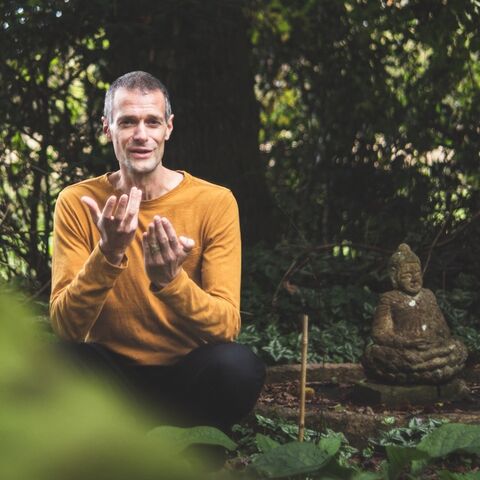
Today I have Rich Lewis joining the podcast.
Rich,
How's it going?
Great,
Great.
Thanks for having me on.
I appreciate it.
You're welcome.
Well,
Thanks for reaching out.
What I usually do,
People probably get tired of me saying this,
Is if I haven't talked too much to the person,
I will toss it back to them to intro themselves instead of me just reading off a sheet or a canned intro.
So who is Rich Lewis and what kind of work do you do,
Specifically kind of work we have in common,
I guess?
Yeah,
Sure,
Sure.
So what I guess what attracted me or what attracted you to me in my practice is I've been practicing silent meditation practice since early 2014 called Centering Prayer,
Which involves,
As we discussed right before we jumped on,
Really inner work and inner,
You know,
Going within and connecting to your true self within.
So I have a site since 2019,
Since 2014,
Devoted to Centering Prayer called SilencedTeaches.
Com.
And really,
It just shares what the practice is.
And I share how this practice has healed and transformed me and kind of shown me the way forward in life and helped me live life better.
And it's a practice that's really been so helpful to me that I simply want to share with others in case it can help them.
It's one practice and maybe it will resonate with people and they'll take me up on it.
And if it doesn't,
There's a ton of contemplative type practices where you go within and get quiet and get out of the way.
But so that's essentially what,
Why we connected was that it's a practice that may be helpful for your community as well,
Because I practice it from a Christian perspective,
But anybody can practice it and they can come wherever they are at and try this type of practice,
Which is the nice thing I like to tell people is anybody can do this.
It's not,
If you're not a Christian,
You can't do this.
Well,
Right on end,
Speaking of silence,
It's so powerful and you say it's a teacher as well.
And we got a real life unexpected taste of this right before the show here.
Rich is microphone had just automatic or just somehow out of the blue went dead and I couldn't hear him.
So I said,
That's probably not the manifestation of silence you're expecting to practice today,
But there it was.
And we came back and here we are be able to talk too.
But I feel that silence can also help our speech to kind of even amplify it and notice how powerful and impactful our speech can be when we've spent long moments in silence.
You might have something to respond to that by,
But I want to just yeah,
Make clear kind of my intentions for bringing rich on.
I was raised Christian.
I wouldn't consider myself like an active Christian now.
However,
I run in all kinds of different Christian circles.
I've joined groups that have been primarily that I have a friend who's a she's a Presbyterian minister.
And so what I do is I encounter folks who it seems like they would be turned off by more going within and more silent meditate meditative like practices,
Because I guess they don't this is a guess obviously they don't feel it's Christian enough.
So what I want to do is kind of bridge the gap here and just promote any kind of wholesome skillful and wise inner practices by going within and not only will it not deter you from the Christian faith from what I gather it can actually help strengthen that and amplify that and become closer to this.
So first of all,
I want to start about,
You know,
Start at the beginning here.
What is centering prayer and its background?
How is it developed?
Sure.
So centering prayer has been around since the early 1970s.
It was actually created by three Trappist monks,
Three Catholic priests in the early 70s.
They saw other forms of meditation going on.
And they wanted a transcendental meditation,
I think being one of them.
And they wanted something for the Christian community.
One of the priests,
Father William Manager was reading,
I think it's a 14th century classic book called The Cloud of Unknowing.
And as he read this book,
Kind of a method of silent wordless meditation jumped kind of out of the pages at him.
So he and the other two priests began kind of refining this practice,
Teaching it to other clergy and then really just teaching it to clay people and sharing it in general.
And then in 1984,
Thomas Keating,
Who was one of the Trappist monks created the Contemplative Outreach Organization,
Which now has a website,
Contemplativeoutreach.
Org.
And it's really the main centering prayer site with tons of resources on this practice and tons of groups that practice,
Many of them either in a building or via Zoom all throughout the US,
But not just in the US internationally.
So the history is it's about a 50 year old practice,
But I guess the idea,
And we can get into what is centering prayer and how you do it.
The idea of silent prayer isn't just 50 years old.
It goes all,
It really goes all the way back to Jesus.
And there's various mentions of him talking about going off to be alone.
And we don't surmise that he was always babbling,
That he was silent or he went off to the desert and he couldn't talk.
He had to,
If he fasted,
He had to be quiet and just sat with God is what he did.
So I guess many people don't realize Christianity has a rich tradition going all the way back to Jesus and even further back,
In the Old Testament,
Be stilled and know I am God and various mentionings of silence.
So people just don't realize it goes back to Jesus and then continues to come into the present future with the desert mothers and fathers in the third and fourth centuries and various mystics mentioned throughout history as you approach the year we're at now.
So it's just not talked about a whole lot at some churches and not possibly accepted,
But they don't realize there is a rich tradition.
And I think it's really the Western church versus the Eastern church or the Western church,
Perhaps in the US.
There are some churches that are willing to do silent practices,
Some Catholic churches,
Some Presbyterian churches,
United Church of Christ,
And some Episcopal churches,
I've noticed,
Tend to be open to the idea of,
Come on in,
Rich,
And just come join our Zoom session and share it with us.
But I think it's really more the Eastern Orthodox churches have been practicing it for thousands of years.
The Western churches,
Some perhaps because they have a pastor that's been exposed to it and says,
This is some good stuff and I need to incorporate it into my congregation.
So it's been around thousands of years,
But people just don't realize it.
Dr.
Tim Jackson It's,
Yeah,
In the Eastern Orthodox thing,
I don't,
It's amazing how much I've been exposed,
You know,
Regular,
Pretty much anybody in the state since there's still a huge,
Churches everywhere,
Just put it that way.
That's,
You know,
It's once very overly simplified way to look at it.
But the Eastern Orthodox,
At least here in the Midwest,
Is not very prevalent.
And so it wasn't until maybe five,
10 years ago,
I even really heard about Eastern Orthodox.
It's,
I don't know what the deal is,
If it's been suppressed,
Or the politics,
Probably there's politics involved in everything,
But we don't have to go into that now.
Because that's a whole nother,
I mean,
Lifetime of study,
Perhaps,
Just like just about pretty much many areas within Christianity itself,
You could spend the rest of your life studying,
Going deep on each one.
What I did want to see if maybe go just a tad bit deeper is my kind of eyes opened up a little bit,
My ears poked,
Perked up a little bit about this cloud of unknowingness.
Is there anything else you can say to expand upon that?
Because that seems like more of the modern day origins of this,
Perhaps,
Or had a significant influence in it,
Right?
Dr.
Tim Jackson It's just,
Yeah,
I guess the centering prayer practice was kind of found in that book,
By this 14th century book.
So why don't I just get into the how you do the practice,
Because the idea of it was formulated,
As he read this book,
The idea of centering prayer was formulated as the gentleman read this book,
And then further refined by the other two Trappist monks.
Dr.
Tim Jackson Let's get into it then.
Yeah,
How it's practiced.
And then if you ever,
If you feel it's appropriate to pick anything up,
Up,
Else up about that book,
Then please do so.
But yeah,
Let's talk about,
Well,
You know,
We gave a little bit of history now,
Let's,
How does one practice this?
What,
You know,
And then what is the,
As we'll probably get an idea of what exactly it is,
As we learn about the practice,
Because it's a practice,
Not really a study or teaching,
It's something we're actually doing and being,
Right?
So yeah,
Go,
Please.
Dr.
Tim Jackson No,
That's,
That's correct.
So it's considered two things.
Meditation,
Because,
And I get asked this question a lot,
Is this,
Is this just meditation?
And the answer is yes,
And so yes,
It is meditation,
Sitting silently,
Silently,
Wordlessly.
But we considered a relationship with God.
So during centering prayer,
We're opening to the presence and actions of God within us.
So we do not believe we're God,
And I do not believe I'm God,
But I believe I'm sitting with God and opening to this presence that's not only,
You know,
Around me,
But is within me.
So during centering prayer,
We open to the presence and actions of God within,
In silent,
In a silent practice.
And how you do the practice is you sit comfortably with your eyes closed.
And then to begin that your silence set,
You introduce a sacred,
What we call a sacred word,
Usually of one or two or three syllables at the most.
So it could be God,
It could be beach,
Ocean,
A color.
And this signifies you're now sitting with God,
And you're kind of designating this time as you're sitting with God silently.
And then as you're sitting there,
As you begin engaging your thoughts,
And what I mean by that is when you begin thinking about all the things you did before your sit,
Or you begin thinking about the errands or things you have to do after your sit,
You realize you're no longer sitting with God,
You're sitting with yourself,
And you're planning and plotting or reminiscing.
So you reintroduce the word interiorly to bring yourself back to the present moment,
And let go of your engaged thoughts,
And then let go of the word as well.
So you use it when needed,
Use the word when needed,
Not as a mantra.
And there are mantra practices where you're saying a word over and over again.
In Centering Prayer,
You just use it when needed to come back to the present moment.
And the purpose of your sit,
Of just to sit with God and get you and your thoughts out of the way.
And go ahead.
Oh,
Yeah,
It is lovely too,
Because in traditional meditation practice a lot,
We'll just use our breath as an anchor,
Right?
This idea of a word,
It really fascinates me.
One thing that's always fascinated me,
Well,
I don't know,
Always,
But is language itself,
Right?
And in the Bible,
The word,
In the beginning was the word,
And the word was God,
I think it's one translation or somewhere along that.
And so just this mystery of language itself,
Where it comes from,
How it comes to us,
How the words are chosen that we speak,
And how it just happens so effortlessly.
And a double-edged sword where the mind can use language to go off into distractions,
And how the other end,
It can help center and ground in our being and give connection.
So it's a really powerful phenomenon,
Language,
Of course.
So yes,
It's a really interesting and cool way to have a meditation anchor.
Yes.
And you don't have to use a word.
I actually use an image,
I was going to mention you.
Some people,
If you're more of an auditory person,
You might use a word.
And I started with the word,
But then I realized I'm more of a visual person.
So I picture an image in my head.
I actually just picture,
Since I've been practicing for the last six or seven years,
I picture an image of a Jesus icon that I came across.
And I don't draw it out in detail.
But I just think of that to bring myself back to the present moment.
So you can use an image,
If you're more of a visual person,
You can use your breath if you're more of a physical person.
And some people don't want to close their eyes.
They're afraid they'll fall asleep.
So they keep their eyes open and just kind of stare at a spot five or six feet in the distance.
So you can use what I call a sacred method,
Any one of those.
And someone may have another version that they use to come back.
So any method just to keep coming back to the present moment can be used.
Very good distinction.
And of course,
I'm more of an auditory thinker until I will get more silent and then make a conscious choice.
But I really like your object.
And there's an Eastern Orthodox practice too,
Called iconography.
And I think that's in the Catholic tradition too,
Right?
And so that's a really profound practice in itself.
But this is a good point because a lot of people,
I would say the majority of people do think in images.
And there's quite a few that do in words as well.
And of course,
They both associate with each other usually too,
Right?
So,
I mean,
They can go hand in hand.
It's just like when we become aware of our thoughts and thinking,
Usually a person is more predominantly visual based or auditory based,
Right?
Or like you said,
I guess,
Kinesthetics are somatically based.
Yes.
So yeah,
That's a really good distinction instead of trying to fight something that's not really natural,
Especially when starting off.
That's a really great point to know too,
Good distinction.
All right.
The only thing I'll make too,
Comment on making is,
So once you pick your method,
You don't want to be flip-flopping in the middle of your practice.
So you want to,
Otherwise you'll spend more time thinking about what's the next method I'm using when I have a thought.
So,
You know,
Pick an image or pick a word or pick your breath and use that the entire time.
And then at the end of your practice,
If you realize,
You know what,
It's not working for me,
Then try something the next time.
But use the same method,
The same word or the same image,
Obviously the same breath.
Otherwise you'll confuse your practice more than help it.
That's all.
I wouldn't comment.
It is.
This is another huge point in meditation too,
Is that,
You know,
When we first started getting into,
At least when I did,
It just,
All this new possibility starts coming up because the mind,
A lot of stuff gets cleared away,
A lot of noise and clutter.
And so the mind power and heart power starts amplifying.
And we just realize all these vast possibilities and it's so tempting to change the object and just explore all these different modes and aspects.
But again,
That's this kind of like another distraction,
Especially when we're doing more concentration type practices.
I think in the Buddhist tradition,
It's called Samatha.
There's Samatha and Vipassana.
The Samatha is actually staying with one object over and over again,
Like Rich is talking about.
While the Vipassana is more,
I guess,
It's probably a distortion saying this,
But it's more investigating the nature of reality.
But that can become really destabilizing if there's not a really stable base.
And so the type of practice Rich is talking about,
Yeah,
Come back over and over again to the object.
And I,
At least I know from my practice,
When I'm doing that,
The mind can get very calm,
Very peaceful,
Very,
The amount of joy and pleasure that just arises naturally from staying with one object over and over,
Especially when it's not an emotionally charged object,
More of a neutral object,
Or one that we really resonate with.
The mind becomes very powerful,
Very peaceful,
Very calm,
Collected and centered.
Yes.
And so that's another very,
And it can be,
Like I said,
It can be so tempting to go off to something else.
And maybe you can scratch that itch some other time,
But we want to dedicate that certain amount of time we have to our practice,
Whatever it is,
Building and strengthening that practice,
Because it will not gather momentum or won't gather as much benefit and momentum if we don't stick with it.
But with the caveat of Rich saying that if you can't,
You choose something,
You can't stay with it.
Well,
Then that's not going to be beneficial either.
All right.
So I guess maybe following on the progression of this is what are some of your experiences in your own personal practice with this?
And then what are some that others come to you,
What they've experienced too?
Now,
This can be all the way from the mundane to the most woo-woo psychic experiences or woo-woo experiences with God or however you want to take it.
I mean,
I'm really open-minded and the audience is too,
And at the same time,
Very practical wisdom aspect of it as well as how we can integrate this into our daily lives and how this in practical day-to-day terms helps our lives too.
Sure.
I do have coaching clients.
I have a recent coaching client.
I guess his practice that he's been doing for a number of years has helped him become one fruit of it that's been very helpful for him is he's become more playful because he's always felt that he has to be on.
He always felt that he was very critical of himself and he's not allowed to play and he's not allowed to have fun and he should always be working.
He should always be productive and he specifically has shared with me that this practice has allowed him to become more and we've been working on a lot but he's realizing it helping him become more playful and just enjoy the moment and maybe do things that he's never done before and maybe dance or sing or just enjoy the moment or do a puzzle or play a game with his wife.
So it's helped him.
That's one specific area that he wanted help with but he realized the practice has helped him become playful probably because he's really just accepting the moment for what it is and he doesn't have to be so critical and feels that he should be so productive that he's focusing too hard and he needs to the practice is letting go because you're letting go during center prayer and you learn to let go in everyday life and then you're better able to hone in on the moment and what it requires of you which includes playfulness.
So that was kind of a neat thing that I have a recent coaching client tell me and I'll let you react to that and I can share how it's helped.
Sure.
And that's a great reminder for me too.
I'm sorry to cut you off there because yeah it's like my to-do list right yo bam bam bam productivity and that's something I'm really good at but it's an important point because it does open up that wisdom aspect and when we have that degree of wisdom we can see well you know how fun is that you're missing out on like so much the richness of life right and the beauty and the diversity and the connection.
Yeah that's so that's really important.
It's ironic that it leisure time turns into work.
I hear these people that you know are hugely rich.
Their job now is to for leisure time where you have people that are still struggling well their leisure time is often spent trying to do more work right.
So it's interesting how that works yeah.
So and then in terms of me as I think about myself and kind of reflect back now that I've been practicing it since June of 2014 on a pretty fairly daily basis twice a day for me I've definitely noticed a number of fruits from the practice much more confidence in myself.
I'm a much more confident person whether it's at home as a father or whether it's a you know the work I do here but I also have a regular day job and I work in the 401k space and deal with large corporate accounts.
I'm a much more confident person when I'm on phone calls or making presentations.
So I've definitely noticed I'm more confident.
I think I'm more calm.
I'm less reactive and what I mean by that is I'm more willing to listen to people and not instantly react to that's wrong.
I'm more willing to listen and then realize that's kind of a neat neat way of looking at things and maybe I should try it or maybe I don't agree with it but that's okay and just it's going to be okay.
So I'm less reactive,
I'm calmer,
I'm more confident and I would say not that I was not excited to live life but I have an excitement for life and I kind of look forward to what's today going to bring and what's going to happen and even if it's a challenge I'm going to get through it if I keep persisting and come out the other side.
So I guess it's I guess it's taught me persistence and resilience where I will be okay and I can let go of I see a task I have to do at work and I think oh my god why did this have to happen to me and then if I then I can calm myself down and say you know what this is okay I can handle it the next you know it's done and I'm like why did I make such a big deal about it.
So Centering Prayer helps me let go of fear,
Anxiety,
Worry and just get the thing done.
So those are some really neat fruits that I've and I've others but that those definitely come to mind when I look back I was not as confident I was not as excited I was more more reactive and I was more afraid of the unknown and new things that are out of my comfort zone.
And yeah plenty to pick up on here too yeah the comfort zone getting out of that is how we grow right and at the same time if there's too much growth we need to pull back into our comfort zone a little bit to integrate the experiences that we've had and yeah those things that that happened to us that was like why is this happening a lot of times I've found that there's a lesson there right there's there's lessons to be learned there to so many like what is this trying to teach me but the self-confidence I'm glad you brought that up because I had this huge distortion early on where I was confusing self-confidence for egotism right so all these for whatever reason the the examples I was giving given in my life of a high self-confidence were usually at least my perception they were also attached to someone who is very egotistical you know and didn't really care about anybody but themselves and it's obvious now that they're not the same thing right there can be a really healthy almost necessary yes a version of self-confidence it doesn't have to do have anything to do with egotism right so yeah and unfortunately it took me it took me quite a while to make that distinction and then it kind of maybe attract better examples of healthy especially masculine self-confidence into to my life so I had better reference points for that you know and it's just it's been a huge difference to what being able to discern that and and then help exemplify that myself too yep no I mean it's it's not really coming from ego it's more coming from I'm confident I can handle this task or I'm confident I can help this person it's not I am great and look at me it's it's it's a different type of confidence a confidence that I if you give me this task I'll get it done or if you need my help I can help you or if there's a new thing I need to try and explore I'm confident like I can do it and figure figure it out so it's different than look at me look how great I am yes and that's exactly the distinction I had to get out of because not only was I mixing the two together but I was doing the same thing myself you know so yeah way behind on that but that's that's okay so now I have that that opposite end of the polarity to to make the other end stronger too so when there's one negative side then there's always the the the opposite positive side of it too and then trying to perhaps bring those in balance in certain areas yeah so okay so now this is a consistency let's talk about this because I've had a daily practice since 2012 you know twice a day as well pretty much and I I can't really think of anything that's helped me so much is a daily practice something that is like a constant that we can rely on that we can do no matter what you know it can always fall back on for I got the advice that you get a hobby because you can always fall back on your hobbies but you know that's just it's it's a good idea but instead of looking at it like a hobby or a hobby why not take your hobby to a daily practice so it builds so much and I tell people if they're not even interested in any of this type of stuff find a daily practice even if it's just singing in the shower for a couple seconds or something you can do every day as kind of like an anchor and a stability and something to to draw on but I want to hear about your kind of the experiences maybe are the contrast or the benefits you've noticed since you've started a daily practice I guess as a reference point before sure so I do it at least twice a day so it for me you know it's the first thing I do to begin my day is my centering prayer 20 minutes sit and I've actually kind of built a routine around it so I actually before it I I I have I'm a big believer in affirmation as you know these are single sentence statements of things I want to do with my family or my personal life or my mental health or my physical health or financial or social or community these are things that are important to me so I read them and I kind of let them go into the silence and then I begin my silent sit and then usually after my silent sit I'm doing two things I'm I read from a current book that I'm reading and it doesn't have it could be anything it could be fiction or non-fiction whatever reading I'll read for five or ten minutes and then and one other thing I do is part of my practice is journaling and I just I've started doing that over the last two months I've been wanting to do it for years and I keep hearing how powerful it is and I keep telling myself I'll do it well I finally did it and and you don't have to make it complicated I just take five however long I just it's it's a dump and I'm simply whatever I feel like saying I say so it could be I don't think I don't like the work that needs to get done later today if that's how I'm feeling I write it or if I need to motivate myself I'll say I'm powerful I'm resilient I'm going to get this done so I've incorporated that into my routine every day as well in the morning it's just a quick journaling even if it's five minutes and single words or single phrases or even sentences so that that's really and I found it so powerful because then I can look back and read them and it's helped me like I'll if I have a day that I'm drudging I'll put on there and I did it this morning I have a bunch of things that need you to get done during my day job and I and I and I listed them down saying this is going to get done this is going to get done this is going to get done I'm going to have a great day and I'm going to end the day and be pleased because everything will be done so that's kind of my morning routine is is is affirmations let them go into the silence do my silence sit read a little bit from a book I'm reading and then do some journaling and then begin my day very cool this is a big part of my practice too the I guess the affirmations that they are really powerful my little spin on it is putting them into intentions intentions so I intend to are I set the intention too and for me I found that while it can build willpower and can build up willpower if I say I am going to do this for me now I've gotten to the point where I just I sometimes I still do that because I have a fairly strong will however I take it seriously so I don't commit to a lot of things because the more I commit to things the the more commitments I have the the less are the more I'm spread thin you know and so so for me I found that prioritizing those those affirmations what's you know what is the most important thing and I know you've you're probably pretty good at this of what's and I forget what how you you said but what I what I like to do is allow so working with this thing of allowing as well like instead of saying I intend to I'm more like I I allow such and such you know and and so that's one thing for my intention now the other thing you said the the reading afterwards and that's a really good idea because once the mind is calm and settled and we focus so deeply that's a great time to do cognitive things too right because it seems I I'm guessing your absorption and your understanding and your insight into what you're reading is expanded at that time right yeah coming out of the meditation is a very important point it's a very powerful thing and sometimes the insights can come after the meditation too during the day so so notice that's a key time as well and the journaling I just have to say yeah I got advice a few years ago that if you're not journaling you're faking faking it and I'm like what I'm not faking it I'm going to do this so I've kept a daily journal probably for years now and sometimes it's only like a sentence or two and for me it's not as much emotional and things like that it's me keeping track of my day what did I do that day but the the retrospective part of it is so important because the hindsight is where we really can change and grow and evolve I don't do that enough I need to go back through it now that I've got years and just you know flip to a random day oh yeah I remember that day what was going on oh how I can only see part of it then but now I it fits into the bigger picture and how that informs what I'm doing now are things events that might have happened and played out so it's it's a beautiful practice yeah and you've already noticed the benefits in your short amount of time doing it so yeah that's a another huge recommendation um now what about retreats of centering prayer have you led those like extended periods of time either in real life or um on zoom and if there's anything else you want to pick up about what I said too haven't I well I do actually with another gentleman that wrote a book so I wrote sitting with god a journey to your true self through centering prayer which came out in august of 2020 I connected with a gentleman named brian russell who also published a book um less than a year ago on centering prayer he has a podcast I was on a show and then we just resonated with each other so and said we need to do stuff together so we're actually tomorrow we're doing I think it's our fourth one we do a monthly centering prayer gathering it's 90 minutes and the first 20 minutes 25 minutes is really just us talking and on an interesting topic that we put together it sometimes it might be me asking him questions or him asking me questions but there's usually a topic and then we lead them into a 20 minute centering prayer sit so I know it sounds funny but we do we all then we we lead them into the sit and then everybody sits silently for 20 minutes and most of the people turn their cameras off and mute and then um at the end of the 20 minute period it's we have 30 minutes left or we allow at least 30 more minutes of just q a where they can either ask questions they can ask questions upon what we talked about at the beginning where they can simply share whatever they want to share so we've been doing this and many of the people have already been practicing centering prayer but in some cases they might be new so we always right before we do the sit I teach them you know how you do the practice in case there's anybody new so now that you said that we've been this is I think our fourth one we're doing it once a month and inviting anybody who wants to join us to come in via zoom and and it's it's been a neat experience I mean we've had people from all over the US and we had a gentleman calling from Croatia and we had a couple people from the UK so it's so that's one thing that I that I've been doing and then I'll get invited to come into churches and we'll and we'll do it via zoom and and I'll kind of cater to what they want so in some cases they want to do centering prayer exactly like what I just explained in other cases they just want to give have me give them a talk share the practice and then let them experience five minutes of silence so I so I do that as well so a little bit of both so the monthly gathering which is a 20-minute sit or church is inviting me to come in whether they have an hour or 90 minutes and asking me to teach them centering prayer and let them experience a sit or or they'll give me a topic and I'll incorporate that in my talk plus the centering prayer very cool and actually this isn't at least in the Buddhist communities that I do I'm actually doing a day-long meditation retreat tomorrow and okay it's out of Redwood City California at least one of the teachers is so that's the whole day just the meditation right but more a lot of the other meetups and gatherings on zoom now it's very similar to the format there'll be a there'll be a talk they'll be sitting and then they'll they'll open it up for questions and answers it's a really common format now and like you're saying the hybrid where part of it can happen in real life and then other people can join on zoom it's becoming really more and more common as far as I can notice now with different things that I check out and join so yeah well why don't you leave we're getting closer to the end here why don't you leave folks with any other thing you'd like to anything else you'd like to say and then also we've mentioned kind of the events you do tell people more about your book anything you want to say about that maybe the writing process the inspiration process anything you want to say about that of course where people can get to know you can get it too and then you can leave folks with your social media links website any other events you have up coming up any messages you want to say you know and I know this this gathering is really important this belonging all of us of humans we're just better off if we feel like we belong to to each other to something to someone you know this in the gathering is a really important part of life too so plenty of stuff there to pick up on sure sure well the first thing I would just encourage people is to try a silent practice so whether it's centering prayer or whether it's some type of silent meditation I would encourage people to find a practice and make try for 30 days and to make it a habit I'll suggest they do it first thing in the morning so before you begin your day do your silent practice if the idea of sitting for 20 minutes seems daunting you don't have to start with 20 minutes sit with five minutes and try to make an effort to do it every day for 30 days and just see what happens and see whether it resonates with you and you can decide you know what this isn't so bad I think I'm going to keep at it and I think I'm going to slowly start increasing the time so I'll just challenge people to try commit to 30 days of five minutes first thing in the morning and see what happens is what I would challenge people to do yes can't I can't echo that enough and then to and then in terms of centering prayer I have a free ebook on my site so if they come over to silencedeaches.
Com and subscribe I have a free ebook that's very easy to read and get through in five five or ten minutes which kind of shares how you know it's it it answers all kinds of questions on centering prayer at the top of the page is a question and then the bottom is just bullet points of answering the question so it'll share the practice and how to how to do it so I would encourage them to take a peek at my site silencedeaches.
Com try the free ebook and just see if this is a practice that resonates with you and then if you find it does they're certainly welcome to take a look at my book they can see it on my website Sitting with God,
A Journey to Your True Self Through Centering Prayer is available on Amazon and and most online retailers Barnes and Noble,
Target,
Walmart and it's available internationally I've noticed it in different spots so they can if they want to further explore the idea of centering prayer they can check out my book because it's a just a regular person who has who works a regular day job and sharing how what the practice is for people new as well as people that want to go deeper but it shares how it's healed and transformed me as well so I think that's what a lot of people have said they like the book because it was easy to read it shared my journey I was I was open and vulnerable in the book the chapters are short I'm purposely short and with even within each chapter that you have a heading so you know what to read under that section the sections are short at the end of each chapter questions for reflection and answer if you want to kind of reflect on what you just read so people told me they they liked it because it was an easy to easy book to read they could read it in chunks and it was just coming from a regular person who's sharing how much this practice has helped and healed healed him so silencedeachers.
Com really is the best place to learn about me my book or even just take a peek at the the free ebook and see if this is something that will resonate with you.
Well very cool Rich and those will be linked in the show notes and thanks for everybody for joining and listening in may you all be blessed with an ideal and optimal day and night bye.