All is welcome.
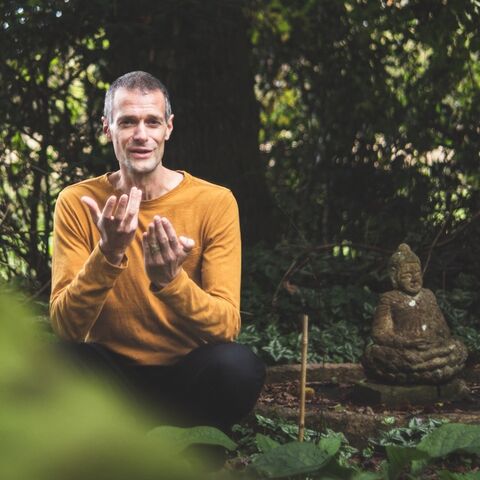
This is Josh Dippold and today's event is entitled Surmounting the Impeccability Gauntlet.
Imagine being impeccable in speech and conduct.
Let's explore such an aspiration via topics like intent,
Purpose,
Honesty,
Training,
Authenticity,
Sincerity,
Seriousness,
Humor,
Ease,
Intuition,
Wisdom,
Discernment,
Feedback,
Self-kindness,
Sympathy,
Mindfulness,
And the power of self-responsibility.
Well yeah,
Well that's a that's a mouthful.
Let me just tell you about what inspired this event and this title here.
After years of kind of unplugging from entertainment and media,
I went back and have been watching kind of more popular shows with fiance lately and I'm just really resensitized to what's what I see on the screen or a small screen.
And it seems like these kind of Hollywood produced shows that I haven't watched in years and years,
There's a lot of times,
Especially the American ones,
There's a lie that goes.
So somebody's dishonest or they tell a deliberate falsehood in order,
Usually it's in order to just make things easier in order to protect someone themselves or someone they love or in order to get back at someone,
Revenge.
And I'm just kind of appalled by this for whatever reason.
I mean,
I shouldn't be because it's so common,
Right?
But,
And it got me to think about these shows and it seems like they present this behavior of kind of lying and then bad things usually happen,
Right?
We see people lie in shows and tell deliberate falsehoods and then all kinds of drama ensues.
People get hurt,
Things like this.
But if we pull back a little bit,
What is this saying about those creators who create the show?
It's almost like,
Yes,
What they present is a fiction and yes,
It does have consequences on there,
But it's almost like they control it.
As long as the actors say what they do and they tell a story,
That stuff doesn't happen to them.
They're just pretending it happens and they're removed from,
And of course the viewers remove,
But it kind of depicts some kind of accuracy with cause and effect,
But in very things that might not happen in real life,
Just the way they're presented.
And so they seem to have like this control over reality and that they craft it but aren't subject to it at the same time.
They're behind the scenes and what happens to other people,
That happens to other people,
But the people behind the scenes,
They control it.
And so they can manipulate and if who's ever on board there obeys the director,
Then they're just going to play a part and it's not,
They'll just pretend things happen the way they are.
So it's just really muddled mind mix of,
Okay,
What's real and get lost in the story.
Would that happen if it happened in real life?
Are there people immune to their certain words and actions and not?
And I just got,
I just,
It's a fascinating kind of thought experiment,
But what really drew my attention then is this notion of impeccability.
And I'm so far from this and most of us are,
But this is an inspiring thing.
I mean,
We look at these shows and not to bad mouth all of them because they're great learning opportunities,
But could you imagine aspiring to impeccability?
The Buddha was said to be,
I look for evidence of where this was said directly,
But he said to be impeccable in speech and conduct.
And the word impeccable here is a definition from the dictionary,
In accordance with the highest standards,
Faultless.
So it's free from fault or blame,
Flawless.
This notion of the bliss of blamelessness,
But what about if people aspired instead of to the things we see in media?
A lot of times where it's all doom and gloom or somebody does something ridiculous and it leads to all these horrible things,
Whether that be on the news or in made up TV dramas.
What if we were shown in an aspiration to be inspired by impeccable conduct?
Yes,
We're so far from that,
Right?
And that's okay.
This is an aspiration.
It's not something to realistically attain quickly.
You know,
This has to be trained at.
And so I just want to go into some of these qualities,
And maybe some of this will inspire us to,
You know,
About what could be possible with this human life compared to,
You know,
Yeah,
Or,
And this is not to be goody two shoes.
You know,
This is like,
Wow,
When we experience these qualities and others,
There's like this kind of a beauty or a recognition of,
I don't know,
Goodness and what can actually happen with this human life.
So the first thing is intent or purpose.
So why would we even want to do this,
Have the intent to do this?
And I think it's going to vary from person to person.
But I know skillful actions usually have skillful results,
Right?
So this is helpful.
And having blamelessness and the bliss of blamelessness.
This leads to all kinds of beneficial qualities for ourselves and others.
And I mean,
If we're going to aspire to something,
Why not aspire to the highest thing,
And then have the kind of gradual,
More realistic steps in between there.
And let me just read this,
This portion of a sutta here that caught my eye.
And it's kind of out of context,
But I'll read it anyway.
Take another person who's living with someone else.
They come to know,
Quote,
For a long time,
This venerable's deeds have been unbroken,
Impeccable,
Spotless,
And unmarred.
Their deeds and behaviors are consistent.
This venerable is ethical,
Not unethical.
That's why I said that you can get to know a person's ethics by living with them,
But only after a long time,
Not a short time,
Only when paying attention,
Not when inattentive,
And only by the wise,
Not the witless.
So this is how we kind of come to see people's conduct.
And this makes a lot of sense,
Right?
It's pretty obvious.
You can't just get to know someone right away.
You have to actually live with them for a long time.
And then you have to pay attention.
You can't be inattentive,
And you have to be wise about things.
You can't be witless in seeing these behaviors or impeccable behaviors.
All right,
So now this next quality is honesty.
And I think if we're looking at the Buddha for inspiration here,
One of the things he said to never have broken throughout all his past lifetimes is,
Which is pretty mind-blowing if it's the case,
Is to not deliberately tell a falsehood.
You know,
He's interested in the truth of the way things are,
Because that's kind of the ground level.
If something's not true,
If we don't know what's going on honestly,
Then we're going to have a hard time making decisions that are helpful.
Because if they're based on things that aren't accurate,
Then it just kind of completely lost and don't have a mooring or bearing.
And so to me,
That's the utmost important.
Of course,
Being honest and,
You know,
Pursuing truth or as truthful as things can get.
So without that kind of base,
Then yeah,
It's,
That has to be kind of have a bead and understanding on that.
And with that comes discernment too.
So right,
Knowing when we're lying to ourselves or not being honest with ourselves and that when others too,
When others are not being honest with us forthright,
Deliberately telling falsehoods,
And then what to do about that.
And of course,
There's different,
You know,
What is levels of truth or relative truth,
Right?
There's things that are true and maybe more true.
Now,
The next thing is training,
The,
The quality of training.
And so what do we talk about when we talk about training?
Well,
We talk about training ethics,
And meditation,
And then in wisdom.
So I didn't really realize how important this ethical quality is until I started meditating and then can see more than I usually could see about myself and others.
And so what do we mean by ethical?
It's it to me,
It's really quite simple.
It's based on non harming.
It really is that,
That simple.
Now,
Of course,
What might be harmful for one person might not be harmful for another,
Or what might be really harmful for one person might not be harmful for another,
But it's this desire in this recognition,
That harm is not okay,
Right?
That's harming in the name of some idea,
Or some cause or something like that,
Of course,
We have the,
You know,
The right to protect ourselves and our family,
I'm not talking about that,
And our loved ones,
But we never have the right to aggress on another,
You know,
To,
To,
To harm,
To initiate harm.
And we'll know what's harmful for us or not,
Right?
There's really not much gray area,
We know if we're,
If there's something's harmful,
Whether it comes from ourselves or for others,
And there are subtle layers of this too.
And what's really important too,
With these actions around this is the intent behind them,
Like I say before.
So if we're doing an action with an intent,
Then it means more than kind of an action without intent,
It has more consequences than an action without intent.
And that includes deliberately being mindless and trying to not have intents when acting in order to get out of consequences,
Right?
It's kind of counterintuitive here.
Now,
Authenticity,
I've talked to quite a bit about this.
I mean,
What does it mean to be authentic?
Some people have no clue what it means to be authentic.
You know,
Even me talking like this,
I mean,
I don't,
It's a slight difference from when I'm talking on a,
In front of a computer to I'm not exactly sure who's hearing this right now and in the future.
So this is kind of like,
You know,
How can I be more authentic in this artificial environment?
So maybe it's the most authentic for this,
But you know,
Why is authenticity important?
And this kind of goes in with honesty,
Right?
If we're pretending to be something we're not,
Then we're not being fully honest.
And this can be a practice and a training too.
We can't just beat ourselves up or constantly second guess authenticity,
Right?
You know,
Some people might be more authentic in certain situations and not,
They might not have valued this coming up or they might've valued people kind of acting something they're not in certain situations in order to get ahead or for whatever reasons it was be clever in the West.
There's a huge importance in the world on being clever.
And I fell into that trap for a long time.
And I was saying in and of itself is wrong with being clever,
But that seems to be the end all be all for a lot of people in their entire lives.
That's just all they really kind of do and value is cleverness,
Whether it being shrewd at business or in their relationships or being innovative in a certain way,
Which there's nothing wrong in and of these cells,
But it's such a small slice of life,
I feel as of now.
So then again,
Sincerity,
You know,
This is another thing.
How sincere are we?
And we can't really force people to take us as sincere.
So it's not a hundred percent of responsibility.
My intent for being sincere is mine and it's partly mined when I act to be sincere,
But I can't reach out and tell my audience,
Okay,
You have to interpret me as sincere.
Otherwise,
You know,
You can't be here.
You can't listen or whatever.
I can't control how other people perceive anything,
My sincerity or not.
But again,
I think the sincerity goes hand in hand with honesty and authenticity too.
Now we get into this stuff by now,
It's like,
Oh God,
This guy,
He's so serious,
You know?
And I would say,
Well,
Yeah,
And I think this is a notion I took from another teacher is,
You know,
Could you allow yourself to both be serious and not serious when the time is?
So if you can't take yourself seriously when you need to take yourself seriously,
Then a lot of this stuff is just completely pointless.
Just,
You know,
What's nothing,
This kind of nothing matters or there's no truth in anything,
This solipsistic nature that,
You know,
Nothing matters,
Everything's random,
This kind of thing.
But we do know when we act with skillfulness,
Then there's going to be skillful results,
Maybe not immediately,
But there's a higher likelihood or tendency of this cause and effect.
So this notion of seriousness,
You know,
If we can't take ourselves seriously,
Then,
You know,
You might as well be living as a fool or in a clown world,
You know,
But at the other end of the spectrum,
Humor is a really amazing thing,
You know,
It breaks up and some of the best humor is very truthful and real,
You know,
They're saying the things and putting things in a way that are actually very honest and truthful that nobody has thought to say out loud or put in a certain way.
Humor breaks up a lot of dense energy,
It immediately is able to connect with people as long as they have kind of the same sense of humor and this can be done,
You know,
In good taste too.
And sometimes I have a notion of bizarre humor and not everybody has that as well,
But sometimes it can be helpful,
But sometimes not so helpful.
So kind of the right humor at the right time.
Now,
This next quality of ease,
I think,
Is particularly important for our well-being,
Especially in today's world of high,
Strong,
Doing,
Doing,
Doing all the time.
And ease is,
As far as impeccability,
Probably not the first thing that comes to mind about impeccability,
But it's kind of a support.
So when our actions are more on the impeccable side of things,
Right,
Then there tends to be more of an opportunity for ease instead of worry about what I said,
What I did,
Restlessness.
Restlessness and remorse usually comes from past unskillful actions.
And what meditation does in the training,
They allow us to see these and then view them in a different light,
Make aspirations and resolves to not do it again,
Because we see where those actions and words lead to and being kind and patient with ourselves as we work towards our long-term welfare and happiness and that of others.
And this really,
This notion of ease that all,
And wish that beings could be at ease too,
For health and happiness,
Well-being.
Now,
Intuition,
I think this is,
Some people teach intuition,
And I think it just kind of develops and flourishes and comes to the forefront more naturally as we do meditation practice.
We get interested in these types of things.
We start trusting ourselves internally.
This is where intuition can be just kind of flow naturally.
I know I get in trouble a lot of times when I ignore my intuition and something tells me internally,
You know,
Okay,
Don't do that,
Do this,
You know,
And then the mind will come in and over,
Oh no,
You can just,
You know,
Do your habit or do what you want,
Right?
But that usually comes back to bite me.
So as long as we discern that our intuition is actually helpful and useful,
Then we can hold it close and pay dear attention to it and use it as a guiding force,
Like an inner teacher,
Which is really helpful because the mind and brain can lie to us too,
Right?
So the body is very important as well,
Feeling and knowing in the body,
What's more real and what's not.
Some people do muscle testing and whatnot as well.
Of course,
Wisdom,
That was the threefold training.
You know,
This is the way I look at wisdom is first,
It kind of starts out or one of the ways as it starts out as information,
And then this information can become knowledge,
Excuse me,
And then that knowledge can be applied in our everyday life kind of innately.
And it doesn't have to be set and thought about,
But it's almost like this spontaneous knowing and into action of,
Okay,
I see this situation and now I just act because I see the wise thing to do.
I know the wise thing not to do.
I know the wise thing to say or not to say,
What energy to bring to it,
What energy not to bring to it.
Yeah.
And how I view this,
And this is something that just,
I think some of it can be taught,
But a lot of it to really be wisdom,
I feel is when we enact it in our daily lives,
We know it from experience,
We can take some knowledge and we can act upon it and then grow wisdom that way.
Sometimes with a lot of,
I guess,
Knowledge and time and practice,
We can get wisdom from others and just have this realization right away.
Oh,
Especially when we review,
Oh,
That's what they meant by this.
I can look at review my life,
Certain times in my life and oh yeah,
I could totally see how that applies to that situation.
And then we can take that and go forward into other parts of our lives too.
I've already talked about discernment and this is needed kind of to know what is what and where to act and how discerning what's important to be discerned,
Distinguishing certain things and also knowing when not to draw distinctions,
When to see kind of unity and inclusiveness and inseparability,
Interdependence.
And interconnectedness as well,
Where discernment doesn't make as much difference.
Now,
Feedback is a big one too.
Feedback,
You know,
It's said that feed real,
Honest,
True feedback from someone you admire is more helpful,
Is more valuable than a pile of gold.
So money can always be made and discovered and got,
But think of how many people we really,
Truly value what they say,
What they have to tell to us and they don't pull punches.
They will level with us honestly and it's even more sweet when they do it in a way that's really helpful,
You know,
That really puts us on track,
That straightens us out a little bit,
That points out our blind spots,
How much could we have gone on doing a certain thing the way we've been doing it without those we really respect,
Honor and love,
Giving us honest feedback of how to correct and to make our lives less painful,
Less miserable and can see things that we can't and that are to go out of their way to help us with taking some burdens or showing us some burdens that we can put down.
So feedback,
Yes,
It's totally invaluable.
Can't even put a price on real helpful feedback from those we love and admire.
Self-kindness goes right next with this one and kindness in general.
Kurt Vonnegut said the only rule in life is kindness and when we're going through things where things are difficult,
We're going,
We're being too hard on ourselves,
Of course,
Self-kindness comes as loving kindness,
Wanting us to be safe,
Wanting others to be safe,
Especially our dear ones,
Wishing this and inclining the mind towards being safe to ourselves and then this is a training to and then once we train our mind to incline towards safety,
Then our speech and actions will more likely reflect that training and that wish and that practice.
Also wanting us to be content and others around us to be content because we can see the betterment in our lives and others well-wishing about strength and health.
We want to be strong.
Others want to be strong too and healthy,
Of course,
With the safety,
Right?
All these complement each other.
And then another quality I like is that we mentioned ease and what about being free?
Truly being free and awake.
These things that are beneficial for us and those we love and potentially all beings everywhere.
So we've got now sympathy.
So sympathy is another word,
I think,
For compassion.
So I think about when times get really rough and how much it can really help for someone just to be there,
To listen,
To lend an ear,
To recognize our plights and our pain and be sympathetic towards them.
Not in a way that's pitying,
But that they realize that,
Okay,
You know,
Ignoring this pain or doing all kinds of unskillful things in order to deal with pain.
But if some,
Including ourselves,
If we're really there for ourselves and just feeling how real this can get sometimes,
How painful and stressful life can get and that we really want to be able to do whatever we can in order to address this in the most helpful ways and especially in the long run.
And we can give this to ourselves and others and also give it to ourselves when we can't give it.
So being compassionate and sympathetic when we can't have compassion and sympathy too,
And not to use it as another opportunity to beat ourselves up when we fall short of these standards.
And mindfulness,
Of course,
We can never have too much mindfulness.
Someone interviewed me the other day about practicality.
How do we bring mindfulness off the cushion into our daily lives?
And,
You know,
Really everything's an opportunity for mindfulness.
You know,
We're constantly breathing.
So right there's an anchor that's pretty much continually accessible to bring our awareness to the position of our body.
If we're sitting,
Standing,
Walking,
Laying down,
The transitions we have as our limbs move,
You know,
Eat,
Going to the bathroom,
A little weird,
But when we're going through doorways,
I like this one because we can,
It's a little bit more noticeable.
A lot of times when we move from one environment to another,
The threshold of that,
When we hit,
We'll reach a doorknob or touch a door,
Touch objects.
So there's so many ways to be mindful.
And mindfulness is kind of the governing version of all this,
Where we can tell what other qualities we need and don't need.
If we're not mindful,
If we're not heedful of what we're doing,
Then we can't really make the best choices we need to make.
We can't really have the capacity as much as we could to see things,
Have the right view towards things that will inform how we speak or respond or act,
Where our energy is spent,
These types of things.
So yeah,
It's,
Can't really sing the praises of right mindfulness as much.
And then of course,
This comes to self-responsibility and how this can actually be very powerful.
And like Spider-Man,
Right?
With great power comes great responsibility,
But it's the other way around with great responsibility is powerful or something.
But so yeah,
So this is recognizing that,
You know,
No one else is responsible for my words and my actions other than me.
And yes,
We can't control what comes to us all the time,
Obviously,
But what we do seem to have some say in is how we see that and how we view it and then how we respond to it or not.
And this is where we do feel,
Could feel helpless in a lot of our lives,
Especially if things are going really rough,
You know,
Where we can't seem to have any say,
Or we feel insignificant or belittled,
But there is one thing we can do is how we see things and how we respond to it.
And,
You know,
Some people out there who have a huge presence on like social media and all this type of thing,
You know,
What they say,
It seems to carry a lot of weight too,
But don't underestimate,
You know,
Our things,
What we say and what we do,
Because every little drop can fill up a bucket.
And over time,
This accumulation does make a difference.
We know about the butterfly effect too.
So it's not to get overwhelmed and start thinking,
Oh God,
I can't even do this or that because it can have a huge impact.
That's the other extreme where it could lead to paranoia and whatever.
But we just know that we're doing the best we can and what we say and do matters no matter how seemingly insignificant it may be.
And we don't have to use this to pump up our spiritual ego.
We can just use it,
Especially when we get bummed out thinking,
Oh,
What I say or do doesn't matter.
It has no consequence or whatever.
Yes,
It does.
You know,
And we can see this just by reviewing some of our past actions and things we said in our lives and how what we thought was so insignificant,
It turned out to have a way huger impact than we thought it did.
So with that in mind,
You know,
What's the best way to go about it?
What do I need to train?
What weaknesses do I need to strengthen?
And what strengths can I highlight and kind of celebrate and share with myself and the world and those I love?
So yeah,
I think that's about it.
Unless anybody has any questions.
Getting close to the half hour mark here.
I appreciate you all carrying this out with this amazing aspiration that we're all quite a long way from impeccability.
But why not?
Why not aim for that in the long run,
You know,
And do it realistically like we are,
We start where we're at.
And then we aim higher and we can do practical things on the way,
You know.
But I mean,
If you're going to go for it,
Go for it all the way.
I mean,
Could you imagine turning on your social media and just see the most impeccable speech and conduct that's authentic and helpful?
You know,
It's just,
It can be inspiring.
And we know we have those people in our lives.
So we can,
Hopefully we do.
And we can see there are a few role models out there and,
You know,
That we can see and aspire to.
And may you all aspire to your highest ethical conduct that's not wishy-washy,
That's authentic,
And that's helpful and natural and will be for your long-term benefit and for the long-term benefit of all beings everywhere.
May all beings everywhere realize awakening and be free.