Easiest way to get in the bed.
Paulness,
Welcome.
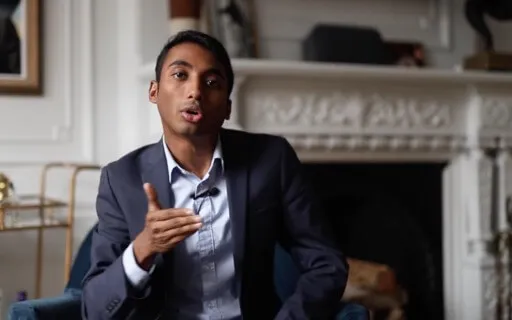
This is Josh Tippold of IntegratingPresence.
Com and today I have Brendan Kumarasari.
Brendan,
How are you doing today?
Very good,
Josh.
How are you?
Doing well.
What I typically do on the show is toss it back to guests,
Especially who haven't really talked too much before.
And for them to introduce themselves,
Tell us a little bit about who they are and what kind of work they do.
Yeah,
For sure,
Brother.
Happy to.
So for me,
The story started when I was in college.
So I went to business school and I did these things called case competitions.
Think of it like professional sports,
But for nerds.
So well,
Other guys my age are like playing football or something.
I'm not that kind of guy because I would get sacked and break all my bones.
So what I did instead was I did presentations competitively,
Josh,
And that's how I learned how to speak.
But then as I got older,
I started coaching a lot of those students in the colleges because they needed to help with their communication.
I wasn't really charging them back then.
It was just to help them.
And that's what gave me the idea for what I do today.
So I started a YouTube channel called Master Talk because I felt that a lot of the information I was sharing with them wasn't really available for free.
And a few years later just turned into something that I never thought it would.
And it's pretty amazing.
I checked this out and of course,
I guess,
Serendipity or synchronicity brought Brendan to ask to guest.
And I thought,
Well,
Yeah,
I've done these talks on mindfulness of speaking and yet I still have these challenges,
At least I feel,
Mainly of these compulsions to say,
Uh,
Uh.
And so,
You know,
My guess with this would be I'm kind of a walking encyclopedia.
I have so much information to share,
So excited about it.
At the same time,
I feel everyone's time is very valuable.
And so sometimes I get into a rush.
I want to compress so much information in a short amount of time.
And I guess I'm not very relaxed when I do that.
And it's obviously I see the benefit when I sit down and think about it and just ponder upon adding these spaces like Brendan talks about in one of his videos,
Mastering this pause instead of just feeling compelled,
I guess,
To fill it in with a stuttering like I just did,
Right?
And the um's just slow down and pause.
And now this I can do very well when I'm not really interacting and I give myself all the time in the world.
So there's this podcast series on the idipadvavanga sutta that I've been doing.
It's like a seven-part series.
And when I recorded this,
I just kind of got into a meditative state and set back.
And so I recorded probably maybe an hour's worth of material.
And then through the beauty of editing,
You know,
This removed silences,
It probably compressed down to over half the size.
There were times when I was getting interference from airplanes flying low,
The neighbors sounds and things like that.
So I would just,
That was easy because I could just really pause and let that go by,
Right?
But then there's other times when things were coming to me where it was kind of this complex information that was just coming out of nowhere.
And so I just let it take its time with that.
Now if I were doing that in a live situation,
I think that would might be a little bit awkward.
I don't know if people would,
Depending on the audience,
I don't know if they'd have the patience to do something kind of for something that obscure and it only really applies to certain practitioners,
I would think.
So anyway,
Roundabout here,
Long story short,
Again,
At least I'm becoming more conscious of this.
I guess I want you to talk about these pauses.
We can talk about,
I really also want to get into mindfulness of speaking too,
But let's just start with this pauses and addressing what I said here.
And then I can probably come back and integrate what's said here.
Absolutely Josh.
Well,
Let me start with this.
You're awfully humble.
I mean,
I don't think you really say that many filler words and you're doing that for the audience,
Which I appreciate.
And the other piece is don't be shy to judge yourself.
Like don't judge yourself.
I mean,
In the sense that if you say like two,
Three filler words,
And this is not just for Josh,
But for everyone listening,
It's not the end of the world.
Like no one's going to die.
I think the challenge is when people say a filler word every like three seconds,
And I know we all know those people,
That's when the challenges come.
So yeah,
Don't feel like I'm evaluating every part of your speech while you're talking.
No,
But it's just,
I can just sense the kind of master you have.
And it helps me be more mindful of the words coming out of my mouth as well.
Just like when I get in the presence of someone who has a really large vocabulary,
Right?
Well then my kind of vocabulary comes,
That I usually don't use,
Comes out.
Same way with kind of we match that energetic resonance of whoever we're around.
It kind of brings out the best in us,
You know,
Comparatively.
So that's good.
And at the same time,
I welcome any kind of criticism,
Whether you feel it's harsh or inappropriate,
I welcome that,
You know,
That's how I get better.
So I'm,
That won't,
That won't scare me off at all.
Speaking of competitions,
Right?
I wish more people were like you,
Josh,
In the world,
Super open-minded and ready for feedback.
So let me start with two things.
So the first thing is,
Let's shift the energy a little bit.
You know,
I think what's,
What's driven me a little bit crazy about most of my industry,
Josh,
Is a lot of us,
We focus on the mistakes.
And you'll notice when you browse my library of videos,
Because you seem to have watched a couple of them.
There's very few videos where I go like,
Five mistakes,
Your fear is going to take over.
You know,
For me,
Communication is all about every moment of your life,
Right?
It's the way we talk to our families.
It's the way we play with our children or nieces or nephews.
It's the way we order food at a restaurant.
It's the way that we meet strangers when we travel.
And when we realize that communication is about leading a more fulfilling life,
Then we start to ask ourselves different questions.
Because right now,
We see communication like a chore,
Not us,
But most people are listening to this,
And no one wants to get better at doing the dishes.
So the question to ask is,
How would your life change if you became an exceptional communicator?
So we got a dream first.
You know,
That's beautiful.
I was thinking just more practical things like it would save me hours and hours of editing time.
Really practical things like that.
So yeah,
It's even just icing on the cake to put those such simply put yet beautiful,
Elegant questions that are really important,
You know?
And I once heard someone say that,
You know,
The most profound thing we'll ever do is speak to another human being.
And at first I was like,
What?
You know,
There's all this majesty in the world,
All these amazing things,
Adventures we can get into,
Things to study,
Experiences to have.
But it really resonated with me.
We come to think of it too.
And I'm reminded now of a silent meditation retreat,
And how the communication just doesn't stop when our voice goes off,
Right?
It's like this amplification of our body language then,
Because we're just in this constant need and just how we are.
We're social creatures of how to communicate.
We're communicating even if we're not talking,
Right?
So we're in constant communication then.
And those things become amplified,
At least for me anyway,
Because usually how I relate to people is through speaking.
But when that's cut off even,
It is really profound how we don't stop communicating.
Super powerful.
I love that,
Especially your point about the meditation,
Because even when the voice goes off,
You're still communicating who you're being to the world.
And that's what one of my coaches told me.
This guy named Steve Hardison,
He says,
It's not about what you're doing,
It's all about how you're being to other people.
And that as well is a big part of communication,
That nonverbal energy that you give off when you talk or when you communicate ideas.
Absolutely.
And the state of one's beingness I feel does override what we're doing as well.
And then the key for me is merging those two.
So can we be as we do,
Do as we be,
Kind of integrate and embody both of those things together.
All right.
So what about tips for podcasting?
Do you have some of those?
I mean,
I know your kind of forte seems to be in front of other people and giving presentations,
Which is there's been a whole huge culture,
I guess,
Around TED Talks and whatnot,
Right?
And I used to be the opposite.
Like I worked behind the scenes in a podcast,
I was kind of terrified to be out there in the public eye.
And I really,
Eventually I'll have to get in front of other people,
A live audience to to do a presentation.
I haven't really done that as much yet.
I think I did the best man speech for my brother's wedding and people really loved it.
But I had cue cards,
You know,
Which would be nice if I couldn't,
But I had a bunch of stuff,
But,
You know,
I didn't obviously read verbatim on those,
But they helped me a lot because I was really nervous and stuff during that time.
But people really loved it.
OK,
So I guess,
Yes,
Tips for podcasting.
And then I guess we can go into what it's like to present in front of a live audience,
Comparative,
You know,
Like this Zoom culture we've kind of got now and online things,
Which is still OK.
And I love podcast.
I mean,
I spent hours and hours and hours at parts of my life doing nothing but just like consuming podcasts,
Basically.
Same,
By the way.
Same.
And congrats to your brother as well.
That's awesome.
Thank you.
Of course.
So I would say in the context of of podcasting,
Josh,
There's kind of two lens that we can look at it through.
One is the podcast host and another one is the podcast guest.
So how can you be better on both sides of the of the interaction?
So let's talk a little bit about both.
So for podcast guesting,
I would say the most important exercise is what I call question drills.
So all the time in life,
Josh,
We always get asked questions about who we are,
What our expertise is,
You know,
Doing the dishes,
Take out the trash like we get to ask questions all the time.
But most of us are reactive to those questions.
So we get asked and we go,
Oh,
I don't really know what to say versus proactive.
So my advice is every day,
As a podcast guest,
If you want to get better on shows for five minutes a day,
Just write down one question that you think somebody is going to ask you on your expertise and write out the answer and do that every single day for five minutes.
And if you do that for a year,
You'll have answered 365 questions about your expertise and you'll be unbeatable.
So that's the advice for podcast guesting for podcast hosting.
And then feel free to follow up on this,
Josh.
I would say I like Lewis Howes's tip on this is a lot of things I could say,
But I'd say the biggest one is what he said,
Which is the pre-show is the show.
And what he means by that is that the environment that you create for a guest before the show begins is the actual show.
And the reason is because the best podcast guests in any industry are probably doing like 10 shows a week,
Five shows a week.
And the crazy ones are probably doing 20 shows a week if they're promoting a book or something.
So for them doing the show is really just about serving the audience in the moment.
So they're not actually making a conscious decision before the show that this is the most important one of the day.
And here's a trick you can use as a podcast host that Lewis does.
So whenever he sends an email to a guest,
He always goes,
How can I make this the best interview you've ever had in your life?
So when a guest gets that question,
They go,
Oh,
I've never really gotten that before.
So it changes their mindset.
They start to cancel meetings outside of the interview.
They start to prepare more mentally,
Psychologically for it because they believe it'll be better.
And so it does become better.
Well,
Cool.
And that's really important.
I appreciate that because and then I guess the pre-show starts pretty much at the point of contact,
I would think.
And we messaged a little bit before we jumped in really quick today.
We're working more on spontaneity here,
I feel,
Which is,
Has its own interesting dynamic.
Great tips.
Now,
Two things that are just coming to mind next here.
I want to ask you to answer the same question you put to me about,
Now I forgot exactly what it was earlier about.
How would your life change if you're an exceptional community?
And the other thing is I noticed,
Well,
Probably much,
Pretty much,
I would say most people,
If I had to guess,
Noticed this when they first hear their own voice played back to them recorded,
The kind of reactions they hear and the kind of feelings they have.
I know for me,
It was maybe kind of embarrassment or do I really sound like that?
Maybe I don't,
But I mean,
Are other people hearing me like that kind of thing?
It's really bizarre.
I wanted to see if you just have any like takes on that and your,
Yeah,
What to say about that.
And if that,
If that can actually,
How we work with that too.
Yes,
Absolutely.
So I would say the biggest thing,
Josh,
Is we need to unlearn a habit that we got in the education system,
Which is that we need to communication is a chore.
That's what we think.
And the reason we believe that is because when we were growing up as kids,
Every presentation we gave in high school and elementary school,
Where all of this begins,
Frankly,
Have three key problems.
One,
They're all mandatory.
We don't wake up one morning and say,
Hey,
Josh,
Want to get breakfast,
Brother at St.
Louis.
And then,
You know,
Present all day.
Nobody says that.
So it's not really a thing.
Whereas with sports,
A lot more people are up for that.
That's probably number one.
Problem number two is all of those,
You think it would be done,
Right?
There's like other problems.
The other problem is that all the presentations are different.
Nobody walks us in high school,
Josh and says,
Hey,
Brendan,
Hey,
Josh,
What do you guys care about?
Do you care about mindfulness?
Do you care about meditation?
Do you want to talk about tips that could help the other kids?
No,
No,
You got to talk about Shakespeare University or I don't know the history of Missouri.
I don't know.
You got to,
You got to talk about some random things.
And you're just like,
Okay,
Not,
Not that the history of Missouri isn't important,
But it might be to most people who are 10 years old.
So,
So that's problem number two.
And then problem number three,
Which is the worst of all,
You think that that's the summation,
All of the presentations,
Josh,
Are tied to a punishment.
So if you don't do a great job,
You get slapped in the face.
You lose like 20% of your grade,
Even if you're like 11 years old.
But when we play basketball,
As an example,
And we're shooting with our friends and having fun,
Nobody's keeping score.
Like it's okay if you miss 70% of the pocket.
And that's the problem we have as a society.
So how do we switch that?
Very easy,
Actually,
Not as hard as you think.
All you have to do is two things.
One is answer the question that we talked about earlier.
How would your life change if you're an exceptional shifts our mind?
And the second thing that I'm sure most people haven't done is make a list of the five people that pour into you the most in your life.
Could be your grandmother,
Could be your niece,
Could be kids,
Could be family,
Friends,
Childhood friend,
Just make a list of those top five people.
These are people who support you,
Who do the things,
Who do your laundry,
Who buy you food,
Like the people who are just awesome.
When was the last time you sent them a 20 second video message?
Just saying,
Hey,
Josh,
Thinking about you,
Love what you're doing at the podcast.
Keep up the great work that you're doing.
Love your energy.
It's simple,
But nobody does it.
So I would start there.
It's kind of like a virtual thank you card.
Yeah.
And how much,
I mean,
You hear how people get,
You know,
How it's such a big deal these days to write a hand written card,
But I mean,
It's not even as hard as that to send like a little video message.
It's so easy.
And it really would mean almost as much as a handwritten card.
I would think,
Yes,
The unlearning is so important.
I mean,
Yeah,
Just everybody's on pins and needles that you have to,
Yeah.
You're worried about screwing up.
That was a big thing.
I didn't play sports much,
But when I realized,
Or just anything in life in general,
I mean,
Just not being afraid of screwing up,
You know,
If we can laugh at ourselves and not put so much emphasis on the competition or,
You know,
The losing part of a competition,
Because that's how we learn is by our mistakes.
And there really is no mistakes or failure as long as we learn from it.
And some of the most higher leveling up in mastery is when we make mistakes and find out for ourselves what it's really about.
Right.
And then the big one,
That's why I'm a proponent of homeschooling,
At least in certain areas is because kids can actually choose what they're interested in.
If a teacher just,
The teacher probably isn't even interested in teaching a lot of things,
Right?
But yeah,
It was early on,
But not too long before my natural curiosity just got beaten out of me.
And I had to regain that love for actually learning and researching it and learning things later on in life,
Because it just got,
You know,
Really just,
Oh,
Can I just get through this stuff in school pretty much.
So now how would you answer that question?
Like,
How would your life,
Or how has your life changed?
Absolutely,
Man.
I think it's beautiful.
No one usually asks me my answer to the question.
And by the way,
Thanks for sharing your stories.
That was powerful.
So it's a little bit long winded,
But I'm happy to share it because I know you're curious.
Yes.
So I was watching a TikTok the other day,
Josh,
Because for me,
The question is a bit different for me and potentially you.
It's more,
How would the world change if you became an exceptional communicator?
But I think for most people it's how would their life change?
So anyways,
I'm watching this TikTok the other day and the TikTok features Taylor Swift,
Right?
We all know what Taylor Swift is,
The musician.
And she won an award called Woman of the Year by Billboard in 2014.
And she's standing on that stage.
And she says this,
Josh,
She says that your next Woman of the Year,
Your future Woman of the Year is 11 years old right now.
And she's playing choir,
Right?
She's learning it.
She's learning how to sing.
She wants to play piano,
But isn't really sure how,
And we need to take care of her.
And then what happens,
Josh,
Is the TikTok kind of flips.
And then it's seven years later where there's like a time forward stand.
And Billie Eilish wins Woman of the Year.
She's the youngest inductee in the history of Billboard.
She's 17 years old.
She's super successful.
And she gets up on the stage.
She's got her big jacket on,
Her funky glasses.
And she goes,
What's up everyone?
So good to be here.
And she ends her speech and she's fumbling in her words.
And she's going,
You know,
Like,
I watched you know,
Taylor Swift's speech in 2014,
And I was 11 years old.
And I was doing choir the first time.
I was playing piano.
And the only thing I've left to say,
Billboard,
Is thank you for taking care of me.
And she walks away from the stage.
And I listened to that story and it always gives me goosebumps because I thought about the next Elon Musk,
Josh.
You know,
When Elon Musk was 15 years old,
Nobody gave a shit about him.
Nobody helped him with this communication.
Nobody said,
Hey,
Elon,
Let me just coach you for free.
Because he hadn't won yet.
He hadn't made his money.
He hadn't gotten the prestige.
No one was taking care of that person.
So my mind immediately went to the next Elon,
Who's currently 15 years old right now,
As we're having this conversation.
She might be a 15 year old girl in Utah.
She might be a 17 year old boy,
Or he might be a 17 year old boy in Cambodia.
And I just asked myself,
What are we doing for those people?
So for me,
It became an idea of communication for me.
The answer to the question is how do I become the world's best communication coach that ever lived in the history of humanity?
Not for me selfishly,
Though some of it might be,
So that I can unlock the communication potential of every other genius that'll ever live so that we can advance the human race at lightning speed.
So that's my answer to the question.
But I spent seven years thinking about it.
It is such a beautiful,
Inspiring answer actually.
And both of us seem to be fairly involved in service work too.
This,
And I think even more now today,
Because you know,
Younger generations from,
At least from what I see,
Is that there isn't as much emphasis on the spoken word,
At least as broad spread as it used to be.
Now,
Texting is fairly prevalent,
Right?
I mean,
You have these kids that are sitting next to each other,
Just texting each other instead of speaking.
Now,
Maybe I'm totally off on this.
No,
It's like,
Well,
What's going on here?
You know,
Is the power of the spoken word being,
I don't know,
Sloved off?
Is it now being reserved for like a certain few experts who can really have mastery of it are well?
Or is there just like a decline in wanting to be able to communicate in this way?
Are people moving more towards like the technocratic transhumanist thing where they just want to have things implanted in their brain and have like artificial telepathy?
So,
What's your take on this stuff?
I love your esoteric questions.
So,
Maybe you're definitely a lot more advanced than I am.
I would say,
I would just say- Not on speech though,
By the way.
Getting there.
Getting there.
You're very good,
Man.
You're a lot better than you.
But I would say,
You know,
We're addicted as a society.
But not to the thing you're thinking about.
Not to texting,
Not to technology,
Potentially our phones.
The biggest thing we're addicted to as a society,
And I'm in that bucket,
Is convenient,
Right?
So,
It's not that like all of a sudden these 15-year-old kids couldn't communicate.
It's just so much more convenient to text.
Let me use a silly example,
Which is very accurate.
Dating,
Right?
20 years ago,
You can't get away with texting.
There's no phone.
You have to go up to a girl and say,
Hey,
I think you're pretty.
I think you're attractive.
Let's go on a date.
Let's do something.
That optionality,
Right,
Doesn't exist anymore.
Like you don't have to do that.
Like if you do that in today's society,
You're already going to be in like the top 1% of mating,
Right?
Of mating men or women,
Because most people just aren't willing to do that anymore.
Not because they're weak,
But because there's a convenience option.
There's a rather,
There's an option that is more convenient to us on the menu of things to make decisions on.
So,
What does that lead us?
It leads us to the conclusion that we don't do the harder thing anymore.
And we've gone soft as a culture.
And because of that,
It's not that our generation sucks at communication,
It's that the incentive system has changed.
So,
What does that mean?
It means that we need to put,
For lack of a better word,
We need to put a fire up the asses of the people in our society and say,
If you don't work on your communication,
Sure,
You could still go on dates through texts,
But there's no way in hell you're going to be a vice president of a company.
There's no way you're going to become a president.
There's no way you're going to be a leader in our society if you don't know how to communicate,
You don't know how to lead teams.
And it's that goal that we need to help them get incentivized by so they can work on it.
Especially the way things are right now,
And for the majority of society,
I would totally agree with that.
Now,
Where it's heading,
It might change eventually,
But it's going to change gradually.
It also,
I feel,
Is when you text someone,
Like a lot of the potential uncomfortable emotions aren't there,
Right?
Now,
If you go up to someone,
Especially,
You know,
Before,
Kind of get over the rejection thing,
Being rejected for some people,
It's really devastating.
I know it was for me,
A long part,
For a huge part of my life.
The intensity of emotions seem greater when we're doing a face-to-face interaction in real life compared to behind technology,
Right?
Texting,
Look at all the keyboard warriors out there in the comments,
Right?
So that seems,
It seems pretty obvious,
But people embrace,
Can embrace intensity.
Now,
It can get overloaded,
And then we need to draw back,
You know,
And give ourselves some time and space for healing and integration and things like that.
But,
I mean,
We,
Our lifespans are so brief that we can't let things like that deter us from these real connections in life,
This real interaction.
And that's the way I find is,
It gets to be really,
Obviously,
Easier to communicate and really deeply connect with someone when we can feel we have a lot in common,
And that we're not afraid of how we're perceived by others as well.
We can really feel like we can share at our deepest levels too.
And that's when kind of intimacy happens in relationships.
So I don't know if you want to pick up on any of that.
I completely agree.
It's the idea that when we choose to do the harder thing,
When we choose to delay gratification,
When we choose not to pick convenience all the time,
Sometimes it's good,
I'll still use a DoorDash to get my food delivered.
But in the moments that matter,
Like communication,
When we choose to have those harder conversations,
Going back to what we said earlier,
Josh,
It helps us lead a more fulfilling life,
Especially in the context of relationships.
And I don't just mean romantic,
I also mean just friendships.
Because when we're having those clear communication channels,
And we're able to communicate what we want out of things,
Life is smoother.
I haven't argued with my sister and my mom in over a decade.
I don't remember the last time we fought.
And the reason is not because we're all,
I mean,
They're all amazing people.
I'm the one who needs work probably.
But I think more in the sense that we just have the tools.
So if there's an issue,
It gets taken care of in 30 seconds.
Like,
Oh,
Okay,
Well,
Did you want the pizza?
Okay,
Well,
I wanted the pizza.
Okay,
Let's just buy another pizza.
And then it's over.
So instead of just letting the issues build up over time.
And I definitely think that applies in the romantic sense.
And you know,
That's a huge sign of spiritual progress is when you can go and spend time with your family,
Right?
I would say I don't really argue much with my folks in family anymore.
That doesn't mean that there's not kind of elevated emotions and matched energy.
Let's just put it that way.
But yeah,
Arguing kind of seems pointless to me.
All right.
So now,
Speaking of that,
Let's talk about mindfulness of speaking.
So the historical Buddha's guidelines for this was,
Is it true?
Is it kind?
No harsh speech,
Or refraining from harsh speech.
In fact,
Trying to get to pleasant speech.
Is it helpful?
Is it actually going to help someone when we speak?
Is it the right time?
Some,
You know,
The time to say certain things,
This should seem obvious if we take it to extremes,
Right?
Is it necessary?
Like idle chatter.
Now some idle chatter is necessary to put people at ease in certain situations.
So that's not really considered idle chatter.
Okay,
Let's say we have those guidelines,
Or you've,
Or we feel,
Or someone feels those guidelines are worth investigating,
Looking into,
Maybe practicing.
Still,
When the words come out of the mouth,
And we're speaking,
That I feel is where your expertise comes in.
So the things that we actually do end up saying,
This is where they can become even more powerful.
With those ethical guidelines in place,
Then the way we talk becomes really important too.
And I learned fairly early on,
Maybe in grade school,
High school,
A lot of times people aren't paying attention exactly to what you're saying,
But how you're saying it.
Especially people identifying more with emotions than cognition.
So is there anything you'd like to say on mindfulness of speaking?
Absolutely.
Love the frame,
By the way,
Josh,
How you moved into the frame.
So there's three pieces that I would say.
The first one is the idea of empathy that I feel you touched upon.
I'm just going to rephrase it in like a different side of the same coin,
Essentially.
My definition of empathy and how I teach it is we are never communicating to the person that we are.
We are always communicating to the person we used to be.
We are always communicating to the person we used to be.
So what does that mean in the context of this very conversation or just day to day?
So for me,
I'm never going to go on a podcast as an example,
It's kind of very meta,
And go like,
Okay,
These are the advanced communication tips you need to keep on.
These are the things you need to do.
And the reason I don't do that is because I know they won't get implemented because the people who are listening to this podcast are starting at ground zero.
They're wondering,
Can I even be a great communicator?
So a lot of the tips that you'll notice is more about inspiring them to take action,
Not really going like,
Okay,
Here's my playbook on 50 tips,
Because they can just watch the YouTube videos if they want them.
So that's the first piece.
It's empathy.
And I'm kind of using myself in this conversation as an example.
The other piece is the idea of mirroring,
But more specifically,
Having the empathy for a fellow human being to make them feel comfortable in the interaction.
You actually had a much better frame rate than I did right around being kind of the questions you had there.
My version of it is more in the sense of what is the person's energy like?
How are they feeling?
And how can I adapt myself energetically a lot to them?
A lot of people think this is being fake.
I completely disagree.
I think it's more about creating a safe space for other people who aren't able,
Who don't have the tools to quickly switch from one mode to the other.
I'll give you an example.
The state that I'm in right now in this conversation is not typical of,
Because this is how I actually sound.
But when I talk to Josh,
You're more on the spiritual side,
You're more about present.
So I see it more as my responsibility to adapt to your energy,
It's not about whether it's right or wrong,
It's more about because that's what serves the audience.
Because whatever energy you have is the energy that the people who are listening to the show generally gravitate.
That's why they've chosen you as their guide.
So that's the second piece.
And then the third piece,
So let's just recap,
Because I know I said a lot of stuff.
The first one is all about presence.
It's about adapting our energy to the other person.
The second one is about empathy,
Speaking to the person we used to be,
Not the person that we are today.
And then the third piece is having the relationship vision to the people that we're speaking to,
So that it creates a willingness to be mindful.
The reason you're mindful,
Josh,
Is not just because you want to get better,
In my opinion,
Even if you have a great growth mindset around that.
I think it's more about the vision that you have for your audience,
The vision that you have for your relationships.
And I think what a lot of people don't do enough of,
Even the people who do it,
Is they don't go,
They might sit with their mom and say,
Oh,
She always does this,
She always does that.
But what they don't do is they don't sit themselves down and say,
What do I want the relationship with my mother to actually look like?
What do I want the relationship with my children to actually look like?
And I had this problem that I know Monelang,
Who I'll throw back to you in a second,
Is me and my mom used to fight all the time,
Bro,
All the time.
We'd fight all the time.
Until one day when I was 15,
I said,
Look,
Is this the relationship I want with my mother?
Because she's a great person.
So I sat her down and I asked her questions.
I understood her perspective and we never fought ever since.
And that's the key.
Very cool.
I know being somewhat energetically sensitive and empathic,
For me,
It just kind of happens naturally to meet someone or to match someone's energy.
Right now,
When we get in challenging situations in life,
A lot of times the tendency is to keep matching the unskillful energy of someone else.
At that point,
I feel it's wholesome to and skillful to let them do whatever they do,
But then focus on the energy I want to bring to the response.
Now,
Yeah,
When we're in situations like this,
I'm talking about more challenging situations because my unconscious tendency is just to match whatever I'm seeing.
And a lot of times it's not the most skillful,
Wise thing.
So bringing mindfulness of how I would like to respond in those situations.
But yeah,
The vision thing is absolutely amazing.
It's this foresight we can have to not only how we would like to see things unfold,
But what we can bring to a vision in order to not only do that,
But to benefit everyone involved,
Not only for the immediate time,
But potentially far into the future and things that life has in store for us that are so magical that we couldn't even possibly imagine.
So with that,
I think I'm going to throw it back to you for anything else you'd like to leave the audience with,
Anything else you'd like to plug,
Tell people how they can get in contact with you if there's any kind of events or workshops or classes or anything you have coming up.
Absolutely,
Joshua.
First of all,
Thanks so much for this conversation.
This is super fun.
Really enjoyed it.
And so I'll give the plugs and then I'll give you the final word.
So to keep in touch,
Two ways,
Master talk the YouTube channel,
Just type master talk in one word,
It'll back to hundreds of free videos.
And for those of you who want to see me live on Zoom,
I do a free workshop on communication every three weeks that I facilitate.
It's live,
It's interactive,
It's fun.
And if you want to register for that,
You visit rockstarcommunicator.
Com.
In terms of the final word,
Josh,
I would say this,
The question that we found ourselves repeating so many times,
I'm glad we did,
By the way,
How would your life change if you're an exceptional communicator?
Here's the problem with that question.
A lot of people who are listening to this podcast right now,
Sidestep the question.
So they go,
Oh,
That's a cute question.
It's kind of like when they see a cute baby at a restaurant,
They go,
Oh,
That's so cute.
Oh,
Do you want to jump in?
Yeah,
Please.
No.
And I'm saying I'm sidestepping that question too.
And now since it's been reinforced,
I'm going to give emphasis to this just by the manner of you finishing this to start off with.
Absolutely.
I love that,
By the way.
I love that.
You know what I love about you,
Josh,
Is you're very good at introspecting very quickly,
But you have a very cool gift,
Which is the ability to then immediately express that introspection in a way that somebody understands it,
Which I think is super nice.
Going back to the question,
What's the advice to close?
Don't sidestep it.
Spend 10 minutes.
You don't need to spend seven years because I'll spend my whole life thinking about this question because I'm crazy.
But what I'm asking for is 10 to 15 minutes out of your life,
Not out of your day,
Not out of your week,
Out of your life.
Sit down with yourself.
Take that question and just ponder it because the answer doesn't need to be change the world.
That's why I've changed the question because it used to be,
How would the world change?
But I think that's too big for most people.
I think it's more about how would your life change?
Because for some of you who are listening to this,
It might be a better relationship with your husband.
For others,
It might be a better relationship with your kids.
For others,
It might be getting a job at work,
A promotion that you're looking for.
But what I will say is when you find that reason and you have a burning desire over it,
Trust me,
Nothing will get in your way to achieving communication mastery.
And I'll leave it at that.
It's beautiful.
And even when our life changes,
Our world changes too.
And the world changes.
So good.
Love that.
All right.
With that,
May you all be blessed with optimal and ideal energy and consciousness for the rest of your day and night or whatever time of existence it is for you and yours.
Thank you all.
Bye now.