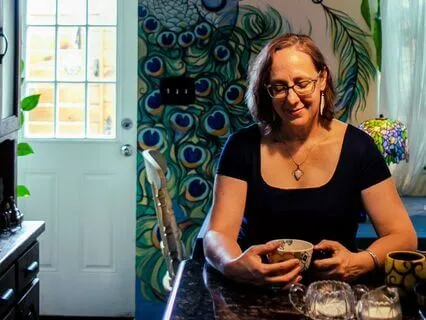
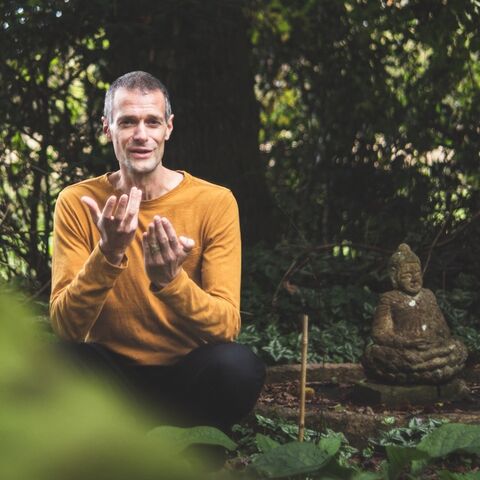
For anyone confused on whether these guests are more than just independent researchers or consultants,
The information shared here is for educational and informational purposes only.
It's not intended as a substitute for professional medical advice,
Diagnosis,
Or treatment.
Always seek the advice of a qualified healthcare provider with any questions you may have regarding a medical condition or treatment.
And that's the end of this required disclaimer.
Sensory interior design is designing for your nervous system.
And you being outside right now actually does apply because we are all animals that evolved in a habitat.
And thus we are not separate from our surroundings.
And modern society tends to treat us as though we are.
As though we are brains in a jar that are supposed to function no matter where we're planted.
Now that's a strength of our species.
We can adapt.
But when we are living in boxes that are not similar to the habitat that we grew in,
We start to have issues.
Paulus,
Welcome.
This is Josh of Interskilled.
And today I have Stephanie Jackson with me.
Stephanie,
What's going on?
Hi,
I'm Stephanie Lee Jackson.
I'm the founder and owner of Practical Sanctuary,
Sensory Interior Design.
Well,
Cool.
I'd like to know what that is.
Yes.
Well,
You've already beat me to my formulated scripted question here.
What kind of work does she do?
So you alluded at that.
And just for the viewers here.
Sorry,
Hopefully this won't be too distracting.
I am going to lift my laptop because I'm on the beach today.
Humble brag.
So yeah,
As far as interior design,
It doesn't apply to where I'm at right now.
So that way I'm out of the woods as far as Stephanie judging and grading my interior.
Bad joke there.
So no.
So who is Stephanie Jackson?
Yeah.
What kind of work do you do?
What is this company you mentioned?
Yeah.
What do you do?
Sensory Interior Design is designing for your nervous system.
And you being outside right now actually does apply because we are all animals that evolved in a habitat.
And thus we are not separate from our surroundings.
And modern society tends to treat us as though we are,
As though we are brains in a jar that are supposed to function no matter where we're planted.
Now that's a strength of our species.
We can adapt.
But when we are living in boxes that are not similar to the habitat that we grew in,
We start to have issues.
And that's what I address.
Well,
I will just jump in here and say I can relate to this.
Okay.
I'm not,
I would consider myself fairly energetically sensitive,
You know,
But I'll let you define that term more than me.
But you're talking about highly,
It's way more noticeable for people that would consider themselves highly energetically sensitive.
And on the spectrum,
I don't know if that's the right terminology now,
But I do like,
We were talking about this with my friends on the way here,
That these notion of neurodivergence.
So I think that's a lot better label than we've used in the past for a lot of things.
But I'll just give you a heads up how I take this on a fluorescent lighting to me is,
You know,
People think that you're crazy,
You know,
That my eyes will burn under fluorescent lighting.
The first thing I want to do as soon as I can is turn off the fluorescent lighting and like open a window or candles,
Something that doesn't make my eyes burn.
And the people with it,
It doesn't bother me,
But you know,
There's,
There's certain things I tell people like,
Okay,
If you go to a place in the city,
That's really grimy,
Crime ridden,
How do you feel around that compared to like,
You're at grandma's house,
You know,
You have a really good meal,
You're in a safe environment.
So most people can connect with what we're talking about on these levels,
Because they notice a difference like that.
We're just talking about more subtle and subtle areas of sensitivity and people noticing things that most other people don't notice.
That's one way I would put it.
But yeah,
Jump into here and talk about this and how it applies.
Well,
Well,
You've pointed out the outlines,
Which is that all of us have slightly different nervous systems.
And we assume that's not true.
When you're born in a body that perceives things a certain way,
And you see these other creatures that are your same species,
You assume that they're having the same experience you are in the same situation.
Finding out that's not true is a game changer.
As a highly sensitive person,
I,
You know,
Went through the world for,
You know,
20 some odd years thinking that sensitivity meant that you were just whiny and weak.
Okay.
And then I picked up Elaine Aron's book,
The Highly Sensitive Person.
And I took the test and tested 99th percentile high sensitivity.
And that was,
So many things made sense.
So many situations where I'm just like,
Okay,
I just need to man up,
Grit my teeth and get through this.
Because if I complain about the fact that I'm exhausted,
That I'm drained,
That I'm soaking up everyone else's feelings,
Feeling responsible for everyone,
That the music is too loud,
The lights are uncomfortable,
I'm just being weak.
Everyone else is fine.
They're having a great time.
Realizing that other people weren't even noticing the things that were stressing me out beyond belief gave me permission to start to change my surroundings.
I didn't have to stay at the club past midnight.
I could go home.
I could turn off the fluorescent lights.
I could turn down the music.
I could say,
I just don't really like motorcycles or punk rock.
That's fine,
Right?
This is a really good point.
And this stuff becomes more and more obvious,
I think,
To people with spiritual practices too,
Because so much gunk,
At least in my experience,
Got cleared out.
And then I think the levels of perception increase too.
Perception becomes more malleable,
More highly attuned,
More proficient,
And so just noticing more and more things on more and more subtle levels too.
I don't think this is any big shocker to people that have a really deep meditation practice in too,
But it really only applies when we're trying to educate just your standard average Joe that's sick Joe six-pack.
Not that there's anything wrong with these things,
You know.
Joe six-pack isn't listening to this.
No,
Exactly so.
Yeah,
That's right.
Yeah.
Josh,
Let's talk about what's happening on a neurological level when you're meditating.
Your brain is not a reality detector.
It's a survival machine.
And you are going to focus on things that will kill you,
Things that will keep you alive,
Things that'll enable you to procreate.
That is how your brain is constructed.
When you are meditating,
You are bypassing the neurological loops that are focused on those things.
You are literally opening and thus expanding your consciousness.
That is not mystical.
That is biological.
And it is potentially dangerous because you are thus not focusing on the thing that's going to kill you.
Something could come along and just snap you up.
We have to be physically safe enough to be able to even start to do that.
It's a really good point because,
Yeah,
That's what I like about meditation because usually,
Yeah,
Most places are there like a secure,
Safe place to meditate,
You know.
At least if you're going to do it in a – you can know – yeah,
I would definitely advise people that they need to feel safe physically before they go in.
Then there's a whole another level within,
You know.
So this negativity bias you're talking about,
It's another challenge because now we don't have like a lot of real physical threats.
You know,
This is how challenging it can be.
Like we don't have to really – most of us,
I would say,
Don't have to worry about that tiger leaping out and,
You know,
Walking down the street and killing us,
Right?
We don't have to – but we have these different things that we have a negativity bias towards.
I mean,
You know,
Like these kind of abstract,
Am I going to have enough money to survive,
You know?
Like what is this cognitive dissonance that's happening where I feel,
You know,
When we look at political issues and,
Yeah,
Different programs running and things like that.
So we have all these new areas in the massive amount of information that's coming out of sometimes too and overwhelm.
So there's – it's a whole – because we still have this negativity bias and it serves us well,
Right?
It's served us well for so long to survive and stuff like that.
So we shouldn't disregard this.
We just have to realize what's operating and we take what steps we can in our environment to be healthy and supportive.
Now I will ask you more of a challenging question.
Do you think – how do you deal with somebody that maybe that they – maybe comfort zones,
Right?
So growth happens outside of comfort zones.
But however,
There's – as you know,
There's the opposite end where some people are always on edge,
Always frazzled that they need to find a comfort zone and maintain it.
So it's about,
I think,
Identifying,
You know,
How far we are into another.
How much are we clinging to the edge,
You know,
On the edge and we need a comfort zone versus how much are we like a hermit and can't get out of our comfort zone in a way to – how do you view this?
Okay.
So first of all,
People who are highly anxious,
Anxiety is their comfort zone.
That is how they've stayed safe.
It is adaptive response to having grown up with some trauma,
Largely.
So what I do is help people find a down-regulated comfort zone which then allows them to expand their consciousness because they can take down the anxiety.
And second of all,
It's a collaborative process.
I don't work with people who don't want to work with me.
I say,
Look,
Like I can help and it's your – this is a participatory thing.
It's collaborative.
So I'm not going in and trying to change people.
In fact,
What I say is I specifically will not try to change you.
What I will help you do is be more you.
Be more grounded in yourself and start to notice yourself and your own nervous system and tune your environment so that it is reflecting the truer,
More authentic self back to you so that you can settle into that comfort zone.
Very cool.
Yeah,
That's a really beautiful approach and a very practical one too.
Helpful one.
Non-invasive,
I think,
As well.
So let's get into the specifics here about what you do.
I mean,
People know about feng shui.
I actually don't know too much about it,
But from what I understand over generalization,
It's been based on the principles of nature,
Right?
So I'm here.
I immediately feel my nervous system go barefoot on the beach,
The ground.
I immediately feel more in my body,
More grounded,
More centered,
More.
It's so much easier for me to feel relaxed and nourished when I'm in nature.
But there's a possibility to take that inside,
Like you're saying,
In other things because I just think of my ex-partner for like three years and how pristine and amazing every little part of where we lived was.
Everything was consciously,
Intentionally laid out,
Had an energetic impact and effect of nourishing and supporting and lots of crystals of plants,
But not overdone either.
You know,
Lots of open space as well and just really super clean all the time.
I really had it good,
So a shout out to her.
You sure did.
I know.
It was amazing.
So she was highly clairvoyant and very attuned and sensitive and all this stuff made a huge difference to her and I reaped the benefits,
You know.
So I was very happy.
So I noticed this.
Then when I come home and I have to stay with my parents a little bit longer and the room I'm staying in is just cluttered and the excess and I haven't even got through there yet and it's just okay.
So that's another thing to address too.
If people that are living like digital nomad lifestyles and,
You know,
More transient lifestyles where they might not have as much control over their environment.
So I guess start from ground zero,
So to speak.
I don't really like that term,
But like what do you do?
Do you do an assessment?
Do you do a consultation?
Do you go through individual objects and say,
Hey,
Can you live with this or not?
Yeah,
How do you do it?
Let's just start with an outline and maybe we can dig into details.
Yes,
It is absolutely a process and it really is about starting where you are.
I can work with anyone anywhere as long as they have a phone or a screen so that we can connect digitally.
And usually people are coming to me because they have a problem that they need solved.
I have worked with people that are nomads,
That they are constantly moving from one country to the other for work.
People are moving with children,
They own property,
They have to get squared away.
So they're coming to me with some problem that is connected to their environment,
Their living habitat.
And I get on the screen with them and I say,
Okay,
Tell me the story and take me on a tour.
And they'll take me around on a visual tour and I'll be like,
Okay,
Stop.
What's that about?
What's going on there?
What's this?
What's that object?
What's your relation to it?
Why is it set up this way?
And I just take in information and I listen to them tell me about their lives,
What they're struggling with.
So often what is going on in someone's career,
Someone's personal life,
Their relationships,
Their parenting relationships,
Their caregiving relationships is reflected in the physical environment.
They're struggling with a physical thing.
They're struggling with some kind of relational or inner thing as well.
And I ask questions and try to get a sense of even what the goals should be for this situation.
I don't assume I know what they want.
We decide on that together.
The next step is after that consultation,
I have them photograph their own space,
Take dozens of pictures,
Upload them to a shared album,
And then we have a conversation about it.
And the reason I do that aside from being able to like talk concretely about things is that the act of taking a picture of your environment is a process for getting some distance.
It's allowing your brain to see things that it is filtering out.
It's framing.
And so that's the first step.
And then we collaborate on what the next steps are going to be.
We look for high return on investment interventions.
If the paper's out of control,
We get the paper under control first.
If the laundry's out of control,
We figure out a flow path for the laundry.
If the layout isn't working,
I draw up a layout app and I'm like,
Okay,
How about this?
What do you think?
And we just,
We start,
We start big and then we get,
We get more granular.
Well,
Cool.
That's,
It sounds like a really cool practical process.
And I guess maybe the other thing to ask here around this is like,
What,
What are some common themes you see and what people are struggling with and some commonalities.
And then also maybe give some examples of specifics of like what have been some of the specific challenges and then what you've done to address them.
That's such a huge question,
Josh.
Just pick something at random or like what's popping up right now,
Whatever you'd like.
I come back to boundaries,
Physical boundaries,
Mirroring,
Relational boundaries that have gotten out of balance.
I would say 80 to 90% of the time,
The person that hires me is a woman and they're overwhelmed.
Sometimes they have a special needs child.
Sometimes there's a disabled partner.
There's something that they're struggling with and their physical boundaries and mental,
Emotional,
Energetic boundaries have been completely steamrolled by this situation.
And they're usually not even cognizant that that's the issue.
They're just kind of desperate and they're trying to fix something out there because they,
Their own needs aren't getting met.
And that is so clear in the space.
And there's only so much that I can do.
And I really point out what the systemic factors are in that,
Which are economic,
They're,
They're social,
They're,
They're gender coded,
They're all of these things.
But I,
I try to see where that boundary has been crossed and I start to re-establish it.
Really concrete scientific reasons why that boundary is best for everyone.
It's not like emotion,
You know,
Because women are always like steamrolling,
Oh,
You're being so emotional.
You know,
This is your role in life.
You need to be doing this.
You're a good mom.
You need to caregive.
It's like,
No,
If you are collapsing,
Your family's going to collapse too.
So let's get this boundary in place so that your needs get met.
And then you are more capable.
You have more bandwidth to meet other people's needs.
Well,
Absolutely.
I see this with the feminine.
It's a classic thing that they just give and give and give.
And it's just kind of preconditioned or expected of them to put themselves last and take everybody at their own expense.
And like you just said that then everybody ends up all the worse for it because if they're run down,
Then they can't take care of anybody else.
And so it will come to a head one way or another,
Sometimes does anyway.
So,
I mean,
Do you like,
So as you're noticing this and you're seeing that a lot of this is actually inner work that needs to be done too,
The boundaries,
Which are great because they're physical,
External,
And they're also internal and it works.
And this mirroring thing you talk about,
Do you work,
Do you refer people?
I mean,
How do you broach like,
You need therapy,
You know,
Or something like this?
Like,
What do you,
How do you,
How do you address that?
I am a space therapist.
My clients refer to me as a space therapist.
Yes.
If someone needs a lot of therapy,
We're not going to be able to work together very long because I have my own boundaries and I have a lot of clients that I am,
You know,
I am on call,
Like they're texting me all the time and I love them and that's fine.
If someone is got a personality disorder or something,
Like there's going to be a breakdown and that's,
That's okay.
What I more often end up doing is refereeing conflicts between,
For example,
Married couples.
And I've worked with some very,
Very healthy married couples,
But,
But there's this bickering,
You know,
It's like,
Oh,
You like this,
You like that.
She doesn't like that about,
About,
About,
About,
And I will sort of be the referee.
And I come in with a background in,
In art and in neuroscience and in psychology,
You know,
And I can point out the principle that is involved in a color choice,
A layout choice,
A lighting choice.
It's like,
It's not neutral.
I can point out what is actually occurring aesthetically,
Physically,
You know,
Like in terms of physics and I can name what's happening.
And then that can help establish like where the line actually needs to be without dissing anyone.
Okay.
You know,
I don't want to be taking sides,
But I do need to be pointing out like,
Okay,
You like this and you like that.
And what's happening in this situation is A,
B,
And C.
And you see how that's impeding this and that this is draining from this and,
And all of those things and see how this situation over here that you like better,
Let me explain what's happening that you're responding to that you like.
And let's look at it from that perspective,
That it's not just about personal opinion,
That there is a dynamic that's happening.
And I know that's very abstract,
But I also don't want to be naming names.
Exactly.
No,
I,
I often get criticized too,
Or pointed out that I don't make things personal enough and give specific examples,
But no,
I totally follow you.
And it's the physics too.
I imagine some of the guys can connect with more,
No concrete,
Solid things,
No more rational left brain types.
So yeah,
You've,
You've got that too,
To connect to everybody.
So yeah,
In the neuroscience and yeah,
Very good.
And I guess I want to pull out here and take it from the domestic scale to more of a maybe institutional or societal thing too.
Now,
You know,
I was in Denmark.
That was where my ex-partner was on and off for like three years when I needed to leave every three months.
And it's just amazes me like Nordic,
The Scandinavian system and how much more on it they are as far as wellbeing and human centric compared to money centric and just the quality of life.
Yeah.
The taxes are a little bit higher,
But I could,
I could see where those taxes are actually being spent for quality of life instead of just embezzled in some politicians.
Yeah.
Right.
Over-generalization too.
But the,
The design,
Just the conscientiousness in like different,
So many different areas from the schools to yeah,
Design,
The way things feel,
Just almost have to go and travel to see the difference of how big a difference it is.
But a lot of it's in the details,
But there's a whole different ethos and culture too.
There's a philosophy behind it.
It's,
It's not just random cultural.
It's like,
For example,
Okay.
So my sister spent a year in Denmark and came back speaking fluent Danish,
Which freaked me out.
It was like,
She grew another brain.
We're very close.
That's incredible.
I had a hard time with Danish,
All the different sounds and stuff.
Oh,
That's amazing.
Norwegians say they sound like they talk with a potato in their throat.
Right.
Yeah.
And the French talk with a grape in their lower lip.
But,
But I had almost married a French guy too.
But so one of the things that the Danes do that my sister came back,
The light over the dinner table,
It's below eye level with a shade so that it's illuminating what you're looking at.
And it's not in your eyes and you can see over it and make eye contact with the person you're having dinner with.
Brilliant.
I go into American homes and they've all got a Klieg light over the,
Over the dinner dining table.
And it's miserable.
And I,
I have,
I discovered a fixture,
Which I am now recommending to everyone.
I had these clients that hired me to,
You know,
Sensory who do their dining room was about acoustics largely,
But I found this lighting fixture and it looks like a flying saucer.
All the light bulbs are on top of the flying saucer and all of the light is pointing upward toward the ceiling and it reflects off the ceiling and diffuses.
So you have no bulbs.
You cannot see a bulb.
Brilliant.
They tell me they spend twice as much time at the dinner table now.
Isn't that so comfortable?
It's a,
And it's not like this fancy schmancy stuff.
It's,
It's very practical.
It's form over function over form,
Right?
So it has to function.
It's beautiful.
Yeah,
Exactly.
And that's right.
So everything's really thought out.
Hygge and I'll stop talking about Denmark in a little bit.
Yeah.
Don't,
Don't,
Don't mispronounce it.
Do not mispronounce it.
But cozy culture for those that don't know.
And it's,
It's amazing how efficient and well done and yeah,
Sense of pride,
But also how much relaxation and downtime and bonding it is in culture.
So it's a really good mix of all the worlds,
You know,
So we can go into more and more culture,
But the,
The Scandinavian design in general,
I mean,
Everybody's probably been to an Ikea,
Right?
Just one common example of how well things function.
And they also look really well too.
So now rolling that into the way that affects a society,
The way that affects people's mood the way they interact,
How can you roll into what you do on,
On a more like cultural and societal level or institutional level too.
And do people like from institutions come in and,
And consult with you or,
You know,
How,
How does your work with on this level?
Okay.
So,
So my biggest focus right now on an institutional level is healthcare.
I mean,
We have,
Our healthcare system is so broken on so many levels and the physical environment is like pushing the brakes and the accelerator on the healing process at the same time,
Because it's,
This is basic neuroscience.
Your nervous system has two switches sympathetic,
Which is fight or flight and parasympathetic,
Which is rest,
Digest,
Heal.
Parasympathetic nervous system is responsible for telling your cells to repair themselves,
To go after cancer cells,
To go after pathogens.
When your nervous system is overwhelmed,
All of that stuff shuts down.
Okay.
And now we go into a hospital that's got instruments that look like you're about to be tortured.
It's got these Klieg lights in your face.
It's got these beeping things,
Keeping you awake all night.
What is this?
That's ridiculous.
It's not a healing place and it's,
It's costing money.
It's costing stress.
It's costing burnout.
It's causing people to avoid the hospital,
Which like by the time they get there,
They're in worse trouble.
It's going to cost more to treat them.
So I'm really on an initiative right now.
I'm actually speaking with a hospital design firm next week.
I got a message in to someone who,
Someone else who does heal,
Real estate hospital,
Real estate for healthcare.
This is my mission of the decade is to get this at least into the consciousness of people that are commissioning,
Designing,
And building healthcare systems.
And it's so,
There's so much money involved so that there's no excuse that there's no money involved,
That it's one of the biggest industries now.
It's,
It's incredible.
So what countries,
Do you look at what countries as far as allopathic medicine?
I mean,
Did you go to naturopathic?
I mean,
They've had it figured out a long time ago,
But as far as allopathic hospital systems,
Traditional Western,
You know,
Pharmaceutically driven or whatever you want to say.
Yeah.
I still tell people I go,
If I break a bone or something or have to have surgery,
Of course,
I'm still going to go to a regular hospital.
Yeah,
Absolutely.
So yeah,
It needs to be for quality of life for everybody.
Yeah.
It's not either or,
This is an integrative process.
Yes.
I mean,
Our,
Our industrial culture likes to,
Likes to differentiate and specialize and go all down all these different paths.
They're not talking to one another.
And that's,
That's the thing that I'm trying to do is like,
Get these people talking to one another.
It is not controversial that our nervous system has two settings.
You know,
I teach anatomy and physiology in a community college.
It's like,
This is how it works.
This has been known for a very long time,
But somehow healthcare architects aren't aware of that.
And that's ridiculous.
Yeah.
Cultures that are more humanistic and less driven by capitalism and convention,
More cooperative are going to just naturally do that.
I mean,
The Danes,
Obviously,
You know,
Probably the Japanese are going to be,
It's going to be a much more aesthetic experience because that's just how their culture,
You know,
That's the strength of the culture.
So yeah.
Have you looked at the hospital layouts in other countries and stuff or like?
I haven't had that privilege.
Yeah.
I wonder if that,
If somebody,
If you can just go online and look and see if anybody does it well,
But I'm just guessing here that there's quite a bit of similarity in hospital settings around the world.
I'm sure there's,
There's significant variations,
But I don't know.
I've never looked into it.
Right.
Having the economic resources.
I mean,
There are starting to be some projects in the United States.
Cleveland Clinic is opening a neuroscience,
Neurological institute in 2027 that's built on sensory design principles.
The Mayo Clinic is having an initiative to do this.
Dartmouth Hitchcock up in New Hampshire has,
You know,
Some pretty nice design.
I mean,
It's,
It's,
It's what you would expect,
Like,
You know,
Build a courtyard around a garden,
You know,
And have a,
Have a garden,
Have some natural light,
Have windows in every room,
Have some noise buffering,
You know,
It's,
It's,
It's not rocket science.
So I,
I think that we're on the cusp of really making a change.
It just,
It needs to be intentional.
And I,
I guess,
How do you instill the importance of this in a societal level?
I mean,
To you and I,
It seems really obvious,
You know,
Because I'm thinking there's,
You start on the general level,
The most obvious significant things,
But it can go down really into the details.
I mean,
We don't have to get super OCD about everything,
But like,
Well,
You mentioned a few things there.
What kind of general advice can,
Can everybody implement?
And then like the educational aspect of this,
I'm trying to imagine talking to boomers,
Some boomers about this,
You know,
But that's different.
I think maybe the younger generation,
They get younger generations get this more naturally.
Yeah.
It's,
I mean,
The reason that I'm talking with a healthcare architecture firm is because I gave a talk at Autodesk in Nashville and a millennial heard my talk and does project management for an architecture firm.
She's like,
Oh my God,
Yes,
I'm going to bring you into my firm,
You know,
And she's in there like wrangling the executives.
She's like herding the cats,
Like trying to get me in there.
So it's like the young people just get it instantly.
I also have a boomer mentor who's been very high up in strategic healthcare for decades.
That is just opening doors for me.
She's amazing.
Like there are people who get it.
It's really the mid career people that don't dare rock the boat because they have too much to lose.
That is the block at this point,
You do have to make an economic case for it.
And the economic case is shorter health hospital health stays really,
You know,
When people can heal in a hospital,
They get better faster and you let them go.
But it's not so obvious,
There's an upfront cost to retrofitting or to redesigning or adding an extra step or two to the design process.
So it really is about getting access to the people who are high enough at the executive level,
That they are not insecure,
And they're looking to build a legacy.
So you have to be Machiavellian about this.
You have to be strategic.
Well,
You're up against I mean,
I don't want to get too parapolitical.
But there are those people who say it's a sick care industry.
And it's in certain financial best interest to keep it to actually keep you in the hospital longer.
And actually,
You know,
Just do enough to keep you kind of hooked on certain things to keep,
You know,
Then offsetting one side effect with another.
So there is that argument,
Too.
So you know,
You're up against if that's the case,
Then you're up against that,
Too.
You know,
I don't know.
I'm not saying that's a conspiracy thing.
I don't think it's at all that conscious.
I really don't think there's a conspiracy to keep people in the hospital longer.
I think that people are so overstretched and overwhelmed.
This is the system they know.
They're just doing what they can do to get through every day.
There's no bandwidth.
Okay,
And we're now we're coming back to the consciousness thing.
If people have a little more bandwidth in their mind,
They can contemplate making a change,
Right?
If your mind is full and more than full with just coping in the system,
You know,
You're not going to listen to this crazy lady that says you need to redesign your hospital.
You're just not.
You haven't got time for that.
So it's just about carving out that space.
It's kind of ironic,
Too,
Because the people in health care are supposed to have that space in order to be more mentally,
Have more mental well-being.
That's one thing that meditation helps with is allowing that extra space,
You know,
For a response instead of a reaction.
It is.
And Josh,
I apologize.
I haven't listened to enough of your episodes to know if you are one.
There is an issue in a lot of meditation practice institutions where it is solely,
Particularly in the United States,
It becomes solely about the ego,
About the person,
And that the inner work is disconnected from the outer work.
And I,
Having like interacted with a lot of like,
You know,
Like environments and people that kind of sucked up into it,
There is this disconnect between focusing on your own consciousness,
Expansion,
Going inward,
And then going outward and having an influence in the world.
That needs to change.
There's no point in becoming more aware if you're not going to use that awareness to connect.
And the connection process is where I see a lot of mindfulness institutions and groups really falling flat.
I've seen CEOs get real involved in mindfulness when they suddenly had a cancer diagnosis.
But I don't see it translating to the mindfulness being like,
Hey,
Wait,
Maybe I should invest a little more of the profit into making this a better experience for millions of patients.
It's about me.
No,
I'm so glad you brought this up,
Because it is now,
I would say,
A classic challenge or issue,
Or we put it,
Something to address in especially Western,
Let's say,
Spiritual practitioners.
So it's multifaceted.
And I'll just go over it really briefly.
So yeah,
I hear in my own certain group,
There's a challenge for people going really,
Really deep in retreat,
In their practice,
And then translating it off the cushion,
Bringing our practice off the cushion.
And gladly,
That's coming more and more online,
And people are realizing this.
And even my teacher says this a lot,
Because you really don't have an understanding.
And we'll go into the fine details here.
So we're in agreement on that.
And there's some traditions within Buddhist circles.
The Mahayana are really good at this,
Especially the Zen tradition,
Because everything is kind of a meditation,
And they put a big emphasis on integration,
Or actually just real life practice.
Everything is the practice,
Right?
There's no separation really between this and that.
So Zen does this fairly well.
I will not write it all off and criticize everything,
Because I do feel when we're taking care of ourselves,
Then everyone else benefits.
But like you're saying,
So I think there still needs to be a place for really deep individual practice,
But then that needs to benefit somehow.
And I think it still does.
But yeah,
I think for your average practitioner or just getting into it,
There needs to be at least an integration on the cushion into the off the cushion.
How are we bringing what we've learned and benefited from our practice into our everyday lives?
Because otherwise,
It's just like some kind of esoteric hobby or something,
Right?
It's just self-indulgence.
Yeah.
Yeah.
So that can be a misunderstanding.
So yeah,
We do definitely not want to promote that.
We need to constantly ask,
How is my practice translating to real world benefit?
Yeah.
One of the things I say,
Like you mentioned with the feminine too,
When we take care of ourselves,
Other people benefit.
So in some sense,
There's that way.
But yeah,
We don't want to turn it into over-inflating ego.
That's the exact opposite.
There's inferior ego,
Like I'm not good enough.
I'm never as good as these people,
Which tends to be a lot in meditation circles too.
But then you go to the other extreme,
Like,
Oh,
I'm so much better than them.
They're so insignificant.
I'm so much better.
Or comparison.
I've transcended my ego.
Yeah,
Exactly.
Yeah.
Well,
You have to have an ego to remember your name.
Yeah,
Exactly.
And people have turned it into a project and a competitive story,
Which is,
Then you do clear out a regular ego,
But then there's a thing called spiritual ego.
And that's what I'm struggling with too.
Materialism.
Yeah,
Exactly.
Chogom-Trumper-Urvashek.
So to me,
It's about integrating the ego too.
We integrate it.
We don't need to get rid of it.
It just doesn't need to be driving the bus all the time.
But you need an ego to remember your social security number,
To walk from point A to point B.
You can't dissolve it because it doesn't work like that.
It's not an enemy.
So it's a really good point.
And this is kind of a clarion call to remind people that yes,
This needs to go into our daily lives as well.
That's where it really shines.
And what they say,
If you think you've had some kind of spiritual attainment,
Go spend some time with your family.
That's where we're oftentimes really tested,
As you can attest with maybe some of your clients as well.
So Stephanie,
This has been,
I think we should start wrapping up now.
This has been fascinating.
I really appreciate the work you do and holding me to account and the communities that I serve.
No,
It's good.
The more we can be challenged,
The more we can be tested in a healthy manner,
And that will have a benefit outcome.
Because we're not doing spiritual practice just for ourselves.
We're ideally benefiting everyone if we're doing it with any kind of help.
But not to get dragged down into overwhelm.
Integrity.
Yeah.
And it's like even the word benefit is a little bit subjective.
I prefer the word growth.
And growth is not individual.
It's collective.
It's expanding the ability to connect and understand.
And if you're doing that,
You're naturally going to be doing things that benefit other people just as an outgrowth of the practice.
Because you're more aware that the other has become yourself.
And so,
Of course,
You're going to reinvest the profits in making healthcare available to all and making it more effective.
When the process is working properly,
We shouldn't have to be arguing about this.
No,
Absolutely not.
A few other points that came up,
Too,
Is some of us have a responsibility once we're so far along the path to help and teach and help and assist others.
And the cultural thing is really big on this,
Too,
Because some of these practices are new to the West.
But in Asian culture,
They have way more sense of a collective or communal thing.
They kind of just relate to the world differently,
Where in the West,
It's just kind of naturally individualistic.
I mean,
There's pros and cons to each.
There's pros and cons to each,
But we have to take this into account,
Too,
Where we're just not always isolated.
Everything is interconnected,
Too.
There is no separation at the end of the day between internal and external,
Easy for me to say.
Nothing really exists in a vacuum.
So I don't really like the cliche of everything's one,
But everything is interconnected and interdependent,
Too.
So we see that when we go out and interact with the world and our environment and the relationship.
Relationship is everything,
Too.
Relationships to ourselves.
And I'll stop preaching,
But.
.
.
All right,
Stephanie,
This has been great.
I really appreciate it and wish you all the best with the healthcare endeavor.
You have a lot of work ahead of you,
I think,
And maybe sometimes it won't be all like pulling teeth,
But I feel you're going to have a lot of success in this.
And leave on a message,
Would you like to leave the listeners with?
Yeah,
Sure.
Really what I want to leave with is that you know what you need if you can listen to your own nervous system.
You have everything you need.
That's all.
You're enough.
Brilliant.
Lovely.
Great reminder.
So may all beings everywhere find their most optimal,
Ideal environments for themselves,
Others,
And for all beings everywhere.
And may all beings everywhere realize awakening and be free.