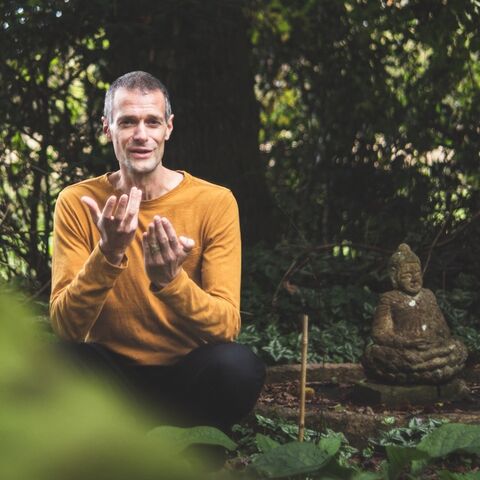
This evening's event,
Negligence in midst deeds for sagacity,
Potential clearing,
Activation,
And advancement from verse 50 of the Dhammapada,
Which reads,
Not the perversities of others,
Nor their sins of commission or omission,
But his own misdeeds and negligences should a sage take notice of.
So then reflecting on this for a little while now,
It came in a Buddhist newsletter and not quite this translation.
I found this translation really fond of not so much about sins,
But you know,
We can just interpret that how we want.
And just to understand the words here,
We all pretty clear on perverse perversities of others,
Things we just kind of find fault of.
In the first part,
We're looking at others,
Right?
So they're sins of a commission or omission.
We know what commission means in terms of money,
Right?
You sell something,
You get commission on it.
People will work on commission if they have their goods or services in a physical space.
So they might get commission on what they sell there.
In this context,
I feel it means like,
What is someone else either doing for you or what are they allowing you to do,
What kind of commission,
What are they giving you,
What's in it for me kind of thing.
Omission is pretty much the opposite.
If you're omitting something,
You're leaving it out.
So what are others neglecting me on or leaving me out on,
Giving me the short stick on,
Short shrift.
So then this next one,
So not paying attention to those so much,
But one's own misdeeds and negligences should a sage take notice of.
So misdeeds,
And I'll go into this,
How this could be misinterpreted too.
What one has done maybe that one wouldn't have liked to done.
Negligences of what have we neglected.
First off,
A disclaimer,
This is just kind of my own interpretation of this,
My own experiences with this,
What I can share.
This is not to be taken as gospel,
Obviously.
So it's things to consider on your own reflection on this and of course put down what's not helpful and take up what's helpful.
The first one,
This comes in all the time I think where,
Okay,
So he said this,
She said this,
She didn't say this,
She didn't do this,
He didn't do this,
This,
That or the other.
So this is the kind of thing that we all encounter in our daily lives.
And a lot of times we're,
I'll speak for myself here,
A lot of times I will get upset because someone has either included me in something,
Has cut me out of something,
Said something to me,
Didn't say something to me.
This ties into my preferences of how people treat me,
How people should treat me,
And expectations,
Which how much am I clinging to those expectations and preferences?
This goes into this classic saying that's helped me so much.
For a time I was just so overly concerned what people thought and said about me,
Really concerned about that.
When I heard that what other people think about me is none of my business,
It was like this huge relief.
Yeah,
You know,
That's their business,
What they think about me,
Not mine.
Now there is the polarity of this can be where I can just use that to write off my own behavior,
Right?
I can say,
Oh,
It's no big deal.
People are going to think what they're going to think.
I'll just do whatever I want.
Be careful for me to fall into the same trap of that,
Kind of not giving heed to how society runs and functions.
That's a kind of a danger for me now because I feel like,
Oh yeah,
Well,
I mean,
I can just kind of get out of it.
Or,
You know,
Who cares,
Society's like so messed up,
This kind of righteousness holier than thou,
I can fall into that trap still now too.
This is an aspiration of mine too,
Is talking to people,
Not about people.
Way easier said than done.
So we all see the benefit of actually connecting and talking to someone that we,
Instead of just talking about them behind their back.
I mean,
How often do I do that,
Right?
People here can probably relate too.
I don't consider so much,
Oh,
Hey,
So-and-so,
Like a mutual friend,
You know,
What are they up to?
How are they doing?
And then maybe some news comes up and ideally though,
If there's an issue with someone or a challenge with someone,
We'll speak directly to them.
I know it's not always the case and sometimes things and situations can get really sticky and then there's a really good mutual friend,
Both parties that can act maybe as a mediator.
Although that's an interesting role in and of itself too.
This other saying of,
It plays into,
I feel kind of more updated on this is,
I can't control other people.
If they want to change,
They have to want to change themselves.
If I'm constantly spending all my time and energy on the sins of commission or mission of others,
Or noticing perversities in others that I don't like and that I feel I could have some kind of intervention in or something like that.
And maybe sometimes there can be.
However,
For the most part,
And especially it shouldn't come from a thing of control,
Like this power dynamic of me wanting to control other people because it's impossible.
It's a kind of a fool's game.
Now if people come to us for advice and help,
That's another story.
But to impose my will and my judgments and values on someone else,
Trying to control them for whatever reasons,
It's kind of a fruitless effort.
Can also be frustrating too.
I mean,
The frustration can still be there for me.
And a lot of times it comes out of deep care too.
We want to have the best for this person.
So this is where equanimity,
I feel,
Can come into realizing,
Oh,
Hey,
They have to live their own life,
Make their own decisions.
Even though I care deeply about them,
I can't be there making all the choices for them either.
And sometimes it's just heartbreaking to see someone you love and care about just do crappy things.
When I look at this too,
It's like,
Where is the emotional charge and pull to this?
Why do some people in our lives have such an emotional charge and pull over us?
Especially at certain times,
Right?
What is that all about?
While other people are just totally indifferent towards.
So this emotional charge is in this pull towards certain people.
This I think will really draw us into their world.
I know at least for me,
When that emotional pull and charge is there,
It's just like I'm getting sucked into their world.
And I totally kind of forget that,
Oh,
Hey,
What's the point of that?
How much of a waste of time is that?
Sometimes it's just getting out of that complete absorption into someone else,
Basically.
Pulling back,
This is a phrase that Shifu at Mid-American Buddhist Association says a lot,
Or at least did when I was studying under him.
Pull back,
Pull back.
And the mind and emotions will go out to something,
But bringing them back.
So that's the first step for me is just kind of realizing,
Oh yeah,
Hey,
How am I viewing this?
How am I seeing this?
What are the thoughts?
What are the feelings?
What are the emotions?
What needs a response to this?
How am I going to deal with this?
It's like self-checking.
Again,
What we pay attention to amplifies what we pay attention to,
Right?
And a lot of times it gets entangled.
So where attention goes,
Energy flows,
Realizing that,
Okay,
The more I pay attention to one's sins of commission or mission or the perversity of others,
It's actually making them stronger and giving them energy and becoming more entangled.
So this is where the wisdom comes in for me of,
Okay,
Well,
What about me?
What about my misdeeds?
Not just their misdeeds.
What about mine?
What am I neglecting here on myself?
So early on I had this expansive period when I was first in healing,
When I actually was acknowledging misdeeds by myself and others too,
But mostly for myself.
And it was just really sobering of all the things that I had forgotten,
What I did and how I was behaving.
I just really couldn't see it until I really started meditating and had gotten that far out of hand.
And now with a lot of that stuff healed and brought up to see and then committed to behaving better and whatnot.
What this can do though,
Is it can go to the opposite extreme where it can turn into self-pity.
Oh,
I'm such a bad person.
I did all this stuff to them.
And there was that time where I was just stuck in that self-pity of,
Oh my God,
This is so horrible.
I'm such a bad person.
I can't believe the mind can spit out,
Everybody hates me.
I don't deserve this.
What am I going to do?
This kind of thing.
The other thing it can do is turn into a dismissal though,
Kind of just glossing over this now where I'm saying,
Oh yeah,
I shouldn't pay attention to others.
Okay,
I got it.
Yeah.
I shouldn't pay attention to what other people are doing,
Their perversities,
Their commissions and missions,
What they're doing,
What they're not.
Yeah.
I don't need to look at that.
So it's almost like glossing over it.
So I think that's the imbalance that can be taken out of that too.
No abuse is abuse.
That needs to be acknowledged and seen and acted on too.
We just can't say,
Oh,
I shouldn't pay attention to that.
That's not what this verse means.
It can be taken to that extreme too.
What am I neglecting here?
When I look at myself,
A lot of times it's this question that we all know of,
Right?
What's needed now?
So it's a beautiful question to ask that brings things home.
Maybe if I'm being honest right now,
I just need a little bit more sleep here in the short term.
Not something I really want to admit,
But maybe that's needed right now.
Maybe someone is so dead inside that they just need to do something silly,
Like not necessarily literally here,
Take your clothes off and run through the woods naked.
Or maybe someone is so burnt out on plant medicine.
They've been doing so much plant medicine that they need to like,
I don't know,
Sit in a room for hours.
This is kind of silly extreme pondering the question,
What if existence and non-existence didn't even apply?
What would that be like?
Wild things like this.
Also,
What's being neglected?
Am I neglecting more love aspect or a more wisdom aspect?
A lot of times you get too into these kind of heart qualities where it's just kind of letting the emotions take over or getting so deeply involved and connected and absorbed and merged into something that,
Hey,
Maybe a little bit of wisdom is needed here because it's completely lost,
Right?
Or the opposite where it's getting really cold and rigid,
Sharp with wisdom and there's just no heart anymore.
There's no heart quality.
So bringing these notions of like compassion,
Loving kindness,
Rejoicing and equanimity and whatever other beautiful heart qualities are needed.
This also neglecting is like a core wound.
So this is one of our core wounds.
I see this that folks that are neglected,
They'll do anything to including abuse.
So a lot of times abuse will feel better than being neglected.
They'll go back to the same type of abuse over and over again because that's what really gives that emotional charge,
That hit kind of makes it feel alive,
Maybe like an addiction or something.
It's better than being neglected.
That's more on external.
If I look internally,
Like what's being neglected?
And this is where the,
Again,
This question of what's needed now,
What's being neglected,
These kind of dark areas of ourselves that need love and care too.
But sometimes we were either in denial or we don't want to look at them.
For a long time it was like,
Well,
My desperation needs love and attention too.
This wild quality that repels people of,
Oh,
I want to give my heart away so quick.
And then it scares people off.
Those parts need love and attention too.
And our innocence,
I feel as well,
For me for a long time,
Confusing innocence with stupidity and low consciousness,
But no,
It's not the same thing.
You wouldn't expect like a third grader to know calculus.
Ellen says,
I've struggled with worrying about what other people think my whole life.
We have a human need for connection.
So that connection feels threatened in a way when I feel dismissed,
Rejected,
Unheard.
Yes,
Ellen,
I did a live on this about ghosting,
Cancel culture and things like this.
Some people found that helpful.
And this is really,
Really common.
Maybe not everybody's ready to hear this,
But I learned this from a teaching that worry is the worst kind of fantasy.
We could be fantasizing about all kinds of lovely,
Beautiful things,
But what we're worrying about actually hasn't happened yet.
It doesn't mean we don't care and we can't prepare,
But actually worrying about something is a fantasy of something that hasn't happened.
And so when we get to that point,
At least when I did,
It was like a relief to realize that now the human need for connection.
Yes,
When I think about all the friends that I actually lost when I started to wake up a little bit and give a crap,
It was heartbreaking to lose those people that I spent so much time and energy investing in.
At the same time,
Maybe it's cliche to say that when one door closes,
Another one opens,
But that's the way it does.
Sometimes it takes longer for it to open than other times,
But it's almost like for people in my life that I really even more value now,
I had to kind of let go of the old friends that we kind of outgrew each other.
We just kind of went separate ways.
Our paths diverged,
So our interests weren't the same.
The connections weren't the same,
But when those were kind of let go of and grieved,
It opened up space for others.
It's easier to say than actually going through it.
Now that connection feels threatened in a way when dismissed.
Yes.
This connection,
This sense of belonging is so very important.
I know with deep meditation practice for me,
It's like when people say,
Do you ever feel alone?
Maybe it sounds wild,
But it's like I wish that I could escape people and environments for a while,
But it's not like that.
Today I was in a rural area,
My folks' place,
And even going into the woods,
There was these blue jays and they were just.
Then there was crows,
Right?
And there's bugs.
This is maybe not what we think of human connection,
But it's like impossible.
We can't live in a vacuum.
We're connected to everything all the time in a way.
A lot of times we're not aware of it,
But even our own minds and feelings,
Right?
People can numb them out for a little bit,
But they're always back.
The body,
We're always connected to the body.
Our relationships to everything,
How we're relating to things.
That's our connection too.
So for me,
It's impossible really to not to disconnect.
There's ways in meditation to disengage temporarily,
But we're always aware of something.
That awareness is interconnected in ways that brings me great comfort a lot of times.
In other ways,
It's just like,
Okay,
Well,
This can be really intense sometimes.
How do I hold this?
Well,
Thanks,
Ellen.
She says,
You're so right.
Your words are helpful.
Thank you.
But it doesn't make the pain really,
At least for a while of being dismissed,
Rejected,
Unheard.
It can be really,
Really painful.
What I did as a little practice for a while is actually go out with the reverse intent to be rejected,
To be dismissed,
To be unheard instead of dreading that,
Fearing that,
Actually making that the goal and practice with that and see what that feels like.
Also,
I realized that indifference isn't really necessarily rejection or dismissal and heard.
So many people have so much stuff going on.
They're so mired in pain that when I'm met with indifference,
If I don't aware of that sometimes or I don't even know what's going on with them,
Obviously a lot of times,
We can feel into a degree with what's going on.
Just because they're indifferent doesn't mean they're hostile or don't care.
Sometimes it might be,
But realizing that until I put myself in their shoes,
It doesn't really dismiss their behavior or say it's right,
Obviously.
This question of,
Well,
What have they really gone through in their lives that are making them behave this way towards me right now?
It turns more empathetic into like,
Instead of me taking it as being victimized,
What the hell have they been through that they're acting like this,
Treating me like this?
Not in a total shock or disbelief.
Okay,
Yeah,
Where's the common ground here?
What can I see or notice about this?
It sounds easy for me to say this when I'm in a quiet,
Reflective space,
Right?
But the real challenge comes in our everyday life,
Like seeing,
Okay,
Well,
How well can I see that and view that?
And what's the repercussions of seeing that and really letting it sink in and when I don't?
Or how are the strategies that we use?
Back to this verse here,
This can actually be applied in meditation really well too.
Our own misdeeds and negligence is,
Should a sage take notice of?
Well,
I mean,
We can aspire to be a sage,
Right?
I mean,
That's a great aspiration,
I feel,
For just about anybody,
Even if realistically never get there.
It's still an admirable thing,
Or we can see these qualities in others too.
Again,
The not so much misdeeds in meditation,
Maybe in reflection and contemplation,
We can reflect on,
And the opposite too.
Okay,
Well,
When I acted unskillfully and unwisely,
Well then a lot of times we can see how those have unwise,
Unskillful results.
And then the opposite,
Oh,
I said this,
Someone said this to me,
This happened to me,
I did this,
I saw it this way instead of this way,
And now I can see the benefits of that.
So those kind of reflections.
It also,
This is kind of go to evaluation after meditation too.
It's like,
Okay,
Well,
What worked and what didn't?
This is something I lack on a lot too,
Is actually just going back and reviewing not only each individual meditation session,
But progressing over time.
A lot of times it happens very gradually.
It's hard for me to notice without review of what are really the kind of turning points.
It just kind of builds momentum,
But when I look way back,
I can obviously see tons and tons of benefits and progression.
Now the negligence is,
For this just means in meditation for me,
You have a meditation object.
When am I neglecting coming back to the meditation object?
Very simple,
Right?
This feedback,
Oh,
The mind's wandering,
Oh,
Now in motion,
So back to the meditation object,
The breath or whatever it might be,
Metta.
And then how are we neglecting how we return to it,
Right?
Are we beating our,
Am I beating myself up saying,
Oh,
Bad meditator,
You can never do this right.
Or just being too lax and saying,
Oh,
Whatever,
I just need to space out right now.
I don't need to really stay with the meditation object or be clear on what the intent is or anything like this.
So it can act as a feedback mechanism.
We don't have to always look at neglect as something negative or I'm really doing something wrong.
I look at more as like,
What's wise and skillful here.
That really needs attention.
And when we give something attention,
We amplify it,
Right?
So where do you want to put your power?
What do you want to amplify?
What do you want to risk entangling it?
Because when we give our energy and attention to something,
There's a risk of entanglement.
Would we rather entangle with enlightenment,
Entangle with wisdom,
Entangle with the beautiful heart qualities,
Beautiful mental qualities?
Risk that?
Yes.
Yeah.
I would say we amplify that.
Well,
With that,
Guys,
Thanks so much for joining.
Appreciate the comments and questions and the vulnerability with sharing.
That's how we really deeply connect and open our hearts to as being vulnerable.
At the same time,
Being brave enough and wise enough to know when there's abuse involved to do whatever we can to get out of that situation.
Again,
That question,
What's needed now?
Because it's pulling back and doing more self-care,
Self-love,
Self-nurturing.
Other times it's like,
Okay,
Well,
I'm way in my comfort zone here.
I need to actually do something a little more wild,
Risk something,
Get out of my shell and get out of my comfort zone.
This constant balance.
So later on,
Guys,
Much love,
Much wisdom.