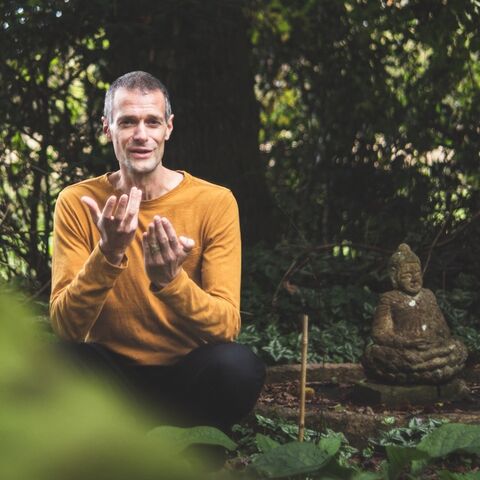
By my lovely co-host,
Wendy Nash.
Wendy,
What's going on?
Well,
I'm here in gubby gubby country in Queensland,
In Caboolture.
And what's going on?
Well,
Not much and lots all at the same time.
You know,
There is lots of small things that are irritating and niggling.
Well,
I actually twisted my ankle yesterday.
So,
Yeah,
So I'm just.
Are you okay?
I mean,
Can you walk on it?
I think hobbling is a better word for it.
So anyway,
It is what it is.
Well,
Just take care of it.
And yeah,
Of course,
Being mindful,
Which is of it.
But today's topic is mindfulness of speaking.
And so the little description I have here in this near impromptu 28th installment of the ongoing live series with Wendy Nash inquiring into meditation practice on and off the cushion,
We plan to explore the many facets of mindfulness of speaking,
Stuff like its importance and the power of words,
Sound and silence,
How this is in theory,
Mindfulness of speaking in theory,
Practice in real life,
Our experiences,
Times when it's challenging and how we can help each other,
Et cetera.
So as you know,
Wendy and I,
We do,
We talk.
I mean,
That's kind of our job sometimes,
Right?
And I'm just coming off of a month long silent retreat.
I'm not gonna talk too much about the retreat itself,
But in this context of sound and silence and speaking,
We could possibly talk about that,
But I just throw it back over to Wendy and let her choose a place to start with this.
I think after a month long silent retreat and then speaking again.
So what is it like to speak again?
Well,
Yeah,
So I'm a week off the retreat in Seoul and then I plan to go back and help serve the retreat.
So I will be able to use electronics away from the monastery and not interfere with the silent part of the retreat to talk to my fiance and whatever,
But it's wild.
So how powerful silence is,
And then can see this huge contrast of then how powerful words and speech are.
There's like,
We've mentioned this before,
I've mentioned it before,
There's just a natural tendency to communicate when around others.
And normally that's done through words,
I feel,
If you're around someone for an extended time,
You know,
But being in deep,
Deep presence with other people without being able to talk to them and then getting a chance,
Because we did get a chance to talk to each other during the retreat,
Three day,
I'll just say it was special circumstances,
But then that's when we really noticed how,
At least in my mind,
Would have one depiction of certain strangers and then being able to talk to them,
Okay,
This is different.
I know,
At least for me,
The way I tend to smooth over things these days with words,
So in relief tensions with words,
I mean,
Words can obviously build more tensions and cause a lot of harm and damage,
But they can also create a lot of peace and harmony and smoothing things over.
And so when there's not this tendency of me who's more verbally based to interact with words,
Then I don't have that tool in my toolkit.
So I'm doing guesswork with behavior and my feedback,
What I observe in another,
Kind of what I'm feeling,
You know,
Because some of us can kind of feel what another person is feeling or at least observe their behavior and interpret it as a certain feeling a certain way.
But the biggest thing is the mind and perception,
For me,
Filling in these gaps of what I don't know about someone,
You know,
Because,
You know,
These optical illusions where you only have part of the data,
But the mind will fill in something that's not actually there.
And upon closer examination realize,
Oh,
The perception is actually filling in gaps here.
So the mind is a very interesting thing here to fill in these gaps and maybe how accurate it might be,
Or maybe how inaccurate,
How high the level of delusion,
Not in a psychological sense,
Or maybe so,
And how much minimized that is.
And then when you get to speak to a completely stranger for the first time after being with him in silence for so long,
How much are they actually accurately depicting themselves or how much are they actually trying to cover up something?
You know what I'm saying?
I'm not really accusing anybody of anything,
But this,
And I'll just say,
Before I throw it back over,
This notion of deception,
It comes to mind here because deception for me usually is someone's needing to protect something.
So it can be just as simple as a simple denial.
You ask somebody about something.
No,
No,
That's not,
And that's it.
You know,
They just,
But sometimes you can tell from body language,
Right,
That that might not be the case or maybe something else is going on there.
But it's real easy for someone just to do a simple,
No,
Denial,
And for protection reasons,
And I get that.
And then another more insidious one is to get back at someone,
To deceive them in order to kind of get back at them for something they perceived as someone doing wrong.
So hopefully none of us really have to experience this much.
I will say for the protective thing,
There is a lot more creative ways to deal with this,
Like just saying,
Okay,
I'm not,
I'm sorry.
I don't feel like I'm ready to talk about this,
Or just simply saying,
Now's not the right time to go into this.
And the other person will probably get the idea of that.
You know,
We don't have to be like CIA.
I can either confirm or deny this.
But to me,
It's kind of a lack of creativity that that protection can still be there and still be truthful and not deceptive.
So I threw a lot of stuff out here.
I know.
But yeah,
It was definitely an interesting experience being mostly in silence,
But then being able to break that silence to retreat.
Yeah,
Well,
We've had some responses to your little talk there.
So Joshua Beckett is the first time he's been here.
So good evening.
We're in the middle of the day,
Us.
So wherever you are,
That's great.
So a few hours ahead of us,
Where would be a few hours ahead?
It's either in the US or somewhere like that.
We've got a couple,
It looks like it's a bot.
Yeah,
Yeah.
So we can ignore those ones.
But Joshua Beckett looks like he's really engaged in this space.
So perhaps,
Joshua,
What did you appreciate about Joshua Beckett?
What did you appreciate about Josh Dippold's insight?
You can type that up and we'll read it aloud.
So let me think.
So I'm interested in the idea of deception.
Would you say that it's more about self-deception than other deception?
Well,
We can talk about self.
I was talking in context of interacting with other people who are being deceptive.
But yes,
In our own context,
That's right.
Yeah,
We can deceive not only another,
But we can deceive ourselves.
And I think that's actually more common that people aren't being completely honest with themselves.
So I wonder if,
I'm kind of balking at the idea that other people are being deceptive.
And I want to frame it in another way.
What's another way that it can be framed,
Do you think,
To not,
Because it sounds like they're being deceptive.
It's like you're actually filling in the gap about what's going on for them.
Oh no,
That's two different things.
So this is,
Yeah,
That's a whole nother thing.
I'm talking about when we could actually verify that someone's being deceptive,
Right?
That they have been caught red-handed being deceptive.
That's what I was talking about with that.
Now,
Filling in the gaps that,
Yeah,
That's a whole gray area and space where it is very uncertain.
They may or may not be,
There could be a lot of other things going on.
I was just talking at the context at the end where someone can actually be verified that they were being deceptive.
And that's when it's usually for protection or to get back at someone,
Right?
So,
Yeah.
Yeah,
And I would,
Yeah,
For sometimes maybe nefarious and not nefarious reasons.
Exactly,
Yeah.
So what was it like to actually speak after a long silence?
You know,
It was like a relief for me,
But also you can see how,
Also,
Okay,
So there is functional speech too.
Like you need to do your,
Each person has a job to do.
And so if you don't know where something's at or how something's done,
Then you,
That doesn't really count because you need,
You break silence in order to be able to have something functional happen.
And then if someone perceives something as functional and the other person does not see if it is functional,
Then there could be a,
Hey,
Why are you infringing on my silence?
And so a lot of these,
It seems like sometimes some of these emotions or challenges are right there pushing on the surface.
And then speech can sometimes relieve that tension in a helpful way,
But also sometimes let it explode.
You know,
For me,
I enjoyed then actually breaking the silence because I could,
You know,
It's almost like an avoidance.
I could then relieve tensions in a way that I couldn't before.
Because if it's silent,
You just have to be with it.
There's no kind of figuring things out,
Actually clarifying what I'm perceiving,
What the other person's perceiving.
There can be clashes,
But other times I felt it was such a huge relief not to have to be expected to interact with people,
To engage on a different level.
When we talk a lot of times it's on a surface level because we don't want to go deep.
We want to keep it on a surface level,
You know,
Small talk,
Smooth things over.
And so all the things that are lurking beneath this veneer that we commonly operate on,
We never go deeper than that or broader than that.
So in a way that silence can take the pressure off having to just stay on that surface level and really go deep.
And so these challenges that it brings up is actually really good for practice,
I feel.
Now,
I think,
Wendy,
We can talk about mindfulness of speaking and just in our everyday lives.
Now,
This is in a context of retreat that most people,
I would,
Not most people,
But a lot of people just don't have the luxury to sit a month retreat,
You know?
And some of this might be even noticeable on a day long,
A weekend,
You know,
Or a week long or two week long retreat.
So,
But what do we do in our everyday lives to bring mindfulness of speaking in our everyday lives?
I know when I'm paying attention to myself when speaking,
I just blab real quick,
You know?
And one of the best things I think could be possible with this is just slowing down the speech.
I've got this tendency that I've got all this information that I wanna convey and I wanna pack so much in there so quickly.
So quickly.
So quickly.
So quickly.
So quickly.
So quickly.
But when can we really command the English language to help each other and help others?
And this is where I talk to somebody about the spaces between words,
Which is also a big help for the stuttering,
The ums and the ahs,
Replacing that with being comfortable with silence between the words.
Same way in meditation practice,
We usually think of the object and not the space around the object,
Being mindfulness of feelings,
But what about the space around the feelings?
The thoughts,
What about the space around the thoughts?
Just like in music,
Right?
It's the notes that aren't played or the pauses between the notes and the sounds and the chords that really make a huge difference.
So my friend has,
I'm trying to teach her to meditate and I catch up with her daily,
Every day,
So that she can,
We do a little meditation.
She's got some mental health issues and she was sort of lying in bed and then she got up and she was instantly irritated.
She was irritated before she got up and then she went out and she just went rah.
Rah.
And so I said,
All right,
Now I want you to sit on your hands and now get really angry with me.
And she couldn't,
Apart from anything else,
She's my friend,
But she's going,
I can't get angry when I'm sitting on my hands.
I was like,
Yeah,
That's right.
So I think there is something about you,
When you have a lot of energy in your body,
A lot of other things,
Mindful speech in the way that you and I might describe it is sometimes too much.
And so sitting on your hands is a really good way of just bringing down the tension.
Yeah,
Stop being,
Yeah,
Lashing out.
What's the rationale?
What's the reasoning behind how and why that works?
I don't know,
But you can sit on your hands and then see what you think.
I know what I'm going to think.
My hands are now,
They're warmer because my hands are freezing cold,
Now they're warmer.
But can you get angry?
Can you feel yourself being able to get angry?
Honestly,
I used to have quite a bit of anger stuff,
But it's really rare that I ever get angry.
One of the things that still triggers me sometimes is when someone tells a deliberate lie to my face,
Then I can get,
Or when I see someone taking advantage of someone and then try to like look over to me to get my approval that they're fooling another person and taking advantage of them,
That really gets my goat still.
And I get a little bit kind of defensive for the other person.
But yeah,
I don't know what to say here.
What was the question again?
So I want,
Okay,
So what I,
It was about being angry.
And so it's,
I can feel.
So what do I feel?
She said,
I feel trapped.
I actually can't.
And that's why they,
This is why they put people in handcuffs,
Right?
You know,
Because you cannot act if your hands are bound.
Usually when someone gets angry,
It's a foreshadowing,
An initial signal that they could fight,
Right?
That you could use your hands to slap,
Hit,
Or push or protect yourself with your hands.
So when that's taken away,
You know,
What happens then at anger?
That would be my guess with this.
Yeah,
It certainly is that it is,
It is harder to muster the energy.
So you can have a conversation while sitting on your hands and that's much more convivial,
But it does definitely give you a sense of vulnerability.
I think these things are really interesting in terms of speech,
How much we're informed by the body and how to direct the mind,
Because this is what we're talking about.
And so when the body is calm,
It's very hard to get angry,
But she was on a mission to get really cranky.
So with her family and yeah,
So it was just very interesting to get her to own and to take responsibility for the impact.
This righteous indignation,
I find can fuel these things a lot of times.
They did this to me and I am going to show them they are so wrong and I need to be right and I'm gonna tell them how it is and why it is and they're wrong and I'm right.
And as soon as I sized up being right or being happy and well,
And which one do I want?
Is it really important that I'm really right and that I have to have my way?
Because when I was like that,
Nothing mattered other than that.
And I would use speech and action and any kind of strategy to prove that I was right and then get some kind of momentary satisfaction from that.
That doesn't last,
But is that really helpful and necessary?
Is the piece that I have experienced through practice,
It's way more satisfying than proving that I'm right.
And so it's pointless to get in arguments,
We're all gonna die anyway.
So the peace of mind and wellbeing and contentment and ease and satisfaction is just to me is far greater when I'm not on a personal vendetta to be right and prove myself and my points or some ideology or something like that.
And this is just something you have to practice and know for yourself.
Sometimes it hurts to just sit there and let someone be angry with you or me and then tell me why I'm wrong and how bad I am.
And it stings and that natural tendency through habiting,
At least for me,
Was to go then and prove myself,
No,
That's not right.
I'm telling you why you're wrong and why I'm right.
And it's just this gridlock.
But when I just,
Okay,
I'm just gonna take this for a second and just feel the sting of it,
But it will end and be over quicker that way than if I just kept fueling the same fire and then it just gets the other person to come back and clash,
Clash,
Clash.
So that's one of the things I found around this too,
So.
Yeah,
I think it is definitely a good question to ask.
Would I rather be right or would I rather be happy?
And next time I catch up with my friend,
I will mention that.
But there is something that is difficult though when you're in that space,
When it's built to be able to stop it from building.
Like you're on a mission.
And I remember years ago how much that was a thing.
And the other thing that I've really been noticing lately is that the ego,
That self-righteousness,
Doesn't want to take any responsibility for the impact.
And when you don't want to take any responsibility,
Then you're in trouble.
We've mentioned this several times before and I was even,
This was the kind of the last thing that when I was doing Ask Us Anything,
We had intent versus impact.
And yes,
And this is something we've talked about before,
But I'll just reiterate it.
What I say is 100% my responsibility to the intent I have because no one really that I know of can impact my intent or choose to say,
Okay,
Josh,
I'm going to influence you to whenever you're speaking,
This is what I want you to mean and say and have a certain thing.
That's me,
Right?
That's,
I have an intent of when I'm conscious of it,
What I want to do,
What kind of,
You know,
Why I'm doing it with speech and actions.
Now,
How it lands on another,
Like Wendy,
How my words land with Wendy,
I have some responsibility for that,
But I don't have 100% responsibility for that.
If I had 100% responsibility for that,
I would have to control how Wendy takes it.
But if I completely get rid of all my responsibility,
Then that's pointless.
Then I can just go around saying anything I want,
Who cares,
Whatever,
Or do anything I want.
Then,
Oh,
It's not,
It's just,
It's happening randomly.
It's not,
Not me.
So,
You know,
Where is this responsibility for my actions and my speech?
And there's some of it,
But I can't control 100% how another interprets what I'm saying,
How it lands in their own heart.
But I think this is why both are very important.
A lot of times our intentions go unknown,
Unexamined,
And come out of habit patterns.
So when we don't even realize our own intentions for doing something really,
Or we're not going deep enough,
When I don't know what my intentions are for speaking or acting very deeply,
Then they might just be operating on more of a surface level.
And I'm unaware of what's deeper,
Driving that,
You know,
That initial intention.
One of the ways to discover this is just asking why,
You know,
Let's just say,
Let's go to the store.
Why do you want to go to the store?
Well,
I want to buy something.
Well,
Why do you want to buy something?
Well,
I want to have food because I want to eat.
Why do you want to eat?
Well,
You know,
I want to take care of this body.
But why do you want to take care of this body?
Well,
You know,
Because I don't want to be a burden on other people,
Because if I didn't take care of myself,
Well,
Then somebody else would have to take care of myself.
Well,
Why do you care about that?
Well,
If everybody did that,
Then this world would be complete chaos and,
You know,
Sickness,
Illness.
So it's just examining,
Now that's the intention.
Now the impact,
You know,
Of my actions or of my going to the store,
You know,
I might go there and people might look at me and they might think,
You know,
We just,
Why is he coming in here?
You know,
Shouldn't he be the type of person that goes somewhere else or maybe he'll buy this product over here?
Or,
No,
I don't know,
That's probably not a good example,
But like how others are interpreting what I'm doing and what I mean is part my experience and part my responsibility and part theirs,
So.
Yeah,
I guess I was looking much more at the times when I don't care what the impact is.
Oh,
Yeah.
And that is a marker that you're in the ego space.
I think we all have this idea that we are,
You know,
Good people who speak kindly.
Oh,
Yeah,
But it wasn't my fault that that happened.
And one of the markers is the lack of responsibility for the impact on others.
And that was the thing that really struck me about the ego being such a core is foundational to that.
That's what I was sort of suggesting.
Totally,
And I think that a lot of this has to do with our own level of care about ourselves because,
I mean,
Looking at times in my life,
I just did not really care about myself at all.
You know,
Being irresponsible and not,
I mean,
I would say people are in a lot of pain a lot of times,
And they're just looking for reprieves from that pain.
And they don't really care of the impact of their actions just as long as they can get a few minutes of pleasure or something else to lessen the impact of the emotional,
Psychic,
Even physical pain that they're in,
You know?
Yeah.
So it is coming up to Christmas,
And many people will be returning to their family,
You know,
Their parents' home,
And mindfulness of speech.
We did a show on this,
Right?
Yeah.
Around the holidays.
Yeah.
And I always think it's good to be reminded because we do go back to that place.
You know,
This is where I see no self being really clear that we can be who we are in our current life,
But then being back in the context of the parents reverts us back to being children.
It's a really tough one because how many years did we spend with our parents?
And they have an idea of who we are or who I am,
Let's just say.
My parents have an idea of who I am.
My family has an idea of who I am.
And so,
And then I have an idea about myself based on their ideas about me.
And so,
But then when I want to change,
How many years am I going to do that?
And when I'm doing a significant change,
How many years then am I around my folks and family?
Usually I'm gone from there.
So all these ideas,
Right,
Have solidified from the past.
And now I'm,
Let's just say,
I'm trying to move on from that,
But we haven't been around each other that long to help transition out of the old patterns and ideas and into the new ones.
So what's going to happen then if you don't have this built up strength and fortitude with the way things,
They are now in your life?
Of course,
All these old patternings and ideas about each other can come back so easily.
I have found though with practice that it has gotten better over time.
Now,
I remember when I first started doing practice,
This was way more apparent,
Right?
I had,
I could see things about my life then and how I was moving away from that and now into something else,
But it just hadn't had enough momentum yet and the strength.
So it was easily broken down,
You know,
And it came flooding back.
And of course it's still there,
But not to the same degree.
So just need the time practice and repetition of this,
I think is a big scene too,
But we also have to have practical strategies for wherever we're at along these things.
And one of the big questions I have is,
If this is causing so much trouble and pain,
Why are we even still going through with all this stuff?
Yeah,
Well,
My mother thinks I'm 15,
You know,
And it's a long time since I was 15 and she still speaks to me like that and she still has ideas.
Yeah,
You know,
A couple of years ago,
She was sitting next to me on the couch and she goes,
She's sort of scratching my hair and I was like,
Well,
What are you doing?
And she said,
Oh,
You've got gray hair.
I'm like,
Of course,
Mum.
You know,
The idea that her 15 year old would have gray hair was sort of such a strange idea.
But again,
That's mindful speech or lack of mindful speech.
I think the thing about mindful speech is really just,
Are we taking into consideration what's going on for the other person?
How might this land?
What's going on for them?
And how can we hold the space for both realities to be plus the mixed one in the middle?
That's where I think mindful speech is really beneficial.
Well,
That's brilliant,
Wendy,
To yes,
Give enough space for how I want to be and how I want to show up and present myself,
Honor and respecting and really valuing and being there for how the other person is and wants to be.
And then that middle ground.
And I'll just go ahead and parent some of these guidelines because I think they're really good in the Buddhist teachings about wise speech.
And the first one is truthfulness,
Right?
Not,
Let's just say,
This is real easy to understand.
I'm not speaking something that I deliberately know is not true.
I know something,
What I'm saying is false or not,
Right?
So this is telling a deliberate deception,
A deliberate falsehood.
What I know what I'm saying is not how it is,
But I'm doing it,
I'm saying it,
Saying something other than I know the way it is,
Right?
So that's what I mean by this.
So I find that sometimes quite difficult.
I have a friend who has a disability and she can get very angry.
So she likes to give me her hand-me-downs and they might be 10 year old food that expired eight years ago.
It's been sitting in her cupboard and she can't bear the idea of throwing it away.
And she'll ask me,
Did I throw it away?
What about this?
I would say,
Oh,
Hey,
Thanks for,
I'll add,
You don't have a compost.
This will be great compost material.
At the point where I was living next door to her,
No.
And she would know if I put it in the bin.
So I had to put it in bins in other parts of the apartment complex.
So I was hiding it.
And in the end I said,
I gave it to a friend of mine.
So,
But that was not true.
And I'm conscious of that.
And if she were to ask me about it,
I'd be going,
Well,
I was a bit afraid of how you would react.
Yeah,
So yeah,
I was gonna ask you the same thing if I may,
Wendy.
What do you think is the worst could happen if you were more upfront and honest with her?
What do you think would happen?
She would maybe get it out of the bin and put it back in her cupboard.
No,
No,
No,
No,
When she,
No,
When she goes to give it to you,
What do you think would happen if you say,
Oh,
No,
Thanks,
I don't think that's actually,
That's not something that I would like to accept right now or something like that,
Or actually just saying,
Hey,
That's eight years old expired.
It's kind of illegal to do anything with that because it goes against safety recommendations.
And they can't legally sell that in a store.
And if the health authorities knew about that,
I don't even know what they would do.
You said something like more authoritarian,
Like something like that.
What do you think she would do?
Do you think,
I mean,
She wouldn't,
Your physical safety isn't jeopardized by doing something like that or saying something like that,
Would it be?
Or if your husband was there at the time when this happened,
Or I don't know.
Maybe this is none of my business,
But I'm just curious,
What do you think would happen if you tried some of these strategies or something different,
Yeah?
I think she would put it back in her cupboard and then she might eat it.
Oh my goodness.
Okay,
Now tell me what to do.
All right,
Well,
Finally I'm getting solicited advice instead of just giving unsolicited advice,
Right?
I would wonder what she would do if you just took these and said,
Oh,
This will make great compost,
You know?
And then if she takes it back,
Then I wonder what she would say if you said,
Well,
I thought these were mine now.
I thought these were mine.
Why are you Indian giving,
What they call it?
You give something,
They take it back.
Yeah,
It's a racist term.
Oh no,
It's a horrible- You never use that one.
No,
No,
It's a horrible term and it's not accurate.
So it needs to be another term replacing that,
Obviously.
So,
And I don't even really get the context,
But yeah,
This is really interesting.
And I would say,
Wendy,
Are you avoiding conflict here?
Or is this actually,
How do we,
Anyway,
I don't want to accuse you of something.
The whole point of this is what do we do about this?
How do we best choose this?
Okay,
So she actually has very few friends.
I'm really the only friend,
Because she has this disability and she will burn a relationship.
She'll just go nuts.
It's very,
If I didn't,
If it was somebody else,
I would go,
Oh,
No thanks.
And oh,
By the way,
I've seen it's like eight years old.
I think I'll just chuck it out.
So it wouldn't be a problem.
But in her instance,
Because she's sensitive about people throwing things away,
That it's not appreciated.
So if it's not good enough for them,
That she gave something which wasn't,
Which was deemed to be bad.
So it's a lot,
Like one time she was serving a meal and she put cream on it that was four days,
Like expired five,
Six,
Or maybe it was 10 days expired.
And I'm like,
What are you trying to do?
Kill me,
You know?
So it's not always easy at all on how do you do this?
It's really difficult.
Oh,
Yeah,
Yeah.
And it almost would have to be there in order to judge a situation.
Because as we know,
We're just going by,
At least I'm just going by anecdotal and example.
And so we know when we actually get in the presence of another,
It's quite a different thing than theorizing about certain strategies,
Right?
I still wonder about the compost,
How she feels about composting and how that can actually be helpful.
No,
Can't compost because that's just throwing it away.
Well,
But it's what does she think happens to the garbage though?
That people,
She does use garbage,
Right?
She does throw certain things away,
Right?
Like there's some kind of food waste at some point,
Or what does she think happens with food waste in restaurants?
You know,
What do they do with that?
It can actually help grow flowers and help new food happen,
You know?
So anyway,
We got it a little bit.
She knows all that sort of stuff for other people,
But I think this is a really difficult one.
So she will give me presents.
And then I go,
No,
Thank you,
I don't want that.
And after about five years of this,
She said,
I like it that you say no to me,
I don't want that because I have no debt to you.
There you go.
Why won't that work with the food then?
Because I don't want it to go back into her cupboard.
Oh,
I see,
Okay.
Now,
What if you gave her a gift?
Do you give her gifts?
And can you give a gift with a message that would convey something like that?
Giving a gift that conveys what you want to point out in the whole situation.
I think that's a bit passive aggressive.
You think so?
What about gag gifts?
What about gag gifts?
That's funny.
Does she have a sense of humor?
Would she appreciate some humorous gifts?
Humorous gifts,
You know?
What about a gag gift?
We don't have the same sense of humor because she has a disability,
So I wouldn't be able to match her sense of humor.
Things that I think are absolutely hilarious.
She's like,
Why is that funny?
Sure,
Sure,
Yeah,
Okay.
All right,
Well,
Back to the drawing board on that one when y'all have to hit.
So,
Okay,
Go ahead.
But I think it's really interesting because what do you do in this situation where she gets calls on her phone and it'll be someone like Taylor Swift is texting her on WhatsApp?
And of course it's not Taylor Swift.
She's actually saying that Taylor Swift is texting her.
Yeah.
So,
And then,
See,
Usually I respond with humor and I would respond,
Well,
Maybe Barack Obama's texting me.
Do you think we should exchange numbers between these two?
And maybe they already have each other's numbers.
No,
That won't work either because it seems like there's some heavy delusion involved in this.
And I don't know.
Sometimes I,
Go ahead.
Sometimes I play along just to get more information on how they're actually perceiving reality.
Oh,
What's Taylor Swift up to today?
I mean,
What's she saying?
How did she get your number?
What do you think about it?
So investigate,
That's what I think.
Investigate it a little bit,
Get more information into the processes of how she's viewing reality,
How she responds to reality,
What might be behind this.
Sometimes there's some psychological occurrences,
Perhaps has happened in the past and they've come up with this coping mechanism or this way of behaving in the world in order to,
As a response,
Or maybe conditioned out of things that have happened in their past.
And this is how they're dealing with those things or that's affected them so much that maybe now that's playing into this type of behavior.
And so like,
Anytime we observe something,
We can ask the question,
What's behind that?
What's the deeper thing going on?
What would cause them to do that?
And it stinks because you can't really directly ask them that,
But maybe you could perhaps convey this kind of self-reflection,
Self-inquiry.
But I don't know either.
Again,
These are just generalities of just shooting in the dark here because you almost have to be in the presence of someone to see and observe it for myself.
You know what I mean?
Because there's not enough information here for me to go on,
But.
So you can't be doing something like that.
She's 60-something,
She has a disability,
They're scammers.
Oh,
Of course.
Yeah,
I mean,
Yeah,
That's,
Yeah,
But how do you?
So they're charlatans.
And so she says,
Oh,
You know,
Who's an Australian,
Who's somebody famous like Taylor Swift,
I use that example.
And she replies back and says,
But what would you want with a 60-year-old woman?
And he was like,
And she doesn't understand that they're actually after money.
Well,
This is,
And what this plays on is someone's lack,
Need for importance.
And,
You know,
That someone important is paying attention to me,
Right?
That someone potentially like,
That even a scammer would bother contacting me and trying to,
You know,
Maneuver in a way to try to fool me or deceive me too,
Right?
So I don't,
You know,
Maybe- Anyway,
We can move on,
But I just,
You know,
There are,
I kind of get very frustrated because there's this idea that everybody has the same sort of cognitive capacities,
Physical capacities as you and me.
And- Now,
Wait a second.
What about like a really strong muscular guy versus a really sickly,
You know,
Guy or whatever?
So I would say they don't necessarily have the same physical capacity.
Right,
But policies and procedures and buildings are designed for the guy who's really fit and able,
Not so much for the sort of elderly,
Frail woman.
There's a whole lot of stuff on that.
So we have digressed,
But I did want to talk about mindfulness of speech when somebody is vulnerable and susceptible to criminal activity.
You mean on the victim end or the perpetrating end?
Victim end.
Yeah.
Now this goes into victimization and even trauma too.
So it is a very sensitive thing.
So yeah,
We can go into that.
I would just,
Since this is mindfulness of speaking,
I might as well just say these other guidelines because we talked about,
This is a really good point because sometimes like Wendy's talking about,
We're at a loss for what to do in certain situations for some people.
So it is just easier to do a little white lie,
You know?
But I actually don't advocate that,
But I mean,
I can't,
You know.
Anyway,
It's not an easy thing.
So the next one is kind.
Is it kind,
You know?
And I would say Wendy's responses here are kind.
You're not doing it a meanness or coldness or anything like that.
So,
You know,
Is this speech kind or not?
The next one is,
Does it create division or does it bring concord?
Does it bring people together and promote harmony or does it divide people,
You know,
And cause discord,
You know?
The other one is,
Is it helpful?
And what I'm saying,
Is it helpful or is it not?
Is it just what they call idle chatter?
You know,
Sometimes we need to talk about like the weather to put people at ease because we can sense tension and we just need to say something,
Right?
So it can be anything.
I'm just talking about blabbing on and on and on,
Which I actually have quite a bit of tendency to do if I want to,
Right?
About any old thing just because I can or because I don't want to feel the uncomfortableness,
The unpleasantness of a silence,
You know?
And tension.
And so the other one,
Is it the right time to say it?
Because it might have something very important to say but it just might not be the right time to say it.
So these are guidelines and it's a training to implement these.
And of course,
I don't think there's few and far between of us who nail these every time but these are the guidelines.
Okay,
So now getting into the very touchy topic of victimization,
Which is I think a rampant,
This bully victim hero programming and archetypes.
And but then the way more extreme trauma,
Which I do not feel qualified to say anything authoritative at this point.
I can do this in an open exploratory context and see what's might be helpful or not.
But I definitely a far from authority figure on that.
But this bully victim hero thing is way more common I think today,
Yeah.
Well,
It's interesting because my husband's being bullied by somebody in his workplace and it's awful to be beside.
And what we do is I support him and I sort of help him debrief.
He meditates every morning and we talk through what's going on for him and what could be going on for her and all sorts of different things,
Not to excuse her behavior but just to put it in within a context.
And it is,
And one of the things that was very interesting in my meditation this week is that I realized that I get into a place of panic when I feel somebody is a big powerful person and there is another person who is vulnerable and voiceless.
And that just sets me up in a bit of a thing.
So,
Because I'm over identifying with the victim and I've been doing this for a long time now but to get to that realization of the identification with the victim and I can't protect them and I am therefore against the perpetrator and I'm into that dynamic.
So,
I think it's really interesting to own your own identification to in response to others,
Particularly people who are vulnerable and voiceless.
That's quite a journey.
This notion of identifying goes beyond just the bully victim hero thing,
Right?
What I identify with is going to determine a lot of how I perceive myself and perceive the world.
So,
What are we identifying with?
Very important reflection examination.
And this is where I find that these identifying with our core values.
So,
Really coming up with or strengthening or stripping away everything in life and just finding out at the core,
What do we really value the most?
Maybe the one,
Two,
Three or four different values that we really hold dear,
That we find so important.
And then these core values,
I'll just give an example of mine.
I've done these before.
Wisdom on one hand,
The heart qualities on the other.
And so,
Like wings of a bird,
These balance and allow a bird to fly.
A bird is very courageous because it doesn't think it's gonna fall out of the air at any time,
But it could,
Right?
And so,
There's this natural courageousness.
And then this notion of being free,
Right?
It can go unhindered in places that a lot of creatures can't.
So,
Just a little visual image.
So,
When I have those core values there,
Then if I apply this situation to Wendy's thing,
First thing I think of is,
Where's the courage?
Where is the proper encouragement and power?
Like,
What needs to be empowered here?
It's not the big powerful person that has this weird superior ego.
That doesn't need any more empowerment.
The victim,
That actual victimization and that lack of power,
That doesn't need empowering either.
But what needs empowering is,
In that situation,
To me,
Is a sense of balance,
You know?
Of,
Okay,
How is the misappropriated power dynamic?
How does that come more back in balance?
And so,
This is where perception comes in too.
So,
How can I perceive the victim as now being more empowered in a wholesome,
Helpful way?
And how can the unhelpful qualities and the unwise and the unskillful qualities of that which I'm perceiving as greater than,
How can those be brought down and back more into balance here?
And I'm not saying this always has to be brought equal,
But where are the helpful qualities and where are the unhelpful qualities of this?
And what is the remedy and the resolve that can help bring about more helpfulness,
More skillfulness,
More wisdom,
And more beautiful heart qualities here?
And see,
This is all filtered through what I value,
Right?
So,
That's why I think it's important to identify what we really value and not take it,
Put it in,
It's a not-self strategy,
Meaning that instead of me focusing on this guy and how powerful he is and his ego and his characteristics are the victim and who they are and their story and what they're identifying with,
Instead of focusing on what are the values involved here?
What are the strengths?
What are the weaknesses?
What are the weaknesses that need strengthening?
And then what's the best approach of this?
And sometimes I think depersonalizing it helps take a lot of the emotional charge out of it.
Instead of putting a self or an identity on someone,
Like what are the action verbs here?
The actions and the qualities that don't have personality,
Egos involved.
That's one strategy,
You know?
But I really get it because there has been,
Our heart really goes out and bleeds for people who have been taken advantage of,
You know?
And other people might think,
Oh,
They're just so weak.
You just need to get stronger and build up bigger and be more resilient and things like this.
And there's a time and place for that too.
But what are the actions here?
What's helpful for me and for others and for everybody?
So I have a very different way of working with it rather than that.
And I know we talk about emotions a lot,
But what I've noticed is that when I get really into,
Where have you gone,
Josh?
I just did change the screen a little bit,
Okay.
Okay.
So where I get into a panic or I get hard or hard-hearted,
There's often an emotion that I haven't acknowledged that sits there,
Which is holding the structure in place.
But once I've integrated it all and I've included the emotion that is waiting to be included,
Then that no longer arises.
That's beautiful.
But,
So I find that if I were to do what you're suggesting,
I would just go straight into bypassing because I wouldn't have acknowledged the hurt that sits here,
Which is where the hardness is responding to.
That's really important,
Wendy.
Thanks for bringing that up.
Yeah,
Because,
So in this instance,
If I,
So you're talking about your over-identification with victimhood,
Right?
And so,
Because it's the victim in you that's,
It's being brought up,
Right?
That's why,
Because that hasn't,
You don't feel that's been resolved or addressed in yourself.
And so that's why you're getting drawn and over-identified with the other who is also playing a victim,
Right?
Yeah.
Yeah,
Yeah.
Very important,
Yeah.
And it's actually the imagined victim.
Exactly.
And so this is where I've heard a different perspective that what we noticed in others is what we've actually at least started addressing in ourselves.
Because if we hadn't started addressing it in itself,
We might not even known it in another.
So once we recognize qualities in other,
It's like a mirror that,
Oh,
I've already seen that in myself,
At least seen that in myself.
So I've at least somewhat addressed it in myself.
Maybe I haven't worked all the way through it yet,
But at least the reason I'm noticing it in another is because I've looked at it at myself at least a little bit.
So yeah,
This is a very important point.
And yeah,
Sometimes I notice that I just get overly identified with something outside myself and then totally forget that that quality is in myself too.
And another thing is when I heard this strategy too that I like,
If I start judging another or not desiring their behavior or not wanting to experience a certain behavior,
That I can look inside myself and forgive that within myself that's contributing to that viewpoint.
So what is it in myself that I can forgive that I'm finding at fault with others?
Now,
This doesn't always apply because if somebody is being abusive,
It doesn't really matter what's in myself or another.
Abuse is abuse and it's never okay,
So.
Yeah,
Yeah,
I think that's true.
But I do think that we need to bring more of the body and the emotion with it.
You know,
I find too often in the Western,
And I don't know if that's the case in your longer retreats or with the way that the teachings are presented in Korea,
Whether you find people are more embodied,
It's a very Confucianist,
It's the most Confucianist country in the world,
Korea.
So whether you have found that the teaching style is quite different because of that?
Well,
That might be something that it needs more further reflection for me because I haven't,
I think maybe once I get out of Korea,
Comment on that,
But what that does bring to mind is these differences between men and women,
At least in the West that I found that women on the whole tend to relate to the world more emotionally and more emotional based while the masculine is more mental or cognitively relating to reality in the world.
And the feminine tends to have more of an emphasis on relationships.
And while the male is more about action and work and what their interest and what they find interested in mutual interest,
Perhaps.
I would phrase it slightly differently.
And there was a program we had with politicians,
Women politicians,
And what she said,
Very,
Very senior politician.
And what she said is,
It's not that women are more emotional,
It's just that men don't acknowledge their emotions and they're often very emotionally reactive,
But they aren't including that.
So they're negating that,
Which makes it a more volatile environment to be with.
Whereas what women will do is they'll include that as part of the information package.
I think that's way better,
Way put,
Way better put,
Totally,
Yep.
So,
And some men are very,
Very good at their emotions and some women are hopeless,
You know?
Yeah,
Yeah,
Yeah.
Yeah,
It's not a one size fits all for sure,
So.
Exactly.
Well.
So we're at time,
We're at time,
Josh.
We did just talk a little bit about mindfulness speaking,
But all these other things that come up that are important too,
Right?
And so,
Yeah,
I guess we looked at some of them,
Yeah.
I think we did.
For me,
I guess,
What I think about speech is how are you interacting with others and what are you bringing to the party when you speak with somebody?
So to me,
That's all part of the picture about mindfulness of speech.
So for me,
I didn't feel like we sort of diverted very much from that.
That's right.
But we didn't talk about the internal speech.
A lot of people will think in images,
But I'm more of language thinking.
And so how am I talking to myself internally?
We hear a lot in psychology,
A lot about self-talk,
But how many times am I rehearsing a conversation or what somebody said to me internally and it had a huge impact?
You know,
How does mindfulness of speaking come in when it's internally and especially when it comes up on the cushion,
But we'll just leave that for one's own reflection and practice.
So Wendy,
Thanks again for doing this and thank you all for joining and may you all speak wisely and with a centered,
Helpful,
Beautiful,
Expansive,
Lovely,
Et cetera,
Et cetera heart.
Yeah,
And it's Christmas.
Don't do something stupid that will reach your limits sooner.
Yes.
More wisdom,
More kindness to yourselves and maybe some distancing,
Who knows?
Absolutely.