Holiness and welcome.
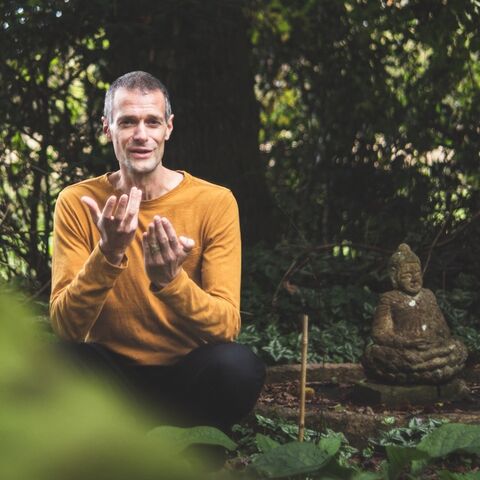
This is Josh Dippold from Integrating Presence.
And today I have with me a buddy and we're just going to call him Beta Ray Bill,
Also aka Egg Drop.
So I think maybe that that'll be a good place to start.
What the heck is Beta Ray Bill?
What's that mean?
Beta Ray Bill was a comic book character from the Marvel universe created by writer and artist Walter Simonson.
For the time the only character that was able to defeat Thor,
And then Thor's Hamill,
Whoever defeats Thor,
Shall have the power of Thor.
So Odin granted Beta Ray Bill his own hammer called Stormbringer,
Which is featured in the Marvel Cinematic Universe,
But the character of Beta Ray Bill is not.
And obviously it's not in the Norse mythology either,
Right?
No.
And of course I just thought immediately of Beta,
Beta Ray,
Or no,
Beta,
Remember Betamax?
The alternative that never took off to VHS for any old-schoolers out there.
And then Ray,
You know,
There's Billy Ray Cyrus,
You know,
And then let's see,
Well,
You know,
Beta,
Now it's the Beta males,
Right?
He introduced me to people like Neil Cramer,
Or just alternative ways of thinking that played different from the mainstream.
And one thing I really liked about Neil Cramer is his idea of suspending your belief or your worldview for a time,
Maybe even zooming out,
You maybe see things from a different vantage point,
And maybe in that way,
You might be able to see maybe a fuller picture or a bigger picture would be on your way to see as many worldviews as possible.
See all the angles,
If you will.
Not to mean that you have to completely give up your current worldview,
But just to be able to suspend it for a while.
You maybe try to see things in a different way without the filter of your current worldview.
And that's what I was going to say.
I mean,
The common term,
I guess now is red pilling,
Right?
When from the matrix be where,
Yes,
That's a great way to put it.
Although that could be even another program,
I guess,
But just all the different things in the world that are going on that I guess are behind the scenes and connected on some of that stuff too.
Now,
Recently I published a article on my site called Cahokia Mounds.
I'm sorry about Cahokia Mounds.
And the first article is about what the Pallady Star System.
And the second article is actually pretty profound and a lot of different.
It's hard for me to describe and I won't go too much into it,
But if anybody's interested,
I think Egg Drop here once would like to talk about the first article,
Which I'm totally,
Mostly in agreement with that there's a lot of holes in it.
What he did want to mention,
One compliment is that,
You know,
Tying back to my site integrated presence,
That it is kind of about meditation and wisdom.
And there's a section on discernment,
Different areas of study for discernment.
And since I don't have a formal Dharma training,
I don't have any kind of certification or whatever.
What I've done is I've opened myself up for criticism and questioning of all sorts at all times.
And for whatever reason,
A lot of people really haven't done this so much.
And this is what I respect about Beta Ray Bill here is that he will come in and develop,
Use the things we talk about and share to develop his discernment.
And so,
While sometimes it can get a little heated and emotional,
I really appreciate not only the opportunity to keep developing discernment,
Keeps me on my toes and keeps me accountable and it helps refine what I'm sharing,
Enable for the quality to increase,
Right?
So invite questions,
Investigation and discernment,
Although there's more helpful guidelines for that than others.
But again,
Like I said,
Just open floor.
So yeah,
If you want to jump into that or anything else.
Well,
When it comes to trying to discern what emotions are,
Something like fear,
I've heard that fear is an illusion.
However,
If an illusion by definition is deception,
How can you really know?
How can you really know that fear is an illusion?
Fear seems to be an emotion that we all can identify,
Even some animals feel fear.
And it might have to do with salt preservation when it comes to fight or flight mechanisms.
So even though fear might have a negative connotation,
I see it as maybe an essential for life to preserve itself and to expand.
That's interesting.
I guess the way I would put it is the fight or flight,
That's just like an inbuilt protection mechanism in our nervous system.
For me,
Fear doesn't really,
That's the label we give it afterwards.
So if we're actually fighting for our lives or run for our lives,
There's really not much time to be in fear because you're acting.
You're either fighting or running for your life.
Now what I would consider fear would be when we don't necessarily have to fight for our lives or run for our lives,
But there's this emotion or this kind of sense that we might need to.
So we're not actually running or fighting,
But there's this kind of overlay or this kind of sense that we might need to.
Even though it's not happening or really doesn't need to happen,
Because if it needed to happen,
It would be happening.
So that's what I would consider fear.
Now I would definitely agree that we can learn from that and we can use that to help.
I mean,
Everything's an opportunity or can be turned into an opportunity.
So that I would totally agree with.
And I think it was just a semantic thing here,
Possibly.
I want to say that it's not wrong to be in fear either.
It's definitely okay to be in fear and to feel it and learn from it and grow from it,
You know,
Because if somebody's already in fear and you say,
Well,
You shouldn't be in fear,
Well,
A lot of times that can just add more fear or it can just add more challenges on top of it already.
So I guess the thing would be,
Well,
How do we deal with that?
How do we,
What do we do with that?
How do we actually,
How do we work with that practically in life for benefit?
And I say,
Well,
One of the things would be to know that you're safe enough to feel the fear or go to a place where you're safe enough to just feel that in the body and experience that and ask it questions,
Scrutinize it,
Feel it.
But if it gets too overwhelming,
Then we need to call out to a friend,
Put our attention on other objects that will distract us in healthy ways,
Put your attention on your feet to go for a walk.
There's all kinds of different ways to deal with it when it gets too overwhelming.
When it comes to the idea of fear,
Whether it's an illusion or not,
Historically on a global scale,
It seems to have been some sort of power that people have been able to tap into.
And when I say people,
I'm talking about those who have managed to have power over a significant amount of people and to even cause them to go to war with other groups of people using the idea,
Well,
We don't want to lose our land to these invaders.
And that argument may be being used on both sides,
Saying if there were two countries at battle.
And it's something that has been a tool that has never gone away in this day and age.
There's still wars all over the globe,
As well as what might be seen as psychological wars.
Is fear the energy or the motivator behind that?
And because people may believe that fear is a real thing,
Is that cause for them to maybe give in to the fear?
And when it comes to,
Is it possible to eradicate this?
History has shown us no,
Although there's been plenty of maybe spiritual insights that there might be a coming of some sort of teacher that helped guide us into life.
For me,
That's still just a story,
But my beliefs are never absolute.
They change depending on the information I'm exposed to.
And if I am able to witness a change in fear somehow being conquered or even controlled and well-being to all life on earth is more predominant than change my view.
So the last part there,
Real quick again,
You said if something changes,
You'll change your view with fear?
Is that what you.
.
.
No,
Meaning I will change my view of fear that it's something that can be maybe put in check.
Okay,
So I can just talk from personal experience,
But before I do that,
It is very common,
At least I see it and I hear other people say the same thing that fear can be used as a control mechanism.
When people are in fear,
They don't want to be in fear.
And so somebody comes along and offers them a way to alleviate or allay that fear,
Then they will take some choices that they normally wouldn't take.
Just because,
Well,
It's just a common axiom that people are easier when they're in fear.
And so people in power with less than ideal intentions have used that,
Like Larry said,
And he gave the definition of war.
And yeah,
For me personally,
Fear is.
.
.
And then we've got a park ranger or something driving by here.
Possibly fear of mine,
Right?
No,
I'm just kidding.
Right.
So,
You know,
If anybody's ever experienced paranoia,
That's like,
I guess it's similar to fear,
But it's like.
.
.
Hit me around too.
Another vehicle.
But the upside to paranoia,
I guess way I would explain paranoia would be it's like extreme fear or it's kind of like off the charts,
Ridiculous amount of things,
But it doesn't necessarily mean it's wrong all the time either.
But one of the lessons I've heard that paranoia can teach is it can say to,
Hey,
Pay attention to your mind,
Trying to get your attention,
Listen to me.
One of the other things that can also teach is there needs to be a different choice made here.
The way I'm going about this,
Maybe I should not do that.
Maybe I should choose a different way.
And so,
You know,
Unfortunately or fortunately in this system,
We have this polarity,
Right?
So for whatever extreme,
There's the other extreme.
So one of the benefits I found about experiencing paranoia is that is like the extreme of fear.
So that's as a reference point for how extreme it can get.
So then you have the other opposite of the spectrum where,
You know,
There's just peace and love,
Right?
And there's fearlessness.
And so if you know the extreme of one,
Well,
Then it's,
You only have one side of the spectrum to go from at that point.
Now,
I'm not recommending people go straight out and try to get paranoid just so they can have that as an experience to become fearless.
You know,
That seems a little ridiculous and actually that is really ridiculous.
However,
I guess it could be leveraged towards fearlessness,
But I want to just talk about maybe more of the standard ways to become fearless,
To increase,
To become empowered,
And to become,
You know,
Where fear isn't a controlling mechanism as much.
So working with it and experience is great.
For me,
I found loving kindness,
Right,
As a formal practice.
And what this does is it becomes harmless to anything and everything.
So if you go out of your way to not even harm a gnat or even something that's inconvenient,
Like if the spider comes along and you have to move it,
Take it outside,
Or,
You know,
Even going through vegetables and there's these little aphids on there that I could barely even see,
And I can't really even tell if they're dead or not because they're in such a,
Like a gorge state from eating them.
So these are organic vegetables,
By the way,
And that just means food is edible,
That it won't kill the bugs,
You know,
So it's,
You know,
It's good to eat.
So then you have to move these little aphids,
See if they're alive or not,
And then spend this extra time taking them out.
But the,
I mean,
That's a little extreme maybe,
But the point is the intent of non-harming.
And so when that happens,
We become,
We give this gift of fearlessness to everyone around us,
Right,
Because they can sense that we're not a threat and that we're not going to harm,
And so it gives them the space where they can take that pressure off of being guarded and,
You know,
Worried about,
Oh,
Is this person out to do such and such,
You know.
And so when the intent comes,
It's all about intent,
Right,
Because if you step on an ant and you didn't intend to kill it,
That doesn't,
That's,
I mean,
It's still death,
But you didn't intend to kill it because if you would have seen it and you had the intent,
Oh,
I don't want to kill that,
You would have drowned it.
But this is like harmlessness,
And it gives this gift where people are safe enough to open up and explore and just,
You know,
Talk about anything,
Be any way they want,
Come as they are,
Be as they will,
And feel,
And feel.
Sometimes whatever we're going through is unpleasant,
And knowing that it's okay to feel and face pain,
And again,
When it gets too overwhelming,
There's other strategies that can happen.
So,
Wow,
Now I've almost lost the entire thread about,
Was there a specific about fear again?
Well,
Yeah,
I could add to that idea when it comes to an individual's intent to be harmless,
We can have a certain level of control of that,
But we,
For the person who's on the receiving end,
We can't really control how they'll react,
Despite what,
You know,
The giver's intention.
For example,
Someone might believe that it would be beneficial to somebody to maybe not to be on so many pharmaceuticals,
And maybe even point out that while your,
You know,
Side effects are possibly harm that,
You know,
The receiving person's experiencing from all these pharmaceuticals,
And it's quite possibly for this person on the receiving end to interpret that and become fearful.
So,
Despite our,
A person's good intentions,
We really do not have control over another individual's response,
And it's one of those things that maybe chance plays into.
You know,
It's,
The chance thing,
I'm just gonna shelf,
But it's a really good point of,
You know,
That's why feedback and dialogue is so important,
Because,
You know,
What I feel might be non-harming to someone actually might be harming.
So,
That's why it's also important to have open dialogue and feedback,
Right?
And also this idea of like self-containment too.
So,
There's sometimes when I know that I can be around people and some of their stuff can come up just automatically,
Stuff they're not ready to handle,
Stuff they can get triggered by real easily,
And so does it really do them any good for me to be around them at that point?
And so that's when I just need to step back and take,
But the thing with the intent too,
Right?
So,
Yeah,
This is a practice,
Right?
It's not like a commandment or it's something we,
It's said to check out in our own experience,
Right?
To see if we see benefits from it.
It's not like a thou shalt,
Right?
Right,
And I would say a possible,
Maybe not a resolution,
But maybe a way to move forward between this example of a giver and receiver is they might question their current worldviews and may want to explore different ways of thinking.
Absolutely,
And that's why,
You know,
One of the things I've always been blessed with since a young age is having more of an open mind,
Right?
So,
I mean,
Sometimes that can get people in trouble,
But a lot of times it goes with their benefit.
It's like balance too.
Now,
Going back to the non-harming thing,
I will say that I'm still in agreement with the,
What is it called?
The non-aggression principle.
There might be a better word for it now,
Where people are obviously allowed to defend their lives and their loved ones if they're aggressed upon,
But they're not really allowed to harm anyone else.
But when their life is threatened,
Then they have the right to protect themselves and their loved ones.
Now,
For me personally,
Right now,
I don't have any immediate family like wife and kids,
So this is kind of,
You know,
I don't have to deal with this situation right now.
So,
I choose just non-harm all the way.
Now,
I can't recommend that for everybody because everybody's not ready to take such an extreme leap right away,
Right?
Because of whatever reason.
So,
You know,
Beta Ray Bill here is a first-generation American,
And I really love his perspective on a lot of things that I've kind of lost perspective on in this country.
He comes at it from a different place than a lot of people,
Circles I run in,
And so I still support fully Second Amendment.
I don't want to get too political here,
But even though I won't own a gun or use one anymore,
I still support the right for other people to do so.
Primarily because usually what dictators do in other countries,
The first thing they do is confiscate everyone's.
And obviously,
We're not going to go up against like the national armies or something,
You know,
Little,
You know,
Sidearms and stuff,
But it's the psychological thing,
Right?
It's the psychological thing there that really makes all the difference,
And it's all about responsible use of it.
So anybody who's a responsible,
Law-abiding citizen that will use it just to protect and not initiate force,
Then,
You know,
Eventually we'll be at a state of consciousness where we won't need,
I mean,
They'll march these guns out on like special days or something.
Like,
Look how primitive we used to be,
You know,
There's a gun,
People used it to shoot things,
And it'll be like a history lesson or something,
But unfortunately the state of consciousness that we're at now isn't at that level,
And so I still feel they're necessary to some degree for certain population members of people that are gonna,
You know,
Be legit and upstanding with it.
So yeah,
I just wanted to mention that.
So throw some practicality things in there too,
And about building bridges from,
You know,
Where we're at now to complete non-harm.
Yeah,
When it comes to the idea of the non-aggression principle,
It's something I've been thinking about as in,
It exists in the realm of ideas,
But can it really be implemented in our physical reality?
Again,
There may be the intent of not harming somebody,
But let's say from a economic standpoint,
We have business A and business B,
Who in free market capitalism,
They are competing,
And if business A puts a product on sale,
Are they not trying to gain more customers and maybe even steal away customers from business B?
Now business B has a shortage on the employees as well as business A,
While offering,
Well business B offers maybe a higher own bonus,
But business A doesn't.
Is that not a competition,
And does competition,
Does it necessarily have to be seen as aggressive?
I don't know.
This is a fascinating question,
Because when we get into harm and non-harmony,
There's subtle and subtler layers and gets subtler and subtler,
Right?
And then when we start connecting certain business activities with certain things too,
And connecting the money trails,
If there's involvement in war,
Gray markets,
Black markets,
It gets really complicated really quick.
So this is where it does kind of have to come to,
I think,
More of an ideological thing,
Where we just have to do the best we can and not go too deep into it,
To where it's practical to analyze,
And when it's not practical to analyze it.
But that is,
You know,
The culture here in the States is,
Or at least was,
And we're kind of in a transition period now,
Built on competition.
You know,
I'm sure there's some competition official,
But I'm thinking it's time to explore this idea of cooperation,
You know,
That goes away from this thing of gangster capitalism,
Where,
And now I obviously don't think socialism and communism is the answer either,
Because we don't really have a true capitalism.
It's kind of gangster capital,
Where,
You know,
It's like growth for the sake of growth is the ideology of cancer cell,
Right?
So if you're just doing growth,
And because of growth,
I don't really see the point,
You know,
Just to make shareholders money.
Okay,
Well,
You know,
I'm not saying you shouldn't make money in business.
I mean,
That's obviously what it's there for.
But it's these cutthroat practices,
You know,
These ethical things,
And then you get into the whole even more,
Like they,
Well,
Now they have these,
What,
Social responses,
They say,
Or I forget the exact term for,
And,
But,
You know,
We talked about this before,
Some of them are kind of joke.
I mean,
They will do kind of certain good things,
But then,
You know,
The track record and the other things are involved with,
Now I don't know for sure.
So I mean,
Don't hold me to this exactly.
But it seems like where there's really the opportunity to do good with investing in money is in private companies,
Private equity,
Where you can individually vet the people in the business to know their intentions and their goodness and their track record,
You know,
And how they're gonna play out.
But,
You know,
It's a lot easier just to buy a stock,
Right?
So that's another thing.
I think that's enough for now.
Pass it over.
Oh,
When it comes to free market capitalism,
I want to distinguish that from what I would call crony capitalism,
Meaning government's support of corporations,
Especially an example would be the pandemic.
Now,
Who decided that small businesses had to shut down yet corporations stayed open,
Giving people,
You know,
A limited place where to shop,
Amazon.
Com,
As well as Walmart and Target,
Whole Foods,
They probably made a lot more money while mom and pops,
You know,
Small businesses,
Even though they were provided with a loan from the government,
And where does the government get the money for loans?
Well,
Essentially,
They borrow it,
And it has to be paid back by future taxpayers.
But for these small businesses to be shut down,
Yet corporations like Walmart stayed open,
That would be my example of crony capitalism.
Well,
Not only that,
But then,
You know,
They have a corporate welfare,
I think some people call it,
Right?
But this has been in the works for a long time,
Right?
Constantly pushing out the small guy,
Making,
You know,
Barriers tougher,
Making regulations more and more,
And consolidating all the wealth and power into corporations.
We kind of know all this.
I'm not saying corporations are bad in and of themselves,
It's just kind of the way things are structured now.
And,
You know,
I was curious too about the,
You know,
If this was really about health so much,
Why are the fast food places to stay open?
Now I get it,
Some people are,
You know,
Are hard to make ends meet,
And they don't really don't have the time to cook and stuff.
But,
You know,
It just doesn't seem,
I don't know,
I think that's enough to say about that.
So I've been contemplating this idea that everything changes,
And I can see how it may work for a lot of things,
But I don't see it as a blanket,
You know,
You know,
Universal truth.
For example,
Change in my life is the more I'm exposed to ideas,
The more I may change my worldview.
But an example of things that don't change,
I think we can see in math.
For instance,
No matter how big this or covered a circle is,
The diameter is always going to be half the value or twice the value of the radius.
The number zero is always going to be the number zero.
And so I've adopted this idea that although many things do change,
There's also things that don't.
And it's possible that these two different ideas exist in our reality.
It's fascinating,
You know,
I never considered the mathematical equations,
Right?
So,
You know,
This is just off the cuff here,
I probably ought to sit with this before I speak on it.
But this is,
Yeah,
I don't,
I think maybe what might be referred to is the three seals in Muslim,
The dukkha anicca anatta,
Right?
The dukkha being stress,
Unsatisfactoriness,
And suffering,
And anicca,
Anatta being not self,
And we will go into that because it's the most kind of subtle complex,
I guess we could,
But the anicca,
That's what's commonly translated as,
What is it,
Everything's changes,
I mean,
Was spoken to,
What is,
Help me out with the word,
It's commonly translated as impermanent.
Okay,
So I'm not really fond of that translation so much either.
The way I like to explain that,
And then I'll come back to the equations here,
Is,
Okay,
So trying to arrange things in our external life,
Conditions in our external lives,
The way we want them,
Right,
Have everything lined up in life to how we want it,
And then that's how we're gonna have lasting happiness.
I mean,
We have this fallacy,
We think that if we only have,
You know,
The right bank account,
You know,
The right living situation,
Maybe a right partner,
Maybe having things go smoothly,
Have a daily routine,
So where,
You know,
I kind of know what to expect,
Move through my life fairly easily,
Get accomplished what I need to accomplish,
And that's gonna do it for me,
I'm gonna be happy that way.
Well,
Yes,
To a certain degree,
However,
This is not a solution,
A long-term solution for happiness,
Because in the long term,
It's gonna be impossible to maintain conditions exactly the way we want them,
Right,
In the long run.
So when we're under this kind of delusion that we can maintain external conditions the way we want them in the long run,
And that's the way we're gonna achieve happiness,
That's kind of a setup for Dukkha,
Which is the unsatisfactory to the stress and extreme version suffering,
Right,
And so we're kind of under this illusion,
Our delusion that we can maintain,
Keep things the way we want,
So,
But all it really takes is just that recognition that that's not possible,
And so when we align with that truth,
That we can't really maintain that,
I know I've said that so many times now,
For external conditions,
The way we want them in the long run,
Then we can just realize that when things happen in life,
That's just the way this system is structured,
That we can't have control of the time,
Can't have it a lot,
And because of this,
We can expand our worldview to see that when we do see stress and unsatisfactoriness and suffering in the world,
That it kind of ties into this idea that people are trying to do this,
And when they realize that that's not possible,
And then they get stressful and upset about it,
And whatever,
So,
Now going back to the things change,
So that's one of the reasons I don't like the impermanence translation of that,
And so yeah,
I'm sure there could be constants and stuff,
Now the mathematical stuff,
You know,
It's hard because that is born in the mind,
Right,
So there is no,
I mean,
I can't go and pick up a zero,
Right,
I can't go pick up a math equation holding my hand,
In physical reality,
I'm not saying it doesn't exist,
Because it exists in the mind,
Right,
Now,
You know,
You get into deeper stranger things,
Like,
Well,
You know,
All there,
Are there alternative realities or other planes of existence where,
You know,
Where we can experience things where that equation doesn't exist,
Or maybe it exists in a different way,
And I think we talked about different number systems,
Number based systems,
Right,
We have an attend based system,
And there might be a,
So I don't,
That's all beyond my pay grade,
And maybe losing people here,
But I mean,
Perhaps you can put it in the way that Kimora understood here,
That I guess that'd be the way I look at it,
But,
So I'm not taking anything off the table that's not constant,
I think that,
You know,
It's said in Buddha's,
If there is enlightenment,
What happens,
You know,
It's a classic thing,
Is there a self,
When I'm,
No,
Is there,
Will I exist after I'm enlightened,
Won't I exist after I'm enlightened,
Will I both exist and not exist after I'm enlightened,
Or after there's enlightenment,
Or will I neither exist nor not exist,
And I think the historical Buddha said,
Well,
None of that even applies,
And so that,
Like,
There's just no reference point,
You know,
There's no words,
There's no,
For me anyway,
I can't,
You could only approximate that,
There's really nothing that can be said,
And it really can't be understood by mere logic alone,
Right,
So I think that's plenty for that,
For the time being.
Yeah,
I just want to add that,
That the Western system of logic,
You know,
Base and math,
It's really just the tool that people have used to try to,
You know,
Prove facts,
Where that might not be the only worldview that exists,
There's plenty of worldviews that are really dependent on the idea of logic,
And I just want to be conscious of that,
There's just so many different ways of thinking or perceiving what may or may not be reality.
You know,
And this is,
This is the really,
The gold of,
You know,
Life,
Is deep things like this,
However,
You know,
A lot of people aren't in situations to contemplate all this stuff,
You know,
This is where the philosophy stuff comes in,
And yeah,
You know,
The logic is fascinating,
But as you agree,
There's things beyond logic too,
Right?
Yes,
And I would say those things that are beyond logic is more based on speculation and faith.
There may be things that we can't prove in our reality because they are beyond,
They're not part of the physical,
They're metaphysical.
That's right,
And so that's when we look at them through this,
The reference point of logic and rhetoric,
And in addition to that,
I would say that's totally right.
We have to really,
You know,
Tap into that,
We have to see it and know it for ourselves.
We can't really be told about it,
You know,
You can be,
You can tell,
Tell somebody about something and speculate about it or do this and that,
But ultimately for that type of thing to become,
You know,
To be experienced,
It has to be seen and known for oneself,
Right?
Because that's,
Yeah,
Because I mean you just can't go talk about a bunch of woo-woo stuff and just have somebody say,
Oh well that's just how it is,
I mean now that's how it is and that's,
That's at the end of it.
No,
No,
Not at all.
It's,
That has to be seen and known for oneself,
And then even when you do see something,
It could,
There's just so many other things that could be in the way that it's,
You know,
That's not necessarily,
You know,
What is it,
It's not necessarily what you see is what you,
When you talk about certain things like this,
And knowing,
You know,
That what is the branch of philosophy about knowing and truth.
I think there's a special word for it,
But I always forget it,
And that's a whole other topic.
I know we've talked tons about truth.
Oh,
When it comes to our natural curiosity,
Or maybe I just talk about my natural curiosity.
Sure.
How do I experience things?
How do I know things?
Well,
There's this idea I could really only know what I experience,
What I feel,
And what I think,
And I've known that ever since I've been conscious,
I've always had this natural curiosity to know what there is and what may be beyond,
You know,
What things do we not know?
How much do we not know?
And what drives this curiosity?
Can we explain that the chemical processes in our brain equal to that,
You know,
Of consciousness?
I don't know if it can be or not,
But does it even really matter?
I mean,
To me,
No.
What really matters to me is just to continue,
I guess,
My expansion of my knowledge through my personal experience,
Beliefs,
Ideas that I've come across from not just people this time,
But,
You know,
Learning about history all over the world.
And this is what they call epistemology,
Right?
Isn't that the branch that deals with knowing?
Yeah,
I believe it has to do with what do we know,
How do we know something,
And how we can justify that we know.
And then empiricism,
Right,
That's what we know for ourselves,
Right?
The senses?
Empiricism is more having to do with hard facts can be proved with,
I guess,
Logic.
It is,
It really is.
And,
You know,
In the Buddhist teachings,
The seven factors of awakening,
The second one is,
Or the first energizing factor of them is investigation.
And so it's investigating.
And how do we do that?
Well,
Like was said,
It's like through our experiences,
How we know,
Asking questions,
Keep looking into things,
Then that curiosity that drives it.
So that desire to do so that intent to do so,
The persistence to do so and then developing discernment,
These are these four things are the called the four roads to power,
Or the idipadas in the Buddhist teachings.
So I've got a helicopter coming over.
Well,
Is there anything else we wanted to chat about today?
Or should we want to address the idea of life?
Or should we leave it for part two?
Well,
Let's use that as a little preview that working on a podcast.
And if anybody's would like to chime in with this,
You're welcome to do a short audio recording and email it to me or send it to me electronically through my site,
Integratingpresence.
Com.
The email address is integratingpresence.
Protonmail.
Com.
You can just send it that way as well.
And the two questions are simple or short anyway.
What is light?
And how do you know?
So I've got a few people that recorded again,
Again,
Looking for that upcoming podcast for what is light?
And how do you know?
And anyone who comes across this audio,
The show on wisdom or the podcast,
You're welcome to contact me,
Send in your response through audio,
And more than likely to be including the podcast,
What is Light?
And how do you know?
All right,
Billy Ray,
Not Billy Ray,
Invader Ray Bill.
Yep.
Anything else you want to close up with?
Yeah,
I just want to,
I just want to add to if there's any terminology that I used wrong,
You know,
Please correct me.
I don't mind being critiqued on just anybody who has a comment or opinion,
Whether they're agreeing or opposing or just want to ask more questions,
Maybe next time.
Yes.
So you're welcome to do that in the comment section of the,
Be the show notes on the blog post on my website,
Integratingpresence.
Com.
So however you want to get into contact with me,
And then more than likely I'll put them on the page and share them with it.
And if you don't want to share,
Let me know.
And I'll just do that private feedback too.
And if there's anything else you want to hear about for a part two or anything like that,
Feel free to reach out as well.
All right.
May you all be blessed with an ideal,
An optimal day.
Bye now.