Wholeness,
Welcome.
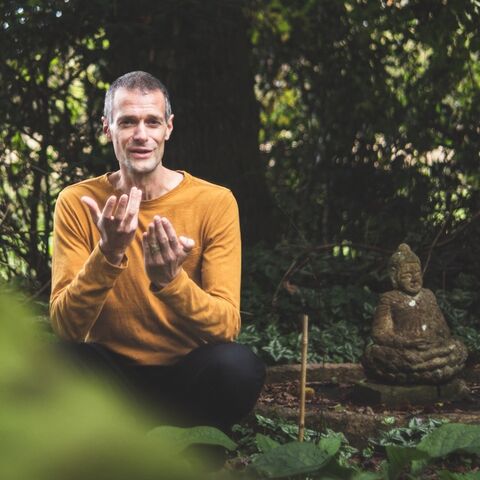
This is Josh DePaul of IntegratingPresence.
Com.
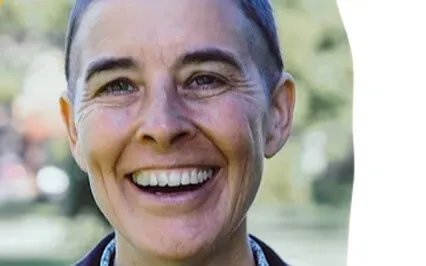
Today I've got Wendy Nash with me.
Wendy,
How's it going?
Yeah,
It's good.
Before I start,
I just always like to do two things.
The first one is to say thank you very much for having me on your show.
And also,
I like to recognize all the work that goes in it.
So we are not just solitary little islands off on our little venture.
It didn't just happen in this moment.
You've got a program,
You've had previous programs,
We've been chatting a little bit,
A couple of times.
And there's a lot of thought about what is going to work for the community,
What the audience,
How are people going to understand this?
There's a lot of prep work.
We've both got equipment.
And there are a number of people that kind of are in the background of this.
This isn't my first interview.
It's not your first.
And there are people who have helped me set up my equipment.
So there's a lot of people in the back,
My partner who supports me in my business.
So I just really like to acknowledge that there's a lot of stuff that goes on in the back,
So that your audience can really have something that they find of value.
So I really like to appreciate.
I'm glad you point that out.
It often goes overlooked.
This is the fun part,
Right?
After this is over,
Then all the extra work begins.
So this is the really cool part.
But yeah,
People don't see the behind the scenes and all the stuff involved in it.
It goes on and on and on.
So the other thing I like to do,
Sorry to cut you off,
Is I always like to acknowledge that I'm calling from Aboriginal land.
So I'm in Queensland and there is a tradition in Aboriginal cultures to acknowledge the country you're on.
And what that does is it sets it to you can't know who you are unless you know where you are and who came before you.
And the people in Australia have been living here for 70,
000 years.
So that's 70,
000 years.
That's a long time.
And for some bizarre reason,
Australia,
Like the US,
Is called the New World.
And I'm like,
Really?
I think they need to take a bit of a look in the mirror there,
Because here it's $70,
000 and there's just been all this crafting and thinking and looking at how the land and the animals and the spirits all come together to in this moment.
And so it's not until you know where you've come from,
How we got here,
That we see where we are,
How we got here,
And where we're going,
And how we can get there.
And of course,
Everything happens in this moment.
So whatever arises is here in this moment,
And we have in this moment,
Setting that tone.
But I think it's really important to recognize that elders have crafted the world here in Australia and made it very livable for a long time.
So I always like to recognize that I'm on Gubbi Gubbi country.
It's a beautiful practice.
And I remember when I tuned into Bonta Sujato's Zoom things,
He does the same thing.
And that might have been the first time I heard it.
No,
Probably.
But how important that was.
And I just think,
You know,
With all the different hardships and sufferings of the native communities and peoples here in the States,
How lovely if we would adopt the same practice here in the States,
Because of all the this atrocities and genocide.
And,
You know,
Here in Missouri,
That used to be a huge population,
Especially in St.
Louis,
They tore down a lot of the mounds here.
There's still Cahokia mounds,
Not too far away,
Which is a World Heritage site.
But then of course,
There's the Trail of Tears,
Where they're pretty much all driven out of the state of Missouri,
And to reservations more west.
So there is no,
That I know of,
Any Indian reservations,
Native people reservations here in the state.
And I really don't know the reasoning behind that.
But it is a lovely acknowledgement.
Right.
And that's one definition of compassion,
Too,
Is acknowledgement.
Yeah.
And compassion,
That's a whole other topic.
We I'm sure you and I could have a long conversation about compassion.
You know,
What is pity?
What is idiot compassion?
What is enabling?
These are all versions,
What they call near enemies of compassion,
You would know this.
And I like to near enemy,
Because they look so like compassion.
But are they really,
You know,
The best definition I ever heard about compassion is that we are in it together,
You know,
And,
And,
And I like that we are not coming from above or below pity,
Whatever.
We're just in it together.
I've got to,
Yeah,
As long as long as you're not suffering in it together,
Right?
You know,
Not overwhelmed.
Yeah.
It's really important to not be right.
Yeah.
Because there's just more people that are in the crap.
You know what I mean?
So yeah,
But if you want to change it,
Where you've got this radio program,
This podcast series,
You can actually do that.
And love that space with your,
You touch base with the local community,
You might find that what is the best way to do it?
What's the protocol?
It's really important to make sure that you follow the correct protocol for that.
We have a lot of stuff here.
Whether it's First Nations,
Or do you,
We don't use the word,
For instance,
Reservations anymore,
Because that's,
Yeah,
We use communities,
Or sometimes people use tribes.
Anyway,
But I always leave it up to the,
It's important to use the language,
Because that's so,
You know,
We wanted to talk about listening,
And we think about,
Yeah,
Language,
The words that we use are really pivotal to how well we can listen.
So maybe that's the place where we start.
That is,
Yes.
Before we do,
Though,
Let's just give people a brief background,
Like,
Who are you,
And what do you do?
So we're coming at this,
It's not,
I guess,
That important,
But I feel it's a way to honor and respect you,
And to show value and validation to your work,
Because I really appreciate it.
Thank you.
Well,
Basically,
So I basically crashed and burned a lot of my life.
So I had a lot of very difficult early life circumstances.
Both my sister and my father died when I was a child of terminal illnesses,
10 years apart.
There was a lot of death.
I was bullied a lot.
There were other stuff going on,
Like,
You know,
Like,
You can imagine,
It's pretty chaotic.
I changed schools all the time.
So I failed at school.
I wasn't good at sport.
I wasn't good academically.
I didn't feel loved at home,
I guess.
And I wasn't popular.
So I sort of had no avenue to go down.
But I was miserable,
And most deeply traumatized.
I have what I now see as complex PTSD.
And so it took a long time to work through a lot of that stuff.
And I was trying lots of therapists.
And finally,
I got to therapist number 19.
And she really got what is complex PTSD and the nature of the pain that I was in.
And she really understood it.
And she said,
You are so wound up like a clock,
You need to take up meditation.
She is very strong Zen practitioner.
And I did.
And I was also trying to understand myself.
And I was doing psychotherapy training.
So I did that was a four year very immersive psychotherapy.
It was theory in theory.
But boy,
You kind of really it's like,
You know,
Those encounter weekends that you get imagine that over to over four years is kind of like,
Everything gets broken in that point.
I also did a psychology degree.
And I did that meditation,
Loving kindness meditation and pro social practice.
And I did that in my second year.
And I did that meditation and pro social behavior using social identity theory.
So that's kind of where I came from.
I did I've been meditating for about 20 years.
I was really angry and hurt,
You know,
PTSD,
One of the manifest common manifestations for that is anger.
And that's exactly what I was like.
And I was crushing and burning all my relationships.
And I didn't know what to do with this anger.
I thought I was completely justified.
And didn't seem to be getting me happier.
It didn't seem to be getting anything better.
And I just,
I kind of was at my wits end,
My ex husband walked out.
We hadn't been married for long,
But we had been together for about six years,
I thought I had all my shit together.
And then Well,
Clearly,
I was absolutely wrong about everything,
Actually.
So everything was up for grabs,
Everything was going I was kind of boring for a long time there in my kind of self absorbed kind of trying to understand it.
But my big curiosity was narcissism.
How does narcissism what is narcissism,
We talk about ego and all that sort of stuff,
But also how,
How,
So how the mind is.
And,
But,
But when I was a kid,
I was walking along the street in in the suburb that I lived in.
And there was a church and on the side,
And my family's atheist.
And it said,
Jesus loves everyone.
And I thought,
I am deeply unloved.
I never want anybody to feel like I do.
Jesus is one person,
I'm one person,
I'm going to find a way to love everybody.
So that was kind of the catalyst.
And I had all this rage and confusion and hurt.
And I didn't understand anything.
But I guess that one thing kind of was a rudder somewhere deep in the basement of my psyche that has really only come to fruition.
Now much later,
That I've understood the impact of that particular event on my that insight that I had in my life.
And so I guess that's my goal is to find a way to love everybody and what to understand my own limitation.
And also to understand what does it mean?
What does love mean?
What does like me,
I wanted to be like,
Because nobody seemed to like me.
So I was just,
I want to be liked,
I want to be loved.
And it was sort of there that I started,
You know,
I didn't start from a great,
You know,
I guess you don't do this work,
Unless you're completely desperate.
So I guess desperation is where I start.
We talked about maybe not using Dharma words,
But the dukador,
That's where I came through to,
You know,
The suffering at wit's end,
Rock bottom,
You know,
Desperate,
Beyond desperate.
And it's just,
I can just look back and think that's probably one of the greatest gifts I was ever given now,
You know,
Ironically,
With the golden question,
What if the worst things that ever happened to us were the greatest gift we've ever been given?
But you know,
The thing about that,
I look at my family,
And you presumably have brothers and sisters as well,
One brother,
Yeah.
Other people in the family,
What I'm always curious about,
Well,
This was my journey,
But nobody else in my family is interested.
We have our lives that different.
And so other people,
You know,
Their lives might hit rock bottom,
But they're not going to go down this path.
And so I think it is actually something about our character and our disposition that makes us curious to be to do that.
And I have a spiritual teacher,
And he says,
Actually,
Kind of have no choice in the matter.
So I think it's an interesting,
It sort of raises the question about free will.
Now,
We didn't want to go into that sort of conversation.
But I do think it is really important to acknowledge that not everybody is a willing party in change.
And not everybody,
Actually,
I was talking about it with my partner this morning,
You know,
In order to build a bridge for listening and understanding,
Both sides,
Both shores need that pylon at the either end in order to have the foundation to meet in the middle.
So you can't just build a bridge from one side and take full responsibility for the whole relationship.
The other party does have to come forward to an extent,
And at least show willing,
Honest,
Honest,
Willing,
And then,
And then it can come forward.
But you can try.
And if somebody is not even able to acknowledge that they are unable,
They may not be,
They may have willing,
But they may not be able.
So I think it's really important to recognize because I think,
You know,
I've spent times in my life where I've tried to really work on these communication and getting a relationship good and healthy and all the rest.
And actually,
It just became an exercise in my own torture to a great extent.
And it crashed the other relationship,
The other person's relationship.
Yeah,
And not in intimate relationships here,
But it seems like it can go the other way.
They're able,
But they're not willing to,
Right?
I learned this the hard way was that I just can't talk about certain things around certain people at certain times,
You know,
And no matter how much I want to,
If they don't want to hear me or have anything to do with it,
Well,
Then it would just,
To our mutual detriment for me to keep on a certain thing,
Right?
So there's certain people that we can only really share and talk about certain things with.
So much to pick up on here,
Too.
If we do have any kind of free will,
I would think it would be in how we view things and how we respond to things,
Right?
Because obviously we can't control everything that happens to us.
I mean,
That's kind of silly.
Yeah.
And we learned that control is like,
What did I read recently?
That control is just kind of like a belief that we've been holding for so long.
And that really struck true to me because I have this policy or not policy.
Well,
Maybe it's a policy of like,
You know,
I don't really need to believe or disbelieve anything.
If I take something as information,
Well,
Then there's not that emotional charge that comes with having to believe something or disbelieve it.
Right?
So if I take things as information,
Well,
Then what's helpful is like more like light as a feather,
And then it can easily be let go of,
Or I can just pick up other feathers when I come with information.
I don't have to,
Because when people's beliefs are shattered,
They've invested so much emotion into those beliefs that it's hard to let go of that belief a lot of times when faced with truth.
Right.
I also,
There's enough there to pick up on.
Yeah.
We have,
Yeah.
I don't know if we can get into it.
I think,
You know,
Like I think you and me,
We could have like a hundred thousand discussions and we would never run out.
Like I think we're both quite chatty people and we like to play around with the ideas and all that sort of stuff.
So,
So I think we let's stick to listening because that's where we kind of let's like keep,
Let me wrap up the quick loose ends though.
The PTSD thing,
I just want to say it fascinates me because it seems like a lot of the other stuff and techniques and ways of relating just doesn't really apply to folks with PTSD.
And so I'm really,
I haven't gone on my way to like study that specifically.
So that's one thing that really fascinates me too.
And I can just tell your loving kindness is amazing.
The practice,
The depth of your practice,
It just seems maybe we can talk about that some other time,
But it just,
It shows so well.
And then I just want to mention Wendy's,
The name of her site.
It has to be mentioned by me,
At least kindly cut the crap.
Okay.
So this can be done on so many different levels,
But the one that resonated with me was approaching someone who's not authentic.
Right.
And you don't have to be a jerk about it.
Right.
So kindly cut the crap.
That's exactly right.
So it's really about cutting away from the extraneous.
So I got a long time,
Not a long time,
You know,
A little bit of time about what would I call the business.
And I am a very direct person,
But I have been brutally honest and brutal is the right word.
And that is not kind of,
And I had to learn kindness.
Like I look at my partner and he's such a lovely man and I'm not that,
That just didn't come naturally to me.
I had to work it,
You know,
And I do want to,
I learned just because people are very interested in PTSD,
They were,
I was listening to a talk the other day about PTSD and actually the pandemic and people are traumatized from,
So normally PTSD,
I just want to very quickly put this in for your listeners.
PTSD,
The way this fellow talked about it was the lack of capacity to forget.
So we have,
We remember,
And we talk a lot about,
Oh,
I wish I had a really good memory,
But we actually need to be able to forget.
And PTSD is not having a good function of forgetting.
And I thought that was very useful.
They talked about the way that they do.
There's a special kind of PTSD that's arisen from the pandemic,
Because normally you would be able to resolve PTSD through laughter and connection.
That's actually how trauma relinquishes,
But you couldn't do that during the pandemic because we were all like unable to have physical contact with anybody.
And many people just completely withdrew.
So I thought that was a very,
I've been looking at PTSD for a long time.
And I thought that was a very refreshing way of looking at PTSD.
My own,
I'll just put this for people who have this work,
Done lots and lots of different work.
And the only thing that personally has worked really well for me is something called EMDR.
So,
Yes.
So I won't go into that,
That this is not the time and the place,
But if people are listening and they want to find out what does work,
That's the one.
And also to see a psychologist and psych therapist and a good adjunct is loving kindness meditation for oneself to learn that it is a slow,
It's a practice.
It's slow.
It just,
It takes a lot of observation of one's own limitations and capacities to,
And it just takes time.
It took me maybe 10 years to stop being so angry.
And actually,
I've been with my partner for two years and last year I got really angry at him and I did the thing that I always did.
And he just went,
Wow,
Like I just silenced him.
And that was the kind of language that my mother used with me in the kind of way.
And so I just reenacted that and I was like,
Wow,
That was well.
I was so well.
And I think,
You know,
The thing about relationships and conversations is we think that there are deal breakers in relationships.
There's no choice about it.
But going back to the question of conversation,
Actually you can say pretty much anything to anyone as long as it is kind,
Sincere,
Truthful,
Unpolitic,
Non-gamey,
No trickiness,
But you've got to be absolutely 100% from the heart,
I want to say.
And I mean,
I work with clients with their meditation practice.
So I try to get people to start a meditation practice so they feel resourced to in their own daily lives.
It takes about 18 months to get a daily practice up and running.
But I was talking with somebody the other day and somebody said,
Oh,
You know,
You,
Her boss had said,
Oh,
You know,
You're unhappy.
And she was like,
Oh,
I'm unhappy.
And so we just worked it.
And I just,
So this is what I do with clients.
And I say,
Well,
How about you just say this silently to yourself?
You know,
I feel unhappy.
Yes,
It's true.
I feel unhappy.
And she did that.
And then I said,
How do you feel?
And she said,
I feel whole actually.
And I'm no longer kind of held back by the denial,
Trying to flip out of that,
Dismiss that.
So there is something very important about remaining sincere to oneself in that.
So the conversation with another person is as much about the conversation that we have with ourselves.
Absolutely.
You know,
Because a lot of times we can't really tell if we say something out loud,
Even if it's a script,
It's hard to tell if another person wrote it or not.
We don't know if another person wrote it or not.
We just hear those words,
Right,
When we speak them.
But yeah,
That really resonated that,
Yes,
That self honesty is a form of self love.
And a lot of,
It surprises me how many people aren't honest with themselves,
Right?
And when it comes down to that,
Like when I was trying to do these,
I love yous to my own heart,
At first it was like,
Well,
This is sappy.
This doesn't feel right.
You know,
This is a little too much.
But that's actually a form of self honesty,
Right?
So that is actually a form of self love too.
And I just want to pick up about,
You know,
I do similar things like,
It's great.
Usually when I'm kind of pressed for time,
And it comes right out of the blue and I'm not expecting certain situations,
Then the tendency is still there,
Fairly decent to revert into past patterning that I had thought I had resolved or at least changed.
But then I find myself going like that.
Sometimes it's a little extreme.
I won't go into examples right now,
But some of the circumstances are kind of extreme.
So I have to,
Well,
Maybe for me,
Maybe not for some people,
But I guess,
But it's to give myself some slack there too,
And forgive myself and start again.
Totally.
And I think there is some Navy phrase or something,
And it says you,
In time,
When times are difficult,
You go,
You don't fall back to the level of your training,
You fall back to the level of your practice or something like that.
I can't remember the term,
Somebody can look it up.
But,
And I think that's why we practice.
That's why it's not a one,
You don't read it and then it's done.
You read it and then you have to sit there going,
So how am I going to apply?
And someone's been really horrible.
So I had a situation and talking about listening.
So we,
My partner and I moved up about two months ago from one state to another,
And we hired the van and the van,
It turns out was pretty dodge.
And it's,
There's been quite a lot of floods.
I don't know if you're aware,
There's been a lot of flooding in this area and the roads were full of potholes and we actually have quite good quality roads.
But it was like,
And the wheel,
I don't know what they call it,
The bar or I don't know,
Some wheel thing,
Or I don't know,
Whatever it was,
It kind of broke,
Snapped off.
So one wheel was going straight ahead and the other wheel was going to the side.
So that's,
You know,
Apparently the mechanics were like,
You're lucky to be alive.
There you go.
My partner was driving fortunately at the time and he was very skillful.
So we were stuck in this town,
Didn't know anyone.
It was a Saturday.
Of course,
We bit shocked by that.
And the mechanic,
You know,
Nothing was going to happen with the van until Monday.
And then we got to the van on Monday and the part came in on,
She said,
Oh,
It'll be Thursday,
You'll get it.
In the end,
We got it on Wednesday.
So we're going,
Okay,
Well,
What are we going to do for a couple of days?
You know,
We've got nowhere to go.
We haven't got anything.
We haven't got a,
We can't go sightseeing.
We can't do anything.
We're just in this tin pot town,
You know.
But it was the week before the election and,
And in Australia,
Voting is compulsory and many Americans really arc up at that.
But I just want to put a vote for compulsory voting because if when everybody has to vote,
You don't have to try and encourage people to vote.
So that's already done.
And it's a legal requirement for the government to ensure that everybody votes.
So you don't have these shenanigans to the same extent in the way that you do in the US.
So I just put a vote there for mandatory voting.
So and everybody has an opinion about the government and they have to unless they're not eligible to vote and then they dip out.
But I had,
I sort of came to this place of asking questions and,
And I said,
Who do you think will get in this weekend?
Because we vote on Saturday.
Who do you,
If you had a magic wand and your favourite party could get in or your favourite person,
Who would it be?
Do you believe in climate change?
Do you believe it's real?
And what is the main issue with climate change?
Now they're quite divisive questions.
And I,
I just came with it.
And I just said,
Look,
There's all these polls and stuff.
I really,
I don't,
I've done,
I've had to do some telemarketing and find out what the polls are.
So I know how dodge they are.
So I just want to hear from people.
What do you think and what is important to you?
And I want to understand more.
And I became very curious.
Now I'm,
I'm trained to ask questions and hear uncomfortable things.
So I know how to not get wrapped up in the answer and to just let things slide.
But I heard racist comments.
I heard people deny climate change.
I heard people be very derisive about others.
I heard people speak against my own political persuasion in very derogatory way.
I heard people talk about people in very unpleasant ways.
It was very,
But I,
You know,
The way that the,
I've,
So one of the best questions to ask for an open question is tell me more about that.
So I was just like,
Oh,
So tell me more about that.
And then the next one is what I hear you care about is,
So that's a really good question.
This is how to ask open questions.
What I hear you care about is not,
Well,
I only learned that question last year and that,
That helps you listen,
Not for the feeling,
But for what is the,
What is their central yearning here actually that they have care.
They care about something,
Even Putin would care.
So what do they care about?
And then you go,
Oh,
What's your sense of thing?
How do you feel about that?
What are your thoughts about that?
So they're the questions to ask and the questions to not ask are ones that begin with why,
Why do you think that's true?
Why did you do that?
Why did you,
You know,
So,
So don't ever start a question with what,
And don't start a question with,
Do you think,
Or would you say,
Cause they are closed questions that are loaded and it's not about,
It's not about the,
It's the question as agenda,
Not the response.
Yeah,
Exactly.
It's a leading question.
And the other one is,
So not,
Don't start with do.
And the other one is don't start with is or are.
And because they are also closed questions and they are also about,
And there's something also what they call shifting and supporting language,
The different.
So shifting language is where you say,
I went on a treat yesterday and I went,
And I said,
Oh,
Well,
I've been on a retreat with him too.
And you know,
We did this one year,
You know,
And it was really amazing.
And we talked about this and we talked about that.
And then we went over here and I went over there and I've done retreats over here and I've done retreats over there.
So that's shifting language because you've started,
You've broached a conversation.
And then all of a sudden it's all about me.
What do you think about me?
That's enough about me.
What do you think about me?
You know,
So,
But supporting language is to go,
Well,
You're on retreat.
So tell me more about that.
So that's,
So that's that.
I think what I understood about listening for a long time was how much the question syntax was essential.
And if you just follow those rules,
You can have a very,
Very open conversation,
Very,
Very open conversation.
Which stops this kind of divisive thing happening.
So what was really interesting about listening,
Asking,
I asked about 20 people,
My partner was a bit like,
Oh,
But it was quite a good conversation topic to the two of us about what could we learn.
And what was clear is that it didn't matter where they were far right or far left or centrist or wherever they sat on the political spectrum.
Whatever racist language they use,
What they were really interested in was that society was good for everybody.
So they use terms about First Nations people here,
But there's no way that those people would like First Nations people to live in poverty,
But they just,
They blamed the people for their situation.
That is,
That is what we do.
You know,
We blame people for their troubles.
It's a kind of a way that we separate from our culpability.
There is a sense of shame that we feel that we live well and others don't.
And we separate from our own emotions.
And so we need to,
Instead of just being pejorative about those people over there,
Those racist people over there,
We need to,
What I have found works for me is to own the emotion that I'm seeking to separate from,
To deny from my reality,
My sense of shame and guilt about why do I live well and other people live in poverty with abuse,
Alcohol,
Drugs,
All that.
And once I've done that,
Then I start to have a much more whole and round experience of,
Then the conversation doesn't become about us and them.
It remains,
I am connected to my own feelings and when I'm connected to my own feelings and I listen to my own feelings and,
You know,
I remember in therapy just going,
I'm a fucking bitch and just having to own that and understand how horrible I was.
And once I did that,
You can do it in any way,
But to really own actually the one common denominator in all our chips is.
Yes.
Wow.
So many points here,
Wendy,
To pick up.
Okay.
So I just wrap up there.
I mean,
Not wrap up,
But yeah,
Sure.
So I think,
I think I meant just what you're saying.
That's right.
And we're,
We're,
We're probably wrap this up pretty fairly soon here too,
But what were you saying?
I cut you off.
Sorry.
That's okay.
So I just want to say the main thing is to be curious,
To come with a place of curiosity in your own internal,
What is going on here?
What am I not seeing about this?
What's the underlying emotion here within my own world and what are its underlying emotion in all these thoughts?
And then,
You know,
I feel hurt.
Yes,
It's true.
I feel hurt.
And then once we own that,
Then we,
Yeah.
So that's,
That's,
That's all I want to say.
So Wendy throughout some,
I guess I could take them as provocative points here.
Okay.
I had a lot to respond to,
But I don't think we have enough time,
But I will address some of them.
I want to say though,
That they're just being able to go up and ask,
Just talk with anyone.
I found that so helpful because I've run in so many different circles.
I mean,
I've hung around street people,
People with,
You know,
Considerable amount of challenges.
And on the other end of the spectrum,
People who have run billion dollar businesses,
And then everywhere in between.
The one thing that's why that's a really good point.
I would say though,
I don't want to give that up for self-inquiry and self-investigation into the mystery.
I don't think I want to get hung up on it completely though with that either because there's a lot of time could be wasted in doing that.
I know we've only got three minutes till we get cut out,
But I'm just going to say why I say,
Why,
Why are you going to give me my reasoning for that?
Why,
Why are you sitting in that chair?
Oh,
I love this.
Yeah.
Like a five-year-old and you can just keep saying why and why and why to everything.
Exactly.
It's because,
Okay.
So there was a Ted talk and there are two things in there.
There were two talks that I thought were completely brilliant.
One of them,
I can't remember what it was.
Hang on,
But it boils down to love.
Usually that's the last question or that's the last answer.
Maybe,
Maybe,
But with why,
Actually you can never get to the bottom.
So,
So the question then is how and what,
That's what you ask instead.
What were the steps?
How did that arise?
Where did that come from?
So those three questions are good,
But the why question,
You can skip that one because you know,
While you know there was the big bang and then you send that little arrest and there was something else you said that I wanted to address,
But I forgot and we've only got two minutes.
Oh,
You,
You,
Well,
Maybe you can.
I just wanted to,
The racist thing.
What I've noticed,
I've noticed racist comments too,
But I've also seen those same people who've made racist comments when they're in the presence of that race,
They are not racist anymore.
Like at least my perception,
Like they get along,
They talk fine.
I mean there might be,
You know,
Underlying,
But they,
They seem to get along.
Maybe it's just me there being there with them or something,
I don't know,
But it's interesting that and then as far as my view of politics,
Maybe this is a cop-out and a bypass,
But for me,
It's an emotional con game.
It's,
Most people get triggered out emotionally with any politics no matter where you're at and sometimes it almost seems like it's designed that way to divide and conquer,
But totally willing to be open to change that perspective.
None,
That I don't want to write it all off with that,
But it,
To me,
It does write off a lot of political things,
But travel,
I want to say,
Is a great opportunity for doing this.
I do this when I travel all the time,
It's just talk to people,
You know.
I learned this from my mom really easily that while she can talk to every,
She was a retired postmaster,
She could talk to just about anybody,
But she can also piss off about,
Just about it too.
So Wendy,
Thanks so much for doing this.
I'm going to give you the last word and please remind people again how they can find you.
So the website is kindlycutthecrap.
Com.
Most people remember that name and there's a contact box if you're interested in learning about meditation on the go,
You don't have to sit down for 20 minutes or anything like that.
I'm a great believer in making meditation available for anybody at any time.
It's not nearly as complicated as it seems.
Very cool.
And may you all be blessed with the most ideal optimal blessings for all time.
Thanks,
Josh.
Thanks,
Josh.
Bye-bye.