Holiness,
Welcome.
This is Josh Tippold,
Integrating Presence,
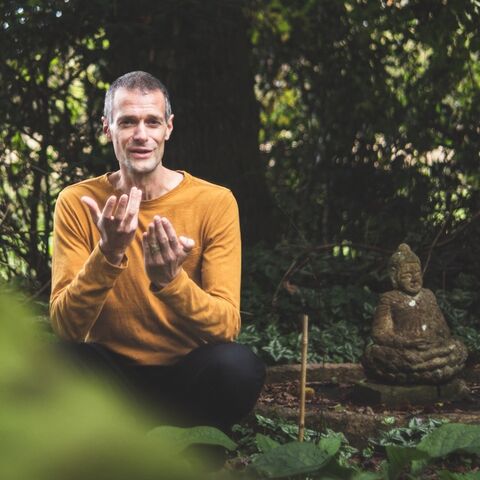
And today I have David Johnson with me.
David,
What's going on?
Great.
Everything's good and happy to be with you.
I've been here at Dhammasukha for,
Geez,
Around 13 years,
Lucky 13.
And before that,
I was practicing Vipassana.
I've met Mahasayada.
I've met Dipa Ma.
I took film of them back in the 70s.
I'm that old.
I know Manindra.
I know Joseph.
I know Jack.
I know the whole crew with the Vipassana.
Not so much in the Goenka world.
I'm not that familiar with it.
But I spent like 20 years going through the Vipassana system.
I was very impressed because there's a book about how to do it and what would happen at each stage.
And that really drew me in.
And I thought,
Well,
If this is being laid out,
Then I'll just follow the process and attain enlightenment.
Well,
I did that in terms of I did follow the process,
But what came out at the end of it,
It wasn't really what I was thinking.
I thought I had done something,
But later my mind was just as kind of crazy as before.
But in any case,
So I ran across Bhante Vimalaramsi,
And he's practicing something very different.
I went to his website.
He's got something like,
You know,
You have to smile.
You have to laugh.
And it's like,
Oh,
That's not serious at all.
And I thought,
Well,
There must be something.
Something's up with this.
So I got a hold of him.
I'd known him in his layperson days for a long time back in the 70s.
We were all doing Vipassana.
And he was always laughing.
So he did carry that trait forward,
But he'd become a monk.
And he was a monk 12 years,
And he went to Upandita,
All the Vipassana world and all that.
So I got a hold of him.
Somebody let me know that he was available.
So I got a hold of him,
And he wrote to me.
And I asked him,
What is all this stuff you're doing here?
This doesn't look like Buddhism to me.
And he wrote back,
Oh,
No,
I've given up the Mahasi style.
I've developed my own style,
But it's based on the suttas.
It matches.
And I call it tranquil wisdom insight meditation.
In other words,
Yoking Vipassana and Samatha together.
And not just Vipassana,
Not just concentration,
But putting them together.
Because that's in the suttas.
In Sutta 149,
It says,
Samatha,
Vipassana yoked together is what the Buddha taught,
Not either one of those.
He tried both of those.
But then he realized it was all together.
So in case I tried it,
And I wrote him some more emails,
And I got convinced I needed to check this thing out.
And I did this during work.
I was in the tech world in Silicon Valley.
And I got amazing results.
And I've been doing it ever since.
And did many retreats.
And now teach it.
So David and I have met,
I think it's been almost a half a year now.
And I was looking for meditation retreats for the two weeks before my fiancee came back to Missouri from Denmark.
And I was looking around for retreats.
And I was reminded of Dhammasuka.
And the first time I heard about it was at Mid-America Buddhist Association,
Which is a Buddhist monastery.
And kind of Southeast Missouri too.
And I just had to say,
It was almost like somebody brought it up there.
Like one of the first few times I went there,
And the whole mood and air changed for some reason.
And I won't go into,
Because I don't remember too much,
But I was like,
Okay,
This is really significant.
What's going on here?
Why is there this kind of response or reaction to this other Buddhist monastery not too far away?
And so I didn't think much about it,
Didn't investigate much about it.
But fast forward,
We met and we hung out and talked Dhamma.
There wasn't a retreat going on there or anything,
But I really enjoyed her time there.
And David's met some quite,
Like he said,
A long list of kind of well-known and advanced yogis and meditators too.
And being an accomplished one himself.
And so TWIM,
That's what I talk about.
For people that don't know all the things and references,
You drop people that aren't super deep into the world of meditation,
Especially more of the Theravada in Southeast Asia and things like this.
We can skip all that pretty much,
But let's talk about TWIM,
Because this is the thing that's being brought forth at Dhammasuka for the most part.
And there's now people in India,
There's online things,
There's quite,
I'd say,
The teachers involved in this are really,
Yeah.
Yeah,
There's Dhammasuka India,
There's Dhammasuka Indonesia,
And now there's Dhammasuka UK.
What else?
Things very slowly are growing.
What is TWIM though?
And then let's talk about the six hours that actually,
I should have known this and I should have looked more into the formal process and actually done this practice before,
But I haven't.
So if David could just kind of walk us through in more detail what this is.
What is TWIM?
What is the six hours?
Well,
Like I said,
It is bringing not a concentrated mind,
But a collected mind with insight.
And so you're doing concentration and you're doing insight both at the same time.
I mean,
How?
Yeah,
How?
So how do you do that?
So there's two objects that the Buddha taught.
Now,
The one that everybody thinks about is breath.
I mean,
Yeah,
Breath.
Anapanasati.
That is your classic meditation object.
Mindfulness of breathing,
Yes.
Yeah.
Well,
The Buddha taught it,
But what we found is he taught it a little bit differently than what is being used today.
So we'll come back to that.
So there's breath,
But there's the Brahma Viharas,
And the first of those Brahma Viharas is metta.
The other are metta,
Compassion,
Or karuna,
Mudita,
Sympathetic joy,
And equanimity.
So there's the Brahma Vihara practice.
You go through all those Brahma Viharas,
Or you can use breath and you just go through all of the jhanas through those.
And the Buddha taught that there was these eight jhanas,
Or you can condense it to four.
So how do you get your mind collected?
Well,
Your object,
And I'm going to use metta because I think we found that it's faster,
It's more fun,
It's pleasant,
And it's just easier to do because it's a pleasant feeling.
And as a side note,
I'll say that people say,
Well,
Metta isn't that very serious.
It's trying to just lighten the mood and it doesn't really lead anywhere.
Well,
That's absolutely not true.
Metta can lead you to nibbana.
It can lead you to awakening.
It's in the suttas.
It says it right there.
However,
You have to practice it right.
And what I think Bhante Vimala Ramsey did is he figured out how to do that.
So the process,
Though,
Is you bring up this feeling of loving kindness and you gently put your mind on it.
You smile.
This brings up an uplifted mind.
You think of something in the past that made you happy and you let your mind sink into that feeling.
You let yourself be there.
You do this,
Let's say you're doing a sitting and it's 30 minutes,
30 minutes minimum.
You sit,
You bring up the feeling of metta for 10 minutes to yourself.
Give yourself some metta.
May I be happy.
May I be free from suffering.
You can use some phrases,
But don't turn them into a mantra.
And then the next 20 minutes,
You change from yourself and you bring up a friend,
A spiritual friend,
A kalyanamita.
In other words,
Somebody that is defined by they're the same sex,
Or at least somebody is just,
You don't have any,
You know,
Lustful thoughts or anything like that.
Somebody that's a friend,
You just sit down and have coffee or tea with them.
Somebody,
When you meet them,
You smile,
You go,
Hey,
I,
You know,
It's great to see you again.
They're alive.
And that's it.
So you bring up this friend who you've picked and you don't deviate once you pick them and you radiate loving kindness to them.
You can put them in your heart and hold them like a baby and just stay with seeing in your mind that they are loving and kind and they're smiling.
They're happy.
Okay.
Well,
You can do this for 20 minutes and then you've got 30 minutes done,
But there's a key here.
And that's as Josh talked about six hours.
The Buddha said there's a very special way to eliminate these mind wanderings,
These hindrances.
Now in concentration,
Your object is to just clamp down on that object and don't let it go.
With TWIM,
Your object is to see that object and to see the mind let go in and let it go,
But then release it and just relax your attention,
Smile again,
And then bring up that feeling of loving kindness again.
So it's not a suppression.
It is allowing the mind to do what it does,
But don't chase it.
Don't follow it.
Just accept that it's there.
Oh,
I have some anger or I'm thinking about lunch.
Those five hindrances,
You know,
Sensual desire,
Aversion,
Sloth and torpor,
Doubt,
Restlessness.
As those things come up,
You release,
Release your attention to them.
You relax just for a moment.
Just give it a second and then re-smile and bring up that feeling and go back to the spiritual friend holding them in your heart.
Now,
If you do this in a very consistent,
Gentle way,
Your mind will very quickly come into a collected state.
And that collected state is called jhana,
And that's referred to in the Anapada Sutta.
And in the Anapada Sutta,
It says that you'll go through eight different jhanas.
Actually,
It's four,
And then there's four bases of the fourth jhana.
And there are certain things will come up as your mind enters in those jhanas.
And don't think that this is really hard to do.
When you use the six Rs,
Releasing and relaxing,
Instead of pushing it away,
You go right in.
You're accepting everything.
We want you to be happy,
Content,
Lots of sleep,
Plenty of food.
This is not an ascetic practice.
The Buddha gave up asceticism,
And he gave up pure concentration,
And he came to a middle way.
And that middle way is making sure that you have an object.
You can't do this without an object.
You have to have something that you can see the mind moving from.
If you just sit in this awareness and just watch the mind,
The mind's going to dull out.
It doesn't have anything to do.
That is a good step to accept.
I mean,
Some of the people out there will talk about just accept what's happening and let it relax.
And that's good to a certain point.
But the next thing,
Though,
Is you have to figure out where you actually are and anchor yourself to an object.
So then you bring up your six Rs.
And where does six Rs come from?
Well,
In the Anapanasati Sutta,
Amazingly enough,
The key is right there.
And it's called Tranquilize the Bodily Formations.
And it's also,
Again,
In Satipatthana Sutta,
Tranquilize the Bodily Formations.
It says that he breathes in,
He knows that he breathes in.
He knows that he breathes out.
He knows that he breathes in.
He knows he is sitting.
And then later it says he knows when he is walking.
He knows when he's going to the bathroom.
He knows when he's eating.
This is simply knowing.
It's not concentrating on anything,
But knowing the processes.
When the mind wanders,
You tranquilize.
What does tranquilize mean?
It means to release it.
Relax.
Just let it go.
So when that mind comes up to wander,
Release,
Relax.
It's right in the Sutta.
Know when your breath is coming in and out.
If it goes and disappears,
Then tranquilize that bodily formation.
Now,
It's not just the breath,
The bodily formations,
But it's also in the Anapanasati Sutta.
It says tranquilize the mental formations.
Is that thoughts?
Yeah,
It's thoughts.
So let all of these things go.
Come back to your object and continue.
So stay with your metta and watch the mind moving from one thing to another.
As it goes away,
Tranquilize and come back.
And that's another thing is,
What is the definition of mindfulness?
Mindfulness is watching the mind move from one thing to another.
But we have to have an anchor.
So here's the mind.
Mindfulness,
The way it's taught today,
Is just watching this object and forgetting everything else.
And the mind is focused on this.
Well,
With the mindfulness in the sense that it's taught in the Satipatthana Sutta,
You watch the mind moving from here and going over here and going over here.
But you always release and relax and let it go.
And you come back.
This is like this story about the monkey who you're trying to train your monkey mind.
And it's like a monkey.
And how do you train a monkey?
You tie him to a post.
And that monkey tries to go away and his string keeps him from coming back.
So we don't want to.
.
.
Our string is that releasing and relaxing.
But we always come back.
And pretty soon the mind just,
It's moving around,
Moving around,
And then it becomes collected.
It doesn't want to go anywhere.
And that's the true state of a non-craving state,
Which is jhana.
And joy will arise when that happens.
And happiness arises.
And all the rest of it that you can find out.
So that's one.
Yeah.
Great,
David.
Thank you for expanding upon that.
A few things I'd like to ask you before we jump into jhana,
Which as you know,
Can be quite controversial in these topics.
And before I even get there,
How important do you think holding onto that image is?
Because I've heard metta taught so many different ways.
And some people claim that you have to have a really strong object of the person you're practicing metta for the entire time.
Some people just the feelings enough.
Some people say that the phrases,
But then some people say,
Well,
The phrases are just to reinforce the image.
So as far as that goes,
And then as far as the practice goes,
The hardest thing I think,
At least the most challenging thing for me at this time,
Is the recognition part.
The recognizing when the mind has gone away.
Because a lot of the times there is just no,
It just wake up out of the mind wandering.
And that's only when it recognizes.
Now,
If I sit and have the intention to actually just watch the mind as things arise in consciousness and pass away,
Or it jumps from one thing to the other,
Like a monkey mind,
Then it's easier for me to pay attention.
But even that,
You know,
Mindfulness itself is a kind of a conditional state.
Sometimes it seems like there's more mindfulness present.
Sometimes they're not.
Sometime I'm able to catch the mind wandering.
Sometimes I've just completely lost in thought for a while.
And then I wake up to,
Oh,
The mind's been wandering.
Oh my gosh.
And it just doesn't seem like I have anything to do with it.
It just happens.
And so it seems to be a variation.
And there's so many definitions of mindfulness.
I like yours,
But I like some other ones.
There's a definition where the ability to bear something in mind.
So if you linger over one particular object and allow it to be in mind,
That's another definition.
Another definition,
I think,
Is knowing what's happening in the moment as it's happening.
But whatever definition we want to use,
They're all kind of maybe different facets.
So again,
The image on the Metta,
The importance of that,
Holding an image in the mind,
And then the waking up to the wandering mind or recognizing that the mind has wandered.
Well,
The image is,
Again,
The Buddha said,
You can't have one or the other.
It's the middle way.
You have to have both.
You always have to have an object.
Now,
You can't bring up a feeling of loving kindness without somebody having it go to or yourself.
You can't bring up something with nothing there to base it on.
I mean,
How strong does the image in the mind have to be?
Right.
So you bring up that object,
Say,
Of your friend.
Well,
At first,
Your mind's 100% on that object.
There's no feeling yet.
So as you smile in your mind to your friend and you bring up this feeling and you smile,
Then there's some feeling that starts to come.
So your object is out here,
Or your attention's out here on your friend,
And now it's starting to come in here to the feeling.
Now,
The feeling can become 80% to 90% of where your attention should be.
And the friend is still there.
Don't let go of the friend.
He's just kind of there.
He's hanging out.
No need to visualize full color like this Buddha right here.
We don't need to have that.
Just kind of,
You know,
As mindfulness says,
Know that the friend is there.
You don't have to focus on each individual piece.
So the friend is generating that feeling.
So the feeling should be almost 80% to 90% of what's there when things are going well.
And that feeling will start to develop around in the heart.
Now,
This feeling's very specific.
People teaching metta are not,
Most of them are not,
They're saying,
Well,
Have a nice feeling.
But actually,
This is your object of meditation.
So notice the feeling.
Put your mind on the feeling.
Let go of,
If the feeling's there,
Let go of the phrases.
There's no need for the phrases.
There's not much need for the friend himself or yourself in it.
Just let your mind sit with that feeling.
Because the way this meditation works is you stay with the feeling and the feeling will do all the work for you.
It will change.
It will go up into the head.
And it will change into karuna and compassion.
And it will change into mudita,
Into this appreciative joy,
A sympathetic joy.
And then it changes and it goes very deep and it goes into equanimity.
All you need to do is watch the feeling,
6R,
As your mind wanders off and then come back to that.
And as far as mindfulness,
I think I'm talking about a mindfulness that's pretty specific.
It's just,
It's not focusing on the object,
But focusing on your mind that's focusing on the object,
Focusing on what's happening.
Now,
The way the meditation works is that you go through these brahma viharas,
But you're not done yet.
You're not done yet.
So what happens is the mind becomes so calm.
Now there's only a quiet mind and the idea or the feeling of equanimity just disappears.
Now we've reached insight.
We've reached full insight.
We're leaving the samatha behind because now the mind is powerfully quiet.
And now all we're doing is we're watching just things arise and pass away and we're 6R-ing and we're releasing those things.
And we're getting to a point where everything goes completely,
Completely quiet and there's no movement at all.
There's some people report there's like a black screen.
It's like watching a movie and there's nothing playing,
But you're completely entranced.
The mind doesn't wander at all.
And if it wanders,
Let it go.
Don't hold it there because that will actually just,
That will add tension.
You hold anything.
That's the problem with concentrations.
You hold something,
You're holding it with tension and tightness.
You can't do that.
You have to be relaxed and let it be there.
Now,
I'm not sure if I answered the last question or not,
But- Well,
Kind of.
It is.
And because when you said equanimity dies out,
I thought that that was one of the jhana factors,
Even in fourth jhana.
And I don't know if it's present there in the arupa jhanas or not.
It's present in all the jhanas to certain degrees.
The fourth jhana is where there's really only equanimity present.
And that's the coloring of the jhana.
But then later,
That equanimity,
It just disappears as well.
Now,
This is very true for metta.
If you're following the breath,
The coloring,
The metta,
The loving-kindness,
The equanimity,
These kinds of things are not there.
You're just with the raw jhana factors,
Which are joy,
There's applied,
And yeah,
All of those things.
The state of tension.
And there's none of the happy feelings that you're gonna get from metta.
They don't color the mind.
But the jhana factors is still there.
The jhana is still happening.
And you still arrive with breath.
You arrive at the same place.
You arrive at a quiet mind.
Okay.
So yeah,
The thing was tips for the wandering mind and waking up and knowing,
Because sometimes the mind will just wander off and you can't really see that it wanders off,
Right?
And so then we just have to wait or what do you recommend?
Well,
You become aware.
You go,
Oh,
All of a sudden,
You come out of the wandering mind,
Which you will eventually.
And as you meditate,
You come out very much faster and much faster.
But for example,
You can use this,
You're at the grocery store and you're standing in line and there's a line and your mind starts to wander.
What am I gonna do next?
Where am I gonna go?
And then as soon as you notice that the mind is off,
Then you could recognize that and release that.
So it's recognize,
Release,
Relax,
Relax your desire to keep thinking about that and re-smile.
You can smile in the grocery line and uplift and bring back an object of love and kindness.
You can be radiating loving kindness to the people that are there.
So you can use this as a all day,
All the time type of process in that sense.
Cool.
And did Bonte detail how he came up with this?
Did he ever write about the inspiration to the process and how it,
Did he get it all as one download or was he experimenting a lot and refined it?
He found it in the suttas.
And what happened was he wasn't really happy,
Left Burma.
He was studying with a number of the most famous masters of the Vipassana world.
And he went to Malaysia and he'd been there before and he knew a monk there,
Kesri Dhammananda,
Who invited him to come and stay at his monastery.
And some people said,
Oh,
Bonte,
You know Vipassana so well.
They say that you know it and you can teach it now.
And he says,
Well,
I don't want to teach it anymore.
I will teach metta.
So he tried metta first.
And there was a point where there wasn't really a lot of progress.
So he started,
He met a guy named Punaji,
Venerable Punaji.
And Punaji says,
Forget the Vasudhimagga,
Forget all the later commentaries about the Buddha and just go back to the Buddhist words,
To the Buddhist teachings.
So then he found the Anapada Sutta,
The Sutta about the Jhanas.
And he found,
He went back and reread the Satipatthana and the Anapanasati Suttas.
And he found this tranquilized the bodily formation and tranquilized the mental formation.
And he was like,
Wait,
Nobody's ever talked about this.
So he tried it.
He would walk up and down the streets,
The Malaysian streets.
And every time his mind would go into thought,
Which of course it will,
You have a thought and then you go,
Yeah,
Oh,
Well,
What about this?
And pretty soon you're having a conversation and you're debating this back.
Then he knows,
Okay,
Let me tranquilize.
What does that mean?
Let it go.
Just stop thinking about it.
It's like you're walking,
Stop.
And your momentum is such that you're going forward still,
Relax.
So he tried this,
His mind stopped,
He relaxed.
He continued forward,
He started thinking again,
He stopped,
Relaxed.
He noticed there's this quiet space there and the mind wasn't moving at all.
And he hadn't stopped it on purpose.
And so he thought,
Well,
Here,
There's something going on here.
And then he got the,
And then there's the famous story of the bowl of mangoes that he got.
And he says,
Well,
Let me try eating some mangoes in a plane,
This system.
And so he'd eat some mangoes and his mind would wander.
He'd go,
Oh,
Release,
Relax.
Or he'd think,
Oh,
That mango's so good.
I want to get some more mangoes.
So he'd have another bite.
Well,
Pretty soon he was onto his second bowl of mangoes and he was understanding,
Ah,
Release,
Relax.
So what does this release,
Relax do?
It just brings you into the present moment.
And so he realized all you have to do to be in the present moment is to actively let go of the things that are taking you away from the present moment.
You can't go and find the secret,
Uh,
Satori,
The secret state of enlightenment that is going to just zap you.
And all of a sudden you're going to become fully enlightened.
You have,
Your mind is completely pure.
You have no craving at all.
You have to let go of the craving a little bit at a time.
But if you do that and you change your mind from thinking,
Thinking,
Thinking to turn it around to release,
Relax,
It's very fast.
You can let go of things in that process very quickly.
Thanks for sharing that.
Now I want to look at some of the other things in the suttas and how this stacks up with this,
Because,
You know,
The historical Buddha talked about guarding the sense doors.
So when you think about guarding,
You know,
That is,
That sounds like there's a lot of,
Um,
You know,
Effort involved and it's kind of framed in a,
You know,
Uh,
A really,
You know,
Heedful,
Uh,
You know,
Don't let things pass kind of thing.
And then you,
On the other end,
You get this,
Oh,
Just allow everything to come in.
You know,
If snakes are in your wanting to come in,
Just open your door,
Allow the snakes come in and they can curl up around you.
You know,
You won't have very many mice in the house and you know,
The neighbors might don't feed them,
Don't feed them and don't,
Don't,
Uh,
Don't pay attention to them.
So that's,
That's the key here.
But David,
They're living with you.
Are they ever going to go away?
So eventually they'll just,
That's a good point.
So,
So there's this notion of guarding the sense doors,
You know,
Not,
Um,
Going after sense indulgences all the time and,
You know,
Some renunciation.
Okay.
So,
So let's,
Let's look at how we balance these things.
Yeah.
So,
So the Buddha actually in Sutta number two,
The Majjhima Nikaya number two,
Um,
It talks about the hindrances,
The distractions,
And it defines all of the distractions very,
Very carefully.
And it says,
Well,
How do you eliminate these distractions?
Well,
You abandon them,
You remove them,
Uh,
You eliminate them,
But there's only one way that you need to do this.
And it's all the same is you six are it.
You notice it is there.
You don't keep your attention on it,
Release it and let it go.
Come back to the moment,
Present moment.
You're,
You're,
You're guarding in the sense of your mindfulness.
Part of mindfulness is remembering to come back to the present and practice and do what it is that you're trying to do.
When the mind wanders,
You remember when you recognize you remember,
Oh,
I can't,
I don't want to continue this release.
You remember to release.
So every moment when you,
Uh,
Come back to the moment,
You're remembering to let go.
So,
Uh,
Guarding all of these words.
Now keep in mind,
Uh,
The Buddha,
He spoke in Pali and he created words for seeing things in the mind that the Western,
Western science has no clues about what they are.
The research here is like,
You know,
Kindergarten as far as what's going on in the mind.
Uh,
But the Buddha created words,
Uh,
For all of these things.
We don't have any words for them.
So we're trying to put words in,
Uh,
That we can like mindfulness is sati.
Exactly.
And one of the definitions is remembering for sati.
That's how another translation is remembering,
But most of the people,
You know,
Uh,
Uh,
The English translation was done in the 18,
Around 1850 or so by Rice Davies and some others.
And they,
You know,
They didn't know what mindfulness was.
They didn't practice it.
So they thought,
Well,
It sounds like,
You know,
Keeping your mind on an object.
So they said,
Well,
What's the word that's close to that mindfulness.
Okay.
We're going to be mindful.
So everybody picked that up because this is where it came.
This is where our understanding of mindfulness came from.
It came from those English translators.
Yeah.
And you look at the definition of mindfulness or the etymology of mindfulness.
It doesn't really break down the way that the best word for it.
I've,
I've heard somebody translate it as body fullness,
Which I think is a really interesting way to,
To,
To,
To put it to,
I mean,
It's a made up word,
But yeah.
So Pali is another huge thing.
I mean,
I've gone over and over a lot of this from my understanding.
A lot of people say the Buddha didn't actually speak Pali.
It was,
That was the language that was invented to write it down,
But he spoke something very similar.
Procrete,
Some kind of Procrete or something.
I don't know exactly,
But.
The dialect of Magadha,
Which Magadha was where he was and they had a special dialect,
But,
And then it was,
Yeah.
I mean,
There's,
We call it Pali.
It is such a beautiful language to listen to,
But it's also very complex,
Very exacting,
And yet it sounds very pleasant to the ear to hear as well.
Now,
The next thing I wanted to get into here,
I guess,
With this is,
Is the commentaries.
Okay.
So we've get I've,
I've heard so much on the,
This is another huge polarizing thing.
I think,
I mean,
You have the,
I guess more people in Burma will say that the commentaries in the Abhidhamma are very important to understanding the suttas themselves.
And well,
We don't even have English translations of the commentaries.
Then there's sub commentaries.
So for me to write those off right away,
I can't,
Because there's not even English translations.
And like you mentioned,
Even the Pali themselves,
The Pali itself,
We know we have various translations,
Some are more helpful,
But Pali,
From my understanding,
Which is very little,
It is so rich and so nuanced that translating it word for word really doesn't do it justice a lot.
The context,
You know,
The,
The,
The,
The,
The subtle things going in there,
Our lack of kind of mind power and wisdom and understanding in the current age compared to the time of the Buddha.
So this is another thing,
But then we have this whole other camp,
Like in maybe the,
The Thai forest tradition,
Which I'm more familiar with that.
They don't put it hardly any emphasis on the Abhidhamma,
You know,
And they don't do the,
The,
The Vasudhi Magga,
The commentaries aren't,
You know,
They're kind of almost written off wholesale.
I shouldn't say that entirely.
So these are quite polarizing things.
And,
And I actually can see pros and cons of each approach,
You know?
So I kind of know your feelings on this,
But do you want to add any,
Anything to this?
Because we don't even have the English translations yet for the commentaries and sub-commentaries.
Well,
The commentaries,
Now realize the Vasudhi Magga is a commentary.
Anything written after the Buddha died about the Buddha is a commentary.
Sure.
Bhante Vimaramsi explained that Vasudhi Magga is a commentary,
But there are sub-commentaries,
Which are commentaries written by monks from that time.
But I think there's a commentary for like every single Sutta almost,
Isn't there?
Yeah,
I believe so.
Yeah.
But we,
We don't have those translations.
No,
We don't.
Some of them are buried in a cave in Sri Lanka where they're very closely guarded and they're on papyrus sheets,
Just like you see in Egypt.
But they're untranslated and they're not going to let anybody in there to get them.
In Burma,
They have a lot of things that are written down and,
But those are,
They're in Burmese and then they'd have to be translated.
So there's a lot of issues with translations.
So those commentaries aren't even allowed out of that?
I mean,
There's not even a,
What is it,
Single ease version of them public?
No,
Because it's like a museum.
I see.
Okay.
It's like,
Hey,
I need to take a look at that Egyptian artifact and,
Oh no,
You're not touching it.
And so unfortunately they're treating it like an artifact and really it needs to be treated like a,
Like a living document that they can translate.
Belongs in a museum.
No,
We have enough.
We have,
We have five huge books,
The Majjhima Nikaya,
The Digga Nikaya,
The Angutra Nikaya,
The Samyutta Nikaya,
Several thousand pages a piece.
There's plenty there for,
For us to get our,
Get our heads around.
Cool.
So yeah.
And,
And,
And the,
And the commentary,
The major commentary that most practices are built on these days is Vasudhimaka or the path of purification.
And he outlines the jhana practice.
He outlines the stages of insight that are in there in the Vipassana practice.
And there's things that are in there and you'll say,
Oh,
Well,
It's all the same.
No,
It's not.
Definitely is not the same.
It will definitely,
It will not match the suttas.
So if you have,
The Buddha said,
If you,
If you are practicing something that doesn't match what I'm teaching you,
Even though it sounds like it does,
But it really doesn't,
Then it's not what I taught.
And don't follow that because it's like a cake recipe.
If you add in too much milk,
Too many eggs,
Too many,
It's not going to rise.
And that state of collectiveness will not develop in the way that it needs to develop.
What can happen with the,
The meditation from the commentaries is it's developed,
It's based on concentration and concentration is going to take you to a different place.
It's,
It's a place that's the mind clamps down and there's lots of joy and there's lots of happiness,
But it's very impermanent and it doesn't change your mind.
When you are able to see and let go of hindrances as they come up,
You're purifying your mind.
And eventually there's a point where those hindrances just stop.
They actually stop coming up because you've seen with insight that they are unpleasant and they are impermanent and that there is no self there.
So you really are seeing the,
The,
The real story here,
Which is that everything is impermanent and that because it's coming and going,
It's dukkha,
It's,
It's suffering.
And if,
If it's coming and going,
There can't be any essence,
There can't be any self there.
And so when you see this,
This is the whole point of the jhanas and to watch the mind is to see the nature of reality itself is unsatisfactory.
Even pleasant feeling is unsatisfactory.
Why?
Because when you get your bowl of ice cream and you eat it and you go,
Oh,
That was really good,
But then it's gone.
Oh,
I better take another one.
Oh,
It's gone again.
Well,
You go to your second bowl of ice cream and okay,
But it's not as good as the first bowl and you're on to your third bowl of ice cream and now you're starting to get a stomach ache.
So not only is pleasant feeling leads to unpleasant because it disappears,
But unpleasant feeling leads to a stomach that's upset.
So pleasant and unpleasant lead to suffering.
And so to look at the entire samsara,
To look at everything in the mind and everything is perceived from your mind,
It's all constantly moving around and it's not staying in any one place and therefore it is dukkha or it is suffering.
And when that happens,
The mind sees that with insight and it lets go of that.
And it goes into a place of complete quiet and cessation.
And then what arises as a result of this is the nibbana element.
This is called an element in the suttas.
Just like there's air and there's water,
The nibbana element arises.
When the nibbana element arises,
It wipes out these hindrances.
There's like four different levels of this.
But when this happens,
All those little things that are making your mind crazy,
All the neurosis and the negative thoughts and all this starts to get eliminated.
And that's the whole point of the meditation.
The Buddha said there's the first noble truth that there's suffering.
This is what I'm talking about.
There's suffering.
Second noble truth is the origin of suffering.
It's all of this craving.
I want this.
I don't want that.
I'm sleepy.
I'm restless.
It's like this craziness in the mind.
So that's the craving.
And the third noble truth is the truth of cessation,
The truth of letting go of craving.
And how do you get there?
Well,
That's the fourth noble truth,
The Eightfold Path.
And that's what we're talking about right now.
But the Buddha identified things as suffering.
But it isn't that it's all suffering.
It's that when our minds are full of craving,
It's suffering.
When you can eliminate the craving in your mind,
Your mind is happy.
It's content.
It's at peace.
And that's the point of this whole meditation is to come to that level of peace.
You know,
Some people say,
Well,
Awakening is seeing cosmic rays and cosmic this and that.
Well,
You can see all of that stuff in meditation,
But it's impermanent also.
What you want is you look at the Buddha and there's always this little smile like,
Yeah,
I got it.
Everything's chill.
Everything's good.
And that's where we're trying to get to.
Yes.
And from my understanding is that the Abhidhamma and the Vasudhi Manga,
And I don't know,
For me to write that off or to completely go all in on that,
Either extreme there,
I would have to practice both because.
.
.
Right.
Okay.
So,
Let's talk a little bit about.
.
.
So,
The Abhidhamma is another set of books.
I was translating.
.
.
It's the third basket in the Pali Canon.
The third basket,
Yeah.
You're talking about suttas.
And then the other one is the Vinaya or Vinaya,
Which are the monk's monastics code.
That's right.
These are the three baskets.
Yeah.
But scholars,
And I'm not talking some conspiracy theories,
But many scholars say the Abhidhamma didn't exist during the Buddha's time.
It was developed in the third century.
Right.
It was Sariputta's students.
.
.
During the time of King Ashoka.
Yeah.
And their story is the Buddha taught his mother the Abhidhamma when she was in heaven.
Well,
The question is why.
His mother died seven days after he was born and she went into the heavenly realm.
And so,
He shot up and taught her the Abhidhamma.
But see,
In the suttas themselves,
Which have been memorized for 2,
600 years now in Burma by monks,
There's no mention of any Abhidhamma.
So,
How can this possibly be?
The second thing is the Abhidhamma,
Ideas in the Abhidhamma do not match the suttas.
For example,
The idea that the path knowledge is followed by the fruition knowledge,
The knowledge of Nibbana.
The suttas say,
No,
It's not.
I mean,
This gets into the weeds here.
But the Abhidhamma defines all these states.
The Buddha didn't care about all definition of the states.
Just let it go.
Six are.
It doesn't matter.
You don't have to break down everything into every single little item.
It's like you have some time in your hands,
Go and study it,
Look at all.
It doesn't matter.
That's why when I was researching the Theravada tradition,
I found that there was 18 sects of the Theravada that had grown out after the Buddha.
Now,
One of those sects is actually called Suttavada.
And this sect,
There's three things that this sect was known for.
And one of them,
The most important one,
Is the fact that only the suttas and the Vinaya were used as the basis of what the Buddha taught.
Now,
The other thing was that there is a self,
But it's not permanent,
Called a Pujala.
That's some idea.
And the other thing was that you can have two Buddhas in one eon.
Anyway,
Those two are,
You know,
That's fine.
Suttavada,
Meaning we don't look at the Abhidhamma.
We only look at the suttas of the Buddha.
So that's why we're trying to stay with the suttas and with the Vinaya.
And the Vinaya is great.
I've read the Vinaya,
And it's very interesting.
It has many stories of the Buddha's time and how he developed all these rules.
And believe me,
When they translated the Vinaya,
They had to actually leave out stuff because the monks really got into really nasty stuff.
You know,
They were letting people in much later on,
And these people were not pure.
And they just,
It was like a bunch of naughty kids trying to get away with things.
So rules had to come into existence,
Probably far more than we needed.
But in any case,
They did.
But the Vinaya highlights how all those rules happened.
And the end result of all these rules is basically you're a polite,
Educated,
Scholarly person living your life in a very nice way.
And that is the definition of somebody who is free of craving and enlightened.
That's the arhat,
If you will.
You would naturally follow all these rules.
So that's why the Abhidhamma is put aside over here.
You can go read it,
But you might get a headache after reading all this stuff.
I used to read it all the time,
Thinking it was very cool because all these mental states and Chedasikas and the 52 states.
And in the end,
It didn't help me at all.
I still was full of all those things.
I definitely see this thing.
I mean,
I definitely see your points,
And they're completely valid.
And I think what you're talking about here is the accessibility you're talking about.
And we're meeting people where they are and what's effective and the most practical.
And I totally get that.
I've been looking and spending time with people that have gone into Vasudhimanga and Abhidhamma and this type of thing based in Burma under the Pahak tradition.
And I'm also impressed by them because they start off with a really deep concentration that's really specific and based in the mind.
So I see strengths in this,
And there's a whole step-by-step process.
And some people,
I think,
Have more of a disposition to benefit more.
And yes,
It's super detailed.
From what I understand,
The Abhidhamma was created or said after the Buddhist time and by disciples,
Completed by disciples of Sariputta.
It is very granular,
Very detailed,
Very specific.
And most people are so far away from this level of detail and attainment that it's really not practical for a lot of people to practice.
So for me personally,
I just look at these things and I weigh them.
I see the pros and cons to all this stuff.
And it really depends on,
I think,
Who's practicing and what interests are.
I mean,
The jury's still out on me.
Wow.
So more controversial stuff here is jhanas to the point that I hear some people have thrown this term around called the jhana wars.
And I don't,
I mean,
It's kind of maybe tongue in cheek because you couldn't get anything further from war from the true Buddhist teachings that I find.
The Buddha actually tried to intervene on a couple of wars sometimes,
Even unsuccessful.
And some people think that might've been the weight of their karma,
Just had to play out some way.
Hopefully it's not that kind of war.
Right.
Exactly.
I mean,
Yeah,
Of course not.
But the thing is I've even on my own,
I stopped talking about it because it's that controversial.
However,
I will talk to people like you to get feedback and to learn about this until I feel more comfortable talking about it.
But the one kind of commonality I think I've found here amongst these different camps is that it's the absence of the five hindrances and the five jhanic factors.
So if there's an absence of the five hindrances and then the presence of the five jhanic factors,
Then it constitutes this jhana,
No matter kind of what system or if it's what they call light jhana or some people call yours,
I think,
Sutta jhana.
And then they talk about the Vasudhimagga jhana,
Or maybe more of a body-based jhana versus a mind-based jhana.
And then nimitta is another really controversial term when it comes to jhanas.
So what's your take on all this?
Because I can see it both.
Well,
We call the jhana that we're creating as an aware jhana because there's two types of jhana.
There's the concentration absorption jhana,
Where you are actually just letting go or you're suppressing the hindrances.
And then there's the aware jhana,
Where you're aware of hindrances arising and you let them go.
And that's what I'm talking about here.
And there's really,
There's only two types.
And you can name off all the people that teach all these jhanas.
And they're all really based on the Vasudhimagga because it gives you the instructions on how to do it.
But let's go back to what,
You know,
It's good to go back and find out what the Buddhist said about this.
Because,
You know,
We have all our ideas,
But look,
Let's go back and study what he found out.
So when he left the palace,
He left his wife and young son.
And he says,
I'm done with this palace life.
I see the ascetic life as the way to go or the.
.
.
Renunciate,
Seeker after truth.
The renunciate,
The mendicant,
The monk.
I want to go out and find out if there is,
Is there more to this world?
You know,
Now I've seen suffering.
I saw old age.
I saw sickness.
I saw death outside the palace.
And now I'm ready to just go find out.
So the first place he went,
This is in Sutta 36,
Is the Mahasacca Sutta.
It's a story of his journey.
So the first guy he talks to is Alara Kalama.
He's a jhana teacher.
He's a,
This is,
But this is of course yogic concentration.
This is the same as what we're having,
Uh,
Is being taught today.
He taught up to the seventh jhana of nothingness.
Okay.
The Buddha,
Uh,
Learned that.
He did that.
And Alara Kalama says,
Wow,
You're a great student.
Why don't you stay with me and teach it?
The Buddha said,
No,
There's got to be something else.
You know,
That just doesn't do it.
So he went and found another guy,
Uttarama Putta.
He taught up to the highest state of jhana that you can get to,
Which is the neither perception of the eighth jhana.
And so the Buddha did that,
But he,
Again,
He said,
No,
This is not it.
And Uttarama Putta says,
This is nothing else.
This is it.
And of course you have a nice state of mind and you're very happy,
But it just wears off.
And so the Buddha said,
No,
I'm going to keep looking.
So he,
He actually went and spent six years with ascetic practices of,
You know,
Standing on one leg,
Of controlling the breath,
All the,
All of what the yogas,
Yogic,
Uh.
Starving oneself.
Yeah.
Yeah.
Yeah.
No.
And,
You know,
Beating himself up and,
And,
You know,
All of that kind of stuff.
And he thought he can control the mind by controlling the body and,
And,
Uh,
Get past pain by enduring pain.
Well,
It turned out that really wasn't it.
He was down to one piece of one grain of rice a day and he was near death.
And the story was the Deva.
So the heavenly beings saw that he was going to die.
And this was the Buddha.
They said,
They came to him and said,
Don't do this anymore.
We're,
We're going to infuse ambrosia,
Heavenly food into you.
If you keep doing this,
He said,
Okay,
I have no choice.
I can't keep going.
I either die.
I won't die because they're going to keep me alive.
So he stopped.
And then Sujata,
This woman comes along with a bowl of,
Of kheer,
Of rice,
Of sweet rice and offers it to,
He,
He eats it.
And he feels all of a sudden so much better.
And his mind is,
Is,
Is better.
His body is starting to recover.
And this is near Bodh Gaya.
And so he,
He goes into this area,
Which is now Bodh Gaya,
And he sits down at a tree.
And he says,
I don't know what to do here.
I've done everything that I can do.
Concentration.
And I've done asceticism.
And hedonism too,
Right?
From this,
He grew up in a palace.
So he probably did hedonism too,
Before he left.
Oh my God.
Yeah.
He was well versed in hedonism.
Yeah.
Yeah,
For sure.
I mean,
He had a winter palace,
A summer palace.
He had all the dancing girls you could ever want and,
And all of that.
So he sat underneath the tree and he thought,
What am I going to do?
So then he really,
He remembered a time when his father had left him there.
And I,
I don't know,
Maybe it was like 10 years old or something.
He'd left him sitting while the father went to the plowshare festival and he'd left him sitting on this couch.
And at that time,
The Buddha was just sitting there.
I mean,
Siddhartha is a child.
And his mind got into this very tranquil,
Aware state.
It just naturally just kind of came down to this state.
And it turned out that it was very likely it was a jhana.
But,
You know,
People said,
Well,
That's fine.
But,
You know,
He's just a kid.
And,
And of course he lost that and,
And he forgot about it and just went on to live his life.
Well,
He's sitting underneath the tree and he remembers this.
And he says,
How did I do that?
And how did I,
He didn't get there by doing all these practices.
He got there by just letting his mind relax and letting it come to stillness on its own.
So he tried that.
He immediately got into the first jhana,
Second,
Third,
Fourth jhana.
And then the other part of this,
It wasn't just all jhanas.
He,
He actually became the Buddha by tivija.
This is the triple knowledge.
First of all,
The,
The first knowledge,
Once you're into the jhanas,
You can go back and remember your past lives.
It's actually a practice that we can teach you.
It's hard to do for most people.
Some people really,
They take to it.
You remember your past lives and you see that you're,
This is not just your only one lifetime,
That there's a lot more to go here,
That there's a lot of things you've been in the past and you keep being reborn and reborn and reborn.
And yet happiness never,
It's always elusive.
And then the second knowledge is this,
Your mind actually starts to visit other realms and it sees in the heaven,
There's heavens and there's hell realms and there's the human realm.
There's all these realms and you can see beings in other realms.
And when you put your mind to,
To seeing how they got there,
You immediately know with intuition.
Now we've taught this to several people and it,
It does work like this.
You are in this realm and you look at somebody and you have like a download as to,
You see their past life,
What,
What happened to get there.
So then the Buddha had this ability and he could,
He,
Of course he was the Buddha,
He had worked on this for lifetimes and lifetimes.
And he saw that karma was inevitable,
That there was no getting out of this.
You could do all the good things that you wanted to,
But if you didn't let go of it,
Eventually you'd slip up and you go right back into the soup.
And the realms,
There's far more lower realms than there's higher realms because the higher realms,
People are good,
They're following their precepts.
Lower realms,
They're negative states.
There's a lot of,
You know,
A lot of beings in that state.
So he realized he'd be stuck there.
And then because of that,
His mind attained Nibbana.
That's the third knowledge.
He let go of samsara completely and he became the Buddha.
He became fully enlightened right there.
He just let go of the whole thing.
And so that's how the Buddha attained enlightenment.
Yes.
And I'll just throw a couple of things in there too,
That when he was asked to teach by Brahma Sampati,
He said,
No,
This is too subtle,
Too profound,
That there's too many beings with too much dust in their eyes,
That they're not going to get it.
And what that points to is that,
But they said,
No,
You know,
There,
There are some out there,
But,
And then there's a handful of leaves too.
He knew all this other knowledge out there,
But he only taught suffering the end of his suffering.
Where did he,
How did he find out all this other vast knowledge?
My point with the Abhidhamma is that I did used to write it off a little bit more in Vasudhi Magga,
But it just seems like our current society compared to them is so dumbed down,
You know,
That this intricate thing,
To me,
I just don't write it off right away.
There are some really advanced yogis who can see all this vast detail,
You know,
And I'm so glad you mentioned these,
These,
I guess,
Supramundane powers,
But some would,
Because,
You know,
This gets in the West,
It gets relegated to comic books or,
You know,
Crazy people.
And so it's just like,
Or religious.
So it has to be studied under religion or in the context of comic books,
Or you're a crazy person.
So I'm glad this is brought about because there's some kind of taboo where science dictates,
You know,
What's possible and what's not possible in the world.
And if they don't have a device and can't measure it,
Well,
Then it's either it doesn't exist or it's all,
Or it's not relevant or it's off the table for investigation.
So I think these are really important things too.
And the other thing that came up was the Buddha's images for the Jhanas too.
Like the first Jhana is a soap powder,
Which we,
I don't even think we have soap powder,
But it's basically balling together something and having it infuse the body,
You know,
Like you're rubbing in,
Or maybe you'll know this metaphor more than the second one is this spring that's feeding a lake,
A clear lake from underneath.
So it doesn't have like an outside source,
But it's constantly refreshed.
And then the third one is this underwater blooming lotus that blooms under the water.
So it's completely submerged.
And then the fourth one is this being wrapped in a white cloth.
And some people,
I mean,
Teachers have talked about how these are,
Could actually be instructions in and of themselves,
These images that he used for Jhana.
And I totally see that.
And I see the relevance for just the standard,
Very simple,
Direct.
And the Buddha was a huge pragmatist too.
He wouldn't talk about theoretical things.
He wouldn't answer metaphysical questions.
He's only concerned about suffering and the end of suffering and what actually worked in people's lives.
And he would talk about,
Depending on the people,
You know,
Who he was in front of.
He wouldn't have gone through into the,
To create an Abhidhamma.
It's not useful.
If you go to the Abhidhamma,
There's no practice instructions that are really there.
It's just,
You know,
Somebody writing down what they see in the mind and how it works.
Sure.
But they're not trying to work to actually attain Nibbana.
So you really only,
You want to go to the suttas and this is what he taught through the handful of leaves.
He says,
I know everything in the forest,
All these leaves,
But I'm only going to teach you how to attain Nibbana.
This is the instructions.
Now,
Getting back to jhanas,
The difference between,
And I was getting to the point of basically that the Buddhist sat under the tree,
Realized that it was the mind just sitting on itself and being aware without movement was the true state that he was really looking for.
If you look at the aware jhana and then a concentration jhana,
I think what you're going to find,
It's the unification of mind,
Which is a jhana factor,
In the aware jhana is true unification.
The mind simply sits on the object.
It doesn't want to go anywhere.
Whereas the concentration,
The mind is pushed onto the object and is held there.
And then it naturally,
It starts to stick there,
But it doesn't do that on its own.
It doesn't,
All those possibilities going off are just suppressed.
So he noticed that all he had to do is just let his mind come to rest,
Really come into the present and all,
And the jhana states would arise so that,
And you're aware during those states of jhana.
Now,
The other concentration jhanas,
Your mind,
Your sense bases are gone.
Well,
How are you going to see craving?
And if you suppress the hindrances,
How are you going to ever understand craving if you've suppressed all the craving and you say,
Well,
Okay,
What am I doing?
And then the suppression stops and you come back and all craving comes back,
But your mind is not steady.
So you really can't see it anymore.
So there is,
To me,
There's two types of jhana.
There is the aware jhana,
Or there is the concentration jhana and all the various varieties of those jhanas,
They are based on one-pointedness of putting your mind on an object and keeping it there and sticking it there,
Of being mindful of the object instead of mindful of the mind moving around the object.
So it's important to see that the difference there is that there is two types.
It is.
And so that's- We call it collectedness.
That's a big thing too,
Because samadhi,
The translation of samadhi as concentration is not really,
And a lot of people agree that that's not a good definition of it.
This unification,
This gathering,
This collecting,
So these kinds of words are,
I think,
Better for this type of thing too.
Yeah,
I'll say that Venerable Puneji said that samadhi is actually made of two words,
Sama and di,
And it has nothing to do with concentration.
It means tranquility is samatha.
And wisdom is di,
Or state.
So it's a tranquil state or tranquil state of wisdom.
And this is jhana.
Yeah,
That's a good definition,
Yeah.
It is not concentration.
And he also said that the Buddha made up the word samadhi,
But now since the Buddhist time,
It's been pushed onto every state.
They're not that.
They are dhyanas.
They're concentration states.
Yeah,
That's what some people say,
That samatha will cultivate samadhi.
And this notion of,
So my guess would be that the story of the Buddha going into the heaven realm to teach his mother is that the devas,
The brahmas,
They have way more capacity than human beings.
So they're able to get the abhidhamma more than humans,
Because the average typical human,
It's too much.
They can't see it,
But the mind level of a deva or a brahma being is more likely to know that.
In arhats,
They have a way bigger capacity understanding than we.
But again,
What is practical?
And so these are things.
So the other thing I wanted to ask you about a few things before we start wrapping up,
You talked about when you went to this world conference,
Buddhism,
I forget the exact title,
With Bhante,
And you found out why some of the other more prominent Western Buddhist leaders and teachers didn't go to.
And it seemed like just kind of a big globalist show or something.
And you were touched by,
You were trying to actually find the commonality,
The thread of all these different schools.
And you can see how we've got a little bit divisive on different types of jhana and different areas of focus within these teachings and things like that,
Even though I'm open to all these still.
But the one thing,
You mentioned the Buddha is in common,
But also I think even the Four Noble Truths,
Even if it's Mahayana will reject them,
They at least acknowledge them,
That there is no suffering,
There is no cause,
There is no path.
Mahayana takes everything in,
But it really comes down to what do they practice?
Most of the Buddhist practices,
The Dalai Lama,
All this,
They accept the general philosophy of the Buddha,
But they don't practice it like that is taught.
So that's really the difference in this conference,
The World Buddhist Conference in Japan.
The first one was 32 countries and 32 of the highest representatives of Buddhism from that country.
And then we went to another one,
But I think it was the first one,
We got everybody into a room and it was actually us that arranged this conference because we're a little bit frustrated because we really weren't talking about anything of substance.
We're touring temples and kind of for show and it was really not that useful.
So we said,
Okay,
So what do we have in common here?
And there's Tibetans here,
Mahayana,
Zen,
You know,
Chinese,
Chan,
And all kinds of different types of styles.
And the question was put out there and nobody had an answer.
It says,
Isn't there anything in common that we all agree on or we all practice?
Silence.
Finally,
Bhante says,
How about the Buddha?
And everybody says,
Yes,
Oh,
Very good,
Very good,
Very good.
So finally,
We got into a little bit of like that,
But it's really,
And the conference itself,
The theme of the conference was going back to the original teachings.
Well,
This is the,
It's a Japanese Buddhist sect and it's a Mahayana sect and the Pure Land and their beliefs are very different than,
Say,
Our beliefs or the suttas.
They don't use suttas,
They have their own group of texts.
But in any case,
Their idea of going back to the original teachings was definitely different than our idea and everybody else in the room.
And I don't think we ever did get back to that.
That's what we were trying to do is get to the original teachings.
And I don't think we ever did.
So it was fun just to see all the different styles and things.
But the Buddha said,
You want to understand what really Buddhism is,
What leads to enlightenment.
If it matches what I was teaching and it works for you and it works in the sense that it leads to nibbana,
It is what I taught,
Then you should use that practice.
But if this practice does not lead to nibbana,
It does not lead to the end of suffering,
And it leads somewhere else like some state of mind,
Then I did not teach that practice and you should not practice it.
So look at things,
Are they what the Buddha taught?
If not,
Rethink what you're doing.
I did that after 20 years.
I wanted to know what the Buddha taught.
Yeah.
This is a Buddha.
He went through four Maha Kapas of trillions of lifetimes to develop his parami.
So this is a guy I want to pay attention to,
Not somebody who's just,
You know,
Has an opinion that this is better.
And so that's,
I think,
What Bhante Vimaramsi tried to figure out is what did the Buddha teach?
Yeah,
It's a really good point.
And there's,
I think,
So much getting in the way of that can potentially,
But if there's any commonality,
I think it is the Buddha.
And then the Dhamma,
I think every school acknowledges four noble truths,
At least.
And then Sangha,
Everybody practices in a community and has some kind of community or,
You know,
Recognizes the importance of noble ones and those practicing.
The other thing is the Buddha was known when he left as a seeker after truth.
And for me,
I mean,
I always admire people that have such strong conviction because I don't,
You know,
The only thing I really have strong conviction in is the importance of what's true.
Because if we don't,
If something's false,
Then it's meaningless.
It doesn't exist.
It's not reality.
And we cannot make,
Inform our choices if we don't even know what's really going on.
So if I have any kind of strong conviction,
It is in the importance of reality and truth,
Because yeah,
Otherwise we're just stabbing in the dark.
So that's what the Buddha was a seeker after truth too.
So I think,
And then being open to being wrong,
Like you mentioned,
And I am too,
You know,
Remitting the errors of my way and wanting to know the original thing,
Right?
If there was this being known as the Buddha and all these teachings came down,
Then I think,
At least for me,
I was,
When I was studying this,
I just,
I just came alive because it was not only was it,
It was useful in daily life.
You know,
These,
I could remember the,
I couldn't remember a lot of different things,
But I read these and I could remember these things naturally because I was inspired and I can see how they can be applied to better one's life.
So that's what kind of inspired me when I studied a lot of this stuff.
So yeah.
Well,
David,
Thanks for joining me today.
And it was cool catching up again.
All right.
It's great talking to you,
Josh.
Good to see you again.
Likewise.
Bye.