Hold this welcome.
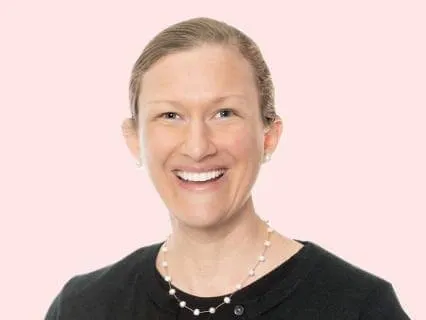
This is Josh of Interskilled and today I have Laura Bratton with me.
Laura,
How's it going today?
Great.
Cool.
Hey,
So I have this question I normally ask people as kind of an introduction.
Who is Laura?
What kind of work does she do?
I'm gonna say the work that I do and then explain that'll connect to who I am.
The work that I do,
I'm a speaker,
Coach,
And author.
And what I speak and coach on is how do we navigate through change using the foundation of grit and of gratitude.
So I speak to companies,
Organizations,
Associations,
School groups,
Education groups on how do we navigate through change when we experience major change.
How do we allow that change not to stop us,
But how do we empower through that change?
And the reason I speak on that and that's my profession and passion is because of my own life experience.
So I was diagnosed with a super rare eye disease even now at 41.
It hasn't received a formal diagnosis.
So I became totally blind as a teenager and obviously that's a major change.
So I had to figure out how do I navigate forward rather than just giving up on life and giving in to the change.
So that's why I say all my work is informed by my life experience.
Well right on.
Yeah and I don't know where to start with this.
I'm just wondering,
I'm sure you probably get a lot of questions about blindness and stuff like that.
What makes this particular interesting to me is that they don't have a diagnosis.
You know that is pretty wild.
I don't know how much,
And we're totally okay to gloss over this and not say much about it and I don't want to make it a huge focus of the thing,
But it is kind of fascinating to some people I'd imagine.
And I just I wonder if it would if it would make sense to describe your experience of what was happening and you know and how that then relates to what you're doing now.
Yeah.
So my emotional reaction when I first started to lose my sight,
A significant amount of sight,
My first reaction was denial.
I'm not going blind,
I'm just losing a little bit of vision.
Or by the time I graduate from high school,
It'll all come back.
Or I would tell myself,
Okay if I just pray enough,
If I just manifest hard enough,
My vision will totally come back.
Again,
I didn't believe that.
I was just trying to convince myself that was just survival mode.
The denial quickly wore off and my mindset and my emotional experience was the intense grief.
I can't accurately put into words the grief I experienced from the loss because I knew how easy life was with sight.
So with that grief came intense depression as I was grieving what my life used to be like and what now how I had to adjust and adapt.
And then coupled as I grieved with that depression was deep,
Deep,
Deep anxiety that manifested in panic attacks.
So that was my initial mindset and just my initial experience to the significant vision loss.
Because remember,
I'm a teenager.
So just going through all the initial normal teenage adjustments were hard enough.
So that made the grief even harder and deeper.
Wow.
Yeah.
And really not having anywhere to turn to,
Right?
I mean,
I'm sure you went through the,
I'm just guessing that you went through the mill of,
You know,
Professionals and specialists and,
You know,
Probably even beyond that route is what I'm guessing.
And,
You know,
Nobody really has any answers,
Right?
Or anything like that.
So I'm wondering,
I guess,
About how long did the grieving process last?
And what was it like,
Kind of?
And maybe you still are in the grieving process because what I've been told and what I find helpful is that there is no limit to the,
I mean,
There's no time limit to grief,
Right?
But like,
So if you want to talk a little bit more about if you're still in that,
If you've navigated out of that,
How it was going through that or in that,
And then what emerged.
Because obviously,
You're not stuck in that and you've come out very strong and capable and very helpful to all of us,
You know?
So yeah,
Talk a little bit about that process.
Yes,
I would love,
Love,
Love to talk about that grieving process,
My experience with that,
Because that's not talked about enough,
Or at least it wasn't for me as I was beginning this whole process.
So I want to start talking about that by a conversation that I had with a mentor.
And the conversation,
It'll become clear while I'm starting with this.
So the week before I started college,
I was in an administrator's office and we were talking about my schedule and professors and just going over everything.
And at the very end of the conversation,
Literally,
I was standing up to walk out the door and she said,
Laura,
I just want to talk to you about one more thing.
And this had nothing to do with the meeting,
But she said,
I just want to give you permission that it's okay to grieve the rest of your life.
I know that you think you should have grieved the four years in high school,
Check the grieving box and move on.
But I want to give you permission that you can grieve and move forward all at the same time.
And I also want to let you know,
Just give you permission at different points and stages in your life,
You will grieve and that's normal and that's healthy for what you've experienced,
The magnitude of loss you've experienced.
So I share that story,
That interaction to say,
The grieving process has continued.
It's not near as intense as it was in those initial high school days when I was initially grieving,
But the grieving process is always there.
It's always a part of my human experience because of the intensity of the loss.
And just like that mentor taught me,
And you referred to it,
That doesn't mean I'm stuck in the grief and can't move forward.
It means I can move forward with courage,
With resiliency and the grief is still there.
So both can be true at the same time where I originally thought it was one or the other,
Right?
Like I grieve and then I move forward.
But she gave me permission to know it's okay to do both.
It really is great because for me going through a certain type of grief,
It was like a huge weight off my shoulders and kind of almost any challenge I feel that,
I don't know about any,
But a lot of challenges it seems is that what if it was like this the rest of my life?
And here you are,
That's a really big possibility.
It's a big possibility,
But it's not impossible,
But we don't know.
But like for any challenge,
That scenario,
I think takes a weight off that it could be like,
And then,
Okay,
Okay.
If that's the case,
Well then,
Here I am with this and yeah,
Yeah,
Yeah.
So yeah,
That really helped me to put certain challenges in perspective too.
Absolutely.
And then to answer your question about,
So obviously I'm not in the grief,
How did I move forward?
Yes.
I 100% move forward by the support around me and also the gift of mindfulness.
So I'd love to break each of those down if I can.
Please do,
Yes.
I'm big into mindfulness and friendship.
That's right.
They're so completely different,
Yet they're so interconnected.
So what I mean by the support around me is I'm in this intense grief,
As I'm in this intense anxiety and depression and wondering,
Is there purpose and meaning in life?
Is it even worth moving forward?
It was the support around me through their actions that helped rebuild my sense of self-worth,
My sense of confidence,
My sense of purpose in the world.
And I want to make it very clear,
It was not through their words,
It was through their actions.
So I had the incredible gift of my parents teaching me,
Laura,
Yes,
This is overwhelming.
Yes,
It's uncertain.
All we have to do is take it day at a time.
So basically what they were saying was live in the present moment,
Right?
Live in the present rather than being overwhelmed by the fear of the future or depressed by the past.
Absolutely.
So that was incredible support to me.
And also it was the support,
And this doesn't sound like support when I say it,
But I promise it was.
I have one older brother and he just continued to treat me like that annoying little baby sister.
He was like,
Oh my gosh,
You're still annoying.
Our interactions didn't change.
And the reason I'll say that was such a gift was because that normal relationship was the source of healing when I didn't believe in myself.
So with everything in my world changing,
It was such a source of strength to say,
Yeah,
I still have that brother who thinks I'm annoying,
Right?
Like that's still there.
And that was such a source of strength.
So it was the gift of community,
That inner dependence,
That healthy interconnection,
Not that dependence like do everything for me,
I'm a victim,
But rather that healthy interdependence of we need each other.
And in times of deep grief and loss,
We need each other even more.
So I can't say enough that we can ask all the questions you will or come up with anything about that support system.
Any questions or want me to say more about that before I talk about the mindset?
You know,
That's right.
I mean,
I could imagine that,
Yeah,
Probably some people tend to make a big deal out of something like this,
Right,
When they meet you.
And it's understandable,
I guess.
A lot of people don't have reference points for this,
Right?
So,
I mean,
You know,
On one hand,
I'm imagining you have to anticipate like special treatment,
You know,
Even more so than you would want,
Right?
You know,
On the other hand,
You know,
It's like,
Okay,
Don't they remember,
You know,
Or maybe in some instances,
It's the other way around,
Like,
Okay,
Like,
How am I supposed to do what I need to do here,
People?
Because you're,
You know,
You're not even,
You know,
Like,
Or whatever,
Right?
So,
I mean,
You have these two different ends of the spectrum,
I guess,
Right?
Yeah.
So,
A funny thing that I promise happens to me all the time is people talk louder and slower.
I'm like,
Guys,
That's not going to help me see better.
I know I'm from the South,
And I know I talk slow,
But talking slower is not going to help me see better.
I promise.
I just have to laugh about that.
You know,
It's like,
Seriously,
Guys,
Come on.
Well,
Right on.
Yeah,
And what you said about mindfulness,
Too,
It really did help me because it's right.
I mean,
Maybe it's an oversimplification,
But like when I'm in the past too much,
Then it does tend towards more sadness,
You know,
And depression.
And then if I'm too far in the future,
Planning too much or anticipating what could go wrong,
Then I get anxious,
You know?
So,
There's a lot to it.
And if we really look at it in our own experience,
If we examine it,
That the past has already happened.
We can't go back and change it.
And actually,
Anything we think is in the past,
It's actually just a thought happening right here in the present moment,
Right?
In one sense.
So,
There is no real past in that way because we're experiencing that right here and now in the same way with the future.
It might seem real.
It might seem like this is really going to happen.
But the thing is,
That's a thought right here,
Right now in the present moment.
So,
That really helped me a lot to kind of see that to come more into the present moment,
Too.
Me,
That was 100% my experience.
And I have to admit,
When I was first introduced to mindfulness,
I was very resistant because I was like,
Oh,
That's not deep enough.
That's never going to help me.
Like,
My anxiety is worse than that.
I was so resistant to trying it.
And it wasn't until grad school when I took a course in it and started to practice it,
That I realized the gift of what you're saying,
Of being in that present.
And for me,
What was very,
Very transformative,
And I'd love to hear if this was your experience,
Learning that we can observe thoughts,
That we don't have to become our thoughts.
Yeah,
It was a huge game changer for me,
Too.
That was an absolute game changer for my anxiety,
For my depression.
I can just observe that feeling.
I don't have to jump into that story.
Exactly.
So,
Super helpful.
And the mind has no shame a lot of times.
It will come up with things and it will lie.
Yeah,
It will come up with all kinds of fabrications.
So,
On some things,
Anyway,
In my experience,
We have the option not to believe our thinking,
Too.
And I still am,
I would say,
To a somewhat decent degree.
I don't know if it's decent.
Over-identified with my thinking.
Now,
Some people over-identified with their emotions,
Or their body,
Or whatever,
Right?
But for me,
I totally identify with my thinking.
And then once I first heard,
I'm not my thoughts,
I was like,
What?
Oh,
My gosh,
What if that's the case?
Oh,
My God.
That was big to just consider and contemplate that,
Because that's who I am.
I'm my thoughts.
I was going to say,
Wait,
My thoughts are for me.
Exactly.
I didn't know there was a difference.
Yeah,
It was so wild to know that.
It was so freeing.
For me,
It was intensely freeing to realize,
Oh,
I can just observe,
Not be,
Or not judge.
Yeah,
That's a huge one,
Too.
The wisdom I got around judgment,
Too,
Is that I think there is some misconceptions around that,
In some sense,
Because I don't want to judge.
I don't want to be judgmental towards someone,
Right?
So I think even just having that concern and that effort,
Then I'm not being judgmental.
It's only when I judge someone and then feel better about myself,
I consider that judging,
Right?
That's the real judging,
Right?
So sometimes when I pass,
Or not really pass judgment,
But when I catch myself thinking something or judging something about another,
And I don't really want to,
I wonder sometimes,
And this is a teaching from someone else,
That I wonder if that's just an identification that,
Okay,
I honor you and respect you,
But that's just not for me right now,
Whatever I was judging.
It's just kind of an identification of,
You know,
Maybe that's okay for you,
But for me,
That's not for me right now.
Not for me,
Yeah.
I would also love,
If you're experienced,
Another major gift of mindfulness that I received was learning the body scan.
I had no idea how much tension I was holding in my body.
I mean,
I didn't realize,
You know,
I would just be sitting in class and have my fists clenched,
You know?
Like I didn't realize I was holding my shoulders so tight,
Clenching my stomach.
I had no idea the tension I was holding my body,
And just the gift of a 10-minute body scan,
Right?
Like that was,
It sounds so simple now to say,
But it truly was a game changer because it taught me to listen to my body.
Big time,
And the body's not going to lie,
You know?
The body doesn't really lie,
And there's that book,
The Body Holds the Score.
Yeah,
For me,
The score,
Yes.
You know,
My posture when I first started meditating was so kind of,
I don't like to use atrocious,
Not the right word,
But it was,
I mean,
It was,
There was some slight spinal,
What do they call it?
Not scoliosis,
But it was kind of a slider version of that.
And like maybe for almost a year or so of my daily sitting practice,
It was a lot of times just me almost constantly readjusting my posture because it was so,
Yeah,
Not straight,
And now I have better posture just by bringing mindful awareness to the body and adjusting,
Yes,
Exactly.
And shoulders too,
And there was so many things that released,
And it's amazing how kind of some emotional things and memories in the past can be stored in certain areas of the body,
It seems like.
And when those things relax and release,
Then there can be like release on multiple levels too.
Yeah,
It's amazing how much- And then also with the,
I found with the body scan,
Again,
Learning to listen to my breath.
Oh,
Wow.
Because again,
When I was anxious,
I didn't realize I would hold my breath or like short,
Shallow breaths.
No,
Like breathing from my throat.
And mindfulness taught me breathe from your diaphragm,
Right?
It sounds so simple now,
But it was such a game changer.
And even earlier today,
I was thinking about it after a few Zoom calls.
Again,
Focus on your breath,
Right?
Are you breathing those deep,
Healing breaths?
Yeah.
And I mean,
Most of us,
Even with a meditation practice,
Even on mindfulness of breathing,
It can be really elusive.
It can be really hard to stay aware of the breathing,
Because it can be fairly subtle.
Now,
When we get really still and we're not distracted by other things,
Then it can be more noticeable.
But yeah,
I mean,
It's an energy too,
Right?
The breath going in tends to energize and the breath going out can relax.
It bridges our mind and body and emotions.
It kind of ties everything together.
So yeah,
It's a great practice too.
Yeah.
Amazing practice.
So yeah.
What else did you learn?
Anything else from mindfulness?
Or tell me about your practice.
Do you have a daily practice,
Meditation or mindfulness practice?
I do.
So what mindfulness taught me is that focusing on the breath,
Focusing on my thoughts,
The body scan,
Can all be integrated into our daily life.
And that was the gift of,
Just as I mentioned,
You know,
After a Zoom call to focus on my breath.
I love how mindfulness is integrated into our day.
Yes,
It's something separate that we can focus on at specific times.
And yet it also can be woven throughout our every day.
I love that.
It's always accessible,
Right?
Like it's always there.
The practice that I do daily is gratitude.
Yes.
And let's,
Before we transition into that,
Which I love too,
Let me just say something about,
And I don't know if this is insensitive or not,
But I would just say that some,
You know,
Meditators will close their eyes a lot.
So I'm wondering,
You know,
If that,
I don't know,
I guess you didn't meditate before this happened,
But in a way,
I guess I have some solidarity because I have a two hour a day meditation practice and my eyes is closed most of the time during that,
You know?
So in a way,
You know,
If there's anything it's,
At least in my experience,
Because the visual field can take up so much data and so much processing power,
I notice when I close my eyes that a whole new world opens up to me where I'm not going out because our society,
At least it seems to me,
Has conditioned us to be in the external so much and to disregard or not look inside or go within,
Right?
So then when I go within,
Then I can realize,
Oh,
There's this whole internal world too.
And I want to ask if you want to say anything more about integrate,
Because a lot of practitioners,
Meditation practitioners,
Have challenges taking what they do on the meditation cushion into their daily lives,
Right?
Like you said,
The breath is always accessible if we remember to pay attention to it.
How many times can I forget to do that,
Right?
So I get the question a lot when I've done different meditation practices and trainings.
I get the question a lot,
Oh,
You keep your eyes open when you meditate.
Absolutely not.
If I have my eyes open and have my eyes closed,
I cannot meditate with my eyes open.
It's like a completely different experience.
Yeah,
It is.
Again,
You make that assumption,
Oh,
Yeah,
You just meditate all day long because you can't see.
Tell me about that experience though.
Yeah.
How is it different for you?
When my eyes are open,
I'm perceiving light.
Oh,
Okay.
I'm perceiving shadows.
I'm perceiving.
So it's like I'm not in meditation when my eyes are open.
Oh,
Yeah.
I have to have my eyes closed to go into that inner world.
Yeah.
And to talk about the integration,
That's so true.
And for me,
And I've learned from mentors,
It has to start by slow reminders.
So even just by setting a reminder on our phone at lunchtime,
Take five minutes to do a body scan and to focus on our breath,
Right?
So to be able to integrate it in our day,
Or just like I'm saying,
Five minutes in between Zoom calls,
Right?
Or like 10 minutes before we start eating breakfast.
So again,
Just starting with those slow reminders helps me in my lived experience integrate it into our everyday.
Well,
That's awesome.
And I love that word emphasis on slow reminders because it kind of disrupts that,
Okay,
I got to do this quick,
Quick,
Quick,
Quick,
Quick,
Right?
It kind of disrupts that and brings us back to our nervous system.
And okay,
So gratitude.
I would say maybe probably for 10 years or so,
I had every morning before I even got out of bed,
I would just start before I got out,
I would set my intention for the day and then I would just start naming things at random of whatever came into mind of what I was grateful for.
And it didn't really even have to make any sense.
And I just,
You know what I mean?
I'm just like,
Is this whatever,
The carpet or the dust on my wall.
I'm kind of making a little bit of a joke,
But yeah,
Imagine if we could be grateful for everything,
You know,
In some sense,
Of course,
Abuse is never okay.
However,
Now that this has happened,
Where can I find the silver lining?
What can I be grateful for within this?
Or what can I be grateful for with my relationship to this or how I view this now or how I hold this now?
So yeah,
I found it immensely helpful mainly because I couldn't be in conflict with something I'm grateful for,
You know?
So tell me about your work with gratitude and why you find it so important and how you practice it.
So it all,
Again,
I want to start by talking about gratitude by sharing a conversation with a mentor because with another mentor,
Just like the grief,
Permission with the grief is how the gratitude started.
So I want to make it very clear,
I was not feeling grateful as I lost my sight,
Right?
Like when I was having panic attacks,
Depression,
Going blind,
I was not feeling grateful,
Right?
Like there was no gratitude in my body.
And one day a mentor said to me,
Laura,
I want you to cultivate a mindset of gratitude.
And so I want you to start by focusing on three things every day at the end of the day that you're grateful for.
And I want you to start by reflecting,
Thinking back to the day and naming three people,
Events,
Situations that you're thankful for from that day.
And I don't,
Again,
Just like the mindfulness,
I didn't think it would work.
I didn't think I had anything to be grateful for.
I thought the mindfulness was like just trying to be ridiculous and just like cliche,
Right?
And so out of my stubbornness,
I said,
Okay,
I'm going to give it a try.
And I'm going to prove to her I have nothing to be grateful for.
The one day became a week.
The week became three weeks.
Three weeks became six weeks.
And what I realized is she was not teaching me to be grateful for the blindness,
For the difficulty.
Rather,
She was teaching me to cultivate a mindset,
To be grateful,
What helps me navigate through the blindness.
So she was not teaching me to wake up and say,
I'm so grateful I'm blind,
Let's all try this.
This is a great way to live life.
Rather,
She was teaching me to wake up and say,
I'm grateful that I have a guide dog that helps me navigate the world.
So with the reframe of our experience,
So I want to be very,
Very clear.
My understanding of my practice of combined by words again,
Of gratitude is not minimizing our pain.
It's not minimizing our emotions.
It's not minimizing our human experience.
Rather,
It's acknowledging what we do have to help us navigate through this human experience.
Wow,
That's beautiful and so well put.
And I love your honesty too,
Because no one's going to really pull one over on you,
It seems like.
I think that's one of the worst things we could do is be inauthentic and pretend something is some way when it's not.
You know what I mean?
That's why I tell people these affirmations,
They're okay.
But for me,
I'm thinking of a one TV show in the 90s where this guy wore a sweater and he would say,
I'm good enough,
I'm smart enough,
Don't go on to people.
So I thought that was hilarious because this is ridiculous.
And I was doing the I love you's to my heart,
Like a teacher.
And I was just like,
This doesn't feel right.
This feels so sappy.
You know,
Exactly.
It's like,
This feels oopy goopy,
Which I don't know if it's a word.
Somebody asked if that was a word actually,
But I was like,
I don't know,
I need to look it up.
But this being honest,
That is a form of self love.
So not diluting myself,
Not trying to lie to myself.
That's a form of self love.
It takes courage for some people who it doesn't come natural to,
But that's right.
And so the alternative for me for these affirmations is an aspiration.
So with an aspiration,
I've got,
Okay,
This is how it is now.
This is really how it feels for me now.
Now,
Whether it's true or not,
That's another thing.
Cause that's another thing that's,
It might feel real,
But a lot of times it's not true,
You know,
When something,
But what I can do now is I can say,
Okay,
This is how it is to me now in my experience.
And yet I can aspire to this.
I'm not there yet,
But it's the goal for me to get to.
So that way I'm not lying and diluting myself now.
And I can see the value of where I want to go,
What I want to train towards.
And then I can aspire there instead of diluting myself,
That I'm already there when I'm not,
You know what I mean?
Oh my gosh.
Thank you so much for saying that.
I love that.
Cause I've always had those thoughts,
But never thought about it so clearly as you just laid it out.
That's a beautiful analogy.
Like I'm,
This is where I am,
But this is where that self love is where I want to go.
I'm not there yet,
But that's the goal.
Cause otherwise it's like you're tricking yourself,
Right?
Exactly.
Exactly.
You know,
It doesn't feel right to me either.
Right.
I can see the value in it,
But I can also see I'm not there yet,
But,
But I'm training to get there and that,
Yeah.
So it's the best of both worlds for me.
Right.
That is so well put.
That makes so much sense.
Cause again,
To me,
That's part of mindfulness,
Right?
Like we're not where we want to go.
Wow.
Thank you.
Thank you.
I'm going to remember that.
That's powerful.
You're,
You're welcome.
Yeah.
I know it's,
It's helped me a lot because I,
You know,
I would see these like new age people in their affirmations and I just kind of turn my stomach sometimes,
But I can also see,
Okay,
Well this might work,
But I can't do that.
You know,
Part of my path is truth and honesty,
You know,
And authenticity.
And it just,
What didn't feel honest and truthful to me,
You know,
But I can see the value into it.
So that way you're not tricking yourself.
You're,
You're empowering yourself,
Right?
Like saying,
This is where I want to go.
Exactly.
This is the end goal.
That word,
That word is spires.
It's a,
It's a great one.
That's awesome.
I'm going to use that.
Thank you.
Yes,
Please do.
Yes,
Yes.
I share freely.
So the other thing is grit you talk about.
So to talk about grit and how that's important to you and,
And how you see that and how you lose it.
So I love the word that you just used and talked about.
That's where I aspire to be.
That is so much how I define grit.
So first I want to say how I don't define grit.
Sure.
So grit is not in my understanding of my life experience.
Push on,
Sweep it out of the rug,
Don't feel your emotions,
Get over it,
Be strong,
Look happy all the time,
Right?
Like that is not my understanding of grit.
My understanding of grit is exactly what you said.
This is where I am now.
I'm really,
Really anxious.
I validate that emotion and that feeling and I choose to keep going even in the anxiety.
So the grit is,
Yes,
This is how I'm feeling and I acknowledge I choose courage.
That's awesome.
Yeah.
Courage is another big value of mine too,
You know because it,
Well,
And so is truth.
So it,
You have to be really courageous to face,
Face some truths,
You know,
In life,
You know,
And to,
To,
To,
To turn towards something that's uncomfortable,
Unpleasant.
But,
But I know it's going to be helpful if I do so that it takes courage to do that.
Yeah.
It takes courage to say,
Hey,
I'm really anxious right now.
But like you said,
I aspire to be in a place where I'm less anxious.
So it takes a lot of courage to choose that every day.
Right.
I mean,
Going through it too.
Right.
Cause you can't sit there and wait till anxiety's over and then move forward.
Or I couldn't.
Right.
So yeah,
The,
The grit for me is the power of just having the courage to validate our human emotions,
Because as you said,
It's really,
Really uncomfortable and scary to acknowledge I'm in pain.
Yeah.
I'm in sadness.
I'm in doubt.
I'm an uncertainty to acknowledge human emotions.
And for me included,
It's also hard to acknowledge I'm actually joyful right now.
Yeah.
Yeah.
I'm actually feeling good right now.
Right.
I'm actually in a place of self-love,
Self-compassion.
That's,
It's,
It's,
It's a really good point because,
And that is,
Um,
So I,
When I do formal compassion practice,
That's one of the phrases that's,
That's the phrase that I start out with is I acknowledge this pain,
You know,
Whatever it is,
It just,
Sometimes that's enough right there.
Cause I've,
I've,
I've,
Um,
I,
I mean,
I lost in whatever.
And then once I just pause and acknowledge what,
What it is,
Instead of trying to get out of it right away,
Right.
Just pause and say,
Okay,
This is happening right now.
This is really,
It is just acknowledging it,
You know,
Then caring about,
Uh,
Go ahead and you're in.
Yeah.
Yeah.
No,
I was just going to give the quick example.
So nice for me that acknowledging how it is,
Is going in the bathroom,
Closing the door and just bawling my eyes out for five or 10 minutes,
Just acknowledging this is my pain.
This is my experience and I'll keep going.
Right.
But for the five or 10 minutes,
I need to acknowledge these tears.
Yeah.
Yeah.
Yeah.
Exactly.
And then the next one I usually do is like,
And I,
And I care about this pain,
You know,
I,
I,
And yeah.
And Carrie,
That's the toughest phrase for me too.
Cause sometimes I don't,
I,
Well,
Then I actually,
What I do is when I don't really care about it,
Uh,
I will say,
I,
I,
I care about this to the level that I'm able to now,
You know,
That way,
If there's only just a tiny bit of,
Um,
Of care there for it,
Then I can just acknowledge whatever level of care I have.
And,
But,
But sometimes I have to compassion for the fact that I don't have compassion.
So that's helpful too.
Right.
Yeah,
Exactly.
And they made this pain.
Oh yeah.
That's that black and white self-judgment,
Right?
Like just saying,
You know,
You can pressure yourself to draw on self-compassion,
Just being in that place.
Yeah,
That's right.
Cause we can,
We can,
Um,
They could be more painful,
Uh,
If I think,
Oh,
I should have compassion right now,
But I can't then judge and blame myself for not having compassion.
Right.
So,
And then wanting it to release and then,
Um,
Uh,
You know,
May I be at peace.
So it's just,
It's just this well-wishing or this,
This,
This wishing that that's,
That's what I want.
I don't want,
Uh,
I want this pain to release and I want to be at peace.
And,
Uh,
These are the phrases that I can practice towards myself,
Uh,
And then towards others too.
Yeah.
Yeah.
Yeah.
Cause the value of what I found,
Once I give myself that acknowledgement of pain or that,
That self-compassion to acknowledge how I'm feeling,
It's easy to extend to others.
Yeah.
Once I acknowledge it in myself.
And also I'd love to hear if this is your experience,
Once I can acknowledge it within myself,
I can more easily receive it from others.
Oh,
Absolutely.
100%,
Over a hundred percent.
Probably if,
If,
If that makes sense,
Because the same way with kindness,
Right?
Like,
Um,
Even like some of the scriptures say,
You know,
Love your neighbor as yourself.
But if,
If I don't love myself,
How am I going to be able to love another the way I could?
Yeah.
So,
So yeah,
That's right.
Once,
Once I know it in my experience,
And it's easier for me to then show it to another in the same way.
Right.
And also I don't,
Um,
Getting external validation from another or getting anything else from another.
It's like,
I have to be able to give it to myself too,
Because I'm the only one that really knows to the extent in the,
In the,
The best way that's needed for me.
Cause I'm with myself more than anybody else's.
100%.
Oh my gosh.
I can't agree more.
That is.
Well,
Laura,
This is,
This has been a great,
I appreciate you coming on here and sharing your,
Your journey.
And,
Um,
You know,
All these things we've talked about,
You know,
I think are applicable to everyone and no matter what situation they're in,
No matter what challenges or lack of challenges they're going through,
You know,
It's just,
Yes,
Exactly.
You know,
So this is,
This is life and,
Uh,
Everybody has something,
You know,
There's,
There's,
Everybody has some,
Something they're dealing with.
It's not to belittle anyone else's experience.
It's,
Uh,
You know,
It's to,
To say that,
Okay,
We're not alone in this.
You know,
We all have ways that we,
That we connect and things we're going through,
Uh,
And challenges we face.
And,
Uh,
We might think that we're alone,
But that more than likely,
Even if we're going through something really weird and strange,
More than likely there's others who have,
Have,
Are there with us now doing the,
You know,
Going through the same thing and that,
Yeah,
We're not alone and we're in this together.
And then once we kind of master what we're going through,
Um,
Then we can help others too.
Or even like you're saying,
Even while we're going through it,
Uh,
You know,
We,
Um,
People like,
That's probably one of the reasons I do this show too,
Is even though I haven't made it to where I want to be yet,
Uh,
I enjoy sharing the journey along the way.
So if others want to listen and listen in and find any value,
If I just help one person,
I think to me,
That's the kind of the satisfying thing that I,
I agree.
And what I would love to touch on quickly,
If I can,
What you said so perfectly made me think when you were saying when we feel alone in our experience,
Also what I found really helps me is yes,
Someone might not be going through exactly what we're going through.
Yet the emotional experience of pain and difficulty and the human experience is,
Is,
Is the same emotions.
So I say that I think it's been so helpful for me to find that connection and not feel that loneliness,
Not feel that loneliness,
Not just say,
Oh,
I just think of other people who lost their sight or is a teenager,
Right?
But to say,
Connect with other humans and the human experience.
It's,
It's,
It's very well put,
You know,
These universal aspects that we all experienced,
No matter what the external,
Internal environments like,
You know,
No matter what happened or hasn't happened,
There are these things that make human,
Make us human,
You know,
And one of them is pain,
You know,
Not that I want pain for anyone,
But there's no,
As far as I know,
There's no human out there that will get through this life without pain,
You know?
So,
And joy,
You know,
So that gives you joy.
I would,
I would imagine,
Maybe there are some rare cases,
Unfortunately,
But for the most part,
Everyone can at least relate to joy at some point.
And so,
Yeah,
So,
So,
So many things.
Yeah.
It's peaks and valleys,
As I once had a supervisor tell me,
Life is a series of peaks and valleys.
That is so,
That's so true.
It's so simple,
But it's so easy to remember,
If we could just remember that,
Or if I could just remember that on a daily basis,
When I'd get so frustrated,
Like nothing's going right,
It never goes right.
To remember,
That's not true.
There were lots of peaks and there were lots of valleys.
It's just in the valleys,
We forget the peaks,
Right?
That's right.
Yep.
You have to look up and look up at the peak.
And then when we're at the peak,
Look down at the valleys,
I guess,
Because we're going to be going to one to the other soon enough,
You know,
Nothing lasts forever.
Oh yeah.
Well,
Cool,
Laura,
This has been fun and helpful for me.
And hopefully anyone listening has found some use and maybe some joy too,
Along the way.
Take the podcast out on a final message you'd like to leave people with.
So what I would like to leave folks with completely relates to harness and courage.
And that is,
As we all go through the ups and downs in life,
The difficulties,
The changes,
The joys,
The gifts,
The losses,
The pain,
Remember that in it all,
We each are enough.
And I say that because,
Especially in difficulty,
We forget our value and we forget our worthiness.
So as we close,
Just close remembering,
Knowing,
Trusting that you are enough.
It's a beautiful message.
And I think very,
Very timely in the place that we're in,
In this world right now,
A beautiful reminder that we,
Yeah,
We don't have to say,
Do or be anything in particular to have our light shine and be enough and a value to everyone.
So may all beings everywhere out there come to know their true worthiness and their amazing grit and optimal gratitude.
May all beings everywhere realize awakening and be free.
Bye now.