Wholeness and welcome.
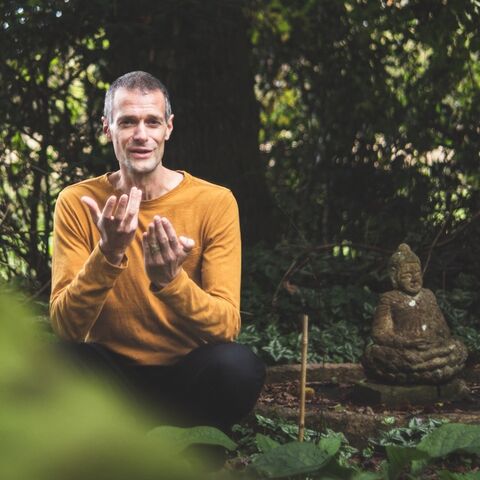
This is Josh Tippold of Integrating Presence and today's talk entitled Full of Love.
And the description for this is,
You know,
For the title,
Full of Love,
Not Full of Crap.
For those interested in practicing the four sublime abidings of loving kindness,
Compassion,
Vicarious joy,
Rejoicing,
And equanimity,
Join this Mettā Sahāṅgata Sutta,
It's SN 4654 and somebody,
Well I guess nobody can chime in pronouncing it right for me.
So join this the sutta reading sharing where we penetrate into even higher release by examining various modes of repugnance and lack thereof.
Let me adjust,
I need to get a chair that's not as loud and Angela says hello,
I finally caught a live.
Well cool Angela,
Glad to have you here.
Violet says hello from New York.
How's it going Violet?
So just this brief reading and there's a few things I'll mention about it too,
But I'll probably bounce back and forth between some technical things and some comparative things,
But then you know the real good part is the practical part,
Like how do we apply this in everyday life.
So I used repugnant here and lack of repugnance.
The sutta uses repulsive and not repulsive and then I think famous R.
B.
Ku uses loathsome and not loathsome.
So we'll see how we can go kind of the main practice of this too and this Pali word is,
I don't even know how to pronounce it here,
I'll put it in the chat.
I'm thinking this is the right one for any people here that study Pali and then this Appa Taikool,
Appa Taikoolasani.
So basically only the Appa part is defined in the sutta central and it's known as a,
It's an adjective,
It means small,
Little,
Trifling,
Few,
Rare,
Very little,
Next to nothing,
Equivalent to negative,
A little small amount of trifling thing.
So anyway that's what I'm taking liberty to translate as repugnant if I'm getting it right.
So let's just jump right into the sutta and I'll just read Bhante Sujato's version because it's all kind of nicely condensed and,
Boy my computer fan's really kicked on now,
And it doesn't do the dot dot dot.
So a lot of times in these suttas it's kind of a tradition to put dot dot dot instead of just repeating things again,
But because the repeating things,
There's a lot of repetition and that's so people can memorize it and it really drives it home,
Kind of like a song,
You know,
A refrain or a chorus in a song.
We'll just jump right into this though.
At one time the Buddha was staying in the land of the Kolians where they have a town called Halayadvasana,
Okay way off on those,
Anyway,
There several mendicants robed up in the morning and taking their bowls and robes entered this town for alms.
It occurred to,
Then it occurred to him it's too early to wander for alms in Halayadvasana,
Why don't we go to the monastery of the wanderers who follow other paths.
So they went to the monastery of the wanderers who follow other paths and exchange greetings with the wanderers there.
When the greetings and polite conversation were over,
They sat down to one side.
The wanderers said to them,
The Buddhist followers,
Reverends or reverends,
Reverends,
The ascetic Gotama,
Which was the name of the Buddha's first name,
Right,
Teaches his disciples like this,
Come mendicants,
Give up these five hindrances,
Corruptions of the heart that weaken wisdom and meditate spreading a heart full of love to one direction and to the second,
To the third,
And to the fourth.
In the same way above,
Below,
Across,
Everywhere,
All around,
Spread a heart full of love to the whole world,
Abundant,
Expansive,
Limitless,
Free of enmity and ill will,
Meditate spreading a heart full of compassion to one direction and to the second,
To the third,
And the fourth.
In the same way below,
Across,
Everywhere,
All around,
Spread a heart full of compassion to the whole world,
Abundant,
Expansive,
Limitless,
Free of enmity and ill will,
Meditate spreading a heart full of rejoicing to one direction and to the second,
To the third,
To the fourth.
In the same way above,
Below,
Across,
Everywhere,
All around,
Spread a heart full of rejoicing to the whole world,
Abundant,
Expansive,
Limitless,
Free of enmity and ill will,
Meditate spreading a heart full of equanimity in one direction and to the second,
And to the third,
And to the fourth.
In the same way above,
Below,
Across,
Everywhere,
All around,
They spread a heart full of equanimity to the whole world,
Abundant,
Expansive,
Limitless,
Free of enmity and ill will.
We too teach our disciples in just the same way.
What then is the difference between the Ascetic Gotama's teaching and instruction of ours?
Those mendicants neither approved nor dismissed that statement of the wanderers who follow other paths.
They got up from their seats thinking,
We will learn the meaning of this statement from the Buddha himself.
Then after the meal,
When they returned from the alms round,
They went up to the Buddha,
Bowed,
Sat down to one side and told him what happened.
And the Buddha said,
Mendicants,
When wanderers who follow other paths say,
You should say this,
We start over with that one,
Mendicants,
When wanderers who follow other paths say this,
You should say to them,
But reverends,
How is the heart's release by love developed?
What is its destination?
Apex,
Fruit,
And end.
How is the heart's release by compassion developed?
What is its destination?
Apex,
Fruit,
And end.
How is the heart's release by rejoicing developed?
What is its destination?
Apex,
Fruit,
And end.
And finally,
How is the heart's release by equanimity developed?
What is its destination?
Apex,
Fruit,
And end.
A question like this,
The wanderers who follow other paths would be stumped and in addition would get frustrated.
Why is that?
Because they're out of their element.
I don't see anyone in this world with its gods,
Maras,
Brahmas,
This population with its ascetics and Brahmins,
Its gods and humans who could provide a satisfying answer to these questions,
Except for the realized one or his disciple or someone who's heard it from them.
Old school landline.
I just did about three of these and I was like,
Okay,
Is the phone gonna ring?
And I even turned it off on some of them,
But I got it today.
So,
All right,
Continuing here,
We're way over halfway done.
How is the heart's release?
Now it goes into each of the four Brahma-Viharas,
Which he translates here as love from Metta or loving kindness.
And how is the heart's release by love developed?
What is its destination?
Apex,
Fruit,
And end.
It's when a mendicant develops the heart's release by love together with the awakening factors of mindfulness,
Investigation of principles,
Energy,
Rapture,
Tranquility,
Immersion,
And equanimity,
Which rely on seclusion,
Fading away,
And cessation,
And ripen as letting go.
If they wish,
May I meditate perceiving the repulsive in the unrepulsive.
That's what they do.
If they wish,
May I meditate perceiving the unrepulsive in the repulsive.
Well,
Then that's what they do.
If they wish,
May I meditate perceiving the repulsive in the unrepulsive and the repulsive.
That's what they do.
If they wish,
May I meditate perceiving the unrepulsive in the repulsive and the unrepulsive.
That's what they do.
If they wish,
May I meditate staying quantumous,
Mindful,
And aware,
Rejecting both the repulsive and the unrepulsive.
That's what they do.
The apex of the heart's release by love is the beautiful,
I say,
For a mendicant who has not penetrated to a higher freedom.
And so just for repetition's sake and to really drive this home,
I'm going to repeat it for the other three Brahma Viharas because I feel this is really important and very useful to get this because there is several things in here.
We've got the awakening factors.
We've got all the different combinations of repulsive and unrepulsive.
And then also have the formless jhanas in here.
So there's a bunch,
But what we'll do after this reading is I'll distill it down to what's most vital and practical in maybe a lay life.
Okay.
So how is the heart's release by compassion developed?
What is its destination,
Apex,
Fruit,
And end?
It's when a mendicant develops the heart's release by compassion together with the awakening factors of mindfulness,
Investigation of principles,
Energy,
Rapture,
Tranquility,
Immersion,
And equanimity,
Which rely on seclusion,
Fading away in cessation and ripen as letting go.
If they wish,
May I meditate perceiving the repulsive in the unrepulsive.
That's what they do.
And actually I said this wrong.
There is some dot,
Dot,
Dots here.
So I'm just going to leave out the other combinations here.
And I'm going to post the link to in the chat in just a minute after I finish this paragraph.
So then there's two other ones.
And then the final one of the four,
If they wish,
May I meditate staying equanimous,
Mindful and aware,
Or actually,
No,
There's three more,
But then the final one,
May I meditate staying equanimous,
Mindful and aware,
Rejecting both the repulsive and the unrepulsive.
That's what they do.
Or else going totally beyond perceptions of form with the ending of perceptions of impingement,
Not focusing on perceptions of diversity,
Aware that space is infinite.
They enter and remain in the dimension of infinite space.
The apex of the heart's release by compassion is the dimension of infinite space,
I say,
For a mendicant who has not penetrated to higher freedom.
Okay.
So here is the link.
I don't know if it's going to show up as a link or not.
If somebody wants to chime in to say it showed up,
Or maybe you just have to copy and paste it.
But so we've got two more here and actually I'll just do the dot,
Dot,
Dot on the next one.
But then again,
On the final one,
We'll get the,
The,
All the different combinations without the dot,
Dot,
Dot,
Just again,
In case you've missed it.
And how is the heart's release by rejoicing developed?
What is its destination,
Apex,
Fruit,
And end?
When it's when a mendicant develops the heart,
Heart's release by rejoicing together with the awakening factors of mindfulness,
Investigation of principles,
Energy,
Rapture,
Tranquility,
Immersion,
And equanimity,
Which rely on seclusion,
Fading away and cessation that ripens as letting go.
If they wish,
May I meditate perceiving the repulsive in the unrepulsive.
That's what they do.
Then the dot,
Dot,
Dot.
If they wish,
May I meditate staying equanimous,
Mindful,
Aware,
Reject,
Rejecting both the repulsive and the unrepulsive.
That's what they do or else going totally beyond the dimension of infinite space,
Aware that consciousness is infinite.
They enter and remain in the dimension of infinite consciousness.
The apex of the heart's release by rejoicing is the dimension of infinite consciousness,
I say,
For a mendicant who has not penetrated to a higher freedom.
Okay,
Last paragraph.
And how is the heart's release by equanimity developed?
What is its destination,
Apex,
Fruit,
And end?
It's when a mendicant develops the heart's release by equanimity together with the awakening factors of mindfulness,
Investigation of principles,
Energy,
Rapture,
Tranquility,
Immersion,
And equanimity,
Which rely on seclusion,
Fading away and cessation and ripen as letting go.
If they wish,
May I meditate perceiving the repulsive in the unrepulsive.
That's what they do.
If they wish,
May I meditate perceiving the unrepulsive in the repulsive.
That's what they do.
If they wish,
May I meditate perceiving the repulsive in the unrepulsive and the repulsive.
That's what they do.
And if they wish,
May I meditate perceiving the unrepulsive in the repulsive and the unrepulsive.
That's what they do.
If they wish,
May I meditate staying equanimous,
Mindful and aware,
Rejecting both the repulsive and the unrepulsive.
That's what they do,
Or else going totally beyond the dimension of infinite consciousness,
Aware that there is nothing at all.
They enter and remain in the dimension of nothingness.
The apex of the heart's release by equanimity is the dimension of nothingness,
I say,
For a mendicant who has not penetrated to a higher freedom.
Wow.
So I found this sutta.
I was researching something else and it was like one of the,
I think a previous one.
So,
Or I can't remember how I stumbled upon it,
But I hadn't heard this before.
And it's also titled by Bhikkhu Bodhi as accompanied by loving kindness.
And then Thaymasara Bhikkhu calls it goodwill metta sutta.
So he translates metta as goodwill.
It's translated loving kindness.
And I think,
Yeah,
Bhante Sujato just calls it love here.
All right.
So the other few things I wanted to mention about this before really digging in is why don't we just start with the practical daily life of this?
Well,
Maybe we ought to,
I guess,
Get to the kind of the,
Really the crux of this and see kind of like,
Well,
What is the importance of this?
I mean,
I'm sure plenty of you here are probably familiar with loving kindness and the brahma viharas of the loving kindness practice,
Compassion practice,
Rejoicing or sympathetic,
Empathetic or altruistic joy,
Rejoicing,
And then equanimity.
And these are formal practices that we can practice and cultivate and develop.
And they're also just kind of natural qualities that arise when they're not really hindered in daily life.
These beautiful,
Also called sublime abidings.
And they're also known as limitless,
Because there is really no limit to these or they're not a scarce resource.
They can be cultivated.
So the crux of this for me that I found really liberating going beyond even like the brahma viharas or incorporating them is this notion of repulsive and unrepulsive.
And for me,
I use repugnant because it seems even more extreme than repulsive.
Okay.
So if we think of something that's really,
Really repugnant,
It almost,
And speaking of that,
There's a huge,
There's been dump trucks going by pretty much all day long and going really loud and strong and just kind of spewing asphalt all over the road by me.
And however,
So the way I look at that as,
I don't know if it's,
It's definitely in a way repulsive,
You know,
Blasting the noise pollution,
But the way I look at it as unrepulsive is it's kind of an expression of power.
So whoever's driving that truck,
Whether they're conscious of it or not,
It's a huge,
Powerful thing to drive a humongous truck like that with a lot of stuff in it,
Moving it with a lot of force.
And there's probably a lot of money involved.
There's probably deadlines and stuff.
And so it's a kind of crying out to have power respected and power noticed.
So that's one way I look at as unrepulsive,
I guess,
For something like that.
So now this is working on a perception level and there's a filmmaker,
David Lynch,
And I've heard this story once where he would take photographs of really up close extreme things and he wouldn't tell them initially people what they were.
And they were these,
They just look like these beautiful abstract,
I don't know,
Either paintings or photographs,
But they were photographs supposedly.
And what they actually were like really extreme close-ups of like stuff that was so disgusting,
Like pus,
Blood,
Different bodily fluids and things.
And people,
If people didn't really know that first,
It looked like a kind of a beautiful abstract thing.
But once the perception comes in of what it actually is,
Then it changes like the whole,
Our whole feelings towards it.
So where do we in our lives,
Do we get a chance to see the repulsive and unrepulsive?
If anybody would like to chime in,
Please feel free.
I mean,
Some things that came to mind immediately for this were with other people,
Right?
There's other people we see that we find repulsive and some people we find the extreme opposite of that,
Very attractive and beautiful.
So we'll just say unrepulsive,
Right?
Groups of people,
Perhaps,
You know,
The,
Our out groups of people that are in our end groups or circles,
We might find some of those types of people repulsive.
Food is a huge one,
Right?
I mean,
The preferences and way attitudes and feelings behind food and how other people see food,
What we like and don't like,
What we find repulsive.
And,
You know,
Just think of like,
I've eaten some really repulsive things in my life,
Just to say,
I did it back before as a vegetarian,
Like I had squirrel brains.
That's probably one of the most or fried possum.
And I would definitely say both of those are fairly repulsive.
And I think maybe my unrepulsive finding was just to be able to taste those at that time,
Just to say,
However you want to interpret them.
And Angela says a stressful work situation has many hidden,
Beautiful moments.
Yes,
It can.
Angela,
You can,
If you'd like to expand on that,
Sharing how they're beautiful,
You're welcome to.
So our feelings too,
You know,
How many times do we feel things that we do not want to feel that we find repulsive in ourselves?
Are we known as feelings and others that are repulsive?
So just imagine how liberating that can be.
If we could find something kind of to balance that out or view a repulsive feeling as not repulsive,
Right?
So I don't really know how many suggestions on how to do that.
I guess we could say something like,
Well,
You know,
In order to feel happiness,
It helps to have the reference point of feeling opposite than that.
So whatever kind of feeling we're having,
You know,
The polarity of that is the other end of the feeling too.
And I feel this is one way to become,
Gain mastery over feelings too,
And thoughts as well,
Like,
Especially in kind of meditative communities and Buddhist communities,
At least at one time,
It seemed,
You know,
There was kind of this denial,
Oh,
Thoughts aren't the problem,
But yeah,
This is how you get rid of them.
You know,
This is,
You know,
This is how you,
You don't want,
You know,
Basically saying that,
You know,
Thoughts are okay,
But then going,
You know,
Okay,
Well,
If thoughts happen,
This is how you deal with them.
This is what you do.
And just spending so much time actually trying to get,
You know,
Deal with them.
And I'm not saying don't deal with them,
But I guess it's almost disproportionate of,
You know,
Instead,
I'm not saying,
But I'm also not saying that we should,
You know,
Totally put thoughts on a pedestal all the time,
You know,
And say we should actually generate more and more and more thoughts.
No,
Not,
So it's just like the balance and how we,
In our feelings and attitudes and perceptions towards thoughts as well,
Is it like we want more thoughts because we think we're dumb or,
You know,
We're just totally,
Oh,
I don't know,
Identify with more intellectualism,
Or we want to be kind of more meditative and view them as,
Okay,
I'm failing in meditation because I'm having a lot of thoughts and like this.
So where's the balance?
How do we view them?
How to respond to them?
Again,
The perception level,
A lot of this deals with the perceptual level,
I feel.
I'm going to view or read a few things from the really brief things from the Vesuti Manga that kind of like puts in detail,
Like really defines how to do this.
And I would say that could be helpful,
But I would say,
Well,
Don't stop there.
Look at this in different ways.
Also,
What about seeing the divinity in the characters in our lives or the Buddha nature?
So sometimes we just see characters,
Right?
We write them off as,
Even some people I know I do,
As like,
Not necessarily cartoon characters,
But okay,
Well,
This is so-and-so,
This is how they are,
And that's how they behave,
And this is who they are,
This is how they act.
You know,
They're always late,
They're always on time.
They're this kind of person,
Not that kind of person,
Right?
Well,
Instead,
Can we see underneath that too,
Well,
This being has potential to become a Buddha someday,
Or if we're into more divinity paths,
Like,
Okay,
Well,
How is this,
Could this be an,
How can I see this as an expression of divinity?
And then,
Of course,
In our relationships,
Right,
We can have really strong likes and dislikes towards the same person.
How many times,
Or at least me,
Where I can see such beautiful,
Lovely qualities and things that are really attractive,
And then at other times see just such horrendous things that are repulsive and disgusting,
And it's like,
How the hell did this happen?
Who is this person kind of thing,
Right?
And so that's a beautiful way to work with this freedom of the heart by,
In our relationships,
Seeing these,
I mean,
I kind of went to extremes there,
But just things we like and don't like about someone too.
Okay,
So Angela says,
I celebrate a win when I remain calm and easy in my mind,
When I'm stretched too thin,
To see challenging co-workers as a being who is also learning and deciphering information.
I can collect,
I'm sorry,
I can connect with my patients in small ways,
Even when they present upset,
Angry.
Yeah,
It's beautiful,
Right?
And patients,
I don't know the nature of your work,
But it sounds fairly clinical.
And yeah,
To be that strong,
Rock-solid center where it can hold space for them to discover their own healing too,
And at the same time,
Benefit ourselves from holding such space too,
Right?
And the ripple effect of that happening goes beyond just the clients and the space holder too,
Right?
Because as healing happens,
Since we're all interconnected,
It benefits everybody we come in contact with.
And I would say maybe even those we don't,
Since we're all interconnected.
Beautiful,
Angela.
Okay,
So here's what the Vasudhi Maga says about this repulsive,
Unrepulsive thing.
It's just three little paragraphs here.
So this is,
I think it's from the chapter on,
It might be the chapter on the Iti Pada,
Which I also did a series about.
It's section 36 starts here.
That which consists in dwelling,
Perceiving the unrepulsive in the repulsive,
Et cetera,
Is called the noble one's success.
According as it is said,
What is noble one's success?
Here,
If a bhikkhu should wish,
May I dwell perceiving the unrepulsive in the repulsive,
He dwells perceiving the unrepulsive in the repulsive,
That dot,
Dot,
Dot.
He dwells in equanimity towards that mindful and fully aware.
This is called the noble one's success because it is only produced in noble ones who have reached mind mastery.
And then 37,
For if a bhikkhu,
Which basically means a male monk,
But some people translate it as well,
Anybody practicing into this type of stuff and practicing,
Studying.
For if a bhikkhu with cankers destroyed,
Possessed this kind of success,
Then when in the case of a disagreeable object,
He is practicing pervasion with loving kindness or giving attention to it as elements.
He dwells perceiving the unrepulsive or when in the case of an agreeable object,
He is practicing pervasion with foulness or giving attention to it as impermanent.
He dwells perceiving the repulsive.
Likewise,
When in the case of the repulsive and unrepulsive,
He is practicing that same pervasion with loving kindness or giving attention to it as elements.
He dwells perceiving the unrepulsive.
And when in the case of the unrepulsive and repulsive,
He is practicing that same pervasion with foulness or giving attention to it as impermanent.
He dwells perceiving the repulsive.
But when he is exercising the six-factor equanimity in the following way,
On seeing a visual object with the eye,
He is neither glad nor dot,
Dot,
Dot.
Then rejecting both the repulsive and the unrepulsive,
He dwells in equanimity,
Mindful and fully aware.
And I'll come back to that,
But there's only one short paragraph here.
For the meaning of this is expounded in the Pavasamhita,
I don't know how to pronounce it,
Sorry.
In the way beginning,
How does he dwell perceiving the unrepulsive and the repulsive?
In the case of a disagreeable object,
He pervades it with loving kindness or he treats it as elements.
Thus,
It's called the noble one success because it's only produced in the noble ones who have reached mind mastery.
Basically,
Kind of repeating there.
The key things to this are,
Okay,
So if something's disagreeable,
Our obvious default mode is to not maybe have ill will or wanting to get rid of it at least or push it away,
Not wanting to have anything fond or loving kindness or goodwill towards it.
That's the antidote.
They actually do the exact opposite.
If we encounter something disagreeable,
One way is to practice loving kindness with it or giving it attention as elements.
Usually,
We see something and then it's not that big a deal anymore.
We're now focused on how we feel about it,
Our thoughts about it.
That's the overriding element because if you just look at something that triggers all of the thoughts and emotions,
It's actually usually a form or a memory,
Some kind of thought form or an actual physical object.
That in and of itself really isn't that challenging.
The way to do it instead of focusing on what it brings up in us,
In our way we're viewing it and maybe even responding to it,
We go into the four elements.
The earth element,
Where is the hardness or softness in this,
Focusing on that.
Where is the smoothness or roughness?
It's more like a scientific approach.
Then once you get the heaviness or the lightness of it,
The water element,
What parts of it,
Especially within our body,
It's easier to notice.
What parts are cohesive,
Flowing,
Or maybe dissolving?
Then the air elements,
Where is the supporting?
Where's the movement?
Where's the space?
Also,
Where is the pressure possibly?
Then the fire element,
Just basically heat,
Hot,
Or cold?
Where is the heat in the coldness?
When we're bringing more attention to that,
There's really not much room to go into stories,
To go into reactions,
To view it certain ways.
I wish so and so wouldn't have done that.
Can you believe so and so did this?
If you're viewing them as elements,
That type of thing.
The other thing,
The foulness.
If we find it,
It's the opposite.
We find something really alluring and pleasing.
How can we view it as foul just to balance out how we might maybe get ourselves into trouble if we find something too agreeable,
Pleasant?
I'm sure we've all maybe eaten a tub of ice cream when we just wanted to have a little bite,
Or maybe a whole loaf of bread,
Or something like that,
Or maybe in adult situations beyond that.
Foulness,
So we can look at,
Okay,
Well,
Can I see this person as the.
.
.
Just peel away the layer skin and look at what's all the stuff in there.
How many miles of intestines and what's all in there?
We kind of overlook that because it's hidden pretty well.
Or what about the belly ache I'm going to have from eating a tub of ice cream?
A brain freeze.
Then the other thing here,
The foulness.
Impermanence too.
Something we find really agreeable,
Will that last forever?
It's going to change.
It's not constant.
It can't be satisfying in the long term in the way we want it all the time.
Okay,
So that's that.
Daniela says,
How do you deal with repulsive things you cannot get away from?
For example,
When you have a very toxic relationships with people you love,
Can you become more tolerant towards repulsive things at some point?
Is that healthy?
Really good questions.
I mean,
This depends on a case-by-case basis.
Okay,
So I really kind of have to know more about the individual relationships you're talking about.
I think some guidelines here are the obvious ones are boundaries,
Right?
So establishing healthy boundaries.
But so the ones you cannot get away from.
So I would say that pretty much in all situations,
There can be some kind of boundaries made.
And the biggest thing is if you're in a toxic relationship,
Especially an abusive relationship,
You have to do whatever you can to get out of it,
At least temporarily.
I know in my experience,
I've had some really challenges with certain people in my life.
But when I put those boundaries up,
What happened is we both realized that how much we really appreciate each other and maybe how much we were really treating each other badly and also like treating myself badly too.
And we didn't realize it until that space was established and those boundaries were established.
And then in that time away,
It just gave more appreciation.
Now,
Sometimes the most compassionate thing we can do is create strong boundaries and maintain them and send kind of compassion from a distance.
And that could last the rest of our lives,
Right?
In other cases,
It's kind of a temporary measure,
But you have to look at harm.
If harm's involved,
Then abuse is involved,
Then have to do whatever you can to get out of that.
Even if it's a huge inconvenience,
That's not going to last forever.
So that's what I would say about that.
Can you become more tolerant towards repulsive things at some point?
Yes.
And this is just what this whole thing is.
And it's a practice too,
Finding the unrepulsive and the repulsive.
And then is that healthy?
Well,
It depends.
Is it going to free your heart more or is it just going to make your heart more upset?
And I think it can also be and feel it's a gradual practice,
Right?
So you can't go from,
Let's say,
Wherever we are now to complete utter liberation with no more problems ever.
I mean,
The Buddha said this is possible,
Nibbana,
Right?
I mean,
Maybe that's a distorted way to look at it,
But it's the full liberation of the heart.
There's so many synonyms for it,
But it's a practice.
And I mean,
Some people can get,
It seems seemingly closer to it in less time than others.
There's whole reasons for that.
But we start where we are and we practice where we are.
And I would suggest reaching out to a real Buddhist teacher,
You know,
Officially and studying with them.
If you find any of this stuff interesting for me,
You know,
I don't have any formal qualifications other than I invite people to call me out and correct me because that's how I learn and grow and self-correct too,
And not put out distorted stuff as well.
So,
And it also depends,
The repulsiveness,
Is it harming you in actuality or is it just a perception we have of repulsion,
Right?
Like I was saying,
Like I might find,
You know,
A dirty bathroom repulsive,
A public restroom,
Okay?
But if I don't spend much time in there and really get involved in a dirty bathroom in public,
Then it's not really harming me directly,
Right?
But in my mind,
My mind is reacting to it and maybe emotions saying,
Oh,
This is horrible.
I can't believe this is disgusting.
Why are these people so filthy?
Why don't they just clean this up?
I can't believe I have to use this now.
So,
That kind of thing is not healthy,
My reaction to it.
But in all actuality,
You know,
You could just put on,
You know,
Rubber gloves and maybe a mask if you have to,
If it smells that bad and just go,
You know,
Clean it.
So,
That's one example.
Now,
I would look at harm for as far as a healthy.
If harm's involved,
Then no.
Yeah,
For me,
Any kind of harm is really not healthy.
There's maybe a few exceptions,
Like if you're trying to save someone's life and some harm needs to be involved in order to.
.
.
So,
We get into moral ethical applications,
But just kind of we use our common sense on that.
So,
I hope it's something of that from useful with me rambling here.
So,
I just wanted to go into a few more things here,
The key differences in these translations.
And this is more technical things.
And I would just mention that I've done some work and you're welcome,
Daniela,
Some work in some translation things,
But with some Chinese translations.
However,
I wouldn't really consider it much help because I don't really know any Chinese.
But my little contribution when I'm not getting in the way of other people's more significant contributions,
And that's not just me looking down on myself because if I knew Chinese,
It would be different,
Right?
I could actually contribute more.
But my small contribution is getting a literal,
Literal word by word translation where it doesn't make all that much sense in English.
And then kind of translating that literal translation is something that sounds more natural and kind of fits to the overall feel,
Intent,
And color of the entire thing that's being translated.
Also,
It's very helpful when doing translations like I'm going to do here is to compare it with other people's existing translations and see the differences and then draw.
I mean,
A lot of it's on preference,
But drawing what seems helpful,
What seems more eloquent,
What seems more true to the actual intent of the thing that's being translated.
So,
I'll just read two different key paragraphs here.
And let's see,
The first one is from Bhikkhu Bodhi,
I think,
In this sutta.
And how monks is aware.
.
.
No,
I'm sorry.
This is from Thanissaro Bhikkhu.
And how monks is awareness released through goodwill developed?
What is its destination?
What is its excellence,
Its fruit,
Its consummation?
And how,
Bhikkhus,
Is the liberation of the mind by loving kindness developed?
What does it have as its destination,
Its culmination,
Its fruit,
And final goal?
But,
Reverends,
How is the heart's release by love developed?
What is its destination,
Apex,
Fruit,
And end?
See,
Here's the other one.
And how monks is awareness released through goodwill developed?
What is its destination?
What is its excellence,
Its fruit,
Its consummation?
Okay,
So this is from Thanissaro Bhikkhu here.
And how monks is awareness released through goodwill developed?
What is its destination?
What is its excellence,
Its fruit,
Its consummation?
There's the case where a monk develops mindfulness as a factor of awakening accompanied by goodwill,
Dependent on seclusion,
Dependent on dispassion,
Dependent on cessation,
Resulting in letting go.
He develops analysis of qualities.
And I'm just going to go with the dot,
Dot,
Dot.
He uses persistence,
Rapture,
Calm,
Concentration,
Equanimity as a factor for awakening accompanied by goodwill,
Dependent on seclusion,
Dependent on dispassion,
Dependent on cessation,
Resulting in letting go.
If he wants,
He remains precipitant of loathsomeness in the presence of what is not loathsome,
Loathsome.
If he wants,
He remains precipitant of unloathsomeness in the presence of what is loathsome.
If he wants,
He remains precipitant of loathsomeness in the presence of what is not loathsome and what is.
If he wants,
He remains precipitant of unloathsomeness in the presence of what is loathsome,
Loathsome,
And what is not.
If he wants,
In the presence of what is loathsome and what is not,
Cutting himself off from both,
He remains equanimous,
Alert,
And mindful.
Or he may enter and remain in the beautiful liberation.
I tell you,
Monks,
Awareness released through goodwill has the beautiful as its excellence in the case of one who has penetrated to no higher release.
" This breaks down the loathsomeness and unloathsomeness and we see how he uses that word there instead of repulsive,
Unrepulsive.
And of course,
Instead of fading away here,
He uses cessation,
Right?
So it's another key difference.
And then uses what is its destination,
Its excellence,
Its fruit,
Its consummation.
And then the one I read from before uses destination,
Apex,
Fruit,
And end.
So there's this subtle word changes here,
But some will resonate with some in better ways and vice versa.
So let's see,
Bhikkhu Bodhi,
I'll just read the same paragraph really briefly.
And how Bhikkhu's is the liberation of mind by loving kindness developed.
What does it have as its destination,
Its culmination,
Its fruit,
Its final goal?
Here,
Bhikkhu's,
A Bhikkhu develops enlightenment factors of mindfulness accompanied by loving kindness,
The lightness factor of equanimity accompanied by loving kindness based on seclusion.
I'm sorry,
There's a dot,
Dot,
Dot.
So it goes through the seven factors of awakening.
The enlightenment factor of equanimity accompanied by loving kindness based on seclusion,
Dispassion,
And cessation,
Maturing and release.
If he wishes,
May I dwell perceiving the repulsive and the unrepulsive,
He dwells perceiving the repulsive therein.
If he wishes,
May I dwell perceiving the unrepulsive in the repulsive,
He dwells perceiving the unrepulsive therein.
If he wishes,
May I dwell perceiving the repulsive in the unrepulsive and in the repulsive,
He dwells perceiving the repulsive therein.
If he wishes,
May I dwell perceiving the unrepulsive in the repulsive and in the unrepulsive,
He dwells perceiving the unrepulsive therein.
If he wishes,
Avoiding both the unrepulsive and the repulsive,
May I dwell equanimously mindful and clearly comprehended,
Then he dwells therein equanimously mindful and clearly comprehending,
Or else he enters and dwells in the deliverance of the beautiful.
Bhikkhus,
The liberation of mind by loving kindness has the beautiful as its culmination,
I say,
For a wise bhikkhu here who has not penetrated to a superior liberation.
Okay,
So that is the one on loving kindness,
And then of course it goes into compassion,
And the compassion has the base of the infinity of space as its culmination.
So that corresponds with what people call the first formless or the fifth jhana of the boundless space,
And so how that corresponds,
How compassion corresponds with that one.
And the next one,
Altruistic joy,
Or it's called,
What is it called?
Help me out here.
Oh,
Not,
Upekka is,
So it's,
Wow,
I'm blanking on that.
Anyway,
If I think of it here,
I'll give the Pali,
But the altruistic joy,
Bhikkhus,
The liberation of mind of altruistic joy has the base of infinity of consciousness as its culmination.
So the next jhana up would be the,
If people are giving them numbers,
That's the sixth one,
Boundless consciousness,
And how that can be associated with that.
And of course the last one,
Though,
That with equanimity,
It says,
Because the liberation of mind by equanimity has the base of nothingness as its culmination,
I say.
So this is the seventh jhana or the third formless,
So one before the last one of neither perception or non-perception,
And this nothingness or no-thingness.
So,
And then it's interesting here,
Of all this freedom of heart,
This release of heart,
It's still this one,
Obviously,
Is not,
Well,
Not maybe obviously,
But for those who haven't penetrated into superior liberation.
So yes,
Even the next higher jhana is more liberating in a way,
The base of neither perception or non-perception,
But going even beyond that,
Of course,
Is the goal here,
Nirvana.
And that is the ultimate goal,
I guess we could say here.
All right,
Well,
I'm going to start wrapping this up here.
Those are just kind of technical notes.
Again,
All this stuff is easily online and probably more clear from other teachers.
This is some of the higher teachings of this,
The awakening factors,
Those seven that are listed there,
The dependence on seclusion and cessation,
Those type of conditions that help bring about this kind of thing.
And then,
Of course,
These higher levels,
The refined states of absorption,
Known as the jhanas are associated here too.
But the takeaway from this,
The more practical thing in our daily lives,
I feel,
Is this noticing this repulsiveness in this unrepulsiveness in life.
The easier way even than that,
And maybe it's related or not,
Is just pleasant and unpleasant,
This hedonic tone that's emphasized a lot in Buddhism.
But this has kind of more of a charge and more immediate if we look at it as repugnant or repulsive or loathsome and not that way.
This just kind of makes it more binary instead of the three vedana,
Which is the pleasant,
Unpleasant,
And then the third one,
Neither pleasant nor unpleasant,
And that deals with equanimity.
So again,
In our daily lives,
I'll leave you with this question here.
Well,
Before I do that,
I just want to point out another quick technical note that I could be wrong,
So please reach out and connect me.
But I want to say that in the Vasudhi Magga,
That said that metta,
Compassion,
And rejoicing can only,
If we're doing these as formal practices to enter jhanas,
That they can only get to the second,
Third,
First,
Second,
Third,
And maybe fourth,
I'm not sure.
But from what I want to mention,
Or what I remember is that either the Vasudhi Magga says it's not possible to use those as a formal practice to enter into the formless jhanas,
But it's interesting how this sutta,
Unless I'm reading the sutta wrong,
And they're not associated,
But it does have them right next to what I just went over before this,
Right?
So I'd be interested in the kind of the explanation of that,
Or someone correcting me of,
Well,
No,
The Vasudhi Magga does say you can do that into the formless realms or whatever.
Anyway,
Okay,
Now back to the practical part to leave you guys with here.
So how can we better identify and be mindful of repulsive and unrepulsive in daily life,
Right?
How many times do we notice repulsive,
Right?
Or,
Well,
I mean,
Maybe not.
Okay,
So if I'm more of an aversive personality type,
I'm probably going to remember or notice more repulsive things.
They stick out more,
They get my attention more.
But if I'm more into the maybe greed or lust personality type,
I'm just going to look over the repulsive stuff and focus just on the unrepulsive stuff.
So how can we notice both of these better in our lives?
I'm sure we probably maybe lean one way or the other more than the other.
So,
You know,
What are we not being mindful of?
Do we not notice repulsiveness as much?
Or do we not notice unrepulsiveness as much in daily life?
And then when we do notice these things,
How are we noticing them?
You know,
What kind of wakes us up to be aware of that?
And then also kind of what is our ensuing behavior when we do find something repulsive or unrepulsive?
And then what is it like when we actually know that something's,
We identify and see and know something is repulsive?
And how does that change when we just on autopilot and don't notice how something's repulsive or unrepulsive?
Usually when we recognize that,
There's more wisdom available to how we view it and respond to it.
And then how can we work with these dynamics of repulsive and repugnant and unrepulsive or not repugnant or loathsomeness and not loathsomeness,
You know,
Viewing one and the other,
The other and the other,
Or one in both of them or the other in both of them.
Right.
And actually,
I wonder if Thaynasaar Bikku puts it a way that's different and adds new light on it here.
Yeah,
The precipient.
So just one example here.
If he wants,
He remains precipient of loathsomeness in the presence of what is not loathsome.
So that's a different way to language this.
And I'll just read the rest here anyway.
If he wants,
He remains precipient of unloathsomeness in the presence of what is loathsome.
If he wants,
He remains precipient of loathsomeness in the presence of what is not loathsome and what is.
If he wants,
He remains precipient of unloathsomeness in the presence of what is loathsome and what is not.
If he wants in the presence of what is loathsome and what is not,
Cutting himself off from both,
He remains a quamous alert and mindful.
So that remaining precipient of unloathsomeness in the presence of what is loathsome and what's not.
So precipient,
I just give the dictionary definition for this,
Basically means it says having a good understanding of things and perceptive.
So when we really know something,
Have an understanding and can perceive it,
Then we can focus more on whichever quality we want when in the presence of the other.
So it's kind of like an energetic game,
Bringing more attention and awareness to the opposite,
At least starting off.
I think that's the easiest just to look at as almost like dualistic here and then can go into the trinary of focusing on one when in the presence of both,
Unrepulsive and repulsive.
Anyway,
I welcome you all to try this out and see how much liberation of heart it results in or what it brings up in you and how it might be useful or not,
And how you might address to whatever happens in your practice of perception with this.
And this can be done in formal meditation in everyday life too.
It can be done again in people,
Groups,
Around food,
Around the feelings and thoughts we have.
Again,
The public bathrooms,
I know maybe a little bit too graphic on that one.
What about bad neighborhoods too?
If you go into a bad neighborhood or a good neighborhood,
A really plush,
Swanky neighborhood,
Luxurious neighborhood,
Politicians,
Politicians you might like,
Or in my case,
Pretty much all the politicians are the other way for me.
How am I going to see the unrepulsive in that?
All right,
Well,
Thank you guys for joining and may I,
You,
And all of us come to know the true heart's release.