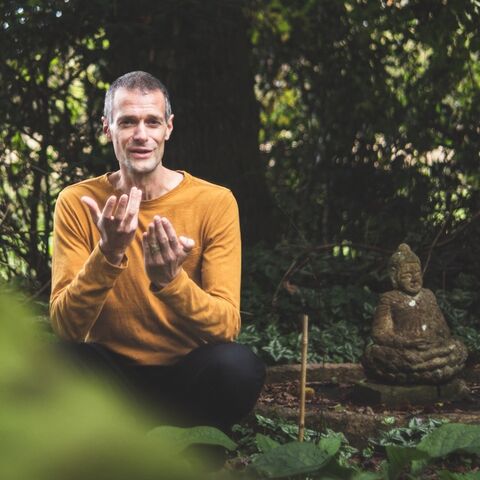
Current Practice Share | Mindful Q&A With Wendy N #32
In this thirty-second installment of the ongoing live series with Wendy Nash inquiring into meditation practice on and off the cushion, we plan to share our current (meditation) practices. Stuff like what they are, for how long we've been doing them, how they are going, why we are doing them, etc., asking each other (specific) questions about our practices. Wendy brings up lack and worthiness and explores how types of conceit play into this. There is talk of ambiguous loss and how reflecting regularly on loss can help. I mention samatha practice, and Wendy mentions Rob Burbea in light of jhana. Wendy passes on an angle of the second Noble Truth as something somewhat akin to selfing and shares that acknowledging ease from others is at the heart of her metta practice. And actually, by the size and smell of it, during the show, it was likely a sewer pumping truck instead of a trash truck! Of course, we welcome questions about meditation practice before, during, and after the Q&As.

Transcript
By Wendy Nash again for our 30-second meditation Q&A.
Wendy what's going on?
30-second Q&A we've got 30 seconds stop there your time is up so I think we've got our 30-minute Q&A today and you're on retreat Josh so that's that's really true I'm here on Gubbi Gubbi Country in Queensland in Caboolture and Josh you are not in Queensland you're not in Australia whereabouts are you?
In the United Kingdom and I've kind of given up on correcting people about I'm on retreat because it is more or less a retreat so it's at a Thai forest tradition and in the lineage of Ajahn Chah Monastery outside of London at Amravati and I'm actually not at the monastery grounds right now outside but I'm living probably amongst over 20 bhikkhus there's usually more here and I don't know how many female monastics nuns maybe 10 and seminaries and people called anagarikas and anagarikas which are they're the testing before they get to nabas all in white but anyway yeah it's quite a place to be in practice and today we're here to talk about our current practices speaking of this so the little description I have here is in this 30 30 whoops uh 30 seconds installment of the ongoing live series with Enash inquiring into meditation practice on and off the cushion we plan to share our current meditation practices stuff like what are they for how long how long are we doing them how how are they going and why we're doing them etc we will likely even ask each other specific questions about our practices like in the modes of being um spiritual uh spiritual friends um in the roles of teachers and coaches and of course we welcome any questions about meditation practices now and after this so yes meditation practice I mean that's what this thing is called meditation q a i'll just throw it back to windy right away and say windy what is your what is your practice uh recently what are you practicing well I will practicing getting wrong often so I when you said 30 30 second uh thing I was going was 30 seconds I think we're going for 30 minutes and I'm going actually we're probably going longer and you actually read 30 the number 32 so there you go why we're on small talk it's a it's a thing so if you're from Germany or you're from the UK if you say let's see half half eight in the UK that means 8 30 but in Germany it means 7 30 so there's been confusion from people this international place of them missing appointments because they don't understand when the Brits say half eight so in the states we say half past eight then there's no but yeah these and you can't they say like 10 to the hour but if you say 22 the hour well then you have a number 22 and you can't use because if you're just talking you don't say 22 because that could be the number 22 are 20 minutes and then I say 20 tell which not many people say that and people can get confused by saying 20 tell it's a shortening for until so 20 until the until the top of the hour but if I say 20 tell people are like what are you talking about yeah yeah I mean this numbers in English well it's you know this is the thing about cultural differences and and when you live in different countries and you know I'm Australian just do you want to mute just there for a sec Josh because oh yes that's right it's windy yes yeah so um when it's like I'm I'm Australian I was raised here but my parents are English and I've lived in England a couple of times but I've also lived in Sweden so and in Sweden they say half eight which is half 7 30 and then in England half 8 is 8 30 so in Australia we say 20 to 10 or 20 to 8 or um but we also we would never say 20 before the hour like you wouldn't 20 before 8 you would just say 20 to 8 or quarter to 8 so that's that's kind of all you do quarter past 20 past but in Danish you have a whole lot of other ways of saying like 25 past that's different in Danish so that's a bit more complicated and all these things you know and and I think what this does is it those sorts of experiences and the different ways language is used say sort of make you more aware of well just because I do it this way doesn't mean to say this is the only way to do it or even the right way to do it or even a better way to do it you know so you know it's that's yeah yeah it's a really good point um in Danish I think the literal translation is what is the clocks say and I love that because it's this whole kind of abstract notion of time and relativity and but the clock okay it's a physical object it's doing it what does it say I like that and the cultural thing was it was really it's helpful here because you have people from all around the world and I was just so inspired by um just an Indian an Indian practitioner and a Sri Lankan practitioner and they just so much more culturally involved in Buddhism so they really knew kind of the suttas and the stories ins and out so I can ask them about all these different things and just kind of see how their heart was kind of more in it while some of the westerner practitioners nothing against them it's kind of like okay look at me and my lifestyle and you know kind of my my spiritual ego and you know almost virtue signaling and you know uh kind of these this outer trappings in this personality level in the shell basically it didn't kind of get to the heart where I can listen to them tell stories about the Buddha and how inspired they were by hearing these and what's possible you know but some people might say well that's just kind of cultural indoctrination or you know they've been got to at an early age and maybe that's true but it just it just um it touched my heart a little bit more than just another you know okay look at me and my in my spiritualism and you know um all the different things and I don't know how to put it so but you know I I've got plenty of both of these as well so with with that you know I think inspiration is another thing for practice and then I guess we'll get back to my question here of um what your practice is and it's weird I kind of hear like a background chatter I don't know if there's a radio on do you hear anything I don't know I haven't got anything there's a dog barking on the opposite side of the street I hear that I hear that too I hear that too no it's I maybe I'll figure it out but it's not that big a deal okay so practice so I've been looking a lot at at the sensation of lack actually and how this is sort of a physical kind of contraction in the chest it arises and it sort of matches in with the experience of emotions like um just disappointed or sad or you know maybe somebody looks down at me which is a psychological one and just seeing how it all kind of comes together in this kind of creation of self and other opposite and I'm really curious to understand what it is that is this self the the sense of lack and how that maps to the self and it arises so um I I've been really looking at that that question of what is the sort of sensation and physical and emotional and psychological experience and the cognitive experience of lack and how much that creates a boundary and it's like we get we get connected by our sense of disconnection to other people I think that's very interesting when you kind of really cranky with somebody and you feel disconnected and alienated from them but actually you're tight in connected to the sense of disconnection so I'm very interested in that so that's where my practice is how about you I think if I can touch on that um that's that's a really good way of taking something that seems like a problem and turning it into to flipping it on its head and actually making that sense of disconnection uh a connection point among people who feel disconnected and I think there's a lot of that with our technology now people feel maybe wired in technological wise but they feel kind of disconnected from like real human experience like face to face and I think there's a lot of people empathizing with that right now and so ironically perhaps that is a thing of connection I wanted to jump before I get into the kind of nuts and bolts of my formal sitting practice which I love doing but maybe not everybody's interested um I want to ask the lack lack in a what what sense Wendy if I may ask is it um a lack of um I don't know yeah just put examples lack what's what's being lacked just kind of an abstract sense or is there something specific that's worth mentioning so it's you know the sense of lack so I'm not good enough I um I have problems I'm a fake um I feel looked down upon like it doesn't matter what it is when when I the reason it came up is because I was really curious about this I was kind of wondering what is it that is the germ of uh the self and and those thoughts that sort of create a lot of energy so I was wanting to know what was that point and so this is what was revealed and it was like everything was kind of gallivanting along it was sort of quiet and then as it kind of I didn't want to feel a sense of lack what happened is it sort of gathered momentum and it sort of created energy and it skipped over the top and and so I was really curious about that whereas if I just experience well I don't feel good enough today or in this moment I don't feel good enough then then actually if I just agree and I say well I don't feel I don't feel good enough actually I feel um unable to or unworthy in something and just allow myself to feel that experience and then the self can't form so the sense of lack is somehow highly correlated with uh feeling a sense of lack so the sense of lack and self kind of come together and it's existential so I can say well I have I feel thirsty I lack water okay so I've got my water and that's existential I need water I need food I need connection I need people I need sort of storytelling and creativity and things and um it's sort of a sense of contribution into the society into the participation with others lives to not have that would be I mean you would die with without any of those so it's existential and so I was very curious about like the sense of sort of how this arises and continues and there's a I sort of did a bit of research on this and it turns out that Rob Burbea so if you've heard of Rob Burbea he's a um and he died recently actually um but he does a lot of jhana practice and we did a lot of jhana practice and he speaks a lot about the sense of lack so there you are as it happens so there you go it's another another sense uh synchronicity here that you mentioned Rob and I'm not so familiar with his teachings but I am booked on at Gaia House which is basically the house of Rob of Burbea in the UK so it's a retreat center uh based basically on his teachings when they say they have all the dhamma talks it's like what do you mean all the dhamma talks they have all his dhamma talks and that's they listen to them in a special room at a special time so it is I would say kind of the house of Rob Burbea so I'll learn more when I go there again but this this sense of I can feel it when you're talking kind of this tightness in the chest and there's a there's a sense of sadness too you know um a little sense of sadness and a certain thing here is actually for a male like the stereotypical male that has um challenging time connecting with feelings that wants to just jump into the the cognitive part of it right away and do kind of a cognitive override it's not necessarily to to not feel it it's just my strategy and in and going to things so I think before anything I say here what's more important is this felt sense and allowing it to be there and feeling it and experiencing the visceral sense of it instead of just cutting that off or jumping over that and into to cognition okay so that said it we've talked about conceit you know usually we think of conceit as and this isn't necessarily judgment we all have this until I think we're fully awakened usually we think of conceit as oh I'm better than that person I'm you know look down on that person that person's not worthy of my time effort whatever there's also an inferiority conceit I'm not good enough I I I don't live up to this um I I don't you know so in a sense I think this is something to explore too and this is more common I think in meditation circles and dhamma circles though it it is a conceit though in a way because yeah you know and so let's just those are the main ones and there's inequality conceit I see when he wants to say something here but then I want to I want to I want to come back to this too because this is really important I have a couple other points sure well conceit just put your mute on there um so conceit is just um really the idea of of being separate and being above or below and it doesn't matter which way you go and it's just to say that the self arises but in your in what you said there you said um you tend to you know um be more cognitive and ride over which is a kind of not good enough you could hear the not good enough in that experience so you're doing the same and this is just what everybody does you know and it's wise because you can't always speak about all your emotions at the right time and at the time it happens because it's too intense so the mind will just do its thing and put keep you safe and then at three o'clock in the morning it'll wake you up and it'll say okay now let's have a bit of a debrief which about those emotions and how it's all coming together so it's just this is the the way it works it's not about um it's not that anybody is above or below but it is the sense of separation and disconnection that arises when the self arises from either being above or below and both of those say there is a sense of lack both of those they're identical in that way so that's that's that over to you really beautiful to put it that way too and see i didn't even really realize it until you pointed it out and as soon as you pointed it out you know there's this saying that even a mountain of gold wouldn't be enough you know so um this this notion of lack you know um i think i mentioned this it seems for the traditional feminine aspects of us there's a need for value and validation you know and in the sense of worth you know and when we were kind of looking for from it from the outside i don't think it will ever be enough it won't even be sufficient because no one knows kind of no one is hanging out with me as much as me right so i have to give myself this sense of worth and even belonging and where do i belong in my own heart you know even and so i think all these qualities um we we it it's so important to get them from within and then anything from without is just kind of maybe icing on the cake because it will i don't think it will ever be enough coming from the outside you know what i mean and the more traditional masculine qualities it's it's honor and respect you know we talked we had a whole thing on this and you know i there's times in my life where i just didn't feel like anybody was you know respecting me or you know honoring or you know gave it didn't care that but it was me imposing um what i was wanting to try to control their behavior to how what i wanted from them around me and it's ridiculous because i can't control other people right and plus the main but the main thing was i really wasn't respecting myself and i wasn't giving respect where respect was due to and even worse than that was probably a lack of dignity you know the the the sense of dignity that everybody um is is just it's just a basic human mode of operation it hadn't fully come online the way it should have um or there were things clouding it or however you want to say and yeah so this this internal notion i think is really important when it comes to this this um this lack as well because in a way it is kind of a it can be a construct of the mind and heart and a perception you know what what one man's trash is another man's treasure you know what how much do we really need to feel not in a sense of lack some people can get by on very little i'm just talking kind of a ridiculous external example some people that are like rich and have to have a bunch of stuff they have to have all kinds of stuff and have everything go exactly right to feel some kind of a sense of contentment or ease and then you look at you know the other kind of extreme like aesthetics you know they have uh robes a bowl and you know food and shelter and medicine and they could be very very content or we look at you know developing nations and how some people are actually better off in the heart there than really rich people fighting to control power and whatever and i think i'll throw that back we got a truck here yeah so but you can hear there in the way that you're describing it that one is better than the other and that suggests that there is lack there that sits between between the you know this high hierarchy of one is above and one is below so this this is again so i would encourage you now that you're on retreat to to notice how many times you think that you're better you're worse you haven't got enough or you know you're in the lunchroom uh i want more all of it or i'm cleverer than this other person or i'm i've got it and i understand what's going on and they don't and they're fake and they're sincere and they really get it all this it's exactly the same thing you go it's compare it's comparison conceit so this is the other one we didn't mention above below in comparison or quality conceit they talk about yes um but how do you mean with contentment here like uh i'm lacking you know like what do you you know what i mean like how does uh how much is enough i guess that's one thing you know so i i was looking at the idea of you know dukkha which is obviously the first the idea that life is uncomfortable you know you're in a you're in a cart and you've got these terrible roads which are all full of mud and ravines and then you're in a cart and the wheels are difficult and they go clunk clunk clunk you're never comfortable you can never be you can never be comfortable enough actually and so basically the first noble truth is saying you will always experience a sense of lack that is existential to your experience the second one is there is a cause to the experience of lack and that is the arising of the self the second is um the third is that the self does end this sense it does end and the fourth is well we've got a bit of a path going here this is how you do it basically to not feel a sense of lack create a self because if you just have a sense of lack but i would encourage you every time for the rest of your day to notice every single time you feel not good enough not right or more this or less that it is comparison but there is a quality to it which puts the self in the front of it so there you go i want to know about your your meditation i want to know what you're doing sure and i'll just pick that up um here but there's a trash truck or i guess they're they're sucking something up so hopefully it's not too loud and the noise remover will get this but um it's interesting how you frame the second noble truth as an arising of itself the cause of suffering and i hadn't really heard it put that way you and i see that but there are also times when i think a sense of self is is can be helpful or at least in a relative sense not an absolute sense but usually i think of clinging clinging in the sense that i have to have it comfortable all the time you know it i you know i shouldn't be uncomfortable and then when it gets taken away then oh no i want it back i i you know you know so and so like this trash truck that's just that's the cause of my suffering no it's how it's how i'm framing it now i want it to be different getting what i don't want right that's one of the the classical things of duca right and uh not getting what not getting what i want and getting what i don't want so so it's it's how much am i clinging to that you know and um so this yeah the sense of the um oh in generosity so the buddha started everybody with generosity too because when there's a sense of lack sometimes it's this meat like you're saying the self it's me that doesn't have xyz or not enough of xyz or it shouldn't be this way for me uh generosity kind of flips it on its head it doesn't matter really how much or how little i have it's the it's the act act of uh you know to to sharing to to benefiting another and at the same time it will uplift my heart it gets to the heart of the of the receiver if they're you know willing to take the generosity and it kind of it kind of reorients the whole way of being where in the world it's just like what can i get for me you know what we do what am i missing in my life you know how can i get more this type of thing like that or i'm a horrible person i can't and nothing ever goes right for me you know why am i always so stupid and you know um yeah yeah people don't get me so on and on and on instead of that yeah flipping it and i think that's a it's it's so beautiful and i had a talk with my teacher too of how i'm just actually even taking for granted every chance i get to serve the sangha it starts to turn into going in with the intention i would want to you know give this gift of service to ultimately end greed hatred and delusion and do that before during and after and this intentionality really means a lot you know um and i think i'm going to throw it back to windy one more time before i jump into my meditation my formal meditation practice here yeah i don't know so the other thing i've been really thinking about is um sort of how i think it's i've actually been thinking about ambiguous loss actually that we are a society which is absolutely filled with ambiguous loss now ambiguous loss came around from the vietnam war when soldiers went missing in action and their wives were going well am i married or am i widowed what do i do what do i do with veterans affairs what do i you know well i've got you know steve here and he's really lovely and what do i do about that and um how i i want to move should i leave the house and all these really complex questions that they they were sort of grieving but they had no funeral to attend there was no market there was no end and so later after that it became about dementia and how people's bodies were still there but the mind was slowly withering away and so the person was there but not there you know and also people with disabilities when they acquire a disability they go well i'm me but i'm not me anymore so again this kind of thing and esther perel who's a relationship expert she says when somebody's on their phone all the time and the other one is um not there that's also a form of ambiguous loss because you you're missing your relationship and i started to think about this from a societal perspective you know everything is online now and so uh you know you go to a government agency and you want help but you're sort of directed to the website or even if you do get an officer the officer is just reading off the website so you're not really able to connect with a person or you get letters back from government departments that are vacuous and empty no one says anything because of there's so much fear about it so it's very difficult to get this engagement and so i've been really thinking about how our society today you know even here you're muted and you're on the other side of the planet you're not sitting next to me having a yarn you know you're just um you're you're somewhere else and we're having to navigate the tech in order to be able to have that happen and there is an ambiguous loss that arises in this relationship between well we have a relationship we've been doing this for a couple of years now and we meet regularly and yet we've actually never met so i don't actually know you there's lots of things about you i don't know and and vice versa and so i've just been really curious about this sense of loss that we don't have community we don't have people we don't have connection in a way that is i can just ring up and find out everybody's really lonely socially isolated in one form or another so just that's the other thing and how have i been thinking about that with my practice it's really uh just noticing this ambiguity in the connection you know i'm a very relational person so that that means that's important to me so yeah so that's me there you go it totally is and this ties right into or the the five topics for frequent frequent recollection easy for me to say are these people it's called the five daily recollections and it is loss you know everything that i hold dear will be become otherwise will become separated from me and how deep does that go and wendy is mentioning these this ambiguous thing so we're not just talking about a super obvious loss like we lose someone in our lives they die or a disaster happens and we lose a physical object or we lose a job or you know um or you know some people lose a limb or some people lose their minds you know temporarily or whatever and this is inevitable in a human life but as wendy pointed out there are more and more subtle layers of this right there's a lot of ambiguous uh is this loss is this not and i think one of the ways to help what's coming to me is to cut through this is that um yeah you know even if we can't discern exactly is this a loss or not or where is the loss it is the the main thing is that this is something that happens in life and the more we reflect on it and the more prepare for it it's not to get bummed out to bum ourselves out it's to say oh this is just how it is this is the way this reality is structured so when it happens there's less devastation less fallout you know less grieving i mean nothing wrong with grieving but if we're we we have this kind of down in our bones that this is the way it is this is part of the human experience then being in alignment with that truth of the way things are actually can bring a lot of happiness because we're not denying that it shouldn't be that way this is how it is and reflecting on that again and again i think helps orient the heart towards the way things are instead of trying to cope with things that we don't want you know that we think shouldn't happen yeah maybe it shouldn't happen but it does you know and so how can we um yeah what happens to the heart when that happens and then when we reflect on that and then if we reflect on that over and over again how does that go into the real world and um how am i better off and those around me when i've spent that time reflecting on this and really touching into the heart on a regular basis instead of just having it bam and then deal with a huge fallout from it you know so yeah i think this is a super important thing and this hit me really hard too at a part and then sometimes it was so painful i would stay in loss in order not to have to feel loss again do you know what i mean so it was it was it was more comfortable to stay in one type of loss than to have to go and gain again and then to lose that all over again because that initial act of loss was so painful i did never want to go through that again you know so this is where that reflection helps a lot i want to hear you about your practice oh yes okay so now we're getting to this okay so my practice is actually really really super boring at the moment because i have yes i have uh you know all this cognition and i love all these different ideas and there's so many palettes to choose from from practices so for years i was kind of just going from one to the other and in fact there was times in my overall practice where i just sit down and i would just intuitively get okay this is what you need to do in this moment and i think that's a good way to operate because it helps with intuition for a little bit but the thing is you can't go deep in one area like that usually you know so the samatha which is a cultivation for samadhi um what it's in in kind of in the paak tradition uh right now of just samatha practice so it's based on kind of the suri maga samatha on anapana so just paying attention to the breath usually right here so when i can't really connect right there i go into the body usually first off first i'll usually set an intention and then i will do a little bit of meta and wendy is a meta practitioner loving kindness or unstoppable friendliness i think she has some other interpretations so i'd love to hear about your meta practice too when i'm done here and then it's just actually really really boring just knowing the breath in this area some people feel it on the top of the lip which i don't so much so it's around the nostrils and just a few notes here um it's just to know the breath you know know the in and out breath kind of moment by moment and it is really subtle and one of the reasons there's criticisms here for doing it this way some people say that attention is very brittle you know it's not embodied so you can get you can get deep and subtle but it's not really lasting and it's really super flimsy and brittle and i can see that but i can also see where it is it can be really distracting in the body there is so much more potential for so much variation which is a good way to practice too with the whole body and with sensations in the body areas of the body you know some people focus on chest belly but um i found that there's at a certain point it's too gross you know it's harder to go subtle and subtle and stabilize the awareness on a subtle breath when it's deep in the body or anywhere else in the body uh it's a good embodiment practice it's stabilizing it's actually kind of healing and uh there's just so many more possibilities within the body but this area right here it allows uh to to stabilize and go very very subtle with the breath and it's really hard to put language to all the different subtle variations of the breath in that area um i will say too that it helps um when the mind's going and the tension wants to be pulled away it helps me because it's not so if you think about it this is my speculation i don't know if there's anything to this or not in our life our attention is drawn to the external and then to the internal okay i have a sense impression objects this thing but then i'm going back to my emotions and my thoughts about it so i'm getting kind of pushed out and pulled back in with experience a lot of times right i thought a feeling a sense impression and it's kind of like there's not much stability and it's um i don't know maybe a lot of energy going in and out but right here it's right on the precipice of internal and external so if i'm focusing the attention there i'm not getting drawn out or are drawn in a lot you know so in that sense it's stabilizing so with this method supposedly it will get uh subtle enough for those who are able to and then a nimitta is supposed to arise and that's a whole nother thing that i haven't got there yet right and that that's this version of of uh first into access concentration uh with this counterpart nimitta and there's there's three different versions of a nimitta sometimes and some people report them different and some people report a lot of similarities like a light is involved apparently but again i that's all um not from experience at this point so i'm just practicing it again and again and yeah it's there's nothing juicy to it really i mean it can feel really good and but there's you know it's not a lot of fancy strategies you know it's just simply knowing the breath again and again here and the purpose of it too is non-distractibility you know so it will it supposedly build up the mind strength and the mind power to then penetrate deeper and deeper into phenomena and reality to start just then discerning ultimate materiality ultimate mentality and then going on to dependent origination but in such granular detail uh and complete detail that like no stone is left unturned and you know it said we need to know and let go but how deeply do we need to know dukkha and each anatta i talk to people and say no you don't need that much in depth but i say if if it's if i do need to know that and i disregard it well then that's it and and one of the reasons i switched this to it seems that most of every other thing is conceptual you know the practice and i i would say i understand maybe 80 on a conceptual level a lot of these other teachings they've been very helpful and i'm forever uh or forever is a long time i'm indebted and grateful for that and they continue to help my life and build wisdom and at the same time they're they're concepts and so supposedly this will get to the ultimate materiality and ultimate mentality i mean it can't be pushed any further it goes to the ultimate end where a lot of these other practices and teachings they're they're concepts helpful concepts but they haven't gone to the ultimate level and so that's that's my practice for the last couple years i'd say for the most part you know of course i do variations and contemplations and different types of things here and there but that's the core of it yeah it's interesting so we've been listening on dharma seed which is a talks i think it'll be okay to say that you can download that app and rob burbear has got talks there 20 i would recommend the 2019 i think it's sort of december into january it's 21 days or 23 days of retreat and he talks about the anapanasati sutta and the the mind the breath meditation and he says many people misunderstand it and they focus too much on the nose or whatever this is very interesting so here you are describing exactly what he says maybe that's not the right way that's just one comment that has been taken as kind of gospel but it's actually been taken out of context this is very interesting you go oh it totally is and there's a whole this is why i don't talk about this much especially solo because there's a jhana war or i don't know how to put it but some people say oh no you need to do the sutta jhana and some visuddhimagga jhana people get really heated and passionate about this really opinionated and so this is on the visuddhimagga some people say there's an aware act some people say you can be aware of other things while in you know the first two or three jhanas other people say no if you really get jhana based on a nimitta and a light then you're not going to have any recollection i mean you're not it's just jhana only when you emerge from jhana well then you can check the jhanic factors and things like this from what i understand and i i'm i'm not like that i'm open to until i can see and know it for myself and say otherwise then i just have to say okay i'm open to this now i'm just choosing to practice this way because the way that rob talks about i've already practiced that and uh you know it's it's it's helpful but until it isn't uh in this uh way of practice too then i really can't comment on both of them with any authority whatsoever you know and i see the pros and cons to each approach and from where i'm at now and the jury's still out for me so i just have to defer to some of the um people i practice with lay practitioners who do do this method and to me their practice is really super profound i mean they've gone past this and into discerning the lives and the financial materiality of different realms beings in different realms i mean to me that is super advanced and they're using this method um but i can also see how people get kind of upset and don't make progress and this is why i think a teacher is really important as well and uh spiritual friends of course too but of course i love hearing what rob has to say what very little i did because he was kind of an iconoclast and he wasn't afraid to say how he saw things and you know where a lot of people are very timid about speaking out on something that goes against the grain and things like this but yeah he was kind of controversial too i haven't studied the soul making dhamma he talked about but even the name of that title is very provocative because you know the buddha never taught anything about a soul you know so that i know of but yeah yeah it's very interesting as you were speaking i was listening to the sort of the arguments the jhana wars and i was going yeah so the one person feels a sense of lack and they argue and they get upset and you can feel the sense of lack in the whole conversation that whole and did you do it right and then when you said i've done the i've done rob burbea's version and that didn't really work for me and you can hear the sense of lack so now i'm trying something new which is this one and so that i'm trying that because i don't quite get it and i i feel like i haven't understood that so you can hear the subtle forms of lack and how the self is arising in that space you go it's great you know i can see it interpreted like that and it's a great reminder to point that out thank you wendy i think what's what's more important is i don't know you know admitting that i don't see and know and the one way i i actually you know according to that i think and i don't like to talk about attainments or anything but it's it's i didn't really talk to a lot of teachers in that way to check and see if it would have qualified under that but i know for sure it's other way i call so so it's just like exploring options it's not necessarily that the other way is bad and i'm disaffected and i'm not of that so much it's just like okay here's here are the options um i don't know what i don't know until i can kind of see and know that for myself then i'm just kind of like but you know it is though um so i could frame it as i laugh this other method because i've got it so it's very important to keep in mind that it doesn't turn into that sense of lack and it doesn't turn into this sense of striving and comparing myself to other people and i haven't got there why haven't i got there you know but i've been practicing for so long you know and i gotta have this and craving for it you know these are all very important things to keep in mind because they're actually detrimental to that and um the in you can see in the language that i use that there's there's still plenty of traces of that left and that's not really skillful either so i appreciate wendy's friendship here pointing this out keeping it real and you know um actually they say um feedback from someone you admire is is more valuable than a pile of gold because not everybody is willing to be open and honest and point these things out not a lot of people are ready to hear things either you know and some people aren't even equipped to know what to do once it comes once they find it out you know they don't have the tools and resources to deal with it so we we have to be mindful of this too who we're talking to and when and how capable and resource they are as well and but yeah when the time's right and we can get feedback like this from friends pointing i always ask people i admire for my blind spots because it's so super valuable and no idea yeah i mean as you were speaking i could feel my own sense of lack in the sense of self arise this is the right way that's the wrong way this is misunderstood this is a very interesting inquiry and instead of avoiding the sense of lack and going oh well i i shouldn't fit i shouldn't think like that which says i i have a sense of lack about my sense of lack uh just to allow oh well i actually do feel like i'm not good enough at this or i haven't got it or i got it wrong or whatever i think that is a more interesting inquiry than saying i shouldn't be feeling that that's to me anyway so oh yeah absolutely and i think buddhism comes in here instead of me comparing and being jealous of someone else's attainment where they are being happy for them wow isn't it amazing that i get to practice with people who are into this and have done that and it's it makes me so happy to to where you are you know or that that's possible and so this sense of mudita i think can really help balance a lot of this out and then when it means something that someone's struggling then that sense of friendly friendliness can turn into compassion you know and and the equanimity to so where it doesn't get you know too far heightened i think on one one end or another so yeah well wendy i think we're uh we're coming up on the end here in a couple minutes um i want to hear about uh any anything in your your meta practice or anything else you want to say and then if you want to wrap up and should we do a little summary of what we talked about here sure you you can do the summary because i won't um but made i my favorite meta practice which is not one that anybody ever you know i don't do the verses or the the you know recite the lines i just go well notice anything that anyone does for you to help you feel at ease and just do that as you go along your day you don't have to do anything with it you don't have you just pause and notice it like it's not complicated so it was lovely that this week we had a surprise little q a session and you wanted to include me in that and you've been wanting to include me in this for a couple of years which is so beautiful even though you're in these different places like it's such a it's so kind of you to to include me in your circle you know it's it's amazing so just to notice all that that's i think really easy if no effort i'm but great believer in no effort in meditation practice yeah this effortless effort is so important and it's it's it's so amazing how the heart can be brightened and uplifted just that simple acknowledgement and i would say there wouldn't there wouldn't be this without you wendy you know without joining and talking about that this wouldn't happen so i'm really appreciative to to hearing and just i'm struck time and time again by how insightful you know all these things and so many nuances that that i wouldn't i don't think stumble upon the way you do and so it's a great compliment um complimentary for doing this and yeah actually i'm not really big on summaries either i let me see if i can even remember i think you know we talked about lack and we talked about kind of worthiness a lot i talked about the meditation practice and this this notion of ease that is the metta suta may all beings be at ease and so honing in on that i mean it's a when even you said that i could just feel you know anytime someone does something that promotes ease we're so stressed out in society so many obligations so many things to worry about and deal with like this trash truck blowing up dust and stuff and at the same time there's a sense of ease and the support you know that get from wendy and others uh normally you know without support i might be reacting differently or seeing viewing differently as well so it really does make a big difference and especially the ease we give to our own heart and acknowledge the ease when it's there and when it's not there too and and then um intending to bring more ease yeah yeah like i think the sound of the the garbage truck has gone because just on time it's finished it's how it works usually yeah yeah you know so yeah great to chat enjoy your written retreat and we will connect next time whenever that is sounds like a plan wendy all right have fun you all be well and at ease