Wholeness and welcome,
This is Josh Dippold of Integrating Presence,
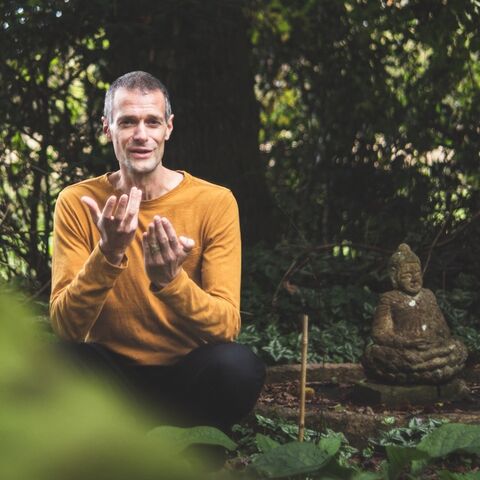
And today I have Keith Christich.
Christich.
Pretty close.
Well,
How's it going today,
Keith?
Doing well.
Happy to be with you,
Josh.
Cool.
What I usually do is I throw it back to the guest and say,
Who's Keith and what does he do?
Yeah,
That's a good question.
An evolving answer,
Isn't it,
For us all?
Yeah,
I mean,
I think I'm a Buffalonian,
So I'm in the States and live and work as a way of serving the world to help people slow down.
The world is too fast and the world is an off-centered place.
And so my whole approach to spirituality,
To meditation,
Is to help people slow down and really reconnect with the true self and to that divine spark,
That piece of God that is alive and well within us that we far too often overlook.
Well,
Cool.
And from what I understand,
You're into mysticism and especially practical mysticism.
This intrigues me,
Especially in today's world of technology and,
Like you're saying,
The fast-pacedness.
Tell me a little bit about it in general and then how it applies to helping people slow down and take things in more.
Yeah,
Sure.
Well,
I grew up in the church,
So I was a religious evangelical upbringing.
And so I had this very religious conventional understanding of God,
The guy in the sky.
And so I've had to go through quite the deconstruction journey of unlearning that.
But with unlearning the divine being,
The superpower outside of myself,
You know,
I fell in love with the Christian mystical tradition.
And not only the Christian mystical tradition,
But the mystical traditions that's at the heart of all the religious traditions.
I believe each religion has its esoteric and its exoteric expressions.
It has the external dogmas,
The beliefs,
The buildings,
The temple,
The church,
Whatever it is,
The holy book.
That's all the external stuff.
And then the religions also have this inner way,
This inner way of contemplative prayer.
If you're in Christianity or meditation within the more Eastern religions.
And so this esoteric,
This inner practice is what I believe all the contemplatives share in common.
And that when we get beyond the words,
Get beyond the dogmas,
Get beyond the books that say different things,
We are all speaking the same language.
And so I want to get to that universal truth that is at the core of each of the religions.
And when we find that universal truth,
I believe it's the most practical thing we can do because it's touching reality.
And most of the time,
Most of us do not.
We do not live in reality.
We live in our mind.
We live in the past.
We live in our opinions.
We live in our political beliefs.
We're not living in reality.
And so I don't think there's anything more practical than waking up to God,
The infinite,
The absolute,
That which is ultimately true because it's what's here and right now.
Well,
Beautifully put.
And I guess,
Why don't we talk a little bit about practices in leading to this?
And I mean,
You laid out some of the benefits there of what it is.
But let's talk about some of the practices and,
Oh,
I don't know,
Other ways to arrive at this.
I mean,
What makes a mystic a mystic and what distinguishes it from other things?
If it can be talked about some of the commonalities,
Maybe what are some of the differences,
I guess?
Yeah,
Well,
I mean,
Those are all good questions.
And what makes a mystic a mystic is,
I think,
Just to be a human open to what is.
You know,
I think part of the practical piece of mysticism is the reality that our spirituality is sometimes too spiritual.
So I want a mystical mysticism because it can get too flowery.
I know in mysticism can be poetic,
Which I love poetry in that.
And I love the flowery language,
But it can feel otherworldly.
It can be and then it can go even more new agey or too woo woo or that and that has its own different flavor.
And so I'm after what is real and what is concrete and what is universally shared.
And what is universally shared,
I believe,
Is the human journey,
Is the human condition,
Is our suffering,
Is the fact that we experience great joy,
Great highs and we experience great lows.
And when we can embrace that,
The highs and the lows,
The good with the bad,
Then I think we can share,
Touch what's ultimately true about the human.
And inside of that,
What is ultimately true about the human is the sacred,
Is the divine.
And so,
You know,
I come from the Judeo-Christian tradition.
We're made in the image and likeness of God.
And so we have that divine element within us and that we just simply overlook.
And our contemplative practices,
Meditation.
I teach,
I'm a certified meditation teacher,
But primarily I teach the practice of centering prayer,
Which is a Christian-based practice.
But just like mindfulness comes out of Buddhism,
You don't have to be Buddhist to practice.
And yoga is born out of Hinduism.
You don't have to be a Hindu to practice yoga.
Centering prayer is this beautifully Christian practice that you don't need to be Christian to practice.
And so that's the method of meditation I work with.
It's very much about silence.
Father Thomas Keating is a Trappist monk who popularized the method.
And he would say,
The universal language of God is silence.
All others are just poor translations.
And so contemplatives,
We've got to learn the language of silence.
And it's not just emptiness.
It is emptiness,
But it's more than emptiness and less than emptiness.
Why not?
We'll write on silence as an interesting thing to discuss on a spoken word podcast here.
But this notion of silence,
It is really interesting.
I know there's some people in my life and that I meet would love me to be a little more silent.
But it really is profound,
And especially on meditation retreats where there's something called a noble silence.
It's a way to really go deeper and practice and our experience of the world perception that most people don't get a chance to experience.
You know,
This always on media culture we live in and things that are demanding our attention and responsibility that require communication.
What I noticed during the noble silence retreats is communication doesn't really stop.
If we're kind of in contact with someone,
There's still like an unspoken communication either through body language,
Thoughts,
Feelings,
Emotions,
Even trying to restrain one's conveyance of communication.
And I would highly encourage everyone to try this.
And it can take other forms besides just not speaking,
Right?
It can be like turning off the internet for a couple hours a day,
Powering off your phone if you're in a position where you can do that safely.
Yeah.
So,
I mean,
What have you learned from practices of silence and,
You know,
Or what can be said about silence ironically of how beneficial it is?
Yeah,
Great question.
And to point out the irony is too good.
You know,
We can talk about it in a couple different angles.
I mean,
We have external silence,
Which we certainly seek in our meditation practices.
You know,
We go to quiet places,
Quiet places in your home,
Quiet places in nature,
Quiet places like a monastery.
But then there's also interior silence,
This word that we use in the contemplative tradition,
Internal silence,
Interior.
And it's not just inner quiet of the mind.
And so I think we could play with these because,
You know,
We use external silence and I,
You know,
One practice I do is my sacred hour in the morning.
I start my day without the internet,
You know,
Without my phone,
Without noise,
Without reading email and reading the news.
It's like protecting that sacred time of day,
Just like I protected at the end of the day to start the day with silence.
Even though I have a little baby boy,
It's silence with his joy.
But it's not it's not filled with news and tasks and other people's agendas.
And same thing with the end of the day.
But when it comes to our practices,
You know,
We go to quiet places.
We could go to a monastery and spend a month there,
But have internal noise,
So much noise.
And that's often what happens.
We think we're going to go on retreat and it's going to be this beautiful time of like peace and quiet.
And then what comes up is our old history,
Old trauma,
Old memories,
Old thinking patterns and old ways of believing and behaving.
And so we're externally quiet.
Sure,
I'm sitting on top of a mountain.
But internally,
It's just the ego is raging,
The monkey mind.
Right.
And so how do we get underneath that is,
I think,
The real work of the practice of creating the space for the messiness to be there while not rejecting it,
But getting underneath it.
Because the reality is the silence is here.
The silence is holding my words.
The silence is holding your words.
The silence never disappears.
It just is veiled temporarily.
It is.
And,
You know,
Sound seems to emerge from it and vanish back into silence.
That's always here.
The sound of silence.
I mean,
Even some practitioners talk about this.
I think it's been called the nada sound.
Listening real carefully,
There's this.
Oh,
This.
I don't know how to.
It's the sound that's going on.
If you get really still and quiet,
Some people talk about hearing this,
This sound of silence,
This nada sound.
And I wonder if some people mistake it for tinnitus.
I think the Brits call it tinnitus.
I have to ask some teachers more about it,
But if you have anything to say about it,
That would be wonderful as well.
And also,
You know,
The space between thoughts and emotions in formal practice,
Too.
This is something that can be paid attention to deliberately to amplify it.
And like you're saying,
Leave the other phenomena arising to just unfold how it is and just give the energy and attention to the gaps in the spaces between thoughts,
Between emotions.
Yeah.
Beautiful,
Beautiful.
Yeah.
You know,
I think I mean,
I might be mistaken,
But I even think the word om is said to be the like from the Hindu tradition,
Like the sound of the universe.
Like when the silence boils down,
It's this hum.
It's not om so much as the hum of the like creation in a sense.
And yeah,
I would say,
You know,
The other thing with tinnitus,
I will just be really brief.
In the past,
I've had too much coffee before meditating and I would have the eardrum tinnitus and I had Googled that.
And they said,
If you drink too much coffee or caffeine,
You will get buzzing of the ears and mind.
And so that was something I'd cut back on.
And so that is a reality if you're a caffeine drinker.
But more importantly,
I think,
Is pointing at that place,
That space between the thoughts,
Just like there's a pause between your in-breath and your out-breath.
You don't pay attention to it most of the time.
There is a pause between every thought that comes by.
And so how do we get that spaciousness,
That objectless awareness,
As we call it in Centering Prayers?
We're always aware of objects,
External objects,
The things you see,
The things you can hold on to,
The like smell of the air.
It's very external.
And so,
Meditators,
We close our eyes.
We turn away from the external objects.
But then we find internal objects.
We hear the noise of our mind.
We have our thoughts and opinions.
We have a,
What's for lunch after this thoughts,
You know?
And so we have internal objects of attention.
But if we give proper space and time to our practice,
That sort of spaciousness expands.
And it might just be micro seconds,
Just one or two seconds or less.
But if we can rest into that,
That is what we essentially are.
That,
I believe,
Is what we are by nature,
Not the thoughts that are always changing.
Yes,
Beautiful.
I would have to agree.
It's something that seems more permanent,
Reliable.
It's almost like this awareness that knows and observes and experiences.
It can't really be defiled and it really can't be purified.
Its only function is really to just observe and know and realize.
So there's usually the object and what's knowing the object.
And so these awareness practices where we can try it out.
And it's like in a movie theater where we're engrossed in the screen.
But we could stand up in the movie theater at any time,
Turn around and look where the projection's coming from.
And the light and the projector where it's coming from.
So we can almost make what's knowing the object,
The object itself.
Try to observe the observing and be aware of awareness.
Know what is knowing.
Notice what is noticing.
And these awareness practices can be really deep and profound.
And yeah,
It's a whole class of meditative practice.
Yeah,
I'm not sure if you'd be familiar with Rupert Spira.
The name,
Yes.
He's known for non-dual teachings,
Right?
Yeah,
Advaita Vedanta and non-duality.
He's a very primary teacher to me.
And he is somebody that speaks the most with the most articulateness about this experience of awareness.
Just using the most clean and objective language I have found.
So he is somebody that speaks,
Is close to my heart.
But what you're speaking to,
The analogy I often use is the sky.
And this is a classic spiritual metaphor that you talked about the inability to be defiled.
Like the sky is inclusive.
It's open.
It's available.
It's saying,
Here I am.
And that is saying,
Here I am to the beautiful fluffy white clouds that we like to lay down and look at.
And imagine they're beautiful bunnies or something.
And then the sky is available to the storms and to the thunder and to the lightning and to the rain.
So the sky is this beautiful analogy for what this awareness is.
It's not pushing the white fluffy clouds away.
It's letting them be,
Letting them come,
Letting them go.
It's not pushing the storms away.
The sky is never injured by the storms of life.
It's never made more beautiful by the clouds of life.
So this inclusiveness,
If we can be willing and open and receptive and spacious like the sky.
Well,
It is what we are.
It's that which we are trying to find.
It's that which we already are,
But we've overlooked.
And so these awareness style meditations,
I believe,
Is about opening to the sky.
Letting go of the clouds,
Be them positive or negative,
Painful or pleasurable.
Riffing on this,
Let's talk a little bit about maybe how emptiness and the formless play into this.
We've got this openness metaphor of the sky,
This vastness,
This inclusiveness.
What's your take on how emptiness and the formless play into this?
Well,
I feel very much,
And there'll be many people that may disagree,
But that is the background of experience.
You know,
That the darkness almost comes before light.
Emptiness comes before somethingness.
Nothingness comes before everything else.
Other traditions might say otherwise,
But it's this understanding like we spoke of silence before.
Like silence is the emptiness that holds all sound.
The emptiness of the cup that is sitting on my desk here is full of air.
And only if I fill it with water or with coffee or something else is it temporarily changed.
And then when we empty that,
It returns to its more permanent state.
And so I think that's one of the elements that I think a true mysticism is after.
What is fundamental?
What is essential?
And whatever is essential is that which cannot be removed from it.
So if I take my glass,
Which is glass,
This is a mason jar.
And if I throw it against the wall,
It is no longer a mason jar.
Its form is destroyed,
But it will remain the glass,
The glassnessness.
You know,
We could crush it up into billions of pieces.
And the mason jar,
The cup,
Its form would be no more,
But the glass would still exist.
And so when I think of formlessness,
I think of what is ultimately essential.
When I think of the nothingness,
When I think of emptiness,
That's the background.
That's the essential nature of things.
But I think more exciting is somethingness,
Is everythingness,
Is I don't want to have a thousand shards of glass.
I would much rather have a mason jar to drink out of.
So I love the ego in a sense.
You know,
We could talk about our true self,
Our essential self,
And then our ego,
But the world's fun because we have egos.
The world is fun because silence becomes music.
And so I think it's this beautiful dance between the two worlds.
And as a society,
We affirm the ego and we forget our true nature.
So as spiritual traditions,
We return to our true nature.
But we can also play with the ego.
Really good point because I know I've gotten rid of seemingly a lot of gross inferior conceit,
Superior conceit,
And there's even this subtle form of conceit thinking,
Well,
I'm just as good as this guy,
Right?
Even that's a kind of a subtle form of conceit because we all have our own uniqueness to offer that can really be unmatched by anyone.
But there's this kind of spiritual ego I still have and still working on.
And I think the way there's a dog running up to me now.
One of the things is just ego is not the enemy.
It's something that needs to be integrated too.
So,
Yeah,
It's there to get us from point A to point B.
And,
You know,
Yeah,
Like you say,
Enjoy life.
But it's when it starts running the show is when it gets to be.
It can get out of hand sometimes,
Right?
Yeah,
Yeah,
Absolutely.
And I just totally affirm that because we get a lot of mixed messages about the ego,
That like ego is the enemy or,
Yeah,
You have to kill the ego.
In the realm of the persuasion,
You don't have to kill anything to be spiritual.
The ego isn't even a thing that you can kill.
It's just an activity,
A play of the mind.
So,
Yeah,
How to integrate it,
How to befriend it because it's there.
It's a part of reality.
Someone,
A fellow Centering Prayer practitioner said to treat it like a puppy,
Like an untrained puppy.
I was like,
I could do that.
I can treat my mind as an untrained puppy.
Hopefully tune it up.
That's a really good metaphor for meditation training,
Too.
I think Jack Kornfield uses this metaphor of a new puppy.
You tell it to stay,
Stay,
And then it will go wander off and you don't need to beat the puppy or anything like that.
You just come back again and again,
Train it,
Stay,
Stay.
And it's interesting.
A dog came up right to me then.
Maybe when you thought about that metaphor,
Yeah.
But nice synchronicity perhaps.
Why don't you talk a little bit about the Centering Prayer?
I had a fellow you know,
Rich,
On before talking a little bit about it.
But why don't you talk a little bit about it in general and then maybe how you work with people with this and then any other practices and work you do with other people and maybe groups you have,
This type of thing.
Sure,
Sure,
Yeah.
Well,
It speaks to Centering Prayer.
It's really an updated form of the contemplative prayer tradition within the Christian church.
And again,
You don't have to be Christian to practice it because it's ultimately a practice about consenting is the word we use.
Consent means to say yes,
To celebrate the divine presence and action within us,
To say that the sacred,
The absolute,
The all in all,
The spirit,
Yahweh,
Whatever framework you have,
The divine is present and alive within us and acting in our favor.
That God's beingness,
That we are borrowing our being from God and we are unfolding as God's being on this planet.
And so Centering Prayer is a simple way of saying yes to that.
And a simple 20 minute practice.
I mean,
It's,
You know,
Traditional 20 minutes.
So many meditation practices,
You do it for 20 minutes.
You could do it for five minutes if you need.
But it's very much,
It's a letting go practice.
It's a way of using either your breath or more commonly what we call a sacred word to release thoughts.
And thoughts in our tradition mean emotions.
It means thinking patterns.
It means visions for the future.
It means if God shows up and starts whispering into your mind,
That's a thought.
You let that go.
And if it's actually from the sacred,
Then you can trust that God will leave a voicemail is something we would say.
But we're actually letting go of everything to move into that objectless awareness.
Recognizing that God speaks in silence as silence.
We don't go to silence to have a word delivered to us.
God's voice is silence.
That's really beautiful in a way to put it.
I think what's coming to mind now is because the heavy emphasis of the word in Christianity,
Right?
That seems to be the primary focus for most Christians as far as I know.
Maybe I'm getting that wrong.
When it's turned to contemplative practice that I kind of only hear about with Christian monastics for the most part,
Other than the kind of movement you're involved in now.
I mean,
Well,
Of course,
Monasticism in the Christian tradition has been around a really long time.
This contemporary contemplative practice is somewhat newer.
However,
Like you're saying,
What I understand is built on older practices.
And why don't you go into some of the Christian mystics that inspire you.
You mentioned Father Thomas Keating.
Are there any others you would like to mention as well?
Yeah,
Yeah.
And I'll just share briefly because you said it so well,
But just to reframe it.
Centering prayer is born out of the Christian monastic tradition.
And that's why it's what we call an updated practice.
Because there's this beautiful meditation tradition in the church that nobody knows about because it was just monks and nuns.
And so this practice is about giving it to ordinary people like myself and like you and likely like our listeners.
But for Christian mystics,
The list is long.
Some people will very much like Thomas Keating.
Thomas Merton is one of the more contemporary teachers who died in the 60s,
Very much into the interfaith dialogue in conversation with Thich Nhat Hanh.
A very favorite is Anthony de Mello.
He's from India and he beautifully weaves Western and Eastern consciousness because he's from India.
And he was also a psychotherapist and a Christian priest.
And so he has a psychology,
The spirituality,
Has the East and the West.
His book is titled Awareness,
Pearls of Reality,
Awareness.
That's the name of the book that is just beautiful.
And then there's other old school folks like the German mystic Meister Eckhart,
Who is said to be the most Eastern Buddhist-like Christian mystic to exist is Meister Eckhart.
Which,
By the way,
Is Eckhart Tolle's name,
Who Tolle kind of borrowed that Eckhart phrase from.
Do you know of Jacob Bohm?
Yes.
Yes.
I don't know if he's more controversial or not,
But I heard of him years ago and I have only read like a work or so,
But it seems really profound stuff.
Yes.
And it's somebody I know very little about,
But the folks that love Jacob,
Love Jacob.
Can't say much more than that.
Well,
Right on.
Anything else you want to draw people's attention to with what you do?
Thanks,
Josh.
The true source of peace,
The true source of joy,
The true source of love is closer than breath.
We think it's out there in the world.
We think it's in making money or getting a new job or getting in a new relationship.
But when we can relax a desire and go to our essential nature,
That formlessness,
We find that God is closer than breath.
Well,
Beautiful,
Keith.
I really appreciate you taking the time today to speak with me and my audience.
I wish everyone out there the best in their contemplative practices and may all beings realize awakening and be free.