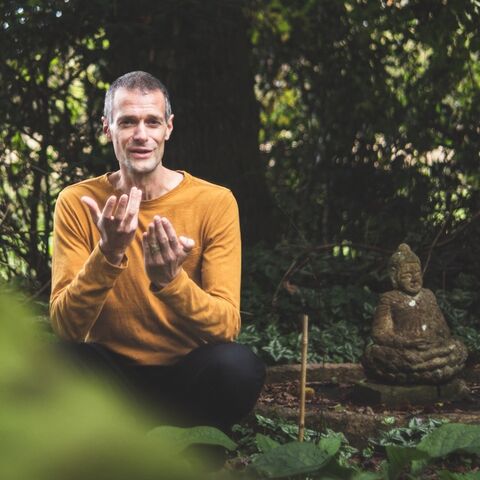
This is Josh Nipple from Integrating Presence and today I have with me guest Christy Geltz.
Christy is a good friend of mine along with her husband,
Robbie.
I originally approached her on a topic that we're not going to do today,
But Christy came back with another topic today and it's about conscious pregnancies.
Of course,
That goes along with births and expecting mothers and fathers.
Obviously,
When she came back with that topic,
I was wary at first.
Still a little bit too because I'm single and childless.
You heard me right ladies,
Single.
Maybe this is too much information,
But for me,
It was never really a thing that I wanted or didn't want.
It was dependent on circumstances and partners.
Definitely not for or against.
I thought this would be totally out of my comfort zone talking about something like this.
I jumped on the chance to do this because when I can get out of my comfort zone,
That's how I learn and grow.
With that said,
Christy,
How's it going?
Good.
I'm going to sit back in the chair a little bit here.
If you want to just tell people who you are,
Maybe a brief bio.
Okay.
My background,
I grew up in the St.
Louis area.
Went to school in Rollam,
Missouri for engineering,
Did chemical engineering very much in the science engineering side of life.
That all interested me.
After I graduated,
I worked a lot in the oil and gas industry for various companies.
Then went through a really big breakup actually,
Which got me thinking more about the spiritual side of things and catapulted my journey inward.
Then continued working as an engineer until my son was born.
When he was born,
It was too hard to watch someone else care for him.
I was convinced I was going to go back to work,
But it was just too hard to do.
Then quit my job and became a stay-at-home mom and have had a daughter since then.
I have two kids and now I'm their primary caregiver.
I also do commercial.
I do renovations with my husband.
He's into commercial real estate,
So we do property management and that sort of stuff as our income.
Cool.
I guess,
How do we dip our toes in this topic of conscious pregnancies?
It's been a topic since time immemorial about planned pregnancies,
Unplanned pregnancies,
Conscious pregnancies.
It can go deep into the spiritual aspects of this.
As a little foreshadowing,
Maybe towards the end,
I'll share something maybe more on the metaphysical end that I recently learned about that's controversial surrounding this.
Let's talk about just everyday life,
Where we're at now in the current day and age.
Maybe let's just start with what is one of the biggest things that would maybe about what would constitute a conscious pregnancy and unconscious pregnancy?
Maybe that whole spectrum even.
Yeah,
And then I even kind of questioned using the word conscious,
The title because I'm not,
You know,
How conscious is it really?
But to me,
I felt where I went from what I felt from unconscious to conscious was when I was really following my own tuition and recognizing the basically just intuitive knowledge and power that flows through the mother from pregnancy through the birth.
There's compared to like my daily life,
When you're pregnant,
There is so much more happening.
So it's much harder to ignore your intuition.
Even you take it like basic food cravings.
So like women who are pregnant,
You know,
You hear about it all the time.
They want to eat things,
Certain things and other things are,
You know,
Make them actually throw up.
So it's your body's talking to you.
They have a lot of gut feelings.
It's just this huge purge almost too with like the morning sickness and all the hormonal changes.
And if you're not respecting your body,
Respecting those messages,
It can make the process very difficult.
And so I really struggled with that with my son.
There was a lot of,
I was really resisting.
So I'm working my job thinking,
You know,
Probably not letting the divine feminine takeover very much go,
Go,
Go.
And it's like,
Wait,
I need to like take a nap in the middle of the day.
I'm working,
You know,
I have this job.
How am I supposed to go and like take a nap in the middle of the day?
And I was sick.
So most women or some women have morning sickness for like the first three months.
Well,
I was sick the entire nine months with my son.
So it was again that like eventually I got to a point where I did honor it,
Where it's like,
Yeah,
I'm just going to take a nap.
I'm going to put my away sign on my profile and then I'm just going to take a nap and that's going to be that.
So yeah,
I think that to summarize,
I think it's just,
You know,
Following your intuition and giving yourself what you need.
And for guys,
You hear this thing about sympathy weight,
Right?
So they'll put on extra weight to this.
Yeah.
Sympathy weight during pregnancy.
And I can see that being like just with the women's cravings.
I remember there was a phase where I was like obsessed with chicken wings.
And so we were going to Buffalo Wild Wings like all the time.
I wanted to eat there all the time,
Which my husband was like,
Oh,
This is awesome.
And we would eat there like constantly.
And then one day I went there and I'm like,
I'm done with it.
And then I don't,
It was like years since we went back,
But it's just,
You know,
The phases,
The cravings.
I hear it's like they get these weird cravings out of the blue that they wouldn't normally eat things too.
Yeah.
Even weirder stuff than that too.
But yeah.
Yeah.
So,
So what about birth options and all the different options for,
You know,
Obviously most people are familiar with having a birth in the hospital and maybe the,
What is it?
The Gone with the Wind saying my aunt always says.
We don't know nothing about birthing no babies.
So but then you hear about birth doulas and underwater births and you know what are the mid midwife midwifery and all this stuff gets very complex or can be,
I guess with the laws and rules and regulations and backup plans and all this stuff.
So if you want to share some of your experience and knowledge with that.
Yeah.
So I'll just give a high level of what I did for both my children.
We did home births,
Which is a very small percentage of women in the US do that.
But I did a home birth with a midwife.
There were actually a few midwives there and a doula.
So and it was in water.
So I did a water birth.
I had a blow up tub in the bedroom.
But so that was what I did.
How I got there was so when I was still in Chicago working,
I was researching this a lot and there's some documentaries out there.
I won't name the one that's most famous,
But it's very controversial.
Brings forward a lot of information about drugs that are given to mothers,
Especially in the birth process and different procedures that can be performed,
Whether you're aware of it or not and thinking this might be all just horror stories.
But I was aware of that and very concerned with that kind of stuff.
So I started my first thing I looked for was a midwife and there are a lot of more and more practices are now they're having the doctor and then they also have a midwife.
But when I went the place I went to,
We had moved to St.
Louis.
Well,
Actually before that,
I had a miscarriage in Chicago.
For me,
I took that as a sign for me to evaluate my life and where it was going because I considered miscarriage having to do with the second chakra.
This is just my experience for me.
And I looked at where my life was going,
What I was creating and I was then feeling the call to move to St.
Louis,
But I had not done that,
Just resisting.
But after the miscarriage,
I said,
Okay,
We're moving to St.
Louis and it all worked out beautifully.
We got to keep our jobs,
Work remotely.
So when we get to St.
Louis,
I look for midwives and there's actually this really great facility in the area in O'Fallon,
Missouri,
Where it's a group of midwives.
It's a birth center,
So it's separate from a hospital.
Some hospitals have birth centers attached,
But this was a standalone facility and they also offered home births,
Assuming you meet certain criteria health-wise and with the pregnancy it's going as planned.
So I was really excited and I was so nervous.
I remember going in there just feeling so nervous,
Like,
Is this going to be the spot?
And then once I got in,
I just felt like this calm come over me.
I felt like I was at the right place.
And just working with the midwife,
You know,
You go into the office and there's like couches and it's very,
Just very cozy.
It's not like sterile.
It's,
I just felt really good there.
And then working with the midwife,
They gave me just so much information on like doulas.
And I remember with the doula,
It was like,
Well,
Do I really mean one?
I'm not sure,
But that's one thing.
Like,
I'm so glad I did it because for me,
I don't,
I know that word.
I don't actually know what it means.
So if you would just tell me or just real briefly what a doula is.
Yeah.
And a midwife too.
So midwives,
I mean,
They do go to school.
They are trained.
And so they do have like a license to be,
To facilitate births and do other women healthcare.
So that's midwife.
But doulas,
I'm not sure what certification is necessary,
But it's more,
I would say to me,
She was like my helper.
So she was always by my side.
If I was wanting anything,
She would be there.
But also the doula,
I feel at least when I use,
I mean,
They attend so many births,
So like they get the hang of it.
She was really good at just knowing what my body needed,
Like in certain movements where she pushed on my hips when I was like having contractions.
And like we go to,
I remember going to,
We would go to all these classes,
Me and Robbie were going to all these classes to learn and what's the husband's role.
And I think I had this fantasy of him being so like,
He's going to be my great helper.
And in the moment he's going to know exactly what to do.
And he was learning how to push on my hips and do all this kind of stuff.
But in the moment,
Like I remember when the doula did it for the first time and she pushed on my hips and it was like,
She was pushing so hard.
Like there's no way Robbie would have known like how to do it and when to do it and at what force.
But like she did it perfectly.
And when we were doing the home birth,
Like there was just so many things pulling Robbie like,
Well,
We got to get filling up the tub.
We need more towels.
We need this.
And so Robbie's out running around doing all that stuff,
Taking care of people.
And so she was just by my side giving me the support I needed.
So that was,
Yeah,
Answer your question.
Very cool.
Okay.
So I guess looping back to where before I broke in there,
But I guess you covered pretty much of it,
Right?
I mean,
That was a,
So home birth.
Yeah,
That's,
It's,
I guess what,
What do you think turns more women off to,
To that idea in the mainstream?
And then what is kind of the appeal?
You mentioned a lot of the appeal,
But why don't you think it has more mainstream appeal other than kind of the obvious,
Well actually it can state the obvious too.
So yeah.
So,
And when I was telling people I was doing a home birth,
You know,
I got to meet people and meet all the resistance there.
I think that a lot of people feel it's not safe.
There are,
There's also,
You know,
Maybe some doctors may think it's not safe,
That birth is not a natural process and maybe it needs to be monitored and I'm not against,
You know,
Any of that stuff.
And I feel like it's every woman needs to choose what they want.
And the most important thing,
Which again is following your intuition,
I read that the safest and fastest bursts are those when the mother feels in control.
So if the mother is going to feel in control at a hospital,
On a hospital bed,
Then you go for it.
Like go do that.
Go be safe.
Go be where you need to be.
For me,
I felt the most,
And the control part was the biggest thing for me because I wanted control over like,
I want my baby on me.
I want to see,
Like I want to,
I don't want an IV in my arm.
I don't,
I want to be in control.
So I felt,
Well,
Where am I going to be most in control?
And that's going to be in my house.
The other thing I noticed I had to clear in my family and I feel that women,
Some women carry this,
That women not being able to do it,
Just not being,
So when I decided to do a home birth and I told my mother and my mother's mom found out my grandmother,
They were actually the two that were most resistant.
They kept calling me,
Telling me like,
What if your baby dies?
What if the cords around the neck?
What if all this stuff,
There was just so much fear.
They were also like,
Are you sure you're going to be able to do this?
And I'm like,
These women have had babies before,
But it's just this mindset of a woman not being strong enough and not being capable to birth a baby,
Which is what we're made for.
So for me personally,
I knew I had to do it because of just the karma I feel I was healing from my maternal line.
I think there's,
When I was mentioning it to other people,
I met one person who said like,
Oh,
I'd love to do it,
But I'm not sure if I'm brave enough.
So there's just a lot,
I think,
With going back to checking in with yourself,
But again,
Being mindful of where you feel the safest and where you feel most in control because that's likely the best option for you.
This is interesting because there's so many other spiritual modalities around birth,
Right?
There's a,
I'm not really familiar with this,
But I met a breath work practitioner that does a rebirthing breath work and I'm not really familiar with that at all.
I know there can be birth trauma,
A lot of birth trauma.
For me,
This is the exact,
Not the exact opposite,
But an opposite of what I was told about my birth,
It was that I was a cesarean section and that my mom was in labor for,
I don't know how long,
And she was supposed to be born on Christmas day,
I think,
But they're like,
You're not having a Christmas baby.
So it went and drug on and on and on.
So finally,
I guess,
And then I was just looking at my birth receipt.
My parents kept that and supposedly they took me and did all kinds of lab tests and they don't know what they.
.
.
I mean,
How would I know what they've done,
What they did with me when I was born like that?
I won't go into kind of like maybe the spiritual trauma around that as well.
But that's a good point.
That was one of my concerns because I wanted it to be where my baby wasn't leaving my sight and the midwives I worked with were just really great at saying when the baby's born,
They would even walk through that.
So when the baby,
Which and I did a water birth.
So for expecting moms out there,
If you can consider a water birth,
There is something really wonderful.
I had heard like a water birth are great and like the water.
And I remember when I was starting to have my contractions,
I just got in the shower and there really is something with water.
And I remember both births,
I kept like yelling at my husband,
Like,
Is the tub full yet?
Because I was just so ready to get in.
And when you get in,
It is just like,
It's not going to take away everything.
You're still in the middle of a birth,
But there is just something really nice and calming about being in the water.
It also helps that there's less risk of tearing if you're in the water.
So just there's benefits for doing it and making it easier.
And then they say it's an easier transition.
So when the end,
Some people say,
Oh,
What if the baby's going to drown?
Well,
The baby does not start breathing until like a few minutes after it's born.
So if it's born into water,
They say it's a more easy transition for the child into this world going from lululemon,
Then into warm water.
And then I would pick up the baby and then the baby goes on the mother's chest and that's where the baby stays.
Or they asked the midwife,
I said,
You should be skin to skin with your child for at least 24 hours.
Which it's funny because with my son,
I'm following all the rules.
So okay,
They say 24 hours,
So I'm making sure I do at least 24 hours of him skin to skin with me.
But with my daughter,
My second birth,
It was like,
I think we were like skin to skin for like three days.
But it just felt right.
Like I was just,
Yeah,
We're both just like,
I mean,
Naked and not naked completely,
But she's naked on me.
And there's just something really wonderful about that that I think is natural for women to do.
And it's just where our initial thought is to do more like,
Well,
What's normal?
And normal is to be dressed with my child.
And you see pictures of newborns with all these pretty little outfits on and stuff like that,
Which nothing against newborn pictures.
But there is something really special about just putting your baby on you and wrapping up in a blanket and just staying there and sleeping like that.
And we co-slept,
Which is another controversial topic.
But it's just honoring that,
Informing that bond.
And it's so beautiful,
Just the connection.
And even now,
I feel like I have that connection just with my children.
They say that it's good to sleep with your child because as you breathe out,
That your exhale,
The breath on them triggers them to breathe.
So there's that concern of the child stopped breathing and they feel your heartbeat and you feel their heartbeat.
And they say your sleep cycles sync up.
And I feel it's so true.
It's almost like you feel,
You get in such a groove where you feel like you fall asleep at the exact moment together and you wake up at the exact moment together.
And your needs are,
It's just,
It's such a wonderful time for the mother and child bond.
Well,
It seems like that's,
Well,
The first time should be with the kids always wanting to run in with their parents anyway.
The kids that are the parents that don't do that,
Right?
They're always wanting to go in there anyway.
So instead of fighting that,
I mean,
Maybe that's,
If that would happen,
I would think,
Well,
Maybe it's time to look at,
To inquire,
Well,
Why is that?
You know,
I don't know,
Really no one way or the other,
Obviously,
Because I don't have children.
But niece and nephew,
You know,
I can give them more of my attention now since,
You know,
Since they don't require all of my time.
But now did you,
How long did you leave the umbilical cord attached?
Because I hear that's supposed to stay attached for a while.
I mean,
That's what some of the teachers I follow recommend.
So it actually stayed attached.
So I mean,
They say if you're,
That's another thing that can cause trauma if the baby comes out and you cut it because that's where they're getting all their oxygen,
Everything.
So I mean,
You can wait until,
I'm not sure how,
You know,
A few minutes or what like the medical procedure would say to do that.
But when I did my home birth,
You know,
The baby came on me,
Umbilical cord still attached,
I'm in the water.
And then I,
The placenta was birthed and then it was cut.
So I mean,
The placenta is out of my body,
The baby,
It's still attached to the baby,
But obviously it's still not getting any nutrients.
So that's one way to be sure.
And then another,
I don't know,
Controversial,
I mean,
Not mainstream would be eating your placenta.
I've heard this.
Yeah.
Yep.
I had mine.
I did not.
Some people can eat it and fry it up or I don't know what they do with it.
They make it and then eat it.
I had mine encapsulated.
So they,
I think they dry freeze it.
Again,
When I was working with midwives,
They just had all these resources like,
Oh,
Well,
If you want to do this with your placenta,
Here you go.
So I had it in.
Honestly,
It was like,
That's the one thing I would probably recommend to like every mother because those little pills are amazing.
They say they help with recovery.
They help with breast milk production.
My doula got hers done and she said they gave her energy.
For me,
I felt like it was like anti-depression pills.
So we can get into that,
Like the postpartum depression,
But they're just really amazing little pills.
So the placenta is a very great organ.
In most mammals,
I think all mammals besides camels,
Actually the mothers will eat their,
The moms will eat their placentas.
And I remember seeing,
My dad helped out with a veterinarian for part of his life and neighbors,
We lived out in the rural area and he would always go,
They called him up,
You know,
And there was trouble with a birth or whatever.
So I got to see some of those at a very young age.
So yeah,
I guess why not?
Why don't we go into,
Yeah,
Other things surrounding pregnancy and the birth,
Not just necessarily those two things,
But things that go along with it,
Like potential challenges like postpartum depression.
Maybe I'll think of some other things here while you're telling.
And I can give some,
I want to share too,
In case there's some others out there,
Expecting moms having the same issues.
The other things that I felt were extremely helpful that I learned through the first pregnancy,
So being sick all the time,
Just in its nausea,
It's,
You know,
Just feeling nauseous all the time.
The C bands,
So that you wear on your wrist,
They hit an acupressure point.
I learned about those in my second pregnancy and they were amazing.
They would immediately stop the nausea and I could,
You know,
Function normally.
So I highly recommend them.
And I got to the point where I was like so sensitive,
I could tell when the band had shifted and moved away from that acupuncture point.
So it's really great for morning sickness.
The other thing that really was a relief to me,
And I can talk more through it with pregnancy,
Was the chiropractic care.
So getting adjusted while pregnant,
Every time I got adjusted,
I just felt like this relief and they work a lot on,
You know,
Positioning the baby.
So that's another concern with safe birth,
Like is the baby in the correct position?
Has the baby moved head down?
And there are so many things to stress over when you're pregnant.
What's the baby's position?
How is the baby?
And chiropractic care can really help shift the baby to allow for more optimal birth.
With my son,
He came out great.
My daughter actually was kind of shifted a little weird.
So I was able to do the natural birth and everything,
But like the midwife had to move my leg and stuff as she was coming out.
And when she came out,
She was not breathing.
So again,
Some things that maybe,
You know,
Concerned about.
And when,
So she came out and she wasn't breathing,
I was holding her.
And honestly,
At that moment,
I was feeling like,
You know,
Connected and I'm like,
Okay,
This is now out of my hands.
I did it.
It was her pregnancy.
I was in labor for like over 24 hours.
And with my son,
It was like five hours.
So,
You know,
Completely they say,
Oh,
The second pregnancy should go faster than the first.
And you know,
There's all kinds of stuff.
But anyways,
For her,
It was a very long labor.
So when she came out,
I was like,
Oh my gosh,
I'm done.
Like I am done.
Like just,
I was so physically done.
I just didn't have energy for anything else.
And when she wasn't breathing,
I was holding her.
But I wasn't,
Honestly,
I was not concerned.
There was never any fear that entered my mind or anything like that.
And I'm just holding her.
It's almost like I picked up fear in the room.
But again,
I'm just holding her just happy to be done.
And then they put an oxygen mask on her and then they got her breathing.
But with her,
Her head was so misshaped,
Which is how she came out.
And breastfeeding,
So there's a lot of that can be a big struggle.
So when I went to feed her,
She ate good for the first like 12 hours.
And then it was very painful to nurse.
So that's a sign that there's problems and why a lot of mothers,
I may choose not to breastfeed is when it becomes so painful,
It's like,
Well,
You can't do it.
Or of course,
It's just not working.
But my chiropractor,
Who was awesome,
Actually came to our house.
It was a Saturday morning and she came over and she adjusted Vera,
My daughter.
And then after she was,
And by adjusting,
They're not like popping the back or anything like that.
Like they were doing cranial sacral and they would work in her mouth too.
And after she was adjusted,
She ate perfectly and it was just wonderful.
So that was another thing thinking back like,
Man,
If I didn't have that experience,
I wouldn't have been able to breastfeed my daughter.
With the positioning and everything,
It all just lines up to help.
The cranial sacral stuff is amazing.
I heard so much about it.
So I finally got a chance to try that out a couple of years ago.
But being energetically sensitive,
I was just amazed of how profound an impact that could have with just such a,
It's almost like magic.
But no,
It's a really in-depth science.
The Upleger,
He's written books about the cranial sacral pump and how that whole mechanism worked.
But it really is,
If anybody hasn't tried it that's interested,
I would definitely recommend that.
Maybe switching topics because I know you're,
But it's still related.
I know you're interested in animal totems and it's interesting,
I just had a cop come in back around and spin out a little bit,
But it's raining today.
So there's this animal,
The stork,
Right?
We all see in the cartoons with the stork,
If I'm saying that even right.
Do you have any insights on that?
Or I mean,
Just in general,
Were there any animals that surrounded the birth or any wisdom from them?
Yeah.
So I'm not sure that I- By the way,
A squirrel fell out of the tree earlier on our talk.
That's what Kristi mentioned that,
But she's at it really quietly though.
Yeah,
It's been interesting.
That was when I was talking about my son,
Which I feel that's like my son,
He's like,
Go hard or go home.
But he,
Okay,
So the stork doesn't really resonate with me much,
But maybe it's thought of as like a,
I don't know,
A messenger.
But for me,
I was into,
So elephants are really great motherhood totems,
Also cows.
So actually in my birthing room,
I had a huge two by two picture,
Two foot by two foot picture of a painted cow.
And I had that on the wall and I put the intent like,
Okay,
I'm crawling on.
I'm going to use cow energy to help me with this process.
So there's some great motherhood totems out there,
But I think whatever resonates with you if you're drawn to that.
Yeah.
And there's just,
You go into any like history museum or art place,
Mainly history places,
And there's just the whole fertility symbols,
Right?
I mean,
It used to be a huge thing,
Even with shamans and yeah.
And for crops even too.
Well,
You know,
I guess we can start wrapping this up a little bit,
Right?
I do want to,
I alluded to this at the beginning and I want to kind of maybe turn the tables just a little bit here.
And I know that Christy will be open to this because just about all my friends have an open mind,
Even though they might not even be comfortable with it.
They would at least hear me out and consider something.
But I would say that I'm not for or against this.
It's just some interesting information that I've never heard before.
And it's from this like heavy duty,
I would just say other worldly practitioner.
And she's actually a mother too,
Which is even weird.
And I have questions about this.
Like I said,
I'm not for or against it,
But I hadn't heard before that it's almost like the perspective,
And this isn't,
Obviously not a value judgment for anybody.
And it's separate from our everyday lives now too.
So now that I've built this up and like gave so many disclaimers,
Right?
That a fetus is almost like,
In a way it's similar to a parasite because it can't rely on itself.
It has to rely on another organism and able to grow.
And I was wondering about,
You know,
Some of all the challenges that come into that because it's not like a,
Yeah.
It's like it's feeding off of a host,
Right?
I know it's so weird.
It doesn't,
I mean,
I know.
I feel like if I was more prepared for that,
Like I went from,
And I think that's part of women being posts with postpartum depression.
I mean,
So I'm working,
You know,
Very successful and making,
You know,
120,
000 a year doing my job feeling like,
You know,
I'm powerful.
I'm a woman climbing the ladder,
Corporate ladder.
And then I'm able to get so many rewards.
Like I do things and I get rewarded.
And then I go and have a kid and I'm,
You know,
I have this bond with this kid.
Like I'm the only one who knows really what this kid needs.
And I know that.
And then I,
It's like my whole life changes then.
And I remember going back to work and it's like,
Yeah,
I can do this,
But like,
I don't want another woman watching my child.
Like I need to be the one.
I want to pump milk and then leave it in the fridge for someone else to feed my child.
Like,
You know,
Pumping is just,
It's a whole nother like castle.
Like,
Oh,
I have to,
You know,
Then you really feel like,
You know,
You're just of service.
Like,
Oh,
I'm just,
You know,
Here's my mouth.
Take it.
They're with children.
Yes.
They just,
They just need so much from you.
And I remember hearing,
So they read like in the first six months to a year,
Their first chakra is really developing and their needs and their wants are the same.
So for a baby,
Their need and their want is the same,
Which when you think about that,
Like some people say,
Oh,
They're so needy.
Just let them cry it out or do that.
But really if you honor that bond and their needs and wants and consider,
Well,
It doesn't matter whatever they want or need,
I'm going to give it to them.
The mom is like a servant to them.
And that's what is so hard for,
At least for me,
It was going from being in charge of my life,
Being able to set my own schedule to like,
Now I'm literally like serving this baby around the clock.
And I know like,
Yes,
I can someone else go do it,
But I know no one else can do it as good as me.
And then I just feel guilty.
There's so much guilt that mothers feel with,
Oh,
I'm just going to like,
You know,
Have someone else.
But our society isn't really supported as much.
Like maternity leave here is nothing.
Like in other countries,
They at least give you like some countries give you like a year,
Which is great.
But if you can't do that here,
It's just,
It's so hard and you're pulled in so many directions.
So,
You know,
Isn't it suggested,
Isn't it like the five up to five or six that is pretty much this bond needs to be really strong,
Like all the time.
Like,
Yeah,
It's,
You're not supposed to like start to like wean them off or be independent for that long.
Right.
And then after a certain point,
It becomes important where you need to do that.
But up until that point,
It needs to be pretty much like you're saying all the time,
Pretty much.
And I honestly,
I don't know how I wouldn't do it,
You know,
Especially with now they're even being,
I mean,
It's,
You know,
The pros and cons to everything to be with more diversity in the workplace and giving women more power in the workplace,
Which I'm all for that obviously.
But the responsibility they have not only there at the end,
Then if they want to consider motherhood too,
It's just like,
Wow.
You know,
We're talking superwoman at this point.
Right.
Well,
Yeah.
And eventually you just,
You know,
A woman can't do that all.
Like,
Let's be honest.
There has to be,
You know,
Give and take.
And that's something that I don't think is honored,
Especially not in where we live now that,
You know,
That just how important it is for the mom to be there.
And there is going to be that pull.
There is going to,
You know,
There's just that bond.
But anyways,
Oh,
But with the five to six and that's something that I happy you sent me that parenting thing that mentioned that that bomb stays because so my son is four,
Four and a half and my mother keeps saying like,
Oh,
You need to get him in preschool and you need to get him like,
You know,
Out of your house and going out and he needs to be involved in sports and he needs to be doing all this stuff.
And I still feel so like connected to him even with like,
You know,
I don't know simple things like,
You know,
If he has problems going to the bathroom or if he needs help in the bathroom,
Like is he going to feel safe enough doing that with someone else,
Which we ended up leaving him with a grandparent and he,
And he was not safe enough,
You know,
He didn't feel comfortable enough and he ended up holding it the whole time.
So it's just little things like that.
And I know you can make children and then at such a young age,
But I was happy when I read that,
That that bond can stay till five or six because then it gave me permission.
I mean,
My intuition was saying like,
I'm not ready for this and I don't think he's ready for this.
But then it was just a reassurance that,
Okay,
So I'm not gonna,
You know,
I'm not ready for it.
I don't know if he's ready for it,
So I'm not gonna do it.
Yeah.
You know,
Again,
I can't speak from experience here,
But you know,
I can just witness to my niece and nephew and yeah,
They're going to have pretty much their entire lives for independence right.
And now even younger and younger ages of even before preschool,
They want the kids even before preschool.
And you know,
For some people that might work out,
But I just,
I see we need to support all different types of parenting methods too.
And another one is homeschooling.
I think that should be an option.
I think the challenging part,
And it is,
And the challenging part of that would just be the social,
Social interactions.
That would be spending enough time to have all that scheduled where that just comes with regular school.
So that's one benefit of just regular,
Typical schooling.
But I see so many benefits in that because I know for me,
You know,
Coming up,
I was just,
My curiosity for wanting to learn was just beaten out of me,
You know,
And I had to rediscover that curiosity for wanting to learn.
But yeah,
You know,
It's,
But you know,
Like everything can be turned into an opportunity.
And to wrap,
I kind of felt like I had a loose end with the parasite,
Children's parasite.
I don't want to simplify it to that because it sounds a little silly,
But you know,
It's kind of off topic,
But that idea originally comes into some really deep seers and clairvoyants that can have gone back into the past,
Ancient,
Ancient past and said,
Well,
That's not how we always used to be reproducing like that according to their worldview.
Like again,
Like this is just information to me.
I probably shouldn't be repeating it unless I can verify it in my own experience.
And it's a long drawn out road of how it changed to how it is now.
But then again,
I don't know.
I guess I would question like,
Is it really much different?
But I don't know,
You'd have to interview a lot of moms and see like what,
You know,
Because there is that,
You know,
Honestly there is that you are giving and giving and not getting anything back.
And so yeah,
It's hard.
Well Christy,
Thanks so much for sitting down and doing this.
And I am,
You know,
Even this is mostly awkward for me.
I know you said you were nervous at the beginning,
But it's mostly awkward for me because this is not the typical topic I would be drawn to.
But since you're so cool and your husband's so cool,
I'm glad to do this.
Great.
If I can just say any last words,
I don't know if any mothers will listen to this,
But I feel like just the biggest thing is following your intuition and,
You know,
Supporting.
Like we mentioned,
Josh and I have support.
I feel like we all should be supportive no matter what path you choose.
There is for moms,
There's not an easy route and,
You know,
Choosing to stay home with your child is,
You know,
Has its own challenges.
So all of it just presents so much,
So many challenges that we really just need to support each other.
And I think too,
The other thing is just respecting the mom's intuition.
If the mom says this is what she needs,
Then that's what she needs.
Very good.
Yeah.
I couldn't agree more because I mean,
And this expands to all areas of life,
Right?
Support and where we can help each other,
Especially help ourselves.
So we're in a position so where we can help others.
That's what it's all about for me at this point.
So all right,
Christy,
Thank you so much.