Give a disclaimer here at first.
I'll probably give a lot of just kind of points and I didn't really organize this much.
I've got my notes from practice.
I just want to make a lot of points.
So at the end of the day,
This might seem all too complex or something.
Just kind of let all that go and do your chanting practice.
This doesn't involve thinking.
This is some noticings of things I could point to or talk about after the practice.
So just a little background here.
I did chanting at least one time a day in a group for a month of Colche,
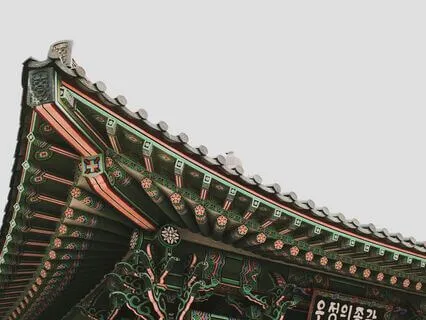
Which is a winter retreat in Koreans and tradition in a Buddha hall.
And maybe twice a day.
Sometimes I would do the morning a lot of times for one month of retreat.
And then I went back and I served the retreat and then I was still doing chanting once a day there.
So like two months every day,
At least one chanting session for two months.
And then before that I've been at monasteries in Theravada tradition,
Which is quite different.
It's English chanting and Pali chanting.
So significant differences.
There's some similarities.
The thing when I first started doing this or was there,
It was a big question about authenticity.
So how do I do this and feel authentic?
And there's a huge reluctance to not want to do this,
To feel weird about it.
And when I list all these,
How many of these can be applied at the same time,
Applied together at the same time,
These points I'm going to make.
So the first thing you do or notice is when you go into the space,
You're going to chant.
So I mean,
This is common for all of us,
Right?
We go into a space and we immediately notice things about the space,
Whether we don't like it,
Whether we like it,
We love it,
What do we want to change?
How can we get it for ourselves?
This type of thing or are confused about where we're at,
What we're doing.
So the other thing to notice here is the inside and outside of the space we're doing.
And this goes into the body as well.
I'll be talking quite a bit about the body.
So just the physical space we're in,
Some just standard sound qualities to mention are echo,
Right?
Echo in this space.
These are things more like a sound engineer would know the quality of the sound.
Is it an acoustically rich place?
Does it sound really well?
Would you want to have a concert in there or is it just kind of like an afterthought?
Most chanting halls I think are designed for kind of rich,
Full,
Deep,
Wide sound and the volume.
So these are just kind of things that just happen in the background,
Right?
Okay.
So when we're actually practicing,
One of the biggest things,
At least I was doing,
Is hearing others,
Listening to others chant and my own voice.
So a lot of times I couldn't hear my own voice and some say you should hear your own voice.
Well,
Then it starts getting into maybe a loudness war.
That's not the right terminology,
But how can I still raise my voice to hear my own voice when I'm chanting and at the same time hear others and not stick out too much or not be too quiet and soft?
And of course,
This goes into things like self-confidence of,
Do I feel confident enough to raise my voice and to chant?
And this notion of harmony with others,
Being in harmony with others,
This is a common thing for singing obviously.
And how am I when I'm tone deaf?
How do I do this when I'm tone deaf really?
The resonance,
The resonance effect,
How it kind of feels with the vibration within the body especially and then in the space and with others around me.
So this goes into vibration.
So even though I couldn't hear my voice,
A lot of times I could feel the vibratory qualities of the voice,
Especially in the voice box.
And of course,
The breath while we're chanting and how is the breath while we're chanting?
Do we even notice that?
And then what we're paying attention to as well.
There's only so much capacity in my attention and awareness that what am I going to put an emphasis in on what I'm paying attention to?
Sometimes I would pay almost occlusive attention to the breath while I'm with the words.
And of course,
The silences,
As we know in music too,
Two people can play kind of the same piece of music,
But what really makes the difference is their pauses and the silences between the notes.
Okay.
And there was a time when it was almost sounded like an organ.
I don't know if you guys have been like in a church or something where you hear an organ and it just has a certain quality.
And at times everybody was synced up where it almost sounded like someone was playing an organ.
It was really beautiful and a little bizarre at the same time,
But of course,
That was my perception.
But then we have these organs inside.
So with certain kind of awareness,
Maybe some of us can know,
Can feel a slight vibration and a resonance within the organs and the body when we are really embodied in chanting in a certain way and deep and paying attention to maybe kind of tickles the organs.
So another thing is personality types.
It's interesting who we're sitting next to in chanting and maybe how we know them outside of chanting and how maybe there's an alpha type or a beta type and kind of the psychology and how this might play into chanting too,
I noticed.
Of course,
We get into our likes and dislikes,
Right?
I like this chant.
I don't like this chant.
I like the way I'm singing or chanting this.
I don't like the way I'm chanting this.
This guy next to me,
He sounds weird.
I don't like that.
This guy over here,
Oh,
He sounds amazing.
Wish I could be like him.
So this is a common thing throughout all our lives.
And of course,
It goes into the judgments like I've just said.
The ideas we have,
You know,
Oh,
I wish we could chant a little bit quicker or chant a little bit slower,
Going into what the text says and thinking about that.
In one sense,
It's helpful to really be mindful and aware and kind of know the meaning of the chanting beforehand because I found myself kind of getting off by contemplating what the meaning of the words were if I agreed with the words.
And then other times,
Just completely put that in the background almost so much it was completely mindless and it was just like on automatic.
And I think that's kind of the other extreme where that's not helpful either.
So how much do we really embody and put meaning into what we're chanting?
Of course,
The willingness to do this,
Some days kind of more willing to chant and then there's reluctance other days like I just don't want to do this.
This was every day pretty much the same thing every single day.
And even within this container,
There's differences.
So that's the great thing about these certain formal practices and forms is there's not a lot of surprises in one sense,
Kind of know what's expected and can keep practicing.
However,
Within that container,
We can know slight variations and slight subtleties because there is potential for slight variations and just in all the different things that I'm saying.
And none of this has to really even be noticed either.
Just this is kind of the scope and some of more what's possible,
But maybe it's not normally noticed or recognized of all the different things that can go into this.
Of course,
Our feelings come into play.
I know the first time I chanted at a center that was both Theravada and Mahayana combined,
I wept and I didn't,
Just slightly.
And it was kind of a mix of joy.
It was mostly joy.
And then I don't know what it was.
It just happened.
It was a really beautiful thing in some respects,
In a lot of respects actually.
Humbleness,
I noticed quite a bit of humbleness when we get into,
At least in the Buddhist tradition and probably Christian tradition too,
Just kind of feel humbled by,
Well,
I should have put this.
Well,
In the Mahayana,
There's so much vastness and profoundness and inspiration of going beyond,
Beyond,
Beyond,
And this huge greatness to aspire to.
And in a way that's very humbling at the same time,
Inspiring and helps with aspirations,
I feel.
And I think just reflection on the Buddha is humbling as well.
Here's a fully self-awakened being,
That's something to aspire to or just full awakening.
The togetherness,
Concord,
And just noticing that everybody's together doing the same thing on whatever level that may be.
At certain times there were chills,
Like up the spine.
And yeah,
How much are we understanding all this and how okay are we with not being able to understand and not needing to understand and how that can be okay too?
What kind of uniqueness is here?
What's really unique about this practice and what's kind of commonplace?
So,
These are things to notice too.
Of course,
The energies in the room some days are just really palpable and people really get into it and there's a lot of energy flowing.
And other days it's kind of like pulling teeth and stiff and just kind of flat.
Sometimes it can be draining and sometimes it can be energizing,
Not really draining as much.
The differences and just noticing again those differences day-to-day in practice.
I also wanted to say that I haven't done solo chanting practice.
So,
I would love to hear from anybody that has done that and what their experience is with that.
And honestly,
I don't really have a huge inclination to do solo chanting practice.
I was doing maybe a couple of years ago,
Every once in a while,
Just Namo Tassa Bhagavato Arahato Samma Sambuddhassa.
This is kind of said three times before a lot of things in certain Theravada traditions.
And then back to the energy balancing.
The chanting can be an energetic practice where we're balancing energy,
Sharing what needs to be shared,
Kind of knowing what energy is needed for everybody involved in the space and providing that if we have that to provide and also receiving the energy that we need from the group.
And so,
There's kind of maybe an equal exchange and balance of the energies.
I think the other interesting quality to mention here is the language.
So,
A lot of these chants were in Korean.
I don't know Korean.
There was a translation in the back of the book.
So,
I did get to read the meaning.
And of course,
I raised a couple of questions I had on this and that minor things to a few of the monastics there.
So,
I was clear about certain things.
But it's a really interesting practice,
At least for me,
To chant in an unknown language.
Because when I'm doing it in English,
I kind of get caught up in the meaning or I think I know the meaning.
And then I think,
Well,
There's nothing else to know here or nothing else to realize.
And then it kind of compresses the understanding and the experience in a way.
But when I'm chanting in a language that I don't know,
I don't know what I'm really chanting.
So,
Then I can't focus on what the words mean,
But I'm listening to the sound and the experience of the words.
And the Korean has a lot of vowel endings.
So,
It reminded me of these people that speak light language,
Just rata,
Sakapa,
Tapa.
So,
I don't do that,
But I'm just mimicking what some other people do.
And it's this really interesting experience of not,
At least for me,
When I hear that I don't really understand it,
But it's got a beauty in the way it sounds.
And yeah,
In a way,
It reminds me of reading complex scientific literature and being able to read and pronounce a lot of the words and know what kind of the words mean individually,
But not really knowing what it's about because it's so high level that I could read a bunch of technical jargon,
But I'm not really understanding it.
So,
It's a really kind of interesting experience like this.
And this question of,
Am I doing it right?
Am I actually pronouncing the words right?
Does anybody know?
I mean,
How far off am I?
So,
Like I said,
The pros of this are not being hindered by focusing on meaning.
And there's more attention to the sound and the special qualities.
I'm sorry,
Spatial qualities involved in singing.
So,
It frees up a lot of things,
At least in my experience,
To focus on things other than the actual words themselves,
Like the effects that the language might've had energetically and then other different phenomenon that I mentioned.
So,
Those are my notes on chanting practice.
And like I said,
Most of that reflection was the kind of the Mahayana and the Koreans and tradition that I did,
The Theravada,
The Pali language that we were doing.
It's a beautiful language too.
And I know a little bit more Pali due to practice,
But a lot of these have English chants as well.
And noticing how English can be kind of really stodgy and da,
Da,
Da,
Da,
Da.
And some of these other languages like Korean,
They sound more feminine and kind of smooth and more beautiful.
I know the Thai language,
To me,
It sounds like,
Even though I don't know of it,
Sounds so beautiful and pleasant.
And Pali,
Of course,
Has a mix of softness,
Femininity,
Beauty,
And at the same time,
Very deep,
Profound and precise ways of describing what it describes.
So,
Yeah,
I thank you all for tuning in and listening to all these little bitty minutia on chanting practice.
And now you can just let all this go.
And yeah,
Just hopefully some of that in the background might help your own chanting practice or get you interested in doing chanting or exploring chanting in different ways.
So,
May all your chanting practices be optimal for yourself and others' long-term benefit and well-being.