The easiest way to get integrated in the world today.
You know.
Hold this welcome.
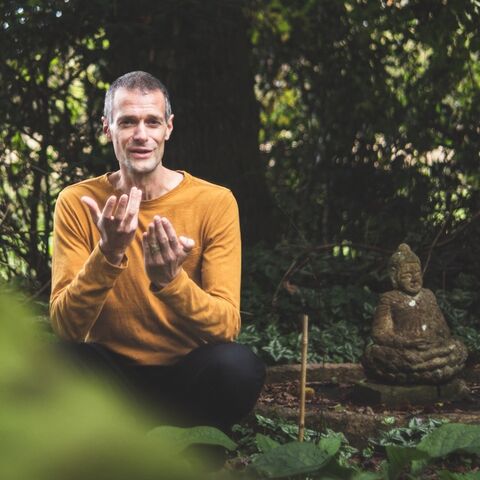
This is Josh Dippel of integratingpresence.
Com.
And today I have Michael Magruch on with me.
Michael,
How's it going?
Hi,
Josh.
Good to talk to you in Denmark.
Yeah.
And I'm from LA.
And yeah,
I've just been here a little over a month and it's quite the place for sure.
Be a little premature for me to say too much about it,
I think at this point.
So Michael reached out to me for the podcast and Michael is a little bit of the artist.
Would you say,
Michael,
Perhaps?
Or yeah.
No,
Very much.
Yeah,
Let me.
Yeah,
Sure.
Yeah,
Instead of me trying to read a bio off a script or something,
I'm going to throw it back to Michael and tell you who he is and what he does.
Really quick.
I was born in Vienna in Austria.
I came here when I was 18 to 20 and then moved here by 24.
So I moved totally here.
And then I am extremely neurodiverse.
I was a sick child and then neurodiversity and it hit me in the school and I could never fit into any systems.
Which I found now after 50 years that actually that what I thought was a curse was actually a blessing because I can now compartmentalize issues and my neurodiversity is actually a tremendous context seer.
I see context in stuff that nobody can see.
And art saved my life,
Literally.
So I was an artist my whole life,
But I decided to be an artist and not need to be deemed an artist by a system like society or religion or politics.
When I was 30 and I looked at all my resumes and oh my God,
Everything was creative from selling tapes out of the trunk to be a DJ,
To be a fashion show producer,
To be in advertising.
Everything was creative.
I think it was a pivotal point at 30 that I decided I am an artist,
No matter what anybody would say.
And that is a lot of confidence that all of a sudden you have when you don't chase after a goal,
But you are the goal.
And I was chasing to be an artist and did this exhibition and that exhibition and kissing ass and all this stuff and it didn't work.
So that was a major thing.
And when I wrote my last book,
The Smart of Art,
I found two things.
It saved my life,
But 97 to 99% of artists on the poverty level all over the world.
And I said,
What the hell is that?
Why is that?
So I said,
I will,
Because of my neurodiversity,
I will solve this puzzle.
And I solved it.
I know why it is.
I don't know what to do about it,
But I know why it is.
And I found that the art world that we all know from art history to beautiful buildings and all this stuff and how what we consider art as a society,
Which is also a system,
Is the product.
We always focus on the product.
Nobody really cares.
Yeah,
If Michelangelo would be alive or,
You know,
Jeff Koons is alive,
You know,
We like those artists,
But they are the 1%.
We usually don't care what anybody does as long as the product is valuable,
And which is basically a system and it's called the art business.
And that's also based like every other system on financial principles.
You know,
Even a non-profit is a religion.
Once you have a system,
A man-made system,
It's based on financial principles because it has to run.
And I always say that example that you and I want to tend to a garden.
We just go whenever we want.
Sometimes we see each other,
Sometimes we don't.
Often we don't see each other for months.
But when now 150 of my friends and 150 of your friends want to be part of it,
We need scheduling,
Cleaning up,
A crew,
Service crew.
And to enjoy the garden,
It is too efforting to enjoy the garden because you have to schedule,
You have to pay a fee,
You have to do all these things.
And what we have lost our self-humanity,
I think that's all the problems that arise now in all the systems that collapse and can't do it anymore and need to create new systems,
Is the differentiation between we are a species of nature and we forget that.
We have forgotten that because over generation,
We get born in a hospital,
A system.
We get baptized,
A system.
We get to school,
A system.
We go to job,
A system.
So we get married,
A system.
So we experience our habitat in systems.
And since we are very adaptable,
Like you and I adapt right now,
Right?
We adapt.
So I am to you,
You to me.
And that's why we have to,
Can actually have a conversation,
A valuable conversation,
Not I'm doing a system conversation,
I'm right,
You're wrong,
But we can actually have a discourse which I call the second superpower.
That's why I call the first one creativity.
The second one is communication.
And the third one is our adaptability,
Because we would have never survived the Holocaust slavery atrocities of war without being adaptable.
So basically,
That's what I'm all about.
And creating art is the blueprint,
Brings us always to the blueprint of how humanity,
What we are to know what we are in everything.
We can talk about that.
Sure.
That's a huge question,
Who we are,
Right?
But what came to mind there was Banksy,
Right?
Even Banksy,
Who has this anti-establishment view,
His stuff is still,
Right?
It's marketed a lot of it,
Right?
Is that how it is?
I remember seeing the documentary,
Exit Through the Gift Shop,
Which is a really brilliant piece,
But still even him,
It seems like,
You know,
That he's been made into this.
And we can't just judge this just on money,
Right?
But I like this approach that it's,
Yeah,
It's a system just like any other.
And,
You know,
Some are more efficient than others,
But it is really losing touch with our kind of natural environment as well.
And another thing that struck me was,
I wonder how,
You know,
Nature itself makes art.
And we were talking a little bit before the show,
How we're not separate from nature either.
And you know,
When I go out outside into more environment where there's less buildings and things like this,
That some people would call nature,
Right?
I wonder what it's,
Then it becomes more of a perceptual thing where I'm viewing,
Well,
Some people might just see trees and whatever,
But what if we can,
If through a certain lens of perception,
We can see how nature even creates its own art too.
So perception is a huge part of the art world too.
And other things came up like,
You know,
Usually they say in business and stuff,
It's not who you know,
It's who knows you.
In the art world,
I see that too.
If you have the great agent,
If you have a huge investor,
If someone can really hone in on someone's work to use it for their agendas and things like this.
So yes,
All these complex things that are involved.
So I knew I threw a lot of stuff out there.
So I don't want to pick up on anything.
No,
No,
No,
Not for me.
I'm neurodiverse,
Don't forget.
So first of all,
I say to your answer,
Because you know,
This is,
You know,
Banksy,
You mentioned Beneki first.
I mentioned Elon Musk too,
With Banksy.
Those are Bose or Jeff Bezos.
Those are people,
We have a game.
So we are a part of nature,
But we have to decide it universally,
Or more and more and more in the Western world,
That we play monopoly,
That we play a game that has nothing to do with humanity.
It's just we're playing that game.
It has become humanity,
But it,
You know,
That we adapt to it.
And we now think that any system is bigger than a human.
And it's not true.
It's absolutely not true.
But we all decided to play the system.
It's called monopoly.
Banksy in the art world,
Which I told you is a system,
Is a master like Jeff Koons or Damien Hirst.
They are master system navigators,
Not manipulators,
Navigators.
They know how to navigate,
How to get attention,
How to,
You know,
And that's what Banksy is.
His artistry is that.
Jeff Koons' artistry is how to navigate the art system.
Elon Musk,
Same thing.
All these people.
And basically what I believe,
This is just my belief,
What they show us,
It's how limitless humans are,
That they can always create new ways of getting attention or new ways of engaging people.
So we are limitless in engagement because 20 years or 30 years ago,
Nobody talked about Elon Musk,
You know,
Nobody talked about Banksy.
So that shows our limitlessness.
That doesn't mean we all have to be like this.
And the problem is because we're adaptable,
We all compare ourselves to Banksy,
To Elon Musk,
To Jeff Bezos.
And that doesn't mean that they are fulfilled.
What I'm saying is,
Think about this,
When you separate nature and humans,
In nature and human,
It's about the fulfillment.
It's not about the success.
Success is only in the system,
In the man-made systems.
It's I have a goal,
I reach the first quarter and then I start again,
Second.
So the problem with not compartmentalize that,
Being not conscious about this is that the system,
Man-made systems,
Because they work on a financial principle,
Financial principles always work on a lack,
Lack of money,
Lack of goods,
Lack of everything.
And the problem is that humans adapt to that.
And that you just see that the beggar as well as the billionaire both worry about money.
The billionaire to lose it,
The beggar to get it.
And it's right here,
It's right in front of us.
We don't see it.
We don't see it.
We need to get rethink financial principles.
I'm not saying get rid of the monopoly system.
If you want to play this,
But what is,
Let's say,
I could not.
It's like my hand is cut off and I have to,
And you ask me,
In the system,
Everybody shoots bows.
I said,
I don't have an arm and I could never fit into it.
But in nature,
Since we have established we are a species of nature,
Right?
In nature,
The fact that you are born is the proof that you're worthy.
The ant never thinks,
Oh my God,
The elephant is so great,
I need to be an elephant.
Or the elephant says,
I wish I was a little ant,
But then I don't have to look for so much food.
And that's where we are fundamentally,
It gets down to that system.
It gets down,
Not that it's bad,
It's just manmade and it's flawed.
Like every manmade system is flawed.
And we try to get 8 billion different DNAs and different finger marks into fingerprints,
Into systems that are very limited,
Can only work on the median.
But who is changing the world?
The tails of the median,
The people that are outside.
That's right.
Elon Musk,
Right?
The outliers,
And this ties in,
My thing that I did here,
Nothing like this existed.
I had to kind of create it from scratch.
You can't go to school and learn about exactly the things that we do and how we do it.
So I wonder if it comes down to,
Well first,
Do you think everybody is capable of this?
I mean,
There needs to be,
Or not needs to be,
Or maybe there does,
Followers too.
For leaders,
There are followers,
But at the same time,
It's like,
Well,
I wonder if people really don't have the courage a lot of times to do this because of social pressures and things like this.
Being afraid of being the outcast,
This thing of getting thrown out of the group,
Right?
That we hear about in psychology of trying to fit in certain groups.
And then if we're too far out,
Then there's these worrying about getting cast out of the group and things like this.
So I think courage really comes in here as well.
And I was wondering,
Do you have any suggestions for how this type of awareness can be,
We talked a little bit too about awareness before the show,
And especially through art,
How we can boost awareness through art.
And then another thing I think is defining our own success too.
We don't have to look for certain role models to,
I mean,
If we even have any real quote unquote role models for success,
There's no set definition of success either.
I think that's very helpful to know as well.
And then there's even so more things about with our own internal systems too,
Right?
And if you're going about art,
I mean,
Do you go about it systematically as well within a micro system of your own,
Or is it all entirely free form?
All these things are coming to mind.
Okay,
So inclusion,
Number one,
The inclusion is a DNA drive that everybody has.
Everybody wants to be in the whole.
We have an inclusion,
Social herd animal.
And when we,
That's why I say the awareness is important from a man-made system to nature,
That we are part of nature,
And we need to know where we are navigating.
So when we perceive system that is very limited,
That are not like nature,
Adopting constantly perfect,
Systems don't adapt.
They are very static.
And when we get over generations conditions because of our adaptability and the drive to include ourselves,
Then we believe that is our habitat.
It isn't,
It isn't.
And success shows the success,
Like you said,
There's no formula of success.
If it was,
It would be like the cell phone.
Everybody would have one.
If success is a limited system definition that says,
This is what you do,
And you have to get bigger,
Better,
More.
If that chemistry is not there,
You can't do it.
You can only do it if the chemistry is to make more,
To better,
Faster,
Cheaper.
If you can do that,
If that chemistry is not there,
I don't care what your passion is.
You can't be system.
You can be passionate about it.
Let's say you've been an artist,
Right?
You are passionate about art.
That's why I say the artists,
They should milk the moment of creation.
That is the superpower,
Number one.
So when you want to be fulfilled,
Which is the human success,
And you want to create,
Then create and get a little job that you can feed yourself and create.
But don't think,
Which 99% of artists think,
I create something and I sell it.
And at the same time,
They're worrying that they're going to sell.
Nobody has white walls in their house and nobody has a lack of music or theater.
We have an abundance of all of that.
Is it important that you create?
Absolutely.
It is important that you create.
But it's not that it's successful in the system.
When you create,
You balance yourself.
You get self-esteem that nobody can take away.
I can say you're the absolute best podcast,
Or I can say you are the worst podcast,
Which is a system definition,
Right?
Categorizing,
Systemizing,
Judging.
But I cannot steal from you the fact that you did a podcast.
I can never do that.
I can say everything in the world,
How good or bad you are,
But I can't take,
And that's the power of creation.
In this,
Just connect with it.
That is your power of creation.
That's why creation of art is the number one,
And creation in general,
But creation of art is the highest superpower because it's not neutered to,
Yeah,
You create a new Nike shoe,
A new iPhone.
So you don't do a system product.
You're creating because you're creating.
Whatever comes in,
You put on canvas,
You sing,
You perform,
And that's why this is the highest form.
It's godly almost.
Then you have to think,
I want to do a podcast,
I want to do a shoe,
I want to do a thing in the system.
So I believe that,
Because I have totally self-taught,
I have a completely different view of,
So I'm not tainted,
System tainted so much.
I try to be tainted and try to fit in,
And when I got this,
Oh,
There's systems and there's actually nature.
Oh my God,
50%.
I guarantee if your listeners listen to this a couple of times,
When you get,
Your life gets 50% easier because you're not living your essence through a system.
You can distinguish,
Aha,
This is a system problem.
Okay,
I need to pay my rent.
I need to get more money.
Those are system problems.
Nobody thinks in nature they need to make more money or whatever.
Just see that.
See the differentiation.
The lion,
He doesn't eat all the gazelles on the savannah.
It's one gazelle,
And a half an hour later,
A gazelle is grazing because she knows the guy is full.
We need to remind ourselves we are species of nature,
And we are limitless.
We can create anything because since we are part,
You pointed that out so wonderfully,
Since we are part of nature,
We are perfect.
We are limitless.
We adapt and harmonize,
And our inclusiveness is other humans.
Just look at one thing,
Because you said you want me to come back to art.
Look in the system how the hierarchy is.
There's a CEO,
There's CFO,
And they require quarters,
Increase,
Whatever.
Otherwise,
It's not even a business.
They can't even say when.
They say negative growth.
They can't say lose.
In the past,
They said loss.
They can't even say,
Mother the word,
Loss and sustainability.
They can't.
What happens,
For example,
The differentiation?
In a system,
The CEO doesn't know how the phone is done or what the phone guy do right or wrong.
That's right.
If he does wrong,
He's getting exchanged.
If he's good,
He gets a promotion.
That doesn't work in a symphony orchestra.
If you even have the best conductor and the best first violin that everybody comes to,
What happens?
If the oboist doesn't play right,
The whole thing.
It shows us the blueprint how it works.
I don't want to take too much time from you.
It really is.
I like to think of that as an unfolding,
Too.
There's certain things that we have a sense of agency over,
And there's certain things that just unfold due to causes and conditions.
It is a beautiful thing.
We talked quite a bit about what's happening in the art world.
It's just not the art world either.
Is there anything the art world is getting right right now?
Is there anything that's on your radar or anything like this,
Anything that you're enthusiastic about from anywhere or even yourself?
The art world gets it right by just the being,
The beingness.
Rick Rubin did this wonderful book.
I separated it,
Too,
But Rick just made the Bible of it.
What about the creation,
The creative act,
A way of being?
It's phenomenal.
It's just showing exactly the power is in the creation and not in the product.
He says that the customer comes last,
Even.
He's a producer for all these.
.
.
Oh,
Yeah.
Rick Rubin,
Beastie Boys,
All these huge names.
I saw one interview with him because he used to be fairly reclusive from what I remember,
But he's out there every once in a while doing stuff in the public eye,
But he's more comfortable behind the scenes.
He used to be that way.
Yeah,
A brilliant guy.
Now,
With his new book,
He's really out there.
There's a lot.
Watch all his videos as an artist for your girlfriend,
For example.
Watch that because the power and the fulfillment is in the creation.
And then when you feel fulfilled,
You abound then and you attract money and you attract clients and you attract other people.
Yeah,
This law of attraction.
I know there's plenty of distortions around that,
But that's a whole other thing.
So would you say anything else about just the creational process or the art process,
Anything art-related,
How it can tie to perhaps more meditative practices and meditative states in general?
I know you did talk about the creational process as a way of being,
And we did talk about nature.
When you create,
Milk the moment.
My thing is milk every moment and don't worry about the out.
.
.
Because the more you worry about the product,
The less you get from the thing.
Art does not require you to be successful,
To make a lot of money and to have a lot of views.
Art requires you to,
It only wants you to create it.
Whatever comes through and you need to come to a point as an artist to be okay with whatever you create and see the beauty in that.
And if you don't hate it,
I always say,
Put it away for a month,
Two months,
A year and pull it back out.
You will be surprised.
I've never found an artist that after he created and he hated it and he wanted to cut this canvas and then he put it away and I said,
Just put it away and bring it out.
That said,
No,
I need to still cut it.
Never.
I've never.
.
.
When I asked,
I talked to all of them because they realized the ego is out of the way.
And when they watch it again,
They said,
Oh my God,
I created it.
I can't believe it.
You know,
And it's about a way with all my creations.
I can never be as fulfilled when I just finished it.
And when I look back at it after a while or listen back to it,
You know.
This reminds me in the meditative world,
They call it the pregnant pause or the sacred pause.
Sometimes we're just pausing before acting or speaking.
Right.
And just all these new worlds of possibilities can come before us as well.
So yeah,
If you happen to know what David Lynch is up to these days,
I would really love to know that too.
I know I was into his stuff for a while,
But I think he did this second version of Twin Peaks or whatever,
But he was always doing creative things.
One of the things that he used to take really close up pictures of really vile and disgusting things like pus.
And then people wouldn't even know what this.
.
.
Oh,
That's beautiful.
But as soon as they found out what it actually was,
Oh,
It's revolting,
Disgusting.
So it's just fascinating how perception plays so much into the art world and how,
Like you said,
The limitless possibilities as our perception expands,
The more choices and ways we can view things and respond to things too.
It's really a fascinating thing.
So Michael,
Is there anything you would like to leave the audience with and also tell folks if they're listening to an audio version of this,
How they can get in touch with you?
What kind of.
.
.
If you have any projects or anything in the works or what you would like to draw people's attention to?
I have a million projects.
I'm neurodiverse.
So just go to my website,
MichaelM.
Com.
Michael with two L's,
MichaelM.
Com.
And saying to David Lynch,
I would say,
We are all shamans.
And what you explained is,
You know,
When the Magellan ships came and the indigenous people couldn't see them,
And,
You know,
The shaman was standing on the beach and said,
Look at,
Look,
Can you see the dinghy?
And they could see the dinghy.
And I said,
You see that chain there,
The anchor chain?
And then they could see the frigid.
They could never.
So basically,
When you go into detail enough,
You see the beauty of it.
And art is also the only tool that makes us experience heaven on earth next to sex.
But that is also out of the second chakra,
You know?
So the thing is,
You know,
It's,
And by the way,
Your girlfriend needs to show her art.
That's one process.
The process,
Art doesn't want anything but being created and being exposed.
And if she just exposes it to you,
That's fine.
Well,
Beautiful,
Michael.
I will sit with that and see if how I could present that or not.
We'll see.
So I will definitely take that.
Just let her listen to it.
Listen to the podcast.
All right.
Well,
Thanks for joining and thank you all for listening.
May you all be blessed with all the creativity your heart desires and all the success that you can invent and define.
Bye now.