Welcome.
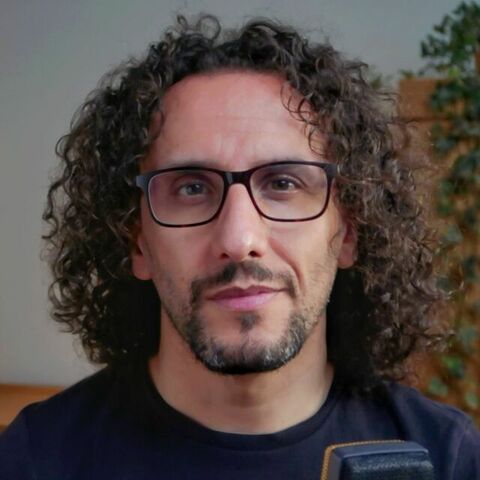
I'm Ian Ritter.
I'm a psychoenergetic practitioner,
And this is my podcast,
Where I offer insights to anyone who wishes to bring greater awareness and authenticity into their lives.
January 2021,
And the topic that has been on everybody's lips for over a year is COVID-19.
We've been on a rollercoaster of states of emergency for months,
And our nervous systems are constantly stressed by a media barrage warning us of this imminent threat.
Since it's a subject on which there is so much heated debate,
Even among noble prizes,
Each of us takes a stand according to our own nature.
In fact,
All around us,
We see and hear people reacting in the most disparate ways,
Some running for cover,
Some openly defying the dictates that come from the government,
And others simply doing as if nothing was wrong.
What I would like to talk about in this first episode is how each of us is reacting to this situation.
I stress the word reacting because there is an important distinction between reaction and action.
A reaction is an automatic act driven by often ancient emotions,
While an action is a conscious gesture that may have emotional components but is the result of a deliberate choice.
The two most widespread ways of reacting to what's going on around us are submission and rebellion.
Some people diligently and rigorously follow all the guidelines,
Others challenge every single one of them.
But although doing so might give the perception of freedom,
Rebellion as much as submission are actually two sides of the same coin.
They are reactive modes that we are used to implementing with authority figures.
They are defense mechanisms we create as children when having to deal with an authoritarian parent or tutor in order to protect ourselves from the discomfort generated by impositions.
Some of us,
Depending on various factors,
Resigned ourselves and submitted,
Becoming a good boy or a good girl,
While others rebelled and fought,
Becoming more dissident.
We end up carrying these submissive and subversive ways with us for the rest of our lives if at some point we do not choose to work on them and change them.
And I'll say more on why it's useful to do so later in this episode.
For now,
I'd like to bring the focus on the opportunity that this very particular moment in time is offering.
That is,
The possibility to pause for a second to observe ourselves,
Asking in which ways and to what extent we are reacting to these events and how we are acting.
If we're able to identify when and how we are reacting,
We also have the opportunity to go a step further and observe what I consider to be a key factor to understanding what underlies every reaction.
That is,
The emotions that are involved in this automatic response.
If we look back at the last time we remember reacting,
We can ask ourselves,
How did I feel in that moment?
What emotions had been awakened within me?
Let's go back to the global situation.
If we look around,
The two predominant negative emotions everybody is feeling are fear and anger.
If we look back to the last time we reacted to something that we heard on television,
Read on social media,
That we saw in the street or anywhere else,
It's likely that what we were feeling was fear,
Anger,
Or both.
If we had the possibility to go back and replay the scene in slow motion,
We would be able to see that between witnessing the event and our reaction,
There is an upwelling of emotion within ourselves.
In that moment,
If we had been able to notice what we were feeling before our reaction took place,
We would have had the opportunity to pause.
This would have been enough to stop ourselves from going into reactive mode and possibly choosing to act differently.
So,
Being able to observe ourselves is the essential element in being able to snap out of this automatic mechanism.
And when we're not in reaction,
We can choose how we want to act.
We've taken notice that a certain external stimulus has awakened a certain emotion within ourselves,
And we have the power to decide how we want to behave accordingly.
Don't get me wrong,
This is not an easy feat.
Emotions have a very strong grip on us,
And when a wave of fear or anger comes along,
It's really hard to be present enough to just observe it rather than being carried away by it.
Being able to observe in real time what emotions we're feeling is something that takes a lot of practice and that few are used to doing,
And even those who are do not always succeed.
So,
It's much easier to do it in hindsight,
And with time and repetition,
We can get closer and closer to the present moment when it's happening.
Let me give you an example.
We're at the supermarket,
And there's someone not wearing a mask who is coughing and sneezing.
We're scared at the idea of a potentially sick person and the possibility of contagion.
Immediately after the fear comes the anger,
And we might instinctively verbally attack this person,
Telling them not to leave the house if they're not well,
And especially not without a mask.
Whether we decide to do it or not,
We're feeling the fear and the anger,
And they will most likely stick with us for several hours.
But the moment we're aware that we're feeling them,
We then have the option of not acting according to these emotions,
But rather acting according to a conscious choice,
Which might be a different one.
We can choose to leave,
Or to tell them the same thing in a less aggressive way,
Or notify someone from the staff and let them deal with it.
Whatever we do at this point,
It's an action we chose to perform and not a reaction made without thinking.
And then there are also those who in the same situation do nothing.
But the same principles apply here as well.
Even when we don't act,
The same dynamics might be taking place,
For the same emotions might be happening within.
There are those who react internally and do not say anything out of habit,
For fear of exposing themselves,
For shame of what others might think,
And so on.
And then there are those who choose not to say anything.
In the first case,
We're talking about an automatic behavior forced by internal mechanisms,
A reaction.
In the second,
We're talking about a conscious choice,
An action.
As you can see,
In the reaction,
What we do immediately follows what we feel.
When we act,
On the other hand,
We're able to put a thought process between what we feel and what we do,
Making it a conscious choice rather than an automatic instinctive gesture.
So why would we want to change that?
What are the costs and benefits of acting versus reacting?
Well,
Talking about reacting,
Besides the fact that the person in the supermarket from earlier in turn might react to our aggression and start screaming at us,
So if he or she is really sick,
The risk of contagion is further increased.
Basically,
The great cost that we pay when we are in reaction is that we feel we are victims.
We feel that a situation that we do not like has been forced on us,
And we experience it as an injustice.
There may be a slight sense of relief because we have released some of the anger,
But it's short-lived,
And what emerges soon thereafter is a sense of helplessness.
Helplessness because no matter what,
We haven't been able to change anything internally or externally.
We still feel the fear and anger,
And we haven't changed the other person nor the overall situation.
In addition to that,
Now we're upset,
And even though those around us at the time may have approved of our reaction,
It's difficult not to judge ourselves after attacking someone,
No matter how wrong they may have been,
And it's not uncommon for a sense of shame to arise within ourselves after what we felt and how we instinctively expressed it.
This can bring out feelings of humiliation and low self-worth.
All these negative feelings and judgments about ourselves have often very old roots,
As they were mostly created during our childhood.
From an energetic point of view,
The reactive mode is essentially indicative of a blockage.
What happens is that initially there is a series of destabilizing emotions,
Fear and anger.
Then there is an emotional explosion projected outward.
Then,
Although at the time we released some of our anger,
The sense of injustice remains,
And since we think it's someone else's fault that made us scared and angry,
Often we do not come out of it,
But we continue to brood over what happened.
So the energy remains there,
Stuck on that episode because even if we have let off steam,
Internally it's not over.
It reopens an old file full of old sensations belonging to our past that have not been fully processed,
Contributing to stagnation that may have been going on for decades.
In jargon,
This energetic block is called a time capsule.
Based on the intensity of our reaction,
We can get an idea of the extent of the time capsule related to that particular issue.
Furthermore,
Since so many of us have negative judgments towards certain emotions such as fear and anger,
When these emerge,
We then tend to want to suppress them,
Which leads to further energy stagnation.
So,
Between the blocked energy,
The suppressed emotions,
And the ones we try to get rid of through our emotional release,
We can feel literally exhausted.
Okay,
Deep breath.
That's some of the price for reacting we might be paying since our childhood.
We all do it to some extent and in different contexts,
And it's always something that we can work on in order for its impact on our lives to be less and less,
Moving to a different space in which we interact with those situations in a different way.
Because when we are in action,
We feel in our own power.
We feel that our emotions are our own stuff,
Not something that someone else has imposed on us.
We might feel the uncomfortable emotions,
But at the same time,
We feel that we have the ability to choose how to act in the fullness of our individual authority.
Energy flows throughout the body and throughout the energy field,
Rather than being stuck in one place.
We are aligned and connected with our personal truth.
Rather than from a place of unbalance,
We moved from a place of centeredness.
As Barbara Brennan says in the book Hands of Light,
To have power is to be seated in the center of one's being.
And last but definitely not least,
It allows us to remain with an open heart,
Something that when we are in reaction,
We're unable to do.
In order to come to the point where we are acting more than reacting,
An essential step is that of recognizing which emotions we're not comfortable with,
And in time,
To come to accept them,
Since all emotions are an integral part of us.
Instead of representing obstacles which we try to avoid and on which we periodically stumble against,
Being able to recognize,
To welcome without judgment,
And to allow these uncomfortable emotions to flow within our system is what provides the freedom to choose how we want to act.
Above all,
It's an act of love and respect towards natural parts of ourselves.
Naturally,
Developing a different relationship with our emotions is by no means an easy feat,
As it requires time,
Practice,
Dedication,
And often a helping hand from someone from the outside to help us understand and learn something that we were never taught.
Some of us grew up in families in which certain emotions were allowed,
While certain others were not acceptable,
Or where no emotions at all were to be expressed.
This can cause us to have a strong resistance to feeling certain emotions or even accepting the fact that they exist within ourselves.
But as with any resistance,
There's always the possibility of doing dedicated therapeutic work that allows us to be comfortable enough to feel and eventually express such emotions in a healthy way.
As you can understand,
These two modes,
Action and reaction,
Naturally result in very different internal experiences as they relate to the emotions we're feeling and not to the events that are taking place.
We can come out very fortified or very weakened,
Depending on how we manage to interact with both internal and external events.
The next time you have a strong reaction in any life situation,
Try remembering that you're probably not reacting as much to the present as you are about your past.
This is why,
Once it's over,
It's worth taking a step further in understanding what exactly triggered your reaction,
Rather than trying to forget what happened as quickly as possible.
A deeper search might bring up hints on what past experience it's related to and the time capsule you're dealing with.
This allows you to start or continue to explore and process that theme you might have been carrying around for decades,
Slowly integrating it and transforming it into awareness you can use from here on.
Talk to you soon and take care.