Welcome to the Everyday Mindfulness Show where we educate and inspire people to live fuller lives through mindful practices.
Let's get started with your host,
New York Times contributor,
Leadership advisor,
Sought after keynote speaker,
The author of the Amazon hot new release,
Everyday Mindfulness from chaos to calm in a crazy world,
She's smart,
Strong,
Sassy,
And a trendsetter in the field of mindful leadership.
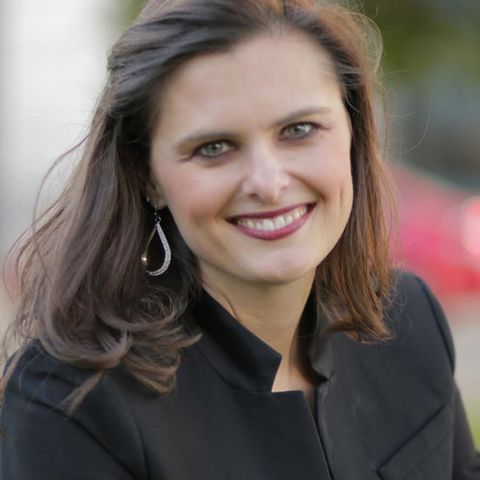
Your host,
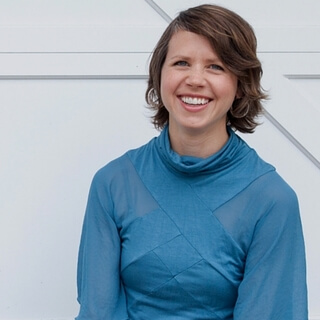
Holly Duckworth.
Welcome to another episode of the Everyday Mindfulness Show where we bring you powerful conversations on what mindfulness is and how to apply mindfulness to your business and personal life.
Today I am excited to introduce you to someone who will educate you on topics that you may not want to talk about,
But he's become a dear friend.
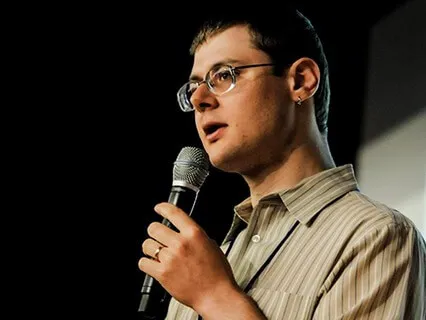
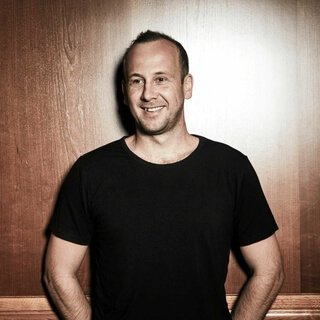
Dr.
Gleb Topersky is on a mission to help us make better decisions.
We're going to be talking today about cognitive biases.
His expertise is helping people make decisions even in this time of COVID-19.
He has written a book that I've had the privilege of reading.
It's called resilience,
Adapt and plan for the new normal of the COVID-19 pandemic.
He's got over 15 years of advanced education.
He has worked with some of America's biggest companies.
Welcome to the show,
Dr.
Gleb.
Thank you so much,
Holly.
I really appreciate you inviting me and it's been really great to get to know you recently,
Especially in the context of COVID-19 people need a lot more mindfulness nowadays.
Yeah,
And you know,
Our show really focuses on mindfulness in business and I know your company disaster avoidance experts really helps people even before the pandemic understand the brain science of how we make decisions and how those decisions are going to impact us.
So,
You know,
It's so interesting that we both had messages pre-COVID that we were preparing for this particular time and we didn't even know it as we were serving folks.
We were building up our case studies for sure.
So,
I'm really,
Really heartbroken open that,
You know,
Some of these decisions that were little decisions as business owners before,
Well,
Of course my people are going to work in their offices or of course they're going to drive to work now can really truly be dangerous decisions.
I was coaching in the Chicago area,
You know,
A few months back and they were in a law firm and just the decision to go into the office every day and get the mail was a dangerous decision.
So,
Talk to us about cognitive bias,
Talk to us about resilience and how can we navigate these decisions from a place of higher awareness?
So from a place of higher awareness,
We need to first be aware of what drives our decisions.
Our decisions are overwhelmingly driven by emotions,
By how we feel.
Do we feel safe?
Do we feel not safe?
Do we feel excited?
Do we feel hopeful?
Do we feel enthusiastic?
Do we feel scared?
Our decisions are 80 to 90 percent driven by our emotions.
That's what the research shows.
So I'm a cognitive neuroscientist and behavioral economist besides my work as the CEO of Disaster Avoidance Experts,
Training,
Consulting,
Coaching clients.
And so having looked at the research on this topic,
Unfortunately our feelings,
Our intuitions,
Our emotions,
They're not a great fit for the modern world.
That's not what they're wired for.
Our gut reactions,
People tell us to go with our gut,
Trust your heart.
That's bad advice,
Really harmful advice because your gut reactions are really wired for the Savannah environment.
When we lived in small tribes of 15 people to 150 people,
So for example,
Our threat response,
You're talking about danger and decisions.
Our primary threat response is the fight or flight response.
That's our primary threat response.
In the Savannah environment,
We had to jump at 100 shadows to get away from that one saber-toothed tiger.
And that was great for the Savannah environment.
That flight response was great because we're the descendants of those who had a great flight response because the other people were caught by the saber-toothed tiger who were a little bit slower to jump at 100 shadows,
Jumped at 50 shadows.
That's who we are built to.
That's what we're built to do right now.
So folks who experienced COVID-19,
A lot of them had the flight response.
They flee from the information.
They ignore the information.
They say,
Oh,
It's not a big deal.
Something worse than the common cold,
Whatever.
That's the flight response.
People are ignoring the reality because it's so uncomfortable.
They don't want to deal with it.
They flinch away from the information.
And so many business leaders,
So many business owners fleeing away,
Flinching away from the information.
Look at Elon Musk,
On March 19th,
He tweeted that based on current trends,
Close to zero new cases of COVID-19 by the end of April.
I mean,
Obviously,
He's very,
Very wrong.
And that is an example of a supremely popular,
Very powerful business leader who lots of people follow.
So that's an example of fleeing from the information.
Other people had the flight response.
So they had aggressive responses,
Whether going to the store and buying up all the toilet paper,
Right,
Kind of a notorious toilet paper shortage.
That was one aspect of flight response in your regular life.
But other people had the flight response in their business life,
Where,
For example,
They turn to their business continuity plans,
Their disaster preparedness plans.
And I know this as someone who designed a lot of these plans.
That was a lot of my work as a disaster avoidance expert.
So that's definitely a bunch of stuff that I do.
Unfortunately,
They're not designed for COVID-19.
They're great for when a blizzard hits.
That's great.
Or when there's a major flood,
Like when Houston got flooded.
That's a perfect time to use your business continuity plan when there's a one week,
Two week interruption in your business.
Now COVID-19 is not that.
It's like Houston got flooded and then stayed flooded.
That's what COVID-19 is like.
And people who thought that,
Well,
Now I can go back to my car and drive to work.
No,
You can't.
You need to build a canoe and go to your work in the canoe.
That's the new environment.
That's not what your business continuity plan is for.
So people who are using that are still functioning in emergency mode when in reality they should be changing,
Pivoting to the new environment.
But we don't want to do that.
We don't want to acknowledge that we are in a different environment,
That we are not in a really new normal.
It's more of a new abnormal.
That's more of what we're in,
Kind of a new abnormal.
And we need to realize that we're in a new abnormal.
But it's very not intuitive for us to do that.
In the Savannah environment,
That was a bad assumption.
In the Savannah environment,
The future was going to be much like today.
So that's what was a safe assumption.
The future is much like today.
And you can feel it in yourself.
If you think of yourself five years out,
You'll probably think of yourself,
You know,
I'll be a little bit older,
Maybe a little bit wiser,
A little bit more gray-haired.
That's kind of our intuition of ourselves five years from now.
But if you think of yourself five years back,
You'll probably realize that you were a very different person with different drives,
Different motives,
Different intuitions.
We change much more than we anticipate.
But why don't you think that in five years you'll be just as different as you were five years ago?
Because we suffer from what's called the normalcy bias.
The normalcy bias causes us to perceive the future as being much like today,
Being normal kind of continuation of current trends.
And we greatly underestimate the extent of change,
The extent of major impact,
Especially slow moving,
High impact,
Low probability train wrecks like COVID-19 or the fiscal crisis of 2008,
2009.
We don't realize it will never go back to January 2020.
We live in a new world and we need to prepare and adapt for this new world in order to survive and thrive through the pandemic and the post-pandemic world.
So your book,
Resilience,
Adapt and plan for the new normal of COVID-19 coronavirus and pandemic.
You know,
I always say on the show,
Right message,
Right seat,
Right person,
Right time.
I mean,
This really is a powerful book for people to pick up and consume and read.
And there's a lot of elements to the book.
It is a sit down and read necessarily in one sitting.
But maybe we look at a couple of the concepts.
First of all,
We hear this word resilience a lot right now.
What does that mean to you as it relates to these changing shifts?
One of the most important aspects of resilience.
So resilience,
The term itself means being able to deal effectively with a challenging situation.
That's what it means.
That's kind of the essence of what resilience refers to being able to deal well,
Deal effectively with a challenging,
Troubling situation.
When we are dealing with a new situation like COVID-19,
That means not using your previous instincts,
Your previous intuitions,
Your previous ways of doing things to deal with this new situation.
That means pivoting,
Figuring out what does the new situation require and changing your decision making,
Your risk management processes,
Your strategic planning for the future.
The vast majority of people that I observe are not doing that.
They're trying to use their previous modes of existence to deal with COVID-19 when this is a very bad idea.
You should not use your previous trends.
You should not use your previous modes of being,
Of making plans.
For example,
One of the cognitive biases,
I talked about the normalcy bias.
One of the cognitive biases that's also very relevant to COVID-19 is called the planning fallacy.
Now,
We tend to make plans and think that our plans will come true because we're good people.
We're confident about ourselves.
We like our plans,
So we think our plans will come true.
You've probably heard the phrase,
Failing to plan is planning to fail.
So failing to plan is planning to fail.
It's a common phrase.
It gets bent around a lot,
But it's very misleading.
Why is that?
Well,
Unfortunately,
When you make a plan,
We assume that it will come true,
And we don't realize that just making a plan doesn't mean that we prevented failure.
What much more effective phrase that I have my clients use is,
Failing to plan for problems is planning to fail.
Again,
Failing to plan for problems is planning to fail because we don't plan for problems.
We plan for success.
So much so often,
There's a lot of problems.
And right now,
That people are trying to open back up,
Go back to business,
As though nothing happened,
As though COVID-19 is behind us.
They're asking for trouble.
They're asking for problems.
There's going to be so many issues,
So many challenges,
So many trends that they're not anticipating,
That they're not adapted for,
That they will lose out to people who are more savvy,
And they will lose market share.
They will lose to competitors who are more savvy,
More smart about going forward.
So that's what resilience means to me.
It means responding effectively,
Wisely,
To challenges,
Including new challenges,
Not responding the same way as you would to old,
Traditional challenges.
Well,
That's a hard pill to swallow.
When we had some of our previous conversations,
I want to remind folks who are new to your work or let them know who are new to your work that you're a professional speaker,
You're a coach,
You're an expert.
Your business was also deeply impacted by this.
I like to say that because I think it brings the reality that while you're presenting these interesting concepts,
These challenging concepts,
You're not doing it in a vacuum saying,
This doesn't touch me.
Your business too has transitioned,
Dissolved,
Disintegrated,
Evolved,
That what your company does is different as well.
So I think it's important for people to know that you're dealing with these same things in your business as well.
I very much am.
I mean,
As a speaker and trainer,
I just had a new book that was coming out,
The previous one before this one,
Never Go With Your Gut,
How Pioneering Leaders Make the Best Decisions and Avoid Business Disasters.
And I had a very nice book tour scheduled where I had a number of speeches,
Keynotes,
Trainings and so on,
Which all got canceled.
So all of that got canceled.
And I have no idea if it will happen in the future.
I mean,
A bunch of it certainly won't because we won't really have large conferences going on until 2022 or beyond.
We can talk about that.
But yes,
It's been definitely a major blow to my income,
To my ability to have my business.
And I'm struggling a lot in pivoting to virtual training,
Virtual coaching,
Virtual consulting.
Virtual coaching and training is easier than virtual consulting because consulting requires a lot more dynamics.
That's face to face.
So that's quite a bit harder to do.
We're figuring that out.
So that's kind of one aspect of my business.
My business has been very much damaged and I can see this internally and I'm working,
Struggling hard to pivot.
But it's not simply my business.
It's also my life.
My dad,
He's 79.
He lives in New York.
And sometime in late March,
He started coughing really badly,
Having lots of real shortness of breath.
My mom was saying that he was breathing like a rabbit and he lost sense of smell,
Taste,
Kind of the classic symptoms associated with COVID-19.
He was really on and off for a while.
And my mom,
Fortunately,
She has medical training,
So she was able to prevent him from getting pneumonia with various massages and so on,
Positioning him in various weird positions.
Fortunately,
She was able to prevent him from going to the hospital because the hospitals at that time were really bad in New York City.
So he's recovering.
He's not fully well by any means.
He still has shortness of breath,
But not nearly as bad as before.
So I'm very fortunate that he is recovering.
So it's hit my business and hit my family and it's been really hard for me.
And I mean,
I've observed a lot of my clients struggling with this.
Some of my clients are better positioned to transition to the online space than I am because a lot of my work requires face-to-face services.
Some are positioned worse.
So for example,
I do coaching,
So it's one of my areas.
And one of my clients,
She was the COO of a chain of diners in the Midwest,
Something like 24 diners.
And she just,
You know,
When we were talking about the future,
What the restaurant industry would look like,
You know,
She realized that this was not a future for her.
This was not a good place for her to be.
So we worked on transitioning her to a new career,
Which,
You know,
Obviously at least I don't have to transition my business to a new career.
But fortunately she was able to work her contacts and we looked at the various options she had available and she eventually made the transition to being a regional manager of a large chain of grocery stores.
Now obviously it's a step down the career ladder from the COO to regional manager,
But she has a lot of potential for growth.
We are pretty clear on that.
And her salary is not too far off from what she had.
It's about 85% of what she had before.
So that's pretty decent.
And she is in a much more stable industry because restaurants were not going to do well in the next several years and grocery chain stores will be doing fine.
So Dr.
Glubb,
I love that story and it's a time right now where so many of us are,
I call it navigating awkward.
Something as simple as that conversation you and I just had our personal connection to this experience and layered over all these new HR rules and I can't ask this or I have to ask this or I can't have a video because I can't ask somebody to shoot video from their company and their house.
And you in your book,
You break down a lot of the different issues,
But I really,
I love kind of there's a section in the book where you say,
You know,
Here's,
Here's six issues you kind of got to think about motivation and engagement.
Obviously this idea of effective communication,
Looking at and solving problems,
Noticing and solving problems,
Cultivating trust,
Obviously security,
Both cyber security as well as,
You know,
Physical security for yourself and your business and accountability.
And in that you have a breakdown of developing these effective communication skills.
And right now we're not only just layering the pandemic over our world,
But in the framework of the United States,
Now we've got this layer of George Floyd and police brutality and all that,
Which escalates this need for resilience,
This need to adapt.
Do you have any,
Any simple strategies or tips we might give to our listeners to help them jump into this navigating awkward with effective communication?
One of the really important things to remember about how we fail at communication is that we assume we're much better at communicating than we are.
That's called the illusion of transparency.
That's one of the cognitive biases that I talk about,
These dangerous judgment errors that come from how our brain is wired,
Because we know what we want to communicate.
We know what we want to say,
And we feel in our gut that the other person gets our message in the way that we wanted to convey it.
We don't realize a number of things.
First of all,
The person is interpreting the message through their filters.
So let's say with George Floyd,
If somebody has a certain perspective on George Floyd that doesn't agree with your perspective,
That differs from your perspective,
They might be misinterpreting what you're trying to communicate because they have different filters,
They have different values.
They might have just different information.
They might have the same values,
But they might have different information about the situation coming from their network and so on.
And the same thing about COVID-19.
They might have different perspectives,
Different information,
Different values,
And of course,
Not a horrible thing that they have different values.
It's very important in business and in life to be able to collaborate effectively with people who have different values.
But you have to realize that people with different values who have the same information will have different perspectives on the right course of action.
And people with the same values but different information will also have different perspectives on the same course of action.
And that's even worse when you have different values and different information.
So that's something that we have to realize,
This illusion of transparency and the kind of information and the values that other people have.
So that makes it really complex.
And that,
To address that,
You need to think about what kind of values does the other person have?
What kind of information do they have?
And use those as ways of trying to see what kind of filters they might have about the information that you provide.
So the filters that they have about the information that you provide.
One of the really easy ways to think about this is how can your communication fail?
So imagine all the ways that your communication can fail to this person.
So imagine all the ways that it can fail,
Whether because of information,
Because of values,
Because of their mood at this time or something like that.
Think about all the ways that it can fail.
And then how can you address the ways that it can fail?
Think about the ways that you can address.
So if you're writing an email to an important client,
You know,
Maybe this client is,
Has,
I just had an instance where somebody,
I was going to do an interview on a podcast and the podcast host was in Minneapolis.
And you know,
We're talking about how with all the protests and where,
You know,
I was about to do the podcast and they had said,
You know,
Really are just not in a good state of mind to do this podcast because we're in Minneapolis,
There's so many protests and they didn't even know they were in Minneapolis.
They didn't even know that this was going to be an issue.
So if you want to think about where people are,
What their context is,
Their local context,
What's going on,
That podcast interview failed in a way because I didn't think about their context.
And of course I could have used my time more efficiently if I knew that the podcast interview wasn't going to be held,
Right?
So that's kind of one way of thinking about what's going on.
What are all the ways that it can fail and how can you prevent them in advance?
I didn't know about this podcast interview host being in Minneapolis,
But if I knew I could have checked with them in advance and said,
Hey,
You know,
I know that stuff is going on in your area.
Is this still a good idea to go forward with the podcast?
So that's kind of one thing that you want to be thinking about.
And this is when you're just doing regular communication that you're used to doing.
Right now,
A lot of people are transitioning to virtual communication and this provides a lot more challenges that people are used to.
So when you're communicating in virtual teams,
Virtual settings,
You want to be aware that of how much you're losing.
When you're face to face,
You have not only the verbal content of what you're actually saying,
You also have your tone of voice,
How you're saying kind of the emotional undertones.
You have body language,
Whether how you're expressing things with your face,
With your hands,
With your shoulders,
How you're positioned,
All of those sorts of things.
So when I say,
I think Mary should take that project or I say,
I think Mary should take that project,
Those two sentences mean very different things.
But when I write them down,
They mean the same thing.
And of course,
So many more people are relying on text only communication because they're using workplace collaboration platforms like Slack,
Microsoft Teams,
Cello,
Asana.
So there's a lot of stuff that's being lost.
And so you want to be thinking about what is being lost when those people are communicating,
When you're communicating to other people and when other people are communicating to you,
What is lost?
What kind of context is lost?
What kind of subtext is lost?
And you can address that because you're aware that these things are lost.
You can clarify what you mean.
When you make a comment that you,
Well,
Maybe you should not be making sarcastic comments,
But if you do happen to be making comments that are sarcastic,
You can have parentheses and say JK after the parentheses,
Something like that.
That is a way to convey that you are being sarcastic when of course,
In face to face interactions,
People will be able to read that from your tone of voice and expressions.
I've seen a lot of failures in communication.
I've done a lot of helping companies transition even before the pandemic to virtual teams.
And this is a big,
Big issue.
So you want to be thinking about what's lost,
How we can address it.
And ideally you would get some professional development in these areas because there's definitely a lot of professional development that you can get in effective virtual communication.
When we talk about mindfulness,
We talk about mindfulness is the practice of being present in the moment without judgment.
And right now it is a skill that so many need and there's a lot of different ways to build this.
Deepak Chopra just recently said in the mindfulness movement movie that mindfulness is kind of the wrong word because it's not about your mind being full,
But it's about awarefulness.
And so I really appreciate your comment about the power right now of being aware at home,
Being aware at work.
So I'm curious,
I'm going to ask you this question before you come from a deep expansive academic background.
Do you have a mindfulness practice?
Do you meditate?
And how does that look for you?
Sure.
I have a daily mindfulness practice where that integrates a number of elements.
So the mindfulness practice I follow is from the Jon Kabat-Zinn School of Evidence-Based Meditation.
And that's meditation mindfulness practices of various sorts that have been evaluated by academic research and have been shown to be effective.
So that's kind of what I integrate into my daily activities.
For example,
In the morning I have a mantra that focuses on a variety of things that I want to remind myself to be.
I want to remind myself to have,
For example,
Self-compassion toward myself.
I want to remind myself to have forgiveness toward other people and other sorts of activities that I want to remind myself to do because they're not completely not intuitive.
To have forgiveness for other people is not an intuitive thing to do.
That's not what I've got reactions to tell us to do.
To have compassion toward yourself,
That's not something that's intuitive either because it's very intuitive for me to drive myself to overwork or to do things that are really not in the end helpful for me.
To live life at a sprint rather than a marathon and to take things too seriously.
So that's self-compassion toward myself.
So I have a mantra in the morning and then sometime around midday,
Earlier in the day when I'm getting a little bit tired,
I do a meditation which is at least a 10-minute empty mind meditation.
It's also called the zazen for those who.
.
.
So it's kind of like a meditation tool one.
I started doing meditation with breath,
Focusing on my breath and focusing on my body,
But then I moved up to doing zazen,
Empty mind,
Letting go of thoughts.
It's a harder meditation.
It's a hard meditation to start with because you want to train yourself up to it.
So that's kind of another thing that I do.
And oh,
The other thing I do is a meditative practice of yoga in the morning.
So every morning I start with about 45 minutes or so of various forms of yoga,
Stretching,
Where I combine stretching essentially,
Yoga with awareness of my body.
Now what's yoga?
How is it different from stretching?
It's essentially you are doing it in a way that's aware of your body.
Focusing on your body,
What is it?
Not thinking about what you need to do for the day while you do your exercises or watching TV while you do running on a treadmill.
That's not yoga.
So those are the three main practices that I have.
Well,
Thank you so much for sharing.
You've got an amazing library of books and a massive Rolodex of companies that you've served and we are so grateful to have you on the Everyday Mindfulness show.
And as a friend to our work as we build our resilience,
As we look at how to adapt and plan on today's show,
We literally just barely scratched the surface.
Dr.
Glub,
You are always so generous with our listeners.
Is there a website,
A tool,
A resource?
How can people get more of your work and perhaps even bring your work into their companies and organizations?
And of course,
Folks can check out my book Resilience,
Adapt and Plan for the New Abnormal of the COVID-19 Covid-19 COVID-19 virus pandemic.
But the website that you want to check out is disasteravoidanceexperts.
Com.
Again,
Disasteravoidanceexperts.
Com.
There's blogs,
Videos,
Podcasts of various sorts,
Virtual coaching,
Consulting,
Training,
Guides,
Classes.
Check out a free online class on making the wisest decisions with eight video-based modules at disasteravoidanceexperts.
Com forward slash subscribe.
So again,
Free eight video-based module class on making the wisest decisions at disasteravoidanceexperts.
Com forward slash subscribe.
And I know he said that really fast.
Don't worry,
Listeners.
We're going to have the link in the show notes as well if you didn't get that down.
But let's be mindful together.
Let's grow our awareness together and our resilience in these times so that we can take advantage of these socioeconomic shifts and be a part of the solution.
Dr.
Glub,
Thank you so much.
We look forward to having you on another episode,
Maybe in a few months.
Yeah.
Thank you so much,
Holly.
It's been a pleasure.
Thank you for inviting me.
Remember mindful matters and so do you.
Thank you for joining us for today's show.
For more mindfulness every day,
Visit everydaymindfulnessshow.
Com and download the three-day challenge and experience the ABCs of mindfulness.