Welcome to the Everyday Mindfulness Show,
Where we educate and inspire people to live fuller lives through mindful practices.
Let's get started with your host,
New York Times contributor,
Leadership advisor,
Sought-after keynote speaker,
The author of the Amazon hot new release,
Everyday Mindfulness,
From Chaos to Calm in a Crazy World.
She's smart,
Strong,
Sassy,
And a trendsetter in the field of mindful leadership.
Your host,
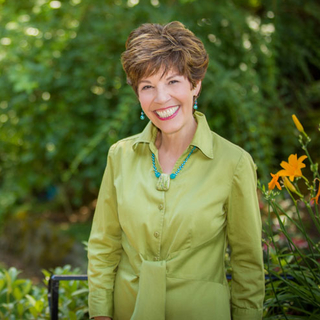
Holly Duckworth.
Good day.
We are bringing a little bit of science and a lot of wisdom and expertise to the Everyday Mindfulness Show.
I am so excited to bring to the show Dawson Church,
PhD.
He is the author of several books on science,
Science in the brain,
Epigenetics.
Today,
We're going to focus in on his newest book.
It's called Mind to Matter,
The Astonishing Science of How Your Brain Creates Your Material Reality.
Dawson,
Thank you for your yes.
To coming on the show.
Holly,
I'm looking forward to being here and sharing.
So thanks for having me.
Well,
I'm really honored that you came on the show because so much of your work.
Scientifically demonstrates what we are talking about every single week on the show.
And I often come up against skeptics,
People that are saying,
I'm not willing to meditate.
It doesn't work for me.
And yet you have many scientific case studies,
Healing stories of people who are giving this a try that we'd love to share.
And I always like to start with our guests on your own personal story.
How did you come to find your passion in brain science and mindfulness?
On this.
Well,
I was one of those people,
Holly,
Who was a skeptic who said meditation doesn't work for me.
And I had evidence to prove it because when I was 15 years old,
I was really in a lot of distress,
Suffering a lot.
I was anxious.
I was very depressed.
I had what I now realize was PTSD from my early childhood.
And one of the events that really I remember clearly from being 15 was one day I was with a group of friends in a hotel and it had full length mirrors,
These big mirrors in the lobby of the hotel.
I walked past the mirror and I turned and stared at myself,
My own reflection.
And back then as a hippie,
I had very long hair and I was wearing a weird plaid shirt and I had a mad purse over my shoulder and bell-bottom trousers.
I looked in the mirror there.
And I looked at my own face and I said to myself,
That is the saddest face I've ever seen.
I realized I was just hopelessly in despair about ever having a decent life or a corner of my mind that wasn't tormented with fear and worry and all of those kinds of negative thoughts that bombard us all.
So I joined the spiritual community and I lived on an ashram for a while,
On and off for quite a few years.
And even when I was not on the ashram,
I was visiting it often.
And so for a long time,
Like 15 years or so,
Very,
Very involved in spirituality,
Also in psychology,
Taking classes in gestalt therapy,
Cognitive therapy,
Trying to fix my own suffering,
And making progress.
I got better.
And better and better,
Little by little,
It seemed to work.
But then around 2000,
I really got into energy psychology and energy medicine in a big way.
And I made the commitment in 2002,
When I was going through a very,
Very rough patch in my life,
I made the commitment to meditating every single day.
It was like,
No excuses.
Even though I've been so unsuccessful my whole life,
I'm just going to do this,
I'm going to make that commitment.
So I had two young kids at the time,
And they had to be up at 6.
30am.
So to meditate,
I had to get up at 5.
30am.
And that,
To me,
Is a horrible hour.
Well,
It was back then.
Now I get up at 5 a.
M.
Naturally.
We're in 4.
30 some mornings.
And back then,
It was like painful for me to imagine getting up at 5.
30 a.
M.
But I just did.
I just made that decision.
I did.
And my entire life.
Get a change for the better.
I've been on this kind of hamster wheel of the same old agony,
In money and relationships and health all in a few decades.
And suddenly,
The hamster wheel was gone,
And I began to shift.
So I then became I then became fascinated by science.
And I want to teach people a way to meditate That was easy because the instructions I got in the ashram from the spiritual teacher were sit down,
Be still,
Close your eyes,
And still your mind.
Now,
You can't steal your mind.
The mind is designed to be hyper aware of everything going on around us.
In fact,
When we close our eyes,
Our brain activity doesn't stop at all.
It just ratchets up to think about imaginary things,
Because it doesn't see anything real.
The visual cortex in the back of the skull here goes offline.
So the default mode network kicks in.
And the default mode network of the brain is one big plexus right over here,
The mid prefrontal cortex,
And the posterior cingulate cortex back here.
The default mode network has One job,
And that is to keep you safe.
And so it just recycles memories of anything bad from the past and anything that might be bad in the future.
The tiger that almost ate you yesterday,
The tiger that might eat you tomorrow,
And the default mode network,
When you close your eyes and don't do anything active,
It kicks on and it floods your mind with the bad stuff of your past and the fears from the future.
And so that's why people can't meditate.
So I set out to find a way to scientifically silence the default network and give people a sense of inner peace.
And I found that there were seven very simple steps you could take that deep meditation produces that you could do.
And there's breathing a certain way,
Relaxing a certain muscle.
They're not hard to do.
And so now we're getting literally thousands of reports from people who are doing those seven simple steps and saying,
For the first time in my life.
I can meditate and I did it the very first time I tried this method called EcoMeditation.
So that's what I'm doing now.
I'm researching,
I'm doing MRI research,
EEG research,
Hormone research on these energy methods that are super simple that really work and that move the needle.
Well,
That's so inspiring because so many people do come to me and they say,
You know,
I'm not even going to,
Going to try to meditate.
And I often joke,
Okay,
Let's,
Let's,
You know,
Thank your monkey mind for showing up,
Give it a cookie,
Put it on the shelf and let's,
Let's try,
Try and try and try again.
And I think it's exciting to me to know that science is supporting this idea that with the,
Immense amount of infobesity,
Of technology,
Of social media that's all coming upon us that maybe some of these people really are right.
They can't meditate and that's why I like to say it's a for me we have to I kind of bucket mindfulness in one bucket and meditation and another to invite people to find other ways to infuse mindfulness so we can use our meditation practices grow them but in the interim also support ourselves with other brain activity that might allow us to be more present in the moment and utilize these techniques to connect better to one another.
Yeah because it's one thing to go away on on a meditation retreat and spend a week or a month or put us together for three years sometimes outside of the world but what really counts is what happens when you get back into the world and so in EEG research,
We have several things we measure.
What is EO,
What is EC?
Eyes closed,
Eyes open.
And so even if you are an experienced meditator and you close your eyes and you can reach a deep state in your practice,
When you open your eyes,
The big question is,
Can you sustain it?
And that is,
Do you have emotional regulation in everyday life?
And if you have emotional regulation,
Then when somebody cuts you off in traffic,
You don't scream and yell and give them the finger.
When you have emotional regulation and your kid does badly in school,
You don't scream and yell and tear up the report card.
When your partner says something annoying,
You don't blurt out a sentence that's going to destroy your marriage.
So having emotional regulation is absolutely critical to happiness.
The single skill most likely to make you happy is the ability to self-regulate your own emotions.
And so in chapter one,
On my book,
Mind Matter,
I give you a case history of a man called Graham Phillips.
And even though the book has over 400 scientific studies that describes I often illustrate them with a story of one person.
So it'll be a study of 1600 people,
But then I'll tell the story of one,
Because that one story really encapsulates all the learning of that science.
And so Graham Phillips had been reading about mindfulness meditation.
He was a TV anchorman,
TV personality had his own show called Catalyst on the Australian Broadcasting Network.
And he said,
I'm going to look into this.
I'm a skeptic,
But I'm going to look into this,
This mindfulness meditation thing,
Because I've read studies showing it has big effects on your health.
So he went with his whole camera crew and team into a really advanced imaging laboratory at Monash University,
Where they gave him a high resolution MRI scans and also tested all kinds of cognitive functions and biological and physical functions.
And they then had a whole profile of his brain function and body function.
He then spent eight weeks being mindful and meditating.
And after just two weeks,
He noticed big behavioral changes.
He was no longer screaming at the Elliot people.
He was no longer impatient with his team members.
And then after eight weeks,
Now this is just two months,
Eight weeks went back to Monash.
They gave him another complete analysis of his brain and function and body.
And they found that parts of his brain had grown in that time by 2%,
3%,
4% the happiness parts of the brain,
The brains that are active in the parts of the brain active and happy people,
But the emotional regulation network.
There's a little node in thin layer of tissue in the very center of our brain that has tentacles that go out and control all kinds of other parts of our brain.
That's called the dentate gyrus.
And that is the core,
The hub of emotional regulation in our brain.
His dentate gyrus in that eight weeks grew.
By 22.
8%,
Okay?
That is like a quarter increased growth in only eight weeks.
So what's happening is we're doing these practices,
We're doing these things that look like they are pretty insubstantial,
They're states of mind,
States of consciousness.
What we don't realize is they're producing hormone changes,
They're producing enzyme changes,
They are producing gene changes,
They are producing,
I just published a study on things called RNAs,
They're producing micro RNA changes.
They are literally remodeling your brain and they're not doing it over just over 10,
20 years or 10,
000 hours or 50,
000 hours.
They are doing it in the first eight weeks of mindfulness and not a little bit,
22.
8% growth in this highly beneficial brain area.
And that's just one of the case histories.
That's from chapter one of Mind to Matter.
So you definitely want to apply this in your life because it makes a huge difference all throughout every part of your outer life.
Obviously,
I'm a meditator,
A mindfulness person,
But I hear from people all the time,
Holly,
I just don't have time.
I can't find the time,
I can't make the time,
It doesn't work for me.
I love that concept of remodeling your brain.
And yet some of these things,
Dr.
Church,
They really feel like Oh,
It's just the magic panacea of all things.
I'm not even going to try because it's just like this magic wand.
What would you tell those people about how to look at just trying it and doing some observations kind of on their own self.
To get that skeptic to just give it a shot.
Yeah.
Well,
Here is some of the research.
And again,
There are over 400 studies in Mind2Matter,
But I simplify them and explain them in clear ways.
So among the many health benefits of meditation are increased stem cell activity.
And so different frequencies you generate in meditation are able to literally make your stem cells proliferate.
And your stem cells keep you young.
Repair damaged tissue.
It lowers inflammation.
It also promotes the expression of genes.
Like in one meditation study,
It produced the upregulation of a whole group of beneficial genes.
And so it's doing all these things for your wellness.
It's affecting your longevity.
People who meditate have longer telomeres.
And the amount of time it takes is really short.
The world's biggest meditation app is called Insight Timer.
I'm one of the teachers there.
My meditations in the last year have had close to 100,
000 plays.
And my meditations on Insight Timer are 15 minutes or less.
And you definitely have 15 minutes.
Everyone has that at the start of their day.
And if you do it,
If you do that,
And if you meditate effectively in that way,
Then you start to see these epigenetic changes and these brainwave changes in your body.
How big are they?
I'll tell you the story of one person who did this.
She's actually a friend of mine.
Her name is Beth Meisner.
She came up with a book now about her experiences.
So that's why I can share this publicly.
But she was diagnosed with metastasized breast cancer.
And she had a large tumor two inches across in the center of her right breast.
And so when the doctors found this large tumor,
They said,
Well,
Let's see if it's spread.
They then found that all lymph nodes under her right armpit were swollen and inflamed,
Full of cancer cells.
They also found three spots of inflammation on her right lung.
So it looked like the cancer was spreading throughout her body.
And the oncologist who gave her the diagnosis said,
Beth,
Normally we'd want to put you on a course of chemotherapy and radiation.
I want you to go straight from my office today to radiology to get your first treatment.
It's that serious.
And Beth,
To her credit,
Said no.
I need time to think.
I need time to plan.
I need time to weigh the alternatives.
I need to get a second and a third opinion.
And the oncologist,
Bless her heart,
Said,
I'm out.
Totally here for you if you need me.
And I totally respect your decision.
I'm going to support you at whatever you do.
And so Beth then completely changed her life from that day onward.
She quit watching the news.
She unplugged from all of her alerts.
She quit work.
She only focused on her and healing herself.
She phoned me,
She emailed me and said,
Dawson,
I've had a gene test.
I have eight abnormal genes that predispose me to breast cancer.
I said to her,
Beth,
You have 24,
000 genes in every cell.
Cell in your body,
Which means you have 23,
992 that are just perfect.
Let's work with those.
Think about the eight ones that are defective.
And so she She began to.
Do old Reiki energy healing qigong.
She did this intensive work on herself.
And we did EFT tapping and acupressure based method I talked about in mind to matter.
And so she did all these things,
Went back to that cancer clinic,
In eight weeks.
Eight weeks of changing your energy.
And all lymph nodes under her right breast were clear.
And the tumor had shrunk to about a half an inch.
Now the oncologist said,
Well,
Let's just schedule surgery and cut it out.
But it's like,
No,
I don't think so.
This is working really well for me.
Changing my energy is changing the matter of my body.
And so there are literally dozens of stories in mind to matter of people who change their health,
Change their money,
Change their relationship path,
Change their health,
Change their weight,
Change all kinds of external things in their lives as a result of changing their energy and their consciousness.
Energy is where it all begins.
Energy,
Einstein said,
Soul-gathering Factor of the particle is the field.
You want to change your energy field,
And when you do that,
The matter of your body starts to improve,
The matter of your life starts to improve,
And you literally affect the world around you in a direct way.
Love what you're saying.
And what's both exciting and sometimes terrifying for people who is the as we embarked upon this work is We have to own our own empowerment.
That woman's story is just such a great example of that.
This is not a science that you can just go read a book and then suddenly,
You know,
You pop the pill and it happens for you.
And a lot of folks that are just now coming across these sciences and the researchers and books like yours,
They might start with something in the world of affirmations or intentions.
You've talked a little hints about tapping and those types of things.
Help us understand how those little introductory tools may help us to create these bigger results like you just shared.
Those little introductory tools are what you do to shift yourself when you're under stress.
So meditation is like the foundation.
Meditation is the baseline.
And in Mind Matter,
I talk about 30 or so practices you can use.
And some of them are very simple.
Time and nature is one of them.
Grounding is another one of them.
Movement meditations like yoga and qigong are a third.
There are lots and lots and lots of these possibilities.
But the two that I think are absolutely essential for everyone,
Without exception,
Are meditation,
Number one,
And tapping,
Number two.
And tapping is just tapping on 13 acupressure points like this,
Your fingertips,
But it regulates the energy flows in your body.
And there are over 100 clinical trials of the method,
Showing that it works dramatically for weight loss,
For anxiety,
For depression,
PTSD,
For phobias,
And for autoimmune diseases.
And so,
Um,
You want to have at least those two that can really make a difference in your life.
And not a subtle difference,
Not a small difference.
Here are some numbers from a study we did of people who did a one-week retreat where they were meditating with me in the morning and they were tapping all through the day,
Tapping on their traumas,
Tapping on their childhoods,
Tapping on their disappointments.
So we measured things like their blood pressure and heart rate and heart rate variability and their immunoglobulins,
Because immunoglobulins are in your saliva and they're a marker of how well your immune system is working.
We measured their cortisol,
Which is the baseline marker of your stress level.
We found that Holly,
Over a course of just one week,
That their anxiety and depression dropped dramatically,
Their happiness increased,
And their cortisol went down by an average of 37%.
Now that's a massive drop in cortisol.
The lab I work in says that you hardly ever see such a big drop in cortisol unless somebody is working intensively on stress reduction for about six months.
But in just one week,
Massive drop in cortisol,
And then their immunoglobulins rose 113% in just that one week.
These are,
Again,
Huge changes,
And that means a much longer life and a much healthier life.
Again,
The evidence is just so overwhelming at this point,
That it doesn't take a lot of time,
But you need to reduce your stress.
You need that 15 minutes,
20 minutes meditation in the morning,
And I encourage you to start small there.
Make sure though,
It's an effective meditation.
If you don't,
You can close your eyes,
And nothing can be happening other than you're just rehearsing stuff in your past,
Your future with that default mode network kicked in.
That kind of meditation doesn't benefit you,
It doesn't even harm you by just reminding you of what didn't work in the past but won't work in the future.
So you want to use a guided meditation initially use the Muse headband,
Which can be useful.
Use the heart rate variability monitor.
There are some smartphone apps to do that.
Use something to train yourself initially into getting into those deep meditative states after six months or a year or three years,
You won't need those those aids,
But get but use them initially use a guided meditation to start with until you can meditate and drop into those deep states without your aid aid.
And then what happens is that you start the day that way,
You get to work,
And one of your colleagues says something that really upsets you or you have a problem client or project is not going well,
What do you do?
You don't feel so good anymore.
That's when you tap and the tapping regulates you in under two minutes very,
Very quickly gets you back into feeling good.
So those are the two essential practices that Everybody has that 15 minutes in the morning.
Everybody can spend two minutes when you're stressed.
And if you don't do that,
You have cortisol running in your life,
Stress hormones,
Adrenaline,
Cortisol running in your life all the time.
Most people have high levels of those.
And if you don't reduce them,
They lead over time to have cancer,
Heart disease,
Obesity,
Cortisol and obesity are very,
Very highly linked to depression,
To loss of skin elasticity,
Aka wrinkling,
Loss of bone density,
Loss of muscle mass,
All of these things are the sequel to high cortisol over time.
You need to love yourself enough to bring your stress down with these two methods,
But make sure you use an effective meditation method,
Because again,
There are ones that are super effective and will really get you into that deep state.
Others,
You're closing your eyes.
The default mode network clicks in,
The prefrontal cortex turns on,
The posterior cingulate cortex turns on,
And you're just rehearsing bad stuff from the past and projecting it into the future,
And you're not getting any benefit from having your eyes closed.
So that's why initially it's important to use that guided meditation.
Meditation.
Well,
I'm excited to partner people with like you and continue to change the narrative,
Because I think unfortunately a lot of folks are coming.
To this science from a reactive point of view.
Something bad is happening in my body and I now have to react and respond versus I would love to see our industry change the narrative to being more preventative.
That your use of the word love yourself enough,
Like let's change the narrative from I have a problem,
I have to fix it to let's prevent the stress in the first place and support our own brain Awareness that rewards chaos and stress.
We you've seen it,
You know,
You go to party go to an event.
Oh,
I'm so busy.
Oh,
Yeah,
Me too.
And we go in this downward stress cycle that how can we as an industry start to support The opposite of that and celebrate the wow I had a really relaxing day today.
I had a really calm day today.
I was really centered and rewarding those behaviors that can really transform our world,
Our industries,
And the lives that we hope to live.
Well,
I've written two books on PTSD.
And what research shows about PTSD is that you can't jump over your past.
In the spiritual community I was in when I was 15 years old,
They taught that you could.
They said,
You just transcend your past.
And then you join with the universe.
And in Mind to Matter,
I call it non-local mind.
Some people call it infinite mind,
Or God,
Or a higher power,
Or whatever label you give it.
But it's something more than yourself.
It's an information field beyond yourself.
And you can connect with it.
That teaching that you can transcend your past,
Research shows,
Doesn't work.
If you try and ignore your past,
It becomes the shadow.
So you have to go in and you have to work with the shadow and release the shadow.
And the reason I'm mentioning this is because There are two ways to use these tools,
Like EcoMeditation,
Like EFT tapping.
And one way is reactively.
And so I think a lot of live workshops all over the world.
And one of the things I have people do is look at their childhood.
I actually bring lists of incidents from their childhood that damaged them,
Hurt them,
Traumatized them.
So they work on those incidents in those live workshops.
One by one,
They work on their list of incidents.
And eventually they're fine.
They will work on a terrible,
Say,
Event where they were bullied or hurt or molested,
And they were able to move through those events.
Was powerful when I had one sexual abuse survivor stand up and turn to the whole class at a workshop and say,
Nothing that man did to me.
Could take away my joy.
I was joyful then,
Under the surface I'm joyful now,
And I'm now,
I'm strong.
" And so she turned her whole narrative around.
Powerful to hear people do that.
So that's going in and working on your your,
Your stuff from your past.
And then you're clearing all of that.
Now at a certain point,
You've done enough inner work,
You've tapped on a bunch of things,
You've had got a meditation practice going.
Now,
You're much more able to handle stress in the present.
So you're no longer triggered by your past.
I know,
For example,
Before this,
I learned all this stuff.
I was very triggered when people didn't listen to me.
And so my wife wouldn't listen to me or a colleague wasn't listening to me.
And I would get very,
Very upset and agitated.
It had nothing to do with my wife or the colleague.
It had everything to do with not being heard when I was two or three or four.
So you want to go and clear all that stuff.
Then when the person doesn't hear you in the present,
You're no longer reactive to them.
And so that's this big component of reparenting ourselves.
In Mind2Matter,
In my other books,
I talk a lot about the mechanisms of doing this,
What tools we use to do this,
What's effective,
What science is based,
And what works.
You want to go about creating a wonderful vision for your life.
In the future.
Like my wife and I lead what's called the Life Vision Retreat for people.
In seven days,
We have them really tune in to what they're being called to do.
And we don't have them do that from the level of local mind.
Because I look around me and say,
My car's broken.
I need a better car.
My marriage sucks.
I need to get divorced and find someone else.
I don't like where I'm living.
I'm going to move.
That's all goal set at the level of local mind.
What we want you to do will be I need to do with the live vision retreat is we want you to merge with non local mind.
That's where the magic is.
That's where the vision is.
And so we have people do these practices.
And what happens is that when people are in tune with non local mind,
Their brain activity changes.
So that prefrontal cortex that mid prefrontal cortex goes offline.
The temporal parietal junction and the parietal lobe,
Which governs our sense of space and time,
Goes offline.
We have huge surges of Hormones like oxytocin,
The bonding hormone,
Kept flowing through our bodies.
So now I'm feeling love and bonding,
But.
.
.
The part of my brain that constructs the self is shut down,
So I'm not bonding with myself.
And the parietal lobe,
Which governs awareness of space and time,
Has shut down.
I'm now literally,
As far as my brain can tell,
I am one with everything.
And that's one of the five fundamental characteristics I talk about in Mind to Matter,
Are people having these transcendent experiences.
When you're then in touch with non-local mind,
You then.
As you're trained to do this,
You download the vision that non-local mind has of your perfect life and your perfect goals.
And those become your goals in your life vision for the coming year and the rest of your life.
And so you're constantly referencing these parts of the universe.
You're tuning into the universe as a whole,
Feeling the love,
The wisdom,
The intelligence,
The compassion,
The kindness,
The beauty,
The creativity,
The inspiration.
And so you've been in this absolutely inspired state for your 15 minutes or 20 minutes to half hour meditation.
Now you bring it into reality.
And here's the cool thing.
Research shows,
Holly,
That person.
You know,
You think this person is a space cadet walking through life now.
How can they pay the bills?
How can they be effective on a team?
It turns out.
That they are effective.
A 10-year study by the McKinsey Consultancy of highly productive people.
Show that in these flow states of consciousness,
When they then move in,
Walk into their office or fire up their computer and they start work.
In those states,
They are five times more productive.
In other words,
Their productivity has increased by 500%.
Another study by the Defense Research Agency of people asked to solve very difficult problems.
And of course,
We have difficult problems in our lives and as a species right now.
This DARPA study found that people,
When they're in these states,
Their ability to solve complex problems increases by 490% and their creativity doubles.
So now you aren't a space case walking around in non-local mind,
Totally unable to make a ham sandwich.
You are amazingly productive.
People say to me,
One of my colleagues says,
Dawson,
I'm convinced that you are a fraud.
There are 12 of you because I watch your output of scientific studies.
I watch you running this big organization.
I watch you running a giant nonprofit.
I watch you getting free treatment to thousands of veterans every year through the nonprofit and running a training corporation and doing scientific papers and still taking a month off to go to a presentation.
Hawaii every year and a month off to go to France.
And I mean,
There are gonna be 12 of you behind that facade.
There can't just be one person there.
But it's because you're highly productive,
You're highly creative,
You're highly organized.
And you're working,
You're living your local life body as an expression of your connection with non-local mind.
Every morning you tune into non-local mind and your whole brain is flooded with ideas and creativity and inspiration and wisdom.
You're gonna apply that to your local life.
You're five times as productive,
Of 490% is likely to solve complex problems.
And you just make magic all around you.
So again,
There are In Mind Matter,
I give you many reasons why this can change not just your internal experience,
Your felt sense of your life and who you are and the health of your body.
It produces a big change in the world around you.
Well,
I am so grateful that you came on the show and made magic for me and made magic for our listeners.
We want to make sure that we give our listeners the opportunity to give back to you.
And first of all,
We want to direct everyone to your work.
Mind2Matter.
Com is the website that has more information on the book,
Tools and resources.
And this is our opportunity to give back to you.
I want to remind our listeners,
Don't just get the book and read it,
But take that extra time to help us expand Dawson Church's research around the world by taking a moment to go on Amazon and filling out a five star review and letting the world know how you're applying this work in your life and how it's changing the world.
Because those little things help us to grow a more mindful world and continue to share this research.
So maybe more skeptics will fall away and we'll see and hear more success stories.
Thank you so much.
Any last minute words of wisdom before we let you go back about your day?
These are tools,
They're tools to feeling better and living a much happier,
Healthier,
Longer life.
And the critical thing is to use them.
And so I know that we can't do this Holly with everyone here.
But usually if I'm doing a workshop,
I'll ask everyone who will commit to that 15 minutes in the morning to raise their hand,
And then I hold them to it.
So I want you just to metaphorically be thinking now about raising your hand and saying yes,
I will commit to that 15 minutes for me every day.
I will benefit and I love myself enough.
To carve out that time and give myself that little bit of freedom.
Boost,
That start to the day.
What I don't want you to do is wake up and don't check your smartphone.
Do not look at the news.
Do not look at social media.
I can guarantee you,
You will find nothing there that will make you happy.
But what will make you seriously happy is to tune into here and tune into the universe.
Give yourself that time at the start of the day.
It'll just start to make your life way,
Way,
Way happier.
So love yourself enough to give yourself that start to the morning.
Wonderful.
Well,
Thank you so much,
Everyone.
Remember mindful matters.
So do you.
You've got your homework,
15 minutes today.
We'll see you on another episode.
Thank you for joining us for today's show.
For more Mindfulness Every Day,
Visit EverydayMindfulnessShow.
Com and download the 3-Day Challenge,
And experience the ABCs of mindfulness.