Welcome to a deep dive into the metaphysical meaning of the name archetype,
Which is embodied in the upper right second molar,
Or the space where it would be.
We are talking about the back tooth if you don't have a wisdom tooth on the upper right,
Or it's second from the back,
In front of your wisdom tooth.
The name archetype is concerned with your public identity as part of a group.
It's especially sensitive to relationships where you share a name.
Tooth archetypes are a way to interpret oral health symptoms in or around each tooth,
With strengths that support the tooth to heal and be healthy,
And vulnerabilities which can influence how a tooth might succumb to disease.
The strengths of the name archetype lie with balancing individuality with belonging,
While names vulnerabilities may arise from a painful relationship with a person or group who shares your identity.
The name tooth thrives with a sense of belonging,
And symptoms can be activated by feeling excluded.
This tooth asks you to know who you are in relation to others like you.
It wants you to use your most authentic name and to have your affiliations acknowledged.
In this talk I'll explain how the name archetype fits into various metaphysical maps of the mouth in order to explain the logic of its primary themes and relationships.
I'll offer interpretations of different symptoms common to this tooth,
And suggest strategies for using the name archetype to support the health of the tooth,
Your whole mouth and your general well-being.
If you're not already familiar with metaphysical approaches to oral health,
I suggest checking out my talk called Tooth Archetypes,
Which introduces some foundational concepts from my book,
The Secret Lives of Teeth.
One of the key concepts is that in my experience,
The emotional or energetic root cause of almost all oral health symptoms can be traced to secrets,
Silences or suppressed emotions.
Please note that if you are in serious pain,
Have a fever or experience swelling around this or any tooth,
You need to prioritise dental care alongside metaphysical healing.
What I'm discussing should be considered complementary rather than alternative health.
Also,
Please do not use this discussion of metaphysical influences on physical health to blame or shame anyone,
Including you.
To start,
Let's put the name archetype in context as your upper right second molar.
Teeth located on the right side of your mouth tend to respond to relationships with men,
And upper right teeth are particularly sensitive to distress associated with your father or any other significant relationship with men in your family.
With its location in the upper jaw,
This tooth speaks to your past,
Where you came from,
Your background and influences.
Upper teeth tend to offer more context and history than lower teeth.
When you were an embryo in the womb,
Your second molars each began to grow as part of a single tooth germ,
Like a seed,
Containing the adjacent first molar and the wisdom tooth.
Thus,
The back molars have elements of ancestral wisdom and social status influencing their archetypes.
Your adult molars spent more than a decade growing underneath your deciduous molars while your frontal cortex developed as a baby and child.
The second molars probably came in when you were about 12 years old,
Replacing your milk molars as they fell out.
This happened at a time when your body was awakening to puberty and your brain was developing the capacity for independent thinking.
The second molars are associated with the psychological developmental tasks of adolescence,
In particular navigating individuality and belonging.
Second molars signal access to autonomous thoughts,
That is,
The ability to think for yourself.
These teeth appeared as you began to ricochet between extremes of acknowledging your unique thoughts and feeling a strong impulse to fit in with your people.
That could have involved sharing secrets with a group of new friends,
Or hiding your opinions in order to conform with the family you depended upon,
Or both,
But either way had the potential to create conflict and threaten your sense of belonging.
This volatile dynamic shaped your identity.
Any secrets,
Silences or suppressed emotions around these issues may have become embodied as cavities which needed filling in your teenage molars.
When the second molars call for attention later in life,
It may be because the choices you made as a young person between individuality and conformity eventually start to chafe.
So that's the name,
Tooth,
Archetype and context.
What about the unique meanings of the upper right second molar,
This singular tooth out of 32?
The name archetype can be summarised with three main themes.
One is any relationship where you share a name,
Often the family who share your surname.
In patriarchal societies,
Common name-sharing relationships include your family of origin,
Particularly your father and his family,
Or your husband and his family.
The second theme is any external recognition of your identity as a group member,
Including nationality,
Political affiliation,
A corporate employer,
A loyal customer or even a fandom.
This tooth might be embodying feelings about your sworn allegiances,
Perhaps as represented by your passport or a uniform.
The third theme can be summed up as reputation,
As in your good name,
And name recognition.
The name tooth might be sensitive to your feelings about someone unrelated who has a similar name,
That other people confuse with you,
Or where your name has come to have a negative cultural meaning,
Like Karen did a few years ago.
Generally,
I've observed a strong dynamic of pride and shame can be embodied in the name tooth.
The tooth may develop complications when your feelings about affiliation with a group outweighs your individual sense of self-worth.
Name is concerned with status and can suffer from comparing yourself to your father or others who influence your identity.
A name tooth is more concerned with harms arising from the status and reputation of the group you identify with rather than your own individual success and reputation.
A dynasty,
Whether a royal lineage or a local farming family,
Gives a name meaning and power within its sphere.
Does your name make other people treat you differently and perhaps hold you at arm's length?
Marrying into a high-status family name can affect this tooth if you feel unable to be true to your authentic self because of the pressure of living up to the expectations of your husband or in-laws.
Now,
Let's explore the ways that these themes and relationships might play out as different symptoms in the name tooth.
Molars are more likely to need dental restorations than most other adult teeth.
They often bear the brunt of bruxism when clenching or grinding causes cracks,
Chips or broken teeth.
The occlusal or chewing surface of molars is naturally rough with pits and peaks to aid in breaking down food but these can become traps for leftovers to sit in the mouth feeding the unhelpful bacteria that cause decay.
In addition,
Being hidden away at the back of the mouth,
Molars might not get the same level of careful daily oral hygiene that front teeth usually do.
When you become aware that this tooth is asking for attention,
It can be helpful to trace the story of your tooth back to its earliest symptoms and first dental interventions.
It may have originally developed a cavity and been filled in your teens.
If you have name archetype issues which remain unresolved,
You may find that an initial filling is followed by a sequence of problems which continue for many years.
For some people,
Your earliest name tooth problems might be embodying difficult emotions,
Traumatic circumstances or shameful scandal relating to your paternity or a close family member's paternity.
For example,
A closed adoption,
Especially if it was secret and you or other family members found out in painful circumstances.
Or if the father who raised you was not your biological father,
Especially if you or either of your fathers didn't know the truth of your relationship.
Questions of paternity from prior generations can affect your name tooth.
For example,
If issues around paternity led to your parent feeling resentment,
Powerlessness or unworthiness which has shaped your identity.
For most people though,
Names relevance can be found by taking a broader view of the archetypes themes,
Perhaps starting with possible interpretations of different kinds of symptoms.
Do any of the following symptom interpretations resonate for you?
A sensitive name tooth may be vulnerable to the misuse of your name,
Perhaps being abused or accused when mistaken for someone else.
Tooth sensitivity can indicate that you are rubbed raw by a cruel nickname which belittles or misrepresents or mocks some aspect of your identity.
You might be very sensitive to the tone that someone in your family uses for your name when they are trying to scare,
Hurt or control you.
In a work setting you may feel sensitive to the use of your first name only to signal lower status or exclusive use of your last name or title in order to depersonalise you.
Alternatively,
A sensitive name tooth may be embodying emotional pain that you've numbed out to survive how others recognise your identity or don't.
It may be in response to the use of an unwelcome,
Inauthentic version of your name for administrative convenience,
Social dominance or assimilation.
One of the ways that dominant cultures oppress individuals is by encouraging or imposing inauthentic names that erase your first language or cultural background.
My last name,
Sims,
Was only two generations old when it went on my birth certificate,
A name twice anglicised through immigration and antisemitism.
A traumatic change to your name that you don't choose may not consciously feel like the most important issue when you have so little say over your life at that time,
But the name tooth may not let you forget that it matters.
Sometimes your choice of name and other people's reaction to your choice carry an emotional weight to which this tooth is sensitive.
If you are transgender,
You know how uncomfortable it feels to be misgendered by your dead name.
The tooth may embody grief for the loss of an allegiance represented by your old name or a reluctant commitment to your new affiliation.
You may be trying to keep yourself safe by using a name that feels inauthentic.
If your sensitivity seems to come and go randomly,
Keep track of when you feel it in both the physical circumstances,
Such as eating,
Drinking or brushing,
And the psychosocial context,
Like who you are with,
What you are talking about or thinking about and events leading up to the sensitivity.
A cavity in the upper right second molar could be responding to a lack related to one of the name archetype themes.
Ask your tooth if you are feeling estranged from your family or hurt by the way your name is shortened or persistently forgotten.
The location of a cavity,
Chip,
Crack or break can be interpreted with specific meanings inspired by the work of Dr Christian Beyer.
Any damage on the mesial surface which faces the front of the mouth on the name tooth can embody trauma resulting from idealising your father or a father figure who in reality lets you down hard,
Especially if you criticise yourself for not measuring up to him.
This is a common wartime experience with an absent father who's idealised in your imagination while serving far from home and then perhaps returns as a shell-shocked veteran or a harsh disciplinarian.
Like when my grandfather returned from World War II,
Where he'd been a dentist in the army for three years,
My five-year-old father was afraid of the strange man making himself at home and that was very painful for them both.
A cavity on the distal surface of the name tooth facing the back of your mouth or touching the wisdom tooth if you have one there,
May be embodying exclusion from a group.
This is part of the tooth which can feel the pain of being an outsider in your family if you're considered the black sheep or the near-do-well.
Are you a sensitive artist in a family of sporty businessmen or queer in a conservative homophobic family?
If your outsider status has been traumatic,
This surface is where your trauma may express physically as a cavity.
The distal surface can also pick up effects from the adjacent wisdom tooth,
Which is the lore archetype and is vulnerable to trauma in relation to rules and regulations.
A cavity on the occlusal or chewing surface which faces the lower jaw can embody imposter syndrome,
Especially secrets,
Silences and suppressed emotions in relation to your father or a father figure.
For example,
If you've had a bombshell revelation that your father is not your real father,
The occlusal surface is also vulnerable to painful experiences relating to your physical appearance and how much you look like or don't look like your father.
Dental restorations like sealant or an onlay applied to the occlusal surface may help to maintain a secret around paternity or serve to keep your imposter feelings suppressed with the risk of decay developing underneath the restoration.
A cavity on the buccal surface,
The side of the name tooth that faces your cheek,
May embody hurts arising from feeling rejected by your father or family.
Maybe family belittled you or your parent for having certain aspirations or for not meeting their expectations.
Conversely,
A cavity may embody trauma from leaning too hard on your reputation.
Like if you expected your family name to protect you from the consequences of your actions.
The cervical buccal part of the name tooth is the gum line facing the cheek and it can embody traumatic surprises like a shocking failure to achieve your ambition,
Maybe because of self-sabotaging impulsive action.
This surface is vulnerable to being blindsided by events such as being disinherited or the family business going bankrupt.
A cavity on the cervical lingual part of the name tooth,
That is the gum line facing your tongue,
May embody inner conflict about your identity like if you're not behaving how you think you should or your public image doesn't match your authentic sense of self.
Cracks may develop here if you grind your teeth from a feeling that you are powerless to control yourself.
This part of the tooth can also embody ancestral or personal memories relating to traumatic secrets of paternity.
If your name tooth is infected,
Inflamed or has an abscess or cyst,
Consider whether you are internalizing rage or frustration about one of your shared name relationships or another archetypal theme.
A client of mine,
Who I'll call Rebecca,
Came to me in her 70s with an infected upper right second molar and a lot of suppressed anger.
From a family of Holocaust survivors,
She'd rejected Judaism after leaving home at the age of 15 rather than join the family business.
She committed herself to a simple Buddhist life,
But now her name tooth could no longer contain the anger about her childhood and family which she had tried so hard to deny.
By letting the anger surface to be felt,
Expressed and released,
Rebecca saw the tooth infection subside so she could keep her name tooth stable and avoid extraction.
The name tooth's root problems are often linked to losing your place in your family,
Their home,
Hometown or home country,
Especially through being deliberately excluded or violently displaced.
Name tooth roots may embody a painful immigration experience where your authentic identity was threatened by making a new life somewhere you didn't have strong affiliations.
Occasionally the name tooth may never appear,
Its development stopped before you were born.
There may be a baby molar which stays in its place or a gap at the back of the mouth.
Metaphysically,
The natural lack of this tooth could suggest that one of your ancestors lost their family name in traumatic circumstances.
When the name tooth has been extracted without fully resolving your archetypal issues,
Those stories can continue to activate symptoms in the gap left behind or in adjacent teeth.
Ongoing secrets,
Silences or suppressed emotions may affect your tolerance of an implant or contribute to the risk of bone loss.
Look back at the history of the tooth and your life experiences with the name archetype themes to help you address the underlying metaphysical issues left behind after an extraction.
Gum problems above the name tooth may embody feeling a lack of support that you've needed or desired from your family or group.
Symptoms in the gums adjacent to the name tooth may be asking for you to set up and maintain or reinforce boundaries with an individual or group who shares your name or some key aspect of your identity.
Different types of gum symptoms can express different aspects of the archetype.
Gum pockets may embody trauma arising from dishonesty about your name,
Like hiding your real name or if someone else stole your identity,
Or dishonesty within the group your name is affiliated with.
Are your gum pockets responding to someone with the same name being dishonest in ways that have harmed you directly or by association?
An ankylosed name tooth,
Which occurs when a lack of periodontal ligament fuses the tooth's root to your jawbone,
Could embody being stuck in a negative social dynamic,
Which is central to your identity because you lack the support you would need in order to leave.
Gingivitis,
Localised around the name tooth,
May be embodying shame in your family name or about your association with a group's misfortunes,
For example living in an invaded country or backing a defeated political movement.
Bone loss or periodontal disease,
Undermining the name tooth,
May embody a lack of financial or material support from your family.
Now,
Let's explore ways to work with the name archetype to support the health and wellbeing of the upper right second molar or the space where it would be.
If you know someone else who is struggling with this tooth,
You might be able to support them by finding out and using the name they feel most aligns with their authentic identity.
For yourself,
You could start exploring your name archetype's stories by re-evaluating all the names of your life so far,
Using meditation,
Journaling,
Artistic expression or therapeutic conversations.
Perhaps spend some time remembering all the names you've ever been called,
Your first,
Middle and last names,
Family and school nicknames,
Your name in other languages,
Online usernames,
Even characters you've played in games or as an actor.
If you are journaling,
You could write down each name and make a note of the affiliation that name has,
Such as the particular context where you were called by those names and anyone else you know of with the same or similar names.
Then note down the years in which you were called by that name and whether it was a positive or negative experience.
Compare your name history to a timeline of when you've had symptoms or dental interventions in your upper right back molar or adjacent teeth.
Then look for patterns and themes that can help you to understand and respond to your name tooth symptoms.
If you are currently known by a name which affiliates you with something that reminds you of trauma or inauthenticity,
Maybe you could experiment with some playful name changing in low stakes ways,
Like trying on a nickname with a stranger or an alter ego in a game,
A pen name with your writing or a username online.
I'm not suggesting legally changing all your documents,
At least until you are very sure it's worth doing.
Just start to see how it feels to be seen and known without that old affiliation.
You can work with tooth archetypes in many kinds of therapy,
Including somatic therapies,
Talking therapies and spiritual practices.
In traditional Chinese medicine,
The upper molars and lower premolars are associated with the stomach and spleen meridians.
Any meridian based therapy such as acupuncture,
Reflexology or EFT could support the energy flow to this tooth or the site where the tooth would be.
The stomach and spleen meridians are considered earth elements,
Which represent confidence,
Harmony and satisfaction.
Make space in your life to encourage these kinds of feelings.
Now I'll share some suggestions of symbols you can use in ritual,
On altars or in any practices where you want to represent your name archetype in order to support your upper right second molar.
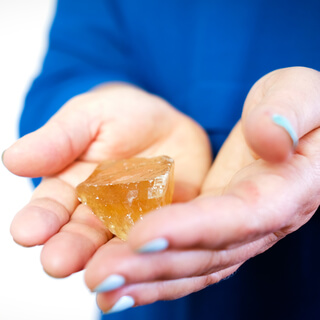
The colour yellow.
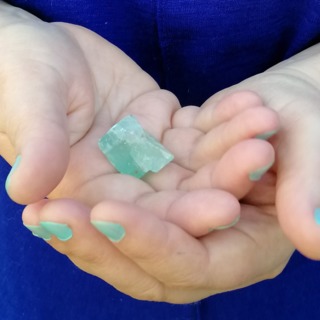
Crystals and plants to represent the element of earth.
Objects that represent your family or a group you strongly identify with.
A picture or object representing someone who shares your name.
A picture of yourself as a teenager.
Symbols of your teenage passions,
Aspirations or idealism.
A symbol of Hermes or another god or goddess figure that has meaning for you.
Dr Michelle Kafan associates this tooth with Pegasus,
The mythological flying horse,
And the astrological planet of Mercury,
And the mineral Sulphur.
I associate the name archetype with the tarot card,
The Seven of Swords.
Some closing thoughts.
A name you don't share with anyone in both senses can be a magical talisman which nourishes the name archetype.
A private name that almost no one knows or uses has special meaning because it's not part of your mundane shared identity.
Being known by a unique name can isolate you,
But may also feel like destiny and power.
My given name is so difficult for most people to pronounce,
Spell or remember that it has felt like a burden at times.
Malheurs has three meanings.
Honey bear,
A belief that people can make the world better,
And the antonym or opposite of stressors.
I feel each of these interpretations is contributing a kind of energetic nominative determinism guiding me on an unconventional life path.
Having a unique name may also have helped me to trust my own thinking because the name tooth calls you to live in alignment with your inner authenticity.
A shared name can be a burden,
A bond,
A shield,
Or a source of privilege.
There can be strength found with others who share aspects of your identity,
But even when your affiliation provides comfort and companionship,
Even when it gives you higher status and better access to resources,
Don't give up your own ideas and values.
Leaning on shared affiliations for your identity,
More than being known for your personal character and actions,
Can inhibit your personal growth.
Collective community power is necessary and important,
But the name tooth is vulnerable to blind allegiance.
If your group identity comes with rigidly enforced compliance,
Then your tooth may suffer.
Name tooth symptoms speak to you about the healing that needs to happen around a group or person that has strongly influenced how you see yourself.
Keep your name tooth healthy by thinking critically about your relationships with individuals who share your name and groups who share your identities.
Ultimately,
Your name tooth invites you towards a happy balance of individuality and belonging.
This tension may be embodied in the name tooth until you find your own way to be unique,
Yet not isolated,
And to have empathy without groupthink.
The name tooth knows you are a social animal who needs support and that you can walk your own path.
At every stage of the life of your upper right molar's presence or absence in your mouth,
The name archetype can be a valuable partner in your well-being.
Your unique healing story about the name archetype,
Reflecting your background,
Body and inner life,
Matters more than any descriptions I have shared today.
Trust what your intuition says about this tooth.
Use my ideas and suggestions,
Just as much as is helpful,
To get started in telling your own unique healing story.
Then come and share it in the Secret Lives of Teeth discussion group on Insight Timer.
I want to know what you imagine.