Hello and welcome to Series 3 of the Ultimate Holistic Escapes podcast.
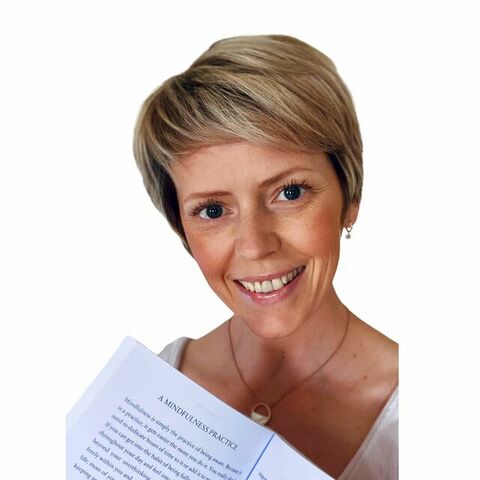
I'm Rebecca,
Your host and founder of Ultimate Holistic Escapes.
I'm a fully qualified holistic therapist and meditation teacher and I'm here to share some wisdom,
Guidance,
Inspiration and honesty about holistic healing and living life on a spiritual path.
So stay with me and see where this journey takes you.
What is this word equanimity?
The Oxford Dictionary's definition of equanimity is calmness and composure,
Especially in a difficult situation.
This episode will involve some self-reflection,
Self-analysis and hopefully some self-improvement which will contribute to your overall wellbeing.
This topic is something I'm really passionate about and I myself am working towards reaching a stage where equanimity comes effortlessly for me.
If I think about where I was just a couple of years ago compared to now,
I can see huge improvements in this area and every day I get that little bit closer to a stage of effortless equanimity.
In fact,
In the past year,
I've probably seen the biggest changes in myself in terms of this starting to come more naturally.
This may well be the case for lots of you as we've been forced to live with less control and certainty of the future.
What I find is the more stress I face,
The more resilience I build and the more equanimity shows up naturally in everyday challenges.
It's a journey and a process and it sits nicely alongside a spiritual path as lots of spiritual practices help you to develop the skill of being less reactive and more intuitive.
You'll find that some people seem to naturally radiate equanimity and I'm sure you've been around people like that or on the opposite end of the scale,
People who are just so reactive in what seems like not a difficult situation at all.
These people are usually impatient or they seem to thrive off negativity,
Maybe drama,
Gossip.
I've been that person at times in my life,
Especially when I was younger,
But now I know better so I do better.
Think about yourself.
Are you a cool,
Calm and collected person by nature or do you have to practice this virtue and make a real conscious effort?
Have you ever even thought about how reactive you are and do you ever notice and make a mental note when you've reacted to something or overreacted to something and wished you hadn't?
We can often feel guilty when we have reacted negatively to something and we look back on it with regret.
This is all part of building on that self-awareness and if you have that,
You are definitely heading in the right direction for positive change.
So what comes to mind for me when I think about equanimity?
Self-awareness,
Learned behaviors,
Stress,
Mindfulness,
Becoming the observer and that all-important gap between perception and reaction.
That is very important,
The gap.
It takes practice to pause in this gap,
But once you've made a commitment to positive change,
There's no going back.
I will go into more detail and give you an opportunity for some self-reflection.
So you might want to hit pause here and grab your journal or a notepad and pen.
When we're overwhelmed by stress,
I'm sure most of you have been at some point in your life and you probably found that you were more reactive,
So you're more likely to overreact when you are consumed by stress.
Stress can be a real stumbling block when we're learning to be less reactive,
But it really is during stressful times that we can reach new levels.
If we gain self-awareness and self-control during our most stressful times,
Then we can certainly learn to maintain equanimity throughout day-to-day challenges.
There'll come a point where you no longer view what was once a challenge as a challenge and you'll smile to yourself knowing that you really have got that control and the feeling of equanimity will make you feel empowered.
We have the power to change our subconscious mind.
We know this by now and therefore we can change our default reactions and behaviors.
Think about how kind and intuitive your reactions could be compared to your automatic reactive mode.
Even with small things,
We see how angry and wound up people can get,
Like when driving or stuck in a queue at a supermarket.
This is why working on patience is a key part of learning equanimity.
You have to own up to your impatience and take control of your mind.
I always say that a person's reactions are a reflection of their internal world.
If someone is angry all the time,
They are most definitely suppressing emotions and possibly dealing with some real challenges on the inside.
It's important to note that practicing equanimity and mindfulness is not a way to suppress emotions or hide your true thoughts and feelings.
It's a way to regulate them,
Become more self-aware and maybe even learn the reasons why you feel the way you do.
It can help you to become more skillful and intuitive with your thoughts.
And it's a fundamental part of self-compassion.
Your feelings and emotions are valid and they need an outlet.
So I would say if you are really struggling with this or you suffer from depression or anxiety or other mental health issues,
It's important to seek the right type of help from a mental health professional.
If you have your journal or notepad ready,
Make a list of the times when you have been reactive in a situation where you know you could have been calm and composed.
Times where you can clearly see on reflection that the reaction was negative and perhaps even hurtful for yourself and maybe others.
And if you take a moment to pause and gain composure,
How would things have been different?
It's okay to be honest here.
Nobody else needs to see what you've written.
And when you are honest with yourself,
This really does open up the channel for positive change.
So again,
If you'd like to pause,
Just make those notes in your journal,
Self-reflection and just analyzing our thought patterns and behaviors just to work towards that positive change.
Our reactions can come from learned behaviors.
So for example,
If you've been around anger and highly reactive people in childhood,
You've probably grown up thinking that this was normal.
And so these types of reactions could just seem completely acceptable to you.
Just remember what I said about anger though.
Could it be that if you are showing anger,
Are you suppressing emotions or are you overwhelmed by stress?
And this is making you less tolerant of what you normally wouldn't react to naturally.
This is your time to reflect and decide where the feelings and emotions stem from.
Anger through learned behavior may not really be a feeling of anger at all.
We all perceive situations differently,
But we have the power to make positive change and live our lives just a bit more relaxed,
Peaceful and joyful.
We often fall into the trap of the conditioned way of thinking where the focus always goes to the negative.
There's actually some interesting science behind this,
Which is what psychologists call the negativity bias.
Our brains are wired to constantly be on the lookout for a threat.
So humans seek out the negative thing,
Which a lot of the time isn't actually a threat at all.
And then comes the stress response,
The overthinking,
The internal dialogue and the reactiveness.
If we were to become aware of this natural instinctive and learned way of thinking and catch the negativity bias before it takes over,
We get to take control and change our mindset.
And this is the amazing thing about being human.
We have the power to control and change our thoughts,
Behaviors,
Emotions and reactions.
We get to be in the driver's seat.
And this means we always have the space for personal development and growth.
I often think those that are completely stuck in their ways with no self-awareness or room for growth and change are missing out on a huge part of life.
The place where we get to create our own reality,
We get to cultivate deeper levels of compassion and we get to see life in all its beauty.
I'd like to share with you my top tips for practicing equanimity.
These are based on my personal experiences and practices and ongoing studies of Buddhism,
Psychology and holistic health and wellbeing.
I've made a note of some books and inspirational people that I've learned from in the episode description.
So please do check those out as I believe it's important to share this information and support those wonderful influences.
Your number one,
This is a big one.
And if you've ever been to any of my sessions,
If you've been on a live session online or you've had one-to-one treatments with me,
You will know that I'm really big on mindfulness.
Practice the art of mindfulness.
And this really is the key because it covers the awareness of every aspect of your being both internally and externally.
When you tune in to mindfulness,
You gain more control over your life and you also develop deeper levels of compassion for yourself and for others due to the heightened level of awareness that begins to come naturally the more you practice.
Mindfulness doesn't have to be a meditation practice.
It's day to day,
Minute by minute being mindful of your environment internally and externally.
Mindfulness has been proven time and time again to have a significant positive impact on our health and wellbeing.
And with this comes equanimity because we approach situations with more clarity and understanding instead of with that default negativity bias.
The more you practice mindfulness,
The less reactive you become.
Number two,
Get to grips with honest self-awareness,
Which is part of mindfulness.
Being mindfully aware of your thoughts,
Emotions and behaviors encourages equanimity because you're allowing yourself more space between perceiving something and the reaction that may or may not follow.
This is what puts you in control of your reality.
Are you going to start seeking out the positives in what initially appears to be a negative situation or are you going to allow the default mode to take control?
This is difficult,
But it is a choice and it is there in each moment.
It's through self-awareness you can become more patient and accepting of others and less critical of yourself and others.
You may not like everything that comes up when you turn inwards and begin to analyze your reactions and that's okay,
That is normal.
None of us are anywhere near perfect,
If that is even a thing.
Think about your negative thoughts and behaviors and how you can change them and practice day to day,
Minute by minute,
As I said,
Being self-aware and show yourself compassion by not being so critical of yourself.
It takes time,
Consistency,
Practice and patience and sometimes it's a matter of coming out of your comfort zone to start to see real positive change.
Tip number three is to journal your progress and any difficulties you come across.
These things,
They do take time,
So it's a matter of dedicating some time out of your day to just jot some notes down,
10,
15 minutes before you go to bed.
There may be that one particular person that pushes your buttons and you really struggle to stay calm,
Composed and compassionate around them.
Maybe make a note of why this could be and are you making the situation worse with your repetitive,
Negative thoughts about that person?
It's actually damaging you.
Journal the pros and cons of a mindful,
Compassionate approach to them versus the hostile approach.
What you will find here is that you can't change a person,
But you can change the way they make you feel by changing your thoughts about that person.
Again,
It does take time,
But it is possible.
Tip number four is practice loving kindness meditation,
Also known as metta bhavana.
Loving kindness cultivates self-compassion and compassion for all beings.
It's a Buddhist meditation.
It's so beautiful.
It's extremely powerful if you practice regularly and in six to eight weeks,
You can change your default thought processes and emotions to more positive ones.
It improves overall happiness and contentment and it increases feelings of gratitude.
All of these things combined,
They create this new environment and this new way of looking at life and the way that you react to life.
Practice ingratitude,
That's a reaction to all of the positive things around you.
You can find loving kindness meditations on meditation apps,
YouTube,
In Buddhist teachings.
If you go back to series one of this podcast,
It's episode five and I guide listeners through a short loving kindness meditation with affirmations to cultivate forgiveness and unconditional love.
So you might want to check that out or go back to that one.
Forgiveness is a big part of this whole mindset shift because when we forgive ourselves and others more easily,
We naturally become less reactive.
We let go of the things that we once held onto that don't serve us and we just get this just more flow.
We just tend to flow through life with less negativity and conflict.
So it really is a nice direction to go into,
Begin to switch on to equanimity and practice it in your everyday life.
Do let me know how you get on.
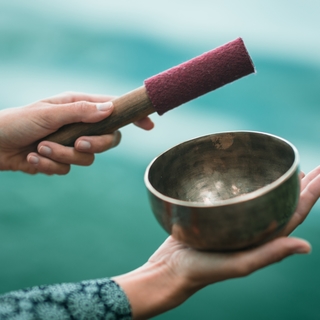
I'm going to leave you now with some gentle crystal singing bowl sounds and a wonderful new chime that I've just got hold of.
It's a Woodstock chime for the throat chakra.
It's got real turquoise in the chime and it makes a beautiful sound.
So I'm going to share that with you.
The chime will sound at the beginning and the end.
So it's just a short sound healing meditation.
It will help you to relax and come into a place of healing and you can rebalance,
Prepare for some positive change and just enjoy the beautiful sound.
So it will be the chimes,
Then the bowls,
And then it will just end with the chimes.
My wish for you as I play these sounds for you now is an abundance of love,
Joy,
And effortless equanimity.
Thank you so much for listening.
I really hope you are inspired to evolve,
Grow,
And let go on your spiritual journey.
To support this continuing work,
Please share this podcast,
Follow Ultimate Holistic Escapes on social media,
And leave five star reviews on Google or your chosen music platform if it allows.
Visit ultimateholisticescapes.
Com to find out about our upcoming retreats and events,
And feel free to share your feedback and experiences or ask any questions via the contact form.
Have a wonderful week and I look forward to connecting with you again next time.