Good evening.
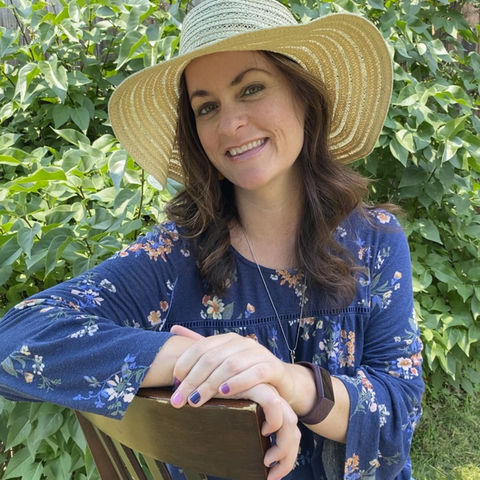
My name is Hillary LaFawn and I'm so grateful you've joined me this evening to enjoy Wildin by Henry David Thoreau.
Before we begin,
Settle yourself in your bed in the ways that you know best.
Take comfort in your pillows,
Blankets,
And sheets and allow your body to soften and relax as you settle in.
When you're ready,
Close your eyes and let's begin.
Economy When I wrote the following pages,
Or rather the book of them,
I lived alone in the woods,
A mile from any neighbor,
In a house which I had built myself,
On the shore of Walden Pond in Concord,
Massachusetts,
And I earned my living by the labor of my hands only.
I live there two years and two months.
To present,
I am a sojourner in a civilized life again.
I should not obtrude my affairs so much on the notice of my readers if very particular inquiries had not been made by my townsmen concerning my mode of life,
Which some would call impertinent,
Though they do not appear to me at all impertinent,
But considering the circumstances very natural and pertinent.
Some have asked what I got to eat,
If I did not feel lonesome,
If I was afraid,
And the like.
Others have been curious to learn what portion of my income I devoted to charitable purposes,
And some who have large families,
How many poor children I maintained.
I will therefore ask those of my readers,
Who feel no particular interest in me,
To pardon me if I undertake to answer some of the questions in this book.
In most books,
The I or first person is omitted.
In this,
It will be retained,
That,
In respect to egotism,
Is the main difference.
We commonly do not remember that it is,
After all,
Always the first person that is speaking.
I should not talk so much about myself if there were anybody else whom I knew as well.
Unfortunately,
I am confined to this theme by the narrowness of my experience.
Moreover,
I,
On my side,
Require of every writer,
First or last,
A simple and sincere account of his own life.
And not merely what he has heard of other men's lives,
Some such account as he would send to his kindred from a distant land,
For if he has lived sincerely,
It must have been in a distant land to me.
Perhaps these pages are more particularly addressed to poor students.
As for the rest of my readers,
They will accept such portions as apply to them.
I trust that none will stretch the seams in putting on the coat,
For it may do good service to him who it fits.
I would feign say something not so much concerning Chinese and Sandwich Islanders as you who read these pages,
Who are said to live in New England.
Something about your condition,
Especially your outward condition,
Or circumstances in this world,
In this town,
What it is,
Whether it is necessary that it be as bad as it is,
Whether it cannot be improved as well as not.
I have traveled a good deal in Concord and everywhere,
In shops and offices and fields.
The inhabitants everywhere.
They have appeared to me to be doing pendants in a thousand remarkable ways.
What I have heard of Brahmins sitting exposed to four fires and looking in the face of the sun,
Or hanging suspended with their heads downward over flames,
Or looking at the heavens over their shoulders,
Until it became impossible for them to resume their natural position.
While from the twist of the neck,
Nothing but liquids can pass into the stomach,
Or dwelling chained for life,
At the foot of a tree,
Or measuring with their bodies like caterpillars,
The breadth of vast empires,
Or standing on one leg on the tops of pillars,
Even those forms of conscience-pendants are hardly more incredible and astonishing than the scenes which I daily witness.
The twelve labors of Hercules were trifling in comparison with those which my neighbors have undertaken,
For they were only twelve and had an end,
And I could never see that these men slew or captured any monster or finished any labor.
They have no friend to burn with the hot iron the root of the hydra's head,
But as soon as one head is crushed,
Two spring up.
I see young men,
My townsmen,
Whose misfortune is to have inherited forms,
Houses,
Barns,
Cattle,
And farming tools,
For these are more easily acquired than gotten rid of.
Were they born into the open pasture,
And suckled by a wolf,
That they might have seen with clearer eyes what field they were called to labor in?
Who made them serfs of the soil?
Why should they eat their sixty acres,
When man is condemned to eat only his peck of dirt?
Why should they begin digging their graves as soon as they are born?
They have got to live a man's life,
Pushing all these things before them,
And get on well as they can.
How many a poor immortal soul have I met,
Well nigh crushed and smothered under its load,
Creeping down the road of life,
Pushing before it a barn,
Seventy-five feet by forty,
Its aji and stables never cleansed,
And one hundred acres of land,
Tillage,
Mowing,
Pasture,
And woodloth?
The portionless,
Who struggle with no such unnecessary inherited encumbrances,
Find it labor enough to subdue and cultivate a few cubic feet of flesh.
But men labor under a mistake,
The better part of the man is soon ploughed into the soil for compost.
By a seeming fate,
Commonly called necessity,
They are employed,
As it says in an old book,
Laying up treasures which moth and rust will corrupt,
And thieves break through and steal.
It is a fool's life,
As they will find when they get to the end of it,
If not before.
It is said that Ducaleon and Pyrrha created men by throwing stones over their heads behind them.
Rally hymns say in a sonorous way,
From thence our kind heart it is,
Enduring pain and care,
Approving that our bodies of a stony nature are.
So much for a blind obedience to a blundering oracle,
Throwing the stones over their heads behind them,
And not seeing where they fell.
Most men,
Even in this comparatively free country,
Through mere ignorance and mistake,
Are so occupied with the fictitious cares and superfluously coarse labors of life,
That its finer fruits cannot be plucked by them.
Their fingers,
From excessive toil,
Are too clumsy and tremble,
Too much for that.
Actually,
The laboring man has not leisure for a true integrity day by day.
He cannot afford to sustain the manliest relations to men.
His labor would be depreciated in the market.
He has no time to be anything but a machine.
How can he remember well his ignorance,
Which his growth requires,
Who was so often to use his knowledge?
We should feed and clothe him gratuitously sometimes,
And recrute him with our cordials before we judge him.
The finest qualities of our nature,
Like the bloom on fruits,
Can be preserved only by the most delicate handling.
Yet we do not treat ourselves,
Nor one another,
Thus tenderly.
Some of you,
We all know,
Are poor,
Find it hard to live,
Are sometimes,
As it were,
Gasping for breath.
I have no doubt that some of you who read this book are unable to pay for this,
And pay for dinners which you have actually eaten,
Or for the coats and shoes which are fast-wearing,
Or are already worn out,
And have come to this page to spend borrowed or stolen time robbing your creditors of an hour.
It is very evident what men and sneaking lives many of you live,
For my sight has been wedded by experience,
Always on the limits,
Trying to get into business,
And trying to get out of debt,
A very ancient slough.
Another's brass,
For some of their coins were made of brass,
Still living and dying,
And burying by this other's brass,
Always promising to pay,
Promising to pay tomorrow,
And dying today,
Insolvent,
Seeking a curie favor,
To get custom,
By how many modes,
Only not state prison offenses,
Lying,
Flattering,
Voting,
Contracting yourself into a nutshell of civility,
Or dilating into an atmosphere of thin and vaporous generosity that you may persuade your neighbor to let you make his shoes,
Or his hat,
Or his coat,
Or his carriage,
Or import his groceries for him,
Making yourself sick that you may lie up something against a sick day,
Something to be tucked away in an old chest,
Or in a stocking behind the plastering,
Or more safely,
In the brick bank,
No matter where,
No matter how much,
Or how little.
I sometimes wonder that we can be so frivolous,
I may almost say,
As to attend to the gross,
But somewhat foreign form of servitude,
Called slavery,
There are so many keen and subtle masters that enslave both north and south,
It is hard to have a southern overseer,
It is worse to have a northern one,
But worst of all when you are the slave driver of yourself.
Talk of a divinity to man,
Look at the teamster on the highway,
Wending to market by day and night,
Does any divinity stir within him?
His highest duty to fodder and water his horses?
What is his destiny to him compared with the shipping interests?
Does not he strive for a squire,
Make a stir?
How godlike,
How immortal is he?
See how he cowers and sneaks,
How vaguely all the day he fears not being immortal or divine,
But the slave and prisoner of his own opinion of himself,
A fame won by his own deeds.
Big opinion is a weak tyrant compared with their own private opinion.
What a man thinks of himself,
That it is which determines,
Or rather indicates,
Its faith.
Self emancipation,
Even in the West Indian provinces of the fancying imagination,
What wilder force is there to bring about?
Think also of the ladies of the land weaving toilet cushions against the last day,
Not to betray too green an interest in their fates,
As if you could kill time without injuring eternity.
The mass of men lead lives of quiet desperation.
What is called resignation is confirmed desperation.
From the desperate city you go into the desperate country and have to console yourself with the bravery of minks and muskets.
A stereotyped but unconscious despair is concealed even under what are called the games and amusements of mankind.
There is no play in them,
For this comes after work,
But it is a characteristic of wisdom not to do desperate things.
When we consider what,
To use the words of the catechism,
Is the chief end of man,
And what are the true necessary and means of life,
It appears as if men had deliberately chosen the common mode of living because they preferred it to any other.
Yet they honestly think there is no choice left,
But alert and healthy natures remember that the sun rose clear.
It is never too late to give up our prejudices.
No way of thinking or doing,
However ancient,
Can be trusted without proof.
What every body echoes or in silence passes by a true today man turn out to be falsehood tomorrow,
Mere smoke of opinion which some have trusted for a cloud that would sprinkle fertilizing rain on their fields.
What old people say you cannot do,
You try and find that you can.
Old deeds for old people and new deeds for new people.
Old people do not know enough once per chance to fetch fresh fuel to keep the fire going.
New people put a little dry wood under a pot and are whirled around the globe with the speed of birds.
In a way to kill old people as the phrase is,
Age is no better hardly so well qualified for an instructor as youth,
For it has not profited as much as it has lost.
One may almost doubt if the wisest man had learned one thing of absolute value by living.
Practically the old have no very important advice to give the young.
Their own experience has been so partial and their lives so miserable.
Failures for private reasons as they must believe and it may be that they have some faith left which belies their experience and they are only less young than they were.
I have lived some thirty years on this planet and I have yet to hear the first syllable of value or even earnest advice from my seniors.
They have told me nothing and probably cannot tell me anything to the purpose.
Here is life,
An experiment to a great extent untried by me,
But it does not avail me that they have tried it.
If I have any experience which I think valuable,
I am sure to reflect that this my mentor said nothing about.
One farmer says to me,
You cannot live on vegetables solely,
For it furnishes nothing to make bones with.
And so he religiously devout a part of his day to supplying his system with the raw material of bones,
Walking all the while he talks behind his oxen which with vegetable made bones,
Jerk him and his lumbering plough along in spite of every obstacle.
Some things are really necessaries of life in some circles,
The most helpless and diseased which in others are luxuries merely and in others still are entirely unknown.
The whole ground of human life seems to some to have been gone over by their predecessors,
Both the heights and the valleys,
And all things to have been cared for.
According to Evelyn,
The wise Solomon prescribed ordinances for the varied instances of trees,
And the Roman predators have decided how often you may go into your neighbors land to gather the egg-corns which fall on without trespass,
And what share belongs to the neighbor.
Hippocrates had even left directions how we should cut our nails,
That is,
Even with the ends of the finger,
Neither shorter nor longer.
Undoubtedly the very tedium and ennui which presume to have exhausted the variety and the choice of life are as old as Adam.
But man's capacities have never been measured,
Nor are we here to judge of what we can do by any predecessors,
So little has been tried.
Whatever have been thy failures hitherto be not afflicted,
My child,
For who shall assign to these what thou hast left undone?
We might try our lives by a thousand simple tests,
As for instance,
That the same sun which ripens my beams,
Illuminates at once a system of earths like ours.
If I had remembered this,
It would have prevented some mistakes.
This was not the light in which I hold them.
The stars are the apexes of what wonderful triangles the distant and different beings in the various mansions of the universe are contemplating the same one at the same moment.
Nature and human life are as various as our several constitutions.
Who shall say what prospect life offers to another?
Could a greater miracle take place than for us to look through each other's eyes for an instant?
We should live in all the ages of the world in an hour,
I in the worlds of the ages.
History,
Poetry,
Mythology,
I know of no reading of another's experience so startling and as informative as this would be.
The greater part of what my neighbors call good I believe in my soul to be bad,
And if I repeat and repent of anything it is very likely to be my good behavior.
What demon possessed me that I behaved so well?
You may say the wisest thing you can,
Old man.
You who have lived seventy years,
Not without honor of a kind,
I hear an irresistible voice which invites me away from all of that.
One generation abandons the enterprises of another like stranded vessels.
I think that we may safely trust a good deal more than we do.
We may waive just so much care of ourselves as we honestly bestow elsewhere.
Nature is as well adapted to our weakness as to our strength.
The incessant anxiety and strain of some is a well-nigh incurable form of disease.
We are made to exaggerate the importance of what work we do,
And yet how much is not done by us.
Or,
What if we had been taken sick?
How vigilant we are,
Determined not to live by faith if we can avoid it.
All the day long on the alert,
At night we unwillingly say our prayers and commit ourselves to uncertainties.
So thoroughly and sincerely are we compelled to live,
Reverencing our life and denying the possibility of change.
This is the only way,
We say,
But there are as many ways as there can be drawn ready from one center.
All change is a miracle to contemplate,
But it is a miracle which is taking place every second.
Confucius said,
To know that we know what we know,
And that we do not know what we do not know.
That is true knowledge.
When one man has reduced a fact of the imagination to be a fact of his understanding,
I foresee that all men will at length establish their lives on that basis.
That is the end of our sleep story tonight.
Thank you so much for allowing me the precious gift of your time.
Until next time,
Sweet dreams.