Siddhartha by Herman Hess Chapter 9 The Ferryman By this river I want to stay,
Thought Siddhartha.
It is the same which I have crossed a long time ago on my way to the childlike people.
A friendly ferryman has guided me then.
He is the one I want to go to,
Starting out from his hut.
My path had led me at that time into a new life,
Which had now grown old and is dead.
My present path,
My present new life,
Shall also take its start there.
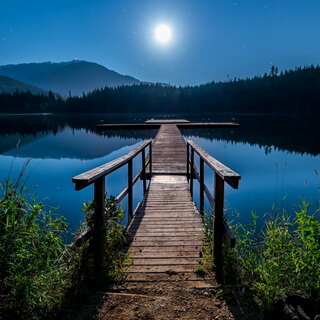
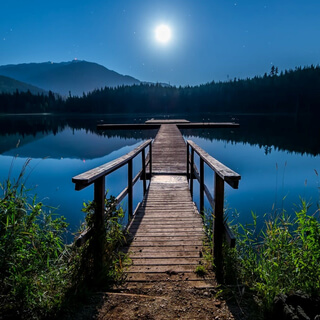
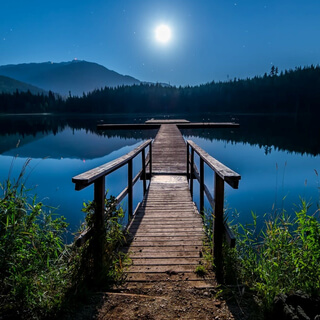
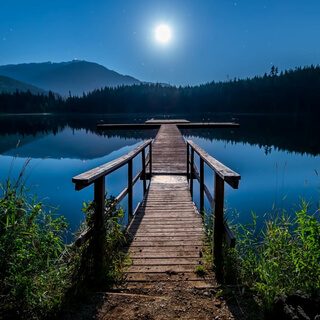
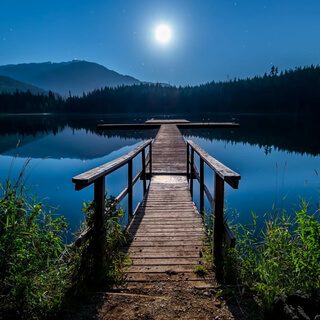
Tenderly he looked into the rushing water,
Into the transparent green,
Into the crystal lines of its drawing so rich in secrets.
Bright pearls he saw rising from the deep,
Quiet bubbles of air floating on the reflecting surface,
The blue of the sky being depicted in it.
With a thousand eyes the river looked at him,
With green ones,
With white ones,
With crystal ones.
With sky blue ones.
How did he love this water?
How did it delight him?
How grateful was he to it?
In his heart he heard the voice talking,
Which was newly awaking,
And it told him,
Love this water,
Stay near it,
Learn from it.
Oh yes,
He wanted to learn from it,
He wanted to listen to it.
He who would understand this water and its secrets,
So it seemed to him,
Would also understand many other things,
Many secrets,
All secrets.
But out of all secrets of the river,
He today only saw one.
This one touched his soul.
He saw.
This water ran and ran,
Incessantly it ran,
And was nevertheless always there,
Was always,
At all times,
The same,
And yet new in every moment.
Great be he who would grasp this,
Understand this.
He understood and grasped it not,
Only felt some idea of its stirring,
A distant memory,
Divine voices.
Siddhartha rose,
The workings of hunger in his body became unbearable.
In a daze he walked on,
Up the path by the bank,
Up river,
Listened to the current,
Listened to the rumbling hunger in his body.
When he reached the ferry,
The boat was just ready,
And the same ferryman who had once transported the young Samana across the river,
Stood in the boat.
Siddhartha recognized him.
He had also aged very much.
Would you like to ferry me over,
He asked.
The ferryman,
Being astonished to see such an elegant man walking along and on foot,
Took him into his boat and pushed it off the bank.
It's a beautiful life you have chosen for yourself,
The passenger spoke.
It must be beautiful to live by this water every day,
And to cruise on it.
With a smile,
The man at the oar moved from side to side.
It is beautiful,
Sir,
It is as you say.
But isn't every life,
Isn't every work beautiful?
This may be true,
But I envy you for yours.
Ah,
You would soon stop enjoying it.
This is nothing for people wearing fine clothes.
Siddhartha laughed.
Once before,
I have been looked upon today because of my clothes.
I have been looked upon with distrust.
Wouldn't you ferrymen like to accept these clothes,
Which are a nuisance to me,
From me?
For you must know I have no money to pay your fare.
You're joking,
Sir,
The ferryman laughed.
I'm not joking,
Friend.
Behold,
Once before you ferried me across this water in your boat for the immaterial reward of a good deed.
Thus do it today as well,
And accept my clothes for it.
And do you,
Sir,
Intend to continue traveling without clothes?
Ah,
Most of all,
I wouldn't want to continue traveling at all.
Most of all,
I would like you ferrymen to give me an old loincloth and keep me with you as your assistant,
Or rather as your trainee.
For I'll first have to learn how to handle the boat.
For a long time the ferryman looked at the stranger,
Searching.
Now I recognize you,
He finally said.
At one time you've slept in my hut.
This was a long time ago,
Possibly more than twenty years ago.
And you have been ferried across the river by me,
And we parted like good friends.
Haven't you?
You've been a Samana.
I can't think of your name anymore.
My name is Siddhartha,
And I was a Samana when you last seen me.
So be welcome,
Siddhartha.
My name is Vasudeva.
You will,
So I hope.
Be my guest today as well,
And sleep in my hut.
Tell me where you're coming from,
And why these beautiful clothes are such a nuisance to you.
They had reached the middle of the river,
And Vasudeva pushed the oar with more strength in order to overcome the current.
He worked calmly,
His eyes fixed in on the boat,
With brawny arms.
Siddhartha sat and watched him,
And remembered how once before,
On that last day of his time as a Samana,
Love for this man had stirred his heart.
Gratefully he accepted Vasudeva's invitation.
When they had reached the bank,
He helped him to tie the boat to the stakes.
After this,
The ferryman asked him to enter the hut,
Offered him bread and water,
And Siddhartha ate with eager pleasure,
And also ate with eager pleasures,
Of the mango fruits Vasudeva offered him.
Afterwards,
It was almost the time of the sunset,
They sat on a log by the bank,
And Siddhartha told the ferryman about where he originally came from,
And about his life,
As if he had seen it before his eyes today,
In that hour of despair,
Until late at night,
Lasted his tale.
Vasudeva listened with great attention,
Listening carefully,
He let everything enter his mind,
Birthplace,
And childhood,
All the learning,
All the searching,
All joy,
All distress.
This was among the ferryman's virtues,
One of the greatest.
Like only a few,
He knew how to listen.
Without him having spoken a word,
The speaker sensed how Vasudeva let his words enter his mind,
Quiet,
Open,
Waiting,
How he did not lose a single word,
Awaited not a single one with impatience,
Did not add his praise or rebuke,
Was just listening.
Siddhartha felt what a happy fortune it is to confess to such a listener,
To bury in his heart his own life,
His own search,
His own suffering.
But in the end of Siddhartha's tale,
When he spoke of the tree by the river,
And of his deep fall,
Of the holy Aum,
And how he had felt such a love for the river after his slumber,
The ferryman listened with twice the attention,
Entirely and completely absorbed by it,
With his eyes closed.
But when Siddhartha fell silent,
And a long silence had occurred,
Then Vasudeva said,
It is as I thought.
The river has spoken to you.
It is your friend as well.
It speaks to you as well.
That is good.
That is very good.
Stay with me,
Siddhartha,
My friend.
I used to have a wife.
Her bed was next to mine.
But she has died a long time ago.
And for a long time I have lived alone.
Now you shall live with me.
There is space and food for both.
I thank you,
Said Siddhartha.
I thank you and accept.
And I also thank you for this,
Vasudeva,
For listening to me so well.
These people are rare who know how to listen.
And did I not meet a single one who knew it as well as you did?
And I will also learn in this respect from you.
You will learn it,
Spoke Vasudeva,
But not from me.
The river has taught me to listen.
From it you will learn it as well.
It knows everything.
The river.
Everything can be learned from it.
See,
You have already learned this from the water too.
That it is good to strive downwards.
To sink.
To seek depth.
The rich and elegant Siddhartha is becoming an oarsman's servant.
The learned Brahmin Siddhartha becomes a ferryman.
This has also been told to you by the river.
You'll learn that other thing from it as well.
Siddhartha said after a long pause,
What other thing,
Vasudeva?
Vasudeva rose.
It is late,
He said.
Let's go to sleep.
I can't tell you that other thing,
O friend.
You'll learn it.
Or perhaps you already know it.
See,
I'm no learned man.
I have no special skill in speaking.
I also have no special skill in thinking.
All I'm able to do is listen and to be godly.
I have learned nothing else.
If I was able to say it and teach it,
I might be a wise man.
But like this I'm only a ferryman.
And it is my task to ferry people across the river.
I have transported many thousands,
And to all of them my river has been nothing but an obstacle on their travels.
They travel to seek money and business,
And for weddings,
And on pilgrimage.
And the river was obstructing their path.
And the ferryman's job was to get them quickly across the obstacle.
But for some among thousands,
A few,
Four or five,
The river has stopped being an obstacle.
They have heard its voice.
They have listened to it.
And now the river has become sacred to them as it has become sacred to me.
Let's rest now,
Siddhartha.
Siddhartha stayed with the ferryman and learned to operate the boat.
And when there was nothing to do with the ferry,
He worked with Vasudeva in the rice field,
Gathered wood,
Plucked the fruit off the banana trees.
He learned to build an oar,
And learned to mend the boat,
And to weave baskets,
And was joyful because of everything he learned.
And the days and months passed quickly.
But more than Vasudeva could teach him,
He was taught by the river.
Incessantly he learned from it.
Most of all,
He learned from it to listen,
To pay close attention,
With a quiet heart,
With a waiting open soul,
Without passion,
Without a wish,
Without judgment,
Without an opinion.
In a friendly manner,
He lived side by side with Vasudeva,
And occasionally they exchanged some words.
Few and at length thought about words.
Vasudeva was no friend of words,
Rarely.
Siddhartha succeeded in persuading him to speak.
Did you,
So he asked him at one time,
Did you learn that secret from the river,
That there is no time?
Vasudeva's face was filled with a bright smile.
Yes,
Siddhartha,
He spoke,
It is this what you mean,
Isn't it?
That the river is everywhere at once,
At the source,
And at the mouth,
At the waterfall,
At the ferry,
At the rapids,
In the sea,
In the mountains,
Everywhere at once,
And that there is only the present time for it,
Not the shadow of the past,
Not the shadow of the future.
This is it,
Said Siddhartha,
And when I had learned it,
I looked at my life,
And it was also a river.
And the boy Siddhartha was only separated from the man Siddhartha,
And from the old man Siddhartha by his shadow,
Not by something real.
Also,
Siddhartha's previous births were no past,
And his death and his return to Brahma was no future.
Nothing was,
Nothing will be,
Everything is,
Everything has existence and is present.
Siddhartha spoke with ecstasy,
Deeply,
This enlightenment had delighted him.
Oh,
This was not suffering time,
Were not all forms of tormented oneself and being afraid time,
Was not everything hard,
Everything hostile in the world gone,
And overcome as soon as one had overcome time,
As soon as time would have been put out of existence by one's thoughts.
An ecstatic delight he had spoken,
But Vasudeva smiled at him brightly and nodded in confirmation.
Silently he nodded,
Brushed his hand over Siddhartha's shoulder,
Turned back to his work.
And once again when the river had just increased its flow in the rainy season and made a powerful noise,
Then said Siddhartha,
Isn't it so,
Old friend,
The river has many voices,
Very many voices,
Hasn't it the voice of a king and a warrior,
And of a bull,
And of a bird of the night,
And of a woman given birth,
And of a sighing man,
And a thousand other voices more?
So it is,
Vasudeva nodded,
All voices of the creatures are its voice.
And do you know,
Siddhartha continued,
What word it speaks,
When you succeed in hearing all of its ten thousand voices at once?
Happily Vasudeva's face was smiling.
He bent over to Siddhartha and spoke the holy Om into his ear.
And this had been the very thing which Siddhartha had also been hearing.
And time after time his smile became more similar to the ferryman's,
Became almost just as bright,
Almost just as thoroughly glowing with bliss,
Just as shining out of thousand small wrinkles,
Just as alike to a child,
Just as alike to an old man's.
Many travelers,
Seeing the two ferryman,
Thought they were brothers.
Often they sat in the evening together by the bank on the log,
Said nothing,
And both listened to the water which was no water to them,
But the voice of life,
The voice of what exists,
Of what is eternally taking shape.
And it happened from time to time that both,
When listening to the river,
Thought of the same thing,
Of a conversation from the day before yesterday,
Of one of their travels,
The face and fate of whom had occupied their thoughts,
Of death,
Of their childhood,
And that they both in the same moment when the river had been saying something good to them,
Looked at each other,
Both thinking precisely the same thing,
Both delighted about the same answer to the same question.
There was something about this ferry and the two ferryman which was transmitted to others,
Which many of the travelers felt.
It happened occasionally that a traveler,
After having looked at the face of one of the ferryman,
Started to tell the story of his life,
Told about pains,
Confessed evil things,
Asked for comfort and advice.
It happened occasionally that someone asked for permission to stay for a night with them,
To listen to the river.
It also happened that curious people came who had been told that there were two wise men,
Or sorcerers,
Or holy men,
Living by that ferry.
The curious people asked many questions,
But they got no answers,
And they found neither sorcerers nor wise men.
They only found two friendly little old men who seemed to be mute and to have become a bit strange and gaga.
And the curious people laughed and were discussing how foolishly,
Ingullibly,
The common people were speaking and spreading empty rumors.
The years passed by and nobody counted them.
Then at one time monks came by on a pilgrimage,
Followers of Gautama,
The Buddha,
Who were asking to be ferried across the river.
And by them the ferrymen were told that they were most hurriedly walking back to their great teacher,
For the news had spread the exalted one was deadly sick and would soon die his last human death,
In order to become one with the salvation.
It was not long until a new flock of monks came along their pilgrimage and another one.
And the monks as well as most of the other travelers and people walking through the land spoke of nothing else of Gautama and his impending death.
And as people are flocking from everywhere and from all sides when they are going to war or to the coronation of a king and are gathering like ants in droves,
Thus they flocked,
Like being drawn on by a magic spell,
To where the great Buddha was awaiting his death,
Where the huge event was to take place and the great perfected one of an era was become one with glory.
Often,
Siddhartha thought in those days of the dying wise man,
The great teacher,
Whose voice had admonished nations and had awoken hundreds of thousands,
Whose voice he had also once heard,
Whose holy face he had also once seen with respect.
Kindly,
He thought of him,
Saw his path to perfection before his eyes,
And remembered with a smile those words which he had once,
As a young man,
Said to him the exalted one.
They had been,
So it seemed to him,
Proud and precocious words.
With a smile he remembered them.
For a long time he knew that there was nothing standing between Gautama and him anymore,
Though he was still unable to accept his teachings.
No,
There was no teaching a truly searching person,
Someone who truly wanted to find,
Could accept.
But he who had found,
He could approve of any teachings.
Every path,
Every goal,
There was nothing standing between him and all the other thousand anymore who lived in that what is eternal,
Who breathed what is divine.
On one of these days,
When so many went on a pilgrim to the dying Buddha,
Kamala also went to see him,
Who used to be the most beautiful of the courtesans.
A long time ago she had retired from her previous life and given her gardens to the monks of Gautama as a gift,
Had taken her refuge in the teachings,
Was among the friends and benefactors of the pilgrims.
Together with Siddhartha,
The boy,
Her son,
She had gone on her way due to the news of the near death of Gautama in simple clothes,
On foot.
With her little son,
She was traveling by the river,
But the boy had soon grown tired,
Desired to go back home,
Desired to rest,
Desired to eat,
Became disobedient and started whining.
Kamala often had to take a rest with him,
He was accustomed to having his way against her,
She had to feed him,
Had to comfort him,
Had to scold him.
He did not comprehend why he had to go on this exhausting and sad pilgrimage with his mother,
To an unknown place,
To a stranger,
Who was holy and about to die.
So what if he died?
How did this concern the boy?
The pilgrims were getting close to Vasudeva's fairy,
When little Siddhartha once again forced his mother to rest.
She,
Kamala herself,
Had also become tired,
And while the boy was choosing a banana,
She crouched down on the ground,
Closed her eyes a bit and rested.
But suddenly she uttered a wailing scream.
The boy looked at her in fear,
And saw her face having grown pale from horror.
And from under her dress,
A small black snake fled,
By which Kamala had been bitten.
Hurriedly,
They now both ran along the path in order to reach people,
And got near to the fairy.
There Kamala collapsed,
And was not able to go any further.
But the boy started crying miserably,
Only interrupting it to kiss and hug his mother,
And she was also joined his loud screams for help until the sound reached Vasudeva's ears,
Who stood at the fairy.
Quickly he came walking,
Took the woman on his arms,
Carried her into the boat.
The boy ran along,
And soon they all reached the hut,
Where Siddhartha stood by the stove,
And was just lighting the fire.
He looked up and first saw the boy's face,
Which wondrously reminded him of something,
Like a warning to remember something he had forgotten.
Then he saw Kamala,
Whom he instantly recognized,
Though she lay unconscious in the fairy man's arms.
And now he knew that it was his own son,
Whose face had been such a warning reminder to him,
And his heart stirred in his chest.
Kamala's wound was washed,
But had already turned black,
And her body was swollen.
She was made to drink a healing potion.
Her consciousness returned.
She lay on Siddhartha's bed in the hut,
And bent over her stood Siddhartha,
Who used to love her so much.
It seemed like a dream to her,
With the smile she looked at her friend's face.
Just slowly she realized her situation,
Remembered the bite,
Called timidly for the boy.
He's with you,
Don't worry,
Said Siddhartha.
Kamala looked into his eyes.
She spoke with a heavy tongue,
Paralyzed by the poison.
You've become old,
My dear,
She said.
You've become gray,
But you are like the young Samana,
Who at one time came without clothes,
With dusty feet,
To me in the garden.
You are much more like him than you were like him at the time when you had left me,
In Kamaswami.
In the eyes,
You're like him,
Siddhartha.
Alas,
I have also grown old.
Old.
Could you still recognize me?
Siddhartha smiled.
Instantly I recognized you,
Kamala,
My dear.
Kamala pointed to her boy and said,
Did you recognize him as well?
He is your son.
Her eyes became confused and fell shut.
The boy wept.
Siddhartha took him on his knees,
Let him weep,
Petted his hair,
And at the sight of the child's face,
A Brahmin prayer came to his mind,
Which he had learned a long time ago when he had been a little boy himself.
Slowly,
With the singing voice,
He started to speak.
From his past and childhood,
The words came flowing to him.
And with that sing song,
The boy became calm,
Was only now and then uttering a sob,
And fell asleep.
Siddhartha placed him in Vasudeva's bed.
Vasudeva stood by the stove and cooked rice.
Siddhartha gave him a look,
Which he returned with a smile.
She will die,
Siddhartha said quietly.
Vasudeva nodded.
Over his friendly face ran the light of the stove's fire.
Once again,
Kamala returned to consciousness.
Pain distorted her face.
Siddhartha's eyes read the suffering on her mouth,
On her pale cheeks.
Quietly he read it,
Attentively,
Waiting.
His mind became one with her suffering.
Kamala felt it.
Her gaze sought his eyes.
Looking at him,
She said,
Now I see that your eyes have changed as well.
They've become completely different.
By what do I still recognize that you're Siddhartha?
It's you,
And it's not you.
Siddhartha said nothing.
Quietly his eyes looked at hers.
You have achieved it,
She asked.
You have found peace.
He smiled and placed his hand on hers.
I'm seeing it,
She said.
I'm seeing it.
I too will find peace.
You have found it,
Siddhartha spoke in a whisper.
Kamala never stopped looking into his eyes.
She thought about her pilgrimage to Gautama,
Which she wanted to take in order to see the face of the perfected one,
To breathe his peace,
And she thought that she had now found him in his place,
And that it was good,
Just as good,
As if she had seen the other one.
She wanted to tell him this,
But the tongue no longer obeyed her will.
Without speaking,
She looked at him,
And he saw the life fading from her eyes.
When the final pain filled her eyes and made them grow dim,
When the final shiver ran through her limbs,
His finger closed her eyelids.
For a long time he sat and looked at her peacefully dead face.
For a long time he observed her mouth,
Her old,
Tired mouth,
With those lips which had become thin,
And he remembered that he used to,
In the spring of his years,
Compare this mouth with a freshly cracked fig.
For a long time he sat,
Red in the pale face,
In the tired rinkers,
Filled himself with this sight,
Saw his own face lying in the same manner,
Just as white,
Just as quenched out,
And saw at the same time his face and hers being young,
With red lips and fiery eyes,
And the feeling of this both being present and at the same time real,
The feeling of eternity completely filled every aspect of his being.
Deeply he felt,
More deeply than ever before in this hour,
The indestructibility of every life,
The eternity of every moment.
When he rose Vasudeva had prepared rice for him,
But Siddhartha did not eat.
In the stable where their goat stood,
The two old men prepared beds of straws for themselves,
And Vasudeva lay himself down to sleep.
But Siddhartha went outside,
And sat this night before the hut,
Listening to the river,
Surrounded by the past,
Touched and encircled by all times of his life at the same time.
But occasionally he rose,
Stepped to the door of the hut and listened,
Whether the boy was sleeping.
Early in the morning,
Even before the sun could be seen,
Vasudeva came out of the stable and walked over to his friend.
You haven't slept,
He said.
No Vasudeva,
I sat here,
I was listening to the river.
A lot it has told me,
Deeply it has filled me with the healing thought,
With the thought of oneness.
You've experienced suffering,
Siddhartha,
But I see no sadness has entered your heart.
No,
My dear,
How should I be sad?
I,
Who have been rich and happy,
Have become even richer and happier now.
My son has been given to me.
Your son shall be welcomed to me as well.
But now,
Siddhartha,
Let's get to work,
There's much to be done.
Kamala has died on the same bed on which my wife had died a long time ago.
Let us also build Kamala's funeral pile on the same hill on which I had then built my wife's funeral pile.
While the young boy was still asleep,
They built the funeral pile.
And that is the end of our sleep story this evening.
Until next time,
Be well.