8.
By the River Siddhartha walked through the forest,
Was already far from the city,
And knew nothing but that one thing,
That there was no going back for him,
That this life,
As he had lived it for many years until now,
Was over and done away with,
And that he had tasted all of it,
Sucked everything out of it,
Until he was disgusted with it.
Dead was the singing bird he had dreamt of,
Dead was the bird in his heart,
Deeply he had been entangled in sansara,
He had sucked up disgust and death from all sides into his body,
Like a sponge sucks up water until it is full.
When full he was,
Full of the feeling of being sick of it,
Full of misery,
Full of death,
There was nothing left in this world which could have attracted him,
Given him joy,
Given him comfort.
Passionately he wished to know nothing about himself anymore,
To have rest,
To be dead.
If there only was a lightning bolt to strike him dead,
If there only was a tiger to devour him,
If there only was a wine,
A poison which would numb his senses,
Bring him forgetfulness and sleep,
And no awakening from that,
Was there still any kind of filth he had not soiled himself with,
A sin or foolish act he had not committed,
A dreariness of the soul he had not brought upon himself?
Was it still at all possible to be alive?
Was it possible to breathe in again and again,
To breathe out,
To feel hunger,
To eat again,
To sleep again,
To sleep with a woman again?
Was this cycle not exhausted and brought to a conclusion for him?
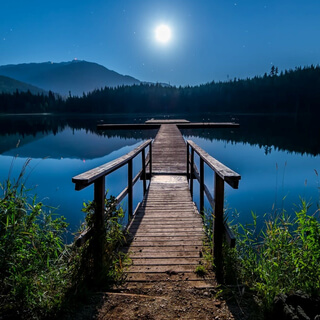
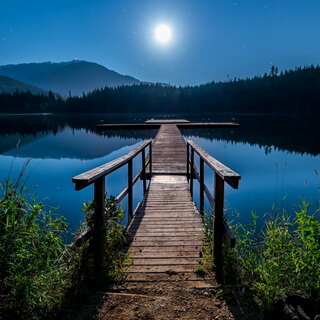
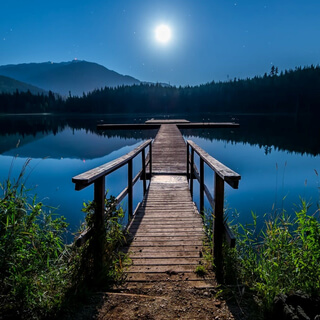
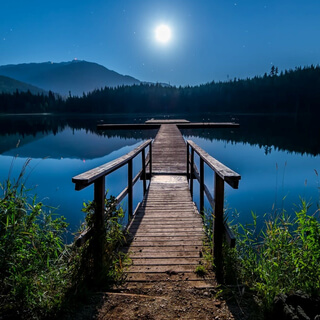
Siddhartha reached the large river in the forest,
The same river over which a long time ago,
When he had still been a young man,
And came from the town of Gautama,
A ferryman had conducted him.
By this river he stopped.
Hesitantly he stood at the bank.
Tiredness and hunger had weakened him.
And whatever first should he walk on?
Wherever to,
To which goal?
No,
There were no more goals.
There was nothing left but the deep,
Painful yearning to shake off this whole desolate dream,
To spit out this stale wine,
To put an end to this miserable and shameful life.
A hang bent over the bank of the river,
A coconut tree.
Siddhartha leaned against its trunk with his shoulders,
Embraced the trunk with one arm,
And looked down into the green water,
Which ran and ran under him.
Looked down and found himself to be entirely filled with the wish to let go,
And to drown in these waters.
A frightening emptiness was reflected back at him by the water,
Answering to the terrible emptiness in his soul.
Yes he had reached the end.
There was nothing left for him except to annihilate himself,
Except to smash the failure into which he had shaped his life,
To throw it away before the feet of mockingly laughing gods.
This was the great vomiting he had longed for.
Death.
The smashing to bits of the form he hated.
Let him be food for fishes.
This dog Siddhartha,
This lunatic,
This depraved and rotten body,
This weakened and abused soul.
Let him be food for fishes and crocodiles.
Let him be chopped by bits by the demons.
With a distorted face,
He stared into the water,
Saw the reflection of his face and spit at it.
In deep tiredness,
He took his arm away from the trunk of the tree and turned a bit,
In order to let himself fall straight down,
In order to finally drown.
With his eyes closed,
He slipped towards death.
Then,
Out of remote areas of his soul,
Out of pastimes of his now weary life,
A sound stirred up.
It was a word,
A syllable which he,
Without thinking,
With a slurred voice,
Spoke to himself.
The old word,
Which is the beginning and the end of all prayers of the Brahmins,
The holy Aum,
Which roughly means that what is perfect,
Or the completion.
And in the moment when the sound of Aum touched Siddhartha's ear,
His dormant spirit suddenly woke up and realized the foolishness of his actions.
Siddhartha was deeply shocked.
So this was how things were with him.
So doomed was he,
So much he had lost this way and was forsaken by all knowledge,
That he had been able to seek death,
That this wish,
This wish of a child,
Had been able to grow in him,
To find rest by annihilating his body.
What all agony of these recent times,
All sobering realizations,
All desperation had not brought about.
This was brought on by this moment when the Aum entered his consciousness.
He became aware of himself in his misery and in his error.
Aum,
He spoke to himself.
Aum.
And again he knew about Brahman,
Knew about the indestructibility of life,
Knew about all that is divine,
Which he had forgotten.
But this was only a moment,
A flash.
By the foot of the coconut tree,
Siddhartha collapsed,
Struck down by tiredness,
Mumbling Aum,
Placed his head on the root of the tree,
And fell into a deep sleep.
Sleep was his sleep and without dream.
For a long time he had not known such a sleep anymore.
When he woke up after many hours,
He felt as if ten years had passed.
He heard the water quietly flowing,
Did not know where he was and who had brought him here.
Opened his eyes,
Saw with astonishment that there were trees and the sky above him.
And he remembered where he was and how he got there.
But it took him a long while for this.
And the past seemed to him as if it had been covered by a veil,
Indefinitely distant,
Indefinitely far away,
Infinitely meaningless.
He only knew that his previous life,
In the first moment when he thought about it,
This past life seemed to him like a very old previous incarnation,
Like an early pre-birth of his present self.
That his previous life had been abandoned by him.
That,
Full of disgust and wretchedness,
He had even intended to throw his life away.
But that by the river,
Under a coconut tree,
He had come to his senses.
The holy word,
Om,
On his lips.
That then he had fallen asleep and had now woken up and was looking at the world as a new man.
Quietly,
He spoke the word Om to himself,
Speaking which he had fallen asleep and it seemed to him as his entire long sleep had been nothing but a long meditative recitation of Om.
A thinking of Om.
A submergence and complete entering into Om.
Into the nameless.
The perfected.
What a wonderful sleep had this been.
Ever before by sleep he had been thus refreshed,
Thus renewed,
Thus rejuvenated.
Perhaps he had really died and drowned and was reborn in a new body.
But no,
He knew himself.
He knew his hand and his feet.
Knew the place where he lay.
Knew his self in his chest.
This Siddhartha,
The eccentric,
The weird one.
But this Siddhartha was nevertheless transformed,
Was renewed,
Was strangely well rested,
Strangely awake,
Joyful and curious.
Siddhartha straightened up when he saw a person sitting opposite to him.
An unknown man.
A monk in a yellow robe with a shaven head.
Sitting in the position of pondering.
He observed the man,
Who had neither hair on his head nor a beard.
And he had not observed him for long when he recognized this monk as Govinda,
The friend of his youth.
Govinda who had taken his refuge with the exalted Buddha.
Govinda had aged.
He too,
But still his face bore the same features.
Express zeal.
Faithfulness.
Searching.
Timidness.
But when Govinda now,
Sensing his gaze,
Opened his eyes and looked at him,
Siddhartha saw that Govinda did not recognize him.
Govinda was happy to find him awake.
Apparently he had been sitting here for a long time and been waiting for him to wake up,
Though he did not know him.
I have been sleeping,
Said Siddhartha.
However did you get there?
You have been sleeping,
Answering Govinda.
It is not good to be sleeping in such places,
Where snakes often are,
And the animals of the forest have their paths.
I,
Oh sir,
Am a follower of the exalted Gautama,
The Buddha,
The Sakya Muni,
And here have been on a pilgrimage together with several of us on this path,
When I saw you lying and sleeping in a place where it is dangerous to sleep.
Therefore I sought to wake you up,
Oh sir,
And since I saw that your sleep was very deep,
I stayed behind from my group and sat with you.
And then,
So it seems,
I have fallen asleep myself.
I who wanted to guard your sleep.
Badly I have served you,
Tiredness has overwhelmed me.
But now that you are awake,
Let me go to catch up with my brothers.
I thank you,
Samana,
For watching out over my sleep,
Spoke Siddhartha,
Your friendly,
You followers of the exalted one.
Now you may go then.
I'm going,
Sir.
May you,
Sir,
Always be in good health.
I thank you,
Samana.
Govinda made a gesture of salutation and said,
Farewell.
Farewell,
Govinda,
Said Siddhartha.
The monk stopped.
Permit me to ask,
Sir,
From where do you know my name?
Now Siddhartha smiled.
I know you,
Oh Govinda,
From your father's hut and from the school of the Brahmins and from the offerings and from our walk to the Samanas and from that hour when you took your refuge with the exalted one in the Grove Jetavana.
You are Siddhartha,
Govinda exclaimed loudly.
Now I am recognizing you and don't comprehend anymore how I couldn't recognize you right away.
Be welcome,
Siddhartha.
My joy is great to see you again.
It also gives me joy to see you again.
You've been the guard of my sleep.
Again I thank you for this,
Though I wouldn't have required any guard.
Where are you going to,
Oh friend?
I'm going nowhere.
We monks are always traveling.
Whenever it is not the rainy season,
We always move from one place to another,
Live according to the rules of the teachings that have passed on to us,
Accept the alms and move on.
It is always like this.
But you,
Siddhartha,
Where are you going to?
Siddhartha said,
With me too,
Friend.
It is as it is with you.
I'm going nowhere.
I'm just traveling.
I'm on a pilgrimage.
Govinda spoke,
You're saying you're on a pilgrimage and I believe in you.
But forgive me,
Oh Siddhartha.
You do not look like a pilgrim.
You're wearing a rich man's garment.
You're wearing the shoes of a distinguished gentleman.
And your hair with the fragrance of perfume is not a pilgrim's hair,
Not the hair of a Samana.
Right so,
My dear.
You have observed well.
Your keen eyes see everything.
But I haven't said to you that I am a Samana.
I said I'm on a pilgrimage.
And so it is.
I am on a pilgrimage.
You're on a pilgrimage,
Said Govinda.
But few would go on a pilgrimage in such clothes.
Few in such shoes.
Few with such hair.
Never have I met such a pilgrim,
Being a pilgrim myself,
For many years.
I believe you,
My dear Govinda.
But now today you've met a pilgrim just like this.
Wearing such shoes,
Such a garment.
Remember my dear,
Not eternal is the world of appearances.
Not eternal.
Anything but eternal are our garments and the style of our hair and our hair and our bodies themselves.
I'm wearing a rich man's clothes.
You've seen this quite right.
I'm wearing them because I have been a rich man.
But I'm wearing my hair like the worldly and lustful people,
For I have been one of them.
And now,
Siddhartha,
What are you now?
I don't know.
I don't know.
It's just like you.
I'm traveling.
I was a rich man and am no rich man anymore.
And what I'll be tomorrow,
I don't know.
You've lost your riches?
I've lost them.
Or they me.
They somehow happen to slip away from me.
The wheel of physical manifestations is quickly turning.
Where is Siddhartha the Brahmin,
Govinda?
Where is Siddhartha the Samana?
Where is Siddhartha the rich man?
Non-eternal things change quickly,
Govinda.
You know it.
Govinda looked at his friend of his youth for a long time with doubt in his eyes.
After that,
He gave him the salutation which one would use on a gentleman and went on his way.
With a smiling face,
Siddhartha watched him leave.
He loved him still,
This faithful man,
This fearful man.
And how could he not have loved somebody and everything in this moment,
In the glorious hour after his wonderful sleep filled with Aum?
The enchantment which had happened inside of him in his sleep and by means of the Aum was this very thing that he loved everything.
And he was full of joyful love for everything he saw.
And it was this very thing,
So it seemed to him now,
Which had been his sickness before,
That he was not able to love anybody or anything.
With a smiling face,
Siddhartha watched the leaving monk.
The sleep had strengthened him much,
But hunger gave him much pain,
For by now he had not eaten for two days,
And the times were long past when he had been tough against hunger.
With sadness,
And yet also with a smile,
He thought of that time.
In those days,
So he remembered,
He had boasted of three things to Kamala,
Had been able to do three noble and undefeatable feats,
Fasting,
Waiting,
Thinking.
These had been his possession,
His power and strength,
His solid staff.
In the busy,
Laborious years of his youth,
He had learned these three feats and nothing else.
And now they had abandoned him.
None of them was his anymore,
Neither fasting,
Nor waiting,
Nor thinking,
For the most wretched things he had given them up,
For what fades most quickly,
For sensual lust,
For the good life,
For riches.
His life had indeed been strange,
And now,
So it seemed,
Now he had really become a childlike person.
Siddhartha thought about his situation.
Thinking was hard on him.
He did not really feel like it,
But he forced himself.
Now he thought,
Since all these most easily perishing things have slipped from me now again,
I'm standing here under the sun again,
Just as I have been standing here a little child.
Nothing is mine.
I have no abilities.
There is nothing I could bring about.
I have learned nothing.
How wondrous is this!
Now that I'm no longer young,
That my hair is already half gray and my strength is fading,
Now I'm starting again at the beginning,
And as a child.
Again he had to smile.
Yes,
His fate had been strange.
These were going downhill with him.
And now he was again facing the world void and naked and stupid.
But he could not feel sad about this,
No.
He even felt a great urge to laugh,
To laugh about himself,
To laugh about this strange,
Foolish world.
Things are going downhill with you,
He said to himself,
And laughed about it.
And as he was saying it,
He happened to glance at a river,
And he also saw the river going downhill.
He's moving on downhill,
And singing,
And being happy through it all.
He liked this well.
Kindly he smiled at the river.
Was this not the river in which he had intended to drown himself in past times,
A hundred years ago?
Or had he just dreamed this?
Wondrous indeed was my life,
So he thought.
Wondrous detours it has taken.
As a boy I had only to do with gods and offerings.
As a youth I had only to do with asceticism,
With thinking and meditation,
Was searching for Brahman,
Worshipped the eternal and the atman.
But as a young man,
I followed the penitents,
Lived in the forest,
Suffered of heat and frost,
Learned to hunger,
Taught my body to become dead.
Wonderfully,
Soon afterwards,
Insight came towards me in the form of the great Buddha's teachings.
I felt the knowledge of the oneness of the world circling in me like my own blood.
But I also had to leave Buddha and the great knowledge.
I went and learned the art of love and kamala,
Learned trading with the Kama Swami,
Piled up money,
Wasted money,
Learned to love my stomach,
Learned to please my senses.
I had to spend many years losing my spirit to unlearn thinking again,
To forget the oneness.
Imagine it just as if I had turned slowly and on a long detour from a man into a child,
From a thinker into a child-like person.
And yet,
This path has been very good.
And yet,
The burden in my chest has not died.
But what a path this has been.
I had to pass through so much stupidity,
Through so much vices,
Through so many errors,
Through so much disgust and disappointment and woe,
Just to become a child again and to be able to start over.
But it was right so.
My heart says yes to it.
My eyes smile to it.
I've had to experience despair.
I've had to sink down to the most foolish one of all thoughts,
To the thought of suicide,
In order to be able to experience divine grace,
To hear Aum again,
And to be able to sleep properly and awake properly again.
I had to become a fool to find ottman in me again.
I had to sin to be able to live again.
Where else might my path lead me to?
It is foolish,
This path.
It moves and loops.
Perhaps it is going around in a circle.
Let it go as it likes.
I want to take it.
Wonderfully,
He felt joy rolling like waves in his chest.
Wherever from,
He asked his heart,
Where from did you get this happiness?
Might it come from the long,
Good sleep,
Which has done me so good?
Or from the word Aum,
Which I said?
Or from the fact that I have escaped,
That I have completely fled,
That I am finally free again and am standing like a child under the sky?
Oh,
How good is it to have fled,
To have become free?
How clean and beautiful is the air here?
How good to breathe!
There,
Where I ran away from,
There everything smelled of ointments,
Of spices,
Of wine,
Of excess,
Of sloth.
How did I hate this world of the rich,
Of those who revel in excess?
Those who revel in fine food,
Of the gamblers.
How did I hate myself for staying in this terrible world for so long?
How did I hate myself,
Have deprived,
Poisoned,
Tortured myself,
Have made myself old and evil?
No,
Never again I will,
As I used to like doing so much,
Delude myself into thinking that Siddhartha was wise.
With this one thing I have done well,
This I like,
This I must praise,
That there is now an end to the hatred against myself,
To that foolish and dreary life.
I praise you,
Siddhartha.
After so many years of foolishness,
You have once again had an idea,
Have done something,
Have heard the bird in your chest singing,
And have followed it.
Thus he praised himself,
Found joy in himself,
Listened curiously to his stomach which was rumbling with hunger.
He had now,
So he felt,
In these recent times and days,
Completely tasted and spit out,
Devoured up to the point of desperation and death,
A piece of suffering,
A piece of misery.
Like this,
It was good.
For much longer he could have stayed with Kamaswami,
Made money,
Wasted money,
Filled his stomach,
And let his soul die of thirst.
For much longer he could have lived in this soft,
Well-upholstered hell,
If this had not happened.
The moment of complete hopelessness and despair,
That most extreme moment,
When he hanged over the rushing waters and was ready to destroy himself,
That he had felt this despair,
This deep disgust,
That he had not succumbed to it,
That the bird,
The joyful source and voice in him was still alive after all.
This was why he felt joy.
This is why he laughed.
This was why his face was smiling brightly under his hair which had turned gray.
It is good,
He thought,
To get a taste of everything for oneself,
Which one needs to know,
That lust for the world and riches do not belong to the good things.
I have already learned as a child.
I have known it for a long time,
But I have experienced it only now.
And now I know it.
Don't just know it in my memory,
But in my eyes,
In my heart,
In my stomach.
Good for me to know this.
For a long time he pondered his transformation,
Listened to the bird as it sang for joy.
But not this bird died in him,
Had he not felt its death?
No,
Something else from within him had died,
Something which already for a long time had yearned to die.
Was it not this what he used to intend to kill in his ardent years as a penitent?
Was it not his self,
His small,
Frightened and proud self he had wrestled with for so many years,
Which had defeated him again and again,
Which was back again after every killing,
Prohibited joy and felt fear?
Was it not this which today had finally come to its death here in the forest by this lovely river?
Was it not due to this death that he was now like a child,
So full of trust,
So without fear,
So full of joy?
Now Siddhartha also got some idea of why he had fought the self in vain as a Brahmin,
As a penitent.
Too much knowledge had held him back,
Too many holy verses,
Too many sacrificial rules,
Too much self-castigation,
So much doing and striving for that goal.
Full of arrogance he had been,
Always the smartest,
Always working the most,
Always one step ahead of the others,
Always the knowing and the spiritual one,
Always the priest or the wise one.
Into being a priest,
Into this arrogance,
Into this spirituality,
His self had retreated.
Where it sat firmly and grew,
While he thought he would kill it by fasting and penance,
Now he saw it and saw that the secret voice had been right,
That no teacher would ever have been able to bring about this salvation.
Therefore he had to go out into the world,
Lose himself to lust and power,
To women and money,
Had to become a merchant,
A dice gambler,
A drinker and a greedy person,
Until the priest and Samana in him was dead.
Therefore he had to continue bearing these ugly years,
Bearing the disgust,
The teachings,
The pointlessness of the dreary and wasted life,
Up to the end,
Up to bitter despair,
Until Siddhartha,
The lustful,
Siddhartha the greedy,
Could also die.
He had died,
A new Siddhartha had awoken him from his sleep.
He would also grow old,
He would also eventually have to die.
Mortal was Siddhartha,
Mortal was every physical form,
But today he was young,
Was a child,
Was a new Siddhartha and was full of joy.
He thought these thoughts,
Listened with a smile to his stomach,
Listened gratefully to a buzzing bee.
Cheerfully he looked into the rushing river.
Never before he had liked a water so well as this one.
Never before he had perceived the voice and the parable of the moving water thus strongly and beautifully.
It seemed to him as if the river had something special to tell him,
Something he did not know yet,
Which was still awaiting him.
In this river,
Siddhartha had intended to drown himself.
In it,
The old,
Tired,
Desperate Siddhartha had drowned today.
But the new Siddhartha felt a deep love for this rushing water and decided for himself not to leave it very soon.
And that is the end of our story today.
Until next time,
Sweet dreams.