Hello,
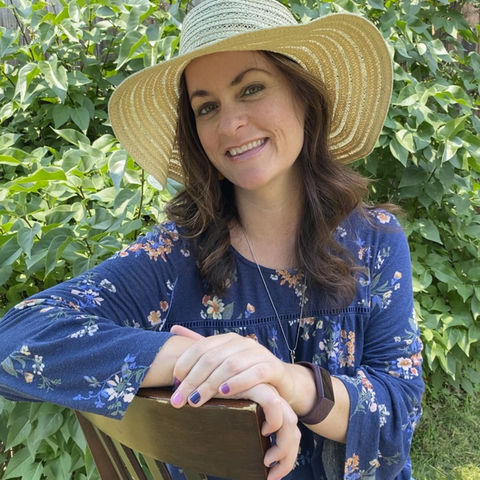
My name is Hilary LaFawn and I'm so grateful that you've joined me today to explore Chapter One of How to Stop Worrying and Start Living by Dale Carnegie.
Enjoy this sleep story to help relax your mind and body for a great night's sleep.
Before we begin,
Settle yourself in your bed and find your most comfortable position.
Take a few long,
Deep breaths and feel the gentle support of your pillows,
Your soothing sheets and your blankets.
Let them cradle your body so you can relax and settle in.
Getting comfortable is only you know how.
Let's begin.
Chapter One.
Live in day-tight compartments.
In the spring of 1871,
A young man picked up a book and read 21 words that had a profound effect on his future.
A medical student at the Montreal General Hospital,
He was worried about passing the final examination,
Worried about what to do,
Where to go,
How to build a practice,
How to make a living.
The 21 words that this young medical student read in 1871 helped him to become the most famous physician of his generation.
He organized the world-famous John Hopkins School of Medicine.
He became Regis Professor of Medicine at Oxford,
The highest honor that can be bestowed upon any medical man in the British Empire.
He was knighted by the King of England,
When he died two huge volumes containing 1466 pages were required to tell the story of his life.
His name was Sir William Osler.
Here are the 21 words that he read in the spring of 1871.
21 words from Thomas Carlyle that helped him lead a life free from worry.
Our main business is not to see what lies dimly at a distance,
But to do what lies clearly at hand.
Forty-two years later on a soft spring night,
When the tulips were blooming on the campus,
This man,
Sir William Osler,
Addressed the students of Yale University.
He told those Yale students that a man like himself,
Who had been a professor in four universities and had written a popular book,
Was supposed to have brains of a special quality.
He declared that that was untrue.
He said that his intimate friends knew that his brains were of the most mediocre character.
What then was the secret of his success?
He stated that it was owing to what he called living in day-tight compartments.
What did he mean by that?
A few months before he spoke at Yale,
Sir William Osler had crossed the Atlantic on a great ocean liner where the captain,
Standing on the bridge,
Could press a button and presto.
There was a clanging of machinery and various parts of the ships were immediately shut off from one another,
Shut off into watertight compartments.
Now each one of you,
Dr.
Osler said to those Yale students,
Is a much more marvelous organization than the great liner and bound on a longer voyage.
What I urge is that you so learn to control the machinery as to live with day-tight compartments as the most certain way to ensure safety on the voyage.
Get on the bridge and see that at least the great bulkheads are in working order.
Touch a button and hear,
At every level of your life,
The iron door shutting out the past,
The dead yesterdays.
Touch another and shut off with a metal curtain,
The future,
The unborn tomorrows.
Then you are safe,
Safe for today.
Shut off the past.
Let the dead past bury its dead.
Shut out the yesterdays which have lighted fools the way to dusty death.
The load of tomorrow,
Added to that of yesterday,
Carried today,
Makes the strongest falter.
Shut off the future as tightly as the past.
The future is today.
There is no tomorrow.
The day of man's salvation is now.
Waste of energy,
Mental distress,
Nervous worries,
Dog the steps of a man who is anxious about the future.
Shut clothes then,
The great foreign aft bulkheads,
And prepare to cultivate the habit of a life of day-tight compartments.
Did Dr.
Osler mean to say that we should all not make any effort to prepare for tomorrow?
No,
Not at all.
But he did go on in that address to say that the best possible way to prepare for tomorrow is to concentrate with all your intelligence,
All your enthusiasm,
On doing today's work superbly today.
That is the only possible way you can prepare for the future.
Sir William Osler urged the students at Yale to begin the day with Christ's Prayer.
Give us,
This day,
Our daily bread.
Remember that the prayer asks only for today's bread.
It doesn't complain about the stale bread we had to eat yesterday.
And it doesn't say,
Oh God,
It has been pretty dry out in the wheat belt lately,
And we may have another drought.
And then how will I get the bread to eat next fall?
Or suppose I lose my job.
Oh God,
How could I get bread then?
No.
This prayer teaches us to ask for today's bread only.
Today's bread is the only kind of bread you can possibly eat.
Years ago,
A penniless philosopher was wandering through a stony country where the people had a hard time making a living.
One day a crowd gathered about him on a hill,
And he gave what was probably the most quoted speech ever delivered anywhere at that time.
This speech contained 26 words that have gone ringing down across the centuries.
Take therefore no thought for the morrow,
For the morrow shall take thought of the things of itself.
Sufficient unto the day is the evil thereof.
Many men have rejected those words of Jesus.
Take no thought for the morrow.
They have rejected those words as a council of perfection,
As a bit of mysticism.
I must take thought for the morrow,
They said.
I must take out insurance to protect my family.
I must lay aside money for my old age.
I must plan and prepare to get ahead.
Right.
Of course you must.
The truth is that those words of Jesus,
Translated over 300 years ago,
Don't mean today what they meant during the reign of King James.
Three hundred years ago,
The word thought frequently meant anxiety.
Modern versions of the Bible quote Jesus more accurately as saying,
Have no anxiety for the tomorrow.
By all means,
Take thought for the tomorrow.
Yes,
Careful thought and planning and preparation,
But have no anxiety.
During the Second World War,
Our military leaders planned for the morrow,
But they could not afford to have any anxiety.
I have supplied the best men with the best equipment we have,
Said Admiral Ernest J.
King,
Who directed the United States Navy,
And have given them what seems to be the wisest mission.
That is all I can do.
If a ship has been sunk,
Admiral King went on,
I can't bring it up.
If it is going to be sunk,
I can't stop it.
I can use my time much better working on tomorrow's problem than by fretting about yesterday's.
Besides,
If I let those things get to me,
I wouldn't last long.
Whether in war or peace,
The chief difference between good thinking and bad thinking is this.
Good thinking deals with causes and effects and leads to logical,
Constructive planning.
Bad thinking frequently leads to tension and nervous breakdowns.
I had the privilege of interviewing Arthur Hayes Solzberger,
Publisher.
He lived from 1935 to 1961.
Of all the most famous newspapers in the world,
The New York Times,
Mr.
Solzberger told me that when the Second World War flamed across Europe,
He was so stunned,
So worried about the future that he found it almost impossible to sleep.
He would frequently get out of bed in the middle of the night,
Take some canvas and tubes of paint,
Look in the mirror,
And try to paint a portrait of himself.
He didn't know anything about painting,
But he painted anyway to get his mind off his worries.
Mr.
Solzberger told me that he was never able to banish his worries and find peace until he adopted as his motto five words from a church hymn,
One step enough for me.
Lead kindly light,
Keep thou my feet.
I do not ask to see the distant scene.
One step enough for me.
At about the same time,
A young man in uniform somewhere in Europe was learning the same lesson.
His name was Ted Benjermeneau of Baltimore,
Maryland,
And he had worried himself into a first-case class of combat fatigue.
In April 1945,
Wrote Ted,
I had worried until I had developed what doctors called a spasmodic transverse colon,
A condition that produced intense pain.
If the war hadn't ended when it did,
I'm sure I would have had a complete physical breakdown.
I was utterly exhausted.
I was a graves registration,
Noncommissioned officer for the 94th Infantry Division.
My work was to help set up and maintain records of all men killed in action,
Missing in action,
And hospitalized.
I also had to keep,
To center the bodies of both allied and enemy soldiers who had been killed and hastily buried in shallow graves during the pitch of battle.
I had to gather up the personal effects of these men and see that they were sent back to parents or closest relatives who would prize these personal effects so much.
I was constantly worried for fear we might be making embarrassing and serious mistakes.
I was worried about whether or not I would come through all of this.
I was worried about whether I would live to hold my own child in my arms,
A son of 16 months whom I had never seen.
I was so worried and exhausted that I lost 34 pounds.
I was so frantic that I was almost out of my mind.
I looked at my hands.
They were hardly more than skin and bones.
I was terrified at the thought of going home a physical wreck.
I broke down and sobbed like a child.
I was so shaken that tears welled up every time I was alone.
There was one period soon after the Battle of the Bulge started that I wept so often that I almost gave up hope of ever being a human normal again.
I ended up in an Army dispensary.
An Army doctor gave me some advice which has completely changed my life.
After giving me a thorough physical examination,
He informed me that my troubles were mental.
Ted,
He said,
I want you to think of your life as an hourglass.
You know there are thousands of grains of sand in the top of the hourglass and they all pass slowly and evenly through the narrow neck in the middle.
Nothing you or I could do would make any more than one grain of sand pass through this narrow neck without impairing the hourglass.
You and I and everyone else are like this hourglass.
When we start in the morning,
There are hundreds of tasks which we feel that we must accomplish that day.
But if we do not take them one at a time and let them pass through the day slowly and evenly as they do the grains of sand passing through the neck of the hourglass,
Then we are bound to break our own physical or mental structure.
I have practiced that philosophy ever since that memorial day that an Army doctor gave it to me,
One grain of sand at a time,
One task at a time.
That advice saved me physically and mentally during the war and it has also helped me in my present position of public relations and advertising director for the Adcrafters Printing and Offsets Company.
I found the same problems arising in business that had arisen during the war.
A score of things had to be done at once and there was little time to do them.
We were low in stocks.
We had new forms to handle,
New stock arrangements,
Changes of address,
Opening and closing offices and so on.
Instead of getting taut and nervous,
I remembered what the doctor had told me.
One grain of sand at a time,
One task at a time.
By repeating those words to myself over and over,
I accomplished my task and in a more efficient manner and I did my work without the confused and jumbled feeling that it almost wrecked me on the battlefield.
One of the most appalling comments on the present way of life is that at one time half of all the beds in our hospitals were reserved for patients with nervous and mental troubles.
Patients who had collapsed under the crushing burden of accumulated yesterdays and fearful tomorrows.
Yet,
A vast majority of those people could have avoided those hospitals,
Could have led happy,
Useful lives if they had only heeded the words of Jesus.
Have no anxiety about the morrow or the words of Sir William Osler.
Live in day-tight compartments.
You and I are standing this very second at the meeting place of two eternities.
The vast past that has endured forever and the future that is plunging on the last syllable of recorded time.
We can't possibly live in either of those eternities.
No,
Not even for one split second.
But by trying to do so we can wreck both our bodies and our minds.
So let's be content to live the only time we can possibly live.
From now until bedtime.
Anyone can carry his burden however hard until nightfall.
Wrote Robert Louis Stevenson.
Anyone can do his work however hard for one day.
Anyone can live sweetly,
Patiently,
Lovingly,
Purely until the sun goes down.
And this is all that life really means.
Yes,
That is all that life requires of us.
But Miss E.
K.
Shields of Saginaw,
Michigan was driven to despair even to the brink of suicide before she learned to just live until bedtime.
In 1937 I lost my husband,
Miss Shields said as she told me her story.
I was very depressed and almost penniless.
I wrote my former employer,
Mr.
Leon Roach,
Of the Roach Fowler Company of Kansas City and got my old job back.
I had formally made my living selling world books to rural and town school boards.
I had sold my car two years previously when my husband became ill,
But I managed to scrap together enough money to put a down payment on a used car and started out to sell the books again.
I had thought that getting back on the road would help relieve my depression,
But driving alone and eating alone was almost more than I could take.
Some of the territory was not very productive and I found it hard to make those car payments as small as they were.
In the spring of 1938 I was working out over sales in Missouri.
The schools were poor,
The roads bad.
I was so lonely and discouraged that at one time I even considered suicide.
It seemed that success was impossible.
I had nothing to live for.
I dreaded getting up each morning and facing life.
I was afraid of everything,
Afraid I could not meet the car payments,
Afraid I could not pay my room rent,
Afraid I would not have enough to eat.
I was afraid my health was failing and I had no money for a doctor.
All that kept me from suicide were the thoughts that my sister would be deeply grieved and that I did not have enough money to pay my own funeral costs.
Then one day I read an article that lifted me out of my despondence and gave me the courage to go on living.
I shall never cease to be grateful for one inspiring sentence in that article.
It said,
Every day is a new life to a wise man.
I typed that sentence out and pasted it on the windshield of my car where I saw it every minute.
I saw it every minute I was driving.
I found it wasn't so hard to live only one day at a time.
I learned to forget the yesterday and to not think of the tomorrows.
Each morning I said to myself,
Today is a new life.
I have succeeded in overcoming my fears of loneliness,
My fear of want.
I am happy and fairly successful now and have a lot of enthusiasm and love for life.
I know now that I shall never again be afraid,
Regardless of what life hands me.
I know now that I don't have to fear the future.
I know now that I can live one day at a time and that every day is a new life to a wise man.
Who do you suppose wrote this verse?
Happy the man and happy he alone,
He who can call today his own.
He who,
Secure within,
Can say,
Tomorrow do thy worst,
For I have lived today.
Those words sound modern,
Don't they?
Yet they were written thirty years before Christ was born by the Roman poet Horace.
One of the most tragic things I know about human nature is that all of us tend to put off living.
We are all dreaming of some magical rose garden over the horizon,
Instead of enjoying the roses that are blooming outside our windows today.
Why are we such fools?
Such tragic fools.
How strange it is,
Our little procession of life,
Wrote Stephen Leacock.
The child says,
When I am a big boy,
But what is that?
The big boy says,
When I grow up,
And then grown up,
He says,
When I get married,
But to be married,
What is that after all?
The thought changes to when I'm able to retire,
And then when retirement comes,
He looks back over the landscape traversed,
A cold wind seems to sweep over it.
Somehow he's missed it all,
And it is gone.
Life we learn too late is in the living,
In the tissue of every day and hour.
The late Edward S.
Evans of Detroit almost killed himself with worry before he learned that life is in the living,
In the tissue of every day and hour.
Brought up in poverty,
Edward Evans made his first money by selling newspapers,
Then worked as a grocer's clerk.
Later with seven people depended upon him for bread and butter,
He got a job as an assistant librarian.
Small as the pay was,
He was afraid to quit.
Eight years passed before he could summon up the courage to start out on his own,
But once he started,
He built up an original investment of fifty-five borrowed dollars into a business of his own that made him twenty thousand dollars a year.
Then came a frost,
A killing frost.
He endorsed a big note for a friend,
And the friend went bankrupt.
Quickly on top of that disaster came another,
The bank in which he had all his money collapsed.
He not only lost every cent he had,
But he was plunged into debt for sixteen thousand dollars.
His nerves couldn't take it.
I couldn't eat or sleep.
I became strangely ill,
He told me.
Worry and nothing but worry,
He said,
Brought on this illness.
One day as I was walking down the street,
I fainted and fell on the sidewalk.
I was no longer able to walk.
I was put in bed and my body broke out in boils.
These boils turned inward until just lying in bed was agony.
I grew weaker and weaker every day.
Finally my doctor told me that I only had two more weeks to live.
I was shocked.
I drew up my will,
And they then laid back in bed,
Awaiting my end.
No use now to struggle or worry.
I gave up,
Relaxed,
And went to sleep.
I hadn't slept two hours in succession for weeks,
But now with my earthly problems drawing to an end,
I slept like a baby.
My exhausting weariness began to disappear.
My appetite returned.
I gained weight.
A few weeks later I was able to walk with crutches.
Six weeks later I was able to go back to work.
I had been making twenty thousand dollars a year,
But I was glad now to get a job for thirty dollars a week.
I got a job selling blocks to put behind the wheels of automobiles when they were shipped by freight.
I had learned my lesson now,
No more worry for me,
No more regret about what had happened in the past,
No more dread of the future.
I concentrated all my time,
Energy,
And enthusiasm into selling those blocks.
Edward S.
Evans shot up fast now.
In a few years he was president of the company,
The Evans Products Company.
It had been listed on the New York Stock Exchange for years.
If you ever fly over Greenland you may land on Evans Field,
A flying field named in his honor.
Yet,
Edward S.
Evans never would have achieved these victories if he hadn't learned to live in day-tight compartments.
You will recall that the White Queen said,
The rule is jam tomorrow and jam yesterday,
But never jam today.
Most of us are like that.
Chewing around yesterday's jam and worrying about tomorrow's jam instead of spreading today's jam thick and on our bread right now.
Even the great French philosopher Montaigne made that mistake.
My life,
He said,
Has been full of terrible misfortunes,
Most of which have never happened.
So is mine and so is yours.
Think,
Said Dante,
That this day will never dawn again.
Life is slipping away with incredible speed.
We are racing through space at the rate of 19 million miles every second.
Today is our most precious possession.
It is our only sure possession.
That is the philosophy of Lao Thomas.
I recently spent a weekend at his farm and I noticed that he had these words from Psalm framed and hanging on the walls of his broadcasting studio where he would see them often.
This is the day which the Lord hath made.
We will rejoice and be glad in it.
The writer John Ruskin had on his desk a simple piece of stone on which was carved one word,
Today.
And while I have a piece of stone on my desk,
I do have a poem pasted on my mirror where I can see it where I shave every morning.
A poem that Sir William Osler always kept on his desk.
A poem written by the famous Indian dramatist Kali Dasa.
Salutation to the dawn.
Look to this day for it is life.
The very life of life in its brief course lie all the verities and realities of your existence.
The bliss of growth,
The glory of action,
The splendor of beauty.
For yesterday is but a dream and tomorrow is only a vision.
But today well lived makes every yesterday a dream of happiness.
And every tomorrow a vision of hope.
Look well therefore to this day.
Such is the salutation to the dawn.
So the first thing you should know about worry is this.
If you want to keep it out of your life do what Sir William Osler did.
Number one,
Shut the iron doors on the past and the future.
Live in day tight compartments.
Try not ask yourself these questions and write down the answers.
Number one,
Do I tend to put off living in the present in order to worry about the future or to yearn for some magical rose garden over the horizon?
Number two,
Do I sometimes embitter the present by regretting things that happened in the past that are over and done with?
Number three,
Do I get up in the morning determined to seize the day to get the utmost out of these 24 hours?
Number four,
Can I get more out of life by living in day tight compartments?
Number five,
When shall I start to do this?
Next week?
Tomorrow?
Today?
And that is the end of chapter one on how to stop worrying and start living.
Thank you so much for allowing me the precious gift of your time.
Until next time,
Sweet dreams.