The Water Babies A Fairy Tale for a Land Baby By Charles Kingsley Chapter Two Part Two Some people think there are no fairies.
Cousin Cramchild tells little folks so in his conversations.
Well,
Perhaps there are none.
In Boston,
U.
S.
,
Where he's raised.
There are only a clumsy lot of spirits there,
Who can't make people here without thumping on the table.
But they get their living thereby,
And I suppose that's all they want.
And Aunt Agitate,
In her arguments on political economy,
Says there are none.
Well,
Perhaps there are none in her political economy.
But it is a wide world,
My little man,
And thank heaven for it.
Between theories,
Some of us would get squashed.
And plenty of room in it for fairies,
Without people seeing them.
Unless,
Of course,
They look in the right place.
The most wonderful and the strongest things in the world,
You know,
Are just the things which no one can see.
There is life in you,
And it is in the life in you which makes you grow,
And move,
And think,
And yet you can't see it.
And there is steam in a steam engine,
And that is what makes it move,
And yet you can't see it.
And so there may be fairies in the world,
And they may be just what makes the world go round,
In an old French tune.
And yet no one may be able to see them except those whose hearts are going round to that same tune.
At all events,
We will make believe that there are fairies in the world.
It will not be the last time by many a one that we shall have to make believe.
And yet,
After all,
There is no need for that.
There must be fairies,
For this is a fairy tale,
And how can one have a fairy tale if there are no fairies?
You don't see the logic of that?
Perhaps not.
Then please not to see the logic of a great many arguments exactly like it.
Which will you hear before your beard is gray?
The kind old dame came back at twelve,
When school was over,
To look at Tom,
But there was no Tom there.
She looked about for his footprints,
But the ground was so hard that there was no slot,
As they say in dear old North Devon.
And if you grow up to be a brave healthy man,
You may know some day what no slot means,
And know too,
I hope,
What a slot does mean.
A broad slot with blunt claws,
Which makes a man put out his cigar and set his teeth and tighten his girths when he sees it,
And what his rights mean.
If he has them,
Brow,
Bay,
Tray and points,
And sees something worth seeing between Haddonwood and Countessbury Cliff,
With good Mr.
Paul Collins to show you the way,
And mend your bones as fast as you smash them.
Only when that jolly day comes,
Please don't break your neck.
Stogged in a mire you will never be,
I trust,
For you are a heath cropper bred and born.
So the old dame went in again quite sulky,
Thinking that little Tom had tricked her with a false story,
And shammed ill,
And then run away again.
But she altered her mind the next day,
For when Sir John and the rest of them had run themselves out of breath and lost Tom,
They went back again looking very foolish,
And they looked more foolish still when Sir John heard more of the story from the nurse,
And more foolish still again when they heard the whole story from Miss Ellie,
The little lady in white.
All she had seen was a poor little black chimney sweep crying and sobbing,
And going to get up the chimney again.
Of course,
She was very much frightened,
And no wonder,
But that was all.
The boy had taken nothing in the room by the mark of his little sooty foot,
And could see that he had never been off the hearth rug till the nurse caught hold of him.
It was all a mistake.
So Sir John told Grimes to go home,
And promised him five shillings if he would bring the boy quietly up to him without beating him,
That he might be sure of the truth.
For he took for granted,
And Grimes too,
That Tom had made his way home.
But no Tom came back to Mr.
Grimes that evening,
And he went to the police office to tell them to look out for the boy.
But no Tom was heard of.
As for his having gone over the great fells to Vendale,
They no more dreamed of that than of his having gone to the moon.
So Mr.
Grimes came up to Hearthover next day with a very sour face,
But when he got there,
Sir John was over the hills and far away,
And Mr.
Grimes had to sit in the outer servant's hall all day and drink strong ale to wash away his sorrows,
And they were washed away long before Sir John came back.
For good Sir John had slept very badly that night,
And he said to his lady,
My dear,
The boy must have got over into the grouse moors and lost himself,
And he lies very heavily on my conscious,
Poor little lad,
But I know what I will do.
So at five the next morning up he got,
And into his bath,
And into his shooting jacket and gaiters,
And into the stable yard like a fine old English gentleman,
With a face as red as a rose,
And a hand as hard as a table,
And a back as broad as a bullock's,
And bade them bring his shooting pony,
And the keeper to come on his pony,
And the huntsman,
And the first whip,
And the second whip,
And the underkeeper with the bloodhound in a leash,
A great dog as tall as a calf,
Of the color of a gravel walk,
With mahogany ears and nose,
And a throat like a church bell.
They took him up the place where Tom had gone into the wood,
And there the hound lifted up his mighty voice and told them all he knew.
Then he took them to the place where Tom had climbed the wall,
And they shoved it down,
And all got through.
And then the wise dog took them over the moor,
And over the fells,
Step by step,
Very slowly,
For the scent was a day old,
You know,
And very light from the heat and drought.
But that was why cunning old Sir John started at five in the morning.
And at last he came to the top of Lew Wait Crag,
And there he bade,
And looked up in their faces,
As much as to say,
I tell you,
He is gone down here.
They could hardly believe that Tom would have gone so far,
And when they looked at that awful cliff,
They could never believe that he would have dared to face it.
But if the dog said so,
It must be true.
Heaven forgive us,
Said Sir John,
If we find him at all,
We shall find him laying at the bottom.
And he slapped his great hand upon his great thigh and said,
Who will go down over Lew Wait Crag and see if that boy is alive?
Oh,
That I were twenty years younger,
And I would go down myself.
And so he would have done,
As well as any sweep in the county.
Then he said,
Twenty pounds to the man who brings me that boy alive.
And as was his way,
What he said he meant.
Now,
Among the lot was a little groom boy,
A very little groom indeed,
And he was the same who had ridden up the court and told Tom to come to the hall.
And he said,
Twenty pounds or none,
I will go down over Lew Wait Crag,
And if it's only for the poor boy's sake,
For he was as civil a spoken little chap as ever climbed a flue.
So down over Lew Wait Crag he began.
A very smart groom he was at the top,
And a very shabby one at the bottom,
For he tore his gaiters,
And he tore his breeches,
He tore his jacket,
And he burst his braces,
And he burst his boots,
And he lost his hat.
And what was worst of all,
He lost his shirt pin,
Which he prized very much,
For it was gold,
And he had won it at a raffle at Malton.
And there was a figure at the top of it,
Noble old Beeswig herself,
As natural as life,
So it was a really severe loss,
But he never saw anything of Tom.
And all the while,
Sir John and the rest were riding round,
Full three miles to the right and back again,
To get into Vendale and to the foot of the crag.
When they came to the old dame's school,
All the children came out to see,
And the old dame came out too,
And when she saw Sir John,
She curtsied very low,
For she was a tenant of his.
Well,
Dame,
And how are you?
Said Sir John.
Blessings on you as broad as your back,
Hearthover,
Says she.
She didn't call him Sir John,
But only Hearthover,
For that is the fashion in the north country.
And welcome into Vendale,
But you're not hunting the fox this time of year.
I am hunting,
And strange game too,
Said he.
Blessings on your heart,
And what makes you look so sad this morn?
I'm looking for a lost child,
A chimney sweep,
That has run away.
Oh,
Hearthover,
Hearthover,
Says she.
You were always just a man and merciful,
And you'll no harm the poor little lad if I give you tidings of him.
Not I,
Not I,
Dame.
I'm afraid we hunted him out of the house,
All on a miserable mistake,
And the hound has brought him to the top of Luthweg Crag,
And.
.
.
Whereat the old dame broke out crying,
Without letting him finish his story.
So he told me the truth after all.
Poor little dear.
Ah,
First thoughts are best,
And a body's heart will guide them right,
If they will but hearken to it.
And then she told Sir John all.
Bring the dog here and lay him on,
Said Sir John,
Without another word.
And he set his teeth very hard.
And the dog opened out once,
And went away at the back of the cottage,
Over the road,
And over the meadow,
And through a bit of alder copse.
And there,
Upon an alder stump,
They saw Tom's clothes lying.
And then they knew as much about it all,
As there was any need to know.
And Tom?
Ah,
Now comes the most wonderful part of this wonderful story.
Tom,
When he woke,
For of course he woke,
Children always wake after they have slept exactly as long and as good for them,
Found himself swimming about in the stream,
Being about four inches,
Or,
That I may be accurate,
3.
87902 inches long,
And having round the parotid region of his fauces a set of external gills.
I hope you understand all the big words,
Just like those of a sucking eft,
Which he must took for a lace frill,
Till he pulled at them,
Found he hurt himself,
And made up his mind that they were part of him,
And best left alone.
In fact,
The fairies had turned him into a water baby.
A water baby?
You never heard of a water baby?
Perhaps not.
That is the very reason why the story was written.
There are a great many things in the world which you never heard of,
And a great many more which nobody ever heard of,
And a great many things,
Too,
Which nobody will ever hear of,
At least until the coming,
When man shall be the measure of all things.
But there are no such things as water babies.
How do you know that?
Have you been there to see?
And if you had been there to see,
And had seen none,
That would not prove that there were none.
If Mr.
Garth does not find a fox in Eversleigh Wood,
As folks sometimes fear he never will,
That does not prove that there are no such things as foxes.
And as is Eversleigh Wood to all the woods in England,
So are the waters we know to all the waters in the world.
And no one has a right to say that no water babies exist,
Till they have seen no water babies existing,
Which is quite a different thing,
Mind,
From not seeing water babies,
And a thing which nobody ever did,
Or perhaps ever will do.
But surely,
If there were water babies,
Someone would have caught one at least.
Well,
How do you know that somebody has not?
But they would have put it into spirits,
Or into the illustrated news,
Or perhaps cut it into two halves,
Poor little dear thing,
And sent one to Professor Owen,
And one to Professor Huxley,
To see what they would say about it.
Ah,
My dear little man,
That does not follow at all,
As you will see before the end of the story.
But a water baby is contrary to nature.
Well,
But,
My dear little man,
You must learn to talk about such things when you grow older,
In a very different way from that.
You must not talk about ain't and can't,
When you speak of this great,
Wonderful world around you,
Of which the wisest man knows only the very smallest corner,
And is,
As the great Sir Isaac Newton said,
Only a child picking up pebbles on the shore of a boundless ocean.
You must not say that this cannot be,
Or that that is contrary to nature.
You do not know what nature is,
Or what she can do.
And nobody knows,
Not even Sir Roderick Murchison,
Or Professor Owen,
Or Professor Sedgwick,
Or Professor Huxley,
Or Mr.
Darwin,
Or Professor Faraday,
Or Mr.
Grove,
Or any other of the great men whom good boys are taught to respect.
They are very wise men,
And you must listen respectfully to all they say.
But even if they should say,
Which I am sure they never would,
That cannot exist,
That is contrary to nature.
You must wait a little and see,
For perhaps even they may be wrong.
It is only children who read Aunt Agatate's arguments,
Or Cousin Cramchild's conversations,
Or lads who go to popular lectures,
And see a man pointing at a few big ugly pictures on the wall,
Or making nasty smells with bottles and squirts for an hour or two,
And calling that anatomy or chemistry,
Who talk about cannot exist and contrary to nature.
Wise men are afraid to say that there is anything contrary to nature,
Except what is contrary to mathematical truth.
For two and two cannot make five,
And two straight lines cannot join twice,
And a part cannot be as great as the whole,
And so on,
At least so it seems at present.
But the wiser men are,
The less they talk about cannot.
That is a very rash,
Dangerous word,
That cannot,
And if people use it too often,
The queen of all the fairies,
Who makes the clouds thunder and the fleas bite,
And takes just as much trouble about one as about the other,
Is apt to astonish them suddenly by showing them that though they say she cannot,
Yet she can,
And what is more,
Will,
Whether they approve or not.
And therefore it is,
That there are dozens and hundreds of things in the world,
Which we should certainly have said were contrary to nature,
If we did not see them going on under our eyes all day long.
If people had never seen little seeds grow into great plants and trees of different shape from themselves,
And these trees again produce fresh seeds to grow into fresh trees,
They would have said,
The thing cannot be,
It is contrary to nature,
And they would have been quite as right in saying so,
As in saying the most other things cannot be.
Or suppose again that you had come,
Like M.
Du Chalut,
A traveler from unknown parts,
And that no human being had ever heard or seen of an elephant,
And suppose that you described him to people and said,
This is the shape,
The plan,
And the anatomy of the beast,
And of his feet,
And of his trunk,
And of his grinders,
And of his tusks,
Though they are not tusks at all,
But two foreteeth run mad,
And this is the section of his skull,
More like a mushroom than a reasonable skull of a reasonable or unreasonable beast,
And so forth,
And so forth.
And though the beast,
Which I assure you I have seen and shot,
Is first cousin to the hairy little coney of scripture,
Second cousin to a pig,
And I suspect thirteenth or fourteenth cousin to a rabbit,
Yet he is the wisest of all beasts,
And can do everything save read,
Write,
And cast accounts,
People would surely have said,
Nonsense,
Your elephant is contrary to nature,
And have thought you were telling stories,
As the French thought of Le Valant when he came back to Paris and said that he had shot a giraffe,
And as the king of the cannibal islands thought of the English sailor when he said that in his country water turned to marble and rain fell as feathers,
They would tell you the more they knew of science,
Your elephant is an impossible monster,
Contrary to the laws of comparative anatomy,
As far as yet known,
To which you would answer the less,
The more you thought,
Did not learn men to hold until within the last 25 years that a flying dragon was an impossible monster,
And do we not now know that there are hundreds of them found fossil up and down the world,
People call them pterodactyls,
But that is only because they are ashamed to call them flying dragons,
After denying so long the flying dragons could exist,
The truth is that folks fancy that such and such things cannot be,
Simply because they have not seen them,
Is worth no more than a savage's fancy that there cannot be such a thing as a locomotive,
Because he never saw one running wild in the forest,
Wise men know that their business is to examine what is,
And not to settle what is not,
They know that there are elephants,
They know that they've been flying dragons,
And the wiser they are,
The less inclined they will be to say positively that there are no water babies,
No water babies indeed,
Why?
Wise men of old said that everything on earth had its double in the water,
And you may see that it is,
If not quite true,
Still quite as true as most other theories,
Which you are likely to hear from many a day,
There are land babies,
Then why not water babies,
Are there not water rats,
Water flies,
Water crickets,
Water scrabs,
Water tortoises,
Water scorpions,
Water tigers,
And water hogs,
Water cats,
And water dogs,
Sea lions,
And sea bears,
Sea horses,
And sea elephants,
Sea mice,
And sea urchins,
Sea razors,
And sea pens,
Sea combs,
And sea fans,
And of plants,
Are there not water grass,
And water crowfoot,
Water milfoil,
And so on without end,
But all these things are only nicknames,
The water things are not really akin to the land things,
That's not always true,
There are in millions of cases,
Not only of the same family,
But actually the same individual creatures,
Do not even you know that a green drake,
And an alder fly,
And a dragon fly,
Live underwater till they change their skins,
Just as Tom changed his,
And if a water animal can continually change into a land animal,
Why should not a land animal sometimes change into a water animal,
Don't be put down by any of Cousin Cramchild's arguments,
But stand up to him like a man,
And answer him,
Quite respectfully of course,
Thus,
If Cousin Cramchild says that if there are water babies,
They must grow into water men,
Ask him how he knows that they do not,
And then how he knows that they must,
Any more than the proteus of the Edelsberg caverns grows into a perfect newt,
If he says that it is too strange a transformation for a land baby to turn into a water baby,
Ask him if he ever heard of the transformation of Silas,
Or the distomas,
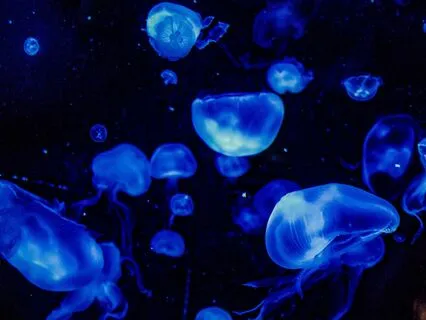
Or the common jellyfish,
Of which M.
Quatrophages says excellently well,
Who would not exclaim that a miracle had come to pass,
If he saw a reptile come out of the egg,
Dropped by the hen in his poultry yard,
And the reptile give birth at once to an infinite number of fishes and birds,
Yet the history of the jellyfish is quite as wonderful as that would be,
Ask him if he knows about all this,
And if he does not,
Tell him to go and look for himself,
And advise him,
Very respectfully of course,
To settle no more what strange things cannot happen,
Till he has seen what strange things do happen every day,
If he says that things cannot degrade,
That is,
Change downwards into lower forms,
Ask him who told him that water babies were lower than land babies,
And even if they were,
Does he know about the strange degradation of the common goose barnacles,
Which one finds sticking on ships bottoms,
Or the still stranger degradation of some cousins of theirs,
Of which one hardly likes to talk,
So shocking and ugly it is,
And lastly,
If he says,
As he most certainly will,
That these transformations only take place in the lower animals,
And not in the higher,
Say that that seems to little boys,
And to some grown people,
A very strange fancy,
The lower animals are so wonderful,
And so difficult to discover,
Why should not there be changes in the higher animals,
Far more wonderful,
And far more difficult to discover,
And may not man,
The crown and flower of all things,
Undergo some change as much more wonderful than all the rest,
As the great exhibition is more wonderful than a rabbit burrow,
Let him answer that,
And if he says,
As he will,
That not having seen such a change in his experience,
He is not bound to believe it,
Ask him respectfully,
Where his microscope has been,
Does not each of us in coming into the world go through a transformation,
Just as wonderful as that of a sea egg,
Or a butterfly,
And do not reason and analogy,
As well as scripture,
Tell us that the transformation is not the last,
And that,
Though what we shall be,
We know not,
Yet we are here but as the crawling caterpillar,
And shall be hereafter as the perfect fly,
The old Greeks,
Heathens as they were,
Saw as much as that two thousand years ago,
And I care very little for cousin Cramchild,
If he sees even less than they,
And so forth,
And so forth,
Till he is quite cross,
And then tell him that if there are no water babies,
At least there ought to be,
And that at least he cannot answer,
And meanwhile,
My dear little man,
Till you know a great deal more about the nature than professor Owen,
And professor Huxley put together,
Don't tell me about what cannot be,
Or fancy that anything is too wonderful to be true,
We are fearfully and wonderfully made,
Said old David,
And so we are,
And so was everything around us,
Down to the very deal table,
Yes,
Much more fearfully and wonderfully made already is the table,
As it stands now,
Nothing but a piece of dead deal wood,
Than if,
As foxes say,
And geese believe,
Spirits could make it dance,
Or talk to you by rapping on it,
Am I in earnest,
Oh dear no,
Don't you know that this is a fairy tale,
And all fun and pretense,
And that you are not to believe one word of it,
Even if it is true,
But at all events,
So it happened to Tom,
And therefore,
The keeper,
And the groom,
And sir John made a great mistake,
And were very unhappy,
Sir John at least,
Without any reason,
When they found a big black thing in the water,
And said it was Tom's body,
And that he'd been drowned,
They were utterly mistaken,
Tom was quite alive,
And cleaner,
And merrier than he'd ever been,
The fairies had washed him,
You see,
In the swift river,
So thoroughly,
That not only his dirt,
But his whole husk,
And shell had been washed quite off of him,
And the pretty little real Tom was washed out of the inside of it,
And swam away,
As a caddis does,
When its case of stones and silk is bored through,
And away it goes on its back,
Paddling to the shore,
There to split its skin,
And fly away as a caperer,
On four fawn-colored wings,
With long legs and horns,
They are foolish fellows,
The caperers,
And fly into the candle at night,
If you leave the door open,
We will hope Tom to be wiser,
Now he has got safe out of his sooty old shell,
But good Sir John did not understand all this,
Not being a fellow of the Linnaean society,
And he took it into his head that Tom was drowned,
When they looked into the empty pockets of his shell,
And found no jewels there,
Nor money,
Nothing but three marbles,
And a brass button with a string on it,
Then Sir John did something as like crying as ever he did in his life,
And blamed himself more bitterly than he need have done,
So he cried,
And the groom-boy cried,
And the huntsman cried,
And the dame cried,
And the little girl cried,
And the dairymaid cried,
And the old nurse cried,
For it was somewhat her fault,
And my lady cried,
For though people have wigs,
There is no reason why they should not have hearts,
But the keeper did not cry,
Though he had been so good natured to Tom the morning before,
For he was so dried up with running after poachers,
That you could no more get tears out of him than milk out of a leather,
And Grimes did not cry,
For Sir John gave him ten pounds,
And he drank it all in a week,
Sir John sent far and wide to find Tom's mother and father,
But he might have looked till doomsday for them,
For one was dead,
And the other was at Botany Bay,
And the little girl would not play with her dolls for a whole week,
And never forgot poor little Tom,
And soon my lady put a pretty little tombstone over Tom's shell in the little churchyard in Vendale,
Where the old dalesmen all sleep side by side between the limestone crags,
And the dame decked it with garlands every Sunday,
Till she grew so old,
And she could not stir abroad,
When the little children decked it for her,
And always she sang an old song,
As she sat spinning what she called her wedding dress,
The children could not understand it,
But they liked it nonetheless for that,
For it was very sweet,
And very sad,
And that was enough for them,
And these are the words of it,
When all the world is young lad,
And all the trees are green,
And every goose a swan lad,
And every lass a queen,
Then hay for boot and horse lad,
And round the world away,
Young blood must have its course lad,
And every dog his day,
When all the world is old lad,
And all the trees are brown,
And all the sport is stale lad,
And all the wheels run down,
Creep home,
And take your place there,
The spent and maimed among,
God grant you find one face there,
You loved when all was young,
Those are the words,
But they are only the body of it,
The soul of the song was the dear old woman's sweet face,
And sweet voice,
And the sweet old air to which she sang,
And that alas one cannot put on paper,
And at last she grew so stiff and lame,
That the angels were forced to carry her,
And they helped her on with her wedding dress,
And carried her up over hearth over fells,
And a long way beyond that too,
And there was a new school mistress in Vendale,
And we will hope that she was not certificated,
And all the while Tom was swimming about in the river,
With a pretty little lace collar of gills around his neck,
As lively as a grig,
And as clean as a fresh run salmon.
Now,
If you don't like my story,
Then go to the school room and learn your multiplication table,
And see if you like that better.
Some people no doubt would do so,
So much the better for us,
If not for them.
It takes all sorts,
They say,
To make a world,
And that is the end of our story this evening.
Until next time,
Sweet dreams.