I'm going to say some words to create a context as well as to invoke that support that will help us some the knowledge and the information and the Essence of what it is that I'm speaking about come through in a more clear way and it might come through in a way that's beyond my words and maybe just Through through a vibration,
You know just through a sense through a feeling so we give thanks for all of these people Who have gathered here today?
And we give thanks for their many lineages of vibrant ancestors And we take a moment to bow our heads to our hearts for you know,
The suffering as well in our own families in our own bodies in our communities in our cities and the territories that were situated on and How we witness and interact with them,
You know at large And the same way we give thanks for the dreaming of our vibrant ancestors whether they've been our spiritual ancestors our blood and bone ancestors or You know the trees and the plants the plant ancestors all those who have come before us in a way that that have memory The memory that we are also connected to and within that memory,
You know,
We ask that We ask that We'd be supported in the rekindling and the reawakening our own remembrance You know what the memory and the knowledge that is stored in our blood our bones our our DNA and so we ask for And we give thanks for all the different ways of knowing all the different Lineages of knowing whether they're intact or whether they are kind of being reconstructed as in such as in my own life Whether they're being reclaimed such as in my own life and we ask that that blueprint of wholeness May it sing a little more easily here may it sing together with the diversity of different ways of knowing Helping to lend their threads of knowledge to the picture that I'm trying to present here in terms of what is primal awareness part of the reason why I'm broadcasting on this topic is because I've never actually taught this topic before and If you've ever,
You know shared something or given its talk on something you'll notice that It's you know through the feedback through people's questions through people through the sense of whether people are relating or not to What you're saying that then the material becomes refined it becomes it's easier to find the essence And I realized that and for this topic I haven't had a chance to really share it with anybody and in that sense I'm kind of at a loss or at a very preliminary stage if people are actually relating to it So so once again the course the pre-course the course that I'm speaking about is one in that's in development on insight timer And it's called primal awareness the original quiet mind Now,
Let me read the the course introduction for you and then we'll talk a little bit because we're gonna get into some practice today This 10-day course offers a practical approach to quieting the mind This 10-day course is a practical approach to quieting the mind.
It is a journey of indoor and outdoor practices Invitations to transform your everyday ordinary awareness Into a path of deeper connection with your true nature and to the school of life That is to be found in the nature outdoors In its essence this course is written as an introduction to the topic of self-awareness and quieting the mind Good for new meditators,
But offer something rich for the seasoned meditator and explorer on the spiritual path By the end you'll have touched a place of quiet that you may have forgotten and Rediscovered the magic of our animal like nature overtime with practice and curiosity the quality of your moment-to-moment awareness both indoors and outdoors Will grow refine and deepen And may it support you and bring great richness to you on your great journey Okay,
Great that's that that's the introduction I'm feeling like I'm going to be a little bit more emotional about it,
But I'm really feeling it Okay,
Great that's that that's the introduction I'm feeling the resonance you guys I'm really feeling it When I was studying in the Amazon with my teacher Papa Gilberto,
Mahua Who comes from a long lineage of Shipibo medicine people or his titles on Ananya It's a different rank of healer or medicine person.
There's a Muraya Ananya they were said to be able to shape-shift into animals and Jaguars and and you know,
They're very mythical and and It's interesting because in different in other cultures that you know,
There's there's a there are there are there are kind of Suggestions that there are similar kinds of beings whether they be immortals or deities or Buddhas,
You know,
Something like that And you know,
I'm because I spent many many years in in in Eastern style meditation or at least that you know,
It's kind of a noir some of you might know Vipassana Vipassana as as taught by S.
N.
Goenka is It was tradition from India lost to India You know kept safe in Burma and then was returned to India It's very specific way of practicing meditation and in that way of meditation one develops the senses You know you spend four days on anapata sutte,
Which is just like it's just like it's the mindfulness the Buddha's discourse on mindfulness of the breath and Over those four days your awareness of your breath in silence Becomes very very refined and you can feel that you know The breath becomes from very gross awareness like in out to like very subtle And that subtleness is like sometimes you just you feel your breath and you might feel it right now as I'm speaking It's like subtle like a strand of silk and sometimes you might realize that your breath your in breath is shorter and your out breath is longer or You might notice that the in breath is warmer and the out breath is cooler and you know slowly,
You know this This four days of preparation on a pata on an a patti sutta The Buddha's discourse on the mindfulness of breath that prepares one's mind to go deeper to penetrate You know the kind of gross reality and so you have this very subtle awareness and you begin to examine the nature of your mind and matter and you begin examining your body and I notice that the most bodily level you have Sensations in your body and so not only are you aware of them?
But you begin practicing you examine them and you examine the nature that your true nature of those sensations and are they are they permanent?
Oh,
That's very painful.
You know,
Is that it and what is the ultimate?
What is the ultimate realization and that the you know,
The Buddha's realization at least in this topic?
Was that there's impermanence and so to practice equanimity?
Well,
Why should I chase this feeling if it's so blissful?
Why should I chase this?
Why should I why should I?
Turn away from this feeling which is so painful,
Which is the nature of the conditioned mind but you know deep in that meditation practice one begins to practice and develop their equanimity and And equanimity means oh,
I know the true nature of these sensations.
These are pleading sensations ephemeral sensations Whether as pleasant or unpleasant as they are But one develops first You know takes the time to develop their awareness to be able to perceive on this level of reality and this is what this Retreat is about and so some of you may have heard of the Pasa now as there's many there's many traditions of a Pasa But this is the Vipassana is taught by S.
N.
Goenka a dear teacher my first teacher who who recently passed,
You know,
Probably about five or six years ago,
But he left behind You know a vision of Dharma which is that you can pretty much sit anywhere in the world free of charge to learn the practice and you go for ten days and you go like a monk and You know for those of you who know a little bit about the different lineages of Buddhism there are very different lot of different traditions and and they kind of The aspiration why is it free?
You know they talk about the teachings are so priceless and this really always stuck with me the teachings were so priceless You know because they weren't they weren't just to like help you relax or to you know,
Feel better They were there those teachings,
You know Someone had followed those that that path to the ultimate liberation of one's mind of one's suffering and you know that's what the Buddha was most known for I mean there were many Buddhas Siddhartha Gautama the Buddha and so The teachings so in They call it in some traditions They call it the pure land Buddhism which means that you need it you need an environment to practice You need an environment to practice where there's no distractions And not just yes outward distractions But also like,
You know,
One of the some of the hindrances that that don't allow us to practice people say oh I'm too busy to meditate.
I have too many things to do or my kids are there.
I have to work I don't have time to go,
You know,
And so in this space in this pure Dharma space in these vipassana centers You know,
You don't have to pay You don't have you don't have to you don't have to pay for food food is provided for you You're given shelter and you're given a place to take refuge as a keep that's a key point You're given a place to take refuge so you can begin to learn the teachings But you can begin to understand the teachings properly And so I'm what I'm speaking from is this like 20 years of experience in this one Like,
You know of my early days of learning to meditate.
I want to pause right there and read some of the notes I noticed Jennifer has Left some left a nice comment.
You Know how I relate to what you're saying is that in my understanding?
Journey to understand the ancestors and of course to understand some of the troubles that we face as a human Society human culture is that who were the original ancestors,
You know?
Because there was like your ancestors wrong to my ancestors my ancestors,
You know wronged your ancestors you know,
This is this is this is the fact and Who are the original ancestors and I think about who were those who gave of themselves so that their descendants could live their Descendants could have the best life possible and I often think it is the the elements,
You know Which would some people would say we are composed of all of these elements You know the elements of life and so that these elements of life the water the earth the air And you know the fire the space and in other traditions is slightly different That these elements gave them themselves and they continue to give of themselves so generously They animate our bodies.
They animate our awareness our consciousness they animate our lives and the seasons and the cycles,
You know that we're seeped in and Those that those are I like to think that those of our original ancestors the elements and they're still here with us They're in us.
They're a part of us and we're not separate from them So I talked a little bit about I spent you know the contrast of the time with my teacher in the Amazon and The contrast that would come later and the contrast with the many years that I spent sitting in silent retreat you know in a building and it was interesting because Well,
Let me let's say this way When I was so in those silent retreats and the Vipassana We spent ten days where you take the precepts just like a monk would you know,
I would not I will not steal I will not lie I will refrain from sexual misconduct.
There's all these Parameters precepts and And the way that they said is that the Buddha taught this is that there are many people in India at that time very spiritual and many people Were teaching many different teachings but one of the key differences between what Siddhartha Gautama the Buddha was really teaching was that was a concept of See sila which was in the pot in the Pali language the language of the Buddha,
Which is a morality Sila and and that means that you know because there was different kinds of all kinds of things all kinds of teachers teaching and my teacher I think Goenka would say that the difference was that the Buddha said,
You know your mind can be Concentrated and reach a state of Samadhi Yes The Samadhi is absorption or concentration and you know by focusing on your breath or some other kind of practice mantra practice But one undergoes the precepts one undergoes the precepts I shall I shall refrain from killing from stealing from lying from sexual misconducts and there's a couple of other ones but that changes the Foundation that the of the focus of the mind and the only the into a place that the mind can can reach Not achieve or enter into a state of absorption called Samma Samadhi Which I can't remember what exactly means but Samma Samadhi is like,
I don't know if it's supreme or better But it's like a moral a moral conscious as a moral folk folk and focus because he could say he would made the the you say like well a cat can focused to kill a mouse or A robber can like focus on picking a lock to break into someone's house.
There's many kinds of focus and concentration But this kind of Samma Samadhi Samma Samadhi is entered through by a more a moral.
There's a basic there's a base of morality Now morality is a huge topic and it's a messy topic because I've had to ask myself,
You know Where do I get my morals from and which ones are you know imposed upon me upon?
Society and which ones are truly within myself as a fascinating topic and interest a deep topic.
So let's just table that for now but Let's come back to what I was talking about in terms of their Samma Samadhi.
There's a When the mind has a foundation of morality That it bases its concentration upon So when you go to the Vipassana retreat,
You know you go and you meditate indoors and you know It's like 10 hours a day.
You're and you know,
There's more like you're closing your eyes It's a very very very grueling process but very very deep very very deep very very deep surgical process of the mind Primal awareness is something that I feel is on a slightly different Slightly different.
Um,
I'm getting insight right now an insight that I'm looking for because exactly you talked about hunting And so we're gonna keep moving my moving my way onto there.
Yeah so And the teachers and the teacher would say in the discourse at the retreat they would say,
You know for now You're meditating on the building with all these conditions.
There's there's there's a note.
There's no noise.
You're not allowed to read There's no music other than the chanting.
There's no books.
You don't you don't stretch all these things So the one can go deeper and they said,
You know,
The ten days is the minimum To be able to and begin to understand the teachings and to practice correctly Remember that this teaching had been lost originally maybe because of being practiced incorrectly but was kept in its original state in Burma so we're talking now about lineage and knowledge,
You know We think about our own lineage and our knowledge and we think about our own ancestors our own vibrant ancestors like,
You know Our family who were the wisdom keepers who were the knowledge keepers were the medicine people,
You know Who were the warriors who were the who had knowledge of herbs and medicines or magic,
You know there's so many different things we talk about and You know you may or may not get a sense that that is kind of waking up in you because we are connected to our ancestors and sometimes there's a sense of grief when You don't have a proper teacher or proper like the dream of that grandfather or that grandmother to To herald you in and to mentor you and to steward helped you to steward that Inkling towards that knowledge,
You know to reawakening that knowledge to caring for that knowledge and your family That's something that's been very very very very filled with sorrow in my life and why reached out to many other teachers and But the teacher would say in the camp he said,
You know here you have all these conditions to meditate So you begin to understand the practice properly,
But the Buddha he said he became enlightened under Just like in nature Sitting under the Bodhi tree with his resolve as a return his determination He said I will not open my eyes until I've reached the full state of enlightenment liberation and you know you may you may have remembered the If you look up,
You know in the artwork of Mara Mara when Buddha and written the mythology,
You know Buddha sits under the Bodhi tree as Mara and his army of of illusions and delusion mints and Demons and different things and you know They're all charging with him with his their Spears and different weapons and he's just sitting there seeing through the you know The illusion and they say that's when he you know became fully enlightened This is another great topic.
What is fully enlightened mean so and I'm not claiming to know these are just things that I've explored And this so they were saying at the early stage of practice you practice indoors so you don't get distracted by the Sounds by the wind by you know other things that are going on outside,
You know And you hear some teachers say like,
You know,
Oh I can't meditate right now or you've complained to your teacher I can't meditate right now.
There's a there's a there's a bobcat in the background I don't know if you guys can hear it.
It's moving dirt and I can't focus my kids are running around But you know in the most natural sense you say oh well that's also a part of life So we have to learn to work and meditate and you know Enter into a state of absorption or focus or like Dirk said flow while all these all these things are happening But we can find a place of refuge We need to take it sometimes the agony and the angst in our own mind or in our own lives is so intense that we need to be able to We need a place of refuge.
We need a place of refuge to begin to practice,
Right?
And so I hope I'm making I hope I'm tying in those points clearly so refuge but in the great and why I'm saying this is because when I went to the Amazon I Found when I was sitting and meditating so we call them dietas and the dietas are is a is a longer apprenticeship with certain plants where so you may be drinking the bark of a tree or The leaves of concoction and these are non entheogenic like they don't open up your they don't open up your vision And you don't have a big deep experience like say ayahuasca,
But the dietas are in some traditions These are like the auxiliary plants that ayahuasca works with in in the in the ceremony And so basically it's not just ayahuasca Alaska is kind of like the operating system in the jungle and it helps you to see and understand things But the other plants like tobacco,
You know,
Bob and sauna ayahuama.
No,
You're out these are all that other trees and it helps you to It helps you to Understand all of the different trees of different specialties and plants and different the flowers have different knowledge And it begins so you diet those plants to begin deepening your relationship and they will serve you in your life and in the ceremony And so when I was sitting there in the dieta It's very much like meditation and I was sitting there and I realized that my I had a realization that my awareness Was was centered maybe too rigid too rigidly too rigidly on my internals You know,
It was centered too rigidly on my inside.
Maybe it was from the many years of training in vipassana you know,
I trained for 13 years in vipassana and This began a slow understanding of what I'm gonna what I want to describe here as primal awareness and like Dirk was saying,
You know hunting now if you remember we talked a little bit about You know sama samadhi as being you know as a focused mind With the more with the foundation of morality with the precepts of I will not kill I will not I Will not steal I will not lie.
I will refrain from sexual misconduct You know and and this is again this is from another tradition,
You know,
And the And it gets it gets dicey because you know in terms of vegetarianism and stuff it's like oh well,
You know Indigenous tribes are very comfortable killing and honoring the animal and having a very sacred experience you know,
I was reading about you know the Kalahari bushman or even They tracked the animal for like days running and running and someone was telling me because the animal Eventually does because it does not have sweat glands whether it's like the antelope or something or the deer It doesn't have sweat glands So eventually it runs out of it has to it has to just lay down to cool down and so the hunters will track the animal and run with them for like days on days and days and During this time and I had read this also from Lujan Matus Who's an aha or a seer in in the In the In the In the In the In the In the In the In the It becomes edgy when people talk about veganism and killing and morality and concentration and all these things that we're talking about,
Samma samadhi,
And can you reach a certain kind of focus by killing something.
In my understanding,
The way that we had invoked the knowledge of many vibrant,
Many different ways of knowing,
Many lineages of knowing,
Maybe you can see a little bit of a glimpse in the way that I've been able to see in my own life that there are different ways of understanding and those different ways may not be right or wrong in the way that we might ordinarily think they are.
In fact,
My friend Geshe-la,
Who is a Tibetan bun monk,
Is another tradition that I explored and bun is the indigenous spirituality of Tibet.
We came to my house and he's like,
I'm like,
Hey,
You know,
You're a monk and you should probably,
You're vegetarian,
Right?
And he's like,
I don't know,
I eat whatever.
And I was kind of like judgmental of him,
You know,
Well,
In my understanding of Buddhism,
You know,
At a deeper stage,
You know,
You don't kill,
You abstain from killing because the vibration of those foods actually,
It becomes a hindrance to your practice.
And,
You know,
I kind of held this silent judgment towards him for a little bit and then finally somehow it came out and I told him,
I said,
And he said,
Oh,
Well,
You know,
In Tibet,
We don't,
Nothing,
There's no plants that grow in the mountains,
So we have to eat the goats and stuff like that,
Right?
And it was just like,
Such a simple,
Simple open answer.
And slowly,
You know,
It helped me to open up and to understand and to realize how much,
How much I don't know,
How much we don't know at the depth of people's different circumstances and the understanding that has been cultivated,
You know,
Through a long period of time through lineages of knowledge and wisdom.
So when I was sitting in the Amazon,
I realized that my awareness was fixated on my internal space in a way that was a little bit too rigid,
That was a little bit too rigid to be useful for me in ceremony in the way that I was intending to learn.
I was apprentice of that medicine tradition,
You know,
Of the medicine plants and this Shipibo tradition.
And just to be clear,
The Shipibo tradition is a wide tradition.
There are many different,
There are very similar but different ways in my understanding of practicing medicine,
Which differ from family to family,
From probably even region to region.
So my understanding was given to me through the ceremony by my teacher,
Papa Gilberto Mahua,
And that was his family name.
When I was sitting there,
I could see my eyes were too rigid.
And when I got home after a couple summers,
I said,
Oh,
There was something that I was not getting,
And that was that I did not have a kind of relationship with the land that the people that I was sitting with had a relationship with.
So when I am walking around my neighborhood,
My backyard,
Or even the ravine,
Mostly I am walking,
I am enjoying the trees,
Maybe the water,
Maybe the fresh air.
I might even occasionally pull up my phone if I am not paying attention or feeling distracted.
Occasionally I might,
You know,
Grab a Saskatoon berry or something like that.
That is for me maybe the average person.
But I understood that in the Amazon,
The way that the knowledge was being transmitted that I did not understand was that there was a kind of relationship,
A kind of awareness when traversing the land that I did not possess,
But I did not have at that time.
I did not have an attunement to.
And that is why when we are invoking this space,
We are saying to the memory that is stored within our cells,
In our bones,
The breath of our vibrant ancestors who also have knowledge of this,
Help me to speak in a way that is like sourcing from all of these vibrant ways of knowing that make up all the people that are here.
Because they are actually giving me clues as I am speaking.
And so,
For example,
Why this is important is because in the tradition,
And you know,
Sometimes when you hear about ayahuasca or those medicine plants,
Those plants contain a lot of power.
And one of my teachers would say this,
She is a western teacher,
But very,
Very wise,
And she was saying all plants have power and wisdom and knowledge,
But some plants you need to spend a little bit more time to get to know.
She talks about how the ayahuasca vine is very often referred to as grandmother.
She is very close to the sun,
The equator.
So it is very intense,
The energy,
Very,
Very intense.
And I am going off on a little bit of a tangent.
Let me see if I can bring this together.
I am talking about primal awareness and the awareness that I noticed that I was not,
That my internal awareness from meditating just solely on the framework of my body was kind of rigid.
It was kind of becoming a hindrance to my development and my ritual and my ceremonial knowledge.
And so of course at that time I started going looking for plants.
Oh,
What are the powerful plants?
Oh my God,
These are so amazing.
These are so amazing.
And Elliot Cowan Smith who wrote the book Plant Spirit Medicine,
He proposed this great idea and he said,
Most people will go far to try to find a very powerful plant that they can work with,
But you don't realize that the most powerful plant medicines are growing in your very own backyard.
And Jackie would say,
One of my teachers Jackie would say,
It is the plants in your territory.
It is the plants in your territories.
For me for example,
It is the wild rose here in Alberta that knows how to endure the minus thirty degree weather.
It knows how to survive and thrive in the hot,
Hot sun that we have.
And it doesn't need to be watered.
It survives,
It has survived very,
Very long time in these territories with the natural seasons and the cycles,
Whether it be drought or sun.
And that's what gives these plants their strength,
Their robustness.
And that's why those plants have some knowledge,
Some characteristics,
Some features that they can be called medicine and especially good medicine for the people who are living in these territories.
And I think indigenous peoples are people who have a strong relationship with the land for many,
Many generations.
They know this because just like the plants thrive,
They help the human beings thrive.
And this is not a jab at plant lovers,
But Jackie who wrote the book,
The Medicine Path,
A Return to the Indigenous Way of Our Ancestors,
She said that,
You know,
You can think of a house plant.
It's like,
It's so beautiful,
But if you don't water it,
It's like toast.
If you don't give it sun,
It's toast,
Right?
It cannot actually survive.
And so even though it's so beautiful,
It does not,
In contrast,
In contrast to that dandelion that's growing in your backyard that's springing out of the concrete or whatever,
You know,
Wild medicinal or,
You know,
They call them weeds these days,
But you know,
Whatever that's growing native in your territories,
That plant could have very,
Very strong knowledge,
Relationship to that plant for what it means to thrive and a remedy to some of the sicknesses that may be characteristic to where you're living.
Okay,
I'm going to take a little bit of a break here just because I'm going,
I feel like I'm climbing up a steep mountain and I'm not sure if everyone's following what I'm saying.
I'm jumping around a bit.
I'm going to read,
I'm going to read the comments.
Let me know how you guys are relating to what I'm saying,
If it's making sense and if it's relevant in any way to your life.
Now there are traditions in the South America,
Or at least in Peru,
As far as I know,
Where,
You know,
They're called paleros.
Palero,
Palo means like a tree.
And so they only work with hardwood trees.
And so those trees do not necessarily have a visionary quality,
You know,
Like the quality that,
You know,
When ayahuasca and chacruna or the other,
You know,
One contains DMT and one is the MAOI inhibitor,
Something like that opens up and,
And,
And,
You know,
And begins to,
You know,
If you've ever experienced it,
It offers one that process,
It enters,
You enter into the dreaming of that plant and that world of that plant.
And it can be exciting and it can be also very,
Very dangerous.
And there's a whole,
You know,
A whole debate of whether one should sit with,
You know,
A shaman or a facilitator,
Or like I said,
My teacher is an Ananya,
That is his rank.
That's a whole other topic.
And it's an important topic.
It's connected to this topic,
But I got to learn to manage my threads.
They're just like everywhere right now.
Yeah,
Let me make a comment about that is that,
You know,
I think in the West where I was raised and born,
You know,
Generally the mind is the way that we navigate things.
You think about things,
You reflect on things,
You read about things.
And some of us also know that there's a,
There may be,
There are different languages.
A,
There's math,
You know,
There's the language of music.
It's different.
We don't necessarily process it with language,
Right?
You could say like on the brain level,
If you just hear like a tone,
Or sound,
You know,
It would be different if I tried to explain to you how I felt and why I felt that way.
And it just activates a different part of our,
Of our,
I don't know,
Of our cerebral cortex,
I guess.
And so,
You know,
There's some really beautiful,
I think what Brooke is referring to is what people would call interspecies communication.
Now this is a much,
We're,
We appreciate that we're opening up so many doors right now of awareness,
Right?
You know,
Interspecies communication with plants,
With elementals,
With trees,
With animals,
With land spirits,
You know.
And so my understanding of going to the Amazon was bolstering my understanding,
Was that there is a different language that is not accessed through this part of our brain.
And it's a whole,
And it's a whole world.
And it's a very,
Very rich world.
And that's,
This is part of what I'm trying to help him to,
You know,
Lay a foundation for in this,
In this course,
Primal Awareness.
Now some people would say,
I once studied with a woman.
I mean,
Well,
Some of you may know Pam Montgomery,
And she wrote the book.
Pam Montgomery wrote Plant Spirit Healing.
She studied with Elliot Cowan Smith,
And Elliot Cowan Smith worked with an element,
A framework of the five elements,
A framework of classical Chinese medicine.
Basically it was kind of using that framework of knowledge to provide treatments,
But it was the plant spirits that were gifting instead of needling.
And Pam,
I think she went and kind of started her own thing.
And my,
One of my teachers,
Jackie,
Also studied with Elliot and she began teaching her own understanding of things.
So again,
We're talking a lot about plants and we're kind of diverging a little bit from my original experience of working,
You know,
In the,
In the Eastern tradition of a Pasana meditation.
It opens up a very,
Very rich world,
And that was the world that opened up for me,
A very rich world of interspecies communication.
And being able to sit into,
To feel the expansion of consciousness that is just not just human consciousness,
But to understand how a plant relates to the world.
And I remember once sitting with like a goldenrod flower.
This is another topic and we'll get into this.
And I was just focusing,
Fixating on this goldenrod,
This kind of low growing plant.
And it was basically,
It was showing me like,
You can't just fixate on me.
It's like,
I'm just everything.
I'm part of the air and the sun and the grass.
And like,
My focus was a little bit too rigid on there.
And this really,
This becomes a very,
Very rich topic of like friendship,
You know,
Friendship in communicating and respect when,
In respect when communicating within species,
Between species and,
You know,
Jackie works with a mountain and she's,
She is kind of rekindling this tradition that is primarily,
I wouldn't say primarily in South America,
South America,
But they call them the Apus,
But in China too,
They,
You know,
The martial arts were always practiced on mountains of Wodang Mountain,
Ermei,
Ermei Shan,
Like all these different rich traditions of wisdom and knowledge always seem to be at the mountain.
And Jackie here in where I live,
You know,
She has a relationship with the mountain,
Grandmother mountain,
And the mountain is her teacher and she talks with it and she learns from it and she practices ceremony there.
And she's a very,
Very deep relationship.
And,
You know,
She's considered a spiritual elder in our community,
But she's helping people who feel connected to mountains,
You know,
Kind of re,
Re,
I don't know if the traditions being reawakened here in these territories or if it's trends or I don't know if it's like migrating here.
I don't really know.
So but she would say with a mountain,
Now we're talking about interspecies communication and we're talking about,
You know,
The language that we can,
You know,
What is this language that we can navigate with that's not just our words,
Not just our mind,
Not just our logic,
Our thinking about things,
You know.
And she says with the mountain,
One of the,
You know,
Because the mountain is a particular kind of being,
She's like,
Don't ask for anything and just offer your listening.
Actually,
She says,
Don't even offer your listening because that's implying that you're wanting something.
Like,
I can't remember what she said now.
She says,
Just don't ask for anything.
Just be there.
So thanks,
Eleanor.
Eleanor is one of my aunties and she reminds me to slow down and stay grounded.
All right,
Let's see if we can keep drawing those threads together and slow down a little bit.
So this intersection of like meditating in this Eastern tradition,
You know,
Where my awareness was very fixated on within the framework of my body.
And then going to the Amazon where I realized that was a little bit was too rigid.
And I was,
And I'm not saying that maybe my understanding was too rigid.
My understanding was too rigid and that my awareness did not yet know or did not remember how to root into the landscape.
We can take a moment to consider,
You know,
The children in our lives.
Maybe it's a niece or a nephew and you may notice your concern for,
You know,
How drawn how drawn in they are to their devices,
To their tablets,
To their phones,
To the TV screen.
It's like it just sucks them in,
You know,
And they seem so content,
So pacified.
Now,
The Kalahari bushman,
Some people say,
You know,
Or the original civilization,
I think the territories of culture like Botswana and Africa and other places I don't know fully.
And they say that,
You know,
John Young once asked them,
What is it like,
What is it like to be,
What is it like to be you?
What is it like to,
Because he went,
John Young went to understand which was the cultures that were able to transmit their knowledge,
Their awareness,
That it kept on passing on from generation to generation.
You know,
We talked about earlier in this talk about some of the grief that I felt and maybe that you felt in trying to come to reconstruct the knowledge of your ancestors and all the wisdom and the knowledge that maybe had meant to be passed down from family to family with amongst the culture.
And that many of us,
Including myself,
Feel that kind of sorrow,
That heartache,
That heartbreak.
It's like,
What is this?
It's just like a bunch of superstition that's left and I don't know what's,
You know,
Having to sort through it and be beginning to look towards other teachers,
Other traditions and cultures outside of your tradition,
Which is totally fine.
And so John Young explored,
You know,
Which was the culture to him,
I think this was in his university study,
You know,
Which maintained,
Was able to maintain that transmission of nature awareness,
Nature connection.
And so he's talking about tracking animals and bird languages and very,
Very fascinating topics.
And,
You know,
He would describe,
You know,
Walking in the Kalahari with,
You know,
As he went to study with and spent time with these people that he became very,
Very close and dear with.
That you know,
Because and if you were if you were walking and if there was like 10 or 12 bushmen and suddenly you would hear a bird,
They were all he said,
You would describe them,
They would all look at the same time and keep walking.
You know,
They were all tracking,
They were all tracking it at the same time.
And he goes into great depth talking about tracking when you're looking at an animal print,
You know,
Do you do you give your full attention to your eyes so that you lose,
You lose,
You know,
Your connection with your ears of what's going around you.
And I remember him saying something like you don't because you never you might not hear something else approaching you very fascinating topic to me but let me see if I can bring it back to very simple.
And he's and so joining said,
What is it like to be to be a bushman,
You know.
And he said,
And they said,
You know,
We have a connection to everything.
And he just described these connections as ropes.
We have ropes to the trees and to this bird and to these animals and to this body of water and to the sky.
And these are ropes of connection.
And we have the ropes of connection to,
You know,
I'm pretty sure they would say,
You know,
You know,
What we would describe as something like God,
Because there's a book they were saying,
You know,
Track,
There's a book that somebody wrote called tracking God with the Kalahari,
You know,
And so they have and this is that every time we pass by these things,
We we know that we have connection with them because they're tending to these relationships all the time.
And they describe them as ropes and and they're not just thin ropes,
But they're thick,
Beautiful braids.
And,
You know,
I think about my father and contrast,
You know,
Who's about 72.
And I would describe him as he's,
You know,
Suffering with diabetes,
Type two and late stage Parkinson's PGID.
It's like my general sense of describing him is like a potted plant in a forest that he just is not able to put his roots down.
He's not able to get their nutrients and and he's just doesn't want to or is not able to in it.
It's a sense of kind of the not it's not available to the nutrients of life is one way that I that I,
You know,
Empathetically experience his coming back now to the thought of our children,
You know,
With their devices.
There's their iPads.
And I know that we can we can relate to this as well.
Our awareness roots into these devices.
And we you know,
We have you could say we have ropes in there.
Some of you who can see a little bit more clairvoyantly,
You know,
You can see the energetic lines or the antennae,
You know,
That come and they connect to other people.
Sometimes we get our antennas crossed with other people.
And so one of the concerns is that our children and ourselves,
We're losing that connection,
You know,
Whereas normally,
Our children,
They would be rooted in their awareness would be rooted in the relationship with that squirrel with that tree or with that meadow,
With that flower with the sky with the wind with the sun.
But because for some reason,
You know,
There's such a strong draw of energy of awareness into our devices that all the awareness is that now the relationship is really just,
You know,
Is devoid from the natural world.
And you know,
Some people would say,
You know,
If we don't give our children the opportunity to fall in love with nature,
There will be nobody left to protect it.
So this is good.
I'm enjoying the pace of this a little bit more.
And let me know if I'm speaking a little more succinctly,
A little more to the essence.
And so we're talking about primal awareness in our own sense.
And I want to come back to the thought of when I was in the Amazon,
You know,
I noticed that my own awareness,
You know,
Which was predominantly influenced by my practice in Vipassana was a little bit too rigid in my own body.
And I was saying that when I came back from my studies in the Amazon,
That there was something that I did not understand.
And it was when I walked on the land,
I had been learning from people who had a direct knowledge and experience of walking through the jungle.
And as they walked through the jungle,
They would,
My guess is that they still retain knowledge of what certain snakes looked like and what certain sounds,
You know,
We talked about the Kalahari,
You know,
A bird,
A bird is the one that sees,
Oversees the entire jungle.
And if you hear a certain bird call,
You recognize that as the,
Oh,
There's a predator close by,
Or there's a certain kind of snake close by,
Or there's a certain kind of thing.
And this is this language that we were talking about,
This woven language of the environment.
So we're getting closer to a little bit about the topic of primal awareness.
The reason why this is important is that a big,
Big topic in spirituality that I think a lot of people don't really address or are not sure how to address or maybe are premature in their understanding.
This idea,
Does evil exist?
Are there such things as evil spirits or malicious spirits or malicious energies or why do bad things happen?
Why do bad things happen in our world?
Right?
And you may or may not have a different understanding of this based on who your,
What your relationship,
You know,
What you've been taught or what you've explored or what you've experienced.
This is such a big topic and I don't want to bulldoze into it.
But the reason why it's important here is because there are certain regions that have adopted the use of,
You know,
We were talking a little bit about ayahuasca,
We were talking about plant medicines and there's certain,
You know,
Regions in Peru that have adopted the use of this medicine and that would say have been less,
A less older way of working with them.
This is my understanding.
And a lot of people say,
Oh,
There's no evil,
There's no bad spirits,
There's no,
There's no danger.
You just focus on the light,
Focus on the positivity and focus on the angels and,
You know,
These are,
These are also realms that exist,
Right?
And I had come in contact with different people who had been sitting and working with the medicine in that way and my personal understanding was that it was only half,
That was only working with half the knowledge.
And it was the older knowledge of understanding,
You know,
In the jungle.
It's not like that there's necessarily evil,
But I have to be very careful with what I'm saying because I'm just,
I'm just sharing my experience.
I'm not saying that this is truth or not.
It's just from my own quest to understand.
But there is danger.
There is danger.
And you need to be alert and aware to that danger.
And if you are familiar in those territories and if you've been brought up and mentored in a culture that still is aware of the danger that naturally exists,
Whether it be a poisonous steak or spider or certain kind of plant that might,
You know,
Make you itchy and that,
That awareness becomes transmitted to you and it lives in the culture.
There's a story,
You know,
That I heard John Young tell and Hanuma,
Who's this elder in the Kalahari,
He says,
He describes him telling a story and he says,
When a long time ago,
And he said all the children were gathered around the fire at the end of the evening,
The village and he said,
Or in there,
They don't have the village,
It's more,
I believe that Kalahari don't actually have like dwellings that they sleep in.
I'm not sure.
But at the end of the day,
Hanuma,
The elder,
One of the elders would say,
A long time ago,
The lion ate many of our peoples.
And he described all the kids kind of shuffling and kind of paying more attention and looking out into the darkness.
It's not to,
I don't think it's to instill fear,
But you know,
When you are,
I'm trying to describe just part of what I understand as part of that transmission process of cultivating a certain kind of awareness.
You might imagine,
You know,
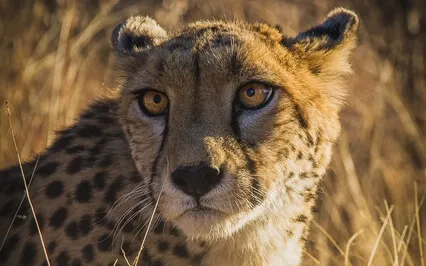
The faint colored swishing of a tail,
Of a cheetah's tail that looks almost the same as the swaying grass.
And if you've ever been in those parts,
I've never,
I've been to Africa,
But I never was in the,
I was never in the safari.
But that's why you bring,
That's why you have a guide with you,
You know,
A guide who understands the unique landscape and the territory and the danger of those territories.
So primal awareness has something to do with what I came back from the Amazon realizing that we could say that I didn't have it,
But we could say it was just waking up in me,
You know,
Waking up in me.
And so again,
We've called upon,
You know,
All the support that exists in all the relationships,
You know,
All the vibrant lineages that we are connected to,
Whether you're reconstructing them,
Reclaiming them,
Or whether they're intact.
You know,
We're calling upon that wholeness to help to inform at least what I'm speaking so that people who are listening can help to gather the pieces and see if there's some relevance here for you.
And again,
This is the topic of my upcoming course called Primal Awareness,
The original quiet mind.
Laurie says,
Yes,
I agree there is danger,
We can't close our eyes to the full spectrum of life.
Exactly.
My favorite is when people say,
Oh,
I love nature.
I love nature,
But I hate mosquitoes.
Crack.
It's like,
You know,
And when we think about,
Have you ever,
You know,
Walked kind of in a mysterious body of water,
Maybe you're in a lake and you can't see the bottom and you're,
You're kind of like pushing your toes down and you're not sure if it's going to be slimy or spiky or maybe something's gonna bite you.
And you can't see it.
You don't,
You don't know what's there.
And for me,
It strikes a kind of primal fear in me because I've never seen it.
And it makes for a really beautiful analogy of being able to illuminate,
You know,
When you can see things,
And you can see what it is,
And you know,
See clearly and see if there's anything to be afraid of.
So we're approaching the top of the hour and this talk has kind of,
Uh,
Merged in,
In a ways that I'm satisfied with.
And in some ways I'm kind of like,
Hmm,
How are we going to tie this all together?
Because there's just scratching the surface of what I'm trying to,
Uh,
Propose here.
Why don't I read the,
Why don't I read the course outline maybe as a,
As a completion to this.
And I would love to read once again the course outline and I would really love your feedback for anyone who's out there listening,
You know,
A,
Is this relevant to you and why,
You know,
Which part of it is interesting to you?
And because I've never taught this material before,
I really am wanting to get the feedback and see what people's questions are,
What people's curiosities,
What people think is important or not important or agree or disagree with,
You know.
So this 10 day course offers a practical approach to quieting the mind.
That is a journey of indoor and outdoor practices,
Invitations to transform your everyday ordinary awareness into a path of deeper connection with your true nature and to the school of life that is to be found in the nature outdoors.
In its essence,
This course is written as an introduction to the topic of self awareness and quieting the mind.
It's good for new meditators,
But offers something rich for the seasoned meditator and explorer on the spiritual path.
By the end,
You'll have touched a place of quiet that you may have forgotten and rediscovered the magic of our animal like nature.
Over time with practice and curiosity,
The quality of your moment to moment awareness,
Both indoors and outdoors will grow,
Refine and deepen.
May it support you and bring great richness to you on your great journey.
So I have an invitation for you.
And basically,
I think today is Wednesday,
So we're going to keep with Wednesday for this course topic.
But because our summer is almost over,
I want to be able to,
I may increase the intensity of these talks and I'm actually going to post them as well so people can catch up.
Great.
So what I want you to do is I want you before you before you go walking,
Actually,
I'm going to ask you a question when you walk,
Do you find your like,
What do you find yourself paying attention to for me,
When I'm walking my dog?
There are moments where I'm like,
Oh,
Like,
I feel I feel so in it.
And there are moments where I'm just like,
I realized I've been in my head for like the last 20 minutes.
Because often,
You know,
I'm walking and I've got extra energy.
And I'm starting to think about things.
And it seems like it's almost a normal thing to do while you're walking,
Right?
Like it's like,
Oh,
I'm walking,
I'm thinking about things,
I'm processing things.
And actually,
One of the things that I dislike the most is when I'm walking outdoors,
And I'm chatting with a friend,
It's like,
I want to be paying attention more to the,
You know,
To the surrounding environment,
To the language to the,
But I have to like,
I'm talking with my friend,
And it's very hard for me to do both.
Well,
That's perfect,
Jennifer and Cindy.
So maybe this may be already very natural for you.
So for those of you,
What I want you to do is,
When you go when you go to this natural space today,
I want you to imagine that,
That the natural world is having a very good conversation already.
It's having like a great,
Great conversation.
And as you walk,
You know,
From wherever your car,
Standing on to that,
Those territories,
I want you to choose some times and,
And make the intention of walking as to not to disturb,
Not to interrupt that conversation.
And notice if it changes the way you walk,
And changes the way you step,
And changes the way you listen,
And changes the pace,
And you know,
Even the direction of how you walk.