Hello everybody,
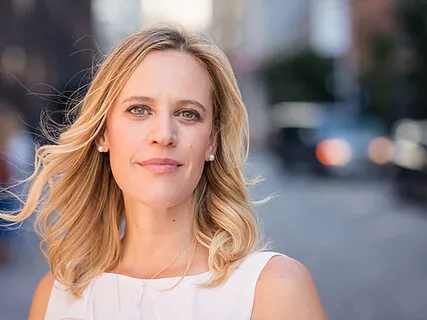
This is Hayley Evans and welcome to my podcast.
This is the Basics of Meditation podcast where I will be teaching you how to meditate and getting you to the first five minutes.
Getting to the first five minutes is really important because if you can sit long enough for five minutes,
It's much easier to build your practice from then on.
I have been learning about meditation,
Religion,
Spirituality,
Quantum physics for probably the last 15 years and that all really adds up to who I am and the decisions that I've taken in life to this point.
I started learning about meditation probably a good 10 years ago when I actually got my first teacher and we actually sat down for a period of time.
I was trained in the Buddhist tradition which is mostly quiet meditation,
Sometimes with chanting,
Sometimes with singing bowls.
My current daily practice is anywhere from five minutes to an hour or two hours.
I like to get at least one meditation in per day but generally I will do two meditations,
One in the morning and one in the evening.
Generally I can get a really good sitting practice in the morning but given my schedule sometimes that really is just five minutes before I leave,
Making sure that I'm grounded,
That I'm connected and that I'm going forward with some kind of intention and that I'm also going forward with awareness and consciousness to be amongst the people and be amongst the city.
If I don't get a proper meditation in the morning then it is really important that I do it in the evenings.
Meditation for me not only is a way to ground and connect but it's also a way for me to release the day and to release anything that I might have sort of attached to or attached to me and making sure that I clear my mind.
I am doing this meditation A because it makes me really happy and secondly I would love to help people break through the five minute mark and get to an experience where they're sitting and actually meditating and feeling the benefit for themselves.
And perhaps they can pay it forward,
They can set up little meditation groups with their friends or easily go and teach other people how to meditate.
So why meditate?
There's roughly 7.
6 billion people on this planet so technically that's roughly 7.
6 billion ways to meditate.
Meditation is unique.
It's very basically stringing together several breaths towards the stillness of being and connecting to oneself.
It is a way to quieten your mind,
To stop thoughts,
To stop resistance and allows you to see,
Feel,
Know your truth,
The alignment with your higher self.
Today I'm going to be going through how I'm going to set up the meditation as well as the positions,
How to breathe and how to get to that five minute mark.
So first things first,
How to sit.
There are generally two ways to do a sitting meditation.
You're either sitting on a chair with your feet firmly on the ground or you're sitting on the floor with your legs crossed in sort of that typical meditation position.
To start off with,
It's really important to be comfortable.
That should be the number one factor and priority for now.
Sitting on the floor with your legs in lotus or crossed is quite difficult from the beginning because it's easy to get sort of tied up in that position so I really do recommend to start off with that you're sitting in a chair and that you have your feet firmly planted on the ground.
So if you're in a chair,
As I said,
Feet firmly planted on the ground,
Get as much space as possible with your foot on the ground,
As much of your foot touching the ground.
Then you should have a 90 degree angle at your knees and then with your butt on the chair wiggle it around so that you're perfectly square on the chair.
Your sit bones are perfectly even on the chair.
And then sit up straight,
Wiggle your shoulders around,
Get your shoulders back and relaxed.
Sometimes it's helpful to imagine that you have a rod going down the back of your neck through down your spine.
You know,
I think it's really important,
As I said,
To be comfortable in the beginning.
So it really is a focus on just sitting up straight,
Being able to get sort of the space and the air in your chest and having nice straight alignment from the top of your head all the way down to the base of your spine.
Your shoulders should be relaxed back so that your chest is open and down.
But keep in mind it needs to be relaxed position.
Again,
Your neck should be in neutral with your head in a neutral position,
Very gently being able to look forward.
If you are sitting on the floor in the cross layered or lotus position,
Just make sure that your butt is very evenly on the floor on your sit bones and that you have that same alignment up through your back,
Through your spine,
Through your neck to the top of your head.
Right,
So now we're ready to start breathing.
Meditation is really all about breathing.
And there's tons of benefits associated with meditation because we're actually getting in full breath,
We're getting in enough oxygen,
Which really helps our bodies heal and be at their best.
For meditation breathing,
You want to be able to take full breaths in and full breaths out while still being relaxed and not either holding too much or pushing the breath out.
The easiest way to do this is to envision a baby.
When babies breathe in,
They expand their stomachs out to capture all the air and fill that entire space with air.
And when they breathe out,
It all relaxes down again to the spine.
That's how we're going to breathe for meditation.
So in your position,
You're going to breathe in and allow your belly to expand,
Filling that entire space of your abdomen with clean,
Fresh air.
You're going to let that open up into your chest and let your chest expand with air all the way up through your shoulders,
Through your neck and to the top of your throat.
When you get to the top of your throat,
Gently and easily release the air.
Feel your neck relax,
Feel your throat relax,
Feel your shoulders relax,
Falling down and backwards.
Feel your chest relax,
Feel your diaphragm relax and feel your abdomen gently and easily relax down to the spine.
In the beginning of meditation,
It's hard to figure out how much time you should be spending breathing.
It's really again important to focus on comfort,
Making sure that you're breathing in and out in the way that I mentioned and not losing breath or forcing breath.
Ideally,
You would want to get to the point where your inhale and your exhale is around 17 seconds altogether.
And 17 seconds is important because that's how much time it takes to change your energy and to transmute the energy around you.
For now,
We're just going to focus on comfort.
So don't bother about counting how many seconds you're inhaling or exhaling.
Just focus on getting the air into your abdomen,
Filling that space with air and then gently and easily relaxing it so that the air naturally leaves your body.
Take a few seconds to practice.
Breathing in and letting air fill your abdomen,
Your chest and up through your throat and then breathing out,
Letting everything relax and fall to the back of your spine and naturally exhaling all of that air.
So we've got the breathing down.
We're comfortable in our chairs.
Now we get to the nitty gritty,
Those thoughts.
I think where most people will get hung up with meditation is that they feel that having thoughts through their mind is wrong and they're doing meditation wrong.
You are not.
Every meditation practitioner has thoughts in their mind and it really is just a practice to understand which of those thoughts actually mean something versus which of them are noise and can be dealt with later.
I highly recommend that whenever you meditate,
You focus on a comfort and having some water next to you,
A blanket or something to keep you warm and also a pen and some paper,
A journal to write down some thoughts that come to you while you're meditating.
As I said,
There's generally two types of thoughts that will pop in your head.
There's going to be those sort of nagging thoughts telling you that you need to do something.
Once meditation's done,
You're going to have this list of things that you need to do.
Instead of trying to chase them out of your mind,
Just take a moment to write them down and then let yourself know that you've captured it.
It doesn't need to stay in your brain and keep going because you've captured it.
You will get to it once meditation is over.
And then there are those thoughts which really don't mean anything.
It's when people pop in your head,
You see their faces or you see their names or it's just random stuff like chores or grocery lists.
This is the kind of stuff that you really don't need to pay attention to.
And this is the noise that you need to actually focus on and get out of your mind so that you can sit in meditation.
My recommendation for these is to acknowledge each one of them and say,
Hello,
Thank you,
Goodbye and let them leave your space.
It will take practice.
You might have to say hello,
Thank you,
Goodbye several times for a thought to get the notion that it's done and it's time to go.
Allow yourself the patience to be able to do that for a little while.
Allow yourself the time to sort of spend maybe the first five minutes of your meditation actually grounding and connecting with those thoughts and identifying which ones need to be written down versus which ones need a hello,
Thank you,
Goodbye.
And that leads to patience.
Have patience with yourself.
Meditation is not a perfect practice.
Every single meditation is a little bit different and is a little bit more perfect than the one before.
But the key here is patience and allowing yourself the time to learn and to start a practice.
Give yourself permission to mess up,
To completely mess up where you don't meditate for that day.
Don't try and sit there trying to force a meditation because that's actually going to give meditation and negative connotation with you.
So if you can't get it for that day and you've tried sort of five minutes and you just can't sit,
Get up,
Walk around.
Don't worry about it.
Come back tomorrow or an hour or two later and try again.
And finally,
Ending your meditation.
It's really important to come out of meditation slowly and giving your body and your mind a chance to get back to the environment that it's in.
So at the end of the meditation,
Slowly open your eyes.
Allow sort of what's going on in the scene around you to come through your eyes and then for your body to sort of come alive and come back to that scene slowly and quietly.
Don't jump up immediately and get going again.
The ending of meditation is just as important.
Many people will put their hands in the prayer position and bow their heads.
This is honoring the time that they took for themselves,
Prioritizing themselves with the meditation with the moment to be quiet and to truly connect with our bodies,
With our emotions,
With our minds and with our spirituality.
If you're meditating with a group of people,
It's also a good idea to do that sort of honorable prayer bowing,
Acknowledging that they were part of your practice and they also created the energy for you to have a successful practice that moment.
Alright,
So now you have all the basics.
Let's get started.
Make sure that you have your phone next to you on silent and not vibrate and go to the timer and make sure that you're setting the timer for either two minute,
Three minute,
Five minute windows.
Choose the alarm and make sure it's a sort of gentle alarm that's not going to startle you when you come out of this.
For today's purposes,
I will be tracking the time and letting you know when it's time to open your eyes and come back to awareness.
We're going to start off with a two minute meditation and the focus in this two minutes is really just to practice breathing.
So get comfortable.
If you need to get up and get water or get a blanket or that pen and journal,
Now's the time to do it.
Alright,
So in your sitting position,
Make sure that your feet are firmly on the ground with as much foot cover on the ground as possible,
That your knees are at 90 degrees and that your butt is sitting squarely on the surface,
Whether it's a chair or the floor,
Squarely on your sit bones,
That you are sitting up straight and comfortably,
Not rigid,
That your shoulders are back and down,
Your neck is straight but relaxed and neutral and your head is in a neutral position with your eyes looking ahead.
Gently close your eyes and get ready to breathe in.
We're going to take one inhale and one exhale.
On your next inhale,
You're going to breathe,
The baby breath.
So breathing in from the bottom of your abdomen,
Allow it to expand and allow it to fill with air,
Fill that entire space with clean air,
Moving up through your diaphragm,
Through your chest,
With air filling all of that space,
Filling your lungs,
Filling your heart,
Moving up through your shoulders and up through your throat to the top of your jaw.
When you get to the top of your jaw,
Relaxed and gentle,
Exhale out.
Let your body gently expel the air,
Letting your throat,
Your neck relax,
Letting your shoulders relax and fall down and backwards,
Letting your chest relax and fall down to your spine,
Letting your diaphragm relax,
Letting your abdomen relax and back to its natural position as all the air moves up and out.
And then get ready for your inhale,
Expanding out your abdomen and creating the space,
Filling it with air,
Filling your abdomen with air,
Moving up through your diaphragm into your chest,
Filling your lungs with air,
Filling your heart with air,
Moving up through your shoulders into your throat,
Through your neck filled with air till it gets to the point of your jaw and then slowly and relaxed,
Gently letting the air leave your body,
Allowing your neck to relax,
Your throat to relax,
Your shoulders fold back and down,
Relaxed,
Your chest relaxes and falls flat against your spine,
Your diaphragm relaxes,
Your abdomen relaxes and falls back against your spine with less and less space and less and less air in your abdomen.
Alright,
Slowly come back.
You just did a little over two minutes of meditation.
How did it go?
How was the breathing?
Were there any thoughts jumping in your head?
Take a minute to get comfortable,
Take a minute to write down anything that was jumping through your head that wouldn't let go and get ready to do three minutes of meditation.
Over the next three minutes I will guide you through the first two minutes and then leave you to the last minute.
Just focus on your breath,
Breathing in and breathing out and then if there are any thoughts remember to tell them hello,
Thank you,
Goodbye to each one.
So in your relaxed sitting position you're going to start with an inhale,
Breathing in,
Allowing your abdomen to expand out and creating space for air and filling that space up with air,
Allowing it to move up through your diaphragm and into your chest where your chest expands and your lungs fill with air,
Your heart fills with air,
Your shoulders,
Your throat is full of air all the way up to the top where it meets your jaw.
When you get there,
Relaxed and easily let the air escape.
Let your neck relax,
Let your throat relax,
Let your shoulders relax as the air gently moves up and out,
Let your shoulders relax down and back,
Your chest relaxes and falls back to your spine.
Through your diaphragm,
Relaxing,
Your abdomen relaxes as the air gently leaves and your abdomen falls back to its relaxed neutral state against your spine and getting to the bottom of your abdomen where it meets your hips and breathing in to allow space and letting air fill the space,
Allowing your abdomen to expand as the air fills in and moves up through your diaphragm,
Into your chest expanding out,
Your lungs fill with air,
Your heart fills with air,
Your chest is full of air as it moves up into your throat through your neck all the way to the top where it reaches your jaw and slowly and relaxed let the air escape,
Let your neck relax,
Your throat relax,
Your shoulders relax down and back,
Your chest relaxes,
Falls to the base of your spine,
Your diaphragm falls and relaxes,
Your abdomen relaxes,
Goes back to its neutral state,
Flat against your spine as all the air moves out and up,
Allowing all that space to go back to its natural until you're ready for another inhale,
Breathing in and breathing out on your own now,
Remembering to fill the space with air and see that air filling up all through your abdomen,
Your chest and your throat and then seeing that air leave gently and quietly without being forced,
Dealing with any thoughts that come with a hello,
Thank you,
Goodbye,
Slowly open your eyes,
Let the picture that your eyes show you inform your body,
Let your body gently and slowly get used to its surroundings again and continue to just breathe normally and easily.
So that was over three minutes,
Just over three minutes of meditation.
How did you do?
How was the breathing?
How were the thoughts?
Are you ready to go five minutes?
So for the five minute meditation,
This is the one,
No need to get anxious,
You can do this,
You've already done five minutes,
Just broken up.
So we're going to do five minutes all in one sitting.
I'm going to guide you first to two minutes and then I'm going to come in and out at different times just to bring some focus back and help you remember to breathe and to say hello,
Thank you,
Goodbye to the thoughts.
So if you're ready,
Let's get going.
Again,
Getting comfortable with your position with your feet firmly on the floor,
Getting as much space on the floor,
As much contact with the ground,
Having a 90 degree angle up through your knees and getting wiggling on your butt so that you get comfortable and your sit bones are naturally and equally on the surface,
Whether it's a chair or the floor,
Sit up straight,
But comfortably not rigid.
Your neck is tall and comfortable and your gaze is forward,
Neutral.
Gently close your eyes and prepare for the inhale.
From the bottom of your abdomen,
You're going to expand your abdomen out and fill that space with air.
The air naturally comes in and fills the space,
Moving up through your abdomen,
Through your diaphragm,
Up through your chest,
Through your lungs,
Through your heart,
Up through your shoulders,
Into your throat,
And to the top where it meets your jaw.
When you get to that top,
Gently relax and let the air escape.
Let your body naturally relax so that the air releases.
Let your throat relax,
Your neck relax,
Your shoulders relax,
Falling down and back,
Your chest relax,
Falling back to the spine,
Your diaphragm relaxes,
Your abdomen relaxes,
Falling back to its natural position where there's little to no air,
All the way down to the bottom of your abdomen where it meets your hips.
Breathing in,
Fill that space with air.
Allow your abdomen to expand to create the space that you can fill with all of that air.
Allow it to move up through your diaphragm,
Into your chest,
Expanding your lungs,
Through your heart,
All the way up through your throat to where it meets your jaw.
And then exhaling out,
Allowing your jaw to relax,
Your throat to relax as the air gently leaves,
Allowing your shoulders to relax and fall backwards and down,
Allowing your chest to relax and fall to your spine,
Allowing your diaphragm to relax,
Allowing your abdomen to relax and for that space to get smaller as the air leaves,
Gently releasing and relaxing.
Slowly breathing in and on your own now,
Focusing on your breath,
Your inhale and filling that space of your abdomen and your chest with air all the way to the top of your throat.
And then releasing the air,
Letting your body relax to its natural state against your spine as all that air leaves,
Focusing on your breathing.
That's all.
Breathing in,
Breathing out,
Letting those thoughts go with a hello,
Thank you,
Goodbye.
Letting any of those thoughts go,
Hello,
Thank you,
Goodbye.
Coming back to your breath.
Breathing in,
Breathing out,
Allowing your body to feel the rhythm and focus on air,
Air moving in,
Air releasing,
Slowly,
Gently allowing the body to do what it does naturally.
You're just breathing.
Bring your awareness to your eyes and gently open them,
Allowing the scene around you to come into your body.
Gently move your fingers,
Gently wiggle around in your chair or in your seat.
Come back to being present in the surroundings that you are in.
Gently and quietly bow your head,
Hands in prayer and give thanks for this moment,
For this time that you have prioritized you and you alone.
So congratulations everybody.
That was a five minute meditation window.
How did you do?
How was your breathing?
How were the thoughts?
You did really well today and I really hope that you're now comfortable with meditation,
That you can go forward and practice at least one or two more times this week.
Just give yourself five minutes to get into the breathing and to let the thoughts go with hello,
Thank you,
Goodbye.
That's it for today.
Thank you so much for listening.
If you have any comments,
Questions or would even like to get in a discussion about this with me,
Please feel free to reach out.
You can email me or visit my website,
Haleyevans.
Com.
I would love to hear your feedback.