Hello everyone,
And thank you for listening to BrainFruits,
The podcast on woman change makers.
I'm your host,
Hannah Becker.
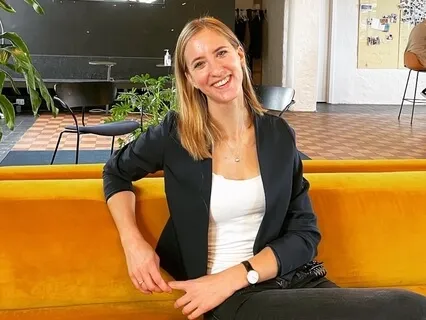
And today I have the great pleasure to introduce you to amazing Christina Tsai.
Christina Tsai is a solution engineer at Salesforce.
She's also the vice president of the Salesforce Woman Network.
The Salesforce Woman Network has the mission to empower females in tech and create greater advocacy to counterbalance gender inequalities in the tech industry.
Christina has previously also worked for Uber,
Adecco and Vodafone.
Together with Christina,
We will discuss how to overcome gender inequality in the tech industry.
Welcome,
Christina.
Hi everyone.
This is Christine.
So nice to have you today on the BrainFruits podcast,
Christina.
Really big,
Great welcome from our side.
It's a pleasure to have you as a woman that leans in and takes the gender gap in the tech industry seriously.
Can you tell us a little bit about your career path in the tech industry?
I finished my master in 2018 and ever since then I moved to Hong Kong to work for ERP system and now that work for Salesforce.
So previously,
Like even in my internship,
I also worked for,
As you mentioned,
Like Uber,
Vodafone.
We have the paper that was led by Accenture and Girls Who Code that showed that 50% of women abandon technology careers by the age of 35 and that women are leaving tech roles at a 54% higher rate than men.
There are only 21% of women in the study that said that they believe the technology industry was a place they could thrive in.
What are some of the struggles that you experienced as a female in the tech industry?
35 years old,
It's kind of like a threshold,
Like for women to actually form a family,
Give birth to a child.
So then that's one of the reasons why that they consider like not further that go for executive role or moving up.
In my industry that I will say,
This is also a very open thing.
For example,
Like my role,
I need to attend a different meeting,
But then also that I need to do proof of concept.
So in this sense that that would be you're doing the project,
Which is very intense,
That you're just doing whatever client told you to do to deliver it.
So client was set a strategic goal.
Then you have to manage to do it.
It's actually required a really long time when a project's going on.
And that's the same thing.
Like when the project is done,
Deal with sign.
When you move to the implementation part,
It's actually for a center or deployed or that's a,
Or PWC,
The implementation time is also very,
Very long.
So think about that.
If you're going to strike the walk,
Like balance between it,
Especially nowadays when tech industry always say it's okay that you can work from anywhere,
But when you work from anywhere or only chasing after the deadline of the project means that there's no stop along the way.
So then for most of the women,
If you have to struggle between your family,
Your work,
It's actually pretty hard.
Actually with this cultural angle that you're providing.
I mean,
If we look at Hong Kong,
The major disparities there are quite striking.
We can see that some governance subsidized universities in Hong Kong have a female representation in engineering and technology of just maybe 30%.
If we look at,
I mean,
The place to be Silicon Valley,
Only 11% of executive positions are held by females.
So what does this tell us about the technology industry's effort to become more inclusive and diverse?
So I would say we're doing slightly better.
It's like 33.
6% of the women in our industry,
In our company.
So one thing I do feel it's very important for tech industry to be more inclusive is you have to recognize the work that we do.
The reason why that I started this woman's network in Hong Kong for the whole greater China can say your wellbeing is actually impact your productivity as well.
And we do notice to say in greater China,
Yes,
We have last female employees.
For example,
Like in my team,
When I just get on board as a solution engineer,
My manager told me that I'm actually the first female in years to come to this team because there are not many people want to be a solution engineer.
That not to say because the workload,
But also the fact that you have to stereotype that as an engineer,
You're supposed to be a guy.
So as a woman,
Why do I want it to take a title as an engineer?
That's why we host lots of different lunch and learn to empower that the woman in our company saying that internally we have this executive can reach this level,
But externally we also have lots of guests sharing talk about how they reach the level here.
And also another thing about equality is when we talk about equality,
It's often the case we think about gender inequality,
But the truth is the equality could be also mean racial inequality in Hong Kong.
We have lots of aspects.
So then,
And also color people as well.
And even for myself that I'm from Taiwan,
I'm not exactly local.
So then when you started off,
Then you,
When we talk about equality,
It shouldn't be only focused on women like male and female,
But also focus on different race and also like different backgrounds being more diverse.
I think that's very important.
There should be no inequalities,
No matter what your age is,
No matter what your race is,
No matter what your skin color is.
And of course also not what your gender is.
So that's really important point to make,
And this is exactly where,
Where brain fruits wants to,
Wants to make a difference.
Talking about the initiative that you're heading,
The Salesforce Women Network.
This network amplifies the progress of women at every step of their journey.
You can see that this network achieves this through like professional and personal development,
Allyship,
Supportive connections,
And taking action on gender equality.
It is actually one of the largest equality groups.
It is based on some common values,
Empathy,
Trust,
And wellbeing.
Can you tell us a bit more what the network really is about and what its impact is so far?
We found this network in Greater China,
But it's not a new idea that for our company.
So Salesforce Women's Network is actually one of the oldest and biggest in our equality group.
When you mentioned about that,
One of the core values,
Well-being,
I think one thing that we also talk about before it is staying in Hong Kong.
It's many people just chasing after deals and deals that they never actually take a look at how good their life it is or how they feel that mentally,
We also feel like that's very important that not just help our colleagues to like maybe take a break,
Do some lunch and learn,
But also like to reflect about that,
What is their purpose.
One of the things that we do with the lunch and learn is we bring like different nonprofit organization.
So one of them is actually called Mother's Choice.
So Mother's Choice is a local charity group that they take the teenage girl who got pregnant,
But they have nowhere to go.
So then they take all those young mother and then to give them a place for them to at least have a choice about whether they should keep the kids or whether they're going to let it go.
And then if they keep the kids,
What happened to the kids that once the kids is delivered and then help that all those kids to go to different foster family or even just stay inside the organization till that they are eligible to go to other organization.
It's actually very reflecting for most of the women in our organization,
Because you talk about that nowadays as a woman,
Even for those teenage girls that you do have a choice and for us that you're empowering that all those women set to know more about.
It's okay that you have this choice or it's okay that you're in this situation and we are here to help.
So at the end of the session,
Of course we do the donation,
But then also another thing is we do the pro bono project for them.
I think mentally and also intellectually that we bring more and more information,
How much that we can do to help the society.
That's one.
And also another thing is that we actually do bring people to those voluntary events for them to take on the action and actually make it work.
This interplay of business and society just shows really nicely you create value for your business where people,
Especially females can learn.
And then you have a positive impact on society by collaborating with public or NGO organizations.
So that's really,
It's really an inspiring network that you're building.
I'm talking a bit,
Yeah,
Can you tell us a little bit more about any setbacks that you experienced personally on the way to become the head of the women's network and also how did you deal with them?
Sad facts,
You made the way that how we found it or yeah,
The experience,
Any struggles,
Any hurdles that you had to overcome in order to become the head of these of the women's network.
But then I think the most difficult part is actually bringing awareness to people for people will be why should I spend one hour with you guys to do lunch and learn?
I can actually like spend lots of,
I can actually spend a really fancy lunch without learning.
I can go to the restaurant and not listen to you guys.
Why should I even like have my lunch,
Like staring at the Zoom,
The meeting,
Or even a Google meeting just to listen to these people.
So for each of the events,
We make sure that we will have to get the stakeholder,
The major influencer in our organization,
Which is either our boss,
Original head,
Or the regional managing director to get them on board.
But again,
That also have to convince them like this is worth your time because most of those people are really busy actually.
We always think about as an audience,
What I'm expecting to get out of it and how could I make sure that each of the events can actually reach the target that say,
Make people reflect about what they're doing or actually bring the efficacy of that.
And also another thing is to align with all those NGOs because sometimes the NGO will look great outside,
But then deep down that when,
For example,
When you ask about their impacts or what kind of message you would like to make,
Well,
In Hong Kong,
Since capitalism is everything that people ask about money,
Ask about donation,
They probably only care about whether those people are going to donate.
So then the communication between them,
It's also very important that they understand that you're here to share your experience,
Not exactly expecting any return.
What are some of the key success factors that other companies could learn from this Women Network?
Like what would you advise to another company when they were to ask you,
Okay,
We are super interested in this Women Network,
We would like to implement it.
People who actually run an organization should have the true belief in that because we do see that probably in other region that the reason why people join Women's Network is because they would like to get some,
I don't know,
Visibility within an organization since you're going to get the fancy title.
So then in that case that people run the events,
Of course,
We'll have different ideas about what should we do,
Right?
So that's A.
And also another thing is you get to make sure that not just the organization,
The organizer that truly believe in this,
But also like they have enough resources that they can pour around.
I'm actually going to do a global equality leader program,
Which we do it together with Europe and also US together.
So then you can see that it's a global level that we do hire external speaker or that the organizer to give us a training and to make sure that we are actually doing it well in our own region.
So I will say that it's not the bottom up,
But also top down.
You don't have the executive buy-in.
It can be very tricky to start something like that as a,
Let's call it,
Grassroot movement from the bottom,
From the bottom up.
So it's great to hear that in some of the tech companies out there,
Executive leadership is taking this issue of diversity so seriously.
And as you say,
To have the belief and the motivation to keep something like that running.
And also another thing that I wanted to point it out here is individually that how much would you willing to invest in this because everyone in the organization already have their own target to go after.
So that say that yourselves,
You have your KPI to go after you have your project to go on.
So then how much would you like to invest in this?
As you say,
We only have limited time and energy available,
And it's upon us to really make priority list to say,
This is important for me.
I want to dedicate my time to it and be very honest with that dedication.
Having heard now about your tech and success story,
Do you have any recommendations,
Any brain fruits that you would like to pass on to our community of listeners,
If they would like to pursue a successful career in tech?
I think one thing very important is you shouldn't have anyone,
Even yourself to underestimate who you are,
How far you can go.
I feel that in tech industry and say,
For example,
I used to be with Uber and I also like do the city lunch for them,
Which means to say,
I find out upon a ship in the city.
And then after two,
After one or two months,
We have to get the business on the road.
So then I also deal with recruiting one guideline.
I get it from HQ as meritocracy.
So meritocracy of the me.
So we wanted to find a higher cheaper and at that point that to be honest,
That if you look at those top one percent students,
Most of them are actually males.
So I feel like as a female that when you walk into it,
When you realize that most of the candidates that eight out of 10 of them is actually men or guys,
You just have to tell yourself that even though this is an engineering role or even though this is a more technical role,
You are as equal as others.
So you have to,
You got to believe in yourself first.
Are you smart enough?
Are you good at computer?
Do you play video game a lot,
Even though that's irrelevant,
But then yes,
You got to believe that you got something like,
Which is different from all your male competitors.
When that's up,
People focus a lot on gender inequality in tech industry,
Especially I will say,
Don't even,
I know it sounds ironic since I'm the one running Salesforce woman network,
But then I always say that don't even think about that.
Cause whenever you have the idea that there's an inequality there,
You probably were magnified that all those side effects over there,
You probably will be that,
Oh,
Is it because the CTO doesn't,
My client doesn't like me because they think I'm a female,
I'm not professional enough.
So the choose can only be like,
Oh,
Maybe they just see your title as a associate that already think that you're not that professional,
Et cetera,
Et cetera.
So then just don't magnify that the whole inequality thing that think about who you are as a person,
How capable you can actually succeed in your job and just kick up.
Wow.
Yeah.
Very inspiring.
That is really nice that you say that this belief in oneself is,
You know,
So,
You know,
Something that I think also from our social structure is very much underestimated in the European context.
I mean,
It comes a bit more from the U S side where it's all about,
You know,
You've got to believe in yourself and you can achieve whatever you want to do.
And I think this is something,
I mean,
We know from studies that females tend to underestimate themselves.
So I think it's good to just add on an extra 50% to your confidence and say,
Maybe,
You know,
I think I don't have all the qualifications ready yet,
But I'm still going to apply it.
I'm still going to go for it.
I actually would like to share a personal story of mine.
Yes,
Please.
Being a solution engineer,
Like people expect you to be super technical since you're not a salesperson.
But the first day actually,
Actually,
Even before I joined Salesforce at doing a recruiting session,
I already got a feedback from my hiring manager saying that Christine,
That you have a man,
You have amazing background,
But then you don't have computer science degree and you don't,
You don't,
You're not,
You're not software developer.
So we worry about your technical side.
So even for me that ever since I get the job,
I kind of like,
I second guess myself all the time that whether I'm technical enough,
Whether I'm professional enough,
Then I asked myself,
What is the technical skill I need to get?
And is it irrelevant to my job?
As I said in the beginning,
Solution junior,
Yes,
We do have to get some dirty work done,
But being in that the most important part is to help the salesperson sell the product close to deal.
Yeah.
And that's what I'm good at that from a business angle,
Like I know what clients need.
So I just tell the really good story for the technical part.
I can get help from the team and always remember,
Like,
Never be afraid to ask for help.
Cause I know that that's also one thing I learned from the woman's network panel.
Section is most of the topics that could be female is actually they say when it started,
Because they don't want to keep,
They don't want people to think that they are female.
That's why they're last.
That's why at some point they never actually ask for help.
They don't want people to think they're weak just because they are women.
Yeah.
One more little thing is to always look at your strengths.
Cause I remember the day one,
And when I joined a work,
My manager immediately tell me that the reason why we hire you,
It's not because your technical skill for sure,
But it's your business acumen,
Which it's really hard to foster that you can,
You can ask it,
You can ask a person to take a computer science course,
But you can ask a person to be more observant or to be more business driven that along.
That's a nice,
That's a nice ending line.
I do believe looking more at your strength and fostering your strengths can boost your confidence and help you to leverage forward.
Thank you so much for being part of brain foods.
It was a pleasure to have you Christina.
It's actually my pressure to join this session because I feel,
Um,
Along the sharing that I also figure out that how I made it to today.
And I also figure out that even though we're just a small individual in a society,
We still can have a lot to share and to empower.