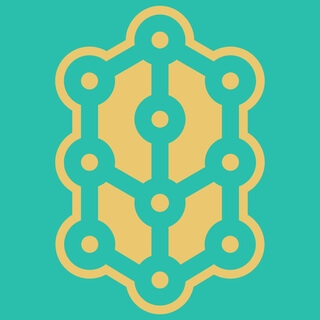
This is a talk on the Qabbalistic Tree of Life,
Which encompasses the ten sefirot,
Known as divine aspects.
And the Tree of Life is a very important image in Judaism.
Trees are often compared to the righteous ones.
The Torah,
Our spiritual wisdom,
Is often compared to trees.
And part of the spiritual practice is learning about the wisdom of trees,
Of what it means to be rooted in the earth and have our branches reach up to the heavens.
And there is a teaching that says that humans are actually an upside down tree,
That our roots are actually in the spiritual world and our fruits are to the earth and to this material world.
So part of the Qabbalistic Tree of Life is this framework to understand our spiritual evolution.
And Qabbalah in general was very interested in creating frameworks for understanding who God is.
So it's not enough to simply believe in God or the life force or spirit or however you want to refer to God.
But actually we want to invest in the learning with precision and articulating the nature of God.
How does God show up in our lived world?
So there are ten sefirot.
Sefirot translates as divine aspects and they make up all of creation.
So they are found in our bodies,
In nature,
In relationships,
In the universe itself.
It's like the blueprint of creation.
And part of what we do when we study the Tree of Life is that we learn of these divine aspects and the ways that they are creating and relating to each other in our creation.
The ten sefirot can be divided into what is known as the upper three and the lower seven.
And the upper three are known as the conscious states,
The beyond this world.
They are in the mind.
And the lower seven are about the emotional reality that is creating that material reality.
So in the upper three we start with Keter.
Keter is known as the crown.
It is sometimes referred to as insof,
Which means beyond the beyond,
The infinite.
Or nothingness,
Right,
The emptiness and the infinite are actually reflections of one another.
And Keter,
It's the point to the Godhead.
It's the direct access to God.
And that is associated sometimes with our crown chakra.
It is this place where we begin the flow of the channel of light.
It's that divine point.
The second sefirah is Chokhmah,
Which translates to wisdom or the point of beginning.
And Chokhmah is all about the wisdom that it created the world.
It's actually this foundational imprint.
And in the Qabbalistic tree,
It is divided into three columns.
So there's the right,
There's the middle,
And there's the left.
Traditionally,
The right is associated with the masculine.
The left is associated with the feminine.
And the middle is the integration.
So Keter is that middle point where it all starts.
And Chokhmah is the first on the right side.
And everything on the right side is represented by the masculine.
And we can think of it like a seed.
It's like a lot of power condensed into a small seed.
And that is Chokhmah,
That is wisdom.
It is the potency of wisdom in a small seed that then ends up creating the whole world.
And then on the other side,
On the left side,
The third sefirah is Bina,
Which Bina is understanding.
And Chokhmah and Bina,
They function together.
And you can think of them as two representations of this intelligence,
Chokhmah being the masculine and Bina being the feminine.
And the masculine column can be understood as seeds,
Or these condensed,
Small,
Potent kernels,
While the feminine column are more expansion states.
They open up into the cosmology and into creation itself.
So Chokhmah is the seed of intelligence.
But Bina is understanding,
And I like to refer to it as dimensions.
It's the building of dimensions through the kernel,
Through the seed of Chokhmah.
So it's the expansion of all that Chokhmah is.
So that's the upper three,
Keteh Chokhmah Bina.
And then we move into the lower seven.
The first of the lower seven is Chesed.
Chesed being translated as love or compassion or grace.
It is this quality of water that is creation.
It is what allows for the world to be created.
It's the first point in the emotional dynamic.
So it's the first of the lower seven.
And it is all about this overflowing compassion.
And it is on the right side,
Known as the masculine side.
So again,
It's that seed,
That seed that is what the feminine ends up expanding on.
And we see that in Gevurah,
Which is our next Sfira,
Which is translated oftentimes as boundaries or restrictions or power or strength.
It is that which contains the flow of water,
The flow of love.
So the analogy that is often used is around the river banks.
Chesed being the water that makes up the river and Gevurah being the river banks themselves that creates a container for the water to flow.
Without the boundaries,
Without the vessel,
Chesed wouldn't be able to survive.
So Gevurah is a delineation or this architecture of form.
And then we go into Tiferet,
Which is the next Sfira and it is on the middle column.
And the middle column are Sfirot of integration.
They take the right and the left,
The masculine and the feminine,
And they integrate them.
And Tiferet is actually connected to all of the Sfirot except for the last one,
Melchut.
So it is all about this connection.
It is oftentimes referred to as the heart center.
And it is where we feel that connection to all the different Sfirot and it actually harmonizes all of them.
And sometimes it is translated as beauty because when there's that harmony and that connection,
There is that sense of beauty.
Then we move to the seventh Sfira,
Which is Netzach.
And Netzach is all about eternity or endurance or victory sometimes it's known as.
It is basically that which does not change when everything else shifts.
So it's the quality that endures throughout life no matter what.
And that is on the masculine side.
And then we have its feminine counterpoint,
Hod,
Which is again that expansion of the seed.
And Hod is translated as splendor or majesty.
It appears in a lot of the prayers.
And Hod is the many forms that truth takes place.
So the way I like to describe Netzach and Hod is if we think of a color,
Let's say blue,
Right?
We know that there's this conception of this color blue.
Yet Hod is the quality that makes so many shades of blue,
Right?
There's so many shades of blue in the world.
Or you can think about it with the flowers.
There's so many shades of flower,
But still there's something called the flower.
So Netzach is the truth itself,
Right?
It's that color blue.
It's the flower essence.
And Hod is the many representation,
The infinite forms that that can take shape.
The next Sfira is Yesod.
And Yesod is back into the middle line of the integration.
And Yesod is sometimes known as foundation.
It is seen as the masculine side,
But it's basically the Sfira by which all the light,
It starts pouring from Keter and it moves through all the Sfira.
So Yesod harnesses the light before it brings it down into Malchut.
So Yesod is the foundation.
And again,
Because it's a masculine,
It's oriented as that seed and it is holding that foundation of that world.
And it's holding all of it.
One of the things that's important to remember,
It's not actually creating it.
And sometimes it's the masculine and the feminine.
The masculine is the more active and the feminine is more the receptive,
But it's actually in the receptive that we actually get the creation,
Right?
Because if we didn't have the form itself,
We wouldn't be able to create.
So the masculine sometimes is known as the content,
While the feminine is the form.
So Yesod is that content.
It's all the light.
It's taking in all of that energy,
But it's holding it.
And then Malchut,
The final Sfira,
Which sometimes is also known as Shekhinah.
Malchut means royalty or kingdom,
Queendom,
The divine presence.
I like to translate it as manifestation.
It is God's manifestation in the world.
It's the material manifestation of it all.
So Yesod takes all that light energy and places it into Malchut.
And Malchut,
Again,
Because it's feminine,
Expands into creation and is what creates the world itself.
So Malchut and Shekhinah,
Sometimes we get that phrase of Shekhinah is the aspect of God that dwells in the world.
So it's all pervasive and all of the world because it is what allows for the light to actually create this world.
So that is a little glimpse of how the tree of life works.
There are meditations for each Sfira that you can learn on your own time.
And hope you enjoyed this talk.