Welcome to the Wandering Sage from Home School.
Observations,
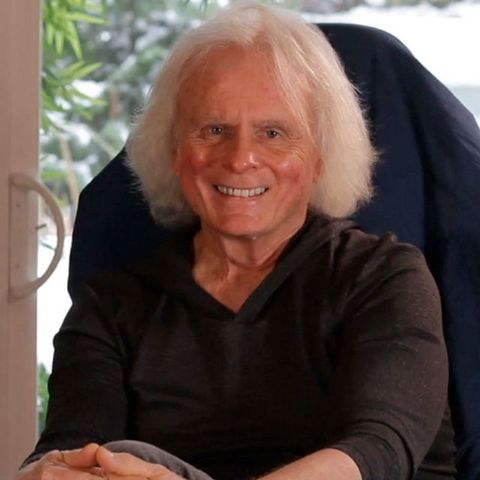
Sat Song and Meditations from Master Spiritual Teacher,
G.
P.
Walsh.
This podcast contains excerpts from G.
P.
's sat songs and public talks,
As well as meditations,
Audio blogs and music from his decades of spiritual teaching and healing.
Much of the material is G.
P.
Answering questions from sincere seekers of truth.
Welcome to the Wandering Sage from Home School.
May all beings everywhere end suffering and be happy.
Welcome,
Welcome,
Welcome one and all.
It is so good to see you.
It is so good to be here with you.
And I got a question that I wanted to take up because it's a it's for it's such a big one and I'm just going to cover it on a cursory level here to just to kind of try to add some more insight to it and maybe maybe just kind of clear up Renick's confusion because he had it well let me read the question to you this is the best way to do it.
He said,
I'm confused.
I was under the impression that true Buddhism and non-dual thought shunned the idea of lack,
Desire and thoughts due to magnifying the identity ego.
Yet our life is what we believe it to be?
We have free will to manifest through the law of attraction?
It seems like that's the antithesis of the path.
It also be nice if next time you can clarify where the law of attraction benefits or doesn't benefit the path.
Maybe I'm misinterpreting.
I'm going to keep going back and forth and referring to that.
I should let me just start and go through it slowly.
I'm confused.
I can understand.
I can understand it is.
It is a very subtle thing.
You know,
When you're talking about manifesting what you want,
You're talking you're speaking in the realm of law of attraction is just the recent way that it's appeared and it's really diluted and watered down.
I mean,
It's grade school stuff,
Right?
What you're referring to is an insight into the nature of how the world gets created and everything in it from the yogic perspective.
They call it city powers.
And you've heard about Yogi's that can do all sorts of amazing things,
Levitate and make objects appear and the like.
We don't usually think of those in those terms because the Yogi's coming from a very different culture aren't trying to manifest the new car or the ideal relationship or a better paying job.
But it's a cultural difference.
The fact of the matter is that power is real.
The question is what do you do with it and who is doing something with it?
There's a very amazing quote from Nisargadatta Maharaj,
Who said,
Talking about his own the process he went through to his own full awakening.
He said,
I've had all the yogic experiences,
And I have washed them off,
For there is no real greatness in spiritual power.
Now that's amazing because most people,
Even Yogi's are pursuing that place of spiritual power.
Well,
What is that spiritual power?
Well,
It is what does Buddha put it,
Nothing but mind.
That what you are doing when you are living your life,
Your supposed life is you are walking through your own thoughts.
Probably the most profound thing that was ever said in the movie,
The Secret,
The only profound thing actually,
And I don't really think he got it.
I don't remember which guy it was right now who said it,
But he was saying,
But they said,
And this is kind of a common theme,
Thoughts become things.
And he went so far as to say,
Thoughts are things.
And that's true.
What you are experiencing is there's not a world out here and me here.
The law of attraction has that as its foundation.
And so you hear the same people talking,
Validating the law of attraction through neuroscience and through quantum mechanics as if they understood that there's only a handful of people in the world who understand that.
But nonetheless,
There's this,
The foundation upon which it's based is exactly the opposite of the non-dual approach,
The non-dual existential explanation.
Now because of that,
It doesn't mean that if I don't believe it,
If I believe it enough,
It's going to happen because it will.
To the degree that you believe in something,
It will become your experience.
Now what do you do with that?
If you have no spiritual background,
If you have no genuine spiritual experience with self-inquiry,
You will want to appropriate that power for the purposes of the ego.
Whether you'll be a yogi trying to gain spiritual power,
Trying to be able to do all this magical stuff,
All of which every sage throughout history has said,
It's a trap,
Don't go there.
The Western version of that is I,
The ego can now manifest anything I want.
Now notice that doesn't mean the fact that it doesn't change the fact that in fact you can.
Now the question is,
What do you do with it?
I mean,
Einstein's theory of relativity opened up a whole new world of science.
What did we do with it?
We invented the atomic weapons.
I mean,
Talk about insanity.
The principle was the same,
Right?
It could have been used for good or used for ill.
It could have been developed more to the point where it became safe rather than dangerous,
But it's how we used it.
This understanding of how the universe actually functions is not the antithesis of non-duality.
Right?
Let me,
Let me try to make this really,
Really clear because in your question,
And I haven't gone off the first thing,
I was under the impression that Buddhism and non-dual thought shunned the idea of lack and desire and thoughts due to magnifying,
Due to it magnifying the ego.
This is a misunderstanding of it.
Right?
The okay,
If I lose any of you,
Please just let me know.
I'm going to,
I'm going to do my best to,
Because this is very subtle and it's very deep.
Let's just start with the experience that everybody has of desire and suffering.
Desire sometimes fulfillment,
Sometimes it leads to suffering,
Right?
He has had the experience of desire arising.
Everybody,
No exceptions.
In fact,
If it didn't arise,
None of us would be here because our parents wouldn't have had it.
Right?
So there'd been,
And they wouldn't have existed.
Life itself cannot exist.
It is a force of nature.
It is a force.
In fact,
What we call desire,
What we've anthropomorphized into human desire is only the functioning of life,
Right?
The feeling of desiring to eat,
Right?
The desire to reproduce,
The desire for shelter,
Right?
All of that.
Do you create that?
Is that a personal possession?
Is that something you made up?
What the Buddhist and non-dual teaching are pointing at is not,
You've got to get rid of desire or transcend it.
How can you?
It's completely embodied in the entire system.
And on top of that,
If I start down this spiritual path of I'm going to transcend desire,
Right?
Is that more or less of the ego?
So now it's the ego that's going to adopt a spiritual persona.
Now I'm overcoming desires.
I'm putting all of my desires aside.
I can speak with authority about this because I did it.
I tried to put all of them aside.
And let's not forget that the Buddha did exactly the same thing.
Siddhartha,
He wasn't the Buddha yet.
He talked to,
Had conversations and interviews with countless numbers of spiritual teachers when he,
As he began his journey and eventually decided,
Which was probably the general view of the Brahmin class,
Which had been the spiritual teachers at that time,
That you attain enlightenment through the total transcendence of the body and all its desires,
Which is exactly what Renick,
You're saying here.
Isn't that what Buddhism teaches?
So according to the legends,
Buddha became an ascetic down to the point where he was eating one grain of rice a day.
Didn't bathe,
Didn't shave or cut his hair,
Didn't wear clothes.
Everything was basically to torture the body into letting go of desire.
Well the only thing it did was leave him emaciated and almost dead.
And as the story goes,
And who knows the historical accuracy of it,
But as the story goes,
He was just almost completely exhausted,
Emaciated,
Nothing left.
I mean,
He looked like death warmed over,
Laying by the side of a river.
And according to one version of the story,
This sounds rather apocryphal,
But it illustrates the point.
He was,
Maybe this actually happened,
Or maybe this was just an image in his mind,
But something along these lines occurred to him.
And according to the story,
There was a boat that slowly went by and on the boat was a man and a boy,
And he was teaching them,
Teaching him some stringed instrument of some Indian string.
I'm not sure which it is.
He said to the boy,
If you tighten the string too tight,
It'll break.
If it's too loose,
You cannot make any kind of sound.
And it struck the Buddha.
And that was the origin of the middle way.
And that he had been tightening the string so tight,
It would break to avoid loosening so much,
Which is total indulgence.
Now notice,
There's not a denial of desire.
And at that point,
A young girl came along with,
And she sees this guy half dead and she offers him some food.
And it was actually like a sweet,
Like a dessert kind of thing.
And he ate it.
The first actual food he'd eaten in years.
Because if he was a Jain,
He'd been eating dead leaves and all sorts of things.
I mean,
At any rate,
It was then after that,
That he went and sat under the now famous Bodhi tree to meditate.
And we see the pictures of this beautiful,
The perfectly coiffed hair and just sitting there in total contentment under the tree.
When in fact it was this half dead scary.
I mean,
He would have been scary looking,
Right?
Imagine,
You know,
Six years hadn't cut his hair.
He hadn't shaved.
He hadn't bathed.
He had more than.
So he sat down and he said,
I'm not getting up until I find the answer to suffering.
Now this is,
So the desire isn't the problem.
It's the I.
In the law of attraction,
They say,
I want this.
I'm going to manifest this,
Right?
We talk about the this and visualize the this,
Have a vision board of the this,
Right?
Putting all of their energy into the wanting,
Into the trying to generate the feeling of having all of them,
All the focus there.
There's not one iota of focus on the I.
And that's where Buddhism puts the,
And non-duality puts the emphasis.
The thing desired,
Fine.
The feeling of desire,
Fine.
No big deal.
Who's the I?
To whom is this sense of desire arising?
Is it personal?
Is it my desire?
Right?
If it's my desire,
I seek to manifest it.
If it's not,
I let it do what it does.
Now this has a very practical implications for us because we all have human needs.
I have to have shelter,
Right?
You know,
We have to have some money to get what we need,
Right?
So this isn't,
This is what it really is,
Is how do you take this non-dual understanding and live it in the most practical way,
Right?
And the idea of this constant self-denial and trying to get rid of desire and all of that,
First off,
You can't do it.
It won't work.
And secondarily,
It's not the way.
Forget trying to get rid of it.
It's there.
You can't get rid of it.
You can't get rid of,
You know,
Can't stop your body from growing hair or digesting food or blinking or sneezing.
You can't do it.
So don't bother trying.
But notice that all of those functions are not personal.
They're simply the functioning of life.
Desire is the functioning of life,
Nothing more.
And therefore it is not,
Is not personal.
Now if the desire isn't personal and it arises,
Do you need to transcend it?
Do you need to get rid of it?
Does it matter?
Does it have the least bit effect on you?
So don't let yourself become a person,
An ego,
Trying to free themselves from desire.
You'll do what the Buddha did.
And it turned out to be wrong.
You do what I did.
And it turned out to be wrong.
And I just wish I had known that story about the Buddha 20 years earlier than I did.
And it would have saved me,
Saved me an enormous amount,
An enormous amount of grief.
Let me just go back one quick time.
So you can see it's not the antithesis of the path.
It is the path.
And the resolution and reconciliation of these apparent opposites is what it's all about.
Nonduality,
By definition,
Is beyond.
It is beyond both desire and the overcoming of desire.
It is beyond the tightening of the string and the loosening of the string.
It is beyond all pairs of opposites.
It is beyond an I and not I.
It is beyond existence and not existence.
So I hope I've clarified that for you,
Renak.
I think that's how you say it.
And giving you Renak,
I assumed it was a guy,
But I'm not sure.
Actually,
I don't really know.
So forgive me if I refer to you as man and you're a woman.
But I hope I've clarified that enough that you can chew on this because as you can see,
It's very subtle.
Buddha was not saying,
Get rid of desire.
He was saying,
Get rid of the I that desires,
That takes personal possession of that.
And at that point,
You'll find that even the word desire disappears because what is it?
It's just a functioning of life.
This is how life functions.
And of course,
Without it,
There'd be no life,
Period.
You wouldn't eat,
You wouldn't do anything.
You just waste away into nothing.
So see that there's nothing inherently wrong or bad or that should be avoided in anything.
When the sense of I has been transcended,
All desires become available to you with the wisdom that goes,
Yes,
No,
Yes,
No.
Because you can't get through life without it.
You have a desire to be here now.
But wisdom has directed you to satsang rather than the pub,
Which is a good thing.
All right.
So thank you for that Renak.
That's a great question and I hope I clarified it for you.
It's again,
It's a very subtle and incredibly important thing to ponder.
Don't just take the kind of the orthodox view,
Oh,
Desire bad,
Because you throw the baby out at the bathwater.
Thank you for listening to the Wandering Sage from Home School.
And remember to always let your wanderings take you deeper within.